可再生能源

Search documents
施罗德投资:周期性与结构性因素汇聚 把握私募市场关键机遇
Zhi Tong Cai Jing· 2025-12-12 06:04
Group 1 - The concept of "resilience" has become a key focus for investors in the current uncertain market environment, with "portfolio resilience" identified as the top priority for investors through 2026 [1] - Despite a seemingly calm market with strong public equity performance and moderate bond yields, underlying complexities such as persistent inflation, increasing fiscal pressures, and geopolitical tensions are testing global stability [1] - The private equity sector is undergoing a recalibration phase, with fundraising and transaction activities remaining below pre-2022 levels, while exit channels are narrowing and holding periods are extending [1] Group 2 - Strategies that can navigate three complementary sources of resilience—local leaders, transformational growth, and diversified innovation—are favored in the current market [2] - Companies rooted in local markets benefit from stable demand and shorter supply chains, making them less susceptible to trade frictions, thus enhancing portfolio resilience against geopolitical shocks [2] - The small to mid-market acquisitions, defined as transactions valued under $1 billion, are emerging as a resilience engine for private equity, offering attractive entry valuations that are 40%-50% lower than larger acquisitions and public small-cap peers [2] Group 3 - The demand for income-generating assets is increasing, particularly in the context of a recovering commercial real estate market, where U.S. property values have stabilized over the past year [3] - As policy interest rates begin to ease, transaction activity and financing demand in the commercial real estate sector are recovering, creating attractive opportunities for private lenders due to a significant gap in debt and equity supply [3] - Infrastructure debt is highlighted as a reliable source of stable, defensive returns, supported by steady capital demand and tangible asset backing [3] Group 4 - Insurance-linked securities (ILS) are becoming increasingly important for diversification, driven by their performance being linked to insured events rather than economic growth, thus having low correlation with market and credit cycles [4] - Energy transition infrastructure is identified as a prominent long-term investment theme, with potential for stable returns linked to inflation and premium growth, while renewable energy has become a cost-effective power source in many regions [4][5] - In Europe, investments in renewable energy infrastructure have reached approximately €600 billion, expected to double to around €1.3 trillion by the early 2030s, positioning renewable energy and energy transition infrastructure as dominant asset classes in the sector [5]
以“双碳”引领,中央经济工作会议提出制定能源强国建设规划纲要
2 1 Shi Ji Jing Ji Bao Dao· 2025-12-12 05:47
Core Viewpoint - The Central Economic Work Conference emphasizes the "dual carbon" goals as a guiding principle for economic work in the coming year, focusing on comprehensive green transformation and the establishment of a new energy system to ensure energy security and transition [1][3]. Group 1: Green Transformation and Energy Strategy - The conference highlights the importance of advancing energy-saving and carbon reduction transformations in key industries, with a focus on creating a strong energy nation through top-level planning [5][10]. - The "14th Five-Year Plan" is identified as a critical period for rapid green and low-carbon transformation, while the "15th Five-Year Plan" will be crucial for achieving carbon peak and green transformation [3][6]. - Energy activities account for over 80% of total carbon emissions, making it a primary battleground for achieving carbon peak goals and building a beautiful China [4]. Group 2: Renewable Energy Development - The conference calls for the expansion of green electricity applications, with renewable energy generation capacity increasing from 40% to approximately 60% [8]. - The current renewable energy landscape includes significant annual additions of wind and solar power, with green electricity now constituting one-third of total electricity consumption [8]. - Key areas for expanding green electricity applications include export-oriented enterprises, large corporations enhancing brand image, and local government mandates for high-energy-consuming sectors [8]. Group 3: Key Industry Transformation - The focus on energy-saving and carbon reduction transformations will target high-energy-consuming and high-emission industries such as steel, non-ferrous metals, building materials, petrochemicals, and data centers [9]. - Successful transformation requires a combination of technology, management, and mechanisms, including the promotion of mature technologies and comprehensive carbon management practices [9]. - The government will support these transformations through subsidies, tax incentives, and green finance to ensure that early adopters benefit [9]. Group 4: Carbon Market Development - Strengthening the national carbon emissions trading market is a key focus, with plans to expand its coverage from the power sector to include steel, cement, and aluminum industries by 2027 [11][12]. - The carbon market is seen as a core policy tool for achieving the "dual carbon" goals, with an emphasis on expanding and deepening its operational mechanisms [12]. - Future developments in the carbon market will include setting scientific quotas, ensuring data authenticity, and exploring financial innovations to mobilize funds towards green and low-carbon sectors [12].

霍尼韦尔助力国内最大SAF装置投产
Zhong Guo Hua Gong Bao· 2025-12-12 03:50
Group 1 - The core point of the news is the successful commissioning of China's largest sustainable aviation fuel (SAF) production facility by Honeywell and Zhejiang Jiaao Environmental Technology Co., Ltd. [1] - The facility utilizes Honeywell's advanced technology to convert 10,000 barrels of kitchen waste oil daily, equating to an annual production capacity of approximately 500,000 tons of SAF [1] - The collaboration focuses on localizing process technology and catalysts, enabling Jiaao Environmental to achieve high output rates and scalable production while effectively reducing production costs [1] Group 2 - The SAF facility aims to provide stable, competitively priced, and high-quality SAF to airline operators, supporting global emission reduction goals [2] - Jiaao Environmental's chairman, Shen Jian, highlighted that Honeywell's technology efficiently processes various quality feedstocks, ensuring consistent high-quality renewable fuel output [2] - Honeywell's Vice President and General Manager for Energy and Sustainable Technology in China, Sun Jianeng, stated that the company is working to increase output, expand the range of available feedstocks, and further reduce SAF costs [2]



《巴黎协定》十周年:世界如何续写气候承诺?
Yang Shi Xin Wen Ke Hu Duan· 2025-12-12 02:03
Core Insights - The Paris Agreement, signed ten years ago, has established a foundational framework for international climate governance, emphasizing a systemic transformation towards a green and low-carbon future [1][8][13] Group 1: Historical Context and Achievements - The Paris Agreement was adopted during the 21st UN Climate Change Conference, with 195 parties reaching a consensus after years of negotiations, marking a significant milestone in global climate cooperation [1][8] - The agreement has led to a shift in global temperature projections, reducing the expected increase from 4°C to approximately 2.5°C by the end of the century, potentially saving millions of lives [9] - The implementation of the agreement has strengthened international mechanisms for emission reduction, adaptation, and financial support, particularly addressing the needs of developing countries [8][9] Group 2: China's Role and Commitments - China played a crucial role in the agreement's success, with President Xi Jinping's support being highlighted as essential for its finalization [8][9] - In September 2025, China announced new Nationally Determined Contributions (NDCs), aiming for a 7%-10% reduction in greenhouse gas emissions by 2035 and increasing the share of non-fossil energy consumption to over 30% [9][10] - The commitments reflect China's determination to advance its green transition and contribute to global net-zero goals, providing stability and predictability in climate governance [10] Group 3: Global Green Industry Dynamics - The rapid development of China's industrial sector, particularly in new technologies, presents both opportunities and challenges for other countries, leading to trade imbalances in sectors like electric vehicles and solar components [11] - The cooperation between China and France is emphasized as a model for climate multilateralism, with both countries being key players in international climate diplomacy [11][12] Group 4: Future Directions - The tenth anniversary of the Paris Agreement serves as a call for renewed commitment and action from all nations to protect the global environment, highlighting the collaborative nature of climate governance [13]

年底回顾与展望:六大前沿赛道的投资密钥与产业跃迁
Sou Hu Cai Jing· 2025-12-11 23:34
Group 1: Commercial Aerospace - SpaceX plans to conduct an IPO in 2026, aiming to raise several billion dollars, marking a new phase of commercialization and capitalization in the commercial aerospace industry [3] - China's recent successful launch of multiple satellites demonstrates its growing capabilities in space exploration, with an increasing frequency of launches expected to drive exponential growth in orders for upstream suppliers [3][4] - Companies like Guanglian Aviation are positioned to benefit significantly from the anticipated increase in commercial rocket launches, with potential revenue growth reaching tens of billions [4] Group 2: AI and Server Technology - The demand for AI computing power is escalating, with power consumption for AI models increasing significantly, leading to a shift from traditional air cooling to liquid cooling solutions [6] - Companies with rare certification for liquid cooling solutions are expected to see a revaluation of their worth due to the high technical barriers and increased average selling prices [6] - The AI server supply chain is evolving, with investments shifting towards companies that possess high technical barriers and rare certifications, which will likely enjoy valuation premiums [6][9] Group 3: Humanoid Robots - Tesla's Optimus has initiated the supplier review process, indicating that humanoid robots are on the verge of mass production, with Chinese companies expected to surpass Tesla in production scale by 2026 [7] - Key components such as lightweight materials and advanced sensors are critical for the development of humanoid robots, with companies like Ningbo Huaxiang collaborating on innovative materials [8][10] - Investment strategies should prioritize core components over complete systems, focusing on companies with high technical barriers and established supply chains [11] Group 4: Semiconductor Industry - The demand for high-bandwidth memory (HBM) is surging due to AI chip requirements, prompting a rapid evolution in HBM technology and a focus on domestic production capabilities [12] - Companies like Huahai Chengke are positioned to capture significant market share in the HBM materials sector, with potential revenues reaching 3 billion yuan [14] - The semiconductor investment landscape is shifting towards companies that can achieve substantial breakthroughs and secure orders in high-demand areas like HBM and advanced packaging [12] Group 5: Energy Sector - The energy market is experiencing a transition, with gas turbines expected to maintain strong demand through 2035, benefiting companies like Yingliu [15] - Nuclear fusion technology is advancing, with Chinese teams making significant progress, positioning companies like China Uranium Industry as future leaders in energy solutions [16] - Investment strategies should focus on both immediate opportunities in gas turbines and long-term potential in nuclear fusion technologies [16] Group 6: Optical Communication - The optical communication sector is transitioning from 800G to 1.6T technology, significantly increasing the demand for core materials like indium phosphide [17] - Companies that have achieved breakthroughs in domestic production of critical components for optical modules are expected to benefit from industry growth and market share increases [17][21] - Investment in optical communication should align with the dual themes of speed upgrades and domestic substitution [17] Group 7: Macro Variables - The Federal Reserve's recent interest rate cut is expected to create a more favorable liquidity environment for growth-oriented technology stocks, particularly those sensitive to interest rates [18][22] - The anticipated improvement in financing conditions will support technology companies in sectors like commercial aerospace, AI, and robotics that require substantial R&D investments [22] - Investors should focus on identifying companies with real technological barriers and clear growth paths in the evolving landscape of hard technology [23]




日本因能源转型缓慢被授“化石奖”
Ren Min Ri Bao· 2025-12-11 22:11
"如果日本等发达国家执意扩大化石燃料生产与投资,全球南方国家的能源转型进程或将严重受 挫。"《化石燃料不扩散条约》倡议组织研究政策主管阿米拉·萨瓦斯表示,全球气候治理需要实际行 动,而非敷衍塞责的缓兵之计。日本若持续在能源转型上慢半拍,不仅会损害自身国际信誉,更将拖累 全球气候治理的整体进程。 不久前,在巴西贝伦举行的《联合国气候变化框架公约》第三十次缔约方大会上,日本因在摆脱化石燃 料依赖方面缺乏实质进展,再度被国际环保组织"气候行动网络"授予象征气候治理消极态度的"化石 奖"。长期以来,日本在环保领域以"技术领先""理念成熟"自居,但在全球节能减排浪潮加速、绿色转 型已成共识的当下,日本的实际行动与其塑造的国际形象形成鲜明反差,其气候治理表现持续引发国际 社会质疑。 减排目标缩水,是日本绿色转型滞后的突出表现。日本政府最新修订的《地球温暖化对策计划》提出, 到2035年在2013年基础上减少60%碳排放,到2040年减排73%。然而,国际环保组织"350.org"的测算显 示,这一目标与《巴黎协定》确立的"将全球气温升幅控制在工业化前水平1.5摄氏度以内"的要求相 比,仍存在6个百分点的差距,远不能满足全 ...
Vingroup拟在印投资30亿美元构建现代产业生态
Shang Wu Bu Wang Zhan· 2025-12-11 17:20
Core Insights - Vingroup has signed a memorandum of understanding with the government of Telangana, India, to invest approximately $3 billion in developing a modern industrial ecosystem in the region, marking a significant milestone in the company's international expansion efforts [1][2] Group 1: Investment and Development Plans - The investment will be phased and will cover various strategic sectors including smart cities, high-end manufacturing, healthcare, education, tourism development, renewable energy, charging infrastructure, and green mobility services, with a potential project land area of about 2,500 hectares [1][2] - Specific projects include the development of a large smart sustainable city covering approximately 1,080 hectares and a 500 MW solar power plant occupying around 485 hectares [2] Group 2: Economic and Trade Relations - The collaboration is expected to significantly boost economic growth and industrial upgrading in Telangana, while also enhancing trade relations between Vietnam and India, thereby strengthening connections between the business communities of both countries [2]
AI会引发能源危机吗?
Cai Jing Wang· 2025-12-11 12:34
Core Insights - The article discusses the dual role of AI as both an energy consumer and an energy efficiency enhancer, highlighting the potential for AI applications to significantly reduce energy consumption over time despite its immediate energy demands [1][2]. Group 1: AI's Energy Consumption - AI's energy demand is growing rapidly, with data centers projected to consume 1.5% of global electricity by 2024, amounting to approximately 415 TWh, with the U.S. accounting for 45% of this consumption [4]. - The International Energy Agency forecasts that global data center electricity consumption will more than double by 2030, reaching around 945 TWh, driven primarily by AI and other digital services [4]. - In the U.S., data centers are expected to contribute nearly half of the electricity demand growth from now until 2030, surpassing the total electricity consumption of energy-intensive industries like aluminum and cement [4][5]. Group 2: AI's Role in Energy Efficiency - AI can act as a "savings tool" in the real economy by optimizing energy supply systems, improving industrial processes, and enhancing efficiency in sectors like transportation and construction [1]. - AI technologies are being developed to reduce energy consumption during model training and inference, with innovations such as the "Mixture of Experts" (MoE) architecture leading to a 70% reduction in training energy consumption [1][6]. - Companies like Tencent and Google are actively pursuing green energy initiatives, with Tencent aiming for 100% renewable energy by 2030 and Google exploring hourly matching of renewable energy supply [9][10]. Group 3: Innovations in Energy Supply and Consumption - AI is enhancing energy supply systems by improving predictive accuracy and operational strategies, particularly in renewable energy sectors [11][12]. - In industrial applications, companies are using AI to optimize processes, resulting in significant energy efficiency gains, such as a 3% improvement in energy use at ArcelorMittal's Luxembourg plant [14]. - AI applications in transportation and building management are also yielding substantial energy savings, with logistics companies reducing fuel costs by 20% through route optimization [15][16]. Group 4: Future Prospects and Challenges - The relationship between AI's energy consumption and its potential for energy savings is complex, with short-term increases in energy use expected before long-term savings materialize [19][20]. - The development of fusion energy technology is seen as a potential long-term solution for providing zero-carbon energy to support AI's growth [21]. - The article emphasizes the need for a balanced approach to AI deployment, ensuring that energy efficiency gains are realized while managing the immediate energy demands of AI systems [23].
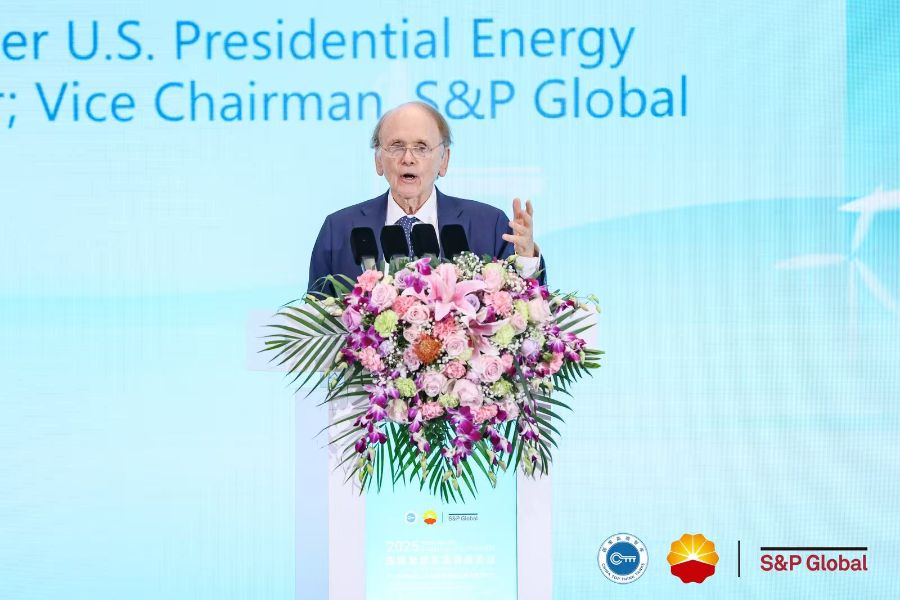
丹尼尔·耶金:中国已成为可再生能源和电气化革命的主宰者
2 1 Shi Ji Jing Ji Bao Dao· 2025-12-11 12:07
与此同时,他强调,全球能源市场面临巨大的风险。"地缘政治带来了巨大的不确定性:委内瑞拉局 势、对俄罗斯的制裁、俄乌冲突都可能迅速改变市场走向。"他说,换句话说,市场不仅"供应过剩", 也"风险过剩"。 当被问到明年的油价走势时,他回答道,"如果你只看供需的话,明年的油价可能是60美元/桶或低于这 个价格,但如果考虑地缘政治的风险,油价可能会高出这个价格,如昨天委内瑞拉的事件(注:据央视 新闻,当地时间10日,美国总统特朗普证实,美国在委内瑞拉附近扣押了一艘油轮。)" 谈及中国在全球能源转型中的角色,他表示,中国已成为可再生能源和电气化革命的主宰者。在发展可 再生能源方面,中国有巨大优势的成本以及大规模的生产能力。 "中国不仅是领导者,而且在绿色能源转型中处于绝对主导地位。无论从电动车、太阳能电池板还是电 池产业来看,中国都处于全球最前沿。中国的地位非常稳固,并将继续成为全球供应者。"他说。 (原标题:丹尼尔·耶金:中国已成为可再生能源和电气化革命的主宰者) 南方财经21世纪经济报道记者郑青亭、实习生陈颖 北京报道 12月11日,在2025国际能源发展峰会期间,标普全球副董事长、著名能源专家丹尼尔·耶金(Dan ...
21对话|丹尼尔·耶金谈油价走势:既供应过剩,也风险过剩
2 1 Shi Ji Jing Ji Bao Dao· 2025-12-11 07:41
Core Insights - The global energy system is transitioning from "supply surplus" to "risk surplus," with geopolitical factors becoming the core variable affecting energy prices [3] - China's oil demand is entering a critical "platform period," marking a significant turning point in the global oil market, as it has contributed to half of the global oil demand increase over the past 20 years, but is now stabilizing [3] - The current global oil market is characterized by a supply surplus, reflected in oil prices ranging from $50 to $60, and it may take one to two years for the market to rebalance [3] Group 1 - Geopolitical uncertainties, such as the situation in Venezuela, sanctions on Russia, and the Russia-Ukraine conflict, could change market dynamics at any time [3] - Three major trends are expected to drive long-term changes in the energy landscape by 2060: the expansion of renewable energy, a return to nuclear energy, and the continued demand growth for oil and gas alongside a significant upstream investment gap [3] - Artificial intelligence (AI) is anticipated to profoundly change the energy system, increasing electricity demand and reshaping the operational models of energy companies [3] Group 2 - The International Energy Agency (IEA) reports that approximately $540 billion annually will be needed for exploration and development to maintain current oil and gas production levels by 2050 [4] - Some companies are retreating from overly rapid transitions to renewable energy and are showing renewed interest in oil and gas exploration while continuing to explore diversified technological routes [4] - The importance of mineral resources, particularly copper, is rapidly increasing, as key minerals will play a central role in the global electrification process [4] Group 3 - China is recognized as a leader in green energy technologies such as solar and batteries, maintaining a dominant position in the global clean energy supply chain despite trade frictions [4] - China's strategy focuses more on energy security and supply diversification, while policies like the promotion of electric vehicles are changing the demand structure and influencing the global energy market [4]