
科技

Search documents
炸锅了!原来是这家基金公司!
Xin Lang Cai Jing· 2026-01-26 13:25
来源 :挖掘机007 你有没有想过,自己辛辛苦苦投进去的钱在亏,而那个管你钱的基金经理,却可能正用自家账户赚得盆 满钵满?这不是小说桥段,而是正在泰康基金上演的现实。 最近,业界诸多报道把这事彻底捅开了。事情主角是泰康基金一位名叫桂跃强的基金经理——他管着超 过20亿的基民资金,五年如一日死守白酒、家电这些所谓"老登股",结果基金亏了快30%;可与此同 时,他自己(或者说他太太名下)的账户却早早重仓科技股,浮盈一度超过5000万。基民血亏,他躺 赢,评论区直接炸锅。 先说说他的两只主力基金:泰康优势企业混合和泰康蓝筹优势一年持有股票。这两只都是偏股型基金, 按理说可以买全市场股票,包括港股通里的腾讯、阿里都没问题。但桂跃强偏偏不走寻常路,硬是把它 们变成了"白酒家电主题基金"。 翻开持仓记录,简直离谱。比如泸州老窖,连续21个季度雷打不动出现在前十大重仓股里,一次都没落 下过;山西汾酒、五粮液也出现了20次;美的集团18次,福耀玻璃、恒生电子各14次……这哪是做投 资,分明是打卡上班。更夸张的是,2025年四季报显示,好几只重仓股一个季度下来一股没动,仿佛账 户被冻住了。 问题是,这几年AI、半导体、新能源轮 ...
资讯日报:日元强劲反弹;金价首次升破每盎司5000美元-20260126
Guoxin Securities Hongkong· 2026-01-26 12:57
Market Overview - The Hang Seng Index closed at 26,750, up 0.45% for the day and 4.37% year-to-date[3] - The Nikkei 225 Index rose 0.29% to 53,847, with a year-to-date increase of 6.97%[3] - The S&P 500 Index ended at 6,916, with a slight increase of 0.03% and a year-to-date gain of 1.02%[3] Commodity and Currency Insights - Gold prices reached a historic high, surpassing $5,000 per ounce, driven by geopolitical tensions[13] - The Japanese yen rebounded strongly, with significant daily gains, as the market anticipates potential government intervention[13] Sector Performance - The commercial aerospace sector saw significant gains, with JunDa shares rising over 51% following the launch of six platforms aimed at accelerating satellite development[9] - The photovoltaic sector also performed well, with notable increases in stocks like KaiSheng New Energy (up 14.44%) and Xinyi Solar (up 11.15%) due to support from Tesla's CEO for solar energy development[9] U.S. Market Dynamics - The U.S. stock market showed mixed results, with the Nasdaq and S&P 500 slightly up, while the Dow Jones fell nearly 0.6%[9] - Notable individual stock movements included Goldman Sachs dropping nearly 4% and Nvidia rising 1.5%[10] Economic Indicators - Japan's core CPI for December 2025 rose 2.4%, aligning with expectations, while the manufacturing PMI for January 2026 increased to 51.5, indicating expansion[13]
一度突破5100美元!推动黄金涨涨涨的五大理由
Xin Lang Cai Jing· 2026-01-26 12:03
Core Viewpoint - Investors are increasingly turning to gold as a safe haven amid concerns over declining bond yields, high stock prices, and geopolitical tensions, with gold prices recently surpassing $5,100 per ounce after previously reaching $4,000 [1][9]. Group 1: Factors Driving Gold Prices - Currency devaluation trading is a significant factor, as investors worried about a strong dollar and other major currencies are buying gold to preserve value against economic shocks [1][9]. - The expansion of debt burdens and accommodative economic policies in Europe and Japan is contributing to the rise in gold prices, with renewed concerns over transatlantic trade wars [2][10]. - The Federal Reserve's interest rate cuts have lowered yields on government bonds and cash, making gold more attractive as the opportunity cost of holding it decreases [3][12]. Group 2: Central Bank Purchases - Central banks, which have shifted from being net sellers to net buyers of gold since 2010, are increasingly competing for gold, with Poland's central bank recently approving a large purchase plan [5][14]. - Central banks view gold not only for its price performance but also for its role in diversifying foreign exchange reserves [6][14]. Group 3: Stock Market Concerns - High stock valuations, particularly in technology stocks, are causing investor anxiety, with current price-to-earnings ratios being among the highest in the past century [6][15]. - The performance of a few major tech companies is significantly influencing the overall stock market, raising concerns about market stability [15]. Group 4: Future Gold Price Trends - Analysts predict that gold prices are likely to continue rising, with historical trends showing that gold often experiences sustained upward momentum [7][16]. - Projections indicate that gold could see significant price increases in the coming years, with estimates of a 65% rise in 2025 following a 27% increase in 2024 [8][17].
驻港公司和初创企业数目再创新高 团结香港基金:建议港府引进国际加速器 在新田打造加速器集群
Zhi Tong Cai Jing· 2026-01-26 08:18
Group 1 - The number of companies with parent companies based in mainland China and overseas in Hong Kong increased to 11,070, while the number of startups reached a record high of 5,221, reflecting growth despite geopolitical and global economic changes [1][2] - The Deputy Research Director of the Unity Hong Kong Foundation expressed optimism about the attractiveness of Hong Kong's business environment, emphasizing the need for the government to actively attract international accelerators and create accelerator clusters in areas like San Tin [1] - It is crucial to convert the increase in companies into tangible contributions to local GDP and employment, with a focus on strategic industries such as biotechnology, life sciences, and advanced manufacturing, rather than an over-reliance on light asset models like financial services [1] Group 2 - The number of startups in Hong Kong increased by 39% compared to 2021, showcasing a thriving entrepreneurial ecosystem [2] - The current startup ecosystem faces challenges, particularly with public-led incubation being hindered by bureaucratic processes, necessitating a shift towards private-led initiatives to attract more market capital and networks [2] - The introduction of international accelerators is seen as a breakthrough for the startup ecosystem, transitioning from a government-led to a market-led model, with suggestions for initial rent-free periods for new accelerators to enhance ecosystem vitality [2]
震荡中的港股,在等待什么机会?
Mei Ri Jing Ji Xin Wen· 2026-01-26 06:43
Core Viewpoint - The Hong Kong stock market is experiencing fluctuations after a period of growth, leading investors to question whether this is a signal of a market end or an opportunity for re-entry. Current market conditions suggest that the pullback may not be a terminal point but rather a wait for several key opportunities to become clearer [1] Group 1: Valuation and Market Position - Despite a previous rally that has repaired valuations, the Hong Kong stock market remains at historically low levels compared to major overseas technology indices. As of January 21, 2026, the price-to-earnings ratio (PE-TTM) of the Hong Kong technology sector is significantly lower than that of the Nasdaq, indicating a medium to long-term safety margin and allocation value. The pullback may provide a more suitable entry point for investors [2] Group 2: AI and Technological Advancements - The recent advancements in the AI sector, particularly with domestic large model companies listing in Hong Kong, are providing sustained momentum for the technology sector. For instance, the "Qianwen App" achieved over 100 million monthly active users within two months of launch, and AI motion control technologies are generating significant interest overseas. This indicates that the commercialization of AI technology is accelerating, and while short-term market sentiment may fluctuate, the logic of value reassessment driven by AI remains unchanged [3] Group 3: Sectoral Support and Opportunities - Beyond AI, several industries within the Hong Kong market exhibit strong support: - New Consumption: Leading companies in trendy toys, tea drinks, and jewelry are expected to drive value reassessment due to explosive performance and emotional premium - Innovative Pharmaceuticals: Chinese innovative pharmaceutical companies are accelerating their international expansion, with large orders expected to improve profitability - New Energy: Policies aimed at reducing competition are gradually being implemented, which may optimize the supply-demand landscape in the industry - Technology: The expansion of computing power demand and the acceleration of large model commercialization are creating abundant opportunities across the industry chain [4] Group 4: Signals to Watch - The current pullback in the Hong Kong stock market is, to some extent, waiting for the confirmation of the following signals: - AI application performance realization: Whether the technology can truly translate into corporate profits - Overseas liquidity and risk appetite: The willingness of global funds to allocate to emerging markets - Corporate earnings recovery rhythm: Particularly whether first-quarter earnings can support valuations [5] Group 5: Investor Strategy - For ordinary investors, it is advisable not to be overly pessimistic during the pullback. Gradual accumulation in the low valuation range may be beneficial. Additionally, a long-term perspective is essential, as the Hong Kong market is characterized by significant volatility, requiring patience to seize structural market opportunities [6]
基金经理投资笔记 | 锚定三重闭环,拥抱基本面慢牛
Sou Hu Cai Jing· 2026-01-26 03:04
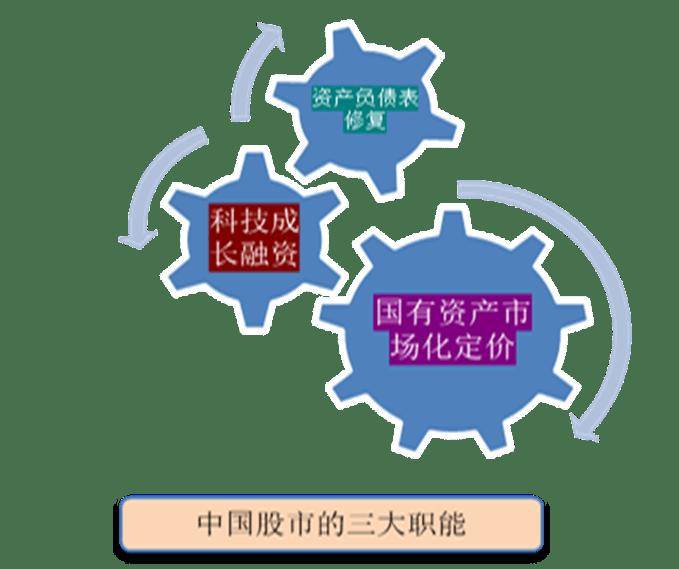
Group 1: Core Views - The narrative trading trend in the market has shown signs of fatigue, with a return to a fundamentals-driven slow bull market logic [1] - Regulatory measures on online information management aim to curb the risks associated with narrative trading, which can lead to significant market fluctuations [1] - The government's guidance for investors to shift from narrative trading to fundamentals trading is seen as a necessary response to market failures [1] Group 2: Positioning and Functions of the Stock Market - The Chinese stock market has evolved beyond a simple financing and trading platform, becoming a core hub connecting public welfare, industrial upgrades, and national strategy [2] - The core functions of the stock market can be summarized as "balance sheet repair, financing for technological growth, and market-based pricing of existing assets" [2] Group 3: Balance Sheet Repair Function - The health of household balance sheets directly influences consumption and economic resilience, with the stock market providing a means for wealth appreciation through a profit-driven slow bull market [3] - This function aims to ensure that financial market returns benefit households, thereby supporting the micro-foundation of common prosperity [3] Group 4: Financing for Technological Growth - The stock market plays a crucial role in providing long-term capital for strategic sectors such as hard technology and high-end manufacturing through market-based pricing and governance improvements [4] - This function embodies the principle of "finance serving the real economy," transforming capital into a long-term partner for innovation [4] Group 5: Market-Based Pricing of Existing Assets - The stock market's public pricing mechanism allows for the revaluation and circulation of existing assets, enhancing operational efficiency and governance structures [5] - This function emphasizes the market's decisive role in resource allocation, breaking away from traditional administrative valuations [5] Group 6: Current Functionality Assessment - As of early 2026, the A-share market shows an uneven performance in its three core functions, highlighting the need for government intervention to address market failures [8] - The asset balance sheet repair function has lagged, with household stock assets accounting for less than 10% of total wealth, compared to 20%-30% in developed countries [8] - The financing function for technological growth has been more robust, with over 1,200 hard technology companies raising more than 1.5 trillion yuan, but narrative trading still poses risks [8] - The market-based pricing function for state-owned assets faces challenges, with low valuations for state-owned enterprises indicating a lack of market recognition for existing asset values [9] Group 7: Historical Lessons from Market Volatility - Historical lessons indicate that the stock market must remain anchored to its core functions to avoid falling into cycles of policy-driven speculation and bubble bursts [11] - Past market booms have often led to significant wealth losses for households, emphasizing the unsustainability of trends detached from real economic support [11] Group 8: Government Intervention - Government intervention is deemed necessary to correct market failures, ensuring that the stock market continues to serve its three core functions effectively [13] - The government aims to protect household wealth, maintain industrial upgrades, and ensure the strategic value of state-owned assets through appropriate interventions [14] Group 9: Asset Allocation Insights - In the context of China's modernization, asset allocation should focus on the three core functions of the stock market, emphasizing long-term stable growth rather than short-term speculation [16] - Investors are encouraged to prioritize broad-based assets that can enhance wealth effects and support household balance sheet repair [17] - Strategic allocations should target hard technology and new productive forces, with a focus on companies with genuine technological barriers [17] - Attention should also be given to the revaluation opportunities of quality existing assets as market pricing mechanisms evolve [17]

【申万宏源策略】人民币升值期间大类资产复盘
申万宏源证券上海北京西路营业部· 2026-01-26 02:10
人民币升值期间大类资产复盘 ——全球资产配置每周聚焦 (20260116-20260123) 本期投资提示: 全球资本市场回顾: 本周 (20260116-20260123)全球地缘政治冲突加剧,贵金属继续上 行。1)固收方面, 10Y美债收益率维持在4.2%的水平,美元指数下行1.88%; 2)权益 方面, 本周上证指数整体上行,中证1000和科创50涨幅靠前,上证50跌幅较大;全球市 场中巴西、阿根廷股价涨幅较大,其中A股行业中建筑材料,石油石化、钢铁涨幅靠前, 银行跌幅较大,港股耐用消费品领涨; 3)商品方面, 本周黄金上涨8.3%,主要是因为 地缘政治冲突集中爆发。 聚焦热点:人民币升值期间大类资产表现复盘 :2000年以来,人民币汇率共经历了6轮升 值与4轮贬值,人民币汇率变化主要受到汇率制度改革、全球贸易周期以及中美货币政策 周期变化的影响。 国内大类资产方面,人民币升值期间,股票稳定的胜率更高,债券和 商品表现规律并不统一。 股票方面 ,创业板整体跑赢沪深300(除2017年),小盘整体 跑赢大盘(除2017年)。 债券方面, 2017、2023、2025年升值期间,国债指数录得负收 益,其他几 ...
基金早班车丨有色金属ETF规模破千亿,供需共振引公募密集加码
Jin Rong Jie· 2026-01-26 00:52
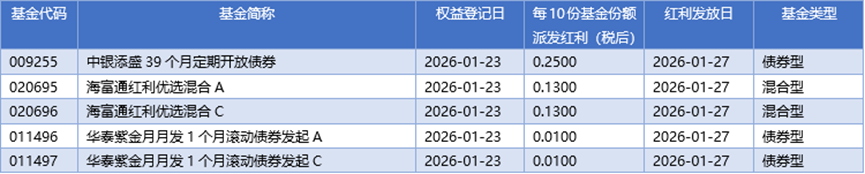
Group 1 - The core viewpoint of the articles highlights significant capital inflow into the non-ferrous metals sector, with related ETFs (excluding gold) seeing a net inflow exceeding 36 billion yuan this year, pushing the total scale beyond 100 billion yuan [1][2] - The demand-supply mismatch, coupled with the needs for new energy and grid upgrades, has led to notable price elasticity in copper, aluminum, and rare earths, prompting funds to quickly position through ETFs [1][2] - Multiple public funds are actively applying for new products, indicating a continuous increase in the toolization of investment strategies, which has become a key focus for institutions during the recovery phase of the year [1][2] Group 2 - As of January 23, 2026, there were no new fund launches, but five funds announced dividends, primarily bond funds, with the highest dividend being 0.25 yuan per 10 fund shares from the Bank of China’s 39-month regular open bond fund [2][4] - Data shows that seven private equity firms have either newly entered or returned to the 10 billion yuan tier this year, indicating a growing trend in the private equity sector, with stock long strategies being particularly popular [2] - Foreign investment firms, including BlackRock and Fidelity, reported that several of their products had net value increases exceeding 50%, with a strong focus on high-quality technology assets expected to lead value reassessment in the upcoming year [3]
行业点评报告:周报:AI应用快速调整期后已基本企稳
ZHESHANG SECURITIES· 2026-01-26 00:45
Investment Rating - The industry rating is "Positive" (maintained) [5] Core Insights - The AI application market has stabilized after a rapid adjustment period, with significant activities from major companies like Tencent and ByteDance, indicating a focus on AI applications and gaming as robust investment opportunities [1][2] - The gaming sector is highlighted for its strong fundamentals, with companies like 37 Interactive Entertainment and Perfect World focusing on mini-games and overseas markets to drive growth [3] - The report emphasizes the importance of companies with Agent ecosystem layouts and the efficiency gains from accelerated AI application implementations [2] Summary by Sections AI Application Market - The AI application market has shown signs of stabilization after a rapid adjustment phase, with major companies continuing to invest heavily [2] - Tencent announced a 1 billion cash red envelope activity for the Spring Festival, while ByteDance launched the Skills feature to enhance AI application usability [2] Gaming Sector - Companies like 37 Interactive Entertainment are focusing on mini-games, SLG, and overseas casual gaming markets, aiming to return to the top three in China's gaming exports [3] - Investment opportunities are noted in companies such as Perfect World, Century Huatong, and Giant Network [3] Key Company Updates - The report suggests close monitoring of companies like Ali's Qianwen App, ByteDance's new features, and DeepSeek's model iterations for potential investment opportunities [2]
滨江开发区商会完成换届
Xin Hua Ri Bao· 2026-01-25 19:18
Group 1 - The fourth first member representative meeting of the Nanjing Jiangning Binjiang Economic Development Zone Chamber of Commerce was held on January 22, where a new leadership team was elected and key work priorities were established [1] - Wang Yin was elected as the new president of the chamber, with Wan Jinglin and Xu Wei serving as executive vice presidents, representing various industries such as manufacturing, technology, food, and environmental protection [1] - The new leadership aims to unite members and act as a bridge to promote the healthy development of private enterprises and the growth of private economic individuals [1] Group 2 - A strategic cooperation agreement was signed between the Binjiang Development Zone Chamber of Commerce and the Bank of China Nanjing Jiangning Branch, which will provide comprehensive and customized financial services to member enterprises [1] - The first session of the "Binjiang Business Path" lecture series was held, featuring an expert in artificial intelligence who shared insights on how AI can help enterprises reduce workforce and costs while increasing efficiency [1]
