人形机器人

Search documents
发展壮大耐心资本大胆资本!深圳重大发布!
Zheng Quan Shi Bao Wang· 2025-12-29 23:36
Core Viewpoint - The Shenzhen Municipal Government has released the full text of the "15th Five-Year Plan" proposal, focusing on economic development strategies and the establishment of a modern industrial system to drive growth and innovation in the region [1][2][3][4][5]. Group 1: Economic Development Strategies - The proposal emphasizes the acceleration of emerging industries, the optimization of traditional industries, and the establishment of Shenzhen as a global advanced manufacturing center [1]. - It aims to promote high-quality development in the service sector, establishing Shenzhen as a significant global industrial financial, consumption, and logistics center [2]. - The plan includes fostering a robust financial system that supports innovation and the real economy while effectively managing risks [2]. Group 2: Technological Innovation - The proposal highlights the importance of artificial intelligence as a key driver of technological revolution and industrial transformation, advocating for high-quality development and application of AI across various sectors [3]. - It calls for the establishment of a leading industrial technology innovation center to enhance productivity and support original innovation and core technology breakthroughs [4]. Group 3: Real Estate Development - The plan outlines strategies for promoting high-quality development in the real estate sector, focusing on affordable housing and improving living conditions for new citizens, youth, and migrant workers [5]. - It aims to create a comprehensive housing supply guarantee system to ensure that individuals can settle and thrive in Shenzhen [5]. Group 4: Regional Coordination and Collaboration - The proposal stresses the importance of regional coordination, enhancing Shenzhen's role as a core engine in the Guangdong-Hong Kong-Macao Greater Bay Area and promoting urban integration with neighboring cities [4].

优必选拟16.65亿入主锋龙股份
Nan Fang Du Shi Bao· 2025-12-29 23:19
Core Viewpoint - The acquisition of approximately 43% of Fenglong Co., Ltd. by UBTECH Robotics through a combination of "agreement transfer + tender offer" aims to enhance UBTECH's capabilities in humanoid robot development and commercialization while gaining control over the A-share listed company [1][4]. Group 1: Acquisition Details - UBTECH plans to invest approximately 1.665 billion yuan to acquire 43% of Fenglong Co., Ltd. [1] - The acquisition will occur in three steps: first, UBTECH will acquire 29.99% of shares through a cash agreement; second, a tender offer will be made for an additional 13.02%; third, the original controlling shareholder will commit to accepting the offer and relinquishing voting rights on remaining shares [2]. - The share transfer and tender offer price is set at 17.72 yuan per share, which is about 10% lower than the last closing price of 19.68 yuan prior to suspension [2]. Group 2: Control and Governance - After the transaction, UBTECH will gain control of Fenglong Co., Ltd., with the board of directors consisting of 7 members, of which UBTECH can nominate 6 [3]. - The transaction includes performance commitments, with the sellers guaranteeing net profits of at least 10 million yuan, 15 million yuan, and 20 million yuan for the fiscal years 2026, 2027, and 2028, respectively [3]. Group 3: Strategic Intent and Market Context - UBTECH's acquisition aims to integrate its humanoid robot technology with Fenglong's manufacturing capabilities, supply chain relationships, and customer base to accelerate development and production [4]. - Fenglong Co., Ltd. reported revenues of 433 million yuan and 479 million yuan for 2023 and 2024, respectively, with net losses of 7 million yuan in 2023 and a projected profit of 4.6 million yuan in 2024 [4]. - The acquisition is seen as part of a broader trend in the industry where leading companies seek to address production capacity constraints by acquiring established manufacturing firms, particularly in the context of rising interest in embodied intelligence [4].

前11月“8+9”相关产业新设企业超百万户
Xin Lang Cai Jing· 2025-12-29 19:18
Core Insights - The "8+9" related industries in China have shown sustained growth in vitality, with a total of 1.01 million new enterprises established from January to November this year, representing a 9% increase compared to the same period last year [1][2] - The "8 emerging industries," including new generation information technology, high-end equipment manufacturing, and new materials, saw 775,000 new enterprises established, a 2.6% year-on-year increase, continuing to play a foundational role [1] - The "9 future industries," represented by future health, future intelligence, and future energy, performed exceptionally well with 283,000 new enterprises established, marking a significant 35.8% year-on-year growth, indicating substantial development potential and growth momentum [1] Industry Performance - In specific sectors, certain cutting-edge fields experienced explosive growth, with the "generative artificial intelligence" sector seeing new enterprise numbers increase by over 29 times; the "civil aviation" sector followed closely with a growth rate of 108.3%; and the "humanoid robotics" sector also showed strong activity with a 48.9% year-on-year increase [1] - These three sectors have emerged as leaders in driving growth within future industries [1] Strategic Implications - The proportion of high-tech and strategic emerging industry enterprises represented by the "8+9" industries continues to rise, facilitating the transition of Chinese enterprises towards new and stronger developments, and further advancing the country's industrial system towards the mid-to-high end of the global value chain [2] - The ongoing improvement of supporting policies and strong market demand is expected to sustain the positive development momentum of these industries [2]
9个月亏1300万元的子公司,宁波方正为何还花超6000万元溢价增持其股权?
Mei Ri Jing Ji Xin Wen· 2025-12-29 16:12
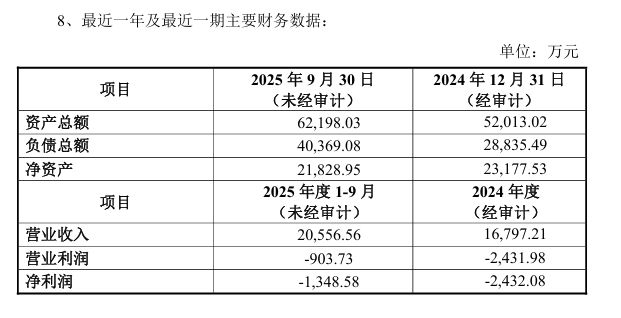
Core Viewpoint - Ningbo Fangzheng plans to acquire a 20% stake in Anhui Fangzheng New Energy Technology Co., Ltd., increasing its ownership to 90.03%, as part of its strategic entry into the lithium battery structural components sector [1][3]. Financial Summary - As of September 30, 2025, Anhui Fangzheng's total assets are 6.22 billion, with a net asset of 2.18 billion. For the first three quarters of 2024, the company reported a revenue of 2.06 billion but incurred a net loss of 1.35 billion [5][6]. - The total liabilities for Anhui Fangzheng as of September 30, 2025, are 4.04 billion, indicating a significant increase from 2.88 billion as of December 31, 2024 [2]. Acquisition Details - Prior to the acquisition, Ningbo Fangzheng held a 70.03% stake in Anhui Fangzheng with a subscribed capital of 1.87 billion. Post-acquisition, the subscribed capital will increase to 2.40 billion, raising the stake to 90.03% [3][4]. - The acquisition price for the 20% stake is set at 638 million, with an assessed value of Anhui Fangzheng's total equity at 3.24 billion, reflecting a 48.88% increase in value [6]. Strategic Implications - The acquisition is a strategic move to enhance Ningbo Fangzheng's position in the new energy sector and to strengthen its control over Anhui Fangzheng [7]. - The company aims to leverage its investments in the lithium battery sector to drive growth, with a focus on integrating its operations in the new energy industry [8]. Industry Expansion - Ningbo Fangzheng is also expanding into the humanoid robotics sector, collaborating with companies like Ningbo Huaxiang Qiyuan Technology and Shandong Future Robotics, and has begun supplying components for humanoid robots [9].
KOTRA发布全球战略 供应链、AI与韩流消费成2026年三大增长关键
Shang Wu Bu Wang Zhan· 2025-12-29 15:17
Core Insights - KOTRA identifies three major trends for Korean companies to focus on in response to rising global trade protectionism and economic security issues [1] Group 1: Global Supply Chain Restructuring - The first trend is the restructuring of global supply chains centered around "friend-shoring," with countries actively moving key industries like semiconductors and batteries to local and friendly nations, presenting strategic opportunities for Korean companies to deeply integrate into international core supply chains [1] Group 2: Technological Competition - The second trend involves a shift from software to "physical AI" technology competition, with global AI investments increasingly focusing on humanoid robots and autonomous driving, which interact with the physical world [1] Group 3: Global Expansion of K-Consumer Goods - The third trend is the global expansion of K-consumer goods driven by the Korean Wave (Hallyu), which has evolved into a globally shared "K-lifestyle," directly boosting exports of cosmetics, food, and pharmaceuticals, with multi-category annual export value surpassing 10 billion USD, becoming a stable pillar of export growth [1] Group 4: Strategic Recommendations - KOTRA emphasizes that companies need to proactively adapt to supply chain restructuring trends and seize opportunities in emerging markets represented by the "Global South," as well as in the AI and consumer goods growth sectors to build diversified competitiveness [1]
外媒观察|“十四五”与“十五五”交汇点 中国经济影响力持续提升
Xin Lang Cai Jing· 2025-12-29 14:06
Group 1 - China's economic focus is shifting towards high-tech industries, with electric vehicles now classified as a mature industry, indicating a transition to next-generation technologies like AI and quantum computing [1] - By 2025, sales of electric and hybrid vehicles in China are projected to reach approximately 16 million units, with electric vehicles expected to maintain a market share of over 50% [1] - The upcoming "15th Five-Year Plan" will no longer include "electric vehicles" in the strategic industry directory, signaling a comprehensive shift in development priorities [1] Group 2 - Germany's media reflects on its policy towards China, noting that China no longer views Germany as a dominant power, and calls for a more objective approach in bilateral relations [2] - China's domestic policies are set to implement more proactive fiscal measures, with a focus on increasing fiscal spending and enhancing policy precision and effectiveness [2] - The emphasis on fiscal support for high-tech, consumer, and livelihood sectors aligns with China's long-term goals of industrial upgrading and social welfare, providing a solid economic foundation for the "15th Five-Year Plan" [3]
喜娜AI速递:今日财经热点要闻回顾|2025年12月29日
Xin Lang Cai Jing· 2025-12-29 12:14
Group 1: Stock Market Dynamics - The Shanghai Composite Index recorded a slight increase of 0.04%, achieving a nine-day winning streak, the longest of the year [2][7] - Various sectors showed mixed performance, with the commercial aerospace sector leading, while others like lithium batteries experienced declines [2][7] - Market sentiment remains divided regarding the future trajectory of the index and leading sectors [2][7] Group 2: Fiscal Policy Developments - The National Fiscal Work Conference highlighted significant achievements in 2025, focusing on active fiscal policies and high-quality development [2][7] - For 2026, the conference plans to implement more proactive fiscal policies, including expanding expenditure and optimizing bond tools, with a focus on six key areas [2][7] Group 3: Commodity Market Insights - Silver prices reached historical highs, with a notable increase of over 6% before experiencing a rapid decline, resulting in a volatility of over 10% [2][7] - The price of silver has surged approximately 180% this year, influenced by geopolitical risks and supply shortages [2][7] Group 4: Industry-Specific Challenges - Chinese online lending companies faced significant challenges in India, with a bad debt rate exceeding 80% due to language barriers and regulatory hurdles [3][8] - Despite the potential of the Indian online lending market, many Chinese platforms have exited due to compliance issues and high bad debt rates [3][8] Group 5: ETF Market Growth - The total scale of domestic ETFs surged by 200.4 billion, surpassing 6 trillion for the first time, with stock ETFs leading the growth [3][8] - The CSI A500 index-linked ETFs saw a monthly increase of 106.6 billion, contributing to the growth of other indices [3][8] Group 6: Corporate Transactions - Tongye Technology announced plans to acquire a 91.69% stake in Silin Technology for 561 million, aiming to enter the power IoT communication chip market [3][9] - The acquisition is expected to enhance market expansion and product competitiveness for Tongye Technology [3][9] Group 7: Robotics Industry Outlook - The humanoid robot industry is projected to experience a significant commercial breakthrough by 2026, with global shipments expected to increase over sevenfold [4][9] - Cities like Shanghai, Nanjing, and Hangzhou are developing plans to establish themselves as industry hubs, with ambitious growth targets [4][9] Group 8: Corporate Financial Moves - Xiaomi's Vice Chairman plans to sell up to 2 billion dollars in company B shares to establish an investment fund focused on emerging technologies [4][9] - Following the announcement, Xiaomi's stock experienced a temporary decline but later rebounded, indicating mixed market reactions to the news [4][9] Group 9: Currency Market Trends - The offshore RMB exchange rate against the US dollar has strengthened, surpassing the 7.0 mark, influenced by expectations of US Federal Reserve rate cuts [5][10] - Experts caution about the uncertainties in the RMB's future trajectory, highlighting potential risks from political changes in the US and fluctuations in the dollar index [5][10] Group 10: Stock Performance Alerts - Several high-performing stocks issued warnings about significant deviations from their fundamental values, indicating potential rapid declines [5][10] - Companies like Victory Energy and Jia Mei Packaging have alerted investors to the risks associated with their stock performance [5][10]



谨慎布局
第一财经· 2025-12-29 11:45
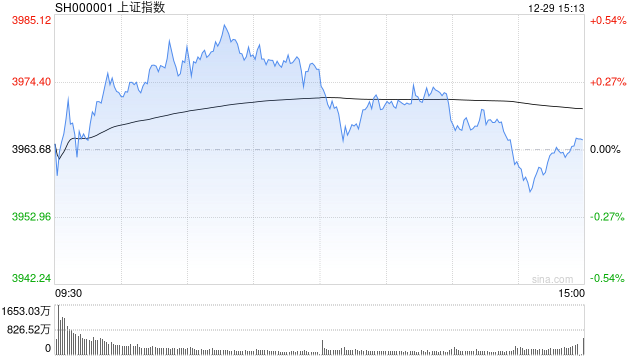
Core Viewpoint - The A-share market shows increasing divergence among the three major indices, with the Shanghai Composite Index achieving a nine-day consecutive rise, marking the longest streak in 2025, and nearing the 4000-point threshold. However, technical indicators suggest accumulated pressure for a correction [3][4]. Market Performance - The Shanghai Composite Index reached a peak of 3983.98 points during the session, with a closing value of 3965.28 points [3][9]. - A total of 1993 stocks rose, while the rise and fall ratio was 90-26, indicating a mixed performance among individual stocks [3]. - The trading volume in both markets decreased by 0.97%, reflecting a growing cautious sentiment among investors, with a notable decline in new capital inflow [4]. Fund Flow and Investor Sentiment - There was a net outflow of funds from institutional investors, while retail investors showed a net inflow, indicating differing strategies between the two groups [5][6]. - Retail investor sentiment was reported at 75.85%, suggesting a relatively optimistic outlook among this group [7]. - The average position of investors was noted at 69.35%, reflecting a slight increase of 4.8 percentage points [18]. Investment Strategies - Institutions are adopting a defensive approach, focusing on low-valuation and high-dividend sectors as a defensive base and stabilizer for indices, while also considering long-term investments in sectors like commercial aerospace and humanoid robotics, which have clear industrial trends and policy support [6]. - Retail investors are becoming more cautious, primarily adopting a wait-and-see approach, with short-term capital focusing on sectors like commercial aerospace and carbon fiber, while mid-term capital is reducing exposure to growth stocks and increasing allocation to defensive sectors like finance and pharmaceuticals to mitigate high-position risks [6].

A股收评 | 年内新纪录!沪指走出九连阳 商业航天概念热度不减
智通财经网· 2025-12-29 07:26
Market Overview - The Shanghai Composite Index closed up 0.04% at 3965.28 points, marking a nine-day winning streak, a new record for the year [1] - The market saw a total turnover of 2.1 trillion yuan, with over 3300 stocks declining [1] - Gold prices fell below 4500 yuan, and silver and palladium also saw significant declines, impacting related stocks [1] Sector Performance - The commercial aerospace sector remained strong, with stocks like Shenjian Co. and China Satellite achieving consecutive gains [1] - The oil and gas sector showed robust performance, with stocks such as Intercontinental Oil and Heshun Petroleum hitting the daily limit [1] - The battery, photovoltaic equipment, and industrial metals sectors attracted significant capital inflow, with leading stocks including Sunshine Power and BYD [2] Policy and Economic Developments - The People's Bank of China announced a digital yuan action plan, set to officially launch on January 1, 2026 [3] - The Ministry of Agriculture emphasized the need to cultivate leading agricultural technology enterprises to enhance innovation capabilities [4] Monetary Policy - The People's Bank of China conducted a 7-day reverse repurchase operation of 482.3 billion yuan, resulting in a net injection of 415 billion yuan [5] - Analysts from CITIC Securities predict that the market's year-end rally has begun, driven by optimistic institutional investor sentiment and favorable policy expectations [5] Market Sentiment and Predictions - Guosheng Securities suggests that the market is still in a phase of adjustment, with several indices showing signs of potential declines [6] - Huatai Securities indicates that while the overseas environment has improved, the A-share market may continue to experience volatility in the short term, with a focus on sectors like batteries and chemicals for potential gains [8]
收评:沪指微涨0.04%录得9连阳 人形机器人、商业航天概念持续走强
Xin Lang Cai Jing· 2025-12-29 07:14
Market Overview - The A-share market experienced fluctuations with mixed performance among the three major indices, with the Shanghai Composite Index slightly rising to 3965.28 points, marking a nine-day winning streak, while the Shenzhen Component Index and the ChiNext Index fell by 0.49% and 0.66% respectively [3][15] - The total trading volume in the Shanghai and Shenzhen markets was 2.14 trillion yuan, a decrease of 20.9 billion yuan compared to the previous trading day [3][15] - Overall, more stocks declined than rose, with over 3300 stocks experiencing a drop [3][15] Sector Performance - The commercial aerospace sector saw a strong performance, with companies like China Satellite and Aerospace Universe hitting the daily limit [3][15] - The humanoid robot sector was notably active, with companies such as Buke Co., Ltd. reaching a 20% limit up, and others like Tianqi Co. and Wuzhou New Spring also hitting the limit [3][17] - The photovoltaic sector showed strength, with Guosheng Technology hitting a historical high [3][15] - Conversely, the Hainan sector faced significant declines, with Hainan Haiyao and Hainan Airlines leading the losses [3][15] - The lithium battery sector also saw widespread declines, with XWANDA dropping over 11% [3][15] Hot Sectors 1. **Humanoid Robots** - The establishment of a standardization committee for humanoid robots and embodied intelligence by the Ministry of Industry and Information Technology is expected to drive growth in this sector [5][17] 2. **Digital Currency** - Companies like Lakala and Cuiwei Co. saw significant gains following the People's Bank of China's revision of the rules for the cross-border payment system to support the development of cross-border RMB business [6][18] Institutional Insights - Guojin Securities reported that a new investment theme is emerging in the commodity market, with a focus on industrial resources such as copper, aluminum, tin, lithium, and crude oil, as well as equipment exports and domestic manufacturing recovery [21] - CITIC Construction Investment analysts noted that the recent eight-day winning streak of the Shanghai Composite Index signals a positive outlook for the A-share market's year-end rally [22] - The report highlighted that the upcoming spring market rally may start earlier due to optimistic expectations among institutional investors and improving overseas liquidity [22]