
食品制造业

Search documents
龙虎榜复盘 | 谷子经济、宠物经济双双爆发
Xuan Gu Bao· 2025-05-20 10:31
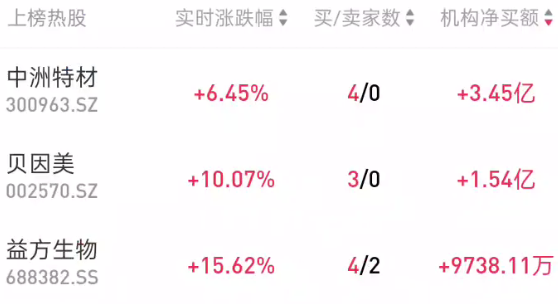
Group 1: Stock Market Activity - On the institutional leaderboard, 30 stocks were listed, with 16 seeing net purchases and 14 experiencing net sales [1] - The top three stocks with the highest net purchases by institutions were Zhongzhou Special Materials (CNY 345 million), Beingmate (CNY 154 million), and Yifang Bio (CNY 97.38 million) [1][2] Group 2: Pet Economy - The pet economy is experiencing rapid growth, with companies like Tianyuan Pet and Yuanfei Pet showcasing a wide range of products including pet beds, food, and toys [2] - The upcoming 2025 Shanghai Pet Expo is expected to break historical records in terms of attendance and transaction volume, indicating strong market interest [2] - According to a report by Founder Securities, the pet sector's listed companies have shown better-than-expected performance, driven by industry expansion and domestic brand development [3] Group 3: Millet Economy - The millet economy in China is projected to reach a market size of CNY 168.9 billion in 2024, with a year-on-year growth of 41%, and is expected to exceed CNY 200 billion by 2025 [5] - The potential for growth in the millet industry is significant due to the underdeveloped commercial chain for IP development and licensing in China compared to the US and Japan [5] - Guotai Junan highlights that various toy categories, including IP toys, are expected to see explosive growth, making companies with strong IP, product, and channel advantages worth monitoring [5]

4月经济数据点评:韧性显现,增势平稳
Orient Securities· 2025-05-19 08:42
Economic Performance - In April, the industrial added value for large-scale industries grew by 6.1% year-on-year, down from 7.7% in March, with a cumulative year-on-year growth of 6.4%[3] - High-tech industries maintained a strong performance with a 10% year-on-year growth in April, although slightly down from 10.7% in March[3] - Fixed asset investment saw a cumulative year-on-year growth of 4% in April, a decrease of 0.2 percentage points from the first quarter[3] Consumer Trends - The total retail sales of consumer goods in April increased by 5.1% year-on-year, down from 5.9% in March, but still better than the previous year's performance[3] - Jewelry retail sales surged by 25.3% year-on-year in April, significantly higher than the previous month's 10.6% growth[3] - Home appliance and audio-visual equipment sales also showed strong growth at 38.8% year-on-year in April, up from 35.1% in March[3] Employment and External Factors - The urban surveyed unemployment rate in April was 5.1%, a slight decrease of 0.1 percentage points from the previous month, indicating stable employment conditions[3] - Despite external pressures, domestic demand indicators such as employment and retail sales did not show signs of a sharp decline, suggesting resilience in the economy[3] - The report highlights potential risks from export-driven growth strategies that may affect the second half of the year[3]
多家公司密集公告赴港上市!年内新增A+H公司将创近年新高
Nan Fang Du Shi Bao· 2025-05-16 08:49
Core Viewpoint - The number of "A+H" companies is significantly increasing in 2025, driven by favorable policies supporting domestic companies to list in Hong Kong, with expectations that the total will exceed the number from 2022 [1][2][3] Group 1: A+H Company Listings - In 2025, 22 A-share companies have submitted applications to list on the Hong Kong Stock Exchange, with 11 of these submissions occurring in April alone [2] - As of now, 25 A-share companies have applied to list in Hong Kong, with 22 being first-time applicants this year [2] - Notable companies like Ningde Times and Heng Rui Pharmaceutical have passed the Hong Kong Stock Exchange's hearing and are expected to list soon [2][3] Group 2: Financing and Internationalization - Many A-share companies aim to leverage Hong Kong's financing capabilities to accelerate their internationalization process [3][5] - Companies like Midea Group and SF Holding have outlined their fundraising purposes to enhance global operations and logistics networks [3][5] Group 3: Regulatory Support - A series of supportive policies initiated in April 2024 has facilitated the surge in companies seeking to list in Hong Kong [6][7] - The China Securities Regulatory Commission has streamlined the approval process for companies looking to list abroad, reducing the time and requirements for applications [7][8] Group 4: Market Performance Post-Listing - Companies that have listed in Hong Kong have shown significant growth in overseas business and overall revenue, with Midea's overseas e-commerce sales increasing over 50% year-on-year [4][10] - The performance of A+H companies post-listing indicates a narrowing of the price difference between A-shares and H-shares, reflecting improved market conditions [10][11] Group 5: Future Outlook - Deloitte forecasts that the total amount raised from IPOs in Hong Kong could reach between 130 billion to 150 billion HKD in 2025, potentially placing it back among the top three global markets for new stock offerings [1][9] - The trend of A-share companies listing in Hong Kong is expected to continue, with an anticipated wave of IPOs in the second half of 2025 [2][9]



安徽怀宁:税宣春风助发展
Sou Hu Cai Jing· 2025-05-15 06:52
Group 1 - The tax authority in Huaining County, Anqing City, is actively promoting tax compliance and legal awareness among local businesses and residents through various outreach activities [1][2][3] - The local tax office is focusing on enhancing the vitality of historical areas like Shipa Old Street by directly engaging with merchants to explain the latest tax policies and encourage honest business practices [2] - The tax department is providing tailored services to high-tech companies like Yongchi Baby Technology Co., Ltd., assisting them with tax policy interpretation during their preparation for an IPO [3] Group 2 - The tax authority is implementing community engagement initiatives, such as a health run event, to address public inquiries about tax issues and promote tax knowledge [4] - The tax office plans to expand its outreach efforts by diversifying communication channels and ensuring that tax policies and compliance information reach market participants effectively [4]
湖南汇桃食品有限公司成立,注册资本200万人民币
Sou Hu Cai Jing· 2025-05-14 02:40
企业名称湖南汇桃食品有限公司法定代表人陈梅香注册资本200万人民币国标行业制造业>食品制造业> 其他食品制造地址湖南湘江新区麓谷街道尖山路18号中电软件园二期第A20栋101企业类型有限责任公 司(自然人投资或控股的法人独资)营业期限2025-5-13至无固定期限登记机关湖南湘江新区管理委员会 天眼查App显示,近日,湖南汇桃食品有限公司成立,法定代表人为陈梅香,注册资本200万人民币, 由长沙芸禾品牌策划有限公司全资持股。 序号股东名称持股比例1长沙芸禾品牌策划有限公司100% 经营范围含许可项目:食品生产;保健食品生产;食品销售;药品委托生产(不含中药饮片的蒸、炒、炙、 煅等炮制技术的应用及中成药保密处方产品的生产)(依法须经批准的项目,经相关部门批准后方可开 展经营活动,具体经营项目以批准文件或许可证件为准)食品互联网销售(仅销售预包装食品);特殊 医学用途配方食品销售;保健食品(预包装)销售;食品销售(仅销售预包装食品);婴幼儿配方乳粉及其 他婴幼儿配方食品销售;消毒剂销售(不含危险化学品);中草药收购;地产中草药(不含中药饮片)购 销;农副产品销售;食用农产品零售;农产品的生产、销售、加工、运输、贮 ...
康师傅:向光而行,以全方位高质量发展赋能品牌建设
Zhong Guo Jin Rong Xin Xi Wang· 2025-05-12 08:02
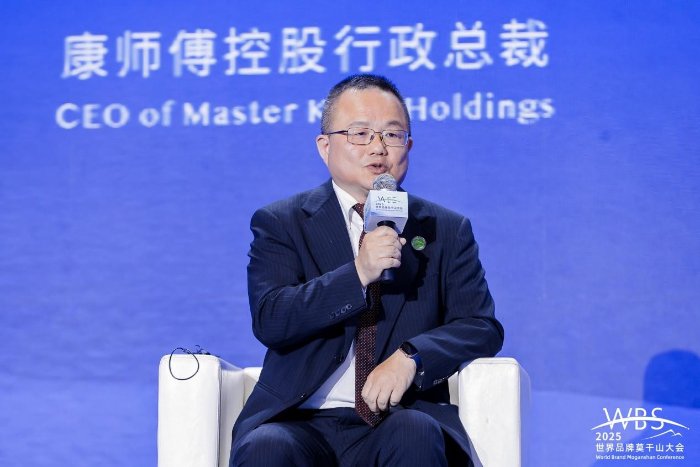
Core Viewpoint - The "2025 World Brand Moganshan Conference" emphasizes the importance of brand building in leading the high-quality development of "Made in China" and discusses the path for global brand development [1] Group 1: Company Overview - Master Kong has been committed to innovation, sustainable development, and globalization as directions for high-quality growth, focusing on creating new value and exploring new productive forces [3][12] - The company has a national penetration rate of 85%, with nearly 1 billion Chinese consumers choosing its products annually, reflecting strong consumer trust and preference [6] Group 2: Product Innovation - Recent product innovations include "Fresh Q Noodles," which utilizes a patented "zero-oil frying" technology for healthier options, and "Tea's Inheritor," a no-sugar tea drink that preserves the essence of Chinese tea [4][11] - The introduction of "pH9.0 Electrolyzed Alkaline Water" employs dual core patents to enhance taste and safety, showcasing the company's strong insight and innovation in the packaged drinking water sector [4] Group 3: Food Safety and Sustainability - Master Kong has invested billions to establish an international-level food safety research management center, conducting over 1,500 food safety monitoring indicators and more than 3.5 million quality inspections annually [9] - The company has developed an environmentally friendly vegetable base model, benefiting over 40 million farmers through the procurement of millions of tons of agricultural products each year [10] Group 4: Global Expansion - In response to global market changes, Master Kong is expanding its international presence, having established operations in 16 countries and regions, promoting Chinese culinary culture worldwide [10] - The company collaborates with leading global firms like Pepsi, Starbucks, and Asahi to innovate business models and enhance international integration [10] Group 5: Commitment to Sustainability - As a member of the United Nations Global Compact, Master Kong actively practices ten international principles and has been recognized as a founding member of the UN's Sustainable Food Systems Advisory Committee [12] - The company aims to stimulate the vitality of the industrial chain and promote high-quality development across the supply chain while sharing the story of the national brand with the world [12]

解读∣4月CPI环比由降转涨,部分工业领域出现积极信号
Guang Zhou Ri Bao· 2025-05-11 13:10
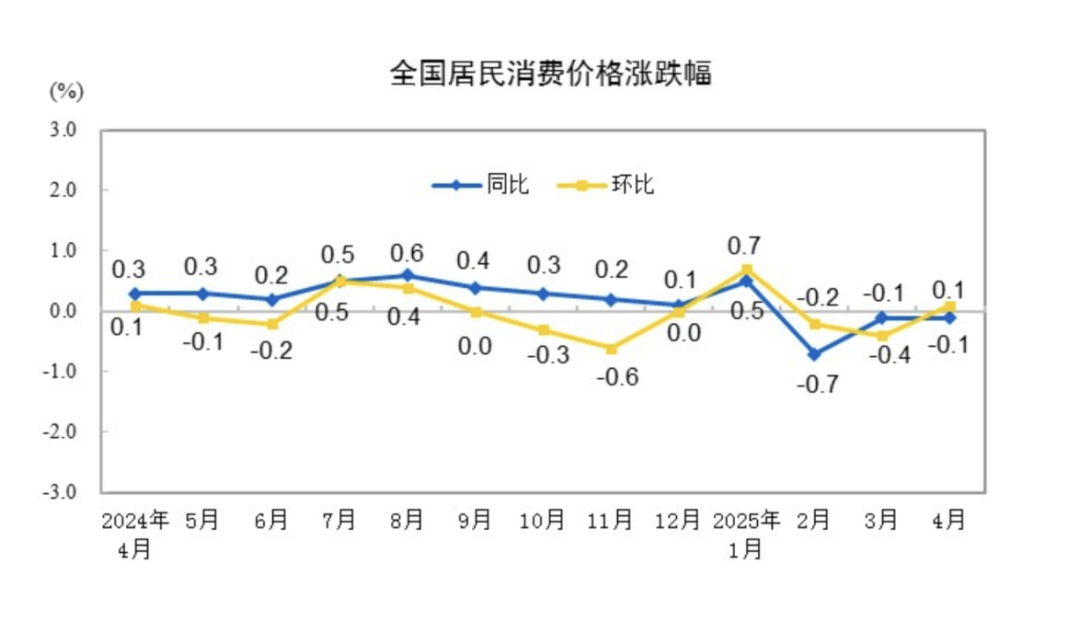
Group 1: CPI Trends - In April, the Consumer Price Index (CPI) shifted from a decrease of 0.4% in March to an increase of 0.1% month-on-month, while year-on-year it decreased by 0.1% [1] - The core CPI increased by 0.2% month-on-month and 0.5% year-on-year, indicating resilience despite the overall CPI decline [1][4] - Food prices rose by 0.2% month-on-month, contributing to the CPI increase, alongside significant rises in travel service prices, such as a 13.5% increase in airfare [4] Group 2: PPI Trends - The Producer Price Index (PPI) decreased by 0.4% month-on-month and year-on-year, with the decline attributed to both international and domestic factors, including seasonal drops in energy prices [5] - Some industrial sectors are showing positive signals, with demand in high-tech industries increasing and leading to price recoveries in certain areas, such as home appliances and new energy vehicles [7] Group 3: Policy Implications - Analysts expect that the government's macroeconomic policies aimed at boosting consumption will support demand and potentially lead to structural positive changes in the PPI [8] - There is an emphasis on the need for the government to expedite the implementation of existing policies, particularly in technology, consumption, and foreign trade, to stimulate domestic demand and support core CPI trends [4]
4月中国PPI下降 部分工业行业价格向好
Huan Qiu Wang· 2025-05-10 09:26
Group 1 - In April, China's Producer Price Index (PPI) decreased by 0.4% month-on-month and 2.7% year-on-year, with the year-on-year decline widening by 0.2 percentage points compared to the previous month [1] - The decline in PPI is attributed to changes in the international trade environment and a rapid drop in prices of certain international bulk commodities, affecting domestic industry prices [1] - Specific sectors such as oil and gas extraction saw a price decrease of 3.1%, while refined petroleum products and chemical manufacturing prices fell by 2.5% and 0.6% respectively [1] Group 2 - Seasonal declines in energy prices were noted, with coal mining and processing prices dropping by 3.3% due to the end of heating season and traditional off-peak demand [1] - The electricity and heat production and supply sector experienced a price decrease of 0.3%, influenced by lower costs of new energy generation and increased wind power output [1] - Despite international factors exerting downward pressure, domestic macro policies aimed at boosting consumption and the growth of high-tech industries have led to increased demand in certain sectors, resulting in positive price changes in some areas [1] Group 3 - Policies promoting consumption and equipment upgrades are expected to lead to a recovery in prices for certain consumer goods and manufacturing products [2] - In April, the year-on-year price decline for household washing machines narrowed by 0.3 percentage points, while food manufacturing and new energy passenger vehicles also saw a reduction in their price decline by 0.2 percentage points [2] - The diversification of trade and market expansion has contributed to price increases or reduced declines in some export sectors, with integrated circuit packaging and testing prices rising by 2.7% and semiconductor device manufacturing prices increasing by 1.0% in April [2]
重磅数据发布!价格领域呈现积极变化
第一财经· 2025-05-10 09:14
Core Viewpoint - The article discusses the recent trends in China's Consumer Price Index (CPI) and Producer Price Index (PPI), highlighting the impact of international oil prices and domestic economic policies on these indices [1][2]. CPI Analysis - In April, the CPI showed a month-on-month increase of 0.1% after a previous decline of 0.4%, but year-on-year it decreased by 0.1% [1]. - The core CPI, excluding food and energy, rose by 0.5%, indicating stable inflation in essential goods [2]. - The year-on-year decline in CPI is attributed mainly to a significant drop in energy prices, which fell by 4.8%, with gasoline prices decreasing by 10.4%, contributing approximately 0.38 percentage points to the CPI decline [6]. PPI Analysis - The PPI decreased by 0.4% month-on-month and 2.7% year-on-year, with the latter decline widening by 0.2 percentage points compared to the previous month [7]. - The drop in PPI is influenced by international commodity price declines, particularly in oil and gas extraction, which saw a price drop of 3.1%, and refined petroleum products, which fell by 2.5% [7]. - Seasonal factors also contributed, with coal prices declining as demand decreased post-heating season [7]. Positive Price Changes - Despite the overall decline in CPI and PPI, certain sectors are experiencing positive price changes due to improved supply-demand dynamics and government policies promoting consumption [9]. - Industries such as black metal smelting and non-metallic mineral products saw a narrowing of year-on-year price declines, indicating a recovery in demand [9]. - High-tech industries are also benefiting, with prices for wearable smart devices and aircraft manufacturing increasing by 3.0% and 1.3%, respectively [10]. Trade and Export Impact - The diversification of trade and market expansion has led to price increases in some export sectors, such as integrated circuit packaging, which rose by 2.7% [10]. - The government emphasizes the importance of maintaining prices within a reasonable range to support both consumer spending and corporate profitability [10].

重磅数据发布!现多项积极信号→
Zheng Quan Shi Bao· 2025-05-10 04:26
Group 1: Consumer Price Index (CPI) Insights - In April, the CPI increased by 0.1% month-on-month and decreased by 0.1% year-on-year, indicating a shift from decline to growth in the month-on-month comparison [1][3] - Food prices rose by 0.2%, while non-food prices increased by 0.1%, with service prices up by 0.3%, driven by seasonal factors and demand recovery [3][4] - The core CPI, which excludes food and energy, rose by 0.2% month-on-month and 0.5% year-on-year, reflecting stable supply-demand dynamics [3][10] Group 2: Producer Price Index (PPI) Trends - The PPI decreased by 0.4% month-on-month and 2.7% year-on-year, with the decline attributed to international input factors and seasonal drops in energy prices [1][9] - Certain industrial sectors showed signs of price stabilization, with black metal and non-metal mineral product prices experiencing reduced year-on-year declines [5][6] - The PPI's month-on-month decline was influenced by falling prices in the petroleum and natural gas extraction sectors, as well as in the non-ferrous metal industries [9][10] Group 3: Economic Policies and Market Dynamics - The People's Bank of China noted that policies aimed at expanding domestic demand are beginning to take effect, which is expected to support a moderate recovery in price levels [1][10] - Recent macroeconomic policies, including interest rate cuts and structural tools, are designed to stimulate domestic demand and support price stability [10] - The upcoming holiday seasons are anticipated to boost service prices, contributing to a potential recovery in the core CPI [10]