证券业

Search documents
流动性与机构行为周度跟踪251219:税期不紧叠加央行呵护跨年降息预期升温推动短端回落-20251221
Huafu Securities· 2025-12-21 11:36
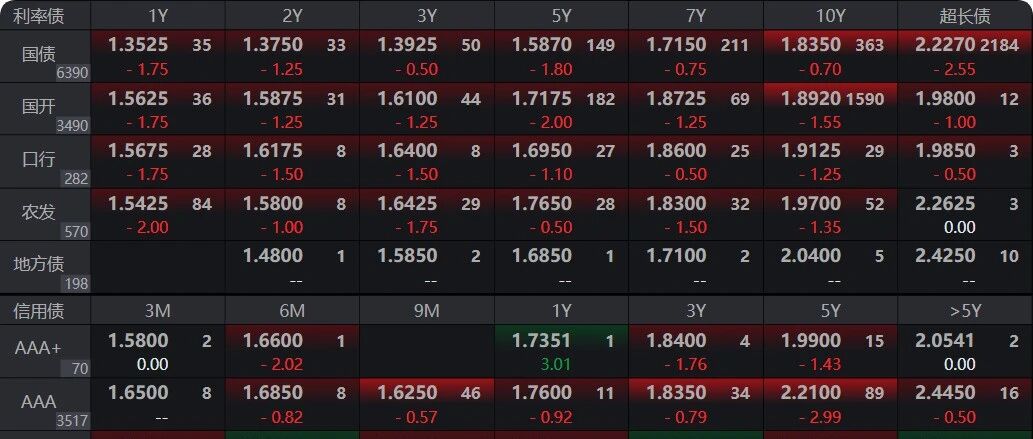
1. Report Industry Investment Rating No relevant content provided. 2. Core Viewpoints of the Report - Tax period funds remained loose this week, and the central bank's care for cross - year liquidity led to a significant decline in short - term interest rates, raising market expectations for interest rate cuts. The interest rate cut may occur in March - April 2026 [4][35][41] - The issuance of government bonds in 2025 is nearing completion. The net financing forecast for December treasury bonds is adjusted upwards to 335.2 billion yuan, and the net financing scale of local bonds in December is expected to be about 230 billion yuan. The supply pressure of local bonds in Q1 2026 may be slightly lower than that in Q1 2025 [6][56][59] - Next week, the net payment scale of government bonds will rise, but the exogenous disturbances in the capital market may decrease, and the loose liquidity state is expected to continue. Attention should be paid to whether the average value of DR001 in December can fall below 1.3% [9][45][69] 3. Summary According to the Table of Contents 3.1 Monetary Market 3.1.1 This Week's Capital Situation Review - The central bank's 7 - day and 14 - day reverse repurchase operations resulted in a net withdrawal of 1.1 billion yuan this week. On Monday, 80 billion yuan of treasury cash fixed - term deposits matured, and the central bank conducted a 600 - billion - yuan 6 - month outright reverse repurchase operation, with an excess renewal of 200 billion yuan. Despite tax - period disturbances, funds remained loose, and DR001 was maintained at around 1.27% [3][15] - The trading volume of pledged repurchase oscillated upwards, with the average daily trading volume increasing by 0.4 trillion yuan to 8.48 trillion yuan compared to last week. The overall scale of pledged repurchase continued to rise, approaching the historical high in early July. The net lending of large - scale banks oscillated and slightly declined, while that of joint - stock banks and city commercial banks oscillated and rose, especially joint - stock banks reaching a new high since August last year. The overall rigid net lending of banks also continued to rise. The rigid net lending of non - banks first decreased and then increased, with an overall slight decline. The capital gap index oscillated and declined [4][22] - The cross - year progress of funds this year is late. As of Friday, the cross - year progress of the inter - bank and exchange markets is only higher than that in 2024, and the gap with previous years is widening. The cross - year progress of the entire market is 7.6%, 5.5 percentage points lower than the average of 20 - 24 [31] - The short - term interest rates represented by 1 - year policy financial bonds and IRS ended a multi - quarter continuous oscillation and significantly declined, reflecting market expectations of a downward shift in the capital interest rate center and an increase in interest rate cut expectations [35] 3.1.2 Next Week's Capital Outlook - The net payment scale of government bonds will rise from 1.61 billion yuan this week to 366.6 billion yuan. The 7 - day reverse repurchase maturity scale will decrease from 668.5 billion yuan to 457.5 billion yuan. On December 25, 300 billion yuan of MLF will mature, and the central bank is expected to continue to renew it in excess [45][69] - The new shares of Hengdongguang on the Beijing Stock Exchange will be issued online on December 23, which may cause some disturbances to the exchange capital price from Tuesday to Wednesday. After the tax period, the exogenous disturbances in the capital market may decrease, and the loose liquidity state is expected to continue [9] 3.2 Inter - bank Certificates of Deposit - The 1 - year Shibor rate remained unchanged at 1.65% compared to December 12. The secondary rate of 1 - year AAA - rated inter - bank certificates of deposit decreased by 2.5 BP to 1.64% compared to last week [70] - The issuance scale of inter - bank certificates of deposit increased more than the maturity scale this week, with a net repayment scale of 69 billion yuan, a decrease of 51.5 billion yuan compared to last week. The net financing scales of joint - stock banks, rural commercial banks, state - owned banks, and city commercial banks were 43.1 billion yuan, 22.2 billion yuan, - 119.7 billion yuan, and - 23 billion yuan respectively. The issuance proportion of 3 - month certificates of deposit was the highest at 34%, and the issuance proportion of 1 - year certificates of deposit increased by 2 percentage points to 17% compared to last week. The maturity scale of certificates of deposit next week is about 868.6 billion yuan, a decrease of 196.2 billion yuan compared to this week [10][73] - The issuance success rates of state - owned banks and joint - stock banks increased compared to last week, while those of rural commercial banks and city commercial banks decreased. Except for state - owned banks with a relatively high issuance success rate, the others are near the average level in recent years. The issuance spread of 1 - year certificates of deposit between city commercial banks and joint - stock banks widened [75] - The relative supply - demand strength index of certificates of deposit continued to rise this week, reaching 40.5% on Friday, an increase of 6.7 percentage points compared to last week. The supply - demand index of 1 - year varieties decreased significantly, while those of other tenors continued to rise [83] 3.3 Bill Market - Bill interest rates first rose and then fell this week. As of December 19, the 3 - month bill interest rate of national joint - stock banks increased by 4 BP to 0.49% compared to December 12, and the 6 - month bill interest rate decreased by 1 BP to 0.89% [89] 3.4 Bond Trading Sentiment Tracking - The bond market oscillated strongly this week, and the spreads of credit bonds and perpetual bonds continued to widen. The willingness of large - scale banks to increase bond holdings weakened, especially for treasury bonds and inter - bank certificates of deposit within 1 year. They tended to reduce holdings of local bonds and policy financial bonds within 1 year, but the willingness to reduce holdings of perpetual bonds decreased, and they tended to increase holdings of commercial paper [92] - The overall willingness of trading - type institutions to increase bond holdings declined significantly. Among them, the willingness of fund companies and other products to increase holdings decreased significantly, the willingness of securities companies to reduce holdings increased slightly, and the willingness of other institutions to increase holdings increased [92]
发展数字金融赋能数字经济
Xin Lang Cai Jing· 2025-12-20 22:07
Core Viewpoint - The 20th Central Committee's Fourth Plenary Session emphasizes the acceleration of building a financial powerhouse, focusing on the development of digital finance as a crucial element for integrating the digital economy with the real economy [1] Group 1: Digital Finance Development Achievements - During the 14th Five-Year Plan period, significant progress has been made in the digital transformation of China's financial sector, enhancing the efficiency of financial products and services [2][3] - The digital economy's core industry is projected to account for approximately 10% of GDP by 2024, with digital innovation significantly boosting development capabilities [4] Group 2: Financial Services and Digital Economy Integration - The growth rate of loans to the digital economy sector has outpaced the average growth rate of all loans, with a loan balance of 8.2 trillion yuan as of September, reflecting a 13% year-on-year increase [4] - New financing channels have been established for technology-driven enterprises through the introduction of a "Technology Board" in the bond market, enhancing accessibility to financing [4] Group 3: Policy and Regulatory Framework - The development of digital finance is supported by a robust policy framework, including the "Financial Technology Development Plan (2022-2025)" and various guidelines for digital transformation in banking and insurance [3][6] - A comprehensive legal framework is being established to govern digital finance, focusing on data security, personal information protection, and algorithm ethics [7][14] Group 4: Digital Currency Development - The People's Bank of China is leading the development of the digital yuan, which is positioned as a state-backed digital currency with unique advantages over existing electronic payment methods [8][9] - As of September, 225 million personal wallets have been opened for the digital yuan, with a total transaction amount of 14.2 trillion yuan across 33.2 billion transactions [9][10] Group 5: Security and Risk Management - The rapid expansion of digital finance presents both opportunities and challenges, necessitating a focus on data security and risk management to maintain public trust [13][15] - Measures are being implemented to enhance the security of financial data and to establish a regulatory framework that balances innovation with risk prevention [14][16]
【笔记20251219— 日债交易员,扛住!】
债券笔记· 2025-12-19 13:51
Core Viewpoint - The article emphasizes that no one is an investment genius and that every investment requires continuous practice in real scenarios, advocating for the mindset that each investment is a trial and error process [1] Group 1: Market Conditions - The central bank conducted a reverse repurchase operation of 562 billion yuan for 7-day and 1000 billion yuan for 14-day terms, resulting in a net injection of 357 billion yuan today [3] - The funding environment is balanced and slightly loose, with the DR001 rate around 1.27% and DR007 around 1.44% [4] - The central bank raised interest rates by 25 basis points, leading to a slight increase in the stock market, while the bond market saw interest rates fluctuate downwards [6] Group 2: Bond Market Insights - Concerns among bond market bears are growing as year-end approaches, with factors such as the low probability of LPR rate cuts, central bank bond purchases, and new redemption regulations potentially impacting the market [7] - The yield on Japan's 10-year government bonds has risen nearly 90 basis points this year, surpassing 2.0% following a 25 basis point rate hike by the Bank of Japan [7]

高息大额存单迎到期“洪峰”:年轻的储户选择去冒险
Di Yi Cai Jing Zi Xun· 2025-12-19 05:53
Core Insights - The article discusses the significant decline in interest rates for bank deposits, leading to a shift in investment strategies among depositors as high-yield savings products become scarce [2][3][4] Group 1: Current Market Conditions - The five-year large-denomination time deposits have nearly disappeared, with interest rates dropping below 1.55% [3] - Many banks are now promoting insurance products with guaranteed returns around 3%, as traditional high-yield deposit options are no longer available [4][5] - The trend of "deposit migration" is evident, with a notable decrease in bank deposits and an increase in non-bank financial institution deposits [11] Group 2: Investor Behavior - Depositors are exploring alternative investment options such as stocks, particularly bank stocks with dividend yields exceeding 5%, and commodities like gold [6][10] - The shift in investment strategy is driven by the realization that traditional savings accounts no longer provide adequate returns, prompting individuals to seek higher yields through riskier assets [9][10] - The potential scale of household savings entering the stock market could exceed trillions, indicating a significant shift in investment behavior [12] Group 3: Future Projections - A substantial amount of high-yield deposits will mature between 2025 and 2026, with an estimated 142 trillion yuan set to expire, leading to further implications for the banking sector [8][11] - The expiration of high-yield deposits is expected to structurally improve the cost of liabilities for banks, with a projected reduction in funding costs by approximately 15 basis points [12]
2026年债市展望:低利率,破局
Orient Securities· 2025-12-19 05:08
Group 1 - The expected low interest rate environment is changing, impacting investor behavior, leading to a slowdown in both entity financing and financial expansion [6] - Financial institutions such as wealth management and insurance are altering their asset allocation strategies, influenced by changes in tax policies and new fund regulations [6] - The mainstream investment strategy in the bond market is shifting from "trading" to "coupon collection," with bond prices expected to experience sideways fluctuations and slight weakening [6] Group 2 - In 2025, the bond market experienced a review where the central bank shifted from tightening to loosening, causing fluctuations in the bond market [9] - The first quarter saw the central bank pause government bond purchases, emphasizing the need to guide financial institutions to explore effective credit demand, which raised funding rates [9] - The second quarter faced uncertainties due to tariff issues, leading to a decline in export expectations and a subsequent rise in bond prices as the central bank adopted a more accommodative stance [9] Group 3 - As of November 2025, the net financing amount of credit bonds reached the highest level in five years, with local government bonds balancing out under financing constraints [14] - The cumulative issuance of credit bonds approached 13 trillion yuan, with a net inflow exceeding 2 trillion yuan, indicating robust primary supply [16] - The financing increment of credit bonds is primarily driven by industrial entities, particularly in public utilities and non-bank financial sectors, while local government financing is expected to stabilize [16] Group 4 - The credit spread has been narrowing, with the strategy of holding credit bonds for coupon collection being favored in 2025 [17] - The yield on non-financial bonds has generally fallen below 2%, making it challenging to find high-yield bonds above 2.2% [17] - The overall yield of credit bonds is fluctuating at low levels, with a widening term spread, indicating difficulty in finding high-yield targets in the industrial bond sector [20] Group 5 - The convertible bond market is experiencing a decline in issuance and a decrease in the number of outstanding bonds, leading to a shrinking market [25] - The performance of the convertible bond market improved in 2025, with the index achieving a 17.12% increase, indicating strong demand despite a shrinking supply [34] - The aging characteristics of convertible bonds are becoming more pronounced, which may deter some investors but could also enhance scarcity in the short term [26] Group 6 - The changing expectations regarding low interest rates are leading to a decrease in banks' enthusiasm for participating in bond investments [50] - In 2025, banks showed a consistent lack of interest in the bond market, with funds acting independently, resulting in a historical high duration for funds without corresponding low interest rates [54] - The reduction in credit and the increasing reliance on certificates of deposit by large banks are contributing to a widening gap in government bond supply and demand [56]
日元加息引爆全球警报!悲观派警告:恐成新金融危机导火索
Sou Hu Cai Jing· 2025-12-19 04:51
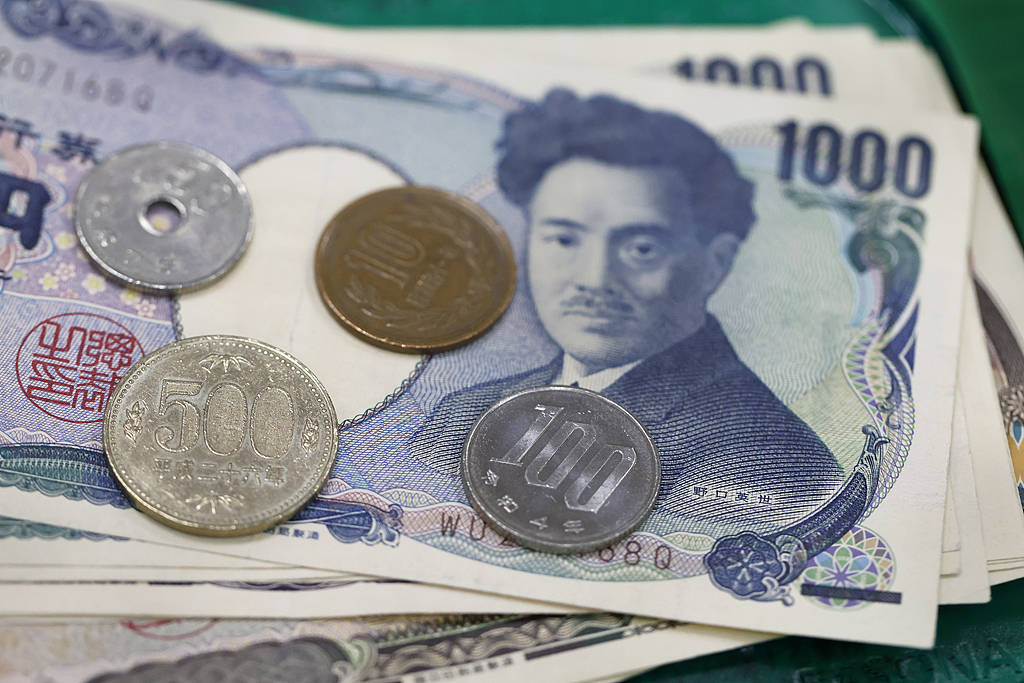
Core Viewpoint - The Bank of Japan raised its policy interest rate by 25 basis points to 0.75%, which is perceived as a "dovish rate hike" by the market, aligning with 94% of expectations, but has raised concerns among economists and investors about potential systemic risks in the global financial market [1][3]. Group 1: Economic Impact - The potential for a "margin call tsunami" from "yen carry trades" is a core concern, as global investors have borrowed yen at near-zero costs to invest in high-yield assets, creating a leverage of several trillion dollars [3]. - The rise in yen interest rates to a 30-year high has significantly increased borrowing costs, and the rapid appreciation of the yen against the dollar has narrowed the arbitrage opportunities [3]. - Historical precedents, such as the bursting of the dot-com bubble in 2000 and the 2008 financial crisis, began with seemingly localized liquidity tightening, which could lead to a systemic crisis today given the high asset valuations globally [3]. Group 2: Market Reactions - Signs of market distress have already emerged, with over 300,000 cryptocurrency liquidations and losses of $600 million occurring around the time of the rate hike announcement, alongside significant declines in Asian stock markets [5]. - The Japanese economy's structural vulnerabilities are highlighted by its national debt, which is 260% of GDP, indicating that even a small rate increase could lead to substantial increases in government interest payments [5]. - Optimists argue that Japan's economy is only 5% of the global economy and that the Federal Reserve's rate cuts could mitigate liquidity issues, but pessimists warn of the broader implications of rising costs of "cheap money" on global asset valuations [5]. Group 3: Investor Sentiment - The real danger for ordinary investors lies not in the rate hike itself but in misjudging the impact of this "gray rhino" event, as complacency often precedes significant market disruptions [6].

利率水平创30年来新高,日本央行如期加息25个基点
Sou Hu Cai Jing· 2025-12-19 03:35
Group 1 - The Bank of Japan has raised the benchmark interest rate to its highest level in 30 years, increasing the overnight lending rate by 0.25 percentage points to 0.75% [1] - This decision aligns with market expectations and follows a series of rate hikes, marking the first increase in 11 months since January 2025 [1] - The core CPI excluding fresh food rose by 3.0% year-on-year in November, matching market expectations and remaining stable compared to October [1] Group 2 - In March 2024, the Bank of Japan ended its decade-long negative interest rate policy by raising the policy rate from -0.1% to 0-0.1% [3] - The central bank has implemented three rate hikes within a year, with the latest increase in January raising the rate to 0.5%, the highest since the 2008 global financial crisis [3] - The Bank of Japan aims to achieve a virtuous cycle of "prices-wages-consumption," indicating that further rate hikes may occur if inflation leads to wage growth and increased consumer spending [3]
海南自贸港启动全岛封关后 跨境资金如何自由便利流动?
Mei Ri Jing Ji Xin Wen· 2025-12-18 13:38
Core Viewpoint - The official launch of the Hainan Free Trade Port's full island closure operation on December 18 marks a significant step in China's commitment to high-level opening-up and the construction of an open world economy. The closure is characterized as greater openness rather than isolation, facilitating more convenient cross-border trade and investment flows [1]. Group 1: EF Account Characteristics - The EF account allows for the free and convenient transfer of funds between multi-functional free trade accounts and overseas accounts, as outlined in the Hainan Free Trade Port's overall construction plan [2]. - The People's Bank of China is actively promoting the establishment of the multi-functional free trade account system, which aims to create a financial platform for external openness [2]. - The EF account features two main characteristics: first, it allows for convenient fund transfers across the "first line" with no restrictions on capital item business except for securities investment [2][3]. Group 2: EF Account Operations - The EF account operates through banks, with the Construction Bank being one of the pilot banks. For instance, Hainan Rubber opened an EF account at the Construction Bank and received a loan of 472 million yuan for purchasing raw materials [4]. - The EF account facilitates cross-border capital flows by reducing the time for funds to reach overseas subsidiaries, as demonstrated by Hainan Rubber's investment in its overseas subsidiary [4]. - The Hainan Provincial Branch of the State Administration of Foreign Exchange has developed over 20 innovative policies to promote cross-border trade and investment, including guidelines for qualified foreign and domestic limited partners [4]. Group 3: Cross-Border Asset Management Pilot - Hainan Free Trade Port is advancing the pilot for cross-border asset management, with the People's Bank of China and other departments collaborating to implement the pilot business [5]. - As of October 2025, four pilot institutions have submitted applications totaling 5 billion yuan, with dynamic management of the pilot scale being established [6]. - Two private placement pilot products have successfully completed the subscription by overseas investors, indicating progress in the cross-border asset management pilot [6].

高息大额存单迎到期“洪峰” :年轻的储户选择去冒险
Di Yi Cai Jing Zi Xun· 2025-12-18 13:33
"五年前买的开门红大额存单就要到期了,现在真不知道该买什么。"在深圳从事设计工作的王延,最近 正在各种渠道里寻找"高息"存款的身影。 今明两年到期定存超百万亿 三年期定存利率已跌破1.5%,五年期大额存单几近绝迹——随着银行存款利率持续走低,曾把银行当 作"财富保险箱"的年轻人,逐渐意识到一个现实:钱,不能再只存在银行里了。 王延最近发现,手机银行里曾经琳琅满目的大额存单产品,如今大多显示"已售罄"。五年期大额存单已 普遍"缺货",利率水平也全面回落至1.55%以下。即便是中小银行、民营银行,也少见高于2%的大额存 单了。 此时,银行客户经理在微信里建议他来网点,称可以介绍"开门红"的产品:保本,收益能到3%左右。 到了网点,王延才明白,这并非存款,而是一款保险产品。在网点,客户经理告诉王延,与往年"开门 红"主打限时高息存款不同,今年银行主要力推保险产品,其中一些产品设有保底收益,相比当下的存 款利率"显得更有优势"。实际上,这种以"保本"为吸引点引导客户了解保险的做法,已推行了一段时 间。由于当前存款利率偏低、吸引力减弱,不少网点选择在年底主动邀约客户,将到期的大额存单资金 引导至保险等新产品中。 犹豫之 ...

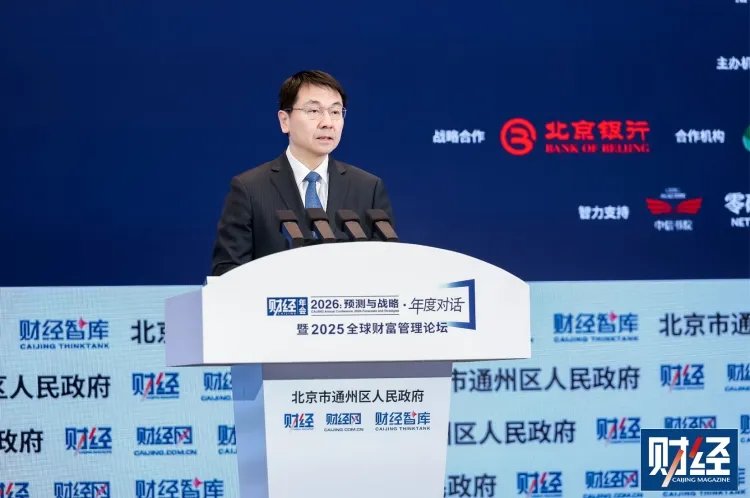
北京市地方金融管理局局长曾林峰:坚持首善标准,扎实推动首都金融各项工作迈上新台阶
Cai Jing Wang· 2025-12-18 05:40
Core Viewpoint - The "2026 Annual Conference: Predictions and Strategies" hosted by Caijing Magazine and supported by the Beijing Municipal Government emphasizes the importance of finance in China's modernization and highlights Beijing's role as the national financial management center, with significant contributions to the national economy [1][6]. Group 1: Financial Development Strategy - Beijing's financial industry accounts for approximately half of the national total assets, with leading indicators in the number of financial institutions, workforce, and insurance metrics [3][7]. - The city aims to enhance the financial sector's stability and quality by developing a high-standard "14th Five-Year Plan" and promoting reforms in key areas, particularly in technology finance services [3][7]. - The focus will be on supporting the development of the Beijing Stock Exchange (BSE) as it marks its fifth anniversary, encouraging participation from professional investors to enhance its role in serving innovative SMEs [3][8]. Group 2: Support for the Real Economy - Financial resources will be directed towards new productive forces and urban governance, with an emphasis on asset allocation across various markets and innovative asset management products [4][8]. - The integration of finance and technology will be prioritized to bolster support for technological and industrial innovation [4][8]. Group 3: International Financial Cooperation - The city will advance financial openness by promoting pilot projects in financial market access and cross-border investment facilitation, while hosting significant events like the Financial Street Forum [4][5]. - There is a call for collaboration with international financial institutions to enhance wealth management services and respond to global market challenges [5][9]. Group 4: Wealth Management Center Development - The urban sub-center is positioned as a global wealth management hub, leveraging its advantages to attract high-quality wealth management institutions and optimize the industry ecosystem [5][9]. - Continuous support will be provided to enhance wealth management products and services, aiming to create a globally influential wealth management center [9].