超市

Search documents
老地标新生 泰国“莲花”系再“闯”通州商业
Bei Jing Shang Bao· 2025-10-22 15:38
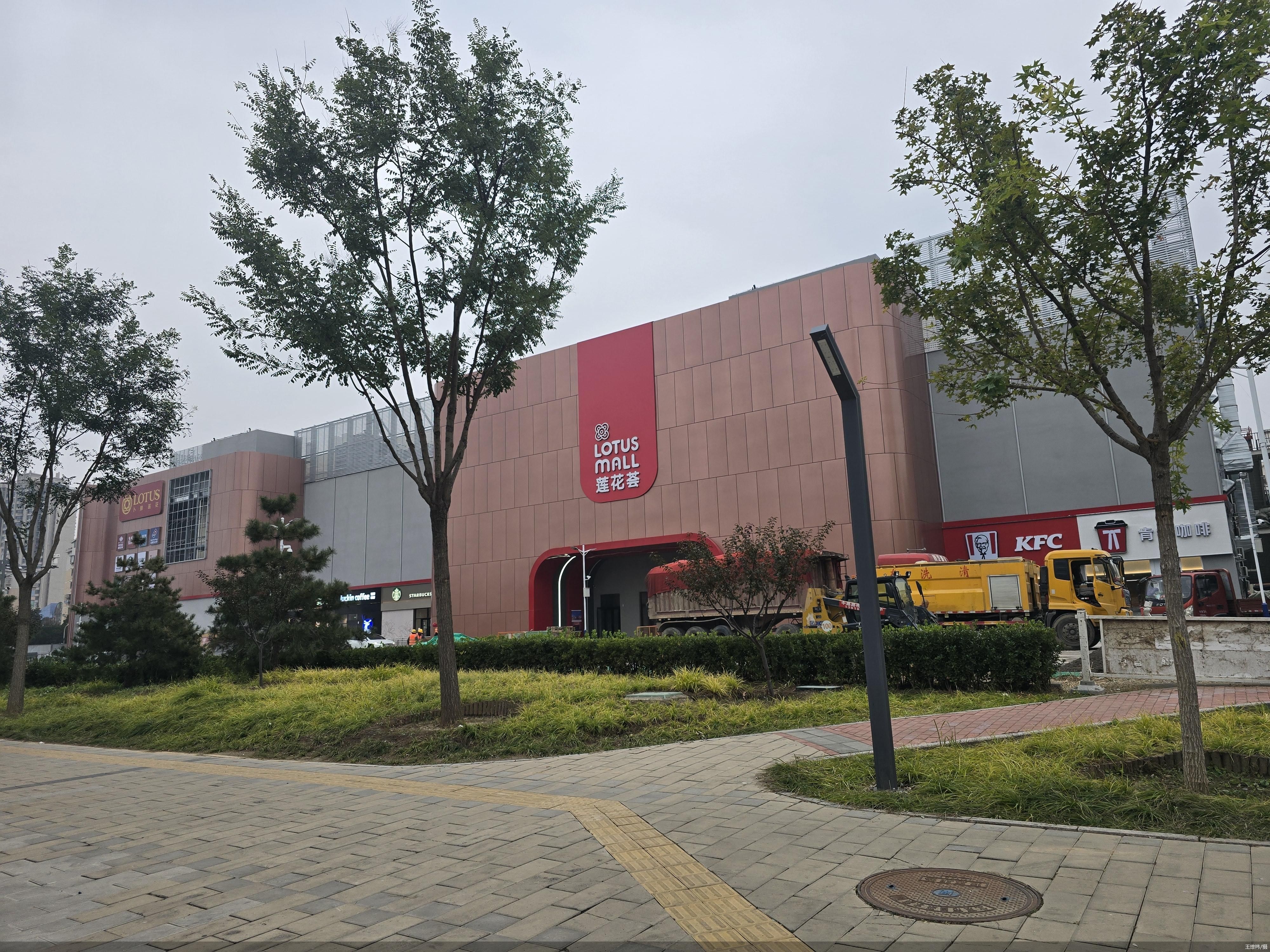
Core Insights - The transformation of Tongzhou Lianhua Hui from a traditional supermarket to a community commercial complex is underway, aiming to meet local consumer demands and inject new vitality into the Tongzhou business district [1][2] Group 1: Project Overview - The Lianhua Hui project has completed exterior updates and has a merchant signing rate of approximately 90%, featuring various business types such as fast food, children's entertainment, and cinemas [2] - The project covers an area of about 18,300 square meters and aims to create a modern commercial complex that aligns with community needs through spatial restructuring and business reorganization [2][3] Group 2: Market Context - The renovation of Lianhua Hui reflects the broader evolution of commercial development in Tongzhou, which has seen over 3,000 enterprises relocate to the area, enhancing diverse consumer demands [3] - The commercial landscape in Tongzhou is shifting from traditional supermarkets and hypermarkets to shopping centers, community malls, and themed streets, indicating a transition from single-function to multi-functional commercial spaces [3] Group 3: Industry Trends - The shift from traditional supermarkets to community malls is driven by consumer demand for richer shopping experiences and better service quality, making community commercial complexes more appealing [4][5] - The "supermarket+" community complex model is gaining traction as it offers a one-stop lifestyle experience, allowing for quick adjustments to consumer needs and fostering local brand influence [5]
老地标新生 莲花荟升级 再“闯”通州商业
Bei Jing Shang Bao· 2025-10-22 11:45
Core Viewpoint - The transformation of Tongzhou Lianhua Hui from a traditional supermarket to a community commercial complex reflects the evolving consumer demands and the shift towards more experiential retail environments in urban areas [1][10]. Group 1: Project Overview - The Lianhua Hui project is undergoing significant upgrades, transitioning into a community commercial complex that integrates dining, leisure, family activities, and cinema [1][4]. - The project has completed exterior renovations and has signed contracts with approximately 90% of its merchants, including popular brands like Bawang Tea and Starbucks [4][5]. - The total area of the project is approximately 18,398.38 square meters, aiming to meet modern community needs through spatial restructuring and business reorganization [7]. Group 2: Market Context - The renovation of Lianhua Hui is part of a broader trend in Tongzhou, which is becoming increasingly important as a sub-center of Beijing, attracting over 3,000 businesses from other districts by 2025 [8]. - The commercial landscape in Tongzhou is evolving from traditional supermarkets and hypermarkets to shopping centers, community malls, and themed street blocks, reflecting a shift from single-function to multi-functional retail spaces [8][9]. - Consumer preferences are changing, with a growing demand for diverse shopping experiences and quality service, which Lianhua Hui aims to address through its transformation [8][14]. Group 3: Operational Strategy - The project emphasizes a "neighborhood living space" concept, focusing on the daily needs of residents and incorporating various business types such as fast food, children's entertainment, and cinemas [5][10]. - The operational model of "supermarket+" community complexes is gaining traction, as it allows for quick adjustments to consumer demands and offers personalized services, making it more appealing than larger shopping centers [14]. - Continuous innovation in operations and offerings is crucial for attracting and retaining customers, especially in the initial phase post-opening [9][14].

胖东来设天价企业开放日,参观学费每人两万引热议
Yang Zi Wan Bao Wang· 2025-10-22 09:58
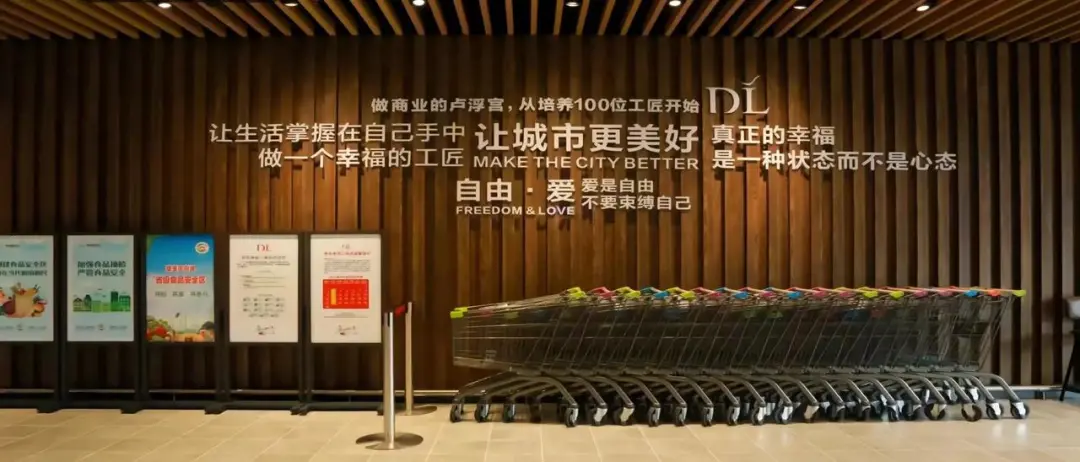
Core Viewpoint - The company "胖东来" has decided to monetize its unique business model by offering a high-priced B2B service, charging 20,000 yuan for corporate visits starting November 1, 2025, which has sparked mixed reactions from the public and industry peers [1][4][7]. Group 1: Pricing and Service Offering - Starting from November 1, 2025, "胖东来" will offer paid visits specifically for corporate clients, marking a shift from free, informal visits to a structured, high-end service [1][4]. - The 20,000 yuan fee is perceived by some as excessive, especially when compared to high-end business courses, leading to skepticism about the value of the experience [1][4]. - Others argue that the fee is justified given "胖东来" is not just a retail store but a successful management case study, offering insights into its corporate culture and operational excellence [2][4]. Group 2: Business Model and Strategic Shift - The introduction of paid visits is seen as a proactive measure to manage the influx of visitors that has disrupted normal operations, transforming external interest into a valuable business service [4][7]. - The company has recently expanded its business scope to include tourism and event services, indicating a strategic move to leverage its brand influence beyond retail into high-value business services [5][7]. Group 3: Market Reactions and Future Implications - Public reactions are polarized, with some questioning the replicability of "胖东来"'s model in different contexts and the potential dilution of its brand identity through commercialization [3][7]. - The 20,000 yuan entry fee serves as a filter for serious inquiries and reflects the market's perception of "胖东来"'s brand value, positioning it as a potential leader in sharing management expertise in China [7].
互联网巨头,盯上了9.9折扣超市?
Hu Xiu· 2025-10-22 07:04
Core Insights - The price war has expanded from food delivery services to the supermarket industry, with significant discounts on essential products [1] - Major players like JD Discount Supermarket, Super Box (formerly Alibaba's Hema NB), and Happy Monkey (Meituan's supermarket brand) are competing aggressively for consumer attention with remarkably low prices [1] - The driving force behind this competition is the concept of "hard discounts," which has become a new battleground for large companies [2] Pricing Strategies - 30 anti-fresh eggs are priced at 11.5 yuan, indicating a significant reduction in prices for basic food items [1] - A box of 12 bottles of 550ml mineral water is sold for 7.9 yuan, showcasing the aggressive pricing strategies employed by supermarkets [1] - 2.5 kilograms of premium soy sauce is available for 19.9 yuan, reflecting the trend of steep discounts on staple products [1] - 5 kilograms of self-operated laundry detergent is priced at 17.8 yuan, further illustrating the competitive pricing landscape [1] Competitive Landscape - The competition is primarily focused on attracting older consumers, as evidenced by the targeting of "大爷大妈" (elderly consumers) in urban areas [1] - The emergence of hard discounts as a strategy indicates a shift in market dynamics, with companies vying for market share through aggressive pricing [2]
中国超市,开到宇宙尽头
虎嗅APP· 2025-10-22 00:56
Core Insights - The article discusses the prevalence and growth of Chinese supermarkets globally, particularly in emerging markets like Southeast Asia and Latin America, driven by familial networks and historical migration patterns [4][5][6]. Group 1: Distribution and Growth of Chinese Supermarkets - Chinese supermarkets can be found in various locations worldwide, including remote areas like Savannah, Jamaica, indicating a widespread presence [4]. - In Argentina, there are approximately 10,788 Chinese supermarkets, with a notable concentration in Buenos Aires, where one can find a store every two to three blocks [4]. - The establishment of these supermarkets often follows a pattern where immigrants are brought over by relatives, leading to a network of family-run businesses [5][6]. Group 2: Challenges Faced by Chinese Supermarkets - Chinese supermarket owners face significant challenges, including theft and violence, particularly in regions with high crime rates like Jamaica and Argentina [7][11]. - In Jamaica, theft is common, with no specific profile for thieves, and even children are known to steal frequently [8]. - In Argentina, the economic situation has worsened, with inflation reaching 211.4% in 2023, leading to increased instances of armed robbery in supermarkets [11][19]. Group 3: Economic Viability and Business Model - Operating a Chinese supermarket requires relatively low barriers to entry, primarily needing initial capital rather than specialized skills [18]. - The business model is characterized as stable and traditional, with average monthly profits around 100,000 RMB, providing a decent living for owners in developing countries [20]. - The Christmas season is particularly profitable for these supermarkets, as local consumers purchase home goods and festive items [19]. Group 4: Social Dynamics and Community - Chinese supermarket owners often operate within tight-knit communities, relying on familial and ethnic networks for support and information sharing [24][25]. - There is a tendency for competition among Chinese businesses, with price wars being common, and cooperation is often limited to those with familial ties [25][26]. - Many owners prefer to maintain a low profile and avoid conflicts, adhering to a culture of discretion in their business dealings [12]. Group 5: Future Trends and Globalization - The competitive landscape for Chinese supermarkets is evolving, with traditional models facing pressure from larger chain stores and changing consumer preferences [30]. - The article suggests that while these supermarkets play a crucial role in introducing Chinese products to local markets, they may be overshadowed by newer business models like e-commerce [30][31].

悬浮、朝圣、难复制,胖东来做成了景区生意
Hu Xiu· 2025-10-21 23:40
Core Viewpoint - The company "胖东来" is expected to exceed its annual sales target of 20 billion yuan by the end of 2025, with sales already surpassing 18.8 billion yuan this year, indicating a strong growth trajectory [1]. Group 1: Sales Performance and Impact - In 2023, "胖东来" has maintained its popularity, especially during holidays, leading to increased foot traffic and sales, which in turn boosts tourism in the region [2]. - During the recent National Day holiday, "胖东来" achieved total sales of 820 million yuan over eight days, averaging over 100 million yuan per day, with the highest sales recorded at the 30,000 square meter Times Square location [3]. - The city of 许昌 ranked fifth in tourism revenue during the National Day holiday, largely driven by the influx of visitors to "胖东来" [4]. Group 2: Tourist Attraction and Visitor Data - Data shows that at least half of the out-of-town visitors to 许昌 visited "胖东来," with the proportion of visitors to "胖东来" increasing year by year [5]. - In recent years, the number of tourists and tourism revenue in 许昌 has shown significant growth, with "胖东来" attracting 2.7 million visitors in 2023, 3 million in 2024, and over 4.5 million expected in 2025 [6]. Group 3: Transformation into a Tourist Destination - "胖东来" has evolved from a local supermarket to a tourist destination, characterized by its ability to attract visitors from outside the region, similar to traditional tourist attractions [10][13]. - The store's unique offerings, including its own branded products, have positioned it as a desirable shopping experience, further enhancing its appeal as a tourist destination [16][17]. - The local community has adapted to this transformation, with many residents participating in the tourism economy as "代购" (purchasers for others), indicating a shift in the store's role within the local economy [22][24]. Group 4: Business Model and Cultural Resonance - The success of "胖东来" is attributed to its strong brand identity, founder's personal influence, and alignment with contemporary consumer sentiments, creating a unique market position that is difficult to replicate [11][30]. - The company's operational philosophy emphasizes social responsibility and employee welfare, which resonates with consumers and enhances its brand loyalty [32][36]. - "胖东来" has become a benchmark in the retail industry, not just for its sales figures but also for its cultural significance, transforming shopping into a pilgrimage-like experience for many [37][39].
中国超市,开到宇宙尽头
3 6 Ke· 2025-10-21 09:36
Core Insights - The article highlights the pervasive presence of Chinese supermarkets globally, particularly in emerging markets like Jamaica and Argentina, driven by familial networks and historical migration patterns [1][2][19] - It discusses the operational challenges faced by these supermarkets, including theft and violence, which are prevalent in certain regions, impacting the business environment [3][4][6][14] - The narrative emphasizes the resilience and adaptability of Chinese entrepreneurs in establishing and expanding their businesses despite adverse conditions [10][15][24] Group 1: Business Operations - Chinese supermarkets often start with individuals being brought over by relatives, working in existing stores, and eventually opening their own [2][12] - In developed markets, larger chains like 99 Great Wall Supermarket exist, while in emerging markets, small family-run stores dominate [2][12] - The operational model is characterized by low entry barriers, requiring minimal skills beyond initial capital investment [12][15] Group 2: Challenges and Risks - Theft is a significant issue, with employees and customers frequently engaging in shoplifting, reflecting the local economic conditions [3][4][6] - In Argentina, the economic downturn has led to increased violence, including armed robberies, affecting the safety of supermarket operations [6][14] - The article notes that local perceptions of crime can differ, with some communities not viewing theft as a serious offense [4][6] Group 3: Market Dynamics - The demand for Chinese products is strong in regions like Jamaica and Argentina, where local consumers appreciate the affordability and variety [14][15] - The article mentions the impact of inflation in Argentina, with prices fluctuating rapidly, complicating inventory management for supermarkets [6][14] - Chinese supermarkets serve as a bridge for introducing Chinese goods to local markets, contributing to a grassroots globalization process [24][25] Group 4: Social Networks and Community - The Chinese business community often relies on familial and social networks for support, sharing resources and information to navigate challenges [19][20] - There is a tendency for these entrepreneurs to remain within their ethnic communities, limiting broader social integration [18][19] - The article suggests that while competition exists, cooperation is often limited to those with familial ties [19][20]
家家悦涨2.04%,成交额2874.28万元,主力资金净流出519.16万元
Xin Lang Cai Jing· 2025-10-21 05:17
Core Viewpoint - The stock price of Jiajiayue has shown fluctuations, with a year-to-date decline of 5.92% and a recent increase of 1.94% over the last five trading days, indicating volatility in market performance [2]. Financial Performance - For the first half of 2025, Jiajiayue reported a revenue of 9.007 billion yuan, a year-on-year decrease of 3.79%, while the net profit attributable to shareholders was 183 million yuan, reflecting a growth of 7.82% [2]. - Since its A-share listing, Jiajiayue has distributed a total of 1.587 billion yuan in dividends, with 402 million yuan distributed over the past three years [3]. Shareholder Information - As of June 30, 2025, the number of shareholders for Jiajiayue was 24,400, a decrease of 0.45% from the previous period, with an average of 26,192 circulating shares per person, which increased by 0.45% [2]. - The top ten circulating shareholders include Huaxia Large Cap Select Mixed Fund, holding 5.8505 million shares, and Hong Kong Central Clearing Limited, which increased its holdings by 1.5847 million shares to 4.5736 million shares [3]. Market Activity - On October 21, Jiajiayue's stock price rose by 2.04%, reaching 10.49 yuan per share, with a trading volume of 28.7428 million yuan and a turnover rate of 0.43%, resulting in a total market capitalization of 6.696 billion yuan [1]. - The net outflow of main funds was 5.1916 million yuan, with significant selling activity observed [1].

步步高涨2.12%,成交额3.69亿元,主力资金净流入1862.46万元
Xin Lang Cai Jing· 2025-10-21 02:47
Core Viewpoint - The stock of Bubugao has shown significant volatility, with a year-to-date increase of 46.08%, but recent declines in the short term raise questions about its future performance [1][2]. Group 1: Stock Performance - As of October 21, Bubugao's stock price rose by 2.12% to 5.77 CNY per share, with a trading volume of 369 million CNY and a turnover rate of 3.03% [1]. - The stock has experienced a decline of 2.70% over the last five trading days and 14.77% over the last 20 days, while it has increased by 18.24% over the last 60 days [1]. - The company has appeared on the "Dragon and Tiger List" 10 times this year, with the most recent appearance on September 9, where it recorded a net buy of -51.15 million CNY [1]. Group 2: Financial Performance - For the first half of 2025, Bubugao reported a revenue of 2.133 billion CNY, representing a year-on-year growth of 24.39%, and a net profit attributable to shareholders of 201 million CNY, which is a significant increase of 357.71% [2]. - The company has cumulatively distributed 1.677 billion CNY in dividends since its A-share listing, with no dividends distributed in the last three years [3]. Group 3: Shareholder Information - As of June 30, 2025, the number of shareholders of Bubugao increased by 96.50% to 88,500, while the average circulating shares per person decreased by 49.11% to 17,105 shares [2]. - Hong Kong Central Clearing Limited is the tenth largest circulating shareholder, holding 10.5068 million shares as a new shareholder [3]. Group 4: Business Overview - Bubugao operates primarily in the retail sector, with its main business segments being supermarkets (64.34%), other (27.44%), department stores (6.01%), and logistics and advertising (2.21%) [1]. - The company is categorized under the general retail sector, specifically in supermarkets, and is associated with concepts such as prepared dishes, community group buying, new retail, duty-free concepts, and low-price strategies [2].

苏州第四家山姆,今天开业!
Sou Hu Cai Jing· 2025-10-20 21:44
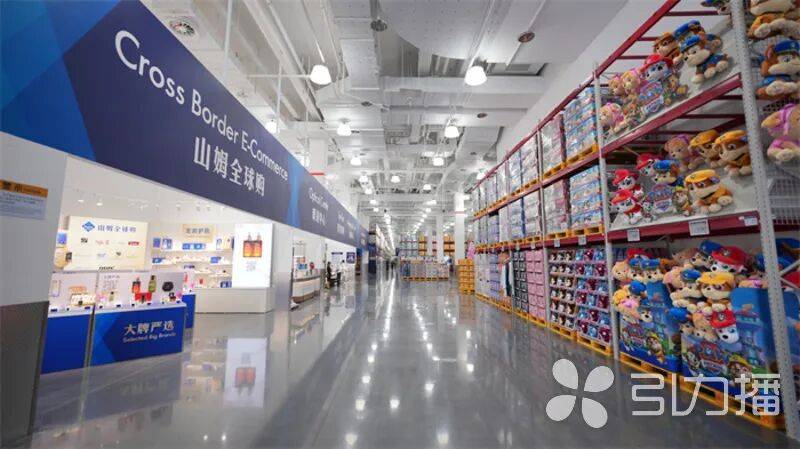
Group 1 - The opening of the Sam's Club store in Zhangjiagang marks the fourth store in Suzhou and the third in a county-level city [1] - The store features a height of approximately 9 meters and a width of about 3 meters for aisles, along with around 1000 parking spaces, creating a spacious and comfortable shopping environment [3] - The store launched five new products, including Sudan King Durian Bread and Berry Red Velvet Cake, and offers around 4000 selected items, including customized products and high-quality goods from global premium regions [4] Group 2 - The store includes specialized service areas such as an optical center equipped with professional devices for precise vision checks and a hearing center offering free tests and quality hearing aids [6] - In the "Sam's Kitchen," customers can enjoy freshly cooked steaks and seafood while interacting with chefs, along with various tasting and trial activities to create a family-friendly shopping atmosphere [8] Group 3 - Recently, a series of high-quality commercial and cultural tourism projects have accelerated in Suzhou, including the opening of the Suzhou Longzhimeng Hotel cluster with a total investment of 1.5 billion [10] - A partnership between Suwen Investment Group and Fashion Media Group aims to create the first "Fashion+" space in Suzhou, focusing on a star-studded lifestyle complex [12] - The new Left Bank 158 district has opened, featuring a blend of day and night activities, becoming a new focal point for citizens and tourists [14]