
石化

Search documents
聚乙烯市场“跌跌不休” 困境在哪里?
Zhong Guo Neng Yuan Wang· 2025-12-17 11:45
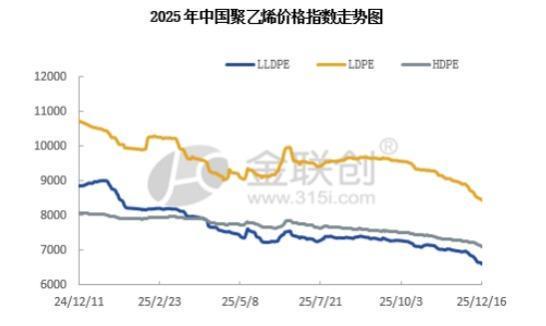
Core Viewpoint - The polyethylene market in December is experiencing a continuous decline due to a combination of increased supply, weakened demand, and reduced costs, leading to a persistent weak market trend [1] Supply Side - Domestic petrochemical main facilities maintained stable operations in December without significant maintenance, and some previously halted facilities resumed operations, contributing to increased production. However, inventory depletion is progressing slowly, keeping supply abundant [2] Demand Side - Demand in December has shown a significant seasonal decline, with colder temperatures causing adjustments in the agricultural film market. Overall industry demand is decreasing, with specific sectors like greenhouse film nearing completion and ground film demand remaining weak. As of December 13, operational rates for various downstream sectors are as follows: agricultural film at 36.0%, packaging film at 54.0%, thin film at 50.0%, hollow film at 51.0%, pipe materials at 30.0%, and injection molding at 50.5% [2] Cost Side - International crude oil prices continued to decline in December, with Brent crude falling below $60 per barrel, closing at $58.92, the lowest since early February 2021. WTI is also nearing the $55 per barrel mark. Year-to-date, WTI prices have dropped approximately 23%, marking the worst performance since 2018, while Brent has decreased about 21%, the worst since 2020. This decline in oil prices is expected to further reduce the cost of oil-based polyethylene, diminishing its support for polyethylene prices [3] Futures Market - The main futures contract for polyethylene has shown a downward trend since December, with the contract changing from 2601 to 2605 on December 5. The lowest price reached was 6475, followed by a slight rebound. However, after the market digested positive economic data from November, no new positive drivers emerged, leading the market to revert to fundamental operations. The short-term outlook for the main contract 2605 is expected to seek bottom support, with a trading range between 6450 and 6750 [3] Overall Market Outlook - In summary, the polyethylene market is unlikely to escape its current difficulties in the short term. Upstream producers and traders are focused on actively selling, and low-price transactions are unlikely to change the overall weak market sentiment. The market lacks core positive stimuli, and a continuation of the weak trend is expected as December concludes [4]

总投资超15亿元的中试基地,全链条贯通!
Zhong Guo Hua Gong Bao· 2025-12-17 09:16
Core Insights - Sinopec's Petrochemical Research Institute has successfully completed the full process of lubricating grease production, marking the integration of R&D, pilot testing, and production at its Tianjin base [1][2] - The Tianjin base project is a key collaboration between Sinopec Group and Tianjin Economic Development Zone, focusing on high-quality petrochemical industry development [1] Group 1 - The total investment for the Tianjin base project is 1.589 billion yuan, covering an area of approximately 360 acres with a total construction area of about 70,000 square meters [1] - The project will establish four research and pilot testing platforms: low-carbon oil integration, high-end carbon materials, hydrogen and electrochemistry, and resource recycling, along with two pilot production bases for special lubricating greases and petroleum products [1] Group 2 - Once fully operational, the Tianjin base will serve as a source of innovation for new energy and chemical technologies, a platform for collaborative innovation, and a base for R&D and production of specialty petroleum products and high-end chemicals [2] - The technological achievements from this project are expected to provide solutions for the petrochemical industry's transition to new energy, new materials, and green chemistry, addressing critical technology gaps and enhancing the R&D capabilities of the South Port Industrial Zone and Tianjin's petrochemical industry [2]

从“末梢”到“枢纽”:广湛高铁引领粤西迈入湾区同城时代
Nan Fang Du Shi Bao· 2025-12-17 06:41
Core Viewpoint - The opening of the Guangzhan High-Speed Railway is set to transform Zhanjiang into a key development hub within the Guangdong-Hong Kong-Macao Greater Bay Area, significantly enhancing its economic dynamics and regional role [1][2][3]. Group 1: Economic Impact - The Guangzhan High-Speed Railway will connect Zhanjiang to the Greater Bay Area in just 90 minutes, facilitating the flow of capital, technology, talent, and information [1][3]. - Zhanjiang's economic development is expected to accelerate, with a projected GDP growth rate of approximately 10% in the first three quarters of this year, driven by significant industrial projects [4]. - The high-speed railway is anticipated to catalyze the growth of a "billion-level industrial forest," enhancing Zhanjiang's position as a modern coastal economic hub [1][4]. Group 2: Infrastructure Development - The Guangzhan High-Speed Railway spans 401 kilometers and is a crucial part of the national high-speed rail network, linking the Greater Bay Area with Hainan Free Trade Port and the Beibu Gulf city cluster [2][3]. - Zhanjiang North Station, with a total area of 105,000 square meters, is designed to become a new urban center, integrating green and intelligent design concepts [5]. - The ongoing construction of additional railways, such as the He-Zhan High-Speed Railway, is expected to further enhance Zhanjiang's transportation capabilities [5][6]. Group 3: Talent and Industry Transformation - The high-speed railway is expected to create a "same-city effect," allowing Zhanjiang to attract high-level talent and facilitate the return of local professionals, thereby enhancing its labor market [3][4]. - Zhanjiang aims to evolve from a traditional industrial base to a modern industrial community, focusing on advanced service industries such as industrial design and supply chain services [3][4]. - The railway's impact on supply chains is significant, as it will improve the stability and efficiency of logistics for high-value-added enterprises [5]. Group 4: Regional Integration - The Guangzhan High-Speed Railway will integrate Zhanjiang into the Greater Bay Area's "90-minute living circle," enhancing regional connectivity and economic collaboration [8][9]. - The development of Zhanjiang's green industries, including green petrochemicals and steel, is expected to be supported by the railway, contributing to a robust industrial ecosystem [8][9]. - The opening of international routes from Zhanjiang Wuchuan International Airport will further enhance its global connectivity, particularly with ASEAN countries [7][9].
伍德麦肯兹:五大趋势重塑全球能源资源格局
Zhong Guo Hua Gong Bao· 2025-12-17 06:01
其三,英国北海油气资产遭遇严重价值折损。因两年半内五次调整财税体系且监管政策不明,该地区油 气资产隐含长期油价(ILTOP)仅约40美元/桶,较经合组织(OECD)70美元/桶的平均水平折价40%,投资 者信心崩塌,资本投入停滞。 中化新网讯 近日,伍德麦肯兹发布最新《地平线》报告称,2025年,五大趋势重塑了全球能源资源领 域,其背后是地缘格局变动、产业战略重构与技术迭代加速的共同驱动。 其一,美国LNG实现颠覆性逆转。短短10年间,美国从LNG进口国蜕变为全球最大出口国,预计2030 年其LNG产量将占全球30%;同时美国还领跑全球油气生产,产量占全球五分之一,远超沙特和俄罗 斯。 其二,稀土成全球贸易核心焦点。稀土广泛应用于可再生能源、高端武器、半导体等关键领域,仅磁体 用途就占其总需求近半。 其四,欧洲石化产业出现大规模产能清退。为减排推进的去工业化,导致欧洲乙烯产能持续关停,2022 年至2027年相关产能退出每年造成40亿美元的总附加值损失。 其五,AI成为电力需求增长的核心引擎。数据中心半数运营成本来自电力,电价成为AI竞争关键变 量。美国电力市场受AI驱动,2030年前电力需求复合增长率将达2 ...
14亿元大宗交易背后的“心酸往事”:恒逸石化第四期员工持股计划参与者亏损惨重
Mei Ri Jing Ji Xin Wen· 2025-12-17 05:17
从本次卖出价格来看,恒逸石化第四期员工持股计划以及恒逸集团及附属企业之部分员工信托计划均以 大幅亏损收场。 全文请见:14亿元大宗交易背后的"心酸往事":恒逸石化第四期员工持股计划参与者亏损惨重,控股股 东接盘于事无补 12月15日晚,恒逸石化(000703)公告其控股股东及一致行动人通过大宗交易增持公司近14亿元。而公 告后的首个交易日,恒逸石化的股价却出现大幅下跌,盘中最大跌幅超过9%!面对如此重大利好,恒 逸石化的股价为何表现如此之差? 每经资本眼专栏记者调查发现,2025年12月5日,恒逸石化发生五笔大宗交易,成交价均为8.23元,合 计成交量约为1.7亿股。这1.7亿股中约有1.62亿股,来自于恒逸石化第四期员工持股计划以及恒逸集团 及附属企业之部分员工信托计划。 ...

辉煌“十四五” 壮美新答卷 | 钦州打造面向东盟的世界级石化产业集群
Guang Xi Ri Bao· 2025-12-17 03:33
Group 1 - The core viewpoint of the news is the successful export of 4,100 tons of methyl tert-butyl ether from the China National Petroleum Corporation's Guangxi petrochemical integrated transformation project, marking its entry into the international market [1] - The total investment for the Guangxi petrochemical integrated transformation project exceeds 30 billion yuan, with construction starting in July 2023 and expected to be completed by October 2025 [1] - Upon completion, the project will reduce oil product output by 3.49 million tons annually and increase chemical product output by 3.06 million tons, addressing the domestic supply gap for high-end chemical new materials [1] Group 2 - The city of Qinzhou has focused on coastal port industry development, establishing the green petrochemical industry as its primary pillar, and has been recognized as a national green chemical park [2] - The Qinzhou petrochemical industrial park has attracted significant investments, with a total project investment exceeding 300 billion yuan, and aims to become a world-class green petrochemical base [2][3] - The industrial park has developed a diverse industrial system, integrating oil, coal, gas, and salt, and has formed a unique "4+1" industrial chain [2] Group 3 - The Huayi Qinzhou base, with a total investment exceeding 90 billion yuan, is the largest single industrial project in the region and is expected to create over 6,000 jobs [3] - The Qinzhou petrochemical industrial park has established various innovation platforms to drive high-quality industrial development and is working towards becoming a national-level petrochemical industry technology innovation center [4] - The park aims to achieve a petrochemical industry output value exceeding 250 billion yuan during the 14th Five-Year Plan period, supporting the development of a trillion-yuan petrochemical industry cluster in Guangxi [4]

14亿元大宗交易背后的“心酸往事”:恒逸石化第四期员工持股计划参与者亏损惨重,控股股东接盘于事无补
Mei Ri Jing Ji Xin Wen· 2025-12-17 03:01
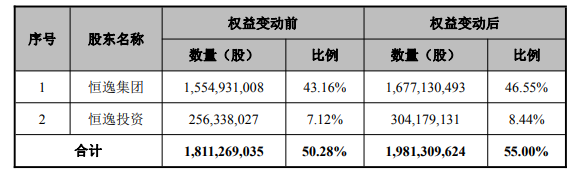
不久前,恒逸石化全资子公司曾陷入舆情风波,而近期公司发布的增持公告又牵出一段"心酸往事"。 12月15日晚,恒逸石化公告其控股股东及一致行动人通过大宗交易增持公司近14亿元。而公告后的首个交易日,恒逸石化的股价却出现大幅下跌,盘中 最大跌幅超过9%!面对如此重大利好,恒逸石化的股价为何表现如此之差?对此,每经资本眼专栏记者展开调查。控股股东增持股份来源主要为公司第 四期员工持股计划 恒逸石化是全球领先的"炼油—化工—化纤"全产业链一体化龙头企业,构建起国内独有的"涤纶+锦纶"双主业驱动模式。依托"文莱炼化基地—国内聚酯 产业"的境内外协同联动优势,公司已形成上中下游垂直整合、各业务板块均衡发展的柱状产业布局。 2025年12月15日晚间,恒逸石化发布了关于控股股东及其一致行动人增持公司股份进展的公告。该公告显示,2025年12月15日,公司控股股东浙江恒逸 集团有限公司(以下简称"恒逸集团")以大宗交易的方式,增持公司股份约1.22亿股,增持金额约为10亿元(不含手续费);控股股东的一致行动人杭 州恒逸投资有限公司(以下简称"恒逸投资")以大宗交易的方式,增持公司股份约4784万股,增持金额为3.94亿元(不 ...
国内高频 | 工业生产延续弱势(申万宏观·赵伟团队)
赵伟宏观探索· 2025-12-16 16:03
Group 1: Industrial Production Trends - Industrial production continues to show weakness, with construction activity remaining relatively stable [2] - The average daily transaction area of commercial housing in 30 major cities decreased by 13.8% week-on-week and is down 33.4% year-on-year [29] - The operating rate of blast furnaces has continued to decline [4] Group 2: Steel and Cement Industry Insights - Weekly apparent consumption of five major steel products has decreased [5] - The operating rate of the cement industry remains stable at 38.5%, with a slight year-on-year increase of 4.8% [15] - Cement shipment rates fell by 0.8% week-on-week, while the inventory ratio continues to decline [19][20] Group 3: Petrochemical and Consumer Goods - The operating rate of the soda ash sector increased by 3.6% week-on-week, while PTA's operating rate remained stable [8][11] - The operating rate of polyester filament has decreased by 1.3% week-on-week [12] - The automotive semi-steel tire operating rate showed weakness, increasing by only 0.7% week-on-week [8] Group 4: Demand and Consumption Patterns - Real estate transactions remain low, with first, second, and third-tier cities all experiencing weak performance [29] - Freight volumes have decreased, but port cargo throughput remains higher than the same period last year [34] - Movie attendance and box office revenue are significantly higher than in previous years, while automobile sales have declined [42][46] Group 5: Price Trends - Agricultural product prices have generally increased, with vegetables and eggs rising by 2.1% and 0.7% respectively [55] - Industrial product prices have seen a notable decline, with the energy and chemical price index dropping by 2.6% [60] - The overall industrial price index decreased by 1.8% week-on-week [60]
国内高频 | 工业生产延续弱势(申万宏观·赵伟团队)
申万宏源宏观· 2025-12-16 13:17
Core Viewpoint - The article highlights the ongoing weakness in industrial production and real estate transactions in China, with various sectors showing signs of decline or stagnation in activity levels. Group 1: Industrial Production - Industrial production continues to show weakness, with a notable decline in the operating rates of blast furnaces [4][5] - The weekly apparent consumption of five major steel products has also decreased [5] - In the petrochemical sector, there is a marginal improvement in operating rates for certain products, while downstream consumption remains relatively weak [8][12] Group 2: Construction Industry - The cement industry shows stable production and a slight increase in prices, with the national grinding operating rate remaining steady [15][19] - Cement shipment rates have slightly declined, and the inventory ratio continues to decrease [15][20] Group 3: Real Estate Market - The national average daily transaction area for commercial housing remains low, with significant declines in transactions across different city tiers [29][31] - The transaction volume in first, second, and third-tier cities has shown varying degrees of weakness [29][31] Group 4: Demand and Consumption - Freight volumes have decreased, but port cargo throughput remains higher than the same period last year [34] - Passenger traffic remains high, with flight operations slightly above last year's levels [38] - Movie attendance and box office revenues are significantly higher than in previous years, while automobile sales have seen a decline [42][45] Group 5: Price Trends - Agricultural product prices have generally increased, with notable rises in fruits, vegetables, and eggs, while pork prices have slightly decreased [55][58] - Industrial product prices have shown a significant decline, particularly in energy and chemical sectors [60][62]
“过去还能列出与中国的差距,现在无从下笔”
Guan Cha Zhe Wang· 2025-12-16 12:42
【文/观察者网 王一】"过去,我们在撰写内部报告时,总会列出各行业与中国还存在多少年的技术差 距。但现在,这样的报告已经很难再写出来了。"韩国产业通商资源部东北亚通商科科长金德九(音 译)12月16日在一场论坛上如此坦言。 韩国《韩民族日报》当天在报道中指出,这番话表明,随着中国制造业和高端产业的迅猛发展,市场格 局已与过去截然不同。 报道称,韩国政府资助的智库"韩国产业经济贸易研究院"(KIET)16日在首尔举办了一场名为"韩国产 业对华战略转型与合作新方向"的论坛,旨在探讨韩国"应对中国挑战"的策略,中国的产业竞争力已紧 追甚至超越了韩国。 据报道,包括金德九在内的与会人士普遍认为,无论是在钢铁、石化、造船等传统重工业领域,还是在 自动驾驶电动车、电池、人工智能(AI)、机器人、可再生能源等未来产业领域,中国都在全面超越 韩国,韩国的产业战略亟须调整。 在当天的主题发言中,韩国金融研究院高级研究员池万洙指出,中国政府"致力于发展制造业",并直 言"韩国的'快速跟踪'经济发展模式正面临危机"。 他分析称,中国吸取了美国的经验教训,后者曾将制造业工厂大规模外迁,导致就业减少并引发政治和 社会不稳定,如今中国正 ...
