
科技

Search documents
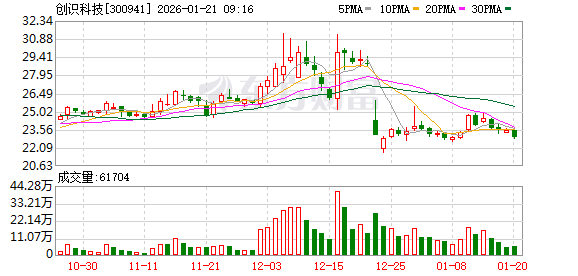
创识科技:公司将于2026年4月27日披露2025年报
Mei Ri Jing Ji Xin Wen· 2026-01-21 01:16
Group 1 - The company, Chuangshi Technology (300941.SZ), responded to an investor inquiry regarding the expected performance increase for the year 2025 [2] - The company's 2025 annual performance report will be disclosed on April 27, 2026 [2]

最新!茅台品牌价值达596.3亿美元,位居全球烈酒行业第一
Xin Lang Cai Jing· 2026-01-21 00:18
Group 1 - The core report from Brand Finance reveals that Moutai's brand value increased by 2.2% to reach $59.63 billion, ranking first in the global spirits industry [1][2] - The report indicates that Apple continues to lead the brand value rankings, with 192 American brands contributing 53.4% of the total brand value, while China has 68 brands, accounting for 15.1% [1][2] - Despite a decrease of one brand from the previous year, the total brand value of the 68 Chinese brands increased by 9.7%, indicating an improvement in average brand value [1][2] Group 2 - Moutai's average brand strength index is reported at 76.4 out of 100, which is 0.6 points higher than the average score of 75.8 for the global top 500 brands [1][2] - For the third quarter of 2025, Moutai reported total revenue of 130.904 billion yuan, a year-on-year increase of 6.32%, with operating income of 128.454 billion yuan, also up by 6.36% [3] - The net profit attributable to the parent company for the first three quarters was 64.627 billion yuan, reflecting a growth of 6.25%, with an estimated average daily profit of 237 million yuan [3]

广州好莱客创意家居股份有限公司 关于放弃参股公司股权优先购买权暨关联交易的公告
Zhong Guo Zheng Quan Bao - Zhong Zheng Wang· 2026-01-20 23:35
Core Viewpoint - The company has decided to waive its right of first refusal for a 6.1947% stake in its associate company, Guangzhou Jixiang Technology Co., Ltd., which is being sold for RMB 51.363202 million, and this transaction is classified as a related party transaction [2][3][10]. Group 1: Transaction Overview - The other shareholders of Jixiang Technology plan to transfer their 6.1947% stake for RMB 51.363202 million, with the condition that the buyer or its affiliates participate in a future capital increase at a pre-investment valuation of no less than RMB 1.2 billion [5][9]. - The transaction falls within the board's approval authority and does not require shareholder meeting approval [4][11]. Group 2: Related Party Transaction Details - Jixiang Technology is an associate of the company, and the company’s board secretary has served as a director at Jixiang Technology in the past 12 months, establishing a related party relationship [6]. - The company and Jixiang Technology operate independently in terms of ownership, business, assets, and liabilities [6]. Group 3: Financial Impact - The waiver of the right of first refusal will not change the consolidation scope of the company's financial statements and will not significantly impact the company's financial condition or operating results [10]. - The transaction is deemed reasonable and does not harm the interests of the company or its shareholders, particularly minority shareholders [9][10]. Group 4: Approval Process - The independent directors held a special meeting to review and approve the related party transaction, which was subsequently approved by the company's board with unanimous consent [11].

“抛售美国”调门再起,避险资产持续走高,美征“夺岛关税”令欧洲市场叫苦
Huan Qiu Shi Bao· 2026-01-20 23:01
Market Impact - European markets experienced a significant downturn, with the Stoxx 600 index falling by 1.18%, DAX 30 down by 1.34%, and CAC 40 decreasing by 1.78% due to the escalating trade conflict over Greenland [1] - Luxury goods, automotive, and technology sectors were the hardest hit, with declines of 3%, 2.2%, and 2.9% respectively [2] - The luxury giant LVMH saw its largest drop since April of the previous year, while major German automakers like Volkswagen and Mercedes-Benz also faced declines [2] Economic Forecast - The trade conflict could erase a significant portion of Europe's profit growth by 2026, according to industry analysts [2] - If tariffs are raised by 10 percentage points, Germany's exports to the U.S. could plummet by nearly 10% in the short term [4] - The UK's GDP could shrink by 0.3% to 0.75% if new tariffs are implemented on top of existing import taxes [4] Investment Sentiment - Citigroup downgraded its rating on European stocks to neutral, citing the deterioration of relations between Brussels and Washington as a key factor [2] - Analysts suggest that the future market trajectory will depend on the EU's response to the trade conflict, particularly whether it translates into formal measures or remains verbal [2] - There is speculation that if the trade conflict escalates, Europe might consider selling off U.S. assets, which could increase U.S. borrowing costs and negatively impact the stock market [3] Gold and Safe-Haven Assets - Gold prices reached a new high, surpassing $4,700 per ounce, as investors sought safe-haven assets amid rising tensions [1][2] - The ongoing conflict has also led to increases in silver prices, with both precious metals hitting historical highs [2]
多项财税金融支持稳投资促消费政策发布 以更大力度激发民间投资、促进居民消费
Sou Hu Cai Jing· 2026-01-20 22:50
Core Viewpoint - The Chinese government is implementing a more proactive fiscal policy in 2025 to support economic growth and enhance social welfare, with significant measures including the issuance of long-term special bonds and increased government debt to stimulate consumption and investment [1][2][3]. Fiscal Policy Measures - In 2025, the issuance of long-term special bonds will amount to 1.3 trillion yuan, aimed at supporting "two new" and "two heavy" initiatives [1]. - The fiscal deficit rate is set at around 4%, with new government debt totaling 11.86 trillion yuan, significantly higher than previous years [1]. - A special bond issuance of 500 billion yuan will be allocated to replenish the core tier one capital of major state-owned commercial banks [1]. Consumer Support Initiatives - The government plans to enhance consumer spending by allocating 300 billion yuan for a trade-in program for consumer goods, expected to drive sales exceeding 2.6 trillion yuan [1]. - Policies such as personal consumption loans and service industry loans will be implemented to encourage and expand consumption [1]. Social Welfare Enhancements - Employment support funds of 66.74 billion yuan will be allocated, alongside increased subsidies for social insurance and unemployment insurance [1]. - Additional funding of 100 billion yuan will be provided for childcare subsidies for children under three years old, enhancing social welfare and consumer capacity [1]. Debt Management and Investment Support - A total of 20 trillion yuan will be arranged for the replacement of existing hidden debt, with 800 billion yuan in new special bonds to support local government financial capacity [2]. - The average interest cost of local government debt has decreased by over 2.5 percentage points, reducing the financial burden on local governments [2]. Support for Private Investment - New policies include interest subsidies for loans to small and micro enterprises in key industries, with a maximum loan amount of 50 million yuan and a subsidy rate of 1.5% [4]. - A special guarantee plan for private enterprises will provide loan guarantees up to 20 million yuan for eligible small and micro enterprises [4]. Optimization of Consumption Policies - The consumer service loan subsidy has been enhanced, with the maximum subsidy amount increased from 500 yuan to 3,000 yuan per transaction [7]. - The loan limit for service industry enterprises has been raised from 1 million yuan to 10 million yuan, expanding the scope of eligible consumption areas [7][8]. Long-term Fiscal Strategy - The fiscal strategy for 2026 will focus on increasing total spending while ensuring that key areas receive stronger support, with an emphasis on boosting consumption and social welfare [3]. - The government aims to deepen fiscal and tax reforms to stimulate economic vitality and adapt to new economic models [9]. Overall Economic Impact - The coordinated fiscal and monetary policies are expected to effectively address bottlenecks in production, circulation, and consumption, enhancing the internal economic cycle [10][11]. - The proactive measures are designed to instill confidence in the market, encouraging both enterprise investment and consumer spending, thereby strengthening the resilience of the economy [11].
财政政策有力支持经济增长(锐财经)
Ren Min Ri Bao Hai Wai Ban· 2026-01-20 22:50
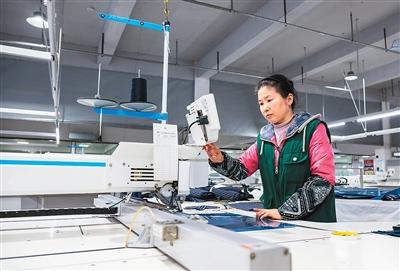
Group 1 - Anhui Province's Wuhu City is actively developing the garment industry by implementing tax reductions and subsidies to attract companies to settle in industrial parks, thereby promoting local employment [2] - The Ministry of Finance plans to adopt a more proactive fiscal policy in 2025, focusing on supporting economic growth and improving people's livelihoods while facilitating structural transformation of the economy [3][4] Group 2 - In 2025, the fiscal policy will emphasize four main areas: increasing counter-cyclical adjustments, boosting consumption, enhancing social welfare, and balancing risk prevention with development [3][4] - The fiscal deficit rate is set at around 4%, an increase of 1 percentage point from the previous year, with new government debt expected to reach 11.86 trillion yuan, a rise of 2.9 trillion yuan [3] - Special government bonds worth 500 billion yuan will be issued to supplement the core tier one capital of large state-owned commercial banks [3] Group 3 - The central government will allocate 667.4 billion yuan in employment support funds to enhance employment stability and expand social insurance subsidies [4] - The standard for fiscal subsidies for residents' medical insurance and basic public health services will be raised to 700 yuan and 99 yuan per person per year, respectively [4] - A gradual implementation of free preschool education is planned [4] Group 4 - The fiscal revenue in China showed a "front low, middle high, back stable" trend, with a 1.1% decline in the first quarter of the previous year, followed by a 0.6% increase in the second quarter and a 2.5% increase in the third quarter [5] - Total public budget revenue is expected to achieve a balance in 2025, supported by stable fiscal income and strong expenditure in key areas [6] Group 5 - A package of fiscal and financial policies aimed at promoting domestic demand will be introduced, including interest subsidies for loans to small and micro enterprises in key industries [7][8] - The loan guarantee plan for private enterprises will set a single credit limit of 20 million yuan, with higher compensation limits and risk-sharing ratios [7] - The optimization of personal consumption loan interest subsidy policies will include credit card installment payments, expanding the range of financial institutions involved [8]
百年企业,如何在时代大潮中奋楫前行,请看—— 招商局“四艘船”的故事(强国建设故事汇·百业千企焕新记)
Ren Min Ri Bao· 2026-01-20 22:43
Core Viewpoint - The article emphasizes the responsibilities and missions of central enterprises in China, particularly focusing on the role of China Merchants Group in contributing to national development and modernization efforts [1]. Group 1: Company History and Development - China Merchants Group, established over 150 years ago, is recognized as China's first modern company and a pioneer in national industry [1]. - The group has total assets exceeding 15 trillion yuan, with operations spanning transportation logistics, comprehensive finance, real estate, and technology innovation [1]. - The historical significance of the "Yidun" ship is highlighted as it marked the beginning of modern Chinese shipping and opened the first coastal commercial route [3]. Group 2: Corporate Responsibility and National Service - The "Hailiao" ship symbolizes the company's commitment to national interests, having raised the national flag during a pivotal moment in Chinese history [5]. - The company has actively engaged in modernizing its operations, such as the transformation of the Ma Wan Smart Port, which has significantly improved operational efficiency [7]. - China Merchants Group's focus on aligning its business strategies with national goals has led to substantial growth, with total assets increasing 40 times from 2012 to 2025 [7]. Group 3: Innovation and Technological Advancement - The introduction of the "New Yidun" ship, which utilizes advanced materials and technology, reflects the company's commitment to innovation and sustainability in the shipping industry [13]. - The establishment of the advanced technology research institute and the Lion Mountain AI laboratory demonstrates the group's investment in cutting-edge technology and talent acquisition [2]. - The company aims to enhance its capabilities in strategic emerging industries, with significant investments in technology and innovation during the 14th Five-Year Plan period [15]. Group 4: Global Expansion and International Strategy - China Merchants Group has expanded its global footprint, investing in 51 ports across 26 countries, with overseas revenue accounting for over 30% of its total [12]. - The company has successfully implemented its international strategy, significantly increasing container throughput at its overseas ports [12]. - The focus on mutual benefit and cooperation in international operations has positioned the company as a key player in global trade [12]. Group 5: Future Outlook and Strategic Goals - The company plans to accelerate its "third entrepreneurship" phase, aiming to build world-class enterprises and achieve significant profit and revenue milestones [16]. - The emphasis on technological innovation and international operations is expected to drive the company's growth and enhance its role in national development [16].
全球科技股指数ETF收跌将近3%,领跌美股行业ETF
Mei Ri Jing Ji Xin Wen· 2026-01-20 21:54
Group 1 - The global technology stock index ETF declined by 2.97% on January 20 [1] - The technology sector ETF and consumer discretionary ETF fell by 2.60% [1] - The semiconductor ETF decreased by 2.50% [1] - The internet stock index ETF dropped by 2.27% [1] - The banking sector ETF declined by 1.47% [1] - The energy sector ETF saw a slight decrease of 0.19% [1] - The biotechnology index ETF increased by 0.45% [1]
广州好莱客创意家居股份有限公司关于放弃参股公司股权优先购买权暨关联交易的公告
Shang Hai Zheng Quan Bao· 2026-01-20 18:48
Core Viewpoint - The company, Guangzhou Haoleke Creative Home Co., Ltd., has decided to waive its right of first refusal for a 6.1947% equity stake in its associate company, Guangzhou Jixiang Technology Co., Ltd., which is being sold for RMB 51.363202 million [2][5]. Group 1: Transaction Overview - The other shareholders of Jixiang Technology plan to transfer their 6.1947% equity stake for RMB 51.363202 million, and the company has chosen to waive its right of first refusal [2][6]. - This transaction is classified as a related party transaction [3]. - The transaction does not constitute a major asset restructuring [4]. Group 2: Approval and Disclosure - The transaction falls within the approval authority of the company's board of directors and does not require submission to the shareholders' meeting [5]. - In the past 12 months, all related party transactions with Jixiang Technology have been approved by the board and disclosed accordingly, with no other related transactions occurring [5]. Group 3: Related Party Transaction Details - Jixiang Technology is an associate company of the firm, and the company's board secretary has held a director position at Jixiang Technology in the past 12 months, establishing it as a related party [7]. - The company operates independently from Jixiang Technology in terms of ownership, business, assets, and liabilities [7]. Group 4: Financial and Pricing Information - The transfer price for the equity stake is RMB 51.363202 million, with an additional condition for the buyer to participate in a future capital increase at a pre-investment valuation of no less than RMB 1.2 billion [10]. - The pricing of this transaction is deemed reasonable and does not harm the interests of the company or its shareholders, particularly minority shareholders [10]. Group 5: Impact on the Company - Waiving the right of first refusal will not change the consolidation scope of the company’s financial statements and will not significantly impact its financial condition or operating results [11]. - There are no adverse effects on the interests of the company or its shareholders, especially minority shareholders [11]. Group 6: Review Procedures - The independent directors held a special meeting to review and approve the related party transaction, which was subsequently approved by the board of directors with unanimous consent [12].
行业ETF美股盘初几乎全线溃败
Jin Rong Jie· 2026-01-20 14:39
Group 1 - The biotechnology index ETF, consumer discretionary ETF, and global technology stock index ETF experienced declines of up to 2.29% [1] - The internet stock index ETF, technology sector ETF, and semiconductor ETF saw declines of up to 1.82% [1] - The energy sector ETF increased by 0.55% [1]