
金融业

Search documents
程实:地缘的围墙 创新的阶梯︱实话世经
Di Yi Cai Jing· 2025-07-27 13:40
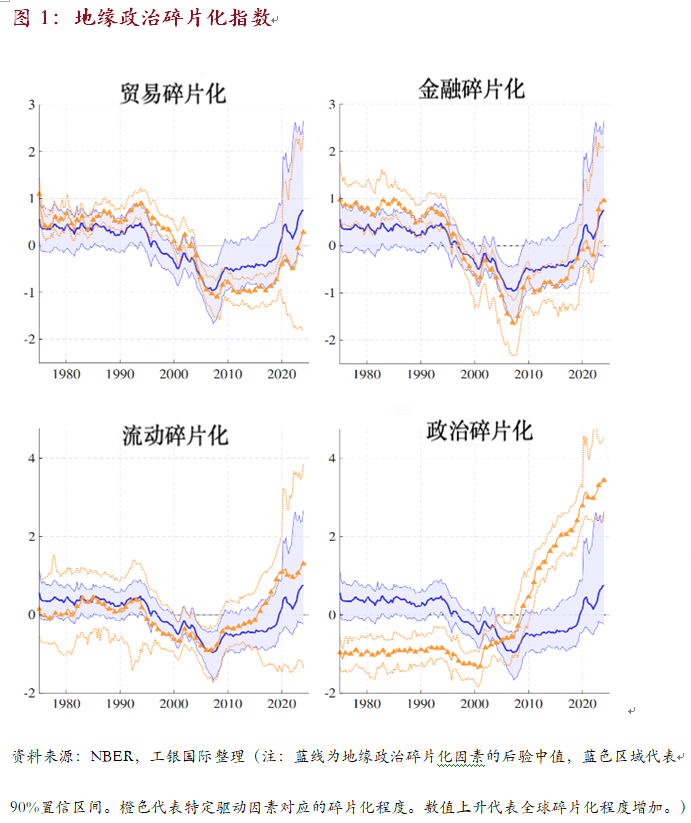
Group 1: Impact of Geopolitical Factors on Global Economy - The global economy is experiencing a slowdown in globalization and an increase in regionalization due to complex geopolitical situations, with innovation and technology development becoming key for sustainable growth amid uncertainty [1][2][3] - The 2007-2008 financial crisis marked a significant turning point in globalization, revealing deep-seated issues in the global financial system and prompting a reevaluation of the sustainability of economic integration [3][4] - Geopolitical fragmentation has a measurable negative impact on global GDP, estimated at approximately -0.4% for a one standard deviation negative shock, peaking within one to two years [7][8] Group 2: Sectoral and Regional Disparities - Different sectors experience varying degrees of impact from geopolitical factors, with industries closely tied to global markets (e.g., manufacturing, finance, wholesale and retail) facing the most severe disruptions [8][11] - Emerging economies, such as those in Southeast Asia and Latin America, are more vulnerable to external shocks due to their reliance on global market openness and cross-border capital flows [8][11] - The spillover effects of geopolitical factors are most pronounced in the US-EU bloc, while the China-Russia bloc exhibits more regional impacts with limited international market influence [7][8] Group 3: Innovation as a Response to Geopolitical Risks - Increasing innovation capacity and industrial autonomy is crucial for mitigating geopolitical risks and enhancing resilience against global uncertainties [2][11] - Industries exposed to higher external political risks tend to exhibit greater innovation activities, driven primarily by the private sector rather than government or academic institutions [11][12] - The interaction between trade barriers and political risks significantly promotes innovation, particularly among medium-innovation firms that are sensitive to external risks [12][14] Group 4: Future Outlook for Emerging Markets - Enhancing technological innovation and industrial transformation is essential for emerging markets to improve economic performance and international competitiveness [14] - Economies that can achieve technological advancement and industrial upgrades within a regional framework are likely to excel in future global competition, achieving high-quality sustainable growth [14]

港股持有比例,创新高
Zhong Guo Ji Jin Bao· 2025-07-27 13:36
Group 1 - The core viewpoint of the articles highlights that the proportion of actively managed equity funds holding Hong Kong stocks has reached a historical high, driven by a significant increase in global interest in Chinese assets [1][3]. - As of the end of Q2, the total market value of Hong Kong stocks held by public funds reached 734.3 billion yuan, a 12.8% increase from the previous quarter, with the proportion of public fund holdings in Hong Kong stocks rising from 36.9% to 39.8% [2]. - The actively managed equity funds specifically increased their holdings in the healthcare and financial sectors while reducing exposure in information technology and discretionary consumer sectors [2]. Group 2 - The Hang Seng Index has seen a year-to-date increase of nearly 27%, making it the best-performing major index globally, with fund managers expressing optimism about the market's future [4]. - Fund managers are particularly optimistic about structural opportunities in various sectors, including new consumption, innovative pharmaceuticals, and traditional industries like "AI+", overseas expansion, and smart manufacturing [4]. - The increasing allocation of public funds to Hong Kong stocks reflects a growing attractiveness of the market, with over 50% of public funds now having the ability to invest in Hong Kong stocks as of Q2 2025 [3].





“三驾马车”动能新韧性足 上海发布2025年上半年经济数据
Jie Fang Ri Bao· 2025-07-26 02:28
Economic Growth - Shanghai's GDP grew by 5.1% year-on-year in the first half of 2023, reaching 26,222.15 billion yuan, surpassing the annual growth target of 5% [1] - The information services sector was the largest contributor to Shanghai's economic growth, with an increase of 14.6% year-on-year, accounting for nearly one-seventh of the GDP [1][2] Service Industry Performance - The service sector's contribution to Shanghai's GDP has been increasing, with its share rising from 74.1% in 2022 to 78.2% in 2024 [2] - The third industry saw a value-added growth of 5.4% in the first half of the year, reaching a record share of 79.1% of GDP [2] - The financial sector also performed well, with a value-added increase of 8.8%, totaling 4,500.81 billion yuan [2] Information Services Sector - The information services sector's revenue grew by 20.4% year-on-year, outpacing the national average by 6.1 percentage points [3] - The sector contributed 1.7 percentage points to GDP growth, marking it as the largest contributor among all industries [2][3] - The rise of platform economies and advancements in artificial intelligence are driving rapid growth in the information services sector [3] Industrial Growth - Shanghai's industrial output value increased by 5.6% year-on-year, reaching its highest level in nearly two years [4][5] - Strategic emerging industries, including integrated circuits and artificial intelligence, saw growth rates of 11.7% and 12.3%, respectively [4] - New-generation information technology industries grew by 13.9%, while new energy and high-end equipment industries grew by 12.5% and 10.7%, respectively [5] Foreign Trade - Shanghai's foreign trade showed resilience, with total imports and exports reaching 21,500 billion yuan, a year-on-year increase of 2.4% [7] - The second quarter saw a significant rebound in foreign trade, achieving a record high of 11,400 billion yuan, with a growth rate of 7.2% [7][8] - High-tech product exports accounted for about one-fourth of the total exports, with notable growth in sectors like biomedicine and electric vehicles [8]
上海经济半年报出炉:GDP同比增长5.1%
第一财经· 2025-07-25 07:38
Economic Overview - The city's GDP reached 26,222.15 billion yuan in the first half of the year, with a year-on-year growth of 5.1% [1] - The first industry added value was 36.54 billion yuan, growing by 1.9%; the second industry added value was 5,445.91 billion yuan, growing by 3.9%; and the third industry added value was 20,739.70 billion yuan, growing by 5.4% [1] Industrial Production - Industrial added value increased by 5.0% year-on-year, with total industrial output value growing by 5.6%, accelerating by 2.1 percentage points compared to the first quarter [2] - Key industries such as computer, communication, and other electronic equipment manufacturing saw a 21.7% increase, while railway, shipbuilding, and aerospace manufacturing grew by 18.1% [2] - The three leading industries in manufacturing achieved a 9.1% growth, outpacing the overall industrial output [2] Tertiary Sector Growth - The tertiary sector's added value grew by 5.4%, with information transmission, software, and IT services increasing by 14.6% [3] - The financial sector's added value reached 4,500.81 billion yuan, growing by 8.8% [3] Investment Trends - Fixed asset investment rose by 6.2%, with industrial investment increasing by 19.8% and urban infrastructure investment growing by 17.9% [4] - New residential property sales area reached 7.9564 million square meters, a 1.6% increase [4] Consumer Market - The total retail sales of consumer goods amounted to 8,260.41 billion yuan, with a year-on-year growth of 1.7% [5] - The sales of energy-efficient home appliances surged by 63.9% due to the trade-in policy [6] Financial Market Performance - Major financial markets saw a transaction volume increase of 6.6%, with the Shanghai Stock Exchange's securities transaction volume growing by 28.6% [7] - By the end of June, the balance of deposits in financial institutions reached 22.90 trillion yuan, a 7.5% increase [7] Price Stability and Income Growth - The consumer price index (CPI) rose by 0.1% year-on-year, while the industrial producer price index decreased by 2.8% [8] - The per capita disposable income reached 46,805 yuan, growing by 4.6% [8] Innovation and New Drivers - The number of valid invention patents reached 293,700, increasing by 12.2% [12] - High-tech manufacturing output grew by 16.0%, with significant increases in the production of smart devices [12] Policy Effects - Retail sales showed signs of recovery, with a 1.7% year-on-year increase [13] - Industrial investment continued to expand, particularly in electronic information products, which saw a 43.0% increase [13] Market Dynamics - The volume of goods transported and international container throughput increased by 7.5% and 6.1%, respectively [14] - The industrial output of private enterprises grew by 8.8%, outperforming the overall industrial output growth [14]

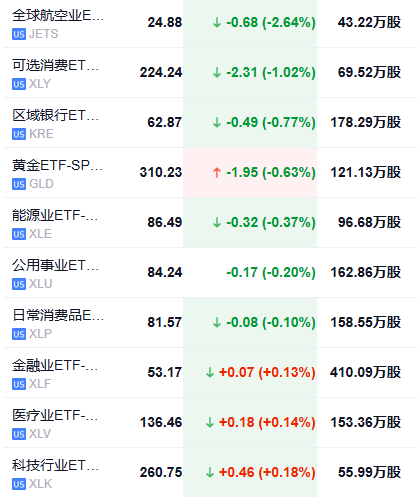
美股盘初,主要行业ETF涨跌不一,全球航空业ETF跌超2%,可选消费ETF、区域银行ETF跌幅居前。
news flash· 2025-07-24 14:00
Group 1 - Major industry ETFs showed mixed performance in early trading, with the global airline industry ETF declining over 2% [1] - The consumer discretionary ETF and regional bank ETF experienced the largest declines, with the consumer discretionary ETF down 1.02% and the regional bank ETF down 0.77% [1][2] - The gold ETF saw a slight increase of 0.63%, while the energy sector ETF and utility ETF both experienced minor declines [2] Group 2 - The global airline ETF (US JETS) closed at 24.88, down 2.64% with a trading volume of 432,200 shares [2] - The consumer discretionary ETF (US XLY) closed at 224.24, down 1.02% with a trading volume of 695,200 shares [2] - The regional bank ETF (US KRE) closed at 62.87, down 0.77% with a trading volume of 1,782,900 shares [2]
对话正大集团张曙晖:中国完善供应链吸引外资企业
2 1 Shi Ji Jing Ji Bao Dao· 2025-07-24 07:26
Core Insights - China has developed a comprehensive supply chain over 40 years, supported by open policies and significant market consumption potential, which are key advantages in attracting foreign investment [1] - Charoen Pokphand Group (CP Group) has established a full industry chain in China, including seed, planting, breeding, slaughtering, processing, and cold chain logistics [1] - There is a growing demand among Chinese consumers for personalized, high-cost performance products, particularly high-quality and safe food [1] Group 1 - CP Group has been active in the Chinese market since 1979, being the first foreign enterprise to invest in China, and currently operates 670 enterprises with over 80,000 employees [2] - The company anticipates that the richness of trade between China and Thailand will further manifest due to the maturation of procurement and supply channels [2] - CP Group's total revenue in China is projected to reach 208 billion RMB in 2024, making it one of the largest foreign investment enterprises in China [2] Group 2 - Thai products like durian, mangosteen, and coconut water are popular among Chinese consumers, while Chinese products such as kiwi and lychee are well-received in Thailand [2] - The 50th anniversary of China-Thailand diplomatic relations and the ongoing benefits from the upgraded China-ASEAN Free Trade Area are expected to enhance trade opportunities [2]
施罗德投资:亚洲深度融入环球制造业价值链 资金回流美国有困难
Zhi Tong Cai Jing· 2025-07-24 06:31
Group 1: Market Outlook - Schroders Investment presents a macroeconomic outlook for global financial markets, highlighting the impact of potential tariff policies and changes in consumer behavior [1] - Asian stocks have outperformed U.S. stocks year-to-date, driven by increased investor interest in Asia, despite uncertainties surrounding tariffs [1] - The U.S. inflation is gradually declining, raising concerns about the long-term impact of tariffs on inflation [1] Group 2: Economic Indicators - The U.S. job market remains resilient with active hiring, but there are indications that the market may be overestimating the Federal Reserve's dovish stance [1][2] - Global fiscal policies are shifting towards expansion, with increased defense spending outside the U.S. and policy changes like the "Inflation Reduction Act" [1] - Eurozone inflation has returned to the 2% target, but economic growth forecasts for 2025 continue to be downgraded [1] Group 3: Consumer Behavior and Investment Strategy - The potential threat of new tariffs may lead to stagflation pressures, with consumers becoming more cautious in their spending [2] - Despite the risks, Schroders maintains a positive outlook on overall stock performance, focusing on broad allocations across different regions, particularly in the U.S. and European financial sectors [2] - The company emphasizes the importance of internal demand trends, stable corporate earnings, and a favorable interest rate environment for investment strategies [2] Group 4: Fixed Income and Credit Market - Schroders holds a neutral stance on overall bond duration, balancing the expectations of interest rate cuts by the Federal Reserve against fiscal deficits and supply pressures that may elevate long-term yields [2] - The company maintains a neutral view on the credit market, noting high valuations but stable technical fundamentals, with U.S. credit still favored by overseas investors [2] Group 5: Commodity Outlook - Schroders continues to favor gold as a traditional hedge against inflation, with strong demand expected as central banks increase their holdings [3] - The overall financial market outlook remains uncertain, prompting Schroders to adopt a cautious and flexible investment approach to capture resilient and potentially rewarding opportunities amid volatility [3]
热点城市工资单曝光,看看多少年才能买房?
3 6 Ke· 2025-07-24 02:15
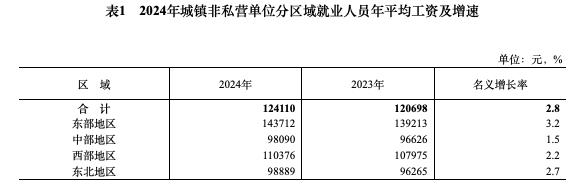
Summary of Key Points Core Viewpoint The average annual salary for urban employees in China for 2024 has been released, showing significant variations across regions and industries, with major cities like Beijing and Shenzhen leading in average salaries. The data indicates a growing disparity in housing affordability relative to income levels in various cities. Group 1: Average Salary Data - The national average salary for urban non-private sector employees in 2024 is 124,110 yuan (approximately 10,342.5 yuan/month), while for private sector employees, it is 69,476 yuan (approximately 5,789.7 yuan/month) [2][3] - Among regions, the eastern region has the highest average salary for non-private sector employees at 143,712 yuan (approximately 11,976 yuan/month), with a nominal growth of 3.2% [3] - Beijing has the highest average salary for non-private sector employees at 224,608 yuan (approximately 18,717.3 yuan/month) and for private sector employees at 106,905 yuan (approximately 8,908.8 yuan/month) [4][6] Group 2: Regional Salary Comparisons - In the eastern region, the average salary for private sector employees is 77,585 yuan, while the lowest is in the northeastern region at 53,058 yuan [4] - Cities like Hangzhou and Guangzhou show competitive salaries, with Hangzhou's non-private sector average at 162,774 yuan (approximately 13,564.5 yuan/month) and private sector at 92,054 yuan (approximately 7,671.2 yuan/month) [5][6] - The average salary in Shenzhen for non-private sector employees is 174,478 yuan (approximately 14,539.8 yuan/month) [4] Group 3: Industry Salary Insights - The highest average salary in the non-private sector is in the information transmission, software, and IT services industry at 238,966 yuan (approximately 19,913.8 yuan/month), followed by the financial industry at 201,883 yuan (approximately 16,823.6 yuan/month) [7][8] - For private sector employees, the financial industry also ranks highest with an average salary of 135,339 yuan (approximately 11,278.3 yuan/month) [8] Group 4: Housing Affordability - The analysis of housing affordability indicates that cities like Shanghai and Beijing have a high housing price-to-income ratio, with Shanghai at 30, making home buying significantly challenging [14][16] - In contrast, cities like Changsha and Qingdao have a lower housing price-to-income ratio, around 8-10, indicating a more favorable environment for home buyers [15][16]
广东企业数据资产“变现”再添新引擎!
Sou Hu Cai Jing· 2025-07-23 14:11
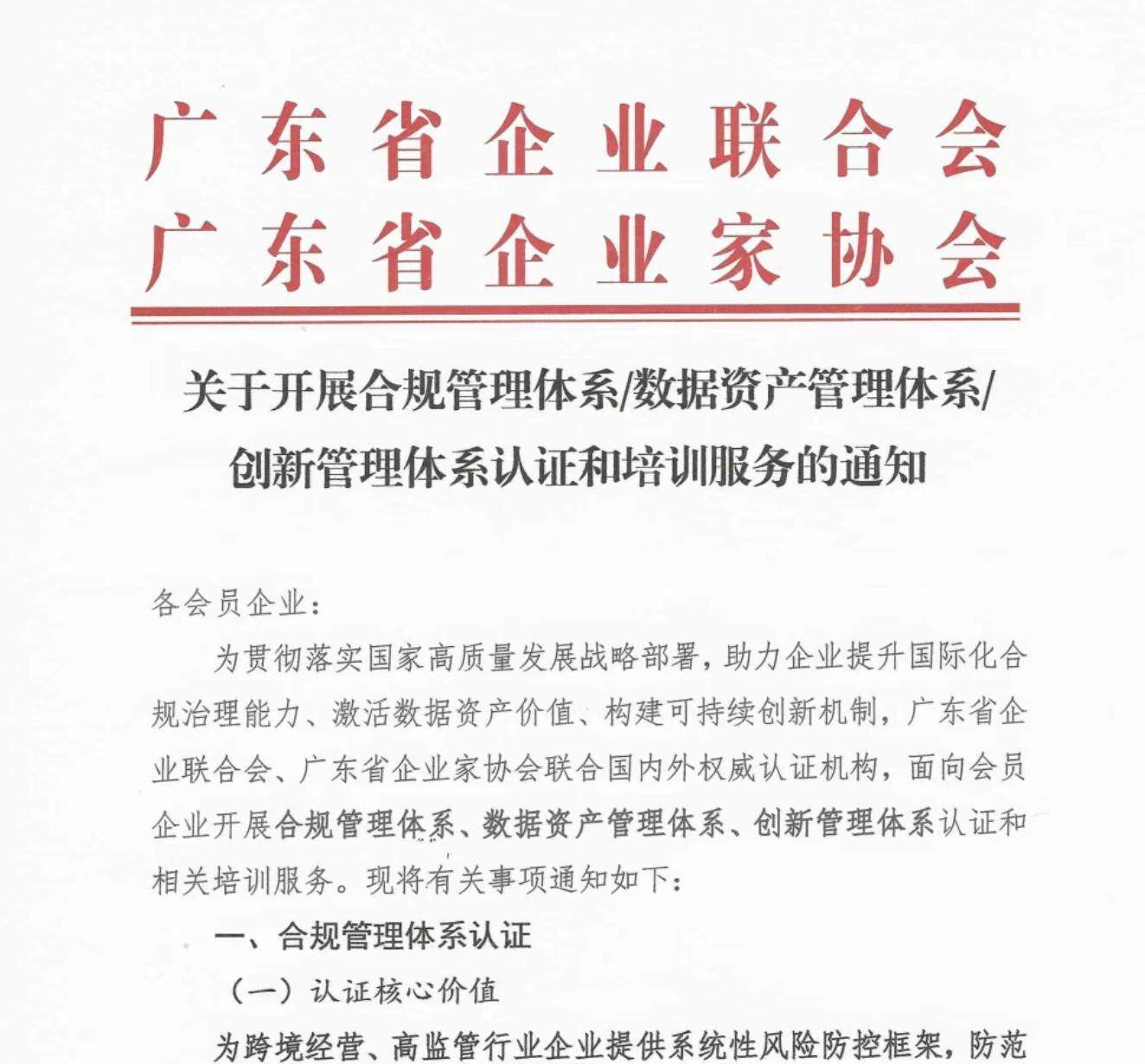
Group 1 - The core viewpoint is that Guangdong enterprises are making significant strides in activating the value of data assets amid the rapid development of the digital economy, with the introduction of a data asset management certification system [1][3] - The certification system aims to address pain points in data rights confirmation, valuation, and circulation, helping enterprises convert dormant data resources into quantifiable assets [1][3] - The certification will follow international standards and provide a comprehensive management solution from data collection to analysis, particularly in the context of cross-border data flow in the Guangdong-Hong Kong-Macao Greater Bay Area [3] Group 2 - The introduction of compliance and innovation management systems alongside the data asset management system is expected to create a synergistic effect, ensuring compliance while maximizing the value of data elements [3][4] - Data from institutions indicates that the digital economy scale in Guangdong will exceed 7 trillion yuan by 2024, highlighting the uneven management levels of enterprise data assets [3] - The initiative aims to help especially small and medium-sized enterprises in Guangdong establish standardized data asset management processes and explore the establishment of a data asset evaluation system [3][4]
“三稳”撑起北京经济半年报,下一步实施消费提振等六大专项行动
Xin Jing Bao· 2025-07-22 13:08
Economic Overview - Beijing's GDP exceeded 2.5 trillion yuan in the first half of the year, with a year-on-year growth of 5.5%, surpassing the national average by 0.2 percentage points [1] - General public budget revenue increased by 2.6% year-on-year, achieving 53.9% of the annual budget ahead of schedule by 3.9 percentage points [1] Industry Performance - The information service, financial, and industrial sectors, which account for over 50% of the economy, contributed nearly 90% to economic growth [2] - The information service sector saw an increase in value added by 11.1%, while the financial sector grew by 8.1% [2] - Industrial output increased by 7%, exceeding the national average by 0.6 percentage points, with strategic emerging industries and high-tech manufacturing growing by 16.8% and 9.9%, respectively [2] Investment and Consumption - Fixed asset investment in Beijing rose by 14.1% year-on-year, outpacing the national growth of 11.3% [2] - The total consumption scale in Beijing surpassed 3 trillion yuan, with service consumption accounting for over 60% and growing by 4.7% [2] Business Environment - Over 95% of businesses in Beijing are private enterprises, which employ over 60% of the workforce and contribute about one-third to the city's GDP [3] - The number of newly established enterprises reached nearly 150,000 in the first half of the year, marking a year-on-year increase of approximately 20% [3] Future Initiatives - Beijing plans to implement six major special actions, including consumption stimulation and investment promotion, to further enhance economic growth [4][8] - The city aims to support the development of high-tech industries and improve public service infrastructure [5][9]