存储芯片

Search documents
存储涨价潮下的“受害者”:消费电子产商陷入成本泥潭,苹果(AAPL.US)、惠普(HPQ.US)等面临利润冲击
智通财经网· 2026-01-15 12:15
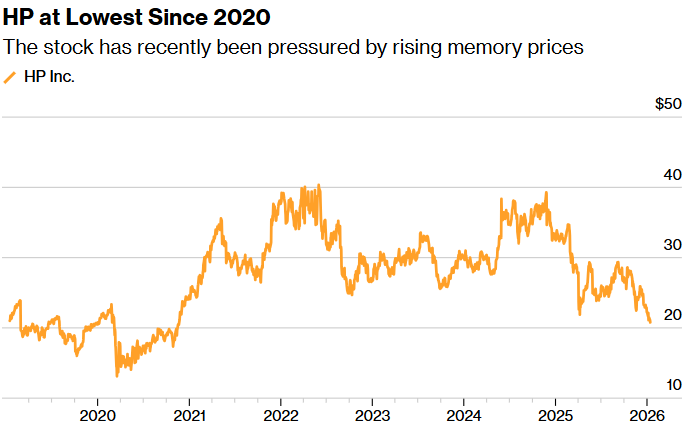
Core Viewpoint - The surge in memory chip prices has made companies like Sandisk, Micron Technology, and Western Digital popular stocks, but it has created significant challenges for their customers, including Apple and HP, as the high costs of memory components pose investment risks that are unlikely to reverse in the short term [1] Group 1: Impact on Hardware Manufacturers - Consumer hardware manufacturers are facing pressure due to high memory component costs, leading to two choices: accept lower profit margins or raise prices, which could harm demand [1] - Apple’s stock has seen only an 8.6% increase in 2025, marking its worst performance since 2022, while HP's stock has dropped nearly one-third in 2025 and hit its lowest level since November 2020 [2] - Dell Technologies' stock has decreased by 28% since reaching a historical high in October [2] Group 2: Semiconductor Manufacturers' Risks - The rising memory prices also pose risks for semiconductor manufacturers like Qualcomm and Arm, with recent downgrades in their ratings by Mizuho Securities and Bank of America [5] - The market is expected to continue pressuring these companies as long as memory prices remain high, driven by demand from artificial intelligence [5] - Dell is viewed positively due to its server business growth, which offsets the negative impact of rising memory prices [5] Group 3: Memory Price Trends and Industry Outlook - Samsung reported a more than 30% increase in average DRAM chip prices and about a 20% increase in NAND chip prices, with expectations that this trend will continue into 2026 or longer [6] - The memory cost for consumer hardware products may account for 10% to 20% of material costs, leading to concerns about profitability for companies like Apple and HP [6] - HP's earnings forecast for 2026 has been lowered by 7.1% due to rising memory costs, while Dell's performance expectations remain relatively stable due to strong demand in its server business [7] Group 4: Long-term Industry Dynamics - Analysts suggest that the current memory chip shortage is not just a cyclical issue but may indicate a permanent strategic reconfiguration of global silicon wafer capacity [6] - The anticipated significant increase in memory component costs over the next two years could impact even large companies like Apple [7] - The cyclical nature of memory prices is acknowledged, but the current supply shortage suggests that prices are unlikely to decrease in the short term [7]


代码型闪存王者,扭亏闯港股!
是说芯语· 2026-01-15 10:32
Core Viewpoint - The article discusses the IPO of Shenzhen-based storage chip company, ChipX, which aims to capitalize on the growing demand for storage driven by AI and the recovery of the storage industry. The company faces challenges from market competition and supply chain fluctuations while leveraging its technological strengths in the code-type flash memory segment [1][4][7]. Company Overview - ChipX was established in April 2014 and focuses on code-type flash memory, which is critical for system operations. The company operates under a Fabless model, offering a product line that spans from 1Mbit to 8Gbit, and has diversified into analog chips and MCUs [3]. - According to data from Zhaoshang Consulting, ChipX ranks sixth globally among fabless code-type flash manufacturers by revenue in 2024, with fourth place in SLC NAND Flash and fifth in NOR Flash [3]. Market Performance - The global flash memory market size decreased from $58.5 billion in 2020 to $40.9 billion in 2023, impacting ChipX, which reported a 33.3% revenue drop in 2024 and incurred losses exceeding 51 million yuan over two years. However, a recovery began in 2025, with the market size rebounding to $68.4 billion, a 67% year-on-year increase [4][5]. - In the first nine months of 2025, ChipX achieved a profit of 380 million yuan, with a revenue increase of approximately 10% and a gross margin of 18.8% [4]. Industry Trends - The code-type flash segment's market share increased from 6.1% in 2020 to 7.2% in 2024, with projections to reach 9.3% by 2030, driven by the rapid development of edge AI [5]. - Despite the industry's recovery, ChipX faces intense competition, with pricing strategies from peers affecting its pricing power. The company's revenue growth has been relatively slow, with a 10% increase in the first nine months of 2025 [6]. Challenges and Risks - ChipX's R&D expenditures have fluctuated, decreasing from 85.2 million yuan in 2023 to 33.3 million yuan in the first nine months of 2025, which raises concerns about maintaining competitiveness in a rapidly evolving industry [6]. - The company's reliance on external suppliers for wafer manufacturing and testing has increased, with procurement from five major suppliers rising from 75.4% to 83.2% between 2023 and 2025. This dependency, coupled with high wafer-related costs, poses risks to profit margins [6]. - The anticipated surge in storage chip prices due to rising demand for AI CPUs and memory could lead to increased costs for ChipX, further squeezing profit margins [6]. Conclusion - ChipX's decision to pursue an IPO aligns with the recovery of the global storage industry and the deepening of domestic alternatives. Its technological expertise and market position in the code-type flash segment are significant assets. However, challenges such as slow growth, reduced R&D investment, and supply chain concentration must be addressed for the company to solidify its market presence [7].

一年价格暴涨18倍!AI点燃存储芯片超级周期,有A股公司预计单季净利增长超12倍
Sou Hu Cai Jing· 2026-01-15 07:40
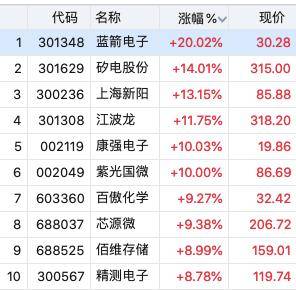
Core Insights - The explosive growth in global AI computing power has led to a significant surge in the storage chip market, with prices for storage chips increasing dramatically, even by 18 times in a year [1] - According to a report by Guojin Securities, strong demand from AI is expected to drive storage chip prices up significantly by 2025, with DDR4 16Gb prices rising by 1800%, DDR5 16Gb by 500%, and 512Gb NAND flash by 300% [1] - The upward price trend is anticipated to continue into 2026, with market prices expected to rise by 40% to 50% in Q1 and an additional 20% in Q2 [1] Market Performance - The storage sector in the A-share market has seen a strong performance, with multiple companies experiencing significant stock price increases, including Blue Arrow Electronics (+20.02%), Silicon Power (+14.01%), and Shanghai Xinyang (+13.15%) [2] - The first earnings forecast from the A-share storage industry was released, with Bawei Storage projecting revenues of 10 billion to 12 billion yuan for 2025, representing a year-on-year growth of 49.36% to 79.23% [2] Company Projections - Bawei Storage also expects a net profit of 850 million to 1 billion yuan for 2025, reflecting a year-on-year increase of 427.19% to 520.22% [3] - The company anticipates that from Q2 2025, as storage prices stabilize and key projects are delivered, sales revenue and gross margins will gradually improve [3] Industry Developments - The storage chip boom has prompted frequent IPO activities among domestic storage chip companies, with Changxin Technology submitting an application for listing on the STAR Market [3] - In June 2025, Changxin Technology's valuation reached 158.4 billion yuan after a financing round led by Alibaba Cloud, which invested 6.1 billion yuan for a 3.85% stake [3] Price Impact - The rising prices of storage chips have also led to increased prices for downstream electronic consumer goods [4] - Notably, the price of a single 256G DDR5 server memory module from Hynix and Samsung has exceeded 40,000 yuan, with some reaching as high as 49,999 yuan [5]
1月15日忠言午评:管理层多举措调控节奏,17连阳后连跌3天百股跌停
Xin Lang Cai Jing· 2026-01-15 06:55
炒股就看金麒麟分析师研报,权威,专业,及时,全面,助您挖掘潜力主题机会! 来源:李志林 【存储芯片概念震荡回升佰维存储涨9%创历史新高】存储芯片概念盘中震荡回升,佰维存储涨超9%, 续创历史新高,伟测科技、大为股份、柏诚股份、江波龙、普冉股份冲高。消息面上,佰维存储预告 2025年度实现归属于母公司所有者的净利润同比增加427.19%至520.22%。此外据供应链知情人士透 露,闪迪已向部分下游客户提出了一项前所未有的供应合同:要求客户支付100%现金预付款,以锁定 未来1至3年的存储芯片配额。 管理层多举措调控节奏,17连阳后连跌3天百股跌停 今日消息面: 【美股三大指数集体收跌纳指收跌1%】隔夜美股三大指数集体收跌,道指跌0.08%,纳指跌1.00%,标 普500指数跌0.53%。科技股普跌,甲骨文、博通跌超4%,亚马逊、微软、Meta跌超2%,英伟达、特斯 拉、奈飞跌超1%。英特尔逆势涨超3%。热门中概股多数下跌,纳斯达克中国金龙指数跌0.23%。 【沪深北交易所将投资者融资买入证券时的融资保证金最低比例从80%提高至100%】2026年1月14日, 经中国证监会批准,沪深北交易所发布通知调整融资保证金 ...
创意图解:擘画区域协调发展大棋局,释放经济发展新动能
Xin Lang Cai Jing· 2026-01-15 05:02
Group 1 - The core viewpoint emphasizes that regional coordinated development is an inherent requirement of Chinese-style modernization, with a focus on promoting urban-rural integration and regional linkage as key tasks for economic work in 2023 [1] - The construction of major transportation corridors and hubs is accelerating in central regions, with strong momentum in industries such as quantum technology, storage chips, and engineering machinery [4] - The "hard connectivity" of the national comprehensive transportation network is nearly complete, serving about 90% of the country's economic and population total [4] Group 2 - The importance of city clusters as key carriers for promoting multi-field interconnectedness and innovation chains is highlighted [5] - Agricultural modernization is progressing rapidly, with enhanced resilience in the agricultural supply chain and improved quality and efficiency of agricultural production [6] - The rural sanitation toilet coverage rate has reached approximately 76%, indicating significant improvements in rural living conditions [7] Group 3 - The integration of urban and rural areas is seen as a fundamental unit of economic and social development, with counties acting as crucial junctions [9] - The development capabilities of counties are continuously improving, with a focus on creating unique development paths for small and beautiful counties [10] - The urbanization rate of the permanent population is projected to reach 67% by the end of 2024, with over 90% of counties expected to establish tightly-knit county medical communities by the end of 2025 [10]

理响中国|创意图解:擘画区域协调发展大棋局,释放经济发展新动能
Xin Lang Cai Jing· 2026-01-14 09:22
Group 1 - The core viewpoint emphasizes the importance of coordinated regional development as an intrinsic part of China's modernization strategy, with a focus on promoting domestic economic growth through collaborative efforts across regions [1] - The "hard connectivity" and "soft connectivity" initiatives are highlighted as essential for enhancing economic development, particularly in central regions and through the establishment of major transportation networks [2][3] - The signing of the Yellow River ecological protection compensation agreement by Henan, Shanxi, and Shaanxi provinces marks a significant step towards collaborative environmental protection and breaking down administrative barriers [4] Group 2 - The agricultural sector is experiencing improvements in productivity and quality, contributing to enhanced food security and better living conditions in rural areas, with a reported rural sanitation toilet coverage of approximately 76% [5] - The strategy of "supporting agriculture through industry" is being implemented, with a focus on enhancing the economic capabilities of counties and promoting rural revitalization [6][7] - The urbanization rate is projected to reach 67% by the end of 2024, with over 90% of counties expected to establish integrated medical communities, indicating a trend towards improved resource allocation and service delivery in rural areas [8]

A股午评:沪指涨1.2%冲刺4200点,超4700股上涨!AI应用板块全面爆发
Ge Long Hui· 2026-01-14 03:39
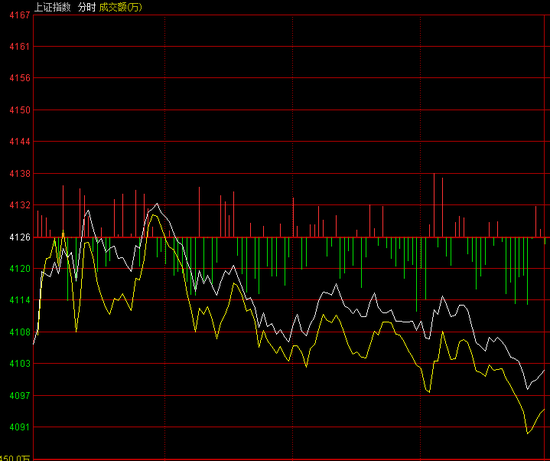
Core Viewpoint - The A-share market showed strong performance in the morning session, with all three major indices rising significantly, indicating positive investor sentiment and market momentum [1] Market Performance - The Shanghai Composite Index increased by 1.2% to 4188.24 points - The Shenzhen Component Index rose by 1.98% - The ChiNext Index saw a gain of 2.24% - The North Star 50 Index surged by 2.96% [1] Trading Volume - The total market turnover reached 22,459 billion, a decrease of 2,224 billion compared to the previous day - Over 4,700 stocks in the market experienced price increases [1] Sector Highlights - A joint initiative by eight departments to promote the "Artificial Intelligence + Manufacturing" special action led to a significant surge in AI application stocks - The non-ferrous metal sector saw collective strength, with companies like Zijin Mining and Jiangxi Copper reaching new highs - After Bawei Storage announced a performance increase, its stock rose over 7%, contributing to a general uptrend in storage chip stocks [1]
一盒=一套房?内存条何以成“抢手货”丨财经早察
2 1 Shi Ji Jing Ji Bao Dao· 2026-01-14 02:52
Core Insights - The storage chip market, particularly DDR5 memory, has seen a dramatic increase in investment returns, surpassing gold, traditionally viewed as a safe haven asset [2] - The market for storage chips has entered a "super bull market," with DDR5 prices rising over 300% since September of last year, and further increases of 40%-50% expected by Q1 2026, followed by an additional 20% in Q2 2026 [3] Group 1: Market Dynamics - The global storage chip market is highly concentrated, with Samsung, SK Hynix, and Micron controlling over 90% of the DRAM memory market [4] - These companies have collectively decided to reduce or halt production of DDR4 memory in favor of more profitable high-bandwidth memory (HBM) used for AI applications [4][5] - The demand for memory in AI server training is significantly higher, requiring 8 to 10 times more memory than standard servers, leading to tech giants paying 50%-60% premiums for procurement [4] Group 2: Supply and Demand - Over 80% of advanced production capacity is now directed towards AI server markets, resulting in a significant reduction in supply for consumer-grade memory [5] - The HBM market is expected to experience explosive growth by 2025, with prices for related products increasing over 30%, leading to a "chip shortage" scenario [5] - As long as AI demand remains high and production capacity is focused on high-margin products, prices for consumer memory are unlikely to return to previous low levels [5] Group 3: Future Outlook - Historically, memory prices are cyclical, and after periods of significant price increases, a correction due to oversupply typically follows [5] - Once the fervor surrounding AI construction stabilizes, supply and demand for memory products are expected to rebalance [5]

创业板涨超1%,AI应用再度爆发,算力硬件反弹,港股医药生物延续强势,沪银大涨8%
Hua Er Jie Jian Wen· 2026-01-14 02:28
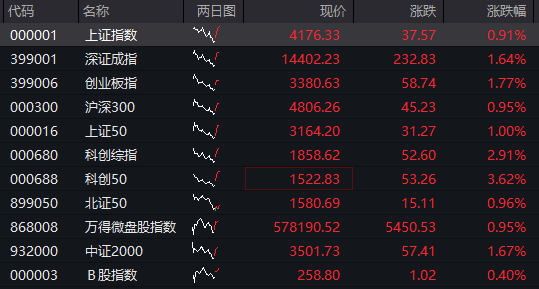
Market Overview - A-shares experienced a rebound with all three major indices rising, the ChiNext Index increasing by over 1% and the AI application sector showing renewed strength [1] - The Hang Seng Index also opened higher, with both the Hang Seng Index and the Hang Seng Tech Index rising [2][3] A-shares Performance - As of the report, the Shanghai Composite Index rose by 0.91% to 4176.33, the Shenzhen Component Index increased by 1.64% to 14402.23, and the ChiNext Index climbed by 1.77% to 3380.63 [1] - The CSI 300 Index rose by 0.95% to 4806.26, while the STAR 50 Index saw a significant increase of 2.91% to 1858.62 [1] Hong Kong Market Performance - The Hang Seng Index was up 0.37% at 26948.34, and the Hang Seng Tech Index increased by 0.52% to 5900.40 [2][3] Bond Market - In the bond market, the 30-year treasury futures contract fell by 0.21%, while the 10-year contract decreased by 0.01% [3][4] Commodity Market - Domestic commodity futures saw a broad increase, with silver rising over 6%, fuel oil up over 6%, and tin increasing by over 4% [4][5] - Tungsten prices have surged, with tungsten powder exceeding 1.1 million yuan per ton and tungsten concentrate reaching 464,000 yuan per ton, both setting historical highs [7] AI and Technology Sector - The ChiNext 50 Index expanded its gains to 2%, with stocks like Bawei Storage rising over 12% and Haiguang Information increasing by over 7% [8] - AI e-commerce and GEO concepts showed strength, with stocks like Liou Co. and Sanjiang Shopping hitting their daily limits [10] Precious Metals and Non-ferrous Metals - The non-ferrous metals sector saw fluctuations, with small and precious metals leading the gains, including stocks like Xianglu Tungsten and Huaxi Nonferrous reaching historical highs [6][7] Summary of Key Stocks - Notable stocks included Zhongkong Technology rising by 12.47%, Bawei Storage by 11.62%, and several others in the tech sector showing significant increases [9]

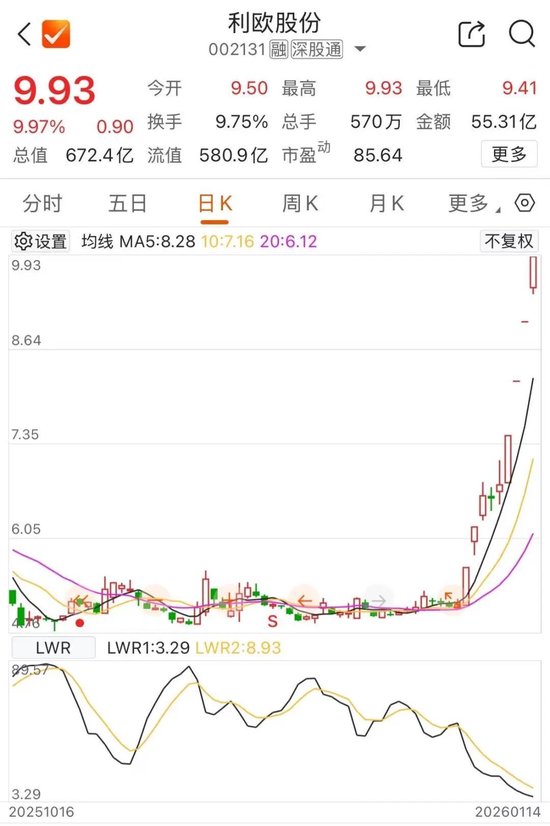
002131,4连板
Xin Lang Cai Jing· 2026-01-14 02:21
Market Overview - On January 14, the A-share major indices rose in early trading, with the Shanghai Composite Index up by 0.77%, the Shenzhen Component Index and the ChiNext Index both increasing by over 1%, and the Sci-Tech Innovation Board Index rising by over 2% [1][6] - The precious metals sector led the gains, while the commercial aerospace sector experienced the largest declines [1][6] Sector Performance - The AI e-commerce and GEO concepts showed strong performance, with Liou Co., Ltd. (002131) achieving a four-day consecutive rise, Sanjiang Shopping (three-day consecutive rise), and both Guangyun Technology and Zhidema reaching the daily limit [1][6] - The storage chip sector saw significant fluctuations, with Baiwei Storage rising over 10% during trading, and companies like Guokai Microelectronics, Jiangbolong, Demingli, and Lankai Technology also experiencing gains [4][8] Notable Stocks - Baiwei Storage (佰维存储) rose by 9.93% to 148.82, Guokai Microelectronics (国科微) increased by 9.29% to 133.44, and Jiangbolong (江波龙) rose by 3.77% to 286.90 [5][9] - Other notable stocks included Blue Arrow Electronics (蓝箭电子) up by 9.14%, and Demingli (德明利) up by 3.56% [5][9] Strategic Partnerships - Google announced a collaboration with Walmart and other major retailers to introduce AI shopping features on its Gemini platform [3][8]