
潮玩

Search documents
泡泡玛特3.5亿回购撬动近600亿市值
Xin Lang Cai Jing· 2026-01-23 03:25
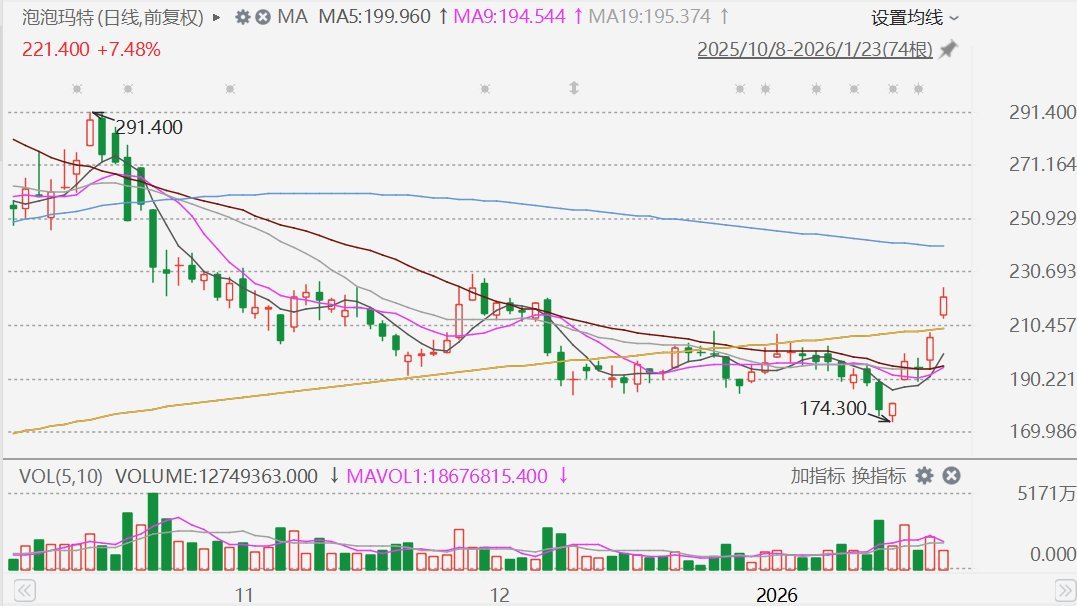
来源:财经读数 启动回购以来,泡泡玛特市值提升近600亿港元,此前股价距离高点已下跌近50% 文|《财经》特约撰稿人 成孟琦 编辑|郭楠 陆玲 1月22日,泡泡玛特(09992.HK)领涨恒指成分股,截至收盘,泡泡玛特股价报206港元,上涨5.97%, 单日成交额达42.5亿港元。1月23日,泡泡玛特开盘继续上涨7%,市值逼近3000亿港元。 值得注意的是,自1月19日启动2026年首次股份回购以来,周内泡泡玛特股价从176.4港元攀升至220港 元,累计涨幅超23%,市值较回购前已提升将近600亿港元。 两次回购是泡泡玛特近期股价回升的重要推动因素。泡泡玛特分别在1月19日、1月21日出手回购,合计 回购股份190万股,斥资近3.5亿港元。 1月22日下午,新华社官方微博宣布,泡泡玛特创办人王宁的专访节目将于1月24日播出。此外,泡泡玛 特近期推出的"PUCKY敲敲系列"毛绒挂件盲盒,因内置电子木鱼功能成为社交平台热议焦点,新品热 度持续走高,多次登上微博热搜。 两次回购是泡泡玛特近期股价回升的重要推动因素。泡泡玛特分别在1月19日、1月21日出手回购,合计 回购股份190万股,斥资近3.5亿港元。 投行对 ...


泡泡玛特再涨超7%,近期公司多款新品热销,回购彰显成长信心
Jin Rong Jie· 2026-01-23 03:01
Core Viewpoint - Pop Mart (09992) has seen a significant increase in stock price, rising over 7% to HKD 220.8, with a trading volume of HKD 2.067 billion, driven by the launch of new products and strong consumer demand [1] Group 1: Product Launches and Sales Performance - On January 22, Pop Mart's new PUCKY electronic wooden fish plush blind box was trending, designed to provide emotional relief through realistic sound effects when tapped [1] - The "Full Throttle" plush blind box series for 2026 sold out within one minute of its online release [1] - The Valentine's Day limited edition "Starry Person's Heartbeat" series also sold out quickly upon release [1] Group 2: Media Engagement and Share Buybacks - A program titled "Sound of Yang" featuring an interview with Pop Mart's founder Wang Ning is set to air on January 23, highlighting the company's initiatives [1] - Pop Mart has conducted share buybacks totaling nearly HKD 350 million, with recent buybacks exceeding previous amounts, indicating confidence in future growth [1]
研报掘金|华泰证券:泡泡玛特回购彰显公司对增长前景信心,维持“买入”评级
Ge Long Hui· 2026-01-23 02:27
Core Viewpoint - Huatai Securities reports that Pop Mart has recently initiated a share buyback, purchasing a total of 1.9 million shares for HKD 310 million, indicating the company's confidence in its growth prospects [1] Group 1: Share Buyback - The recent buyback on January 19 and 21 involved a total of 1.9 million shares, with a total expenditure of HKD 310 million, which is higher than previous buybacks [1] - The size of the buyback reflects the company's strong confidence in its future growth [1] Group 2: Growth Prospects - The company is expected to accelerate the diversification and balance of its IP structure this year, with new business segments such as theme parks, animation content, desserts, and accessories being developed to create new growth points [1] - The emotional connection with IP is being strengthened to alleviate market concerns regarding fashion risks [1] Group 3: Brand Development - The success of Labubu in Western markets is seen as a starting point for increased brand recognition rather than a temporary trend [1] - The company has a deep reserve of IP and product categories, which can leverage brand recognition to gain broader brand collaborations and designer resources globally, transforming popularity into a multi-faceted IP growth engine [1] Group 4: Investment Rating - Huatai Securities maintains a target price of HKD 410 and a "Buy" rating for the company, continuing to recommend it as a key investment [1]

未知机构:泡泡玛特坚定推荐提示后续重要的时间催化包括1月23日王-20260123
未知机构· 2026-01-23 02:25
泡泡玛特 | 坚定推荐 #提示后续重要的时间催化,包括1月23日王宁专访,2月公司年会,3月下旬年报发布与业绩指引,4月下旬一季度 经营情况披露。 1,近期PUCKY敲敲毛绒盲盒出圈,内置拟木鱼发声装置,在传统的包挂显示之外,还有互动声音乐趣,我们认 为这显示公司有持续的品类创新能力。 目前系列在小程序/抖音/天猫均售罄。 我们认为2026年增长的确定性非常高。 核心逻辑包括,海外继续拓店,Labubu 4.0星星人Crybaby宝拉等IP的新品,IP联名拓展 3,按照26年普遍180亿~200亿的净利润预期,目前估值只有12~14x,作为全球稀缺的头部IP运营平台,我们认为 当前估值是罕见的错误定价,底部坚定推荐。 近期学习笔记/开店数量跟踪等,欢迎联系 后续公司在产品层面还有毛绒 泡泡玛特 | 坚定推荐 #提示后续重要的时间催化,包括1月23日王宁专访,2月公司年会,3月下旬年报发布与业绩指引,4月下旬一季度 经营情况披露。 1,近期PUCKY敲敲毛绒盲盒出圈,内置拟木鱼发声装置,在传统的包挂显示之外,还有互动声音乐趣,我们认 为这显示公司有持续的品类创新能力。 目前系列在小程序/抖音/天猫均售罄。 后续 ...
泡泡玛特“电子木鱼”爆火,隐藏款溢价超200%,股价大涨7%
2 1 Shi Ji Jing Ji Bao Dao· 2026-01-23 02:24
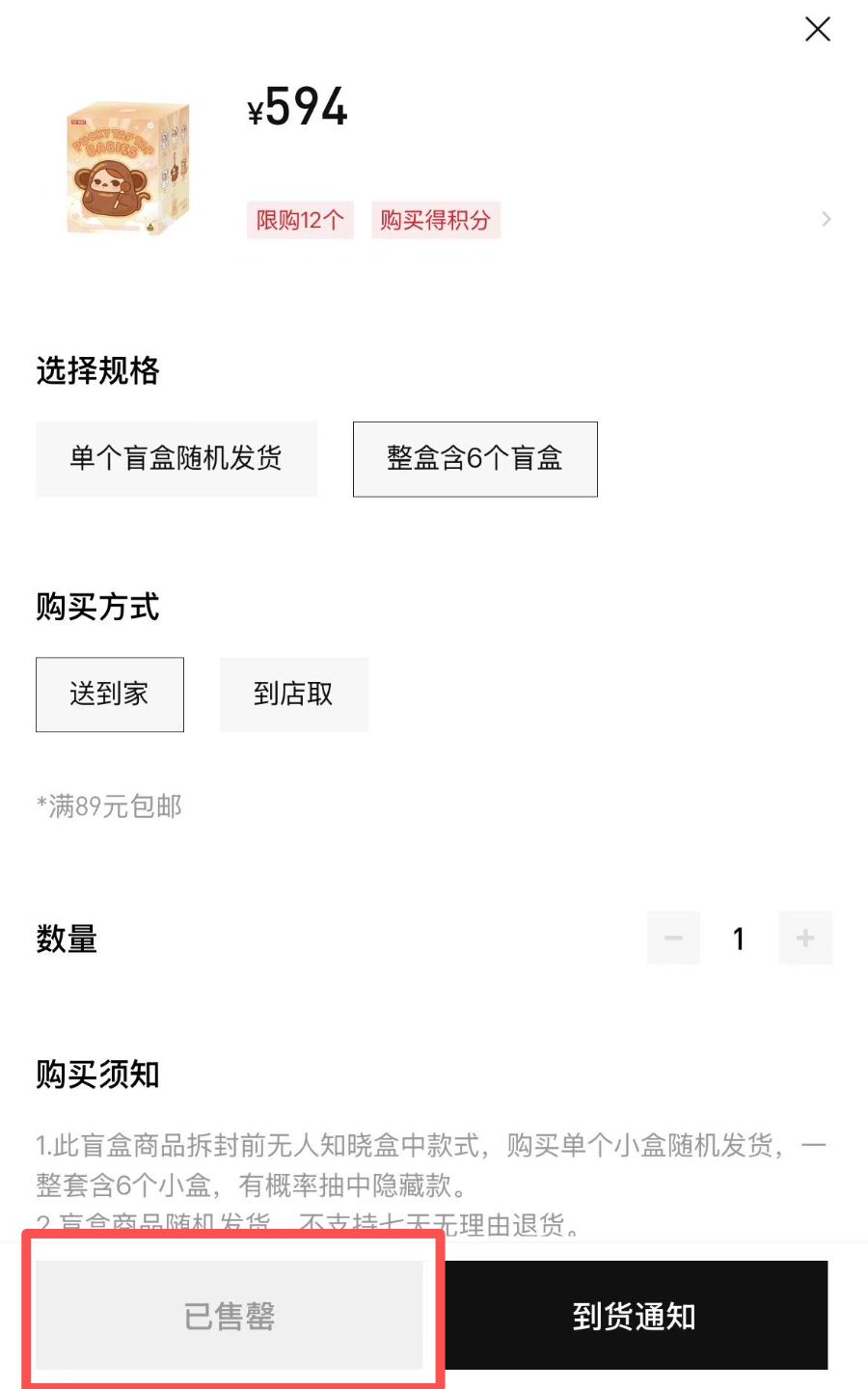
Group 1 - The core product "PUCKY Knock Knock Series" from Pop Mart has gained significant popularity, being referred to as "electronic wooden fish" by netizens due to its sound feature [1] - The series includes 6 regular characters and 1 hidden character, priced at 99 yuan per box and 594 yuan for a full set of 6, with the official website currently showing sold out status [1] Group 2 - The popularity of the product has positively impacted the capital market, with Pop Mart's stock rising over 7% to 222.2 HKD per share, resulting in a market capitalization of 298.1 billion HKD [4] - On January 21, Pop Mart announced a share buyback of 500,000 shares for a total of 96.49 million HKD, marking the second buyback within the week, with a cumulative buyback amount nearing 350 million HKD [4]
泡泡玛特:回购彰显成长信心,产品持续出奇创新-20260123
HTSC· 2026-01-23 02:15
Investment Rating - The report maintains an investment rating of "Buy" for the company with a target price of HKD 410.00 [1][5] Core Insights - The company has recently initiated share buybacks, demonstrating confidence in its growth prospects. The buybacks totaled 1.9 million shares for HKD 310 million, indicating a strong commitment to enhancing shareholder value [1] - The company continues to innovate with new product offerings, such as the "Full Throttle" plush blind box series, which sold out within a minute online, reflecting strong consumer demand and effective IP operation capabilities [2] - The diversification of IP is progressing well, with new IPs gaining market share in both domestic and Southeast Asian markets, suggesting a robust growth trajectory for the company's brand portfolio [3] - The company is expanding its international presence and enhancing its brand recognition, particularly in Western markets, which is expected to drive further growth in 2026 [4] Summary by Sections Share Buybacks and Growth Confidence - The company has executed significant share buybacks, totaling approximately 24.65 million shares for HKD 460 million from April 2023 to February 2024, with recent buybacks exceeding previous amounts, indicating strong growth confidence [1] Product Innovation and Market Demand - Recent product launches have been successful, with the "Full Throttle" series selling out quickly and the "Knock Knock" series gaining popularity among younger consumers, showcasing the company's ability to innovate and meet market demands [2] IP Diversification and Market Expansion - The report highlights the successful diversification of IP, with new characters gaining traction in both domestic and Southeast Asian markets, while the company aims to enhance its IP structure further in 2026 [3] International Growth and Brand Development - The company is accelerating its overseas expansion, planning to open over ten new stores in January 2026, and is focusing on enhancing its brand through collaborations and innovative business models [4][5]
港股异动丨泡泡玛特大涨超9%,据报“星星人”情人节盲盒隐藏款获炒高近7倍
Ge Long Hui· 2026-01-23 02:04
Core Viewpoint - The rising popularity of new IPs has led to a significant increase in the stock price of Pop Mart (9992.HK), which surged over 9% to reach 225 HKD, marking a new high since early December 2025 [1] Group 1: Product Launch - On January 22, Pop Mart announced the release of the 2026 Valentine's Day limited edition blind box series "Star People Heartbeat," which is the first Valentine's series for the Star People brand [1] - The hidden variants "Together Until Old" and "Together to Grow Old" have seen their transaction prices rise from 89 RMB to 699 RMB, representing a premium of 6.8 times, making it the highest premium product for Pop Mart in 2026 [1] - Among the regular variants, the "Heartbeat Signal" has also increased in transaction price to 289 RMB, reflecting a premium of 2.2 times [1]
泡泡玛特早盘涨超7%近期公司多款新品热销 回购彰显成长信心
Xin Lang Cai Jing· 2026-01-23 02:01
Core Viewpoint - Pop Mart (09992) has seen a significant stock price increase of 7.18%, reaching HKD 220.8, with a trading volume of HKD 2.067 billion, driven by new product launches and share buybacks [1][4]. Product Launches - On January 22, Pop Mart's new PUCKY series electronic wooden fish plush blind box gained attention, transforming traditional wooden fish into plush toys that produce realistic sounds when tapped, focusing on emotional relief [1][4]. - The 2026 "Full Throttle" series plush blind box sold out within one minute of its online release [1][4]. - Additionally, the 2026 Valentine's Day limited edition blind box "Starry Person's Heartbeat" series was quickly sold out, marking the first Valentine's series product for the Starry Person brand [1][4]. Share Buybacks - Pop Mart has recently conducted share buybacks totaling nearly HKD 350 million, with the latest buyback transactions exceeding previous amounts, indicating the company's confidence in its growth prospects [1][4]. Operational Excellence - The company continues to enhance its store operations, scene atmosphere, and emotional experiences, demonstrating its long-term capabilities in IP innovation and category innovation, which are driving new IPs and gameplay to gain popularity [1][4].
泡泡玛特再涨超7% 近期公司多款新品热销 回购彰显成长信心
Zhi Tong Cai Jing· 2026-01-23 02:00
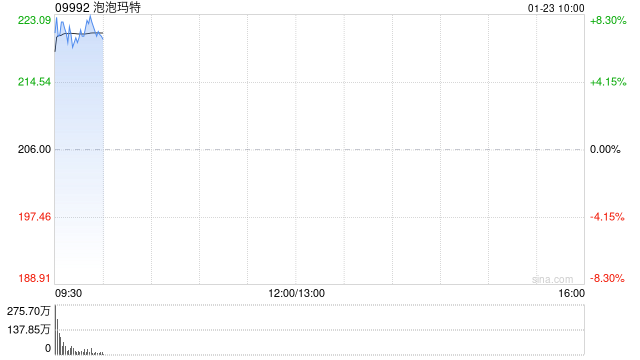
Core Viewpoint - Pop Mart (09992) has seen a significant stock increase of over 7%, currently trading at 220.8 HKD with a transaction volume of 2.067 billion HKD, driven by the launch of new products and strong consumer demand [1] Product Launch and Sales Performance - On January 22, Pop Mart's new PUCKY Knock Knock electronic wooden fish plush blind box was trending, designed to provide emotional relief through realistic sound effects when tapped [1] - The "Full Throttle" plush blind box series for 2026 sold out within one minute of its online release [1] - The Valentine's Day limited edition blind box series "Starry Person's Heartbeat" was also quickly sold out upon release [1] Media Engagement and Share Buyback - A program titled "Sound of Yang" featuring an interview with Pop Mart's founder Wang Ning is scheduled to air on January 23, enhancing the company's media presence [1] - Pop Mart has conducted share buybacks totaling nearly 350 million HKD, with recent buyback amounts and share counts exceeding previous levels, indicating strong confidence in the company's growth prospects [1] Operational Excellence - The company continues to refine its store operations, scene atmosphere, and emotional experiences, demonstrating sustained capabilities in IP innovation and category innovation, which are driving new IPs and gameplay to gain traction [1]
港股异动 | 泡泡玛特(09992)再涨超7% 近期公司多款新品热销 回购彰显成长信心
智通财经网· 2026-01-23 01:41
Core Viewpoint - Pop Mart (09992) has seen a stock increase of over 7%, reaching 220.8 HKD with a trading volume of 2.067 billion HKD, driven by the launch of new products and strong sales performance [1] Product Launch and Sales Performance - On January 22, Pop Mart's new PUCKY Knock Knock series electronic wooden fish plush blind box was trending, designed to provide emotional relief through realistic sound effects when tapped [1] - The "Full Throttle" plush blind box series for 2026 sold out within one minute of its online release [1] - The Valentine's Day limited edition blind box series "Starry Person's Heartbeat" was also quickly sold out upon release [1] Media Engagement and Share Buyback - A program titled "Sound of Yang" featuring an interview with Pop Mart's founder Wang Ning is scheduled to air on January 23 [1] - Pop Mart has conducted share buybacks totaling nearly 350 million HKD, with recent buybacks showing larger amounts and share counts than previous ones, indicating confidence in the company's growth prospects [1] Operational Excellence - The company continues to refine its store operations, scene atmosphere, and emotional experiences, demonstrating ongoing capabilities in IP innovation and category innovation, which drive new IP and gameplay to gain market traction [1]