石油石化

Search documents
大额买入与资金流向跟踪(20260112-20260116)
GUOTAI HAITONG SECURITIES· 2026-01-20 11:45
Quantitative Factors and Construction Methods 1. Factor Name: Large Order Transaction Amount Ratio - **Factor Construction Idea**: This factor captures the buying behavior of large funds by analyzing the proportion of large order transaction amounts relative to the total daily transaction amount[7] - **Factor Construction Process**: 1. Use tick-by-tick transaction data to identify buy and sell orders based on bid and ask sequence numbers 2. Filter transactions by order size to identify large orders 3. Calculate the proportion of large buy order transaction amounts to the total daily transaction amount Formula: $ \text{Large Order Transaction Amount Ratio} = \frac{\text{Large Buy Order Transaction Amount}}{\text{Total Daily Transaction Amount}} $ - **Factor Evaluation**: This factor effectively reflects the buying behavior of large funds[7] 2. Factor Name: Net Active Buy Amount Ratio - **Factor Construction Idea**: This factor measures the active buying behavior of investors by calculating the net active buy amount as a proportion of the total daily transaction amount[7] - **Factor Construction Process**: 1. Use tick-by-tick transaction data to classify each transaction as either active buy or active sell based on trade direction 2. Subtract the active sell transaction amount from the active buy transaction amount to obtain the net active buy amount 3. Calculate the proportion of the net active buy amount to the total daily transaction amount Formula: $ \text{Net Active Buy Amount Ratio} = \frac{\text{Active Buy Amount} - \text{Active Sell Amount}}{\text{Total Daily Transaction Amount}} $ - **Factor Evaluation**: This factor provides insights into the active buying behavior of investors[7] --- Factor Backtesting Results 1. Large Order Transaction Amount Ratio - **Top 5 Stocks by 5-Day Average**: 1. 惠博普 (92.6%, 99.6% percentile)[9] 2. 美年健康 (89.6%, 99.2% percentile)[9] 3. 志特新材 (89.2%, 99.2% percentile)[9] 4. 津滨发展 (88.4%, 99.6% percentile)[9] 5. 江南高纤 (87.7%, 98.8% percentile)[9] 2. Net Active Buy Amount Ratio - **Top 5 Stocks by 5-Day Average**: 1. 杭萧钢构 (16.7%, 99.8% percentile)[10] 2. 纬德信息 (15.4%, 100.0% percentile)[10] 3. 中科微至 (15.0%, 99.6% percentile)[10] 4. 新风光 (13.8%, 100.0% percentile)[10] 5. 联合水务 (13.3%, 97.5% percentile)[10] 3. Broad-Based Indices - **Large Order Transaction Amount Ratio (5-Day Average)**: - 上证指数: 73.8% (12.8% percentile)[12] - 上证50: 70.6% (64.2% percentile)[12] - 沪深300: 73.1% (64.2% percentile)[12] - 中证500: 73.0% (6.6% percentile)[12] - 创业板指: 71.6% (90.1% percentile)[12] - **Net Active Buy Amount Ratio (5-Day Average)**: - 上证指数: -5.8% (86.8% percentile)[12] - 上证50: -12.9% (90.5% percentile)[12] - 沪深300: -8.8% (89.3% percentile)[12] - 中证500: -3.4% (86.0% percentile)[12] - 创业板指: -4.4% (84.8% percentile)[12] 4. Industry-Level Results - **Top 5 Industries by Large Order Transaction Amount Ratio (5-Day Average)**: 1. 房地产: 79.8% (90.1% percentile)[13] 2. 煤炭: 78.5% (66.3% percentile)[13] 3. 钢铁: 78.2% (42.8% percentile)[13] 4. 建筑: 77.9% (24.3% percentile)[13] 5. 综合: 77.8% (50.6% percentile)[13] - **Top 5 Industries by Net Active Buy Amount Ratio (5-Day Average)**: 1. 房地产: -9.5% (95.1% percentile)[13] 2. 电子: 2.2% (78.6% percentile)[13] 3. 汽车: 0.9% (60.9% percentile)[13] 4. 家电: 0.1% (84.4% percentile)[13] 5. 通信: -4.7% (89.7% percentile)[13] 5. ETFs - **Top 5 ETFs by Large Order Transaction Amount Ratio (5-Day Average)**: 1. 华泰柏瑞中证A500ETF (92.9%, 96.3% percentile)[15] 2. 易方达中证A500ETF (91.6%, 100.0% percentile)[15] 3. 国泰中证A500ETF (91.5%, 15.6% percentile)[15] 4. 华泰柏瑞沪深300ETF (91.0%, 99.2% percentile)[15] 5. 易方达沪深300ETF (91.0%, 99.6% percentile)[15] - **Top 5 ETFs by Net Active Buy Amount Ratio (5-Day Average)**: 1. 东财上证科创板50成份ETF (23.4%, 100.0% percentile)[16] 2. 海富通上证城投债ETF (20.9%, 88.5% percentile)[16] 3. 国泰上证10年期国债ETF (15.6%, 61.3% percentile)[16] 4. 富国创业板人工智能ETF (14.3%, 65.9% percentile)[16] 5. 嘉实中证稀土产业ETF (14.1%, 92.6% percentile)[16]


投顾晨报:指数维持震荡,方向还在中盘蓝筹-20260120
Orient Securities· 2026-01-20 11:38
Market Strategy - The index is expected to maintain a volatile trend, with a focus on mid-cap blue-chip stocks as the preferred investment direction [2][6] - The market is currently in a phase of adjustment, with a long-term upward trend anticipated. A shift away from high-risk preferences is seen as beneficial for a healthy market environment [6] Industry Strategy: Coal - The coal industry is transitioning from scale expansion to quality improvement, with a positive long-term outlook for the sector [3][6] - Recent developments include the strategic restructuring of coal companies, such as the merger of Henan Energy Group and China Pingmei Shenma Group, indicating a shift towards enhancing operational quality [6] - The National Development and Reform Commission has issued guidelines for the clean and efficient use of coal, emphasizing systematic and refined regulation of this primary energy source [6] - Policies aimed at replacing outdated production capacity with advanced capabilities signal a move towards innovation-driven growth in the energy sector [6] Industry Strategy: Real Estate - The effectiveness of real estate policies is more about their intensity rather than quantity, with expectations for impactful measures such as interest rate cuts and direct financial support for homebuyers and distressed companies [4][6] - Recent publications have reinforced the signals for stabilizing expectations in the real estate market, suggesting a stronger policy framework may emerge in 2026 [6]
谨慎加仓?
第一财经· 2026-01-20 10:40
Market Overview - The A-share market shows a differentiated adjustment pattern, with the Shanghai Composite Index demonstrating resilience, regaining the 4100-point level, primarily driven by the real estate, banking, and oil sectors [4] - A total of 2231 stocks experienced an increase [5] - The market exhibited a clear divergence, with the real estate sector leading gains, while the TMT (Technology, Media, Telecommunications) sector and power equipment faced significant adjustments [6] Trading Activity - The total trading volume of both markets reached 1 trillion yuan, an increase of 2.56%, indicating a moderate increase in trading activity as funds shifted from previously popular sectors to those with lower valuations or solid fundamentals [7] - Institutional investors are reallocating their portfolios, selling off previously popular sectors like power equipment and telecommunications, and moving towards defensive sectors such as banking, construction, insurance, and real estate [9] Fund Flows - There was a net outflow of 68.4 billion yuan from major funds, while retail investors saw a net inflow [8] - Retail investors are absorbing the selling pressure and speculating on themes, with some funds flowing into short-term overbought stocks, partially offsetting the outflow from popular sectors like semiconductors and commercial aerospace [9] Investor Sentiment - As of January 20, 32.96% of investors increased their positions, while 20.13% reduced their holdings, with 46.91% remaining unchanged [12] - Retail investor sentiment is currently at 75.85% [10]


供需双底基本确立,化工行业周期拐点将至?,石化ETF(159731)成布局利器
Mei Ri Jing Ji Xin Wen· 2026-01-20 10:23
(责任编辑:张晓波 ) 【免责声明】本文仅代表作者本人观点,与和讯网无关。和讯网站对文中陈述、观点判断保持中立,不对所包含内容 的准确性、可靠性或完整性提供任何明示或暗示的保证。请读者仅作参考,并请自行承担全部责任。邮箱: news_center@staff.hexun.com 石化ETF(159731)及其联接基金(017855/017856)紧密跟踪中证石化产业指数,从申万一级行 业分布来看,基础化工行业占比为59.23%,石油石化行业占比为32.60%,"十五五"开局之年,行业将 进一步从"量"的扩张转向"质"的提升,加速周期反转,成长主线明确。 每日经济新闻 截至1月20日10点44分,石化ETF(159731)盘中现涨0.31%。持仓股中,三棵树、卫星化学、华峰 化学等涨幅居前。从资金净流入方面来看,石化ETF连续9个交易日获得资金净流入,合计"吸金"2.80 亿元。石化ETF最新份额达5.61亿份,最新规模达5.49亿元,均创成立以来新高。 银河证券认为,预计2026年Brent 原油价格运行区间为60-70美元/桶,成本端有望逐步止跌企稳。 2024年以来化工行业资本开支迎来负增长,随着"反内卷 ...
投资进化论丨自由现金流vs红利,怎么选?
Sou Hu Cai Jing· 2026-01-20 10:15
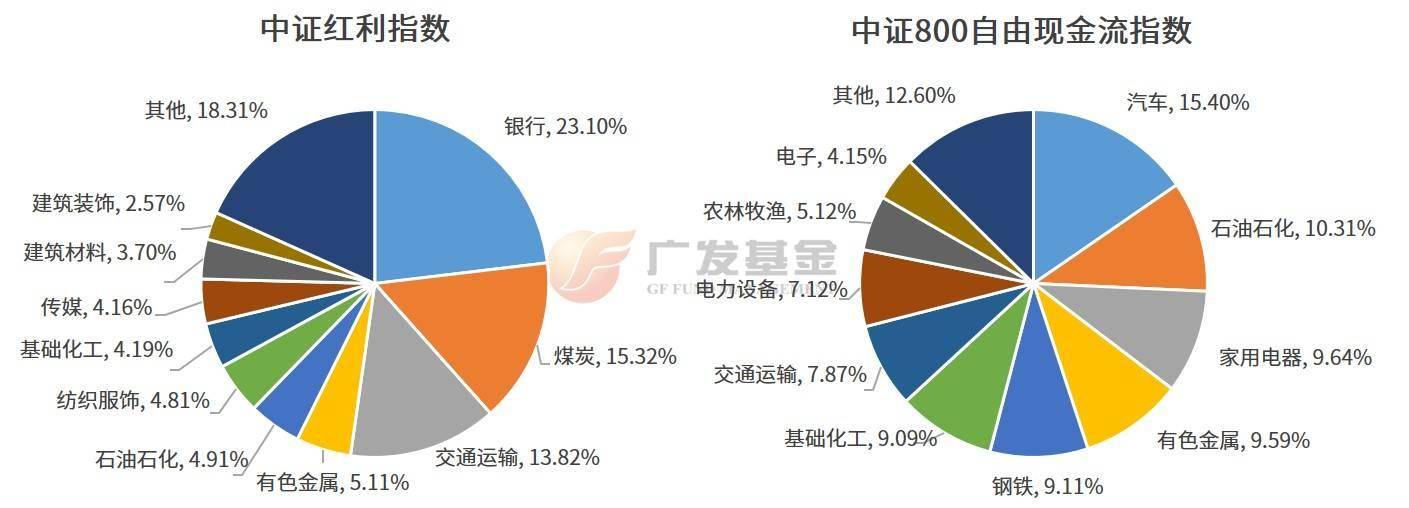
Core Viewpoint - Dividend funds have been favored by conservative investors for a long time, but since 2025, free cash flow index funds have gained significant attention in the market as another product that emphasizes shareholder returns [1] Group 1: Understanding Free Cash Flow - Free cash flow is defined as the cash available after all operating costs, taxes, debt payments, and necessary capital expenditures have been deducted, representing the cash that can be freely allocated [2] - Free cash flow serves as a "litmus test" for assessing a company's health, indicating its ability to maintain operations, manage short-term debts, and support dividends, buybacks, or reinvestments [2] Group 2: Differences Between Free Cash Flow Strategy and Dividend Strategy - The core logic of the dividend strategy focuses on a company's willingness to distribute dividends, while the free cash flow strategy emphasizes a company's ability to generate cash for distribution [4] - Dividend strategy primarily generates returns through dividend income, while free cash flow strategy focuses on capital appreciation, often involving companies in growth phases with higher potential for valuation increases [5] Group 3: Industry Distribution - The industry distribution of the two strategies differs significantly; the dividend index tends to favor traditional, mature industries like finance and energy, while the free cash flow index includes sectors such as consumer goods and cyclical industries [6] Group 4: Historical Performance - Over the past five years, the free cash flow index has shown stronger offensive performance and higher elasticity compared to the dividend index, which has demonstrated more stability and defensive characteristics [10] - The cumulative return of the CSI 800 Free Cash Flow Index was 171.47% with an annualized return of 22.92% and an annualized volatility of 20.64%, while the CSI Dividend Index had a cumulative return of 53.43% with an annualized return of 9.25% and an annualized volatility of 16.17% [11] Group 5: Investor Suitability - The dividend index is more suitable for conservative investors with cash flow needs, while the free cash flow index is better suited for investors with a higher risk tolerance seeking long-term capital growth [12]
数据复盘丨石油石化、建筑材料等行业走强 71股获主力资金净流入超1亿元
Zheng Quan Shi Bao Wang· 2026-01-20 10:00
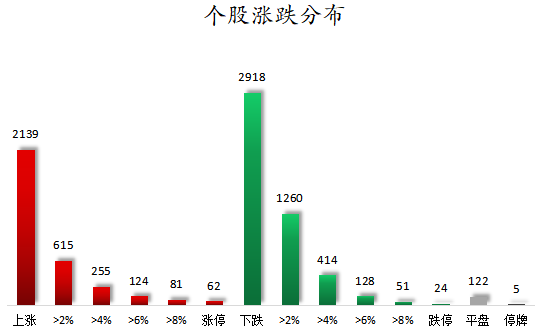
Market Overview - The Shanghai Composite Index closed at 4113.65 points, down 0.01%, with a trading volume of 12,215 billion yuan [1] - The Shenzhen Component Index closed at 14,155.63 points, down 0.97%, with a trading volume of 15,563.13 billion yuan [1] - The ChiNext Index closed at 3,277.98 points, down 1.79%, with a trading volume of 7,092.73 billion yuan [1] - The STAR 50 Index closed at 1,482.99 points, down 1.58%, with a trading volume of 978 million yuan [1] - The total trading volume of both markets was 27,778.13 billion yuan, an increase of 694.23 billion yuan compared to the previous trading day [1] Sector Performance - Strong sectors included oil and petrochemicals, building materials, precious metals, real estate, transportation, banking, chemicals, and coal [3] - Active concepts included epoxy propylene, glyphosate, cultivated diamonds, rental and sale rights, beer, longevity medicine, gold, and prefabricated buildings [3] - Weak sectors included communications, defense and military industry, computers, electrical equipment, machinery, and electronics [3] Individual Stock Performance - A total of 2,139 stocks rose, while 2,918 stocks fell, with 122 stocks remaining flat and 5 stocks suspended [3] - Among the stocks that hit the daily limit, 62 stocks rose to the limit, while 24 stocks fell to the limit [3] - The stock with the most consecutive limit-ups was Fenglong Co., with 15 consecutive limit-ups [6] Capital Flow - The net outflow of main funds in the Shanghai and Shenzhen markets was 764.07 billion yuan, with the ChiNext experiencing a net outflow of 388.98 billion yuan [7] - The real estate sector saw the highest net inflow of main funds, amounting to 4.71 billion yuan [7] - A total of 71 stocks saw net inflows exceeding 1 billion yuan, with Zhejiang Wenlian leading at 5.1 billion yuan [11] Institutional Activity - Institutions had a net buy of approximately 1.78 billion yuan, with Hunan Baiyin receiving the highest net buy of about 808.27 million yuan [18] - The stocks with the highest net sell by institutions included Xinyi Sheng, with a net outflow of 2.194 billion yuan [14]
如何从一二级市场联动寻找产业债交易信号?(行业篇)
Soochow Securities· 2026-01-20 09:28
Report Industry Investment Rating No information provided in the content. Core Viewpoints - The secondary - market trends of industrial bond sub - industries show a divergence in the correlation between primary and secondary markets. This divergence may be due to differences in supply among industries and differences in bond liquidity and trading popularity within each industry. If an industry has many issuing entities with strong willingness and ability to issue bonds and is in a good development trend, the probability of a synchronous resonance relationship between primary - market supply and secondary - market demand is relatively high, which can improve the accuracy of judging trading signals of narrowing spreads from daily net financing [1][14]. - Most industries have trading signals transmitted from primary - market supply to secondary - market demand, including comprehensive, non - ferrous metals, and others. Some industries show a stronger negative correlation between primary - market supply and secondary - market demand, such as comprehensive and non - ferrous metals. Some industries have a weak correlation between daily net financing and daily spreads, including communication and food and beverage [2][4]. Summary by Directory 1. Industrial Bond Sub - industries Show Divergence in Primary - Secondary Market Trend Correlation - **Research Method**: Classify industrial bond issuers by Shenwan primary industries, calculate the daily net financing and daily credit spreads of each sub - industry from January 1, 2025, to December 19, 2025, to observe the correlation between primary - market supply and secondary - market demand [12]. - **Divergence Performance**: Most industries have trading signals transmitted from primary - market supply to secondary - market demand, while some do not show this feature significantly [13]. - **Reasons for Divergence**: Differences in supply among industries are related to the number, size, and life - cycle stage of issuing entities. Differences in bond liquidity and trading popularity within industries are related to the scale of outstanding bonds, valuation levels, and event catalysts [14]. 1.1. Industries with Obvious Correlation - **Comprehensive Industry**: From January to March 2025, daily net financing decreased and daily spreads increased; from March to June, daily net financing increased and daily spreads decreased; from June to December, both were in a low - level oscillation [21]. - **Non - ferrous Metals Industry**: From January to July 2025, daily net financing increased and daily spreads decreased; from July to September, daily net financing decreased and daily spreads increased; from October to December, both were in a low - level oscillation [25]. - **Other Industries**: Similar analysis is conducted for industries such as pharmaceutical biology, social services, and others, with different trends in different time intervals [27][30][32]. - **Common Features**: These industries generally have a large scale of outstanding bonds and high institutional investor attention, which is conducive to the transmission of primary - market supply changes to secondary - market spread changes [3][87]. 1.2. Industries with General Correlation - **Industries Included**: Communication, food and beverage, and other industries have a weak correlation between daily net financing and daily spreads, and the linkage and transmission between primary - and secondary - market indicators are relatively weak [4][13]. - **Reasons**: These industries have low participation in the bond market, and their secondary - market trading demand is more affected by overall bond - market trends, industry risk premiums, and liquidity premiums. Different types of industries have specific reasons for the weak correlation [4][90][91].
石油石化行业今日涨1.74% 主力资金净流出3227.56万元
Zheng Quan Shi Bao Wang· 2026-01-20 08:54
Market Overview - The Shanghai Composite Index fell by 0.01% on January 20, with 20 industries rising, led by the oil and petrochemical sector, which increased by 1.74% [1] - The communication and defense industries experienced the largest declines, with drops of 3.23% and 2.87% respectively [1] Capital Flow Analysis - The main capital outflow from the two markets totaled 95.723 billion yuan, with 11 industries seeing net inflows [1] - The banking sector had the highest net inflow, increasing by 0.80% with a net inflow of 1.472 billion yuan, followed by the real estate sector, which rose by 1.55% with a net inflow of 627 million yuan [1] Oil and Petrochemical Sector - The oil and petrochemical industry rose by 1.74%, with a net outflow of 32.276 million yuan [2] - Out of 47 stocks in this sector, 31 rose while 15 fell, with 18 stocks experiencing net inflows [2] - The top three stocks with significant net inflows were Hengli Petrochemical (1.75 billion yuan), Sinopec (890.169 million yuan), and Continental Oil (587.633 million yuan) [2] Notable Stocks in Oil and Petrochemical Sector - Major stocks with significant net outflows included Rongsheng Petrochemical (-68.2609 million yuan), Baomo Co. (-66.8692 million yuan), and Tongkun Co. (-44.9582 million yuan) [2] - The table of capital flow in the oil and petrochemical sector highlights various stocks, including Hengli Petrochemical with a 6.62% increase and a net inflow of 17.49715 million yuan, and Sinopec with a 1.35% increase and a net inflow of 890.169 million yuan [3]





博时市场点评1月20日:两市继续震荡,市场风格切换
Xin Lang Cai Jing· 2026-01-20 08:41
Economic Overview - The core economic data for 2025 indicates a year-on-year GDP growth of 5.0%, with Q4 GDP growth at 4.5%, aligning with market expectations [1][7] - In December, the industrial added value increased by 5.2% year-on-year, while fixed asset investment showed a cumulative decline of 3.8% [1][7] - Retail sales growth in December was only 0.9%, highlighting weak domestic demand [1][7] - The economic environment is characterized by stronger supply than demand, with external demand outperforming internal demand [1][7] Policy and Strategic Initiatives - The National Development and Reform Commission (NDRC) plans to implement a strategy to expand domestic demand from 2026 to 2030, aiming to create new demand through new supply [2][9] - A national-level merger fund is being considered to promote industrial integration and optimize the competitive landscape [9] - The establishment of a unified national market is a long-term goal, which will enhance resource allocation efficiency and improve the market environment [9] Market Performance - On January 20, the A-share market saw declines across major indices, with the Shanghai Composite Index at 4113.65 points, down 0.01%, and the Shenzhen Component Index at 14155.63 points, down 0.97% [10][11] - The market turnover reached 28,044.27 billion yuan, showing a slight increase from the previous trading day [12] - The two financing balances reported a decrease to 27,231.75 billion yuan [12]
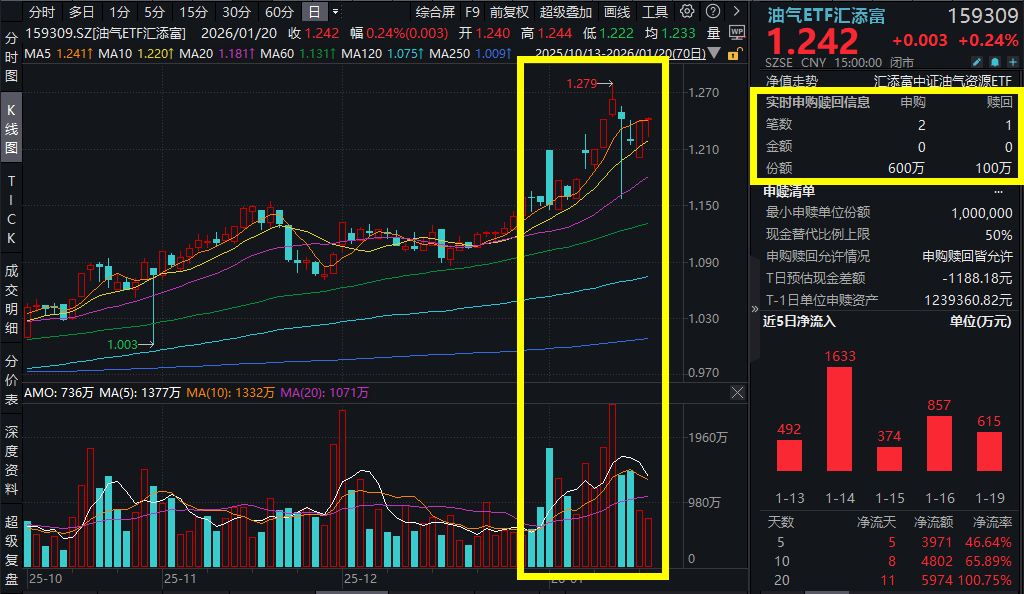
国内成品油价将迎2026年首次上调!三桶油集体上行,油气ETF汇添富(159309)翘尾收涨,连续6日吸金超4500万元!机构:关注石油供给侧两大线索
Sou Hu Cai Jing· 2026-01-20 07:59
Core Viewpoint - The A-share market showed signs of recovery on January 20, with the oil and gas ETF Huatai (159309) attracting significant capital inflow, indicating strong investor interest in the oil and gas sector [1] Group 1: Market Performance - The oil and gas ETF Huatai (159309) closed up 0.24%, with over 6 million yuan in capital inflow on that day, marking a total of over 45 million yuan in inflows over the past six days [1] - The top ten constituent stocks of the oil and gas ETF showed mixed performance, with Intercontinental Oil & Gas rising over 3% and China Petroleum and China Petrochemical both increasing by over 1% [5] Group 2: Oil Price Trends - International oil prices rose collectively, with West Texas Intermediate (WTI) increasing by 0.15% to $59.43 per barrel and Brent crude rising by 0.08% to $64.19 per barrel [2] - Domestic refined oil prices are set to increase by approximately 90 yuan per ton starting January 21, marking the first price hike of the year [3] Group 3: Supply and Demand Dynamics - Geopolitical supply risks in the oil market have risen, with actual supply disruptions occurring since late last year, while OPEC+ is expected to pause production increases in 1Q26 [4] - The U.S. shale oil production is nearing a peak, with the number of active drilling rigs in the Permian Basin decreasing to 250, indicating sensitivity to oil price fluctuations [6] Group 4: Investment Opportunities - The oil and gas ETF Huatai (159309) focuses on the oil and gas industry chain, providing exposure to key sectors with quality reserves and stable dividend capabilities [6] - The ETF tracks the China Securities Oil and Gas Resource Index, which has shown leading cumulative returns over the past six months, one year, and three years compared to similar indices [7]