动力电池

Search documents
宁德时代孙明岩:“内卷”本质是创新保护缺失导致的同质化竞争
Zhong Guo Jing Ying Bao· 2026-02-11 06:57
Core Viewpoint - The essence of the current industry "involution" is insufficient innovation protection leading to homogeneous competition, highlighting the need for a robust intellectual property (IP) system to create a healthy industrial ecosystem [1] Group 1: Company Strategy - CATL invests nearly 20 billion yuan annually in R&D and has established a global patent portfolio of 60,000 patents, creating a comprehensive "innovation-protection-application" management system [1] - The company adopts a "technology licensing + light asset operation" (LRS model) approach to effectively mitigate market risks and enhance its global technological influence [1] Group 2: Industry Challenges - There is a lack of mention of "involution" by foreign patent holders when licensing or enforcing patents, indicating a cognitive bias regarding the value of innovation among Chinese entities [1] - The global leading innovation capability of China's power battery sector requires more robust legal protection [1] - The fundamental issue of "involution" stems from a lack of innovation protection, necessitating the strengthening of IP protection to reshape competitive order [1] Group 3: Call to Action - The Chinese power battery industry is urged to adopt a "leader mentality" in constructing its IP strategy to continuously enhance the global competitiveness of Chinese enterprises [1]

宁德时代、长安汽车等在重庆成立动力电池公司,注册资本10亿元
Qi Cha Cha· 2026-02-11 06:36
Group 1 - The core point of the article is the establishment of a new power battery company, Times Changan (Chongqing) Power Battery Co., Ltd., with a registered capital of 1 billion yuan [1] - The company is fully owned by Times Changan Power Battery Co., Ltd., which is jointly held by CATL (Contemporary Amperex Technology Co., Ltd.), Deep Blue Automotive Technology Co., Ltd., and Changan Automobile [1] - The business scope of the new company includes battery manufacturing, battery sales, research and development of emerging energy technologies, new material technology research and development, and manufacturing and sales of electronic special materials [1]


春节错月致1月CPI同比涨幅回落,反内卷带动相关领域价格改善
第一财经· 2026-02-11 06:23
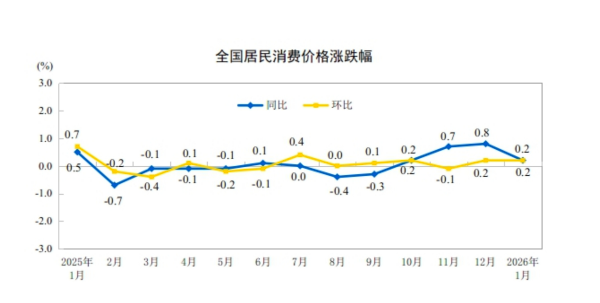
Core Viewpoint - The article discusses the recent trends in China's Consumer Price Index (CPI) and Producer Price Index (PPI), highlighting a decline in CPI and an improvement in PPI due to various factors including seasonal effects and policy implementations [3][5]. CPI Analysis - In January, the CPI increased by 0.2% month-on-month and year-on-year, with a notable decrease of 0.6 percentage points compared to December [3][5]. - The decline in CPI is attributed to the high base effect from the previous year's Spring Festival and a significant drop in energy prices, which fell by 5.0%, contributing approximately 0.34 percentage points to the CPI decrease [5][7]. - Core CPI, excluding food and energy, rose by 0.8% year-on-year and 0.3% month-on-month, marking the highest increase in six months, indicating a steady recovery in consumer demand [5][7]. PPI Analysis - The PPI rose by 0.4% month-on-month in January, marking the fourth consecutive month of increase, with the growth rate expanding by 0.2 percentage points from the previous month [7][8]. - Key factors driving PPI growth include the ongoing construction of a unified national market and increased demand in certain industries, leading to price increases in sectors such as photovoltaic, power batteries, cement, and steel [7][8]. - Specific price changes include a 0.1% increase in cement and lithium-ion battery manufacturing, a 1.9% increase in photovoltaic equipment manufacturing, and a 0.5% increase in computer and communication equipment manufacturing due to rising demand for digital technologies [7][8]. Future Price Trends - The National Bureau of Statistics indicates that favorable factors for moderate price recovery are accumulating, with expectations for expanded consumer demand supported by fiscal and financial policies [8]. - The emphasis on industry self-discipline and capacity management is expected to continue, contributing to price stabilization and recovery [8].

春节错月致1月CPI同比涨幅回落,反内卷带动相关领域价格改善
Di Yi Cai Jing· 2026-02-11 04:17
Group 1: Consumer Price Index (CPI) - In January, the CPI increased by 0.2% month-on-month and year-on-year, reflecting a decrease of 0.6 percentage points compared to December [1] - The decline in CPI is attributed to the Spring Festival timing and a significant drop in energy prices, which decreased by 5.0%, impacting CPI by approximately 0.34 percentage points [3] - Core CPI, excluding food and energy, rose by 0.8% year-on-year and 0.3% month-on-month, marking the highest increase in six months, indicating a steady recovery in consumer demand [3] Group 2: Producer Price Index (PPI) - The PPI rose by 0.4% month-on-month in January, marking the fourth consecutive month of increase, with an expansion of 0.2 percentage points from the previous month [5] - Factors contributing to the PPI increase include the ongoing construction of a unified national market and rising demand in certain industries [5] - Prices in sectors such as photovoltaic, battery, cement, and steel have shown positive improvements due to the "anti-involution" policies implemented last year [5] Group 3: Industry-Specific Price Changes - In January, prices for cement manufacturing and lithium-ion battery manufacturing increased by 0.1%, continuing a four-month upward trend [5] - The price of photovoltaic equipment and components shifted from a 0.2% decrease to a 1.9% increase, while basic chemical raw materials saw a 0.7% increase [5] - The prices of non-ferrous metal mining and smelting industries rose significantly, with silver smelting prices increasing by 38.2% and copper smelting by 8.4% [6] Group 4: Future Price Trends - The National Bureau of Statistics indicates that favorable factors for moderate price recovery are accumulating, supported by policies aimed at boosting consumption and stabilizing market expectations [6] - The implementation of coordinated fiscal and financial policies is expected to gradually expand consumer demand, providing a foundation for stable price operations [6] - Emphasis on industry self-regulation and capacity management is anticipated to further enhance price recovery in key sectors [6]
上游原材料成本增长对于汽车行业的影响
数说新能源· 2026-02-11 02:45
Group 1 - The core viewpoint of the article highlights the significant increase in costs for power batteries and storage chips, driven by a surge in global energy storage battery demand, which is expected to grow by nearly 93% year-on-year by 2025, alongside a 40% increase in demand for power batteries [4] - Key materials such as lithium carbonate and lithium hexafluorophosphate have seen substantial price increases, with lithium carbonate rising from approximately 120,000 yuan/ton in Q4 2025 to nearly 160,000 yuan/ton in January 2026 [4] - The cost of lithium iron phosphate battery cells is projected to rise from about 0.3 yuan/Wh in Q4 2025 to approximately 0.36 yuan/Wh in 2026, leading to an estimated increase of around 3,400 yuan per vehicle for battery costs, representing a 14-15% increase [4] Group 2 - The article discusses the structural shortage in storage chips driven by the AI supercycle and the growing demand from smart vehicles, with a significant portion of wafer production shifting towards higher-margin products, exacerbating supply constraints [4] - The storage cost as a percentage of vehicle price varies, with low-end vehicles at about 0.3%-0.5%, mid-range smart vehicles at 0.8%-0.9%, and high-end vehicles at around 0.7%, indicating a potential absolute cost increase of 200-3,000 yuan per vehicle due to current price hikes [5] - The article notes that the average copper usage in pure electric vehicles is about 80 kg, significantly higher than in traditional vehicles, and the average aluminum usage in pure electric vehicles is 292 kg, which is 42% higher than non-electric vehicles [5] Group 3 - The article emphasizes that the cost increases for copper and aluminum are driven by rising demand from electric vehicles and renewable energy sectors, alongside limited mining and smelting capacities [5] - The impact of these cost increases on vehicle pricing is moderated by manufacturers' hedging strategies, with actual cost transmission to consumers estimated to be between 30%-70% [5] - The overall average cost increase for pure electric vehicles is projected to be around 2,624 yuan, while non-electric vehicles may see an increase of about 1,117 yuan, with an industry average impact of approximately 2,000 yuan per vehicle [5]

2026开年,汽车供应链拉响警报
Zhong Guo Qi Che Bao Wang· 2026-02-10 12:40
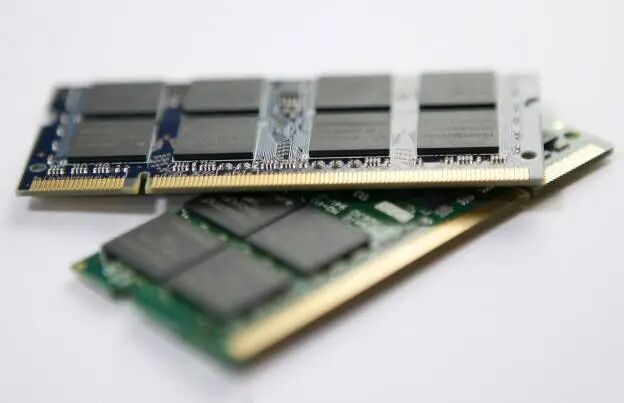
近期,富国银行、瑞银、标普全球等多家市场机构接连发出警告,指出由于DRAM(动态随机存取 存储器)的供应持续紧张,汽车行业2026年或面临这类存储芯片的严重成本压力与生产中断风险。 鉴于2020年底蔓延开来的芯片短缺危机曾给汽车产业带来阵痛,今年的这一供应链警报,不禁让汽 车行业神经紧绷。 今年存储芯片面临供应危机 高利润的AI业务正在系统性挤占车规级DRAM的产能与优先权。据了解,全球AI大模型爆发式增 长,正在创造对算力和高带宽内存(HBM)的海量需求。HBM是一种性能远超普通DRAM的高端内 存,其带宽可达后者的10倍以上,但成本和售价也极为高昂,为存储芯片巨头带来了丰厚的利润。 与之形成鲜明对比的是传统的车用DRAM业务。三星、SK海力士、美光科技这三家企业合计占据 全球DRAM市场超90%的份额,在车用DRAM市场的控制力也同样强大,但该业务对它们的营收贡献普 遍较低,且毛利率远低于HBM。有报道称,去年以来,三星、SK海力士、美光科技等存储巨头进行了 激进的产能战略调整。它们将最先进的制程和优质的晶圆资源优先用于生产HBM,并大幅增加相关投 资。同时,为将资源集中于HBM及高端DRAM,这些企业持 ...
地平线总裁换人:宁德时代前高管,中科大校友
3 6 Ke· 2026-02-10 11:16
Group 1 - The core point of the article is the appointment of Zhu Wei as the new president of Horizon Robotics, succeeding Chen Liming, and the significance of this leadership change in the context of the company's strategic direction and recent partnerships [1][4][11]. Group 2 - Zhu Wei, a graduate of the University of Science and Technology of China, has a diverse career background, including roles at Mercedes-Benz and as an executive at CATL, where he was responsible for passenger vehicle business [1][6][8]. - The recent collaboration between CATL and Horizon Robotics involves CATL supplying intelligent chassis and Horizon providing intelligent driving assistance systems, aimed at offering solutions to OEMs [2][4]. - Chen Liming, the former president, has transitioned to the role of vice chairman at Horizon, focusing on major strategic decisions for the company [4][11]. Group 3 - Zhu Wei's previous experience includes significant roles in multinational companies and a focus on overseas markets, which aligns with Horizon's recent emphasis on international expansion and establishing a European headquarters [11][12]. - The automotive industry is increasingly prioritizing internationalization, with companies recognizing that entering overseas markets is critical for survival rather than just growth [11].
四家A股公司齐发公告:50亿融资+2.5亿研发业绩重整双突破
Sou Hu Cai Jing· 2026-02-10 06:25
再来看科技领域的江波龙,则向市场呈现了一份"研发 业绩"双丰收的亮眼成绩单。2月3日发布的公告 显示,公司2025年的研发投入高达2.5亿元,专注于存储芯片技术的持续迭代升级。与此同时,公司的 净利润也实现了同比高达151.11%的爆炸式增长,业绩直接翻倍。江波龙用实际行动证明,科技企业的 核心竞争力,最终还是要依靠真实的技术实力和扎实的利润支撑。 老牌企业杉杉股份也迎来了股权结构的重大变革。2月8日发布的公告显示,公司的控股股东杉杉集团签 署了重整投资协议,安徽国资计划入主,这意味着杉杉股份即将进入由国资主导的全新发展阶段。值得 一提的是,杉杉股份此前刚刚实现了扭亏为盈,2025年归属于母公司的净利润预计将达到4-6亿元。此 次叠加股东重整的利好,无疑将为企业发展装上"双引擎",为未来的发展打开了广阔的想象空间。 此外,ST金灵也传来喜讯。2月3日晚间发布的公告显示,公司的重整计划获得了法院的批准,正式进 入执行阶段。这家专注于高端装备制造的企业终于摆脱了经营困境,迎来了重生的曙光。ST金灵从债 务危机到重整落地的转变,也成为了众多身处困境的企业成功突围的缩影,向市场传递了积极的信号。 这四家公司的公告看似 ...
【价值发现】建信基金经理陶灿业绩优异,精准的投资策略与行业配置,旗下基金收益率高达473.70%
Sou Hu Cai Jing· 2026-02-10 03:27
文|天峰 来源|财富独角兽 2025年至今,沪深股指持续上涨,主要源于政策支持、产业转型、资金面改善与市场信心修复等多重因素共振。人工智能、半导体、新能源等高景气赛道 轮番表现,反映出市场对"新质生产力"的高度认可。资金结构也发生深刻变化,外资回流加速,北向资金单月净买入创历史新高。 沪深股指大幅上涨,公募基金加仓高端制造与数字经济,尤其是权益类基金业绩因此受益。陶灿作为建信基金权益投资部总经理,深耕行业十余年,其管 理的基金以长期稳健著称。核心策略是"3+3"框架:自上而下优选行业,聚焦商业模式、竞争格局与景气趋势;自下而上精选个股,考察企业家格局、管 理层执行力与研发效率。 这种双维度方法显著提升了组合的抗风险能力。例如,在新能源行业波动中,陶灿通过动态调仓,规避产能过剩风险,同时锁定高成长赛道,使基金在行 业轮动中保持超额收益。其代表产品建信改革红利股票基金,凭借均衡配置和严格止盈止损机制,长期跑赢基准,成为同类产品中的标杆。 01 陶灿旗下基金收益率高达473.70% 精准把握改革红利宏观策略布局 据天天基金网显示,陶灿于2007年7月加入建信基金管理公司,历任研究员、基金经理助理、基金经理、资深基金 ...
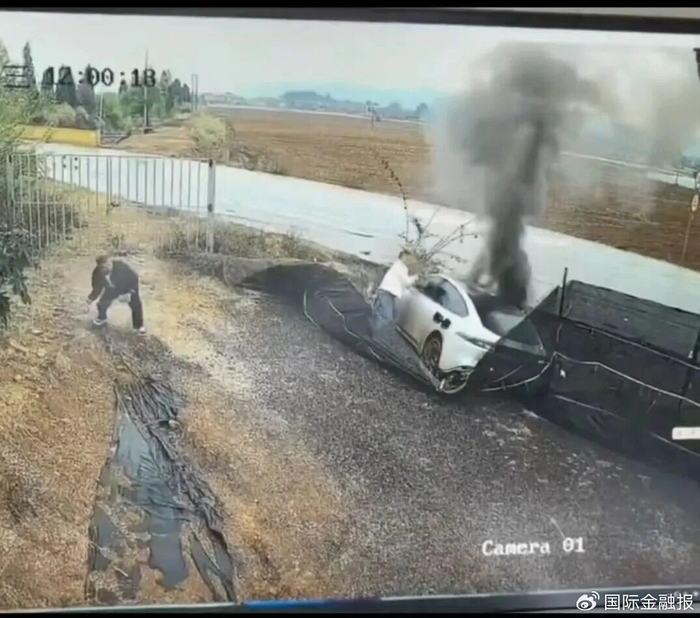
尘封一年的事故曝光:东风奕派撞车后,“不起火电池”50秒爆燃
Guo Ji Jin Rong Bao· 2026-02-09 13:32
2月4日,一段汽车碰撞救援视频在网络平台悄然传开,迅速引发全网热议。 网传视频截图 该起事故实际发生于2025年3月19日11时59分,地点位于云南省文山壮族苗族自治州砚山县平远镇某路 口,涉事车辆为一辆东风奕派eπ007纯电动网约车,搭载的正是欣旺达提供的磷酸铁锂电池,同时标注 匹配马赫E电池系统——该系统由东风集团与欣旺达动力科技合资的东昱欣晟代工生产,核心电芯源自 欣旺达。 涉事eπ007定位中低端纯电动市场,价格区间为10.99万—13.99万元,目前2025款、2026款车型均处于在 售状态,其电池配套方案未发生明显调整。 视频中,一辆东风奕派eπ007纯电动轿车与重型半挂车碰撞后,短短数十秒内便冒出黑烟、燃起明火, 车门锁死导致乘员逃生受阻,最终造成1人死亡、4人受伤的悲剧。 令人关注的是,东风奕派曾宣传"不起火、不爆炸",具备极致安全防护能力。 这场迟来的视频曝光,不仅让这起尘封近一年的事故重回公众视野,更将欣旺达电池的安全宣传与实际 表现的巨大反差,推至舆论风口浪尖。 东风奕派撞车后烈火吞车 经记者核实,网络热传的视频并非事故发生当日画面,而是发生于去年。 公开信息显示,欣旺达动力电池2025 ...