快消

Search documents
品牌控价的攻坚战:以体系化维权重塑市场价值秩序
Sou Hu Cai Jing· 2025-10-30 13:02
Core Insights - The brand pricing system is facing unprecedented challenges due to consumer upgrades and channel diversification, leading to issues like price dumping, cross-region diversion, and counterfeit products, which diminish brand premium capabilities and create consumer anxiety about price and quality [1] Group 1: Pricing Chaos - Pricing chaos is a chronic poison to brand ecosystems, causing significant trust issues among consumers, with 73% of consumers developing negative impressions due to price confusion, and the cost to repair this impression being over five times that of maintaining price integrity [3][4] Group 2: Multi-Dimensional Defense - Brands need to establish a "three-dimensional defense system" comprising legal tools, technology platforms, and channel governance to effectively control pricing. Legal actions can deter malicious low-price sales, while AI systems can enhance price monitoring efficiency by reducing response times from three days to two hours [4][5] - Implementing a tiered management system for distributors and utilizing digital tools for inventory visibility can significantly reduce diversion rates and improve distributor profits, as evidenced by a 65% decrease in diversion rates and an 18% increase in profits for a major appliance brand [4] Group 3: Value Reconstruction - The ultimate goal of price control is to shift the market focus from price competition to value co-creation. Brands can achieve this through differentiated product positioning, membership systems, and service upgrades, creating dual barriers of price anchors and experience barriers [4] - A high-end apparel brand that introduced customized services and lifetime maintenance saw a 40% decrease in price sensitivity and a 65% increase in repurchase rates, demonstrating the effectiveness of providing irreplaceable value to consumers [4] Group 4: Long-Term Perspective - Companies must view price control as a value investment rather than a cost item, leveraging legal, technological, and managerial innovations to restore price to its intrinsic value and ensure fair market competition, which is essential for brand resilience in changing market conditions [5]


联合利华刮骨疗毒:裁员7500人、剥离梦龙,中国市场成转型试金石
3 6 Ke· 2025-10-28 04:00
Core Insights - Unilever is undergoing a significant transformation, marked by layoffs, divestitures, and executive changes, with the Chinese market serving as a critical testing ground for its strategic shift [1][2] Financial Performance - In the first three quarters of the year, Unilever reported revenues of €44.8 billion, a year-on-year decline of 3.3%, with Q3 sales at €14.7 billion, down 3.5% [1] - All five core business segments experienced negative growth, with home care leading at a 5.3% decline, followed by ice cream at 4.2%, and beauty, health, and food segments each declining around 3% [1] - The Americas market saw a significant drop of 5.1%, while Europe achieved a modest growth of 1.9%. In contrast, Indonesia and China showed signs of recovery, with China's Q3 sales returning to low single-digit growth [1][6] Strategic Reforms - CEO Alan Fernandis initiated aggressive reforms, focusing on cutting inefficient businesses, enhancing brand premiumization and innovation, and strengthening digital capabilities [2] - A major workforce reduction is planned, with 7,500 jobs cut, representing 5.9% of the total workforce, and a quarter of the top 200 executives will be replaced, aiming for annual cost savings of $800 million [2] Business Divestitures - Unilever has been actively divesting underperforming brands, including the sale of the water purifier brand Pureit and over 20 beauty brands, as well as the separation of its ice cream business, which has been rebranded as "Dream Ice Cream Company" [3] - The ice cream segment, which holds a 21% market share globally, is projected to generate €7.9 billion in revenue for 2024. In China, it ranks second in market share, trailing behind Yili [3] Market Adaptation - The Dream Ice Cream Company plans to innovate in market engagement, adopt competitive pricing strategies across all snack price points, and expand high-end brand offerings internationally [4] - Unilever is concentrating resources on its "Power Brands," which contribute 78% of sales and achieved a Q3 growth rate of 4.4%, significantly above the overall performance [4] Future Outlook - The company anticipates an improvement in operating profit margins, projecting at least 18.5% for the second half of the year [5] - Unilever aims for a full-year sales growth of 3% to 5% by 2025, with expectations of stronger performance in the second half compared to the first [8] - The management remains optimistic about the transformation despite the ongoing challenges, focusing on a streamlined portfolio that includes beauty, health, personal care, home care, and nutrition [8]
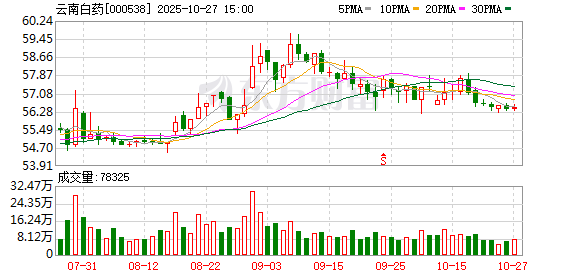
云南白药智慧工厂全面对标“工业4.0”—— 老字号成新标杆
Jing Ji Ri Bao· 2025-10-27 22:09
Core Insights - Yunnan Baiyao Group has established a smart factory that can produce up to 1.6 million toothpaste tubes daily, with an annual capacity of 450 million tubes and other products [2] - The factory aims to represent China's health industry in global competition by adopting "Industry 4.0" standards and focusing on production transformation and smart manufacturing [2][4] - The smart factory has been recognized as a "lighthouse factory" in global manufacturing, highlighting its advanced operational capabilities [2] Digital Transformation - The factory has implemented a comprehensive data governance system, standardizing data across over 50 core business systems and establishing a robust data management framework [3] - It utilizes 7,500 sensors to create a data perception network, enabling real-time monitoring and predictive maintenance through AI algorithms [3] - The integration of IoT technology has led to innovations such as "one-step paste production" and "second-level switching," significantly enhancing production efficiency [3][4] Production Efficiency - The smart factory's digital and modular production approach allows for rapid response to market demands, accommodating diverse needs across different channels and regions [4] - The factory can quickly switch between 42 different paste formulas, reducing the setup time for production from traditional methods by approximately 95% [3][4] - Future plans include expanding the digital transformation model to other product lines, such as traditional Chinese medicine and health foods, to enhance overall industry efficiency [4][5]

老字号成新标杆
Jing Ji Ri Bao· 2025-10-27 22:02
Core Insights - Yunnan Baiyao Group has established a smart factory that can produce up to 1.6 million toothpaste tubes daily, with an annual capacity of 450 million tubes and other products [1] - The factory aims to represent China's health industry in global competition by adopting "Industry 4.0" standards and focusing on production transformation and upgrading [1][3] - The smart factory has been recognized as a "lighthouse factory" in global manufacturing, showcasing its advanced capabilities [1] Digital Transformation - The factory has implemented a comprehensive data governance system, standardizing data across over 50 core business systems and establishing a robust data management framework [2] - It utilizes 7,500 sensors to create a data perception network, enabling real-time monitoring and predictive maintenance through AI algorithms [2] - The integration of IoT technology has led to innovations such as "one-step paste production" and "second-level switching," significantly enhancing production efficiency [2] Production Efficiency - The smart factory's digital and modular production approach allows for rapid response to diverse market demands, facilitating a quick feedback loop from market to production and back [3] - Future plans include deepening digital transformation and applying smart manufacturing models to other product lines, such as traditional Chinese medicine and health foods [3] - The company aims to provide intelligent manufacturing solutions to assist other manufacturers in reducing transformation costs and overcoming technical challenges [3]
中国食品自动售货机数据产品入表交易 开创快消数据资产化新范式
Zheng Quan Ri Bao Wang· 2025-10-27 11:16
Core Insights - China Foods has achieved a historic breakthrough in data assetization, successfully completing the accounting entry for its "Vending Machine Sales Performance Analysis Report Data" product, with an entry amount of 1.023 million yuan [1] - The project marks the first complete closed-loop case of "data resources - data products - data assets - data revenue" for China Foods, demonstrating efficient cross-departmental collaboration and rapid digital execution [1][2] - The company emphasizes the importance of not just recording data on the balance sheet but also establishing a sustainable mechanism for data value transformation [1][2] Data Assetization Strategy - Under the guidance of COFCO Group's digital transformation requirements, China Foods has proactively laid out a strategic framework for data assetization, focusing on both monetization and circulation of data [2] - The "Vending Machine Sales Performance Analysis Report Data" product integrates data from 110,000 vending machines, providing reliable support for operational management, product optimization, and sales forecasting [2] Compliance and Efficiency - To ensure compliance and efficiency, multiple departments within China Foods collaborated to establish management guidelines and frameworks for data asset management and protection [3] - The data product not only integrates into internal operations but also possesses external trading attributes, enhancing both internal efficiency and external market insights [3] Market Potential and Future Plans - The "Vending Machine Sales Performance Analysis Report Data" product has already achieved a transaction scale in the millions, with expectations for significant revenue growth during the 14th Five-Year Plan period [4] - China Foods has initiated plans for a second batch of high-value data assets, focusing on supply chain collaboration data and regional consumer profiling, aiming to transform data from a cost center to a profit center [4] Industry Impact - The practices of China Foods exemplify the national initiative of "data elements" in the consumer goods sector, highlighting that true data assetization lies in its ability to drive decision-making, optimize operations, and create incremental revenue [4]
在西部见证了一场极致真诚、极具影响力的科技领袖盛会|GTLC成都站圆满落幕
AI前线· 2025-10-27 07:29
Core Viewpoint - The GTLC Global Technology Leadership Conference in Chengdu focused on the theme "AI New 'Shu' Light," featuring over ten prominent speakers discussing AI application ecosystems and corporate transformation, attracting more than 300 participants from various cities [2][3]. Group 1: Event Overview - The conference included high-quality keynote speeches, 11 closed-door sessions, and unique activities such as a football friendly match and self-driving tours, emphasizing both learning and networking [3][57]. - TGO Kunpeng Club, the organizer, has grown its membership significantly over the past decade, aiming to cultivate technology leaders and support their personal and business growth [3][9]. Group 2: Keynote Highlights - The morning session centered on "Industry Exploration in the AI Era," with various speakers sharing insights on practical methodologies for AI integration in businesses [4][13]. - The first speaker, the CIO of Anker Innovation, discussed a three-phase approach for AI implementation, focusing on capability penetration, business integration, and AI-native transformation [13][14]. - The second speaker from China Resources Beer outlined a strategy for intelligent transformation, emphasizing scenario selection and phased implementation to enhance efficiency and reduce costs [17][18]. Group 3: Industry Insights - The discussion on intelligent driving highlighted the challenges and advancements in L4 technology, with companies like Waymo and Cruise leading the way but facing limitations in scalability [20][21]. - A presentation on AI's role in community operations emphasized the importance of leveraging AI as a "fourth super lever" to enhance individual and organizational effectiveness [23][24]. - The roundtable discussion on AI model applications reflected on the current state of AI in both consumer and business sectors, identifying gaps and future directions for practical applications [27][28]. Group 4: Afternoon Sessions - The afternoon sessions continued to explore AI's impact across various sectors, including finance, hardware, and education, with speakers sharing their experiences and methodologies for successful AI integration [30][34]. - A former executive from Suning discussed the importance of product-centric approaches in building intelligent enterprises, advocating for a shift from human-driven processes to product-driven operations [34][35]. - The chief model scientist from BaiRong AI presented a comprehensive methodology for applying large models in finance, showcasing successful implementations in marketing and customer service [37][39]. Group 5: Closing Thoughts - The conference concluded with reflections on the challenges and opportunities in AI education, emphasizing the need for a deep understanding of educational principles alongside technological advancements [48][50]. - The event also featured various networking opportunities, including closed-door meetings and social activities, fostering connections among technology leaders and participants [51][57].

36氪X尼尔森IQ「国货未来 超级品牌」揭晓|未来十年,谁将定义国货的「超级品牌」?
3 6 Ke· 2025-10-27 03:24
Core Insights - The evolution of "Guochao" (national trend) reflects a shift from merely supporting domestic products to a deeper cultural and brand loyalty among consumers, particularly the younger generation [2][3] - The concept of "super brands" is changing, requiring brands to establish a significant presence and cultural resonance beyond just product functionality [3][4] - A recent survey by 36Kr and NielsenIQ aims to identify brands that can navigate the challenges of global competition and changing consumer demands, marking a pivotal moment for China's consumer industry [2][4] Brand Evolution - The definition of "super brands" is dynamic, evolving from basic visibility in scarcity to complex cultural and technological competencies in a saturated market [3][4] - The growth logic of domestic brands is diversifying, with new brands focusing on niche markets and agile strategies rather than competing head-on with established giants [6][8] - The importance of cultural identity and consumer engagement is rising, with brands needing to create meaningful experiences that resonate with consumers on a personal level [9][10] Trends in Brand Development - Trend 1: In the era of influence, being remembered by consumers is the ultimate competitive advantage, shifting focus from mere visibility to value-driven choices [6][7] - Trend 2: New brands are leveraging precise market needs and rapid iteration to carve out opportunities in saturated markets, emphasizing a "precision + agility" strategy [8][9] - Trend 3: Consumers are increasingly seeking brands that offer emotional resonance and participatory experiences, transforming products into meaningful symbols of identity [9][10] Brand Rankings and Insights - The "Future Super Brands" list highlights brands that not only excel in product sales but also build strong user relationships and cultural influence [4][10] - The evaluation of brands is based on a combination of consumer survey data and retail performance metrics, providing a comprehensive view of brand impact [55][56] - The collaboration between 36Kr and NielsenIQ aims to provide a clearer understanding of market dynamics and consumer behavior, helping brands navigate the evolving landscape [56][57]
拼多多和Shein在欧洲杀疯了,欧盟会立法禁止这些中国的便宜货吗?
Sou Hu Cai Jing· 2025-10-25 19:17
Core Viewpoint - The article discusses the growing resistance against fast fashion brands like Shein in Europe, highlighting the environmental and social implications of their business models, which prioritize low prices and rapid production at the expense of sustainability and labor rights [4][10][29]. Group 1: Environmental Impact - The rise of brands like Shein and Temu has led to increased waste and environmental pollution, as their business models encourage consumers to buy more and discard items quickly due to low prices [10][11][14]. - The article emphasizes that the so-called "on-demand production" has transformed into a culture of "on-demand disposal," contributing to greater waste rather than reducing it [14][23]. - The fashion industry, including Shein, is noted for its significant carbon emissions, second only to the transportation sector in terms of environmental pollution [23]. Group 2: Labor Exploitation - Shein's business model relies on low prices, which results in reduced factory profits and consequently leads to the exploitation of workers through long hours, low wages, and poor working conditions [19][21]. - The article contrasts the labor practices of Shein with those of European brands that adhere to sustainability standards, highlighting the lack of social responsibility in Shein's supply chain [21][23]. Group 3: Consumer Behavior and Market Dynamics - The article points out that the appeal of Shein lies in its ability to offer a wide variety of trendy items at low prices, which attracts young consumers despite the negative implications [10][18]. - It discusses the algorithm-driven approach of Shein and Temu, which tailors products to consumer preferences, but ultimately leads to a cycle of overconsumption and waste [12][23]. - The article suggests that the current consumer behavior reflects a form of "democratization of consumption," where affordability comes at the cost of environmental and social degradation [23]. Group 4: Regulatory Responses - The Swedish government is considering measures to ban or regulate companies like Shein and Temu due to their environmental impact, indicating a shift towards more sustainable practices in the fashion industry [27][29]. - The European Union is preparing regulations aimed at ensuring that imported products meet sustainability criteria, which could fundamentally change the fast fashion landscape [29].

36氪X尼尔森IQ「国货未来 超级品牌」揭晓|未来十年,谁将定义国货的「超级品牌」?
36氪· 2025-10-25 09:27
Core Insights - The concept of "super brands" is dynamic and evolves with consumer expectations and market conditions [2][5] - The transition from "buying domestic products" to "daily consumption of domestic brands" raises questions about what defines a "Chinese super brand" in a competitive landscape [3][6] - The growth logic of domestic brands is diversifying, moving beyond price competitiveness to focus on cultural resonance and technological innovation [6][9] Brand Evolution - In the past, "super brands" were defined by visibility and market dominance, but today they must establish a deeper connection with consumers [5][6] - The current market demands brands to have both "hard technology" and "soft power" to succeed [6][9] Trends Defining Future Super Brands - **Trend 1: Influence as a Core Asset** The focus has shifted from mere visibility to being chosen by consumers, emphasizing the importance of brand value in consumer decision-making [9][10] - **Trend 2: Agile Growth Strategies** New brands are finding opportunities in niche markets by addressing specific consumer needs and adapting quickly to feedback, contrasting with the previous "big and comprehensive" approach [11][12] - **Trend 3: Cultural Resonance and Value Expression** Modern consumers seek brands that offer meaningful experiences and emotional connections, transforming products into vehicles for personal expression [12][13] Brand Rankings and Insights - The "Influential Brand List" highlights established brands like Moutai and Yili, showcasing their strong market presence and consumer recognition [16][19] - Emerging brands are also recognized for their growth potential, indicating a shift in consumer preferences towards brands that resonate culturally and emotionally [8][11] Research Methodology - The evaluation of brands was based on a combination of consumer survey data and retail performance metrics, providing a comprehensive view of brand influence in the market [44][45] - The collaboration between 36Kr and NielsenIQ aims to identify brands with long-term value and future impact, reflecting the evolving landscape of Chinese consumer goods [44][46]







业绩承压,五大业务部门营收全线下滑,联合利华转型进入深水区
Hua Xia Shi Bao· 2025-10-25 09:18
Core Insights - Unilever is undergoing significant strategic transformation amid performance pressures, including layoffs, leadership changes, and divestitures [2][6] Financial Performance - For the first nine months of 2025, Unilever reported a revenue of €44.8 billion, a year-on-year decline of 3.3% [3] - All business segments experienced revenue declines, with the largest drop in home care at 5.3%, followed by ice cream at 4.2%, and beauty & health and food segments both around 3% [3] - In Q3, sales amounted to €14.7 billion, down 3.5% year-on-year, but underlying sales grew by 3.9% [3] - The European market showed a slight revenue increase of 1.9%, while the Americas faced the largest decline at 5.1% [3] Strategic Challenges - Unilever's revenue growth has been sluggish, with a mere 1.9% increase in FY2024 and a net profit decline for two consecutive years [4] - The company faces intense competition from rivals like Procter & Gamble and L'Oréal, alongside changing consumer preferences towards natural and organic products [4] - Rising raw material costs have further pressured profit margins [4] Reform Initiatives - CEO Fernando Fernandez has identified three key reform areas: eliminating inefficient businesses, focusing on high-margin growth sectors, and enhancing digital capabilities [4][6] - The company plans to cut approximately 7,500 jobs globally, representing about 5.9% of its workforce, to save around $800 million [6] Market Dynamics - In China, Unilever's basic sales returned to low single-digit growth in Q3, attributed to targeted marketing strategies and a premium product mix [4][5] - The domestic consumption stimulus policies have revitalized the market, providing a favorable environment for Unilever's products [5] Business Adjustments - Unilever has divested non-core beauty and personal care brands, including Elida Beauty and its ice cream business, to focus on more sustainable and growth-oriented segments [6][7] - The planned spin-off of the ice cream business is expected to be completed by Q4 2025, with anticipated improvements in operating profit margins [7]