3C数码

Search documents
中国银河证券:提振消费政策重要性凸显 关注高分红率优质公司
智通财经网· 2025-12-18 01:41
Core Viewpoint - The consumption industry needs to focus on the medium- and long-term goals outlined in the "14th Five-Year Plan," with short-term attention on specific policies related to consumption expected to be implemented by 2026 [1] Group 1: Consumption Trends - Global consumption recovery is slow, with high tariffs pushing up prices and high interest rates suppressing credit demand, leading to weak consumer confidence in Europe and the U.S. [2] - The central economic work conference emphasized the importance of domestic demand and the construction of a strong domestic market, implementing actions to boost consumption and plans to increase income for urban and rural residents [2] - The report is more optimistic about the improvement of service consumption compared to goods consumption, highlighting recent policies aimed at enhancing service consumption [2] Group 2: Domestic Demand and Retail Performance - In November, the retail sales growth rate was 1.3% year-on-year, with a month-on-month decline of 1.6 percentage points, marking a continuous decrease since May [3] - The decline in retail sales for household appliances and audio-visual equipment was significant, with year-on-year drops of 14.6% and 19.4% in October and November, respectively [3] - Retail sales in the furniture category showed mixed results, with a year-on-year increase of 9.6% in October but a decline of 3.8% in November [3] Group 3: Category-Specific Insights - Jewelry retail sales saw substantial growth of 37.6% and 8.5% in October and November, influenced by new tax policies on gold jewelry [4] - The clothing and textile categories experienced stable growth, with year-on-year increases of 6.3% and 3.5% in October and November, respectively [4] - The restaurant sector's retail sales grew by 3.8% and 3.2% year-on-year in October and November, indicating stability despite slow growth [4] Group 4: Global Consumer Sentiment - Consumer confidence in Europe and the U.S. remains weak, with the U.S. consumer confidence index at 53.3, close to historical lows [5] - Retail performance in the U.S. was lackluster, with a year-on-year increase of 3.9% in adjusted retail sales for September, showing a decline from August [5] - Online sales during the holiday shopping period showed modest growth, with a year-on-year increase of 7.7%, indicating a competitive environment for promotions [5]

日照|1-11月日照以旧换新带动消费超46亿元
Da Zhong Ri Bao· 2025-12-16 02:01
Group 1 - The core viewpoint of the news is the successful implementation of the "old for new" policy in Rizhao, which has significantly boosted consumer spending and market vitality [1] - From January to November, the "old for new" policy has driven a total sales volume of 4.628 billion yuan in automobiles, home appliances, and other goods, indicating a strong consumer market [1] - The Rizhao Municipal Bureau of Commerce, in collaboration with other departments, has established detailed implementation rules for six categories of goods, including automobiles and home appliances, to promote the "old for new" initiative [1] Group 2 - The "old for new" policy has resulted in the sale of 13,900 scrapped vehicles and 11,800 replacement vehicles, along with 284,400 home appliances and 170,400 3C digital products, showcasing the policy's effectiveness [1] - A total of 801 enterprises have participated in the "old for new" initiative, and the subsidies applied for have reached 657 million yuan, reflecting the tangible benefits of the policy [1] - In addition to the "old for new" policy, Rizhao has launched a "combination punch" to stimulate consumption, including the innovative "ticket root economy" model, which has generated over 5.6 million yuan in consumer spending [2]
首批首发经济创领品牌与创新场景发布
Sou Hu Cai Jing· 2025-12-15 07:22
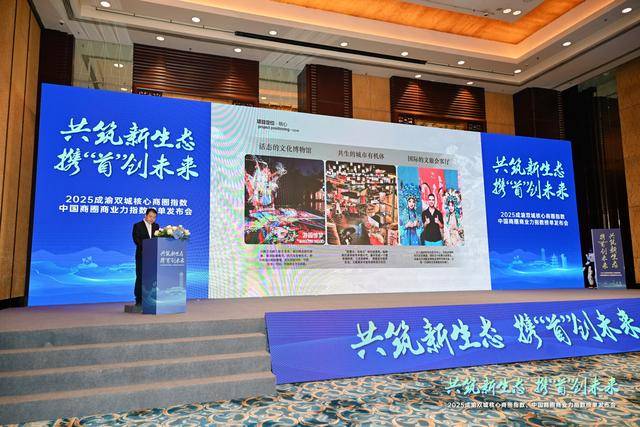
Core Insights - The event "Building a New Ecosystem, Creating the Future" highlighted the launch of innovative brands and economic scenarios in the Jinjiang District, including HADO, Bawang Chaji, and others, showcasing the district's commitment to fostering a vibrant consumer market and innovative economic development [1][3]. Brand Highlights - Bawang Chaji has established over 7,000 global stores since moving its headquarters to Jinjiang in 2021, successfully integrating local culture with tea consumption [4][20]. - HADO, a leading AR sports technology brand, has created a comprehensive industry chain that combines sports, education, and technology, appealing to a young demographic [15][17]. - Zigzag Mountain, a honey tea brand, has chosen Chengdu's Chunxi Road for its flagship store, aiming to establish a local supply chain and cultural IP [14]. Innovative Economic Scenarios - The "Robot World" platform in Jinjiang serves as a core hub for brand display and consumer experience, with plans for a 28,000 square meter development to create a full lifecycle ecosystem for products and services [8][10]. - The "Shishuo Wuyu" online platform, leveraging social media for product launches, has achieved over 100 million in sales, indicating a strong market presence [11]. Market Trends - The Jinjiang District has seen a surge in new store openings, with 266 new stores established from January to October 2023, accounting for nearly 40% of the city's total [25]. - The first city duty-free store in Chengdu has opened, blending international quality with local characteristics, further enhancing the consumer landscape [25].

2026年国补继续!政策将优化……
Sou Hu Cai Jing· 2025-12-12 04:22
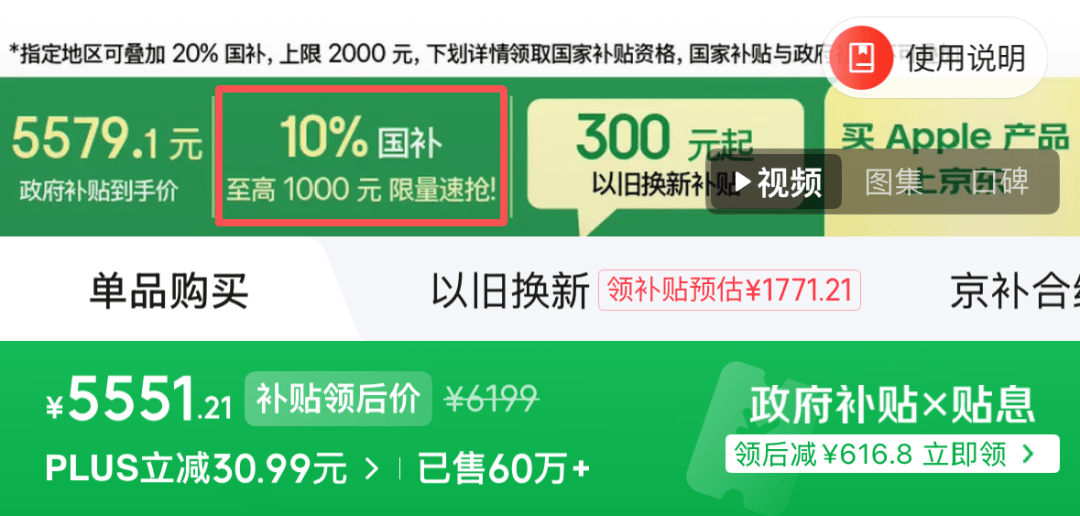
Group 1 - The core viewpoint of the news is the continuation and optimization of the "National Subsidy" policy in 2026, which aims to boost domestic demand and support consumer spending [2][3] - The "National Subsidy" policy will be optimized in 2026, with specific adjustments to be made, indicating a sustained government effort to stimulate consumption [2] - The funding for the "National Subsidy" program is set to increase from 150 billion yuan in 2024 to 300 billion yuan in 2025, which is expected to drive consumption by over 2.5 trillion yuan and benefit 360 million people [3] Group 2 - In November 2025, China's automotive industry saw production exceed 3.5 million vehicles and exports surpass 700,000 units, both reaching historical highs, with new energy vehicle sales accounting for over 50% for the second consecutive month [5] - The continuation of the "National Subsidy" policy is expected to positively impact the automotive market, particularly for new energy vehicles, as consumers may benefit from subsidies and tax incentives [5]
体验消费至上,折叠屏卷向主力机|世研消费指数品牌榜Vol.89
3 6 Ke· 2025-12-08 03:07
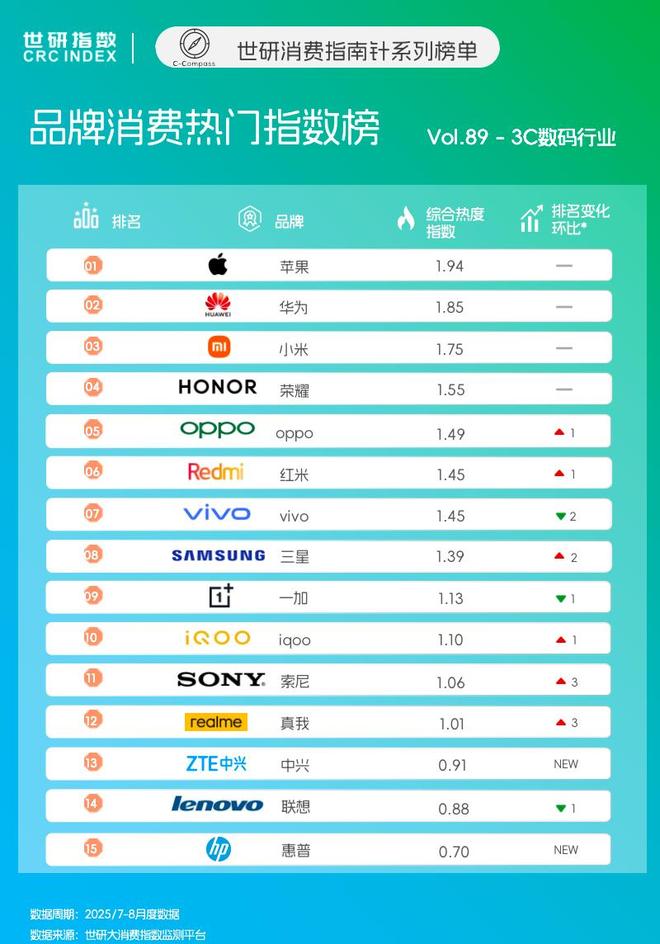
Group 1 - The 3C industry is experiencing a "downward" and "upward" strategic competition, with OPPO focusing on affordable cooling technology for budget phones, while Honor and Samsung are emphasizing lightweight foldable screens and AI integration for high-end devices [1][4][5] - In the budget segment, OPPO launched the K13 Turbo series featuring a "wind cooling engine" that enhances cooling efficiency by 120%, targeting a price point under 2000 yuan [4] - Honor's new foldable phone, Magic V5, is positioned as the thinnest and lightest in the industry, featuring advanced AI capabilities and priced starting at 8999 yuan, marking a significant step in its high-end strategy [4] Group 2 - The tablet market is evolving with Huawei's MatePad Pro 12.2, which integrates HarmonyOS 5 and focuses on professional software and AI functionalities, catering to mobile office and creative needs [6] - The wearable segment is also expanding, with iQOO launching the iQOO WATCH GT and OnePlus introducing the OnePlus Watch 3, both targeting specific niches in the market [6] - The competitive landscape is shifting towards technology experience, innovative forms, and ecosystem collaboration, moving beyond traditional parameter comparisons [1]
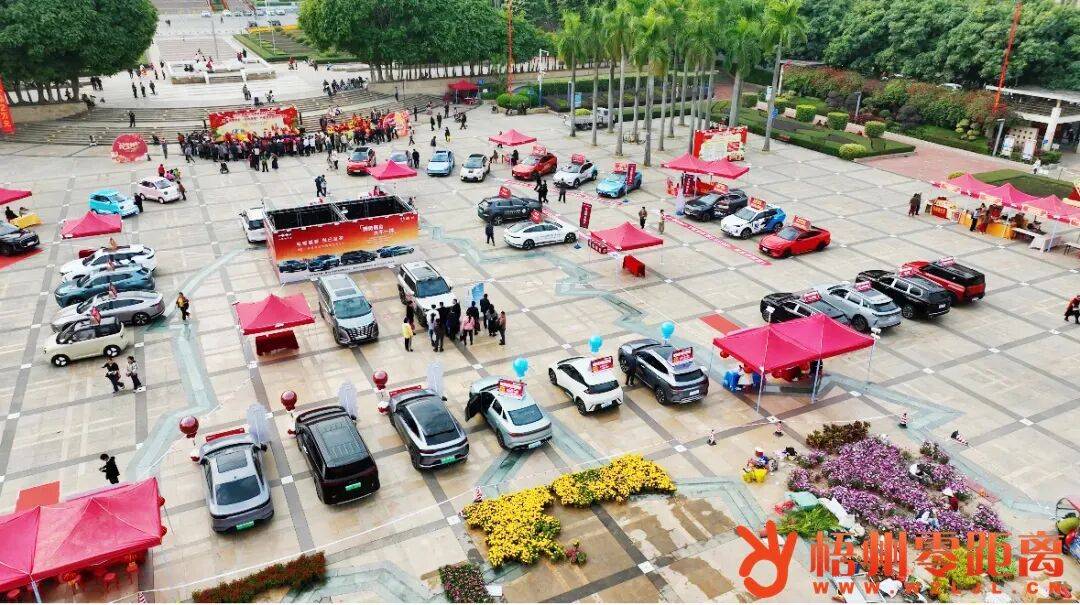
交易额约20亿元!梧州以旧换新活动点燃五大领域消费热潮
Sou Hu Cai Jing· 2025-12-06 17:32
Core Insights - The "trade-in" policy in Wuzhou has successfully stimulated consumer spending, with over 232,000 transactions and a total value exceeding 250 million yuan, leading to approximately 2 billion yuan in sales for over 700 enterprises [1][4] - The initiative has particularly boosted the home appliance sector, which accounted for about 149,000 subsidy transactions, highlighting strong consumer demand for upgrading appliances [6] - The automotive sector also saw significant activity, with over 7,100 subsidy applications for vehicle trade-ins, indicating increased consumer interest in replacing old vehicles [6][7] Group 1: Trade-in Policy Impact - The trade-in policy has led to a surge in consumer activity, with a notable increase in foot traffic to stores and a rise in sales figures, such as a record single-day sales of over 5 million yuan for a local appliance store [6] - The collaboration between government, enterprises, and financial institutions has resulted in promotional activities that further incentivize consumer purchases, creating a "double discount" effect [4][6] Group 2: Sector Performance - The home appliance sector remains the strongest performer in the trade-in program, with significant consumer interest in large appliances like televisions, refrigerators, and air conditioners [6][7] - Other sectors, including 3C digital products, home decoration, and electric bicycles, also participated in the trade-in activities, with subsidy transactions of over 66,000, 7,500, and 2,400 respectively, indicating widespread consumer engagement [7] - Retail sales for key categories such as new energy vehicles, smartphones, and home appliances have shown substantial growth, with increases of 26.5%, 15.1%, and 4.7% respectively from January to October [7] Group 3: Future Initiatives - The Wuzhou Commerce Bureau plans to continue promoting the trade-in policy by collaborating with major commercial enterprises to focus on green and smart products, aiming to enhance consumer quality of life and expand market capacity [8]
国潮崛起(上)
Jing Ji Ri Bao· 2025-12-01 22:22
Core Insights - The rise of "Guochao" (national trend) reflects a significant shift in consumer behavior, where Chinese brands are becoming essential choices rather than optional ones, indicating a deep-rooted change in consumer psychology and market environment [2][3][4] Group 1: Market Trends - Guochao consumption has transitioned from being a niche phenomenon to a mainstream force, with Chinese brands now covering a wide range of categories including 3C digital products, home goods, food, beauty, fashion, and cultural products [3][4] - The popularity of Guochao brands is evident in international markets, with significant growth in overseas revenues for brands like Pop Mart, which saw a year-on-year increase of 365% to 370% in Q3 2025 [2][3] Group 2: Demographic Shifts - The consumer base for Guochao has expanded beyond the "Z generation" to include older demographics, with a notable 38% repurchase rate for Hanfu among those aged 50 and above, indicating a cross-generational appeal [4][5] - Middle-income families from the "80s" and "90s" are becoming key consumers of new Chinese-style home goods and high-end domestic products, showcasing the broadening appeal of Guochao [4] Group 3: Consumer Preferences - The focus of Guochao has shifted from "cost-effectiveness" to "emotional value," with consumers prioritizing personal preference and emotional connection over mere price considerations [5][6] - Brands like ERDOS and Heytea are establishing themselves as premium choices, with products priced higher than their international counterparts, reflecting a growing confidence in the value of Chinese brands [5][6] Group 4: Policy and Digital Empowerment - The growth of Guochao is supported by government policies promoting cultural confidence and innovation in supply, which have enhanced the recognition and influence of domestic brands [7][8] - The rise of digital platforms such as Douyin and TikTok has transformed the marketing landscape, allowing Guochao brands to reach consumers effectively and build trust through social media engagement [8][9] Group 5: Competitive Advantage - The core competitive advantage of Guochao lies in its ability to reconstruct value, moving from a focus on cultural identity to emphasizing quality and consumer trust [10][11] - Guochao brands are increasingly recognized for their superior product quality and emotional resonance, filling a market gap between unreliable white-label products and overpriced international brands [11][12]

小天才,也许是段永平最好的生意
3 6 Ke· 2025-11-28 08:15
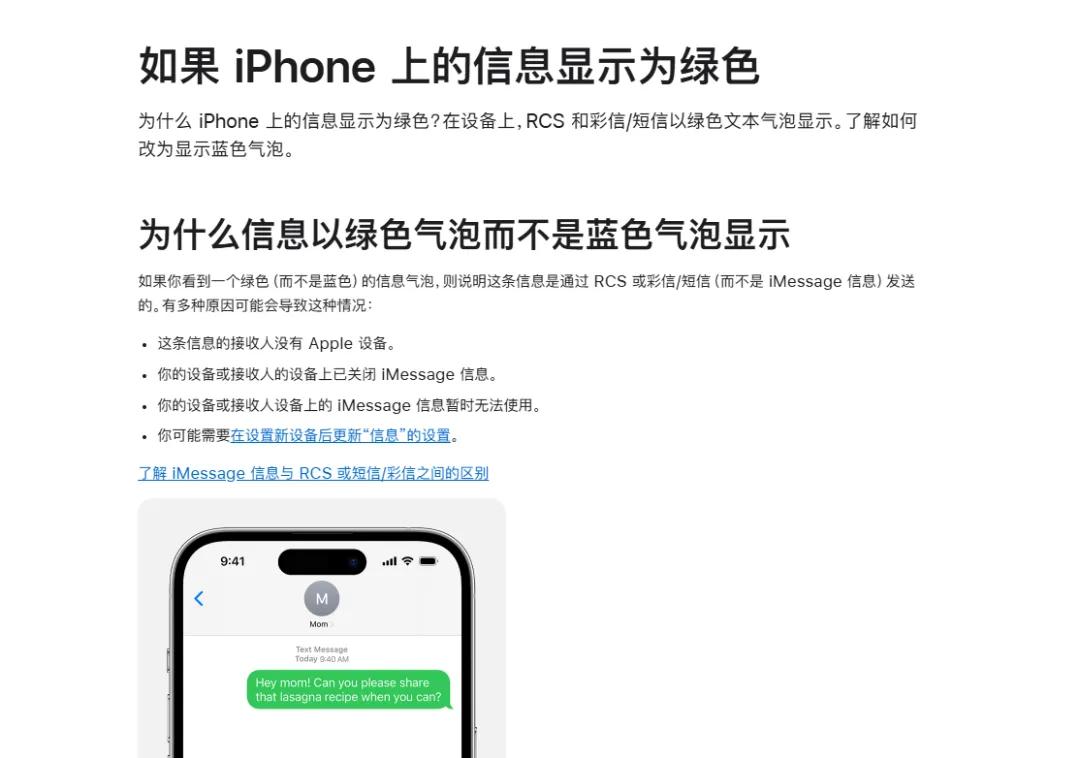
Core Insights - The article discusses the business model of BBK Electronics, particularly focusing on its product, the Xiaotianzi smart watch, which stands out in a competitive market dominated by low profit margins in the 3C digital consumer goods sector [2][22][23]. Group 1: Business Model Analysis - The traditional business model of BBK Electronics is considered suboptimal, with low profit margins typical in the 3C digital consumer goods industry, where companies like Xiaomi, Samsung, and Sony have profit margins generally below 10% [2][23][28]. - The Xiaotianzi smart watch, however, exhibits unique social attributes and pricing power, making it a potential exception within BBK's portfolio [3][31]. - The Xiaotianzi watch has created a closed social network similar to Apple's iMessage, which enhances its value proposition and customer loyalty among children [11][13][19]. Group 2: Competitive Landscape - The article highlights that while Android devices struggle with differentiation, the Xiaotianzi watch offers a unique social experience that cannot be replicated by competitors, thus establishing a strong competitive moat [10][30]. - The watch's social features, such as the "WeChat-like" micro-chat function, are essential for children’s social interactions, making it a must-have item among peers [4][15][19]. - The pricing strategy of the Xiaotianzi watch, with a retail price of 2299 yuan, positions it competitively against premium products like the Apple Watch, despite its limited market size compared to smartphones [30][31]. Group 3: Investment Perspective - The article suggests that while BBK's overall business may not meet the investment criteria of high-margin companies, the Xiaotianzi smart watch could represent one of the best business opportunities within the digital consumer goods sector in China [22][31]. - The potential for long-term sustainability and profitability of the Xiaotianzi watch is emphasized, as it aligns with the growing demand for integrated social and communication features among children [31].

10月锂电下游应用市场概况:汽车渗透率稳步爬升,储能订单饱满
鑫椤锂电· 2025-11-26 06:42
Core Insights - The article highlights the significant growth in the Chinese new energy vehicle (NEV) market, with production and sales reaching 1.772 million and 1.715 million units in October, representing year-on-year increases of 21.1% and 20% respectively [2] - The penetration of new energy vehicles in total vehicle sales has reached 51.6% in October, indicating a strong market trend [2] - Cumulative sales from January to October show a total of 13.015 million NEVs sold, with a year-on-year growth of 33.1% [2] NEV Market Performance - In October, domestic sales of NEVs were 1.459 million units, with a month-on-month increase of 5.6% and a year-on-year increase of 12.1% [2] - The breakdown of sales includes 1.377 million passenger NEVs (up 6% month-on-month, 10.3% year-on-year) and 82,000 commercial NEVs (down 0.5% month-on-month, up 52.4% year-on-year) [2] - Cumulative domestic sales for the first ten months reached 10.929 million units, with passenger NEVs at 10.28 million (up 24%) and commercial NEVs at 649,000 (up 60.2%) [2] Battery Industry Insights - In October, the domestic power battery installation volume was 84.1 GWh, showing a year-on-year growth of 42.1% [5] - The share of ternary batteries was 19.7% of the total installation, while lithium iron phosphate batteries accounted for 80.3% [5] - Cumulative power battery installation from January to October reached 578.0 GWh, with a year-on-year increase of 42.4% [5] Energy Storage Market - The domestic energy storage battery shipment in October was 59.9 GWh, reflecting a year-on-year growth of 67.6% [7] 3C Digital Market - In September, the domestic smartphone shipment was 27.931 million units, with a year-on-year increase of 10%, including 24.106 million 5G smartphones [9] Electric Tools Market - In October, the production of domestic electric tools reached 15.233 million units, with a year-on-year decrease of 8.87% [11] Future Market Trends - The Chinese NEV market is expected to maintain a certain level of growth, while the U.S. market may see a decline in electric vehicle penetration due to subsidy cancellations [14] - The European market is gradually increasing its penetration rate with the introduction of new models, and global energy storage demand is exceeding expectations, positively impacting battery and material sectors [14]

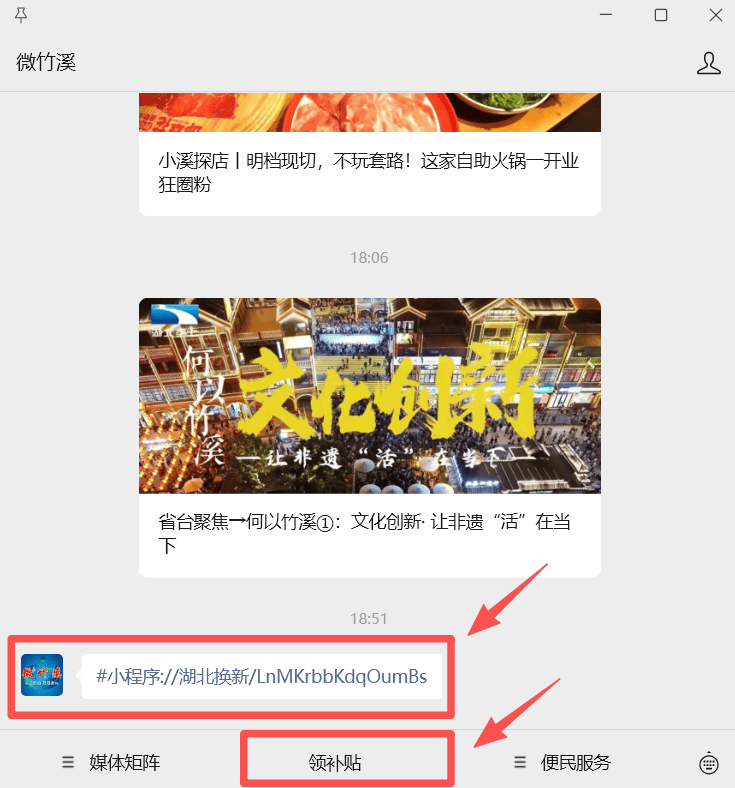
每天9点抢券!湖北亿元消费补贴领取入口&攻略→
Sou Hu Cai Jing· 2025-11-23 09:14
Core Points - The article discusses a promotional event in Hubei, offering significant subsidies for consumers participating in an appliance and electronics exchange program, with a total funding of over 200 million yuan from the government and enterprises [2][5]. Subsidy Details - The event runs from November 20, 2025, to December 31, 2025, and is accessible through platforms like WeChat and major e-commerce sites [2]. - A total of 100 million yuan is provided by the government, combined with enterprise subsidies, resulting in over 200 million yuan in total benefits for consumers [2]. - Specific subsidies include 20% off for purchases over 1500 yuan on home appliances, with a maximum discount of 1000 yuan per item [5]. - For digital products, a 10% subsidy is available for items over 1000 yuan, with a maximum discount of 500 yuan [5]. Product Categories - The promotion covers 12 categories of home appliances, including air conditioners, televisions, refrigerators, washing machines, and more [5]. - Additionally, it includes 3 categories of digital products such as smartphones, tablets, and smartwatches [5]. Participation Guidelines - Consumers can participate by accessing the designated WeChat mini-program daily at 9:00 AM to claim subsidies, which are available on a first-come, first-served basis [6]. - The process involves selecting products, adding them to the cart, and completing the payment to automatically apply the subsidies [6].