芯片制造

Search documents
联邦政府停摆“后遗症” 或逐步显现
第一财经· 2025-11-15 01:18
Core Viewpoint - The article discusses the recent volatility in the U.S. stock market following the end of the government shutdown, highlighting concerns over economic data absence and the potential impact on Federal Reserve interest rate decisions, particularly regarding AI stocks' high valuations [3][6]. Group 1: Market Reactions - The Nasdaq index fell over 2% in one day, marking a significant decline after a strong performance earlier in the year, with a drop of about 5% from its October peak [5][6]. - Risk aversion spread to European and Asian markets, with major indices experiencing declines, and Bitcoin hitting a six-month low [5][6]. - Credit spreads have widened, indicating increased liquidity pressure in the market [6]. Group 2: Economic Data Concerns - The government shutdown resulted in an "information vacuum," affecting the collection of key economic data, including inflation and employment figures [6][7]. - The uncertainty surrounding the release of October inflation data and employment reports has led to a significant reduction in the expected likelihood of a December interest rate cut by the Federal Reserve [7][8]. Group 3: Valuation and Market Sentiment - The S&P 500's expected price-to-earnings ratio stands at 22.8, significantly above its 10-year average of 18.8, raising concerns about the sustainability of current valuations [7][8]. - High-performing sectors, particularly technology, are experiencing increased volatility, with notable declines in stocks like Palantir and Oracle [7][8]. Group 4: Systematic Market Pressures - The market is facing potential "anti-dispersion" effects, driven by large-cap tech stocks, which could lead to further market instability [11]. - Tax-loss harvesting and year-end window dressing by fund managers may exacerbate selling pressure on underperforming stocks [11][12]. - The presence of negative dealer gamma in options trading could amplify market volatility, as traders may need to sell more futures contracts during downturns [12][13]. Group 5: Future Outlook - The article suggests that the market's liquidity may have peaked, with potential warning signs emerging from bank stocks or credit spreads [13]. - The global trend of monetary easing is expected to slow down, with a significant reduction in anticipated interest rate cuts in the coming year [13].


美股动荡未完?联邦政府停摆“后遗症” 或逐步显现
Di Yi Cai Jing· 2025-11-15 00:13
年末行情将如何演绎。 在美国总统特朗普签署法案结束停摆后,美股开始了新一轮波动行情。 投资者担忧,经济数据的缺失可能会推迟甚至阻碍美联储的降息行动,这也加剧了对人工智能(AI) 类股票高估值的担忧,给企业的股票和债券带来了新的压力。在流动性面临潜在考验的背景下,获利了 结和杠杆资金的避险动作可能成为动荡的加速器。 利率与流动性 对利率敏感的纳斯达克指数在周四重挫超2%,11月刚过一半,日内最大跌幅达到这一水平的交易日升 至4天。今年以来,得益于AI类股票的火爆上涨,纳指一度大幅走高,但目前已较10月的峰值下跌了约 5%。 美联储主席鲍威尔已将当前局面比作 "在迷雾中行驶",并指出在9月和10月连续两次降息后,政策制定 者可能会维持当前利率不变,而非继续降息。 "我们此前之所以能看到9月和10月的降息,是因为美联储对通胀的走势方向有足够信心……但在数据缺 失的情况下,他们在12月的会议上还会有这样的信心吗?"奇尔顿信托公司(Chilton Trust)固定收益首 席投资官霍兰(Tim Holland)表示。 根据芝加哥商品交易所(CME)的 "美联储观察工具"(FedWatch Tool),一个月前被视为 "板 ...
DDR5,再次暴涨!
半导体芯闻· 2025-11-14 11:09
Core Viewpoint - Samsung Electronics has raised the prices of some memory chips by up to 60% compared to September due to a severe shortage driven by the global surge in AI data center construction [2][3]. Price Increases - The contract price for Samsung's 32GB DDR5 memory module has increased from $149 in September to $239 in November [2]. - Prices for 16GB DDR5 and 128GB DDR5 have risen by approximately 50%, reaching $135 and $1,194 respectively; prices for 64GB and 96GB DDR5 have increased by over 30% [3]. Market Impact - The current chip shortage has led to panic buying among some customers, with major server manufacturers and data center builders struggling to secure sufficient products [3]. - Xiaomi, a major Chinese smartphone and electronics manufacturer, has warned that rising memory chip prices have increased the cost of smartphone production [3]. Competitive Position - The chip shortage has become a favorable situation for Samsung, which previously lagged behind competitors in the advanced AI chip sector [3]. - Samsung's slower transition to AI chips has enhanced its bargaining power in the memory business compared to smaller competitors like SK Hynix and Micron [3]. Future Price Expectations - Analysts expect Samsung to increase quarterly contract prices by 40% to 50% during the October to December period, surpassing the industry average increase of about 30% [3]. - There is strong confidence in continued price increases due to exceptionally strong demand and long-term agreements being signed by customers, often covering 2026 or 2026-2027 [4].
AI云的新分野:芯在,云在
3 6 Ke· 2025-11-14 11:01
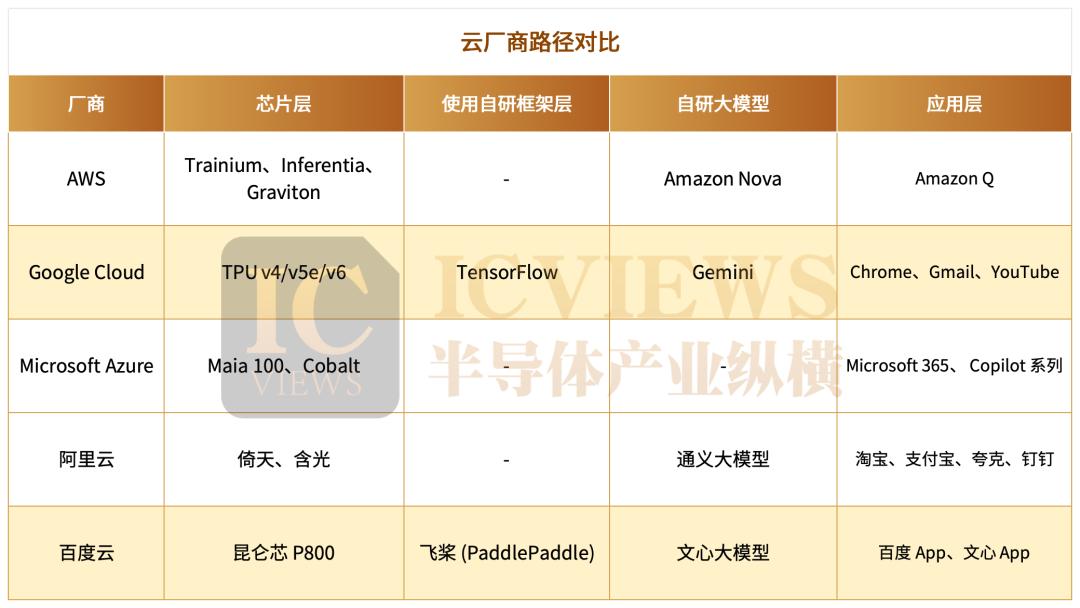
Core Insights - In the first half of 2025, China saw 1,810 AI model project bids totaling over 6.4 billion yuan, surpassing the total for all of 2024, indicating a significant acceleration of investment in key industries such as finance, energy, government, and manufacturing [1] - The demand for AI has evolved, with stricter standards emerging, such as 24/7 operational security requirements and high availability for cloud platforms [1] - The AI public cloud service market in China is projected to grow by 55.3% year-on-year in 2024, driven by a surge in inference demand rather than just training [1] Industry Trends - The AI cloud landscape has shifted from a simple "rental card" model to a more complex system requiring self-developed AI chips and deep collaboration between chips and systems [2][3] - Major cloud providers are moving towards self-developed chips to ensure quality and cost-effectiveness in AI cloud services, as generic GPUs cannot meet long-term AI demands [3] Cloud Provider Strategies - AWS has a comprehensive self-developed chip strategy with Graviton, Trainium, and Inferentia, significantly improving cost efficiency and performance [6][7] - Microsoft Azure is facing challenges with its self-developed chips, which are delayed, leading to continued reliance on NVIDIA GPUs [9][10] - Google Cloud has made significant strides with its TPU chips and is now selling them externally, showcasing confidence in its production capacity [10][11] Competitive Landscape - The competition among cloud providers is intensifying, with AWS focusing on high-end clients and self-developed chips to create a robust AI infrastructure [8] - Google Cloud's full-stack self-developed strategy has led to impressive growth, with a 34% year-on-year revenue increase in Q3 [11] - In China, Alibaba Cloud and Baidu Intelligent Cloud are emerging as key players, each with unique strategies to dominate the AI cloud market [14][20] Future Outlook - The future of AI cloud services will likely be defined by companies that possess self-developed chips and deep collaborative capabilities, creating a clear divide in the industry [20]

安世芯片为啥变安静了?现在啥情况
芯世相· 2025-11-14 09:11
Core Viewpoint - The article discusses the ongoing situation regarding Nexperia Semiconductor, highlighting the complexities of the supply chain, recent developments, and market reactions to the semiconductor crisis [3][12]. Group 1: Current Situation of Nexperia - Nexperia's Dutch subsidiary has not been supplying silicon wafers to its Chinese subsidiary for assembly, causing significant concern in the industry [3][4]. - The Chinese Ministry of Commerce has expressed a willingness to engage in discussions with the Dutch government to resolve the issues surrounding Nexperia [4][12]. - Nexperia's Chinese operations have reported a full order book but are facing material shortages and workforce adjustments, leading to reduced working hours [5][6]. Group 2: Market Reactions and Changes - The semiconductor market has entered a quieter phase since November, with a notable decrease in trading activity and price adjustments following rumors of supply chain recovery [13][14]. - The initial spike in demand for Nexperia chips led to significant price increases, with reports of up to tenfold price hikes in some cases [14][15]. - Major Tier 1 suppliers are actively seeking alternative materials to replace Nexperia products, indicating a shift in the supply chain dynamics [15][16]. Group 3: Future Outlook - Despite some recovery in finished product shipments, the underlying wafer supply issues remain unresolved, necessitating ongoing monitoring of official communications [16].
“安世客户怕再被荷兰坑,想了一招:自己去找中国工厂谈包装”
Guan Cha Zhe Wang· 2025-11-14 04:01
Core Viewpoint - The Dutch government's seizure of the Chinese semiconductor company Nexperia has led to a global chip supply crisis, particularly affecting the European automotive industry, which is struggling with supply chain disruptions due to the refusal of Nexperia's European division to supply wafers to its Chinese counterpart [1][6]. Group 1: Supply Chain Disruption - Nexperia's European customers are seeking alternative solutions to bypass the dispute between its European and Chinese operations, referred to as a "temporary patch," which involves purchasing silicon wafers directly from the European factory and shipping them to China for final packaging [1][3]. - The automotive sector is experiencing significant pressure due to chip shortages, impacting production for major companies like Volkswagen, Bosch, Continental, and Honda [3][4]. Group 2: Alternative Solutions - Nexperia (China) is exploring alternative wafer sources, including domestic Chinese semiconductor manufacturers, to mitigate supply chain disruptions [4][6]. - Other potential solutions being considered include sourcing similar chips from companies like Onsemi and STMicroelectronics [3]. Group 3: Regulatory and Diplomatic Context - The Dutch government has frozen Nexperia's assets and intellectual property for one year, which has exacerbated the supply chain crisis and drawn criticism from China [6][7]. - Dutch officials acknowledge the importance of predictable supply chains and are seeking diplomatic dialogue with China to resolve the issues surrounding Nexperia [7][8].


安世荷兰不给中国工厂晶圆!
国芯网· 2025-11-13 12:59
Core Viewpoint - The article highlights the ongoing semiconductor shortage in Europe, particularly affecting the automotive industry, despite China's resumption of chip exports. The situation is described as "devastating," with potential global production line shutdowns looming in the coming weeks [2]. Group 1: Semiconductor Supply Chain Issues - European officials warn that the semiconductor shortage continues to pose significant challenges for automotive manufacturers and other industrial companies, despite China's efforts to restore chip exports [2]. - Nexperia, a company producing low-margin basic chips for automotive electronic systems, is facing supply chain disruptions due to tensions between its Dutch and Chinese subsidiaries, which affects the availability of critical components [4]. - A European automotive executive indicated that while there are some wafer inventories in Chinese factories, the lack of supply from Germany and the EU could lead to depletion of these stocks within weeks, emphasizing the urgency of resolving the supply issues [4]. Group 2: Industry Responses and Outlook - Automotive manufacturers are urgently seeking alternative sources for chips, with one executive stating that their teams are working around the clock to find solutions, as they may only have a few weeks of supply left [4]. - The European Automobile Manufacturers Association (ACEA) expressed cautious optimism regarding China's exemption but noted that without the resumption of wafer exports from Nexperia in the Netherlands to its Chinese factory, sufficient chip supply to meet global demand cannot be achieved [4]. - Volkswagen acknowledged the uncertainty surrounding the situation, stating that while the current chip shortage has not impacted production at its German plants, future disruptions cannot be entirely ruled out [4].

安世荷兰,还没恢复供货
半导体芯闻· 2025-11-13 10:28
Core Viewpoint - Despite China's agreement to lift export restrictions, European automotive manufacturers and other industrial companies are still facing a "devastating" chip shortage that could halt global production lines within weeks [2][3]. Group 1: Chip Supply Issues - Nexperia's Dutch subsidiary has not been supplying silicon wafers to its Chinese subsidiary due to ongoing tensions, impacting the production of essential automotive chips [2]. - Although some shipments of Nexperia chips have resumed following China's recent easing of export bans, the automotive industry remains in a "very severe" situation due to the strained relationship between Nexperia's Dutch and Chinese operations [2][3]. - A senior automotive executive indicated that while there are some wafer stocks in Chinese factories, the supply could be exhausted quickly if wafers from Germany and the EU are not received [2]. Group 2: Urgency for Resolution - Automotive manufacturers are urgently seeking alternative sources for chips, with a limited supply expected to last only a few weeks [3]. - The European Automobile Manufacturers Association (ACEA) welcomed China's announcement to lift export controls but emphasized that without sufficient wafer exports from the EU, the chip supply issue remains unresolved [3]. Group 3: Governance and Control Issues - The crisis stems from a power struggle over control of Nexperia, with the Dutch government taking over the company in October and forcing the departure of its Chinese CEO due to "serious corporate governance deficiencies" [4]. - Nexperia announced a suspension of direct wafer supplies to its Chinese factory, citing governance issues and unauthorized actions by its Chinese operations [4]. - The Dutch Ministry of Economic Affairs clarified that there have been no export controls imposed on Nexperia or other companies by the Netherlands or Brussels [4].

清仓英伟达股票后,软银高管称无法判断是否正处于 AI 泡沫之中
Sou Hu Cai Jing· 2025-11-13 10:21
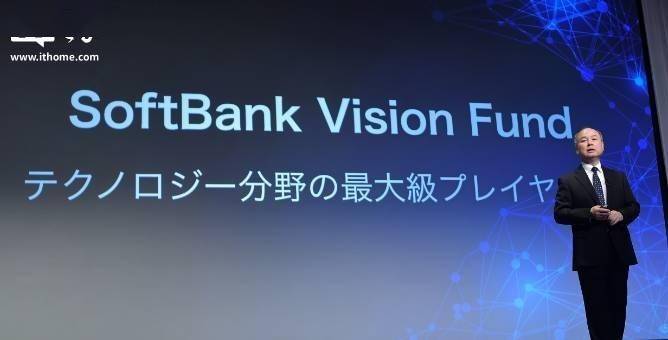
Core Viewpoint - SoftBank has completely sold its stake in Nvidia, valued at approximately £4.4 billion (around ¥41.08 billion), raising concerns in the market about a potential bubble in the AI-driven stock market [1][3]. Group 1: SoftBank's Actions - SoftBank has sold all 32.1 million shares of Nvidia it held, indicating growing anxiety over high valuations in the tech sector [3]. - The sale is intended to fund new AI investments, particularly supporting CEO Masayoshi Son's significant bet on OpenAI, requiring over $30 billion (approximately ¥213.44 billion) [3]. Group 2: Market Reactions - The CFO of SoftBank, Yoshimitsu Goto, expressed uncertainty about whether the market is in an AI bubble, which may cause investor unease [3]. - Analysts suggest that the reduction in holdings indicates that Masayoshi Son believes the momentum that pushed Nvidia to become the first company with a market cap of $5 trillion is waning [3]. - Recently, Nvidia's stock price fell by 3% in New York, despite maintaining a market cap of around $4.7 trillion, having doubled since April and increased over tenfold in three years [3]. Group 3: Broader Market Concerns - Concerns about an "AI bubble" have been escalating, with leaders from major investment banks like Goldman Sachs, JPMorgan, and Morgan Stanley warning of a potential market correction [3]. - Hedge fund manager Michael Burry has bet £835 million against Nvidia and Palantir, reflecting skepticism about the sustainability of current valuations [4].


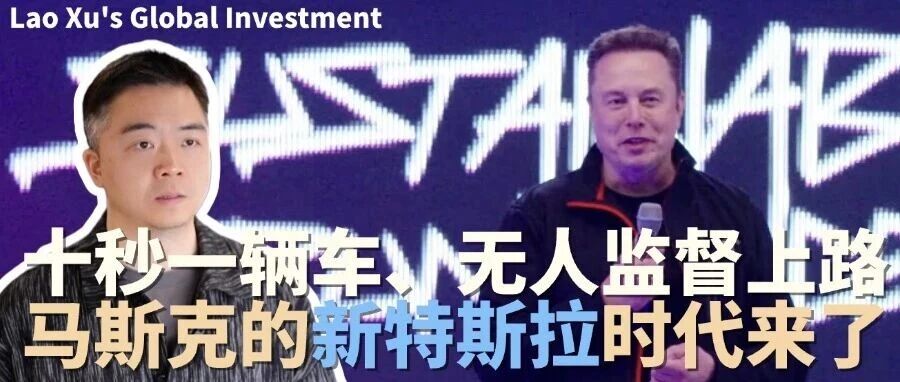
拿下“万亿薪酬”的马斯克,又抛出重磅新计划!
老徐抓AI趋势· 2025-11-13 08:46
Core Viewpoint - The article discusses the recent Tesla shareholder meeting where Elon Musk's compensation plan was approved, highlighting various ambitious plans for Tesla's future, including advancements in Full Self-Driving (FSD), the introduction of CyberCab, the development of the Optimus robot, and the strategic decision to manufacture chips in-house [2][4]. Compensation Plan - Musk's compensation plan, initiated in 2018, allows him to unlock 1% of shares for each of the 12 milestones achieved, totaling a potential 12% increase in his holdings, bringing his total to approximately 25% of Tesla [6]. - The plan is based on the expectation of increasing Tesla's market value from $1.4 trillion to $8.5 trillion over the next decade, implying a sixfold increase in stock price [6]. - Despite a 75% approval rate, 25% of votes opposed the plan, reflecting polarized opinions on Musk's leadership and the potential for investment opportunities arising from this division [9]. New Strategic Directions - Musk's "new book" strategy focuses on sustainable abundance through AI, with key initiatives including FSD, CyberCab, Optimus, and in-house chip manufacturing [10]. - The FSD program is reaching a critical point where it aims to transition from supervised to fully autonomous driving, with a target for full approval in China by early 2024 [14][16]. CyberCab Development - The CyberCab, designed without a steering wheel or pedals, aims for a revolutionary manufacturing process that allows for a vehicle to be produced in under 10 seconds [18]. - Upgrades to manufacturing systems are expected to increase production capacity by 50% within the same factory space, with a target annual production of 2.7 million vehicles by the end of 2026 [20]. Optimus Robot - The Optimus robot is being developed with a focus on advanced dexterity and AI capabilities, with a production target set for 2026 [22][27]. - The robot's design incorporates a unique biomechanical approach to movement, aiming for mass production efficiency [24]. Chip Manufacturing Strategy - Tesla plans to develop its own AI chips to overcome supply chain constraints, targeting performance levels comparable to leading competitors but with significantly lower costs and power consumption [28]. - The decision to manufacture chips in-house is driven by the anticipated future demand and the need for self-sufficiency in production capabilities [28]. Roadster Launch - The highly anticipated Roadster is set to be unveiled on April 1, 2024, with promises of groundbreaking technology [30]. Energy Storage and Supply Chain - Tesla is focusing on enhancing energy storage capabilities to double the usable electricity without the need for new power plants, presenting a significant market opportunity [31]. - The company is also investing in securing its supply chain by building one of the largest lithium refining plants outside the U.S. and establishing its own cathode production lines [32]. 2026 as a Pivotal Year - The year 2026 is projected to be a critical turning point for Tesla, with multiple product launches and production milestones expected to be achieved [33].