
汽车

Search documents
全国人大代表,广汽集团党委书记、董事长冯兴亚:建设汽车强国 要以创新为核心,以生态为支撑,以民生为导向 | 2026全国两会
Zhong Guo Qi Che Bao Wang· 2026-03-13 10:27
Group 1 - The core focus of the suggestions made by the chairman of GAC Group, Feng Xingya, is on high-quality development of the automotive industry, global layout, and service to people's livelihoods, addressing industry pain points while aligning with national strategies and public needs [2] - Feng emphasizes the need for multi-dimensional breakthroughs in the high-quality development of the new energy vehicle industry, particularly in rural markets, highlighting issues such as sparse charging networks and insufficient after-sales support [3] - The proposal includes accelerating the establishment of a unified battery swap standard system and a hydrogen refueling standard regulatory framework to support the large-scale development of the industry [3] Group 2 - The transition from "product going abroad" to "standards going abroad" is seen as a crucial leap for Chinese automotive participation in global competition, with suggestions to build a compliance service system for overseas operations [5] - GAC aims for significant growth in overseas sales, targeting nearly 130,000 units by 2025, with a goal of reaching 250,000 to 300,000 units by 2026, supported by initiatives like the "Thousand Network Plan" and establishing overseas KD factories [5] - The focus on standardization is not only about technical alignment but also about enhancing the overall competitiveness of the industry chain, with GAC promoting the export of supporting systems like charging equipment and energy ecosystems [5] Group 3 - The ultimate goal of industrial development is to serve the public, with a particular emphasis on creating a senior-friendly travel ecosystem to address the needs of the aging population [6] - GAC has integrated public service with industrial development, achieving over 90% market coverage in county areas and establishing a nationwide charging network [6] - The suggestions reflect a clear trajectory for high-quality development in the Chinese automotive industry, with GAC committing to deepening reforms and investing 62 billion yuan in R&D to strengthen its technological foundation [6]



东莞证券财富通每周策略-20260313
Dongguan Securities· 2026-03-13 10:11
Market Overview - The market experienced fluctuations this week, with the three major indices showing mixed results. The Shanghai Composite Index fell by 0.70%, while the Shenzhen Component Index rose by 0.76%, and the ChiNext Index increased by 2.51% [1][3][10] - Despite external market volatility due to geopolitical tensions and rising oil prices, the A-share market demonstrated resilience. The sectors that performed well included coal, electric equipment, construction decoration, public utilities, and banking, while sectors like defense, oil and petrochemicals, and media faced declines [1][3][10] Short-term Market Outlook - The market is expected to continue its oscillating pattern in the short term. Exports have shown strong performance at the beginning of 2026, with a year-on-year growth of 21.8% in January-February, significantly higher than the previous year's 6.6% [2][11] - Inflation is on the rise, with the Consumer Price Index (CPI) increasing by 1.3% year-on-year in February, the highest in three years. This is attributed to geopolitical conflicts accelerating the inflation recovery process [2][12] - The government work report indicates a GDP growth target adjustment to 4.5%-5%, reflecting a pragmatic approach to economic growth amid external pressures. The fiscal deficit remains at a high level, with a total scale of 11.89 trillion yuan, slightly up from the previous year [2][14] Sector Recommendations - It is advised to focus on sectors such as electric equipment, basic chemicals, public utilities, machinery, and finance for potential investment opportunities [4][15]
花旗:理想汽车-W首季指引符预期
Zhong Guo Qi Che Bao Wang· 2026-03-13 10:01
Core Viewpoint - Citigroup's report indicates that Ideal Automotive-W (02015) management has disclosed a sales target growth of over 20% for 2026, with an annual vehicle gross margin of 15% [1] Group 1: Financial Projections - The company has adjusted its profit forecasts for 2026 and 2027 downwards to reflect the revised gross margin predictions and increased operating expense assumptions [1] - The target price for Ideal Automotive-W has been maintained at HKD 72.7, with a neutral rating [1]

特斯拉(TSLA):欲上青天揽明月:在SpaceX上市前从
ZHONGTAI SECURITIES· 2026-03-13 08:59
Investment Rating - The report maintains an "Overweight" rating for Tesla [4] Core Insights - Tesla is accelerating its transformation from an automotive manufacturer to an AI company, with significant capital expenditure directed towards AI infrastructure [6][16] - The integration of Tesla, SpaceX, and xAI is creating a synergistic ecosystem that enhances Tesla's competitive advantages in AI and hardware capabilities [8][36] - Tesla's revenue and profit forecasts for 2026-2028 are adjusted to reflect the slowing progress of its Robotaxi and robotics initiatives, with expected revenues of $123.1 billion, $136.6 billion, and $165.2 billion respectively, and net profits of $7.03 billion, $10.58 billion, and $14.44 billion [4][8] Summary by Sections Transformation and Integration - Tesla is at a pivotal point, initiating its transition to an AI-focused company, with significant investments in AI infrastructure [16][18] - The company has invested approximately $5 billion in its Cortex data center, which is expected to achieve over 250,000 equivalent NVIDIA H100 GPUs by mid-2026 [13][16] - Traditional automotive sales are becoming less critical as Tesla focuses on maximizing existing production efficiency and reducing its vehicle model lineup [23][24] xAI Overview - xAI, founded in 2023, has rapidly grown to a valuation exceeding $200 billion, focusing on AI infrastructure and the Grok model [45][47] - The business model includes both consumer and enterprise services, leveraging the X platform for advertising and subscription revenue [50][52] - Despite significant revenue growth, xAI is still in a cash-intensive phase, with projected revenues of over $3 billion in 2025, primarily from the X platform [52][56] SpaceX Overview - SpaceX is a leader in commercial spaceflight, with high profit margins driven by reusable rocket technology [59][60] - The company is expected to generate over $15 billion in revenue by 2025, largely from its Starlink satellite internet service [8][36] - The acquisition of xAI by SpaceX aims to enhance capabilities in AI and data center operations, supporting the broader Musk ecosystem [40][42]

乘联分会:2月汽车零售同比呈现下滑 吉利汽车销量约15万市场份额超14%
智通财经网· 2026-03-13 08:58
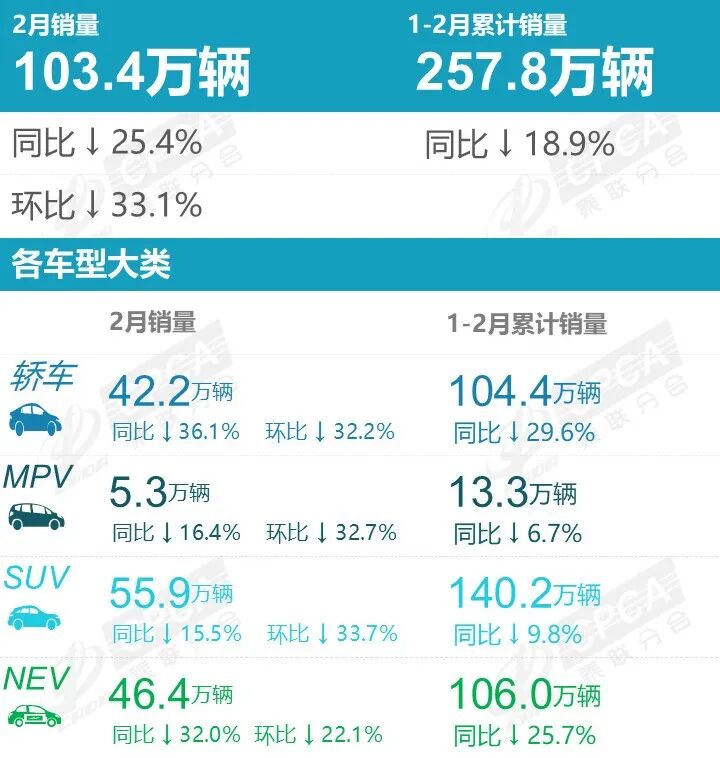
Core Insights - In February 2026, the automotive production and sales in China experienced a decline due to multiple factors including the extended Spring Festival holiday, which was in line with expectations. The retail sales of narrow passenger vehicles reached 1.034 million units, a year-on-year decrease of 25.4% and a month-on-month decrease of 33.1% [1][2]. Sales Data Summary - The retail sales for February 2026 were 1.034 million units, down 25.4% year-on-year and down 33.1% month-on-month. Cumulative sales for January and February reached 2.578 million units, reflecting an 18.9% year-on-year decline [1][2]. - In February, Geely Auto held the largest market share at 14.1%, selling 145,281 units, followed by BYD with 8.6% and FAW-Volkswagen with 7.6% [1][5]. - The wholesale sales rankings for February 2026 showed Geely Auto leading with 206,160 units, followed by BYD with 187,782 units and Chery Auto with 155,779 units [3]. Market Analysis - The decline in automotive sales is attributed to the impact of the Spring Festival and is considered a normal short-term fluctuation rather than a long-term trend. The market is expected to regain momentum with the implementation of local subsidies, the start of spring auto shows, and the launch of new models by automakers [2][4]. - The wholesale sales rankings for January and February 2026 indicated that Geely Auto maintained the top position with 476,327 units, while BYD and Chery followed with 393,300 and 349,748 units respectively [4]. New Energy Vehicle (NEV) Insights - In February 2026, BYD led the NEV wholesale sales with 187,782 units, despite a year-on-year decline of 41.0%. Geely followed with 117,488 units, marking a 19.4% increase year-on-year [8]. - The NEV retail sales for February 2026 showed BYD again in the lead with 88,697 units, while Geely sold 76,636 units, reflecting a year-on-year decline of 17.9% [10].


汽车行业双周报(2026/2/27-2026/3/12):2月新能源车国内总体乘用车零售渗透率44.9%-20260313
Dongguan Securities· 2026-03-13 08:53
Investment Rating - The report maintains an "Overweight" rating for the automotive industry, expecting the industry index to outperform the market index by over 10% in the next six months [44]. Core Insights - In February, the domestic retail penetration rate of new energy vehicles reached 44.9%, indicating a significant market presence despite a decline in overall vehicle sales [26][28]. - The automotive sector has faced challenges with a 20.5% year-on-year decline in production and a 15.2% decline in sales in February, while exports saw a remarkable growth of 52.4% [20][29]. - The report suggests that the automotive market is expected to stabilize and gradually recover starting in March, driven by the implementation of local subsidy policies and the launch of new models by major manufacturers [40]. Industry Data Tracking - In February, China's automotive production was 1.672 million units, down 20.5% year-on-year and 31.8% month-on-month. Sales were 1.805 million units, down 15.2% year-on-year and 23.1% month-on-month. Exports reached 672,000 units, up 52.4% year-on-year but down 1.3% month-on-month [20][29]. - The inventory warning index for automotive dealers was at 56.20%, showing a decrease of 0.70 percentage points year-on-year and 3.20 percentage points month-on-month [20]. Industry News - In February, domestic retail sales of vehicles were 1.043 million units, reflecting a year-on-year decline of 25.9% and a month-on-month decline of 33.1% [26]. - The report highlights that the penetration rate of new energy vehicles among domestic retail sales was 44.9%, with a notable decline in the penetration rate of traditional brands [28]. - The report notes that the automotive export market remains robust, with significant growth in new energy vehicle exports [30]. Corporate News - Changan Automobile aims for a sales target of 1.4 million new energy vehicles in 2026, with plans to launch 43 new models over the next three years [33]. - NIO achieved its first quarterly profit, indicating a positive shift in its financial performance [36]. - CATL reported a net profit of 72.2 billion yuan for 2025, marking a year-on-year growth of 42.28% [37]. Investment Recommendations - The report recommends focusing on companies that are expanding into overseas markets, such as BYD and Seres, as well as those in the intelligent driving supply chain like Fuyao Glass and Junsheng Electronics [40][41].
美将领证实伊朗小学遭袭是美军所为、中东多国不走霍尔木兹海峡、茅台代销新政落地
新财富· 2026-03-13 08:47
Major Events Observation - WeChat has launched three new features to enhance call experiences, including an ignore button for incoming calls, voice-to-text support for 18 languages, and a screen lock feature for video calls [2] - Moutai has established a new consignment policy for non-standard products, allowing distributors to earn a 5% commission on sales, which will be settled monthly [3] - Apple announced a reduction in the App Store commission rate in mainland China from 30% to 25%, effective March 15, 2026 [4] - Pony.ai has integrated with Tencent's transportation service mini-program to expand smart travel applications and enhance user service options [5] - Xiaomi's new SU7 model is set to launch this month, with significant interest from international car manufacturers [6] - Pinduoduo has initiated a trial for free delivery services to rural areas, aiming to enhance user shopping experiences and expand market coverage [7] - Omdia forecasts that smartphone shipments in Latin America will reach a historical high by 2025, indicating a growing consumer electronics market [8] - Gulf countries have initiated alternative logistics corridors to ensure supply chain continuity amid regional tensions [9] - Iran's new Supreme Leader emphasized national unity and regional security in his first public statement, indicating a continuation of the blockade of the Strait of Hormuz [10] - The U.S. confirmed that an attack on an Iranian school was conducted by its military, attributing it to a series of errors [11] - The U.S. Treasury issued a general license allowing the sale of Russian oil and petroleum products that were loaded before March 12, 2023, to alleviate international oil price pressures [12] - JD.com announced a new delivery service strategy and plans to expand its smart robot industry, with daily investments reaching 128 million yuan [13] - A former Xiaomi executive has announced a new company brand and is preparing for internal testing of a new app [14] - JD Cloud launched a promotional campaign involving digital and physical lobsters, enhancing user engagement [16] - The Ministry of Industry and Information Technology released guidelines to mitigate security risks associated with OpenClaw [17] - Ninebot has integrated OpenClaw into its electric vehicles, marking a significant advancement in AI applications within the industry [18] - Microsoft and Meta are driving a surge in the global data center leasing market, projected to reach $700 billion [19] - Meta announced the development of four self-designed AI chips, aiming to compete with Nvidia and AMD by the end of 2027 [20] - The 2026 AWE exhibition highlighted the integration of AI in home appliances, showcasing innovations in smart home technology [21]






上市69年来首亏!本田突然“暴雷”:CEO降薪30%,中国销量5年连跪
新浪财经· 2026-03-13 08:47
Core Viewpoint - Honda is facing its darkest hour, forecasting a potential loss of up to 690 billion yen (approximately 29.8 billion RMB) for the fiscal year 2025, marking its first annual loss since its listing in 1957 due to U.S. tariff policies and declining competitiveness in Asian markets [3][5][6]. Group 1: Financial Performance - Honda has adjusted its operating profit forecast from a profit of 550 billion yen to a loss of 270 billion to 570 billion yen, with net profit expectations shifting from 300 billion yen to a net loss of 420 billion to 690 billion yen (approximately 18.1 billion to 29.8 billion RMB) [5][6]. - The company announced that its global sales for 2025 are expected to decline by 7.5% to 3.522 million vehicles, with a significant drop in the Chinese market, where sales are projected to fall by 24% to 645,000 vehicles, marking the fifth consecutive year of decline [12]. Group 2: Market Challenges - In the U.S. market, the cancellation of the $7,500 federal tax credit for electric vehicles by September 30, 2025, is expected to lead to stagnant or declining sales and increased inventory pressure [6]. - In China, Honda's sales have been adversely affected, with February sales down 15% year-on-year to 28,780 vehicles, and cumulative sales for the first two months down 16% [11]. Group 3: Strategic Response - Honda's management, including CEO Toshihiro Mibe and Executive Vice President Noriya Kaihara, will voluntarily forgo 30% of their salaries for three months, while other executives will forgo 20% to reduce costs [3][9]. - The company plans to reassess its resource allocation and strengthen its hybrid vehicle offerings, moving away from pure electric models that have not performed well in the market [9][15].


A股利润回升在即,戴维斯双击可期
雪球· 2026-03-13 08:09
Core Viewpoint - The article emphasizes the strong performance of China's exports, which grew by 39.6% year-on-year in the first two months, significantly exceeding institutional expectations of 7% growth. This growth is attributed to China's enhanced competitiveness and monopoly advantages in various industries [2][5][11]. Group 1: Export Performance and Economic Impact - In the first two months of the year, China's trade surplus reached $213.6 billion, with expectations to potentially break records and reach $1.5 trillion for the year [5][6]. - The article argues that strong external demand can stimulate domestic demand and boost the stock market, countering the notion that a focus on exports would detract from internal consumption [10][12]. - The article highlights that profits from foreign sales can lead to increased domestic consumption, provided that these profits are converted into cash flow within China [15][17]. Group 2: China's Role in Developing Countries - China has been actively investing in developing countries, providing infrastructure and technology, which helps these nations upgrade their industries and economies [37][38]. - The article notes that while developed countries often exploit developing nations, China takes a different approach by engaging in low-margin businesses that may not yield immediate returns but foster long-term relationships [36][38]. - The shift in China's export focus from the U.S. to ASEAN, Africa, and Latin America is highlighted, with the share of exports to the U.S. dropping from 19.2% to 11.4% between 2018 and 2025 [38][39]. Group 3: Product Structure Upgrade - The article discusses the evolution of China's export products, moving from low-end goods to intermediate and capital goods, which are essential for other countries' industrial growth [53][55]. - It mentions that China's exports of intermediate and capital goods are expected to grow by 10.4% and 5.6% respectively by 2025, while consumer goods exports are projected to decline by 1.0% [61]. - The increasing demand for high-tech manufacturing is noted, with significant growth in exports of integrated circuits, automobiles, and ships in early months of the year [61].

策略简评:各行业外销收入占比跟踪
金融街证券· 2026-03-13 07:29
Group 1: Export Revenue Ratios - The electronics industry has the highest export revenue ratio at 30.68% for the period of 2024H1-2025H1[3] - The automotive industry follows with an export revenue ratio of 20.08%[3] - The home appliance industry has an export revenue ratio of 19.09%[3] - The real estate sector has the lowest export revenue ratio at 0.04%[3] - The public utilities sector has an export revenue ratio of 0.71%[3] - The non-bank financial sector has an export revenue ratio of 1.17%[3] Group 2: Industry Performance and Trends - The average export revenue ratio for the machinery equipment industry is 14.60%[3] - The average export revenue ratio for the textile and apparel industry is 10.43%[3] - The overall market environment has shown increased uncertainty due to geopolitical tensions, impacting sector performance[3] - The report indicates a negative trend in index performance across various sectors, with the electronics sector experiencing a decline of 5.07%[3]