
油气

Search documents
A股,突破之后,又有异常现象出现了
Sou Hu Cai Jing· 2026-01-06 04:19
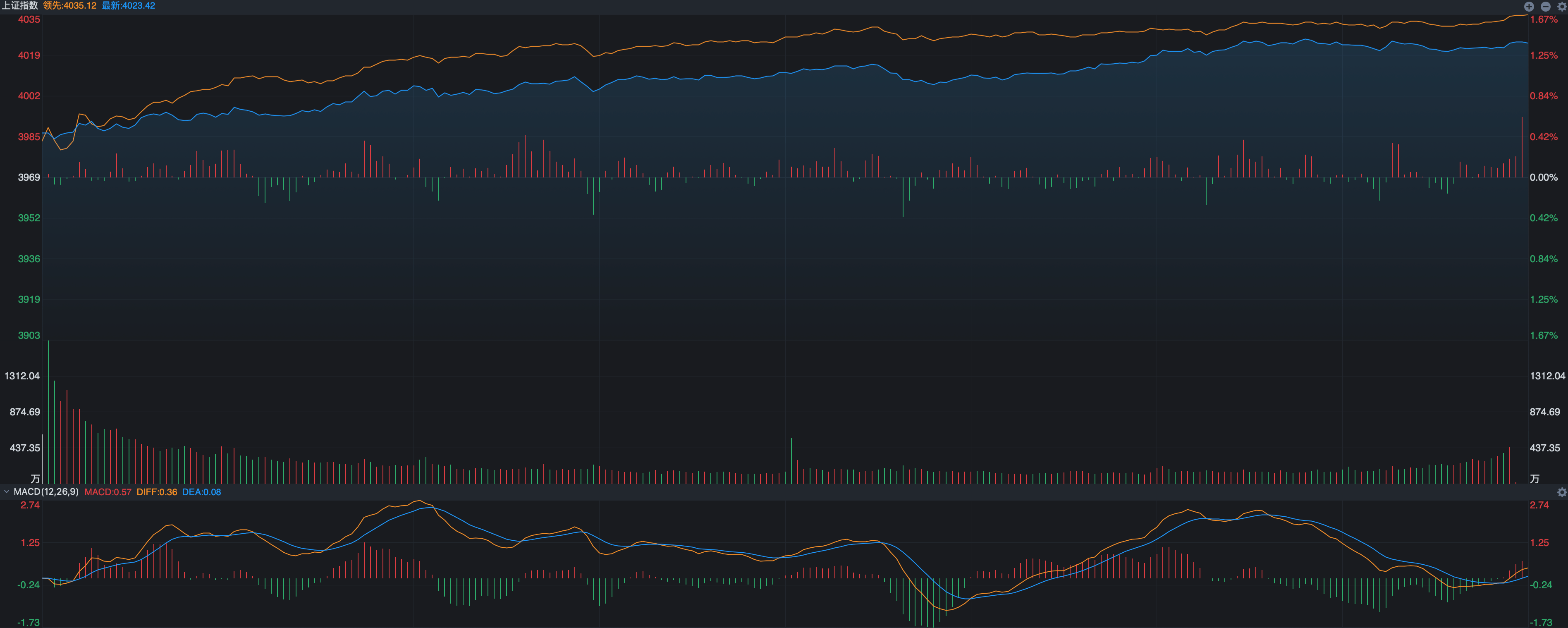
Group 1 - The Dow Jones index showed strong performance, rising over 1% and reaching a new high of 49,209 points, driven by large bank stocks hitting historical highs, with Goldman Sachs up 3.73% and JPMorgan and Morgan Stanley both rising over 2% [1] - Precious metals experienced significant gains, with silver futures rising 8% to $76 and gold futures reaching a maximum increase of 3%, indicating a bullish trend in the medium term despite potential short-term volatility [1] - The current market focus is on precious metals, non-ferrous metals, and commercial aerospace, while the Nasdaq index rose only 0.69%, reflecting a quieter period for global tech stocks [1] Group 2 - The A-share market saw a significant rise, with the Shanghai Composite Index surpassing 4,000 points, just 11 points shy of previous highs, indicating potential for further upward movement if brokerage stocks continue to perform well [5] - There is a concern about profit-taking leading to significant fluctuations in the index, suggesting that a temporary pullback to around 3,900 points could be beneficial for maintaining a steady upward trend [5] - An unusual phenomenon was observed in brokerage stocks, with a notable disparity in the order book for leading brokerages, indicating potential market manipulation, although the overall bullish sentiment remains strong [6]

受俄乌、委内瑞拉地缘政治博弈影响,12月油价震荡下跌
Zhong Guo Neng Yuan Wang· 2026-01-06 02:44
Core Viewpoint - December oil prices experienced fluctuations, with Brent crude averaging $61.6 per barrel, down $2.0 from the previous month, and WTI averaging $57.9 per barrel, down $1.6 [2] Supply Side - OPEC+ plans to fully exit the voluntary production cut of 2.2 million barrels per day from April to September 2025, and on September 7, 2025, it was decided to lift the voluntary production cut agreement of 1.66 million barrels per day reached in April 2023 within 12 months [2] - OPEC+ will increase production by 137,000 barrels per day from October to December 2025, but decided to suspend the production increase plan for the first quarter of 2026 due to seasonal reasons during the meeting on November 30 [2] Demand Side - Major international energy agencies project an increase in global crude oil demand of 830,000 to 1.3 million barrels per day in 2025, and an increase of 860,000 to 1.38 million barrels per day in 2026 [3] - According to OPEC, IEA, and EIA reports, crude oil demand for 2025 is estimated at 105.14, 103.85, and 103.94 million barrels per day, reflecting increases of 130, 83, and 114 thousand barrels per day compared to 2024 [3] Industry Outlook - The petrochemical industry in China is facing an overall surplus in refining capacity, with a focus on optimizing supply-side measures as outlined in the "Work Plan for Stable Growth in the Petrochemical Industry (2025-2026)" released by seven ministries in September 2025 [4] - The plan emphasizes strict control over new refining capacity and a scientific approach to the timing of new ethylene and paraxylene capacity releases [4] - The expected price range for Brent crude in 2026 is projected to be between $55 and $65 per barrel, while WTI is expected to be between $52 and $62 per barrel [4] - Recommended stocks include China National Offshore Oil Corporation (600938), China Petroleum (601857), Satellite Chemical (002648), and CNOOC Development (600968) [4]




受俄乌、委内瑞拉地缘政治博弈影响,12月油价震荡下跌 | 投研报告
Sou Hu Cai Jing· 2026-01-06 02:42
Core Insights - In December 2025, the average price of Brent crude oil futures was $61.6 per barrel, a decrease of $2.0 per barrel month-on-month, with a month-end price of $60.9 per barrel. WTI crude oil futures averaged $57.9 per barrel, down $1.6 per barrel month-on-month, closing at $57.4 per barrel [1] - OPEC+ plans to completely exit a voluntary production cut of 2.2 million barrels per day from April to September 2025, and on September 7, 2025, it was decided to lift the voluntary production cut agreement of 1.66 million barrels per day reached in April 2023 within 12 months [1] Supply Side - OPEC+ announced a pause in production increases for the first quarter of 2026 due to seasonal reasons, despite plans to increase production by 137,000 barrels per day from October to December 2025 [1] - The IEA indicated that there would be a significant oversupply in the oil market next year, contributing to price fluctuations [1] Demand Side - Major international energy agencies project an increase in global oil demand of 830,000 to 1.3 million barrels per day in 2025, with demand estimates from OPEC, IEA, and EIA for 2025 being 105.14, 103.85, and 103.94 million barrels per day respectively, reflecting increases of 130, 83, and 114 thousand barrels per day compared to 2024 [2] - For 2026, oil demand is expected to grow by 860,000 to 1.38 million barrels per day, with estimates of 106.52, 104.71, and 105.17 million barrels per day from the same agencies [2] Industry Outlook - The Chinese petrochemical industry is facing an overall surplus in refining capacity, with a focus on optimizing supply-side dynamics through strict control of new refining capacity and a scientific approach to the release of new ethylene and paraxylene capacities [3] - The expected price range for Brent crude oil in 2026 is projected to be between $55 and $65 per barrel, while WTI crude oil is expected to range from $52 to $62 per barrel, influenced by high fiscal balance oil price costs from OPEC+ and elevated new well costs in U.S. shale oil [3] - Recommended stocks include China National Offshore Oil Corporation, China Petroleum, Satellite Chemical, and CNOOC Development [3]
马杜罗首次出庭:我是被绑架的!我无罪!
Shang Hai Zheng Quan Bao· 2026-01-06 00:30
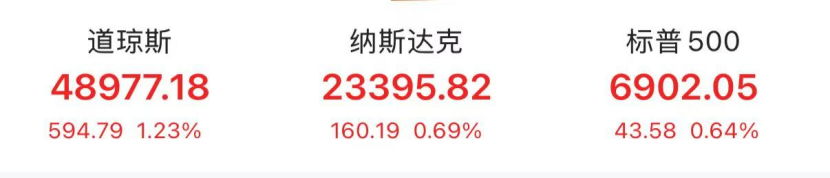
美东时间周一,美股三大股指全线收高,道琼斯指数在金融股的带动下创下历史新高。截至收盘,道指涨1.23%,报 48977.18点;纳指涨0.69%,报23395.82点;标普500指数涨0.64%,报6902.05点。 地缘政治动荡推动黄金、白银期价大涨,周一COMEX黄金期货涨3%,报4459.7美元/盎司;COMEX白银期货涨 7.74%,报76.5美元/盎司。能源股走强,贵金属板块大幅上涨。 英伟达宣布推出一系列人工智能模型和工具,公司CEO黄仁勋在拉斯维加斯举行的CES展会上发布了Alpamayo平台, 使汽车能够在真实世界中进行"推理"。黄仁勋表示,首款搭载英伟达技术的汽车将于第一季度在美国上路。 此外,据新华社报道,遭美国强行控制的委内瑞拉总统马杜罗夫妇5日中午在美国纽约南区联邦地区法院首次出庭, 拒绝美方所谓"犯罪"指控。 美股三大指数集体收涨 尽管地缘政治风险通常有利于国债等避险资产,但周一美国股指整体走高,反映出市场更关注流动性宽松预期下的风 险资产配置机会。投资者在权衡地缘风险与科技、金融股盈利前景后,当前更倾向于布局成长性资产。 截至美东时间周一收盘,道指涨1.23%,报48977.18点 ...
今日国际国内财经新闻精华摘要|2026年1月6日
Xin Lang Cai Jing· 2026-01-06 00:25
International News - Significant fluctuations in international financial markets were observed, with precious metals and energy sectors showing active performance influenced by geopolitical and macroeconomic policies. Gold futures in New York surpassed $4,470 per ounce, with an intraday increase of 0.43%, previously touching $4,460 per ounce, where the intraday increase exceeded 3%. Spot gold also rose, breaking $4,450 per ounce, with an intraday increase of 2.71% [1][11] - The silver market exhibited even stronger performance, with New York silver futures surging 9% to $77.41 per ounce, while spot silver broke $77 per ounce, with an intraday increase of 5.8%. Domestic silver futures also rose by 4%, reaching 18,898 yuan [1][11] - The Azerbaijan State Oil Fund announced profits exceeding $10 billion from gold investments, reflecting an increasing demand for precious metal asset allocation [2] - In the energy market, crude oil futures rose over $1 per barrel due to the situation in Venezuela [3] - The U.S. Department of Energy announced a $2.7 billion investment to enhance uranium enrichment capabilities to ensure domestic energy security. All three major U.S. stock indices closed higher, with the Dow Jones rising 1.23% to reach a historical high, the Nasdaq increasing by 0.69%, and the S&P 500 up by 0.64%. Oil and gas stocks led the gains, with Halliburton, Schlumberger, and Chevron rising by 8.8%, 8.2%, and 6.9%, respectively [4][14] - Goldman Sachs shares rose nearly 5%, marking the largest increase since May of the previous year [5] - Large tech stocks showed mixed performance, with Tesla rising over 3% and Amazon increasing over 2%, while Apple and Micron fell over 1% [6][16] - The Nasdaq Golden Dragon China Index closed up 0.53%, with companies like Canaan Inc., Wanwu Xingsheng, and Kandi Technologies seeing gains exceeding 8% [7][17] Domestic News - The domestic bulk commodity market followed international trends with significant fluctuations, particularly in silver and nickel. Silver futures rose by 4% to 18,898 yuan, while nickel futures increased by 1% to 135,610 yuan [9][19] - In the Hong Kong stock market, the total number of property sale contracts reached 80,702 in 2025, an increase of 18.7% year-on-year, marking a four-year high, with a total value of 614.277 billion HKD, up 15% year-on-year. Residential property sales accounted for 62,832 contracts, valued at 519.83 billion HKD [9][20] - In the A-share market, 17 listed companies disclosed share reduction plans on January 5, including Hongmian Co., Changgao Electric, and Xianfeng Precision, with no increase cases reported on that day [9][20] - The Nasdaq Golden Dragon China Index initially fell over 1%, with Xpeng Motors and Baidu dropping 4.5% and 3.89%, respectively, but rebounded to close up 0.53% [9][20] - In international capital flows, TSMC shares surged 3.4% to $330 per share, with a total market capitalization of $1.7 trillion, reflecting market confidence in the long-term prospects of the semiconductor industry [10][20]


海南封关,油气产业影响几何?
Zhong Guo Chan Ye Jing Ji Xin Xi Wang· 2026-01-06 00:16
Core Viewpoint - The successful customs clearance of petrochemical raw materials at Yangpu Port marks the official launch of Hainan Free Trade Port's full island customs closure operation, injecting new momentum into the oil and gas industry under a new institutional framework [1] Group 1: Policy Impact - The "processing value-added tax exemption" policy allows enterprises registered in Hainan Free Trade Port to enjoy tax exemptions if their products exceed a 30% value-added rate, significantly reducing production costs and enhancing competitiveness [2] - The first day of customs closure saw 17.9 million tons of "zero tariff" petrochemical raw materials valued at nearly 400 million yuan, saving enterprises approximately 10 million yuan in costs [2] - The "zero tariff" list has expanded from about 1,900 to approximately 6,600 tax items, covering around 74% of the import and export goods in Hainan Free Trade Port, allowing most imported production materials and equipment to enjoy tax exemptions [3] Group 2: Industry Upgrades - The "processing value-added tax exemption" policy facilitates a virtuous cycle of R&D, value addition, and revenue generation, encouraging investment in new technologies that convert low-value by-products into high-value chemicals [4] - The zero tariff policy significantly lowers the financial barriers for importing expensive equipment and experimental instruments necessary for technological upgrades in the oil and gas industry, particularly in deep-sea exploration and new energy materials [4][5] - The action plan aims for the petrochemical new materials industry in Hainan to exceed 160 billion yuan in output value by 2027, emphasizing a clear path for industrial transformation [6] Group 3: Future Development - The transition from fuel-type to material-type in refining is a trend in the industry, focusing on the development of high-end chemical new materials and biodegradable materials [7] - The action plan outlines strategies to expand the olefin industry chain and develop high-end chemical new materials, which are areas where the value-added processing policy can be most effective [7] - The customs closure is viewed as a new starting point for the oil and gas industry in Hainan, with policies expected to transform into technological advantages and industry competitiveness, driving significant value enhancement [7]
油气行业2025年12月月报:受俄乌、委内瑞拉地缘政治博弈影响,12月油价震荡下跌-20260105
Guoxin Securities· 2026-01-05 13:56
Investment Rating - The oil and gas industry is rated as "Outperform" [4] Core Views - The report indicates that oil prices experienced fluctuations and a downward trend in December 2025, influenced by geopolitical tensions and supply concerns [1][12] - OPEC+ has decided to pause production increases in the first quarter of 2026, despite previous plans to increase output [1][16] - Demand for crude oil is expected to grow in 2025 and 2026, with estimates ranging from 83,000 to 130,000 barrels per day for 2025 and 86,000 to 138,000 barrels per day for 2026 [2][17] Summary by Sections Oil Price Review - In December 2025, the average price of Brent crude oil futures was $61.6 per barrel, down $2.0 from the previous month, while WTI averaged $57.9 per barrel, down $1.6 [1][12] - The fluctuations in oil prices were attributed to various geopolitical events, including the attack on the Russian Friendship Pipeline and sanctions on Venezuela [1][12] Supply Side Analysis - OPEC+ announced a pause in production increases for the first quarter of 2026, following a period of planned increases in late 2025 [1][16] - The report highlights that OPEC+ aims to maintain a balance in oil prices, with Brent crude expected to stabilize between $55 and $65 per barrel in 2026 [3][36] Demand Side Analysis - Major energy agencies project an increase in crude oil demand for 2025 and 2026, with specific figures provided by OPEC, IEA, and EIA [2][17] - The report notes that the refining industry in China is facing overcapacity issues, leading to stricter controls on new refining projects [3][18] Company Recommendations - The report recommends several companies, including China National Offshore Oil Corporation (CNOOC), China Petroleum & Chemical Corporation (Sinopec), Satellite Chemical, and CNOOC Development, as key investment opportunities [4]
第15届阿联酋国际投资峰会暨中阿能源项目交流对接会新闻发布会即将举办
中国能源报· 2026-01-05 10:22
邀请函 全球领先的多边经贸合作盛会——第15届阿联酋国际投资峰会,将于2026年4月13—15日在迪拜 世界贸易中心举行。本届峰会由阿联酋外贸部、迪拜商会、AIM 全球基金会联合主办,主题为 ——重塑全球繁荣:开启投资新路径,迈向可持续与包容的未来。 为进一步推动中国与阿联酋在能源领域,特别是油气、可再生能源、电力、能源转型等方面的投 资与合作,中国能源报、AIM全球基金会将于第15届阿联酋国际投资峰会期间,联合主办中阿能 源项目交流对接会,打造能源领域集政策沟通、项目合作、技术交流与资本对接的高端实效对话 合作平台。 第15届阿联酋国际投资峰会暨中阿能源项目交流对接会新闻发布会拟定于2026年1月27日下午, 在北京·人民日报社·新媒体大厦举行。 诚邀全球新能源企业500强、中国能源企业500强及国家/地方专精特新企业出席本次新闻发布会, 齐聚产业核心力量与创新活力,共谱中阿合作新篇章。 发布会流程 第15届阿联酋国际投资峰会暨中阿能源项目交流对接会新闻发布会 主题:技术赋能・资本聚力 新闻发布环节 15:15-15:35 第15届阿联酋国际投资峰会暨中阿能源项目交流对接会介绍 互动问答 15:35-15: ...

ETF收评 | A股2026开门红!中韩半导体ETF飙涨8.46%,港股通医疗ETF富国涨7%
Ge Long Hui· 2026-01-05 08:31
Market Performance - The A-share market opened strong in 2026, with the Shanghai Composite Index rising by 1.38% to return to the 4000-point level, while the ChiNext Index surged by 2.85% [1] - The total trading volume in the Shanghai, Shenzhen, and Beijing markets reached 25,672 billion yuan, an increase of 5,015 billion yuan compared to the previous day [1] - Nearly 4,200 stocks experienced gains in the market [1] Sector Highlights - Sectors such as brain-computer interfaces, AI applications, commercial aerospace, memory chips, and innovative pharmaceuticals saw a wave of stocks hitting the daily limit up [1] - Insurance stocks performed notably well [1] - The semiconductor industry chain saw a significant surge, with the Huatai-PB Fund's China-Korea Semiconductor ETF soaring by 8.46% [1] - The Hong Kong stock market's innovative pharmaceutical sector rebounded strongly, with ETFs like the Fortune and Huatai-PB's Hong Kong Stock Connect Innovative Pharmaceutical ETF and the Huaxia Fund's Medical Device ETF rising by 7.13%, 6.97%, and 6.95% respectively [1] Underperforming Sectors - The tourism sector declined, with two tourism ETFs dropping by 1% [1] - The oil and gas sector also faced a downturn, with the Energy Chemical ETF and the Oil and Gas ETF falling by 1% and 0.63% respectively [1]
港股油气股多数走强 百勤油服涨30%
Mei Ri Jing Ji Xin Wen· 2026-01-05 05:57
Group 1 - The core viewpoint of the article highlights the strong performance of oil and gas stocks in the Hong Kong market, with several companies experiencing significant gains [1] Group 2 - Baikin Oilfield Services (02178.HK) saw a rise of 30%, reaching HKD 0.065 [1] - Shandong Molong (00568.HK) increased by 10.84%, trading at HKD 3.58 [1] - Dali Pu Holdings (01921.HK) experienced a gain of 5.79%, with shares priced at HKD 7.86 [1]