零食

Search documents
甘源食品(002991) - 2025年8月13日投资者关系活动记录表
2025-08-14 00:28
Group 1: Sales and Marketing Strategy - The company has transformed from a single bean product brand to a multi-category snack brand, including flavored beans, nuts, and snacks, to enhance sales scale [2] - Increased investment in brand marketing and new product promotion to improve product competitiveness and expand cooperation opportunities [2] - The company aims to enhance the precision and effectiveness of sales expense allocation based on market conditions and product promotion [2] Group 2: Channel Development - Established stable cooperation with major domestic channels, focusing on innovative and cost-effective products to meet diverse channel needs [3] - Strengthening the core product layout in overseas markets while introducing new products based on local market demands to increase market share [3] - E-commerce is a key sales channel, with ongoing efforts to enrich online product categories and enhance self-operated channel cooperation, leading to performance growth [5] Group 3: Product and Brand Innovation - The company targets dual upgrades in product and brand, utilizing fresh-keeping freeze-drying technology and low-temperature baking to enhance product health attributes [4] - Launched the "Zhen Guo" sub-brand featuring freeze-dried fruits and nuts, aligning with the latest trends in snack consumption [4] - Long-term brand value growth is expected through continuous product innovation and brand exposure [4] Group 4: Cost Management - To mitigate raw material cost fluctuations, the company will engage in hedging activities and implement strategies such as low-price purchasing and price locking [6]

控股股东涉10.23亿元诉讼案,良品铺子控制权转让风波升级
Xin Lang Cai Jing· 2025-08-13 12:50
Core Viewpoint - The control transfer controversy of the high-end snack company, Liangpinpuzi, is escalating, with ongoing litigation affecting its major shareholder, Ningbo Hanyi, and potential changes in control to Wuhan Changjiang International Trade Group [1][2] Group 1: Shareholder Dispute - Ningbo Hanyi is involved in a lawsuit with Guangzhou Light Industry Group regarding a share transfer agreement, with the disputed amount increasing from 996 million yuan to 1.023 billion yuan [1] - The lawsuit may create uncertainty regarding the control transfer to Wuhan Changjiang International Trade Group, as the case has not yet been heard in court [1][2] - Ningbo Hanyi failed to sign a share transfer agreement with Guangzhou Light Industry by the agreed date, leading to Guangzhou Light Industry filing a lawsuit and freezing 79,763,962 shares held by Ningbo Hanyi [2][3] Group 2: Share Transfer Agreement - Following the agreement, Ningbo Hanyi and its concerted parties will see their shareholding in Liangpinpuzi drop from 38.22% to 17.22%, while Changjiang International Trade Group will hold 21.00% [2] - The transfer will result in a change of the controlling shareholder from Ningbo Hanyi to Changjiang International Trade Group, with the actual controller shifting to the State-owned Assets Supervision and Administration Commission of Wuhan [2] Group 3: Company Performance - Liangpinpuzi is currently facing performance pressure, with expected net losses for the first half of the year ranging from 10.5 million yuan to 7.5 million yuan, and a net profit excluding non-recurring items projected between -13 million yuan and -10 million yuan [4]

控股股东宁波汉意持有良品铺子股份约1.41亿股
Bei Jing Shang Bao· 2025-08-13 12:41
Group 1: Company Updates - Good Products Company received a notification from its controlling shareholder, Ningbo Hanyi, regarding the release and pledge of some shares [1] - As of the announcement date, Ningbo Hanyi holds approximately 141 million shares, accounting for 35.23% of the total share capital [1] - After the release and pledge of shares, Ningbo Hanyi has a total of 75.9 million shares pledged, which represents 53.72% of its holdings and 18.93% of the total share capital [1] Group 2: Financial Performance - Treasury Wine Estates reported a significant increase in net profit for the fiscal year 2025, reaching AUD 436.9 million, a growth of 341.8% [2] - Excluding major projects and SGARA impacts, the net profit was AUD 470.6 million, reflecting a growth of 15.5% [2] - The strong performance was attributed to the robust growth of Penfolds and contributions from DAOU, with EBITS increasing by 17.0% to AUD 770.3 million [2] Group 3: Market Insights - Penfolds' EBITS grew by 13.2% to AUD 477 million, with an EBITS margin of 44.4%, up by 2.3 percentage points [2] - The growth was primarily driven by increased shipments of the Bin series and luxury products in the Chinese market, aided by the return of Australian products to this market [2] - Adjustments in allocations for other key markets to meet Chinese demand indirectly affected shipment volumes [2]
在拼多多,一批老品牌正在复兴
市值风云· 2025-08-13 10:15
Core Viewpoint - The article discusses the revival of traditional snack brands in China through new e-commerce platforms like Pinduoduo, highlighting the transformation of old brands in the digital economy and the mutual benefits of this collaboration [4][19]. Group 1: Challenges Faced by Traditional Brands - The golden era for Fujian snack brands was from the 1990s to the early 2000s, characterized by strong offline distribution networks and high demand [5]. - The rise of e-commerce has disrupted traditional business models, leading to a decline in market share for older brands as they struggle against emerging competitors like Three Squirrels and Good Products [5][6]. - Older brands are perceived as outdated by younger consumers, who favor new brands that leverage internet marketing to create a trendy image [5][7]. - Traditional brands have been slow to adapt to channel changes, leading to a disconnect with modern consumer preferences, particularly among Gen Z [7][8]. Group 2: Revival Strategies via Pinduoduo - Pinduoduo offers a differentiated path for traditional brands, focusing on data, efficiency, and cost reduction to facilitate their digital revival [9]. - The platform provides real-time consumer data, enabling brands to make data-driven decisions rather than relying on past experiences [9][10]. - Pinduoduo's model allows for rapid product development, significantly reducing the testing cycle for new products from months to days [10]. - Cost efficiency is achieved through lower service fees compared to traditional platforms, allowing brands to reinvest savings into production and marketing [11]. Group 3: Strategic Support and Ecosystem Development - Pinduoduo's "100 Billion Support" policy aims to invest in resources for traditional brands over three years, enhancing their growth ecosystem [12]. - The platform helps brands reach younger consumers through targeted marketing strategies, improving customer acquisition efficiency [14]. - The initiative encourages brands to shift from a focus on cost-effectiveness to enhancing perceived value, thereby upgrading their market positioning [15][16]. - Overall, Pinduoduo's support fosters a systemic transformation for traditional brands, enabling them to thrive in the digital economy [17][19].


8月13日早间重要公告一览
Xi Niu Cai Jing· 2025-08-13 07:11
Group 1: Guizhou Moutai - Guizhou Moutai achieved a net profit of 45.403 billion yuan in the first half of 2025, an increase of 8.89% year-on-year [1] - The company's operating income for the same period was 89.389 billion yuan, reflecting a growth of 9.1% year-on-year [1] - Basic earnings per share were reported at 36.18 yuan per share [1] Group 2: Weixing New Materials - Weixing New Materials reported a net profit of 271 million yuan in the first half of 2025, a decrease of 20.25% year-on-year [1] - The company's operating income was 2.078 billion yuan, down 11.33% year-on-year [1] - The company plans to distribute a cash dividend of 1 yuan per 10 shares [1] Group 3: Jianyuan Trust - Jianyuan Trust's net profit for the first half of 2025 was 40.2897 million yuan, an increase of 13.36% year-on-year [1] - The company achieved an operating income of 15 million yuan, a significant growth of 84.89% year-on-year [1] - Basic earnings per share were reported at 0.0041 yuan per share [1][2] Group 4: Weili - Weili won a bid for a leachate treatment project, expected to generate an annual revenue of approximately 61 million yuan [1] - The project has a total expected revenue of about 610 million yuan over a 10-year operational period [1] - The project includes a 0.5-year construction period followed by a 10-year operational period [1] Group 5: Tianjun Wind Power - Tianjun Wind Power provided a guarantee for a credit line of 150 million yuan for its wholly-owned subsidiary [1] - The guarantee covers the principal amount, interest, penalties, and other related costs [1] - The guarantee period is three years from the maturity of the main contract [1] Group 6: Jiangshan Oupai - Jiangshan Oupai's wholly-owned subsidiary completed the registration for a change in business type [1] - The subsidiary is now classified as a limited liability company [1] Group 7: Ningbo Port - Ningbo Port announced the resignation of independent director Yan Guoqing due to personal reasons [1] Group 8: Yangfan New Materials - Yangfan New Materials reported a net profit of 23.1372 million yuan in the first half of 2025, marking a turnaround from losses [1] - The company's total operating revenue was 473 million yuan, an increase of 47.93% year-on-year [1] Group 9: Zhongguancun - Zhongguancun's subsidiary received a drug registration certificate for a new injection [1] - The company also announced that another product passed the consistency evaluation for generic drugs [1] Group 10: Hengtong Oriental - Hengtong Oriental is under investigation by the China Securities Regulatory Commission for suspected information disclosure violations [1] Group 11: Quzhou Development - Quzhou Development plans to acquire 95.46% of Xian Dao Electronics and will resume trading on August 13, 2025 [1] Group 12: Jiangsu Sop - Jiangsu Sop reported a net profit of 102 million yuan in the first half of 2025, a decrease of 13.01% year-on-year [1] - The company's operating income was 3.158 billion yuan, down 1.08% year-on-year [1] Group 13: Fudan Fuhua - Fudan Fuhua's subsidiary plans to invest 48.87 million yuan in a capital increase for another company [1] Group 14: Shaanxi Huada - Shaanxi Huada is planning to acquire 100% of Huajing Microelectronics and has suspended trading [1]



华泰证券今日早参-20250813
HTSC· 2025-08-13 01:52
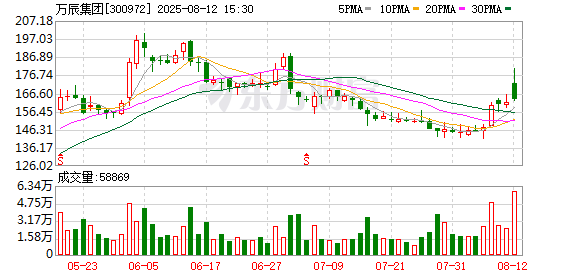
Macro Insights - The US July CPI shows a moderate increase, with core CPI rising 0.3% month-on-month, aligning with market expectations, alleviating concerns about significant inflation rebound [2] - The core CPI year-on-year increased by 0.2 percentage points to 3.1%, slightly above the expected 3.0% [2] - The market anticipates a 96% probability of a Federal Reserve rate cut in September, influenced by the manageable inflation pressures from tariffs [2] Fixed Income Insights - AI is becoming a central theme in the market, impacting investment, employment, and asset prices, leading to a structural divergence in stock performance [3] - The report suggests that AI could enhance labor productivity, potentially leading to a scenario where stock market performance outpaces GDP and employment growth [3] - Long-term, AI may alleviate debt pressures but could also exacerbate income and opportunity disparities [3] Energy Sector Insights - National electricity generation in July is estimated to increase by 3.2% year-on-year to 924.9 billion kWh, with coal, hydro, and renewable energy sources contributing differently [4] - The report anticipates a positive growth momentum for thermal power generation despite some pressure from hydroelectric output recovery [4] Banking Sector Insights - The introduction of a personal consumption loan interest subsidy policy aims to stimulate domestic demand, with a 1% annual subsidy rate [5] - Major banks are responding positively to the subsidy policy, indicating a favorable outlook for structural opportunities in the banking sector [5] Company-Specific Insights - Wanchen Group (300972 CH) is accelerating the acquisition of minority shareholder equity, with stable earnings in April and May, leading to an upgraded target price of 212.66 CNY and a "Buy" rating [7] - Guizhou Moutai (600519 CH) reported a 9.2% year-on-year increase in total revenue for H1 2025, indicating a solid foundation for achieving its annual growth target [11] - Pengding Holdings (002938 CH) is focusing on AI-related capacity investments, with a revenue increase of 24.75% year-on-year in H1 2025, leading to an upgraded target price of 69.2 CNY [12] - Desay SV (002920 CH) benefited from the smart driving trend, achieving a 25.25% year-on-year revenue growth in H1 2025, with a positive outlook for future growth [17] - City Development Environment (000885 CH) reported a revenue increase of 11.25% year-on-year in H1 2025, indicating stable growth in waste treatment operations [21]
万辰集团拟13.79亿元揽收南京万优49%股权,“二代”接班直面零食线下多业态对垒
Cai Jing Wang· 2025-08-12 14:26
Group 1 - The core viewpoint of the article highlights the strategic acquisition by Wancheng Group to strengthen its control over the snack business through the purchase of a 49% stake in Nanjing Wanyou Commercial Management Co., Ltd. for 1.379 billion yuan [1][2] - Following the acquisition, Wancheng Group will hold a total of 75.01% of Nanjing Wanyou, enhancing its operational efficiency and market competitiveness, particularly in second and third-tier cities [2][5] - The company plans to consolidate its sub-brands into a unified brand "Haoxianglai Snacks," which includes brands like "Yadi Yadi," "Lai You Pin," and "Lu Xiaochan" [1][2] Group 2 - The acquisition is expected to increase the company's debt ratio from 67.57% to 90.97%, with a projected decline in net profit due to financial costs associated with the acquisition [2][3] - Wancheng Group aims to enhance its supply chain management and operational efficiency, with plans to improve logistics and inventory management, and to innovate product offerings in line with health trends [5][6] - The company has expanded its retail presence to 14,196 stores and is focusing on brand building, market expansion, and exploring new profit growth points through innovative store formats and product categories [5][6] Group 3 - The leadership transition to Wang Zeneng, the new general manager, is part of a broader strategy to solidify control and ensure stable decision-making within the company [3][4] - The competitive landscape in the snack industry is intensifying, with other brands like Three Squirrels and Lai Yifen also expanding their retail formats and product offerings [4][5] - Analysts predict that Wancheng Group may benefit from economies of scale in the retail sector, potentially leading to improved net profit margins as market concentration increases [5][6]
食品饮料周报:中报逐步落地,关注高景气、低估值修复机会-20250812
Tai Ping Yang Zheng Quan· 2025-08-12 12:13
Investment Rating - The industry is rated positively, expecting an overall return exceeding 5% above the CSI 300 index in the next six months [19]. Core Insights - The report highlights a rebound in high-growth sectors driven by capital flow, with the food and beverage sector rising by 0.6% this week, ranking 26th among 31 sub-industries [11]. - The report emphasizes the importance of focusing on high-growth and undervalued recovery opportunities within the food and beverage sector [7]. Summary by Sections Sub-industry Ratings - No specific ratings for liquor, beverages, and food sub-industries, but several companies are recommended for investment: - Guizhou Moutai: Buy - Luzhou Laojiao: Buy - Shanxi Fenjiu: Hold - Jiansi Yuan: Hold - Yingjia Gongjiu: Hold - Dongpeng Beverage: Buy - Nongfu Spring: Buy - Mixue Group: Hold - Lihigh Food: Buy - Angel Yeast: Buy [3][18]. White Wine Sector - The white wine index increased by 0.38%, indicating a bottoming phase, with expectations for a local rebound despite ongoing policy and demand pressures [15]. - Guizhou Moutai's limited edition product sold out quickly, generating approximately 1.79 billion yuan in sales [5]. - The report suggests capitalizing on low valuation recovery opportunities in the white wine sector, recommending Guizhou Moutai, Luzhou Laojiao, Shanxi Fenjiu, and Jiansi Yuan [15]. Consumer Goods Sector - The snack and soft drink sectors have shown significant rebounds, attributed to previous valuation pressures and adjustments in mid-year expectations [16]. - Unified Enterprises reported a 10.6% revenue increase and a 33.2% net profit increase in H1 2025, exceeding market expectations [17]. - The report recommends focusing on high-growth snack and beverage companies, particularly Dongpeng Beverage, Mixue Group, and Nongfu Spring, while also considering undervalued stocks like Angel Yeast and Lihigh Food [16][17].


山西证券给予万辰集团增持评级,万店筑起量贩业态,供应制胜千亿蓝海
Mei Ri Jing Ji Xin Wen· 2025-08-12 08:38
Group 1 - The core viewpoint of the report is that Wancheng Group (300972.SZ) is rated as a buy due to its strong performance in the snack market and the rapid growth of the Chinese snack industry [2] - The Chinese leisure snack industry has a CAGR of 2.54% from 2019 to 2023, indicating significant growth potential [2] - The market for leisure snacks is highly concentrated, with Wancheng and Henbang actively capturing market share, resulting in a CR2 market share of 80% [2] - Wancheng Group has a mature supply chain system and operational capabilities that reinforce its leading position in the snack market [2]

食品饮料周报(25年第32周):白酒积极推新应变场景缺失,关注板块中报业绩-20250812
Guoxin Securities· 2025-08-12 08:26
Investment Rating - The report maintains an "Outperform" rating for the food and beverage sector [5][4]. Core Insights - The food and beverage sector saw a slight increase of 0.75% during the week of August 4 to August 8, 2025, underperforming the Shanghai Composite Index by 1.37 percentage points [20][1]. - The report highlights the pressure on demand within the liquor industry, prompting companies to innovate and diversify their product offerings to meet consumer needs [2][11]. - The report emphasizes the importance of mid-year performance reports, indicating that companies are focusing on inventory reduction and sales promotion strategies in the short term while planning for long-term consumer engagement and market expansion [2][13]. Summary by Sections 1. Liquor Industry - Companies like Guizhou Moutai and Wuliangye are actively launching new products to adapt to changing consumer preferences, with Moutai's recent product launch achieving significant sales [2][11]. - The report notes that the liquor sector is entering a critical phase for mid-year performance reporting, with expectations of inventory reduction and improved sales strategies [2][13]. - Key investment themes include established leaders with proven resilience, companies showing positive feedback from digital initiatives, and those with potential market share growth [2][13]. 2. Consumer Goods - The beer and beverage sectors are entering a peak season, with expectations for strong performance in mid-year reports [3][14]. - The report indicates a shift in the snack industry towards a model driven by product categories and channels, highlighting the need for brands to enhance their market penetration capabilities [3][15]. - Recommendations include focusing on leading companies in the seasoning and frozen food sectors, which are expected to perform steadily [3][16][17]. 3. Dairy Products - The dairy sector is anticipated to see a gradual recovery in demand, supported by favorable policies and improved supply dynamics [3][18]. - The report suggests that leading dairy companies are well-positioned to benefit from the expected demand rebound in 2025 [3][18]. 4. Beverage Sector - The beverage industry is expected to maintain a favorable outlook, with significant growth opportunities in sugar-free tea and energy drinks [3][19]. - The report highlights the performance of leading companies like Nongfu Spring and Dongpeng Beverage, which are expected to accelerate their market presence [3][19].