
服务业

Search documents
October consumer confidence comes in at 94.6
Youtube· 2025-10-28 14:50
Group 1 - The October consumer confidence index from the Conference Board is reported at 94.6, which is an improvement from the previous month's revised figure of 95.6, marking the best level since August [1][2] - The present situation index is at 129.3, significantly better than the expected 125.4, and has been upgraded from a previous reading of 127.5, also the highest since August [2] - The expectations index has decreased to 71.5 from last month's 73.4, marking the weakest level since June when it was just under 70 [2] Group 2 - The Richmond Fed's manufacturing index for October is reported at -4, which is less negative than expected, while the services index comes in at -1, the strongest read since August [2][3] - The market is observing a consistent trend with the 10-year note potentially closing between 3.95% and 4.03% for the 13th consecutive session [3]


粤开宏观:《“十五五”规划建议》的12大看点:科技自立与扩大内需引领新征程
Yuekai Securities· 2025-10-28 13:57
Economic Environment and Challenges - The "15th Five-Year Plan" emphasizes the coexistence of strategic opportunities and risks, highlighting increased uncertainty in the development environment[3] - External challenges are expected to intensify, with geopolitical tensions and trade barriers affecting China's economic landscape[17] - The plan identifies effective demand insufficiency and the need for new and old kinetic energy conversion as critical issues[19] Development Goals - The plan sets seven major development goals, including achieving significant high-quality development and a notable increase in the resident consumption rate[20] - Aiming for an average nominal GDP growth rate of 5% during the "15th Five-Year Plan" period to reach a per capita GDP of approximately $27,000 by 2035[21] - The target for the resident consumption rate is to increase from 40% to 43%, necessitating a 6.5% annual growth in consumption[22] Industrial and Technological Focus - The establishment of a modern industrial system is prioritized, with a focus on maintaining a reasonable proportion of manufacturing in the economy[25] - The plan emphasizes the importance of technological self-reliance and innovation as a core component of high-quality development[33] - Specific sectors such as new energy, advanced manufacturing, and digital economy are highlighted for rapid development and support[28] Domestic Demand and Investment - Expanding domestic demand is identified as a strategic foundation for modernization, with a focus on enhancing consumer confidence and increasing disposable income[35] - The plan calls for optimizing the investment structure, directing funds towards education, healthcare, and emerging technologies[36] - Reforming the income distribution system is crucial for sustainable consumption growth and fostering a robust middle-income group[38] Governance and Policy Coordination - The plan advocates for improving the macroeconomic governance system and enhancing policy effectiveness through better coordination of fiscal and monetary policies[39] - Emphasis is placed on creating a stable and predictable institutional environment to support market participants[42] - The need for a proactive fiscal policy is highlighted to address short-term fiscal challenges while ensuring long-term sustainability[43]
“十五五”,这项任务排首位
Ren Min Ri Bao· 2025-10-28 12:34
Core Viewpoint - The importance of the real economy is emphasized as a foundation for China's economic development during the "15th Five-Year Plan" period, with a focus on building a modern industrial system and strengthening the real economy as a priority [1][3][5]. Group 1: Importance of the Real Economy - The real economy is described as the foundation of a major country, essential for economic development and international competitiveness [3][5]. - It serves as a "ballast" for economic operation, with over 400 million people employed in manufacturing, construction, agriculture, and services, accounting for 53% of the national employment population [5]. - The manufacturing sector is highlighted as a crucial pillar of the national economy, with China maintaining the world's largest manufacturing scale for 15 consecutive years, providing resilience against external uncertainties [5][6]. Group 2: Strategic Tasks for the "15th Five-Year Plan" - The main tasks outlined for the "15th Five-Year Plan" include optimizing and upgrading traditional industries, aiming to create an additional market space of approximately 10 trillion yuan over the next five years [8]. - There is a focus on nurturing and expanding emerging and future industries, particularly in new energy and new materials, with a goal of creating a scale equivalent to a new high-tech industry in the next decade [8]. - The plan also emphasizes the promotion of high-quality development in the service sector, integrating modern services with advanced manufacturing and modern agriculture to meet people's needs and stimulate economic growth [8]. - Accelerating the construction of a modern infrastructure system is identified as a key task, with an emphasis on coordinated planning and development of new infrastructure [8]. Group 3: Future Outlook - The real economy is positioned as the key to navigating uncertainties in the external environment, with a call for leveraging technological advantages to enhance industrial competitiveness [9].
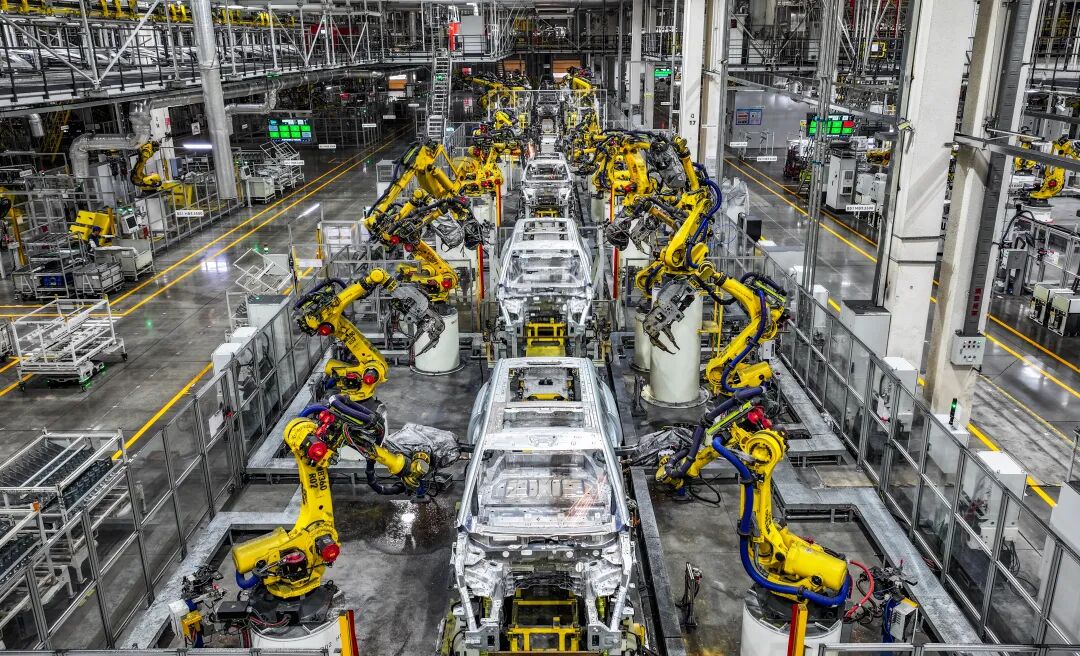
天津前三季度GDP同比增长4.7%
Zhong Guo Xin Wen Wang· 2025-10-28 11:23
Economic Growth - Tianjin's GDP for the first three quarters reached 13,416.08 billion yuan, with a year-on-year growth of 4.7% [1] - The primary industry added value was 162.72 billion yuan, growing by 2.5%; the secondary industry added value was 4,531.97 billion yuan, growing by 3.6%; and the tertiary industry added value was 8,721.39 billion yuan, growing by 5.2% [1] Agricultural Performance - The total output value of agriculture, forestry, animal husbandry, and fishery increased by 2.7% year-on-year [1] - Vegetable production reached 1,990,400 tons, growing by 5.9%; pork, beef, and poultry production increased by 6.7%, 2.7%, and 3.8% respectively [1] Industrial Development - The industrial added value for large-scale industries grew by 4.5%, with high-tech manufacturing increasing by 5.9% [1] - Key products saw significant growth, including a 34.0% increase in electronic computer production and 27.9% and 11.9% increases in industrial and service robot production respectively [1] Service Sector Growth - The added value of the service industry grew by 5.2%, with modern service sectors performing well [1] - Information transmission, software, and IT services, as well as leasing and business services, saw added value growth of 21.8% and 14.4% respectively [1] Investment Trends - Fixed asset investment (excluding rural households) increased by 3.0% year-on-year, with infrastructure investment growing by 12.8% [2] - Investment in water conservancy, ecological environment, and public facility management rose by 17.5% [2] Consumer Market Insights - Sales of basic living and some upgraded goods performed well, with retail sales of sports and entertainment goods, cultural office supplies, and communication equipment increasing by 52.7%, 50.1%, and 51.2% respectively [2] - Online retail remained active, with a 9.4% increase in retail sales through public networks [2] Employment and Income - The city added 268,100 new urban jobs, with per capita disposable income reaching 44,353 yuan, a year-on-year increase of 4.4% [2] - Urban residents' per capita disposable income was 47,990 yuan, growing by 4.1%, while rural residents' income was 26,112 yuan, growing by 5.3% [2] Price Stability - The price level in Tianjin remained stable, with a 0.1% year-on-year increase in consumer prices, while industrial producer prices and purchase prices both decreased by 3.7% [2]
中共中央关于制定国民经济和社会发展第十五个五年规划的建议
中国能源报· 2025-10-28 09:39
Group 1 - The "15th Five-Year Plan" period is crucial for achieving basic socialist modernization, building on the significant achievements of the "14th Five-Year Plan" period [2][3] - The international and domestic environments for development are undergoing profound and complex changes, with both strategic opportunities and risks present [4][5] - The plan emphasizes the importance of maintaining strategic determination and confidence in the face of challenges, aiming to create a new chapter in the construction of Chinese-style modernization [5] Group 2 - The guiding principles for economic and social development during the "15th Five-Year Plan" period include adhering to the leadership of the Party, prioritizing the people, and focusing on high-quality development [6][7] - The main goals include achieving significant results in high-quality development, improving self-reliance in technology, and enhancing the overall effectiveness of the national innovation system [9][10] Group 3 - The construction of a modern industrial system is essential, focusing on optimizing traditional industries and fostering emerging industries [12][13] - The plan aims to strengthen the domestic market and establish a new development pattern that promotes consumption and investment [20][21] Group 4 - The emphasis on high-level technological self-reliance and innovation is critical for driving new productive forces [15][16] - The plan outlines the need for a strong domestic market as a strategic support for modernization, with a focus on expanding domestic demand [20][21] Group 5 - The plan highlights the importance of rural modernization and the comprehensive revitalization of rural areas, addressing the "three rural issues" as a priority [29][30] - It aims to enhance regional economic coordination and optimize the economic layout to promote balanced development across different regions [32][33]

中共中央关于制定国民经济和社会发展第十五个五年规划的建议
Wind万得· 2025-10-28 09:07
Core Viewpoint - The article emphasizes the importance of the 15th Five-Year Plan as a critical period for achieving socialist modernization in China, highlighting the need for strategic initiatives to address both opportunities and challenges in the domestic and international landscape [5][6][7]. Group 1: Achievements and Context - The 14th Five-Year Plan has led to significant achievements in China's development, including economic stability, technological innovation, and improved living standards, despite facing challenges such as the pandemic and international tensions [5]. - The 15th Five-Year Plan is positioned as a transitional phase that builds on past successes while addressing existing challenges to lay a solid foundation for future modernization efforts [6]. Group 2: Development Environment - The international landscape is characterized by rapid changes, including shifts in global power dynamics, technological revolutions, and rising protectionism, which pose both risks and opportunities for China's development [7]. - Domestically, China maintains a strong economic foundation but faces issues such as uneven development, insufficient demand, and demographic changes that require strategic responses [7]. Group 3: Guiding Principles and Goals - The guiding principles for the 15th Five-Year Plan include upholding the leadership of the Communist Party, prioritizing people-centered development, and focusing on high-quality growth [9][10]. - Key goals include achieving significant advancements in high-quality development, technological self-reliance, and comprehensive reforms, alongside improvements in social welfare and environmental sustainability [13][14]. Group 4: Economic Structure and Innovation - The plan emphasizes the need to strengthen the real economy, enhance traditional industries, and foster emerging sectors, with a focus on innovation and sustainability [15][16]. - A modernized industrial system is essential for supporting China's unique modernization, with an emphasis on advanced manufacturing and the integration of digital technologies [15][18]. Group 5: Domestic Market and Investment - Strengthening the domestic market is crucial for driving economic growth, with initiatives aimed at boosting consumption and effective investment [23][24]. - The plan outlines strategies to eliminate barriers to market integration and enhance the efficiency of resource allocation across various sectors [25][27]. Group 6: Social Development and Welfare - The plan prioritizes improving living standards and social welfare, with a focus on employment, income distribution, and education [41][42]. - Enhancing the social security system and ensuring equitable access to resources are key components of the strategy to achieve common prosperity [44].

全文丨中共中央关于制定国民经济和社会发展第十五个五年规划的建议
Xin Hua She· 2025-10-28 08:49
Core Viewpoint - The Central Committee of the Communist Party of China has released the full text of the suggestions for the 15th Five-Year Plan, emphasizing the construction of a new energy system and the promotion of high-quality development in clean energy while ensuring the safe and orderly replacement of fossil energy sources. Energy Sector - Accelerate the construction of a new energy system, continuously increase the proportion of renewable energy supply, and focus on building a strong energy nation [1] - Promote the clean and efficient utilization of fossil energy, upgrade coal-fired power plants, and replace scattered coal usage [1] - Enhance the resilience and complementarity of the power system, develop new energy storage solutions, and accelerate the construction of smart grids and microgrids [1] - Improve the electrification level of end-use energy and promote green and low-carbon energy consumption [1] Economic and Social Development Goals - The 15th Five-Year Plan period is crucial for achieving basic socialist modernization, requiring efforts to consolidate advantages, eliminate bottlenecks, and strengthen weaknesses [2] - The development environment is complex, with both strategic opportunities and risks, necessitating proactive measures to navigate international competition [3] Guiding Principles for Development - Adhere to the principle of people-centered development, ensuring that modernization benefits all citizens [7] - Focus on high-quality development, emphasizing innovation and structural reform to enhance economic vitality [7] - Promote comprehensive deepening of reforms to address systemic barriers to high-quality development [7] - Ensure a balance between development and security, enhancing resilience against various risks [8] Major Development Objectives - Achieve significant results in high-quality development, with economic growth maintained within a reasonable range and increased domestic consumption driving growth [9] - Enhance self-reliance in technology, with improvements in the national innovation system and breakthroughs in key technologies [9] - Advance social civilization and improve the quality of life for citizens, with a focus on employment and income growth [10] - Make substantial progress in building a beautiful China, with a focus on green production and achieving carbon peak goals [10] Modern Industrial System - Establish a modern industrial system with a focus on the real economy, emphasizing intelligent, green, and integrated development [11] - Optimize and upgrade traditional industries while fostering emerging and future industries, such as new energy and advanced manufacturing [12] Infrastructure Development - Strengthen the planning and integration of infrastructure, promoting the construction of new energy infrastructure and modern transportation systems [13] Agricultural Modernization - Focus on agricultural modernization as a key aspect of overall modernization, enhancing production capacity and quality [28] - Promote rural revitalization and improve living conditions in rural areas, ensuring sustainable agricultural development [29]
受权发布丨中共中央关于制定国民经济和社会发展第十五个五年规划的建议
Xin Hua Wang· 2025-10-28 08:41
(2025年10月23日中国共产党第二十届中央委员会第四次全体会议通过) 中国共产党第二十届中央委员会第四次全体会议深入分析国际国内形势,就制定国民经济和社会发 展"十五五"规划提出以下建议。 受权发布丨中共中央关于制定国民经济和社会发展第十五个五年规划的建议 新华社北京10月28日电 中共中央关于制定国民经济和社会发展第十五个五年规划的建议 一、"十五五"时期是基本实现社会主义现代化的关键时期 (1)"十四五"时期我国发展取得重大成就。"十四五"时期我国发展历程极不寻常、极不平凡。面对错综复 杂的国际形势和艰巨繁重的国内改革发展稳定任务,以习近平同志为核心的党中央团结带领全党全国各 族人民,迎难而上、砥砺前行,经受住世纪疫情严重冲击,有效应对一系列重大风险挑战,推动党和国 家事业取得新的重大成就。经济运行稳中有进,高质量发展扎实推进;科技创新成果丰硕,新质生产力 稳步发展;全面深化改革进一步推进,高水平对外开放不断扩大;全过程人民民主深入发展,全面依法 治国有效实施;文化事业和文化产业蓬勃发展,精神文化产品丰富多彩;民生保障扎实稳固,脱贫攻坚 成果巩固拓展;绿色低碳转型步伐加快,生态环境质量持续改善;国家安 ...
【宏观经济】一周要闻回顾(2025年10月22日-10月28日)
乘联分会· 2025-10-28 08:40
Electricity Consumption - In September 2025, the total electricity consumption reached 888.6 billion kWh, representing a year-on-year growth of 4.5% [5] - For the first nine months of 2025, total electricity consumption accumulated to 7,767.5 billion kWh, with a year-on-year increase of 4.6% [5] - Breakdown of electricity consumption by industry in September: - Primary industry: 12.9 billion kWh, up 7.3% - Secondary industry: 570.5 billion kWh, up 5.7% - Tertiary industry: 176.5 billion kWh, up 6.3% - Urban and rural residents' electricity consumption: 128.7 billion kWh, down 2.6% [5] Foreign Investment - From January to September 2025, the number of newly established foreign-invested enterprises was 48,921, a year-on-year increase of 16.2% [7] - Actual foreign investment utilized amounted to 573.75 billion RMB, a year-on-year decrease of 10.4% [7] - In September, actual foreign investment utilization grew by 11.2% year-on-year [7] - Breakdown of foreign investment by industry: - Manufacturing: 150.09 billion RMB - Services: 410.93 billion RMB - High-tech industries: 170.84 billion RMB, with significant growth in e-commerce services (155.2%), aerospace manufacturing (38.7%), and medical equipment manufacturing (17%) [8] Industrial Profit - From January to September 2025, profits of large-scale industrial enterprises totaled 53,732 billion RMB, reflecting a year-on-year growth of 3.2% [11] - Profit breakdown by ownership: - State-owned enterprises: 17,021.8 billion RMB, down 0.3% - Shareholding enterprises: 39,923.5 billion RMB, up 2.8% - Foreign and Hong Kong, Macao, Taiwan enterprises: 13,509.7 billion RMB, up 4.9% - Private enterprises: 15,131.7 billion RMB, up 5.1% [11] - Key industries with profit growth include: - Electricity, heat production and supply: up 14.4% - Non-ferrous metal smelting and rolling: up 14.0% - Agricultural and sideline food processing: up 12.5% [12] Industrial Revenue and Costs - From January to September 2025, large-scale industrial enterprises achieved total operating revenue of 10.208 trillion RMB, a year-on-year increase of 2.4% [13] - Operating costs amounted to 8.734 trillion RMB, up 2.6% [13] - The operating profit margin was 5.26%, an increase of 0.04 percentage points year-on-year [13] - As of the end of September, total assets of large-scale industrial enterprises reached 186.27 trillion RMB, up 5.0% year-on-year [13]
【财经分析】“经济风向标”显示德企信心好转 德国经济面临“关键转折点”
Xin Hua Cai Jing· 2025-10-28 05:29
Group 1 - The German business climate index rose from 87.7 in September to 88.4 in October, indicating improved confidence among German enterprises [1][2] - The index is based on surveys from approximately 9,000 companies across manufacturing, services, trade, and construction sectors [2] - Manufacturing, services, and trade indicators showed improvement, while the construction sector experienced a slight decline [2] Group 2 - Analysts express mixed feelings about the index's rise, suggesting it reflects both positive and negative aspects of the German economy [3] - Reports from various institutions indicate expectations of economic improvement in Germany next year, supported by government fiscal plans [3] - The ZEW economic sentiment index and the composite purchasing managers' index also showed positive trends, suggesting better-than-expected economic conditions [3] Group 3 - Despite the rise in the business climate index, significant concerns remain regarding job stability, particularly in the automotive and metal industries [4] - Major companies like Porsche reported a drastic decline in profits, with a 99% drop in sales profit compared to the previous year [4] - The export-oriented nature of the German economy continues to be affected by unpredictable foreign trade policies from the U.S. [4] Group 4 - The index's increase is attributed to more optimistic expectations for the coming months, although current business conditions have been slightly downgraded [6] - Structural challenges in the German economy persist, with over 70% of surveyed companies considering relocating production or investing in other regions [6] - Despite a 25% increase in government spending since 2015, corporate investment has stagnated, returning to 2015 levels [6] Group 5 - Some economists warn that without comprehensive reforms, Germany may face a prolonged period of stagnation [7] - The current economic situation is described as dramatic, with long-term recession concerns highlighted by experts [7]