公用事业

Search documents
加拿大彻底跪了?50%关税风暴压境,卡尼要如何破局
Sou Hu Cai Jing· 2025-11-29 21:11
Group 1: Economic Context - Canada is facing a severe economic downturn exacerbated by a sudden 50% tariff imposed by the U.S., which has further darkened the already weak economic outlook [3][5] - The Canadian government, led by Prime Minister Mark Carney, has announced a dual response plan, including reducing steel import quotas from non-trade agreement countries from 50% to 20% and allocating 5 billion CAD to support the domestic lumber industry [5][11] Group 2: Steel Industry Challenges - The steel industry is experiencing a crisis, with over 75% of exports to the U.S. now at risk due to the new tariffs, severely impacting local companies like Algoma [8][11] - The reduction of import quotas is seen as a defensive measure, but it may lead to higher steel prices, contradicting the government's commitment to address housing affordability [8][13] Group 3: Lumber Industry Issues - The lumber industry is caught in a long-standing trade dispute with the U.S., and the 5 billion CAD aid may be perceived as a new subsidy, potentially leading to further tariff increases [9][11] - The financial support is primarily aimed at stabilizing employment in British Columbia and Quebec but does not address the fundamental issues of market access [9][16] Group 4: Structural Economic Weaknesses - The policies reflect three structural weaknesses in the Canadian economy: the end of an "extractive economy" model, limitations of technocrats in addressing populist pressures, and the entanglement in a "stagflation dilemma" [11][13] - The reliance on resource exports is becoming increasingly unsustainable as the U.S. shifts towards isolationism, highlighting the need for economic diversification [11][16] Group 5: Investment Strategies - Investors are advised to focus on domestic demand-driven sectors such as utilities and essential consumer goods, which are less affected by tariffs [13][18] - Caution is recommended regarding the real estate market, as high construction costs and declining purchasing power may lead to a stagnant market [13][18]


光大证券:A股市场仍处牛市 但短期或宽幅震荡
智通财经网· 2025-11-29 08:44
Group 1 - The overall direction of the A-share market is still in a bull market, but it may enter a wide fluctuation phase in the short term. Compared to previous bull markets, there is still considerable room for index growth, but the duration of the bull market may be more important than the magnitude of the increase under the government's guidance for a "slow bull" policy [1][3] - In November, major A-share indices generally declined, with the STAR 50 index experiencing the largest drop of 7.1%, while the Shanghai 50 index saw the smallest decline of 1.3%. The performance across industries showed significant differentiation, with sectors like comprehensive, banking, and media leading in gains [2] - The Hong Kong stock market also experienced fluctuations in November, influenced by expectations of U.S. Federal Reserve interest rate cuts and concerns over AI bubbles. The Hang Seng Index and other indices showed mixed performance, with the Hang Seng Technology Index declining by 4.9% [2] Group 2 - In terms of investment strategy, short-term focus should be on defensive and consumer sectors, while mid-term attention should remain on TMT (Technology, Media, Telecommunications) and advanced manufacturing sectors. During the fluctuation phase, previously lagging sectors may perform better, particularly high-dividend and consumer sectors [3] - For the Hong Kong market, a "dumbbell" strategy is recommended, focusing on technology growth and high-dividend stocks. The market's overall profitability remains strong, and despite recent gains, valuations are still relatively low, making long-term investment attractive [4][5] - Specific areas of interest include domestic policies supporting self-sufficiency in technology, chip manufacturing, and high-end manufacturing, as well as independent internet technology companies with their own growth potential [5]

【策略】宽幅震荡,静待风起——2025年12月A股及港股月度金股组合(张宇生/王国兴)
光大证券研究· 2025-11-29 00:04
Market Performance - In November, A-shares experienced a general decline, with the ChiNext 50 index dropping the most by 7.1%, while the Shanghai 50 index fell the least by 1.3% [7] - The Hong Kong stock market also showed volatility, with the Hang Seng Index increasing by 0.1% and the Hang Seng Technology Index decreasing by 4.9% as of November 26, 2025 [7] A-share Outlook - The market is believed to still be in a bull phase, but may enter a period of wide fluctuations in the short term. There is significant room for index growth compared to previous bull markets, but the focus may shift to the duration of the bull market rather than the magnitude of gains [8] - Short-term attention should be on defensive and consumer sectors, while TMT (Technology, Media, and Telecommunications) and advanced manufacturing sectors should be monitored in the medium term [8] Hong Kong Stock Outlook - The expectation of a potential interest rate cut by the Federal Reserve in December may lead to continued upward volatility in the Hong Kong stock market. The overall profitability of Hong Kong stocks remains strong, with relatively low valuations despite recent increases [9] - A "barbell" strategy is recommended, focusing on sectors such as autonomous control, chips, and high-end manufacturing, as well as independent internet technology companies and high-dividend, low-volatility stocks in sectors like telecommunications and utilities [9]

巴菲特2025年致股东信:长期投资的力量
Sou Hu Cai Jing· 2025-11-28 12:52
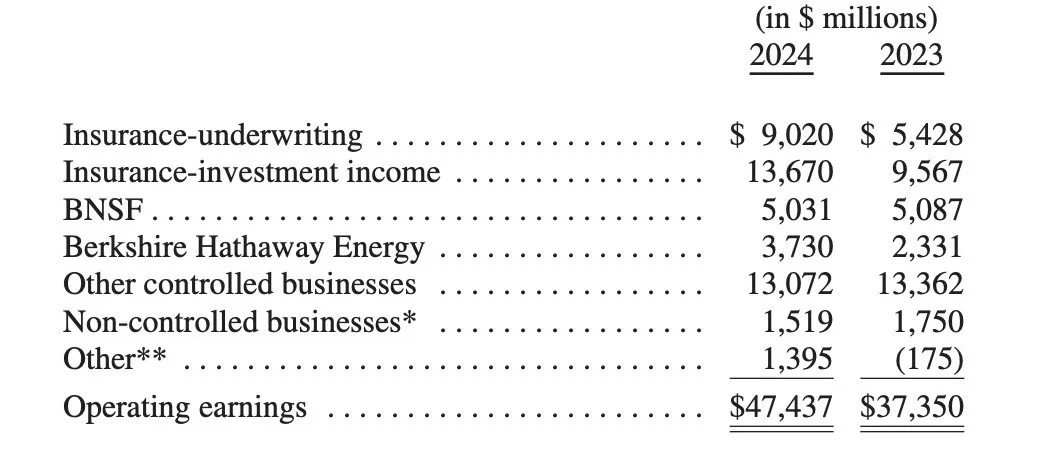
Core Insights - Berkshire Hathaway's 2024 annual report highlights the company's commitment to transparent communication with shareholders, emphasizing the importance of sharing both successes and mistakes in investment decisions [2][3] - The company reported operating earnings of $47.4 billion for 2024, driven by significant growth in investment income and improvements in its insurance business, particularly GEICO [7][8] - Berkshire's tax contributions have dramatically increased, with the company paying $26.8 billion in federal taxes in the past year, representing about 5% of total corporate taxes collected in the U.S. [11][12] Financial Performance - Operating earnings for 2024 reached $47.4 billion, up from $37.35 billion in 2023 [8][9] - Investment income from insurance underwriting increased to $9.02 billion, while insurance investment income rose to $13.67 billion [9] - The company’s total market value of equity investments decreased from $354 billion to $272 billion, while the value of non-traded holdings increased [16] Business Operations - Berkshire Hathaway's insurance business remains a core focus, with a unique financial model that allows for cash inflow before claims are realized, providing significant investment opportunities [17][19] - The company has increased its stake in utility businesses to 100%, costing approximately $3.9 billion [7] - Berkshire's investment strategy includes a long-term commitment to Japanese companies, with a total investment cost of $13.8 billion and a market value of $23.5 billion [22][24] Management and Governance - The company emphasizes the importance of recognizing and correcting mistakes in management decisions, with a focus on maintaining a high standard of accountability [3][10] - The transition of leadership is anticipated, with Greg Abel expected to take over as CEO in the near future [3] - Berkshire's management philosophy values talent over educational pedigree, highlighting the importance of innate ability in successful business leadership [5][6] Shareholder Engagement - The annual shareholders meeting is scheduled for May 3, with a focus on providing answers to shareholder questions and fostering community [28][30] - The company continues to prioritize reinvestment over dividend payments, having only issued one dividend in the past 60 years [11][12]
11月28日国企改革(399974)指数涨0.22%,成份股东方电气(600875)领涨
Sou Hu Cai Jing· 2025-11-28 10:40
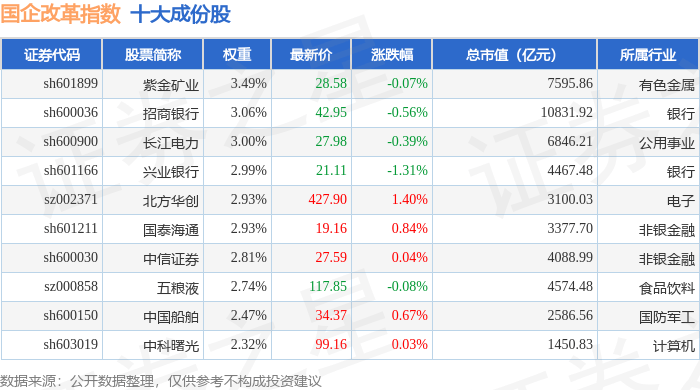
Core Points - The State-Owned Enterprise Reform Index (399974) closed at 1841.64 points, up 0.22%, with a trading volume of 863.26 billion and a turnover rate of 0.48% [1] - Among the index constituents, 63 stocks rose, led by Dongfang Electric with a 5.56% increase, while 33 stocks fell, with China Merchants Shekou leading the decline at 2.63% [1] Index Constituents Summary - The top ten constituents of the State-Owned Enterprise Reform Index include: - Zijin Mining: Weight 3.49%, Latest Price 28.58, Market Cap 759.86 billion [1] - China Merchants Bank: Weight 3.06%, Latest Price 42.95, Market Cap 1083.19 billion [1] - Yangtze Power: Weight 3.00%, Latest Price 27.98, Market Cap 684.62 billion [1] - Industrial Bank: Weight 2.99%, Latest Price 21.11, Market Cap 446.75 billion [1] - North Huachuang: Weight 2.93%, Latest Price 427.90, Market Cap 310.00 billion [1] - Wenzhou Haidao: Weight 2.93%, Latest Price 19.16, Market Cap 337.77 billion [1] - CITIC Securities: Weight 2.81%, Latest Price 27.59, Market Cap 408.90 billion [1] - Wugong Liquid: Weight 2.74%, Latest Price 117.85, Market Cap 457.45 billion [1] - China Shipbuilding: Weight 2.47%, Latest Price 34.37, Market Cap 258.66 billion [1] - Zhongke Shuguang: Weight 2.32%, Latest Price 99.16, Market Cap 145.08 billion [1] Capital Flow Analysis - The net outflow of main funds from the index constituents totaled 788 million, while retail investors saw a net inflow of 768 million [3] - Notable capital flows include: - China Merchants Bank: Main net inflow 325 million, retail net inflow 35.88 million [3] - Zijin Mining: Main net inflow 151 million, retail net inflow 213 million [3] - Yangtze Power: Main net inflow 143 million, retail net outflow 11.30 million [3] - China Shipbuilding: Main net inflow 129 million, retail net outflow 52.74 million [3]




第七届新浪财经金麒麟证券分析师·未来之星荣耀揭晓
Xin Lang Zheng Quan· 2025-11-28 06:22
Core Insights - The 2025 Analyst Conference and the 7th Sina Finance "Golden Unicorn" Best Analyst Awards Ceremony took place on November 28, gathering over 300 authoritative scholars, public and private fund leaders, listed company chairpersons, top fund managers, and chief analysts in Shanghai to discuss future opportunities in the Chinese capital market [1] Group 1: Event Overview - The event featured discussions on the future opportunities in the Chinese capital market [1] - The results of the 6th Sina Finance Golden Unicorn Best Analyst Awards were announced [1] Group 2: Award Winners - Ten analysts were awarded the title of Securities Analyst: Future Star, representing various institutions and research industries, including: - Wang Zihao from Changjiang Securities in the New Energy Vehicles and Components sector - Jiang Tao from GF Securities in the Public Utilities sector - Xue Hongwei from Dongfang Securities in the Electronics sector - Fang Yi from Guotai Junan Securities in Strategy Research - Pang Jiajun from CITIC Securities in the Electronics sector - Yang Jiani from Guojin Securities in Macroeconomic Research - Yang Xu from Zhongtai Securities in the Electronics sector - Liu Jie from Tianfeng Securities in the Banking sector - Lin Chengwei from Zheshang Securities in Macroeconomic Research - Dai Yongbo from Huafu Securities in Robotics and High-end Manufacturing [1]




企业利润率出现不寻常的下滑
Xinda Securities· 2025-11-28 05:11
Group 1: Profit Margin Decline - Industrial enterprises experienced an unusual decline in profit margins from January to October 2025, contrasting with the historical trend of improvement during the same period from 2020 to 2024[6] - The profit margin for industrial enterprises fell to a year-on-year growth rate of 1.9%, a decrease of 1.3 percentage points compared to previous values[6] - Financial expenses are identified as a significant factor contributing to the decline in profit margins, with October 2025 showing negative profit growth year-on-year[6] Group 2: Consumer Goods Manufacturing Impact - The decline in profit margins is particularly pronounced in state-owned and foreign enterprises, while private enterprises maintained relatively stable margins[10] - Consumer goods manufacturing is the only sector within manufacturing that saw a decrease in profit margins, attributed to uneven domestic consumption recovery and challenges in passing on increased costs[10] - Public utility enterprises also faced a decline in profit margins, dropping from 7.05% to below 7%[11] Group 3: Ongoing Constraints on Profitability - The recovery of industrial enterprise profitability remains unstable, with ongoing constraints affecting the pace of recovery[17] - Limited recovery in factory gate prices and a slowdown in production rhythms due to anti-involution policies are contributing factors[17] - If price recovery in November and December is insufficient, there is a risk of a further decline in profit growth rates by year-end[17] Group 4: Risk Factors - Potential risks include domestic policy measures falling short of expectations and geopolitical uncertainties[19]
【申万宏源脱水研报】年度策略精粹
申万宏源研究· 2025-11-28 03:01
Group 1: High-end Manufacturing and Security - The defense industry is entering a new cycle driven by both domestic demand and external potential, focusing on information technology, intelligent equipment, and emerging fields like military trade and deep space economy [2] - The machinery sector is expected to undergo a value reassessment and technological empowerment, with a focus on robotics and autonomous driving, alongside a push for core technology breakthroughs [2] - The electric power and new energy sectors are witnessing a new growth cycle, with lithium battery storage demand surging and the photovoltaic market stabilizing [2] - The home appliance industry is focusing on policy subsidies, technological transformation, and overseas expansion, particularly in Southeast Asia and Latin America [2] - The automotive sector is experiencing rapid technological advancements in smart driving and hybrid technologies, with a focus on export opportunities and collaboration with tech companies [2] Group 2: Real Estate and Banking - The real estate market is stabilizing, with key cities expected to see price stabilization driven by household balance sheet recovery and supportive policies [3] - The banking sector is entering a new profit cycle, with stable interest margins supporting long-term profitability, and a focus on undervalued shares and quality city commercial banks [4] Group 3: Securities and Insurance - The securities industry is benefiting from wealth management trends, with a focus on stable earnings and international expansion as a long-term narrative [5] - The insurance sector is characterized by high elasticity, with investment-driven profit growth and a focus on regulatory compliance and risk management [6] Group 4: Construction and Chemicals - The construction industry is expected to stabilize with government debt management and new infrastructure projects, focusing on regional coordination and green development [10] - The chemical sector is entering a recovery phase, with a focus on high-quality enterprises and strategic investments in various chains [10][12] Group 5: Utilities and Environmental Protection - The utilities sector is seeing steady growth in electricity demand, with a focus on high-dividend investments in water and coal power [13] - The environmental protection sector is benefiting from policy adjustments and technological advancements, with a focus on improving profitability in water and waste management [16] Group 6: Capital Markets and Financial Innovation - The capital market is exploring new paths for empowering inclusive finance, focusing on small and micro-enterprise support and rural revitalization [21] - The green certificate market is expected to grow significantly, driven by policy support and increasing demand for renewable energy [22] Group 7: E-commerce and Retail - The retail sector is experiencing structural changes driven by AI, with a focus on rational competition and the globalization of Chinese brands [23] Group 8: Bonds and Financial Engineering - The convertible bond market is expected to see continued growth, driven by demand for fixed income and equity market expectations [25] - The quantitative investment sector is gaining traction, with a focus on unique strategies and the development of fixed income products [27]

做上海发展的深度参与者贡献者 通过今年市咨会 预计吸引外资项目超10个 拉动投资超300亿元
Jie Fang Ri Bao· 2025-11-28 01:40
Core Viewpoint - The recent inclusion of lipid management in Shanghai's public health services reflects the efforts of international companies like Novartis to address chronic disease prevention and cardiovascular health in the city [1] Group 1: New Member Companies and Their Contributions - Six new member companies of the Shanghai Mayor's International Business Advisory Council include global giants such as Nike, Veolia, Vale, SK, Mizuho Financial Group, and Adidas, representing various sectors like semiconductors, finance, consumer goods, and mining [2] - Adidas has become the largest single-country market for the company in China, with a revenue of €3.459 billion in the previous year, marking a 10.3% year-on-year growth [2] - Veolia's project in Pudong supplies nearly 2 million cubic meters of drinking water daily to 4.3 million residents [2] - Vale's iron ore shipments to China reached approximately 140 million tons in the first three quarters of this year, accounting for 62% of the company's global iron ore sales during the same period [2] Group 2: Alignment of Corporate Goals with Shanghai's Development - Companies believe there is significant potential in the Chinese market, leading to the establishment of a dedicated area for energy transition metals at this year's China International Import Expo [3] - The alignment between Shanghai's development direction and corporate goals is emphasized, with companies like Veolia developing smart water management platforms tailored to local needs [3] Group 3: Engagement and Contributions of New Members - New members are expected to submit consulting reports starting from their second year, but Adidas has already begun contributing by suggesting standardized guidelines for sports event management in Shanghai [4] - Companies are leveraging their global presence to gather insights and propose actionable recommendations for Shanghai's development, with Mizuho Bank focusing on sustainable development and demographic challenges [4] Group 4: Corporate Growth and Interaction with Shanghai - Companies are looking to achieve "second growth" in Shanghai, with Adidas planning to relocate its Greater China headquarters and actively participate in local events [5] - Veolia aims to integrate advanced technologies in water, waste, and energy management to help Chinese industrial parks reduce carbon emissions by 15% to 30% [5] - Mizuho Bank is expanding its operations in China, having received approval to establish the first wholly-owned Japanese securities company in the country, aiming to create a foundation for future growth [5] - The interaction between Shanghai and member companies is increasing, with regular events organized to facilitate communication and collaboration [5]

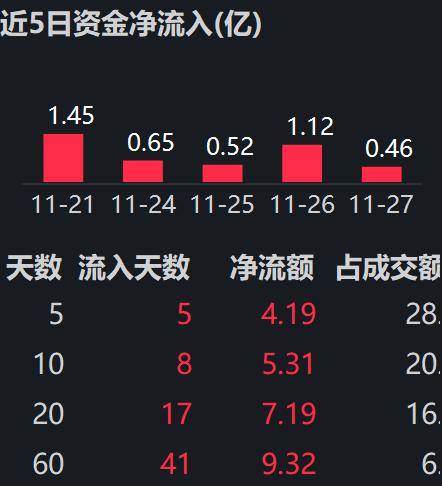
市场冲高回落,资金涌入红利板块避险,中证红利ETF(515080)连续五日吸金超4亿
Sou Hu Cai Jing· 2025-11-28 01:32
Group 1 - The core viewpoint of the articles indicates that the market is experiencing a pullback after three days of gains, primarily due to a lack of new short-term catalysts, while the dividend sector is gaining attention amid risk-averse sentiment [1][3] - The CSI Dividend ETF (515080) has attracted a total of 419 million yuan over five consecutive days, reflecting increased capital allocation towards high-dividend assets [1] - The CSI Dividend ETF has maintained a stable and predictable dividend distribution, having distributed dividends 14 times since its listing, suggesting that systematic investment in such ETFs can mitigate timing challenges and enhance compounding effects through reinvestment [3] Group 2 - Financial analysts predict a short-term market characterized by volatility, with strong resilience but a lack of clear leading sectors; however, long-term expectations for a slow bull market remain solid due to supportive policy expectations and a globally loose liquidity environment [3] - The recommended investment strategy involves a "barbell strategy" that balances defensive and growth-oriented investments, focusing on sectors like insurance and utilities for stable returns while also identifying quality stocks in technology and anti-involution sectors to enhance portfolio flexibility [3]