零食

Search documents
投资策略周报:坚守自我,科技为先-20250803
KAIYUAN SECURITIES· 2025-08-03 03:11
Group 1 - The market has experienced a slight pause after five consecutive weeks of growth, with new capital's marginal profit effect weakening. The financing balance growth rate in the Shanghai and Shenzhen markets is slowing down, indicating a neutral oscillation range of 7%-10% [2][12][13] - The report emphasizes that the current market structure is increasingly clear, driven by two main lines: the "anti-involution" leading to a cyclical and pro-cyclical trading PPI recovery, and the strong elasticity provided by global technology collaboration [2][12][58] Group 2 - The report identifies that despite the current low PPI levels, there is potential for marginal improvement due to a loose liquidity environment, which may accelerate valuation recovery. This is supported by two signals: the credit transmission providing leading signals for PPI recovery and the structural divergence between CRB and PPI [3][14][17] - The "anti-involution" policy has catalyzed a shift towards PPI trading, with core assets in cyclical consumption likely to experience valuation recovery, thus supporting the index [3][21][25] Group 3 - The TMT sector is highlighted as a core area for institutional long-term allocation, driven by a "fan effect" that attracts consensus among funds. The sector has shown significant trading activity, particularly in the communication sub-sector, which has gained traction as other sectors have seen a decline in trading volume [4][37][38] - The semiconductor industry is entering an upward phase, with conditions for transitioning from "expectation recovery" to "economic verification" being met. The report notes that the current semiconductor cycle is characterized by strong demand driven by AI and high-performance computing needs [4][47][49] Group 4 - The report suggests a strategic allocation in the current market environment, recommending a focus on technology, military, anti-involution, PPI diffusion directions, and stable dividends. Specific sectors include AI, robotics, semiconductors, and cyclical sectors like insurance and real estate, which are expected to benefit from PPI recovery [5][58]
食品饮料行业双周报(2025、07、18-2025、07、31):育儿补贴落地,关注中报业绩-20250801
Dongguan Securities· 2025-08-01 10:19
Investment Rating - The report maintains an "Overweight" rating for the food and beverage industry, expecting the industry index to outperform the market index by over 10% in the next six months [51]. Core Viewpoints - The implementation of childcare subsidies is expected to boost demand in the dairy sector, with a national standard of 3,600 yuan per child per year starting from January 1, 2025 [46]. - The report highlights the performance of various segments, noting that all sub-sectors underperformed compared to the CSI 300 index during the review period [9][11]. - The report suggests focusing on companies with strong certainty in high-end liquor, such as Kweichow Moutai, and also mentions potential in the beer and seasoning sectors due to seasonal demand increases [46][49]. Summary by Sections Market Review - From July 18 to July 31, 2025, the SW food and beverage industry index rose by 1.02%, ranking 25th among Shenwan's primary industries, lagging behind the CSI 300 index by approximately 1.74 percentage points [9][11]. - Approximately 37% of stocks in the industry recorded positive returns during this period, with notable gainers including Sunshine Dairy (+35.17%) and BeiYinMei (+22.40%) [13]. Industry Data Tracking - **Liquor Sector**: Prices for top brands like Feitian Moutai and Guojiao 1573 remained stable at 1,870 yuan and 835 yuan per bottle, respectively [19]. - **Seasoning Sector**: The price of soybean meal increased by 2.68% month-on-month, while white sugar prices decreased by 0.82% [22]. - **Beer Sector**: Barley prices rose by 0.45% month-on-month, with aluminum prices increasing by 0.15% [27]. - **Dairy Sector**: Fresh milk prices decreased to 3.03 yuan per kilogram, down 0.33% month-on-month [34]. - **Meat Sector**: The average wholesale price of pork fell to 20.45 yuan per kilogram, down 0.18 yuan from the previous period [36]. Important News - Beer exports saw a significant increase of 64.3% in June, while imports decreased by 20.1% [38]. - The report notes a stable price index for national liquor, with no significant fluctuations observed [39]. - The first half of 2025 saw a decline in profits for the beverage manufacturing sector, with a 2.1% year-on-year decrease [41]. Company Announcements - **East Peng Beverage**: Reported a 36.37% increase in total revenue for the first half of 2025 [44]. - **Jin Zai Food**: Announced a share buyback plan, purchasing 100,000 shares at prices between 12.67 and 12.70 yuan [45].






喜茶爆单,抹茶“杀疯”,中国抹茶会是下一个Labubu吗?
3 6 Ke· 2025-08-01 02:34
Core Insights - BLACKPINK member's social media post has significantly boosted the global sales of HEYTEA's "Triple Thick Matcha" drink, leading to a surge in orders across various countries [1][5][10] - The matcha market is experiencing rapid growth, with various brands launching new matcha products, indicating a trend towards increased consumer interest in matcha beverages [3][4][13] Group 1: Impact of Social Media - The Instagram post by a BLACKPINK member led to a dramatic increase in orders for HEYTEA's "Triple Thick Matcha," with sales in Shanghai and Hangzhou rising over 500% the day after the post [8][10] - Global HEYTEA stores quickly responded to the surge in demand, with some locations running out of stock and others offering limited-time promotional activities [10][12] Group 2: Market Trends - The matcha market in the Asia-Pacific region accounted for 57.76% of the global market in 2023, with significant growth expected in China, Japan, the UK, and Germany [4][20] - Various brands, including Nayuki and Tea Baidao, have introduced new matcha products, reflecting a broader trend in the beverage industry towards matcha [3][13] Group 3: Regional Production and Branding - China has become the largest producer and consumer of matcha globally, surpassing Japan in both production and consumption [20][34] - Regions like Zhejiang, Guizhou, and Hubei are emerging as key players in the matcha industry, each with unique advantages and potential to become "China's Matcha Capital" [20][26][30] Group 4: Consumer Awareness and Cultural Perception - There is a growing awareness among consumers that matcha originated in China, particularly in regions like Jing Mountain, which is gaining recognition alongside traditional Japanese matcha [4][18][20] - The popularity of matcha products has sparked discussions about cultural appropriation, as many consumers associate matcha primarily with Japanese culture despite its Chinese roots [15][17]


亿滋国际下跌6.61%,报65.1美元/股,总市值842.36亿美元
Jin Rong Jie· 2025-07-31 13:49
Core Viewpoint - Mondelez International (MDLZ) experienced a significant stock decline of 6.61% on July 31, closing at $65.1 per share, with a total market capitalization of $84.236 billion [1][2] Financial Performance - As of June 30, 2025, Mondelez reported total revenue of $18.297 billion, reflecting a year-over-year growth of 3.77% [1] - The company's net profit attributable to shareholders was $1.043 billion, which represents a substantial decrease of 48.19% compared to the previous year [1] Analyst Ratings - On July 30, Sanford C. Bernstein & Co., LLC raised Mondelez's target price to $88, with a current rating of "Outperform" [2] Company Overview - Mondelez operates in over 150 countries, providing snacks and is recognized as a leader in the snack industry with iconic brands such as Oreo, Cadbury Dairy Milk, Milka, and Toblerone [2] - The company is the largest snack company globally, with a net revenue of approximately $28.7 billion in 2021, ranking first in the cookie segment and second in chocolate [2] - Mondelez employs around 80,000 people across its global factories, offices, R&D facilities, and distribution activities [2]

年收入近80亿的雀巢咖啡中国,将迎来一位全新“女掌门”
3 6 Ke· 2025-07-31 02:26
Core Insights - Nestlé's coffee business in China, generating nearly 8 billion RMB in annual revenue, is set to have a new leader, Pamela Takai, starting from Q3 [1][12] - The coffee segment is crucial for Nestlé, serving as a strategic vehicle for brand management, product innovation, and consumer loyalty [1][12] Leadership Transition - Pamela Takai, currently leading Nestlé's dairy health and nutrition solutions in the Philippines, will take over the coffee business in China, reporting directly to Kais Marzouki, Chairman and CEO of Nestlé Greater China [1][3] - Takai has over 20 years of experience in fast-moving consumer goods, having previously worked at Unilever and Mondelēz, focusing on brand management and marketing [3][5] - The previous head of the coffee business, Jiang Haiying, is leaving to pursue new opportunities after a year in the role [7][8] Performance and Strategy - Takai is recognized for her strong track record in driving performance growth and business transformation, having successfully revitalized the dairy business in the Philippines [5][10] - Under Jiang's leadership, the coffee business focused on local innovation and product upgrades, launching new ready-to-drink coffee products inspired by local market trends [10][12] - The coffee segment is seen as a fundamental part of Nestlé's business, with a significant contribution to overall revenue, growing at approximately 8% annually over the past three years, generating around 240 billion Swiss Francs (approximately 197.4 billion RMB) [12][13] Market Dynamics - The coffee market is experiencing a shift towards high-end products and diverse consumption scenarios, with younger consumers seeking innovative ways to enjoy coffee at home [16][18] - Nestlé aims to cater to these evolving consumer preferences by developing solutions that allow coffee consumption throughout the day, not just in the morning [16][18] - The competitive landscape in China has intensified, with Nestlé's coffee business revenue showing little change compared to previous years, reflecting challenges in growth [14][16]

好想你跨界做啤酒生意
Bei Jing Shang Bao· 2025-07-30 16:40
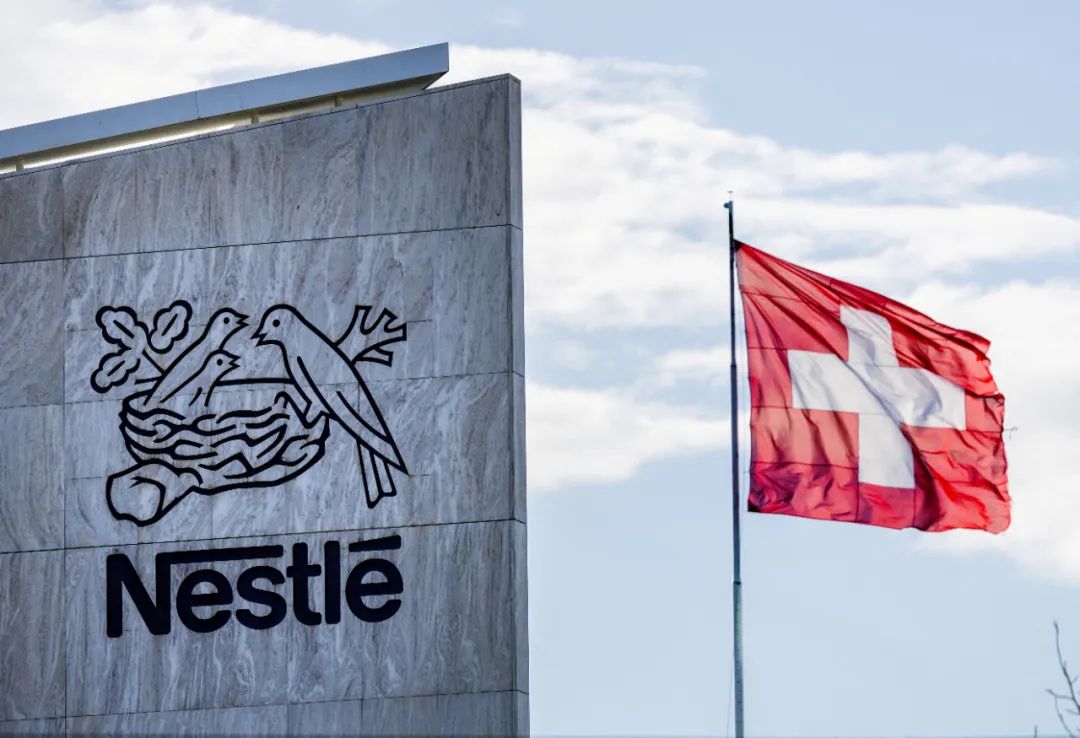
Core Viewpoint - The company "Hao Xiang Ni" is diversifying into the craft beer market, launching a series of flavored beers in response to declining performance in its core business [1][2][4]. Group 1: Company Background and Performance - Founded in 1992, "Hao Xiang Ni" specializes in the research, procurement, production, and sales of health foods, particularly red dates [2]. - The company was the first in the Chinese red date industry to go public in 2011, experiencing significant revenue growth from 2.072 billion yuan in 2016 to 5.961 billion yuan in 2019 [2]. - However, after selling its subsidiary "Bai Cao Wei" to PepsiCo in 2020, the company has faced consecutive years of losses, reporting losses of 189 million yuan, 52 million yuan, and 72 million yuan from 2022 to 2024 [2][3]. Group 2: New Product Launches and Market Strategy - "Hao Xiang Ni" has launched a new series of craft beers, including flavors like red date, green tea, jasmine tea, and peach blossom, set to be released in late May 2025 [1]. - The craft beer products will be sold online at prices of 28.1 yuan per liter, primarily through the company's official flagship stores [1]. - The company has also ventured into other sectors, such as tea beverages and snack foods, indicating a strategy to find new growth points amid declining performance [1][4]. Group 3: Market Trends and Consumer Insights - The craft beer market is experiencing growth, driven by trends in self-indulgent consumption and an increase in female consumers [5]. - The introduction of flavored craft beers aligns with market trends, although similar products are already prevalent [5]. - The company's focus on diverse product offerings reflects a sense of urgency to identify new growth avenues, but there are concerns about the coherence of its diversified strategy [5].


亿滋国际下跌5.04%,报66.2美元/股,总市值856.59亿美元
Jin Rong Jie· 2025-07-30 14:46
Core Insights - Mondelez International (MDLZ) experienced a stock price decline of 5.04% on July 30, closing at $66.2 per share with a trading volume of $308 million and a total market capitalization of $85.659 billion [1][2]. Financial Performance - For the fiscal year ending June 30, 2025, Mondelez reported total revenue of $18.297 billion, reflecting a year-over-year growth of 3.77% [1]. - The company's net profit attributable to shareholders was $1.043 billion, which represents a significant decrease of 48.19% compared to the previous year [1]. Share Buyback Activity - As of July 29, Mondelez has executed a cumulative share repurchase amounting to $1.653 billion for the second quarter of 2025 [2]. Company Overview - Mondelez International operates in over 150 countries, providing snacks and is recognized as a leader in the snack industry with iconic global and local brands such as Oreo, Cadbury Dairy Milk, Milka, and Toblerone [2]. - The company ranks first globally in the biscuit category and second in chocolate, with rapid growth in the baked snacks segment [2]. - Mondelez employs approximately 80,000 people across its global factories, offices, R&D facilities, and distribution activities [2].
好时(HSY.US)巧克力帝国遭遇关税+可可成本双击 警告全年利润可能下滑38%
智通财经网· 2025-07-30 12:59
在与分析师的电话会议的发言中,首席财务官史蒂夫·沃斯库尔(Steve Voskul)表示:"鉴于可可这一大宗 原料无法在美国本土种植,我们仍对贸易谈判中与重要贸易伙伴的关税政策改善抱以希望,"但他补充 表示,该公司今年并未计入任何程度的关税减免。 7月22日,改公司宣布由于可可大宗商品价格处于历史最高位附近,将把巧克力与糖果等好时品牌的零 食价格上调至双位数幅度。此次提价不仅提高了标价,也通过减少包装内糖果重量和数量(即"收缩通 胀"策略)来调整该公司在关税与高原料成本重压之下的经营策略。这是继去年提价后的又一次显著调 价。 过去两年,可可大宗商品价格因象牙海岸和加纳(两国通常占全球可可供应规模逾60%)遭遇病害和恶劣 天气导致供应短缺而持续大幅飙升。 本月早些时候,好时任命柯克·坦纳(Kirk Tanner)为下一任总裁兼首席执行官。坦纳此前担任温迪公司总 裁兼首席执行官,他将于8月18日走马上任。 这家总部位于宾夕法尼亚州,主要生产巧克力类零食以及Reese花生酱杯的零食制造商现在预测,全年 经调整后的每股收益将下降36%至38%。而在5月,该公司曾预计调整后每股收益将下滑约35%,但当时 并未纳入全年关 ...

推中式精酿啤酒,多元化会是好想你的良药吗?
Bei Jing Shang Bao· 2025-07-30 12:48
Core Viewpoint - The company "Hao Xiang Ni," known as the "King of Red Dates," is diversifying into the craft beer market by launching a series of flavored beers, aiming to find new growth opportunities amid ongoing financial losses [1][3]. Group 1: Company Overview - Founded in 1992, Hao Xiang Ni specializes in the research, procurement, production, and sales of health foods, including red dates and dried fruits. It became the first listed company in China's red date industry in 2011 [3]. - The company experienced significant revenue growth from 2016 to 2019, with revenue increasing from 2.072 billion to 5.961 billion yuan, and net profit also rising during this period [3]. - However, after selling its subsidiary Baicaowei to PepsiCo in 2020, the company has faced continuous losses, reporting losses of 189 million, 52 million, and 72 million yuan from 2022 to 2024 [3][4]. Group 2: Recent Developments - In an effort to improve performance, the company has focused on the "Red Date+" strategy, launching various health-oriented products, including the "Hong Xiaopai" red date snack, which achieved nearly 300 million yuan in sales in its first year [3][4]. - Despite these efforts, the health-oriented product line generated only 69 million yuan in revenue in 2024, a decline of 20.31% year-on-year [4]. - The red date product segment has also shown revenue fluctuations, with figures of 955 million, 1.311 billion, and 1.222 billion yuan from 2022 to 2024, reflecting a challenging market environment [4]. Group 3: Strategic Moves - The company has made several strategic investments, including a 30 million yuan investment in the Shenzhen Longzhu Equity Investment Fund, indirectly participating in the popular tea drink brand Mixue Ice City, which led to the launch of a red date milk tea product that sold 8 million cups in one month [5][6]. - In December 2024, the company announced a 700 million yuan investment in the snack brand Mingming Hen Mang, acquiring a 6.64% stake, which became its largest customer, contributing approximately 94 million yuan to annual sales [5]. - The recent entry into the craft beer market, with products featuring flavors like red date and green tea, aligns with current consumer trends, particularly targeting female consumers [6]. However, the company faces challenges in aligning its sales channels with the craft beer market, which typically relies on immediate retail and bar sales [6].
非公经济人士优秀建设者名单出炉,消费行业这些人受表彰
Bei Ke Cai Jing· 2025-07-30 04:31
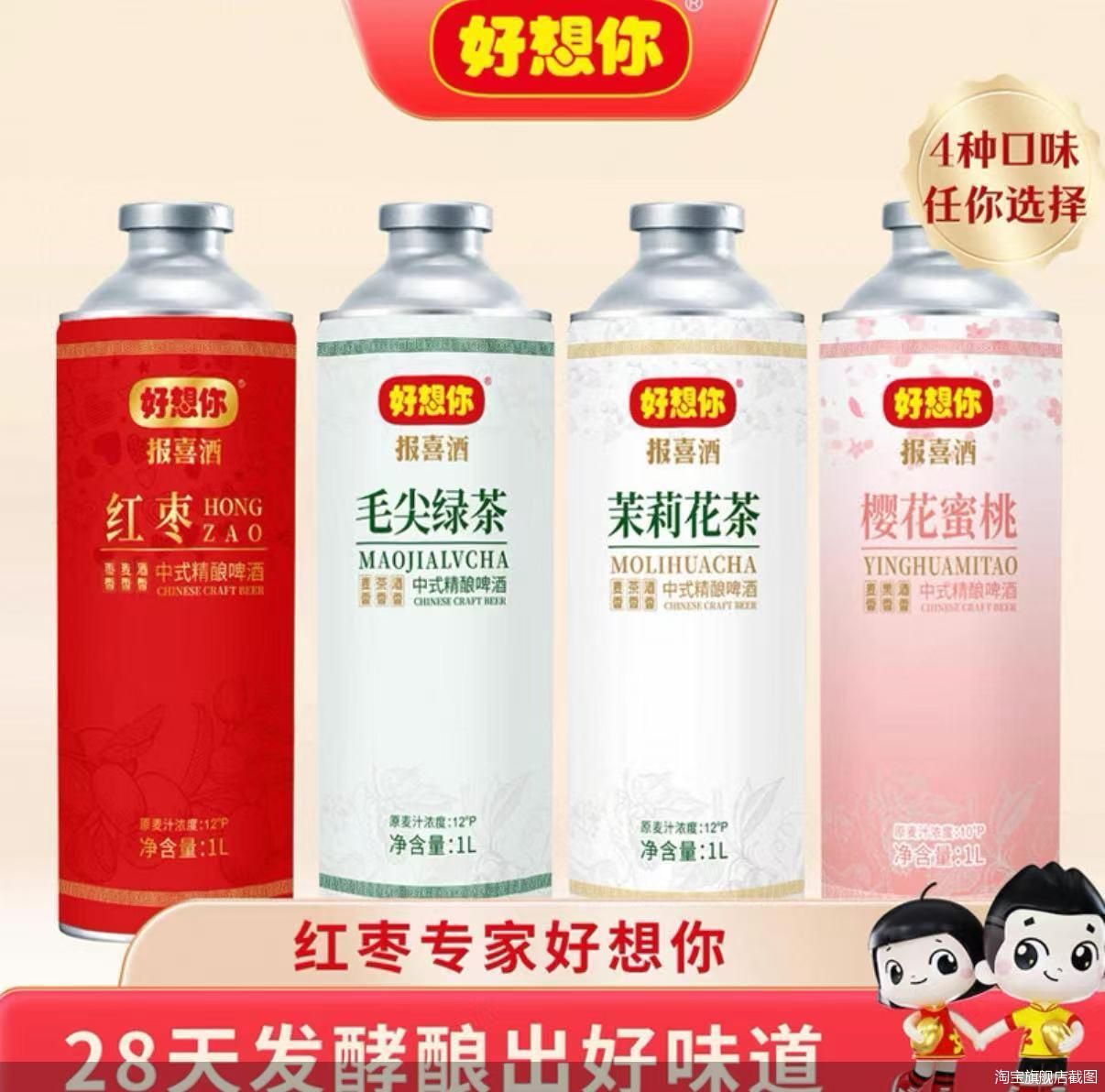
Core Points - The sixth National Non-Public Economic Person Excellent Builder of Socialism with Chinese Characteristics Award ceremony was held, recognizing 100 individuals from various sectors including technology, pharmaceuticals, and consumer industries [1][3] - The event highlights the importance of private enterprises, which account for over 92% of all companies in China, and over 92% of national high-tech enterprises are private [3] Group 1: Technology Sector - Notable entrepreneurs from the technology sector were recognized, including Wang Xingxing, CEO of Hangzhou Yushu Technology Co., Li Xiang, founder and CEO of Li Auto, and Chen Tianshi, Chairman and General Manager of Cambricon Technologies [4] Group 2: Pharmaceutical Sector - Representatives from the pharmaceutical industry also received awards, including Xu Haoyu, Chairman and President of Yangtze River Pharmaceutical Group, Chen Baohua, President of Zhejiang Huahai Pharmaceutical Co., and You Hongtao, Chairman of Chongqing Huasen Pharmaceutical Co. [5] Group 3: Consumer Sector - The consumer sector gained attention, with awardees from traditional and emerging consumption fields, including snack foods, textiles, and grain and oil industries, such as Beida Cang, Wanshili, Mingming Hen Mang, and Hainan Oscar [6] - Wanshili Group, with over 40 years of history, has transformed its focus to silk cultural creativity, reflecting the upgrade of traditional consumption industries [6] - The emerging snack food industry, represented by "Mingming Hen Mang," is gaining traction among young consumers, emphasizing high frequency, low price, and experiential consumption [7][8]