
新式茶饮

Search documents
关税从0%飙到120%13.6亿个包裹遭殃霸王茶姬8美元奶茶谁会买单?
Sou Hu Cai Jing· 2025-06-11 00:32
Group 1: Global Trade Dynamics - The global trade landscape has undergone significant changes, with tariff policy adjustments posing challenges to cross-border e-commerce and brand expansion [1] - The rise of cross-border e-commerce platforms like SHEIN has been facilitated by tax-free policies, but recent tariff increases have disrupted this model [2][3] Group 2: SHEIN's Challenges and Adaptations - SHEIN's business model, which thrived on low logistics costs and zero tariffs, is now under pressure due to a tariff increase from 0% to 54% on small packages [2] - The high compliance costs and the need for supply chain migration to countries like Vietnam are significant challenges for SHEIN [2][3] Group 3: Cultural Branding Strategies - Brands like Bawang Chaji are leveraging cultural symbols, such as "Chinese tea," to penetrate global markets, with plans for expansion in North America [5] - The brand's unique positioning emphasizes authentic tea flavors, differentiating it from competitors [5] Group 4: Market Entry Challenges for Bawang Chaji - Bawang Chaji faces high operational costs in the U.S., requiring a price point of $8 to $10 per cup to cover expenses, which may limit market appeal [7] - The brand's success will depend on balancing cultural authenticity with local market adaptations [8] Group 5: IP Globalization through Pop Mart - Pop Mart has successfully utilized non-region-specific IP characters to capture global markets, with significant revenue contributions from international endorsements [9][11] - The company's strategy of controlling the entire IP lifecycle has proven effective, leading to substantial overseas revenue growth [11] Group 6: Future Directions for Chinese Brands - The global strategies of SHEIN, Bawang Chaji, and Pop Mart highlight diverse approaches for Chinese companies in international markets, focusing on compliance, cultural branding, and IP development [13] - Success will hinge on a deep understanding of local markets, consumer habits, and regulatory environments [13]


霸王茶姬:正从快速渗透向同店销售增长转型,海外拓店并非单纯追求扩张速度
Cai Jing Wang· 2025-05-30 13:14
Core Insights - Bawang Chaji reported its first quarterly earnings post-IPO, with a total GMV of 8.23 billion yuan, a year-on-year increase of 38% [1] - The company achieved total net revenue of 3.39 billion yuan, up 35.4% year-on-year, and a net profit of 677 million yuan, reflecting a 13.8% increase [1] - The number of registered users on the mini-program surpassed 190 million, with 44.9 million active users in the quarter [1] Expansion and Market Strategy - Bawang Chaji opened its first store in Indonesia on April 11, achieving over 10,000 cups sold in the first three days and gaining more than 5,000 registered users in the first week [1] - The first store in North America opened in Los Angeles on May 11, selling over 5,000 cups on its opening day [1] - The company aims to reduce reliance on a single market through global expansion, creating new growth opportunities despite current overseas operations being in a loss phase [1] Financial Performance and Same-Store Sales - The same-store sales growth (SSSG) for Q1 2025 was negative 18.9%, attributed to the normalization of performance after rapid expansion [2] - Approximately 3,300 stores, or 50.6% of total stores, met the criteria for SSSG calculation, which includes stores open for at least 13 months with positive sales [2] - In mature markets like Yunnan and Guangxi, same-store sales growth remained healthy, with rates close to 20% [3] Strategic Transition - The company is transitioning from a rapid penetration growth strategy to a focus on same-store sales growth [3] - Emphasis is placed on new product development, expanding consumption scenarios, and creating engaging marketing activities [3] - Bawang Chaji aims to build brand value through collaboration with partners rather than relying solely on price promotions for sustainable growth [3]
港股IPO爆了!内地企业抢滩,硬科技新消费赛道最火
Guang Zhou Ri Bao· 2025-05-29 16:46
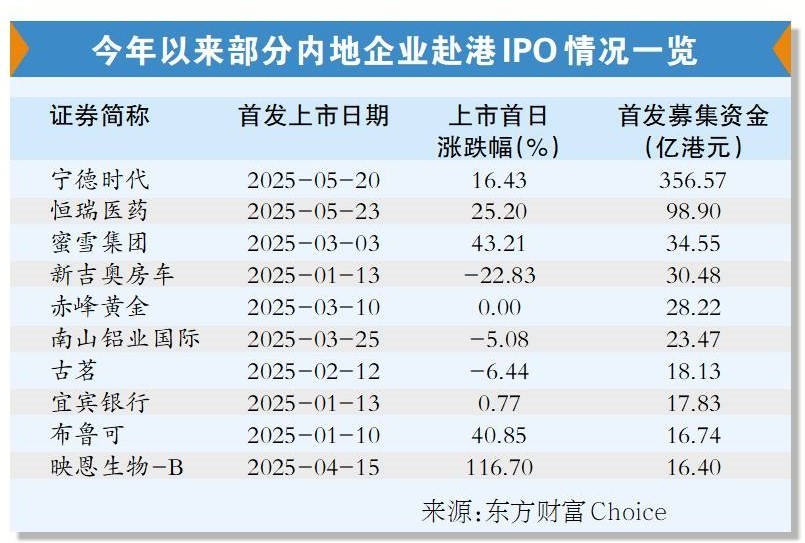
Core Insights - The Hong Kong IPO market is experiencing a capital boom in 2025, with nearly $10 billion raised in the first five months, approaching last year's total of $11.3 billion [1] - Major companies like CATL and Hansoh Pharma are accelerating their "A+H" strategy, focusing on hard technology and new consumption sectors [1][2] - Over 150 companies are currently waiting to list in Hong Kong, with many planning to raise over $1 billion [1] - The attractiveness of Hong Kong stocks is expected to increase, with the AH premium likely to narrow [1] Market Trends - 26 mainland companies have listed in Hong Kong this year, raising approximately HKD 74 billion, with A-share companies making up over 57% of this total [2] - The trend of mainland companies listing in Hong Kong has significantly increased compared to the same period in 2024, where only 19 companies raised HKD 9 billion [2] - The hard technology sector is seeing a surge in interest, with companies like Yujing Technology and Horizon Robotics going public [2] IPO Performance - Notable IPOs include CATL, which raised HKD 35.657 billion, and Hansoh Pharma, which raised HKD 9.89 billion [2][4] - The performance of H-shares has occasionally surpassed A-shares, as seen with CATL's H-share price being higher than its A-share price, resulting in an AH premium of -11.06% [3][11] Policy and Market Dynamics - Policy incentives and mechanisms like "flash placements" are attracting mainland companies to Hong Kong [5] - The collaboration between domestic and international regulatory bodies is enhancing the efficiency of overseas listings [5] - The global capital allocation landscape is shifting, making Hong Kong a preferred channel for international long-term capital [5] Future Outlook - The IPO momentum is expected to continue, with a focus on hard technology and new consumption sectors [10] - The trend of Chinese companies seeking international capital through Hong Kong listings is likely to grow, especially as A-share financing becomes more restrictive [9][10] - The narrowing of the AH premium indicates a potential revaluation of Hong Kong stocks, with increased liquidity and improved market conditions [13][14] Investment Opportunities - Investors are encouraged to focus on sectors such as technology, new consumption, and dividend-paying assets [17][18] - The narrowing AH premium can serve as a reference for investment decisions, with technology and consumer sectors showing strong potential [19][22]


中企境外上市潮涌:备案提速、A+H扩容、政策红利三重驱动
Sou Hu Cai Jing· 2025-05-29 09:48
Group 1 - The core viewpoint is that the trend of Chinese companies going public overseas is accelerating, driven by regulatory policies that enhance the efficiency of the listing process and facilitate cross-border financing [2][3][5] - As of May 28, 2025, 35 Chinese companies have listed on US stock exchanges and 20 on Hong Kong exchanges, surpassing the same period last year, with a significant reduction in the approval time for listings [3] - The approval process for the China Securities Regulatory Commission (CSRC) has improved dramatically, with the average review period reduced from over 100 days in 2024 to within 60 days, and a record of 25 days for Ningde Times [3][4] Group 2 - Leading companies like Heng Rui Pharmaceutical and Ningde Times have seen substantial oversubscription rates of 455 times and 151 times, respectively, indicating strong market confidence in Chinese firms [4] - The "A+H" dual financing platform is emerging, with companies like Muyuan Foods and Sany Heavy Industry submitting applications for overseas listings, reflecting a strategic shift towards global resource allocation [4][5] - Regulatory measures such as the "five policies benefiting Hong Kong" and the expansion of the Shanghai-Hong Kong Stock Connect are creating a favorable environment for Chinese companies to access global capital markets [4][5] Group 3 - The regulatory framework is evolving to support overseas listings, with the State Administration of Foreign Exchange proposing to relax restrictions on fund exchange and account usage [5] - The Central Bank is set to expand the Qualified Foreign Limited Partner (QFLP) pilot program and promote data sharing for hard technology companies, enhancing their access to cross-border financing [5] - The capital outflow strategy is shifting from passive selection to strategic layout, with companies increasingly focusing on global supply chain integration and brand internationalization [6]


政策效应不断显现企业赴境外上市持续升温
Zhong Guo Zheng Quan Bao· 2025-05-28 20:35
Group 1 - The recent surge in Chinese companies listing abroad, including major firms like CATL and Hengrui Medicine, reflects a growing trend in cross-border IPOs driven by improved regulatory efficiency and support from authorities [1][2][3] - As of May 28, 2023, 35 Chinese companies have gone public in the US, surpassing last year's total of 25, while 20 companies have listed in Hong Kong, exceeding last year's 16 [1] - The China Securities Regulatory Commission (CSRC) has significantly reduced the review time for overseas listing applications from over 100 days to under 60 days, with CATL achieving a record approval time of just 25 days [1] Group 2 - Consumer-oriented companies, particularly in the new beverage sector, are leading the wave of overseas listings, with several brands like Gu Ming and Mi Xue Group successfully listing in Hong Kong and the US [2] - There are currently 168 companies in the overseas listing application process, with 133 in the "supplementary materials" stage and 35 "accepted," primarily in sectors like new consumption, biomedicine, and new energy [2] - Deloitte predicts that by 2025, around 80 new stocks will be listed in Hong Kong, raising between HKD 130 billion to 150 billion, mainly from large A-share companies and tech firms [2] Group 3 - The "A+H" listing model is expanding, with companies like Muyuan Foods and Hengrui Medicine recently applying for H-share listings in Hong Kong, highlighting a trend of dual listings [3] - The increase in A-share companies listing in Hong Kong is attributed to strategic international expansion, regulatory conveniences, and improved liquidity in the Hong Kong market [3] Group 4 - The CSRC has introduced policies to enhance the overseas listing process, including the "惠港5条" policy, which aims to optimize the scope of stocks eligible for trading through the Shanghai-Hong Kong Stock Connect [3] - The Hong Kong Stock Exchange has lowered the listing thresholds for "A+H" shares and introduced a special channel for tech companies, encouraging more mainland firms to list in Hong Kong [3] Group 5 - The regulatory environment for overseas listings is expected to improve further, with the CSRC focusing on enhancing transparency and communication with international investors [4][5] - The People's Bank of China and the State Administration of Foreign Exchange are working on policies to facilitate cross-border financing for domestic companies, addressing concerns about the efficiency of fund management during overseas listings [5] Group 6 - International institutions are expressing support for the globalization of Chinese companies, with the Singapore Exchange enhancing its secondary listing framework to attract Chinese firms listed in Hong Kong and the US [6]
新茶饮高管薪酬比拼:蜜雪冰城董事长年薪超千万!
第一财经· 2025-05-22 01:59
Core Viewpoint - The new tea beverage industry is experiencing a surge with multiple companies going public, revealing significant disparities in executive compensation and performance metrics among them [1][2]. Company Compensation - The disclosed executive compensation for leading companies in the new tea beverage sector ranges from 606,000 to 13.128 million RMB, indicating a wide gap [2]. - Bawang Chaji (CHA.O) reported the highest total compensation of 66.2 million RMB (approximately 9.1 million USD) for its executives in 2024, significantly surpassing other companies [4]. - Mixue Group (2097.HK) followed with a total compensation of 53.14 million RMB, ranking second among listed companies [4]. - Other companies like Hushang Ayi (2589.HK) and Cha Baidao (2555.HK) also reported executive compensations in the tens of millions, while Gu Ming and Nayuki Tea (2150.HK) reported lower figures, below 10 million RMB [4]. Company Performance - Mixue Ice City achieved a remarkable net profit of 4.4 billion RMB in 2024, leading the industry, with a revenue of 24.829 billion RMB, reflecting a year-on-year growth of 22.3% [5]. - Bawang Chaji, while not the highest earner, demonstrated the fastest growth with a revenue increase of 167% to 12.4 billion RMB and a net profit increase of 213% to 2.5 billion RMB [5]. - Gu Ming reported a revenue of 8.791 billion RMB, a year-on-year growth of 14.45%, and a net profit of 1.542 billion RMB, growing by 36.95% [6]. - Hushang Ayi's performance was less impressive, with revenue and net profit declining by 1.9% and 15.2%, respectively, despite becoming the sixth new tea beverage company to go public [7]. - Cha Baidao experienced a revenue decline of 13.8% and a net profit drop of 48.71%, although its overall store count continued to grow [7]. Market Trends - The new tea beverage market in China exceeded 300 billion RMB last year, indicating a gradually saturated market with brands entering a phase of stock competition [8]. - The market is expected to maintain a slight but stable growth trend, potentially surpassing 400 billion RMB by 2028 [8]. - The new tea beverage and coffee sectors are seen as essential products for the new generation, driven by changing consumer behaviors since 2018 [8]. - Companies with fewer than 3,000 stores may face challenges and could exit the market, leading to a scenario where larger companies dominate [8].

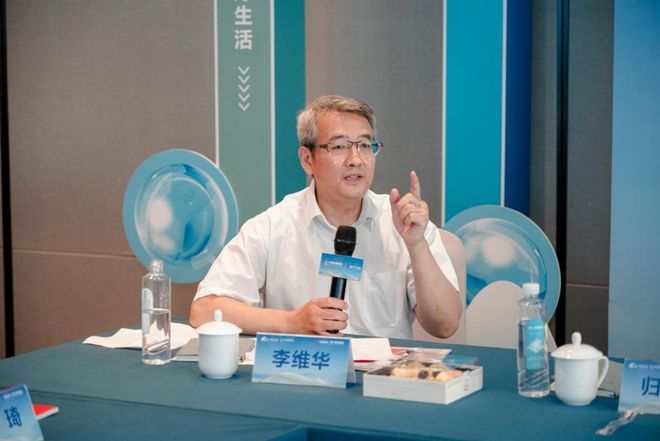
李维华:特许经营理念助力美天竞保推进普惠医疗
Zhong Guo Jing Ying Bao· 2025-05-21 08:16
Group 1 - The event "New Business Civilization - Exploring Smart Technology Empowering Inclusive Healthcare" was held in Chengdu, attracting industry experts and company representatives to discuss the application and development of smart technology in the healthcare sector [1] - Li Weihua, a leading figure in franchise and chain management, provided deep insights into the development of the industry and offered constructive suggestions for Meitian Jingbao [1][3] Group 2 - Li Weihua emphasized that a scientific and reasonable business model must meet five primary indicators: politics, law, business, ethics, and emotion, along with 60 secondary indicators [3] - He discussed the evolution of business models, categorizing them into old models (such as distribution and direct sales) and new models (including e-commerce and community-based commerce) [3][5] - Li Weihua highlighted the importance of integrating modern technology tools like the internet, blockchain, and AI into business models, while cautioning that digitalization should not be viewed as the sole solution [5] Group 3 - For the healthcare sector, Li Weihua suggested designing a B2B and B2C profit model to meet diverse market demands, while advocating for a comprehensive franchise system covering various operational functions [5][6] - He noted that the trend of low pricing is crucial in today's market, as evidenced by successful companies like McDonald's and Starbucks, and recommended that Meitian Jingbao leverage this trend to provide affordable healthcare services [6] - Li Weihua recognized the potential of Meitian Jingbao to achieve inclusive healthcare through a nationwide franchise system, aiming to benefit a broad audience rather than just a niche market [6]
沪上阿姨在港交所上市
Zhong Guo Jing Ji Wang· 2025-05-14 08:33
Group 1 - The core point of the article is that Hu Shang A Yi has successfully listed on the Hong Kong Stock Exchange, raising approximately HKD 195 million through its IPO, with a share price set at HKD 113.12 [1] - From 2022 to 2024, Hu Shang A Yi is projected to achieve steady revenue growth, with revenues of CNY 2.199 billion, CNY 3.348 billion, and CNY 3.285 billion respectively, and adjusted net profits of CNY 154 million, CNY 416 million, and CNY 418 million [1] - The company has developed a multi-tiered and differentiated product matrix under three brand concepts: "Hu Shang A Yi," "Hu Ka," and "Light Enjoy Version," effectively targeting diverse consumer groups [1] Group 2 - The company plans to allocate approximately 25% of the IPO proceeds to enhance digital capabilities, including optimizing membership management systems and upgrading infrastructure [2] - About 20% of the funds will be invested in product research and development, focusing on innovation and equipment upgrades for best-selling products [2] - The remaining funds will be used for strengthening supply chain capabilities, brand building, marketing, and operational expenses, positioning Hu Shang A Yi to enhance its competitive advantage in the new-style tea beverage market [2]
消费企业密集境外上市 “新消费”概念站到资本风口丨港美股看台
证券时报· 2025-05-12 00:38
对于这一轮消费类企业赴境外上市的热潮,分析人士指出,在契合促消费的政策纲领下,一方面前几年是消费类股权投资高潮期,在当前时点其背后的机构 有着退出需求,尤其对赌协议带来了迫切的上市需求;而另一方面,则是目前头部消费类企业面临着国际化需求,上市对其国际化扩张以及品牌提升均有相 应助力,以整合更多资源。此外,消费类企业尤其是新消费企业上市,更是顺应消费趋势变化的必然举措。 2024年下半年以来,消费企业赴境外上市已蔚然成风。 据了解,2025年以来,消费类企业如茶饮品牌中的蜜雪冰城、古茗、沪上阿姨、霸王茶姬纷纷在港股和美股上市,同时还有老乡鸡、遇见小面、绿茶、鸣鸣 很忙等众多消费类企业正在上市进程中。值得注意的是,这里面有不少是新消费企业。 消费企业密集上市 消费类企业正在迎来上市高潮。以新式茶饮品牌为例,今年2月古茗、3月蜜雪集团赴港上市,4月霸王茶姬赴美上市,5月沪上阿姨在港上市,在短短4个月内 就有4家同行业公司上市。 不仅如此,2025年以来,港股市场还有纽曼思、布鲁可、舒宝国际等消费类企业已经上市,目前,另一家餐饮企业绿茶正处于招股期,即将登陆港股市场。 而港股还有众多消费企业已经递表,如老乡鸡、遇见小 ...

沪上阿姨港股首秀涨68%,解码下沉市场的资本新叙事
2 1 Shi Ji Jing Ji Bao Dao· 2025-05-08 12:18
Core Viewpoint - The successful IPO of "沪上阿姨" (Hu Shang A Yi) on the Hong Kong Stock Exchange marks a significant milestone for the new tea beverage industry, reflecting strong market interest and a shift in valuation logic from rapid store openings to ecological resilience [1][2]. Group 1: IPO and Market Performance - "沪上阿姨" was listed on May 8, with an issue price of HKD 113.12, raising approximately HKD 195 million, and saw a first-day opening price of HKD 190.6, a 68.48% increase from the issue price [1]. - The company achieved an issuance valuation of approximately HKD 11.86 billion, with a valuation multiple of 33.58 times, significantly higher than its competitor, "蜜雪冰城" (Mixue Ice Cream) [1]. - The IPO was oversubscribed by over 3,300 times, indicating strong investor confidence and interest in the new tea beverage market [1]. Group 2: Financial Performance - In the years 2022, 2023, and 2024, "沪上阿姨" reported revenues of RMB 2.199 billion, RMB 3.348 billion, and RMB 3.285 billion, respectively, with net profits of RMB 149 million, RMB 388 million, and RMB 329 million [2]. - The number of franchise stores increased from 5,244 in 2022 to 7,756 in 2023, with a growth rate of 47.9% in 2023 [2]. Group 3: Market Strategy and Product Development - "沪上阿姨" has differentiated itself by focusing on health-oriented ingredients and has successfully penetrated the northern market, where hot beverages are more popular [3]. - The company has launched over 100 new products annually since 2021, including popular items like "杨枝甘露" and "超嗲草莓大福" [4]. - The brand has expanded its product line to include "轻享版" (Light Enjoyment Version) priced mostly under RMB 10, targeting lower-tier cities [4]. Group 4: Expansion and Supply Chain - Approximately 50.4% of "沪上阿姨's" stores are located in third-tier cities and below, with a significant portion of new stores opening in these areas [5]. - The company has established a robust supply chain network, including 12 logistics bases and 15 cold chain warehouses, enhancing operational efficiency [6]. Group 5: ESG and Future Growth - "沪上阿姨" has initiated a "green factory" initiative focusing on lean management and energy conservation, alongside a comprehensive quality control system for its fresh fruit tea products [7]. - The company plans to allocate approximately 25% of its IPO proceeds to enhance digital capabilities and 20% for product development and supply chain improvements [7]. - The brand has opened its first overseas store in Malaysia, marking its initial step into international markets [8].