
证券业

Search documents
海外宏观周报:地缘冲突骤然升级,避险情绪升温-20260302
Dong Fang Jin Cheng· 2026-03-02 08:50
Market Overview - Global assets experienced significant volatility due to rising risk aversion, with gold and silver prices increasing by 3.35% and 11.76% respectively last week[3] - The 10-year U.S. Treasury yield fell by 11 basis points to 3.97%, while European bond yields also declined significantly[3] - U.S. stock markets saw a collective drop in major indices, contrasting with gains in Japanese and European markets[3] U.S. Economic Indicators - The U.S. January PPI rose by 2.9% year-on-year, exceeding expectations of 2.6%, driven primarily by rising service prices[13] - Fed Governor Milan reiterated the need for a 100 basis point rate cut in 2026, complicating the monetary policy outlook due to inflationary pressures[7] Japanese Economic Outlook - The Bank of Japan's Governor indicated a careful review of data in March and April to decide on potential interest rate hikes, with February's core CPI at 1.8%[8] - The Nikkei 225 index surged by 3.56%, leading global stock market performance[3] Bond Market Trends - The 10-year U.S. Treasury yield decreased by 11 basis points to 3.97%, with foreign holdings of U.S. debt dropping by $88.4 billion to $9.27 trillion[33] - The 10-year UK bond yield fell by 23 basis points to 4.24%, while German and French yields also saw declines of 5 basis points and 8.4 basis points respectively[40] Commodity Prices - Spot gold prices reached $5,222, marking a 3.35% increase, while silver prices rose to $90, up 11.76%[5] - WTI crude oil prices increased by 1.22% to $67, reflecting a year-to-date rise of 17.39%[5]
曲线平坦化,哑铃策略优势初现?
East Money Securities· 2026-03-01 14:46
Group 1 - The report highlights a flattening yield curve in the credit bond market, indicating that the "barbell strategy" may show advantages in this environment [10][24][34] - The liquidity environment remains balanced, with the central bank conducting significant reverse repo and MLF operations, resulting in a net injection of 309.5 billion yuan [10][34] - The report notes that the yield curve for credit bonds has been trending downward and becoming flatter since the beginning of 2026, with various credit bond types showing high-term spreads [11][24] Group 2 - The average issuance rate of credit bonds has decreased to 2.82%, down 12 basis points from the previous week, with specific declines noted in city investment bonds, industrial bonds, and financial bonds [57][58] - The total issuance of credit bonds for the week was 79.46 billion yuan, reflecting a significant decrease compared to both the previous week and the same period last year [46][57] - The average issuance term for credit bonds has dropped to 2.97 years, indicating a trend towards shorter maturities in the current market [60][61] Group 3 - The report indicates a significant drop in trading volume for credit bonds, with total transactions amounting to 693.5 billion yuan, a decrease of 773.6 billion yuan from the previous week [67][68] - The trading structure of city investment bonds has shifted towards shorter maturities, with an increase in the proportion of transactions for bonds with a remaining term of less than one year [68][69] - The report also notes a concentration of higher-rated bonds in the trading structure, particularly for city investment and industrial bonds, suggesting a flight to quality among investors [69]
流动性与机构行为周度跟踪260301:2月跨月资金平稳1Y存单续创近一年新低-20260301
Huafu Securities· 2026-03-01 13:26
Group 1: Report Industry Investment Rating - Not provided in the report Group 2: Core Viewpoints of the Report - Despite the Spring Festival disturbance, the net payment of government bonds increased in February compared to January, but the volatility of the capital market was significantly lower. The central bank showed an attitude of protecting liquidity. In the future, it is likely to maintain a loose tone and cooperate with the fiscal policy to stabilize government bond issuance. The subsequent tightening of inter - bank deposit self - discipline may reduce non - bank financing costs [5][39] - It is expected that in March 2026, the government bond issuance scale will be 2.68 trillion yuan, with a net financing of 1.18 trillion yuan. The cumulative net financing scale of government bonds in the first quarter is about 3.78 trillion yuan, which may still be lower than the 4.1 trillion yuan in the same period in 2025 [6][55] - Although the pressure of the central bank's policy tool maturity is large next week, the capital demand at the beginning of the month is relatively limited, and the net payment scale of government bonds is relatively low. Coupled with the continuous return of post - festival cash, the capital market is expected to remain stable [9][62] Group 3: Summary by Directory 1. Money Market 1.1 This Week's Capital Market Review - The central bank's OMO had a net withdrawal of 61.14 billion yuan this week. There was a 15 - billion - yuan treasury cash fixed - deposit maturity on Wednesday, and the central bank carried out a 60 - billion - yuan 1 - year MLF operation, with an excess renewal of 30 billion yuan compared to the maturity. Due to factors such as the large - scale maturity of reverse repurchases after the festival, the delay of the tax payment deadline, and the increase in the net payment scale of government bonds, the capital tightened marginally in the first half of the week and then loosened gradually in the second half [3][15] - Affected by holidays and trading - day adjustments, the trading volume and overall scale of pledged repurchase first increased and then decreased this week. The net lending of large - scale banks first increased and then decreased, while that of small and medium - sized banks decreased slightly after a significant increase on the first trading day after the festival. Non - bank rigid lending decreased significantly after the festival and recovered in the second half of the week. The new - caliber capital gap index first decreased and then increased [4][23] - The inter - bank cross - month progress slowed down after the festival but accelerated on Friday due to non - bank institutions. The exchange market cross - month progress also accelerated during the week. The overall cross - month progress of the whole market in the second half of the week was at a relatively high level compared to previous years, and the capital remained stable under the central bank's protection [4][30] 1.2 Next Week's Capital Outlook - This week, the net payment of government bonds was 19.04 billion yuan. Next week, the issuance scale of 182 - day discounted treasury bonds and 30 - year treasury bonds is 4.5 billion yuan and 3.4 billion yuan respectively. The issuance scale of local bonds in 6 regions is 27.25 billion yuan. Considering the time lag of payment, the net payment scale of government bonds will rise to 28.2 billion yuan [42] - Next week, the maturity scale of 7 - day reverse repurchases is 1.525 trillion yuan, and there is also a 1 - trillion - yuan 3 - month term repurchase agreement maturing. Although the pressure of the central bank's policy tool maturity is large, the capital demand at the beginning of the month is limited, and the capital market is expected to remain stable [9][56] 2. Inter - bank Certificates of Deposit - This week, the 1 - year Shibor rate decreased by 0.6 BP to 1.604% compared to February 14. The secondary rate of 1 - year AAA - rated inter - bank certificates of deposit decreased by 0.25 BP to 1.575% [63] - The issuance scale of inter - bank certificates of deposit decreased more than the maturity scale this week, with a net repayment scale of 29.37 billion yuan. The net financing scales of state - owned banks, joint - stock banks, city commercial banks, and rural commercial banks were - 22.28 billion yuan, 0.84 billion yuan, - 7.09 billion yuan, and - 2.29 billion yuan respectively. The issuance proportion of 1 - year certificates of deposit increased by 23 percentage points to 31% [64] - Next week, the maturity scale of certificates of deposit is about 58.3 billion yuan, a decrease of 16.5 billion yuan compared to this week. The issuance success rates of state - owned banks, joint - stock banks, and city commercial banks decreased, while that of rural commercial banks increased. The interest rate spread between city commercial banks and joint - stock banks for 1 - year certificates of deposit widened [65][68] - The willingness of money market funds and fund companies to increase their holdings of certificates of deposit in the primary and secondary markets decreased this week, while that of wealth management products and other products increased. The supply - demand relative strength index of certificates of deposit decreased by 1.1 percentage points to 16.2% [82] 3. Bill Market - This week, bill interest rates generally increased. As of February 28, the 3 - month and 6 - month bill interest rates of state - owned and joint - stock banks increased by 33 BP and 15 BP respectively compared to February 14, reaching 1.53% and 1.30% [86] 4. Bond Trading Sentiment Tracking - Affected by profit - taking sentiment, the bond market adjusted this week. Credit spreads remained stable, and the spreads of Tier 2 capital bonds and perpetual bonds widened [91] - Large - scale banks' willingness to reduce their bond holdings increased overall. Trading - type institutions tended to reduce their bond holdings, while allocation - type institutions tended to increase their bond holdings [91]
周策略图谱:债市抢跑两会行情?
GF SECURITIES· 2026-03-01 10:46
Core Insights - The current market is characterized by a consensus range constraint and a technical pattern indicating a consolidation phase, with the central bank suggesting an interest rate range of approximately 1.75% to 1.9%, indicating that trading is unlikely to exceed this range in the short term [9] - There is speculation whether the bond market is preemptively reacting to the upcoming Two Sessions, as the period before the sessions often sees a vacuum in policy and economic data, leading to potential market reversals post-sessions [10] - The market's defensive positioning may reveal opportunities, as this year's local economic targets are set in ranges, suggesting that stimulus policies may not be overly aggressive [10] Market Strategy - The current strategy suggests taking advantage of adjustments in the bond market by focusing on liquid credit varieties to capture coupon income, particularly high-rated perpetual bonds with maturities of 3 to 5 years [11] - The past week saw a notable adjustment in perpetual bonds, with limited overall interest rate changes, while local government bonds remained relatively stable [11] - The trading logic indicates a rise in defensive sentiment before the Two Sessions and the introduction of new housing policies, with a slight overall market pullback but limited in extent [12] Future Outlook - The outlook remains cautiously optimistic, with potential for interest rate cuts and viewing market adjustments as opportunities, suggesting a slight bullish stance in the short to medium term [11] - Recommended strategies include focusing on 2-year local government bonds and high-grade perpetual bonds, as well as monitoring real estate bonds for recovery opportunities [11]
混沌AI院3期重磅发布:90天手把手落地AI试点,为企业锻造实战型AI团队
混沌学园· 2026-02-28 12:21
Core Insights - The article emphasizes that AI technology is transitioning from experimental stages to becoming a core organizational capability, fundamentally reshaping global business competition [3] - By 2026, AI is expected to be widely adopted across various industries, making it essential for companies to find effective AI implementation strategies to ensure survival and growth [5][7] - The article introduces the "Chaos AI Institute Phase 3" program, which aims to provide a comprehensive solution for enterprises to overcome AI implementation challenges through hands-on guidance [21][22] Group 1: AI Adoption and Impact - The year 2026 is highlighted as a pivotal moment for AI, marking a significant acceleration in its integration into everyday life and various industries, making AI adoption a necessity for businesses [4][5] - AI's rapid integration into consumer life during the 2026 Spring Festival is compared to the mobile payment revolution initiated by WeChat in 2014, indicating a strong foundation for AI penetration into industries [5] - Traditional enterprises are adopting AI to enhance core competitiveness, focusing on practical applications that address real industry pain points rather than merely showcasing technology [7] Group 2: Challenges in AI Implementation - Companies face three main challenges in AI implementation: unclear entry points, lack of practical methods for execution, and a shortage of skilled personnel [10][13][16] - Many enterprises struggle with identifying precise AI application areas, often leading to ineffective resource allocation and stalled progress in AI transformation [13][14] - The lack of systematic methods and hands-on guidance results in difficulties in translating business needs into actionable AI solutions, hindering the establishment of effective AI pilot projects [14][18] Group 3: Solutions Offered by Chaos AI Institute - The Chaos AI Institute's Phase 3 program focuses on hands-on support to help enterprises identify high-value AI entry points, develop actionable AI pilot projects, and cultivate skilled personnel [22][23] - The program promises to deliver a complete AI application plan, a demonstrable AI application prototype, and a team capable of executing AI initiatives independently [24][25][26] - The approach emphasizes collaboration among a core team of three members—strategic decision-makers, business experts, and technical implementers—to ensure effective AI project execution [30][31] Group 4: Practical Applications and Case Studies - The article provides examples of successful AI pilot projects across various industries, demonstrating significant improvements in efficiency and cost reduction [49][66] - Specific case studies illustrate how companies have leveraged AI to enhance marketing effectiveness, streamline operations, and drive product innovation, achieving measurable business outcomes [50][52][54][56] - These real-world applications underscore the potential of AI to transform business processes and create sustainable competitive advantages [66]


债市早报:远期售汇业务外汇风险准备金率下调至0;资金面稳中向宽,债市止跌回暖
Jin Rong Jie· 2026-02-28 03:06
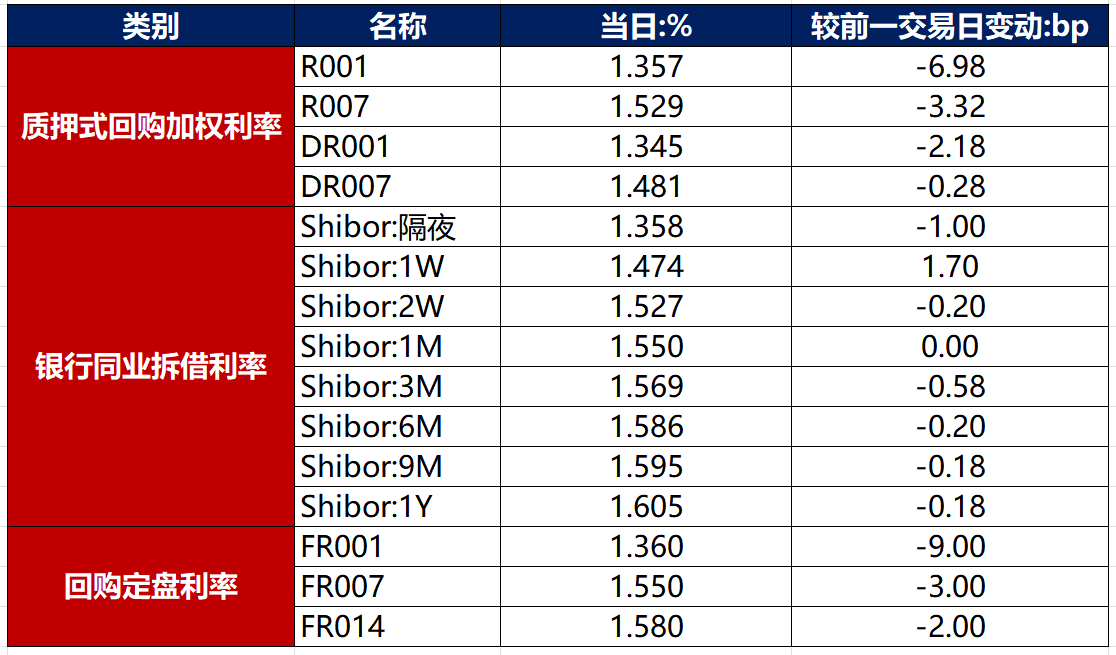
Core Viewpoint - The financial market is experiencing a stable yet slightly easing liquidity environment, with major repo rates declining and bond markets showing signs of recovery, while convertible bonds are facing downward pressure. Group 1: Domestic News - The Central Political Bureau of the Communist Party of China held a meeting to discuss the draft of the 14th Five-Year Plan and the government work report, emphasizing the need for a proactive fiscal policy and moderately loose monetary policy to strengthen domestic market construction and promote high-level technological self-reliance [2] - The People's Bank of China announced a reduction in the foreign exchange risk reserve ratio for forward foreign exchange sales from 20% to 0%, effective March 2, 2026, to support enterprises in managing exchange rate risks [3] - The China Securities Regulatory Commission (CSRC) released the "Supervision and Administration Measures for Information Disclosure of Private Investment Funds," effective September 1, 2026, aimed at enhancing transparency and protecting investors' rights [4] Group 2: International News - The U.S. January PPI rose by 2.9% year-on-year, exceeding expectations, with core PPI increasing by 3.6%, indicating potential upward pressure on inflation and complicating future monetary policy decisions for the Federal Reserve [5] - International crude oil futures prices increased, with WTI crude oil rising by 2.78% to $67.02 per barrel, and Brent crude oil up by 2.45% to $72.48 per barrel [6] Group 3: Market Dynamics - On February 27, the People's Bank of China conducted a 7-day reverse repo operation of 269 billion yuan at an interest rate of 1.40%, resulting in a net liquidity injection of 269 billion yuan for the day [7] - The liquidity environment is stable, with major repo rates continuing to decline; DR001 fell by 2.18 basis points to 1.345%, and DR007 decreased by 0.28 basis points to 1.481% [8] - The bond market showed signs of recovery, with the yield on the 10-year government bond falling by 1.10 basis points to 1.8020% [10] Group 4: Credit Bonds - On February 27, five industrial bonds experienced significant price deviations, with "H1碧地01" dropping over 87% and "H1万科04" increasing over 12% [11] - The credit rating agency Fitch withdrew the "BB+" long-term issuer rating for Weifang Urban Investment Group due to the issuer's cessation of participation in the rating process [12] Group 5: Convertible Bonds - The convertible bond market saw major indices decline, with the China Convertible Bond Index down by 0.14% and trading volume reaching 765.99 billion yuan [16] - Notable individual convertible bonds included Aiwei Convertible Bond, which rose over 9%, while Hengshuai Convertible Bond fell over 8% [17]
多品牌手机涨价超千元,玛莎拉蒂母公司巨亏1800亿 | 财经日日评
吴晓波频道· 2026-02-28 00:30
Group 1: European Central Bank Financial Performance - The European Central Bank (ECB) reported a loss of €1.3 billion (approximately $1.5 billion) for 2025, significantly reduced from the record loss of €7.9 billion in the previous year [2] - The ECB stated that it can continue to operate effectively despite the losses, and the funding gap will remain on its balance sheet to offset future profits [2] - The ECB expects to return to profitability either this year or in 2027, depending on future key interest rates, exchange rates, and the composition of its balance sheet [2][3] Group 2: Smartphone Price Increases in China - The Chinese smartphone industry is set to experience a comprehensive price increase starting March 2026, with new models expected to rise by at least ¥1,000 [4] - Market research firm Counterpoint Research predicts that the average price of new smartphones in China will increase by 15% to 25% compared to 2025 models [4] - Factors contributing to the price increase include rising costs of storage chips and AI chip demand, alongside higher costs for core components like screens and batteries [5] Group 3: Meizu's Strategic Shift - Meizu announced the suspension of its domestic smartphone hardware development projects, opting to seek third-party hardware partners while maintaining existing operations [6] - The company aims to transition from a hardware-focused strategy to one driven by AI software products, leveraging its Flyme ecosystem [6][7] - Following its acquisition by Geely, Meizu's shift reflects a strategic decision to prioritize software development in the AI era [6][7] Group 4: Netflix's Acquisition Withdrawal - Netflix announced its withdrawal from the bidding for Warner Bros. Discovery's film and streaming assets, ending its competition with Paramount [8] - Warner Bros. reported a 5.6% decline in revenue for Q4 2025, with adjusted EBITDA down 20% [8] - The market reacted positively to Netflix's decision, as it alleviated concerns about the potential debt burden from the acquisition [8][9] Group 5: Stellantis Financial Losses - Stellantis reported a net loss of €22.3 billion (approximately ¥180.2 billion) for 2025, primarily due to restructuring costs [10] - The company's net revenue for 2025 was €153.5 billion, a slight decrease of 2% year-on-year [10] - Despite the losses, Stellantis showed signs of recovery in the latter half of 2025, with a 10% increase in net revenue and an 11% rise in global shipments [10][11] Group 6: Luckin Coffee's Revenue Growth - Luckin Coffee reported a total net revenue of ¥49.288 billion for the fiscal year 2025, a 43% increase year-on-year [12] - The company opened 8,708 new stores in 2025, bringing the total to 31,048, a 39% increase [12] - Despite revenue growth, the fourth quarter showed a decline in net profit, attributed to rising costs and increased competition in the delivery market [12] Group 7: South Korean Stock Market Performance - The KOSPI index in South Korea has risen nearly 50% year-to-date, with a 130% increase over the past 12 months [13] - Major companies like Samsung Electronics and SK Hynix have seen significant stock price increases, contributing to the overall market performance [13] - Analysts have raised their target for the KOSPI index, citing government reforms and the AI-driven chip industry boom as key factors [13][14] Group 8: A-Share Market Trends - The A-share market showed mixed performance, with the Shanghai Composite Index rising by 0.39% [15] - Market sentiment has shifted towards "price increase" themes, with significant gains in metals and resource sectors [15][16] - The market is beginning to reassess the sustainability of growth in previously high-performing sectors, focusing on the impact of price increases on future earnings [16]

今日金价:大家不必继续等待了!接下来,金价有可能会重演历史
Sou Hu Cai Jing· 2026-02-27 05:24
Core Viewpoint - The international gold market is experiencing significant fluctuations, driven by unprecedented demand from central banks and private investors, leading to record high prices and trading volumes [1][3][4]. Group 1: Central Bank Activity - Central banks globally have been on a buying spree, with net purchases reaching 863 tons in 2025, although down from over 1000 tons in previous years, still significantly above historical averages [3]. - Poland's central bank announced a plan to purchase 150 tons of gold to increase its reserves to 700 tons, while China's central bank has increased its gold reserves for 15 consecutive months, reaching approximately 2307.56 tons by the end of January 2026 [3]. - The total value of gold held by global central banks outside the U.S. surpassed $3.92 trillion, exceeding the value of U.S. Treasury holdings for the first time [3]. Group 2: Private Investor Trends - In January 2026, global gold ETFs saw a record net inflow of $19 billion, raising total assets under management to $669 billion and total holdings to 4145 tons [4]. - The Asian market led this trend, with a net inflow of $10 billion, and China alone contributed $6 billion, second only to the U.S. [4]. Group 3: Market Dynamics - The average daily trading volume in the global gold market surged to $623 billion in January 2026, a 52% increase month-over-month, marking a record high [6]. - Despite strong demand, global gold supply only slightly increased by 1% in 2025, with expectations of a 1.8% increase in 2026, while demand is projected to grow by 5% [6]. - The average mining cost for gold approached $1390 per ounce in 2026, indicating rising production costs [6]. Group 4: Price Predictions - Major investment banks have raised their gold price forecasts, with UBS predicting a target of $6200 per ounce, while Goldman Sachs increased its target from $4900 to $5400 [7]. - JPMorgan maintains a target of $6300 per ounce for the end of 2026, and Bank of America anticipates prices could reach $6000 within the next 12 months [7]. Group 5: Macroeconomic Factors - The market expects the Federal Reserve to begin a rate-cutting cycle in 2026, which would lower the opportunity cost of holding gold and potentially weaken the dollar, both favorable for gold prices [9]. - Geopolitical risks, particularly in the Middle East, are also seen as a significant factor supporting gold prices, with military tensions increasing [9]. Group 6: Volatility and Market Sentiment - January 30, 2026, saw a sharp decline in gold prices, dropping 9.25% in one day, yet global gold ETFs recorded net purchases, indicating investor sentiment remains bullish [10]. - The traditional negative correlation between gold prices and real interest rates appears to be weakening, influenced by geopolitical risks and strong central bank purchases [12].

资讯早班车-2026-02-27-20260227
Bao Cheng Qi Huo· 2026-02-27 01:44
1. Report Industry Investment Rating - No relevant content provided. 2. Core View of the Report - The report comprehensively presents macro - economic data, commodity investment information, financial news, bond market, foreign exchange market, stock market, and research report insights, reflecting the current economic and market situation. 3. Summary by Directory Macro Data - GDP growth in Q4 2025 was 4.5% year - on - year, down from 4.8% in Q3 and 5.4% in the same period last year [1]. - In January 2026, the manufacturing PMI was 49.3%, up from 49.0% in the previous month and 49.1% in the same period last year; the non - manufacturing PMI was 49.4%, down from 50.1% in the previous month and 50.2% in the same period last year [1]. - Social financing in January 2026 was 7220.8 billion yuan, up from 817.8 billion yuan in the previous month and 7054.6 billion yuan in the same period last year [1]. Commodity Investment Comprehensive - China and the US maintain communication on economic and trade consultations; China - Germany reach over ten business agreements; China adds Japanese entities to export control lists [2]. - Shanghai gold jewelry industry suggests standardizing gold recycling service [2]. - Compensation for investors affected by the valuation adjustment of SDIC Silver LOF starts [3]. - On February 26, 35 domestic commodity varieties had positive basis, 32 had negative basis [3]. - The third round of indirect talks between Iran and the US ended, with differences still large [3][4]. Metals - Zimbabwe suspends lithium concentrate exports, boosting the domestic lithium carbonate futures [5]. - The tungsten industry's supply - demand tightens, indirectly strengthening the price support expectation of industrial metals [5]. - Copper, nickel inventories hit new highs; zinc, aluminum inventories hit new lows [6]. - The World Gold Council believes that gold demand may increase significantly in case of a stock market downturn [6]. - India allows stock funds to allocate more funds to gold and silver [7]. Coal, Coke, Steel and Minerals - Zimbabwe's lithium export ban has a greater emotional impact than actual supply impact on China's lithium - battery industry [8]. Energy and Chemicals - A Chinese research team achieves over 15% photoelectric conversion efficiency in a new solar cell material [9]. - US EIA natural gas inventory decreased by 52 billion cubic feet last week [9]. - Asian LNG demand may grow from 270 million tons to over 400 million tons [9]. - Venezuelan oil sales will reach $2 billion by the end of February [9]. Agricultural Products - US exports 178,000 tons of corn to Japan [10]. - South Korean enterprises bid to buy up to 210,000 metric tons of corn [11]. Financial News Open Market - On February 26, the central bank conducted 320.5 billion yuan of 7 - day reverse repurchase operations, resulting in a net withdrawal of 79.5 billion yuan [12]. Key News - The central bank supports cross - border RMB inter - bank financing and introduces a counter - cyclical adjustment mechanism [13]. - The RMB has appreciated rapidly against the US dollar recently, and its annual trend is expected to be stable with a slight appreciation [14][15]. - In January 2026, Chinese brand passenger car sales decreased, and the market share declined [15]. - The real - estate markets in Shenzhen and other places showed signs of recovery during the Spring Festival [16]. - Government bond issuance has accelerated in 2026 [16]. - Small and medium - sized banks' deposit rates are being adjusted flexibly [17]. - Many local governments aim to resolve debt risks in 2026 [17]. Bond Market - The inter - bank bond market is under pressure, with rising yields; bond futures decline; money market rates mostly fall [20][21]. - European and US bond yields generally decline [23][24]. Foreign Exchange Market - The on - shore RMB appreciated against the US dollar on February 26; the US dollar index rose slightly [25]. Research Report Highlights - CICC believes that during the Two Sessions, key points include the 15th Five - Year Plan, domestic demand expansion, unified market construction, and risk resolution [26]. - CITIC Securities is optimistic about the balance - sheet repair of excellent real - estate enterprises [26]. - Changjiang Fixed Income believes that credit bond ETFs can achieve return enhancement through four strategies [27]. - CITIC Construction Investment suggests focusing on the chemical, building materials, and power equipment sectors in the convertible bond market [28]. Stock Market - A - shares showed narrow fluctuations, with the rise of AI and lithium mining stocks and the decline of film and real - estate stocks [30]. - The Hong Kong stock market declined, with net selling by south - bound funds [31]. - ETFs saw a significant inflow of funds after the Spring Festival [31].
离岸人民币对美元汇率升破6.84;浙江:2026年将强化科技金融支持 | 金融早参
Sou Hu Cai Jing· 2026-02-26 23:16
Group 1 - The People's Bank of China conducted a 7-day reverse repurchase operation of 320.5 billion yuan at an interest rate of 1.40%, maintaining liquidity stability despite 400 billion yuan of reverse repos maturing on the same day [1] - The offshore RMB to USD exchange rate rose above 6.84, with a peak appreciation to 6.83605, reflecting a strong trend post-Spring Festival, supported by improved external conditions for China [2] - Zhejiang Province plans to enhance support for technology finance, aiming for a technology loan balance exceeding 4.2 trillion yuan by 2026, indicating a strong commitment to fostering innovation and attracting capital into the tech sector [3] Group 2 - The Supreme People's Court will focus on combating crimes related to money laundering using virtual currencies and underground banks, highlighting a commitment to tackling financial crime and enhancing market integrity [4] - The International Monetary Fund (IMF) forecasts that the U.S. debt burden will continue to rise, with federal budget deficits projected to increase to 6.1% of GDP in 2026, and public-held federal debt expected to reach 100.7% of GDP by 2026 [5]