
新能源车

Search documents
平安证券(香港)港股晨报-20251015
Ping An Securities Hongkong· 2025-10-15 03:02
Market Overview - The Hong Kong stock market experienced a decline, with the Hang Seng Index closing at 23,831 points, down 145 points or 0.61% [1][5] - The market turnover decreased to 82.799 billion, with net inflows of 484 million from the Hong Kong Stock Connect [1][5] - The US stock market showed mixed results, with the Dow Jones rising by 202.88 points or 0.44%, while the Nasdaq fell by 172.91 points or 0.76% [2] Industry Insights - The report highlights the potential for a rebound in the Hong Kong stock market due to lower valuations and increasing trading activity [3] - Key sectors to watch include artificial intelligence, semiconductors, and industrial software, which are expected to drive future growth [3] - The automotive industry in China showed significant growth, with September production and sales reaching 3.276 million and 3.226 million vehicles, respectively, marking year-on-year increases of 17.1% and 14.9% [9] - The report suggests focusing on companies benefiting from the anticipated Federal Reserve interest rate cuts and strong mid-year performance in the upstream non-ferrous metals sector [3] Company Performance - China Unicom (0762HK) is noted for its strong performance in digital technology services, with a projected revenue of 45.4 billion for the first half of 2025, reflecting a year-on-year growth of 4.3% [10] - The company has a consistent dividend yield of over 6% and is considered undervalued with a PE ratio around 12 times [10] - The report recommends monitoring companies like XPeng Motors (9868HK) and Great Wall Motors (02333HK) in the rapidly growing electric vehicle sector [9]
新能源下游需求依旧向好,关注新能源车ETF(159806)
Mei Ri Jing Ji Xin Wen· 2025-10-15 01:44
Core Viewpoint - The recent decline of 4.61% in the new energy vehicle ETF (159806) is primarily influenced by market sentiment and style changes [1] Demand Side - In the first half of the year, global energy storage cell shipments reached 226 GWh, a year-on-year increase of 97%, with some cell manufacturers operating at full capacity [1] - Domestic energy storage orders exceeded 160 GWh in the first half, marking a year-on-year increase of 220.28% [1] - Global power battery installation volume was 504.4 GWh in the first half, reflecting a year-on-year growth of 37.3%, as the domestic new energy vehicle market enters the traditional sales peak season of "golden September and silver October" [1] Battery Sector - According to Xinluo Lithium Battery data, the average production forecast for batteries and materials in October shows increases both month-on-month and year-on-year, with battery production up 7.1%/37.1%, positive electrode up 0.7%/21.1%, negative electrode up 5.8%/49.5%, separator up 4.3%/31.4%, and electrolyte up 4.2%/46.3% [1] Material Sector - The recent price of lithium hexafluorophosphate has risen to around 70,000, with long-term contract prices expected to follow suit [1] - Some companies in the iron-lithium positive electrode sector are also considering price increases, likely benefiting from self-discipline against excessive competition [1] Export Control - The products subject to export controls are generally high-performance items, marking an important step for China from scale leadership to technological dominance [1] - The core purpose of the export controls is to protect domestic high-end technology; the controls do not equate to a ban, indicating more strategic significance than actual impact [1] Overall Market Sentiment - Overall, there are no significant negative fundamentals, with limited impact from export controls and continued positive downstream demand [2] - However, the current market position is relatively high, and the sector has gradually shifted from performance-driven to valuation-driven, which may lead to increased market volatility [2] - Interested investors may consider opportunistic investments in the new energy vehicle ETF (159806) and the 20cm ChiNext new energy ETF Guotai (159387), with combined storage and solid-state content exceeding 65% [2]
锂电行业有利催化不断,关注新能源车ETF(159806)
Mei Ri Jing Ji Xin Wen· 2025-10-14 21:01
Core Viewpoint - The recent performance of the new energy vehicle ETF (159806) has shown resilience, with a 0.75% increase despite previous adjustments, driven by strong demand and improving industry fundamentals [1][2]. Group 1: Lithium Battery Sector - The lithium battery sector is experiencing favorable catalysts, including a peak production season leading to material shortages and rising prices [1]. - Demand clarity for 2026 is improving with downstream procurement and long-term contracts expected in October and November [1]. - Q3 performance for lithium battery companies has shown significant year-on-year growth in revenue, profit, and cash flow, with leading battery manufacturers achieving high capacity utilization rates [1]. - Strong sales data for September in the new energy vehicle market, particularly from major companies like BYD, Xiaomi, and Leap Motor, indicates a substantial month-on-month increase [1]. - The recovery in new energy power battery production and sales, along with improved operational rates and a rebound in orders for supporting equipment, is positively impacting the overall industry demand [1]. Group 2: Energy Storage Sector - The energy storage sector has maintained strong demand in September, with a notable increase in market-driven requirements [1]. - According to Huatai Securities, the domestic energy storage system and EPC bidding scale is projected to reach 11.7 GW/33.3 GWh by September 2025, representing year-on-year increases of 57.5% and 103.7%, respectively [1]. - The improvement of energy storage profitability models, driven by capacity pricing and spot market advancements, is leading to a gradual emergence of market demand [1]. - The average bidding price for 2-hour energy storage systems in September reached 0.64 yuan/Wh, reflecting a month-on-month increase of 30.6%, indicating changes in the supply-demand dynamics for battery cells [1].
反内卷:让竞争“恰到好处”,让创新“无忧无虑”
Bei Jing Shang Bao· 2025-10-14 15:47
Group 1 - The core argument emphasizes the importance of understanding the relationship between competition, innovation, and economic growth, particularly in the context of China's current economic challenges [1][3] - The concept of "creative destruction" and the non-linear relationship between competition and innovation highlight that competition can be beneficial or detrimental depending on the economic stage and intensity of competition [1][2] - The article suggests that excessive competition can lead to a "Malthusian trap," where industries become trapped in low-quality competition and homogeneous offerings [2] Group 2 - The need for breakthrough innovations is presented as a remedy for the anxiety caused by low-quality competition, with the Nobel Prize serving as a recognition of this necessity [3] - Innovation is described as a luxury due to its stringent requirements for institutional environments, which are essential for fostering effective technological advancements [4] - The article argues that traditional industries and some emerging sectors are caught in a vicious cycle of sacrificing profits for scale, which is detrimental to long-term growth [4] Group 3 - Innovation is portrayed as a long-term strategy that creates demand through technological, knowledge, and institutional advancements, which in turn fosters new markets [5] - The article emphasizes that aligning supply and demand effectively is crucial for enhancing innovation in the current Chinese context [5] - The narrative concludes that growth should be viewed as a series of competitive challenges that connect continuous innovation efforts [5]
【西街观察】反内卷:让竞争“恰到好处” 让创新“无忧无虑”
Bei Jing Shang Bao· 2025-10-14 15:01
Core Insights - The 2025 Nobel Prize in Economics highlights the challenges of competition and innovation in the context of China's economic environment, emphasizing the need for a balanced understanding of these concepts [1][3]. Group 1: Competition and Innovation Dynamics - Competition is not always beneficial; it can lead to excessive internal competition and a "Malthusian trap" when it becomes overly intense and homogeneous [2]. - The relationship between competition and innovation is complex, with a golden balance point where competition can drive innovation without leading to destructive rivalry [1][5]. - In mature and leading economies, competition may not always yield positive outcomes, as seen in industries like electric vehicles and e-commerce, where price wars can lead to diminishing returns [1][4]. Group 2: Innovation as a Solution - Breakthrough innovation is essential to combat the anxiety caused by low-quality competition, positioning innovation as a remedy for current economic challenges [3]. - The process of innovation is demanding, requiring a robust institutional environment that supports knowledge and technological advancements [4]. - Long-term success hinges on innovation, which creates new products and markets, thereby aligning supply and demand more effectively in the current Chinese context [5].
【西街观察】反内卷:让竞争“恰到好处”,让创新“无忧无虑”
Bei Jing Shang Bao· 2025-10-14 14:16
Core Insights - The 2025 Nobel Prize in Economics highlights the challenges of competition and innovation in the context of China's economic environment, emphasizing the need for a balanced understanding of these concepts [1][3]. Group 1: Competition and Innovation Dynamics - Competition can lead to excessive internal strife, resulting in a "Malthusian trap" characterized by low-level homogenized competition [2]. - The relationship between competition and innovation is not linear; it varies based on the intensity of competition and the economic development stage [1][2]. - In mature and leading economies, competition may not always be beneficial, as it can lead to diminishing returns and a focus on price wars [1]. Group 2: Innovation as a Solution - Breakthrough innovation is essential to combat the anxiety caused by low-quality competition, positioning innovation as a remedy for current economic challenges [3]. - The process of innovation is demanding, requiring a robust institutional environment that fosters knowledge and legal frameworks to support technological advancements [4]. - Innovation is viewed as a long-term strategy that creates new demand and markets, essential for adapting supply and demand effectively in the current Chinese context [5].
ETF日报:现阶段,市场整体处于震荡调整期,具有高景气或政策支持的结构性机会值得关注,可关注通信ETF
Xin Lang Ji Jin· 2025-10-14 12:02
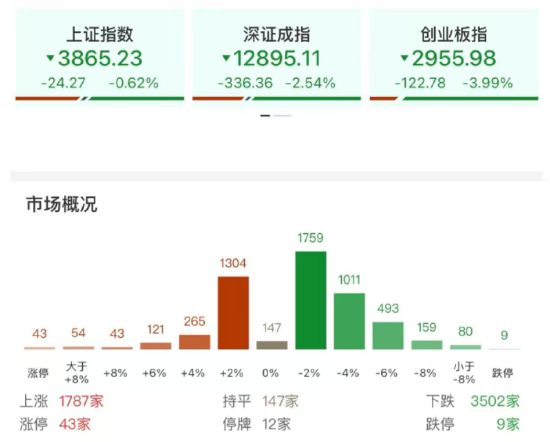
Market Overview - The market experienced fluctuations with the ChiNext and Sci-Tech 50 indices both dropping over 4% during the day. The total trading volume in the Shanghai and Shenzhen markets reached 2.58 trillion, an increase of 221.5 billion compared to the previous trading day [1] - The Shanghai Composite Index fell by 0.62%, the Shenzhen Component Index by 2.54%, the ChiNext Index by 3.99%, and the CSI 500 Index by 1.78% [1] Semiconductor Sector - The semiconductor sector saw a significant correction after a previous rapid increase. Despite the ongoing high demand for AI and domestic substitution trends in computing hardware, some stocks are currently overvalued, leading to increased volatility [3] - The domestic production rate of advanced process equipment still has considerable room for improvement, and the upcoming 14th Five-Year Plan may confirm increased investment in this area [5] - The U.S. House of Representatives recently released a report on semiconductor export controls, which may push for breakthroughs in domestic equipment substitution due to ongoing U.S. export restrictions [5][10] Photovoltaic Sector - The photovoltaic sector is expected to benefit from upcoming policies and market dynamics, with the Fourth Plenary Session of the Central Committee scheduled for next week, which may lead to significant developments in energy consumption standards and production limits [6][9] - The photovoltaic materials sector is anticipated to see improved performance in Q3 2025, driven by both performance recovery and policy catalysts [6] - Investors are encouraged to consider the Photovoltaic 50 ETF (159864) for comprehensive exposure to the photovoltaic industry [7] New Energy Vehicles - The New Energy Vehicle ETF (159806) declined by 4.61%, primarily influenced by market sentiment and style changes. However, the demand for energy storage and power batteries remains strong, with significant year-on-year growth in both sectors [8] - The average production of batteries and materials is expected to increase, indicating a rebound in downstream demand [8] - Recent price increases in lithium hexafluorophosphate and potential price hikes in iron-lithium cathodes are anticipated to benefit from ongoing market adjustments [8] Investment Opportunities - Investors are advised to focus on sectors with high growth potential or policy support, such as communication ETFs (515880), integrated circuit ETFs (159546), and semiconductor equipment ETFs (159516) [6] - The upcoming Q3 earnings reports from major tech companies are expected to provide critical insights into capital expenditures and profitability in the AI and data center sectors [6]

新能源车渗透率加速提升,科创板新能源 ETF(588960)盘中涨幅达4.70%
Mei Ri Jing Ji Xin Wen· 2025-10-14 05:05
Group 1 - The core viewpoint highlights the significant growth in the renewable energy sector, particularly in solar, wind, and lithium battery equipment, with notable increases in related ETFs [1][2] - The latest data from the Passenger Car Association indicates that the retail penetration rate of new energy vehicles (NEVs) in China reached 57.8% in September, a 5 percentage point increase compared to the same period last year [1] - In the first eight months of 2025, China accounted for 68% of the global NEV market share, reinforcing its position as the largest market and a key driver of global industry growth [1] Group 2 - The Canadian local government is advocating for the removal of tariffs on Chinese electric vehicles and encouraging Chinese companies to invest in manufacturing facilities in Canada [2] - The Sci-Tech Innovation Board New Energy ETF closely tracks the Shanghai Stock Exchange Sci-Tech Innovation Board New Energy Index, with a daily fluctuation limit of 20%, comprising 50 large-cap stocks in solar, wind, and NEV sectors [2]
交银国际:9月新能源车渗透率升至57.8% 看好第四季销量冲刺提振车市表现
智通财经网· 2025-10-14 03:33
Core Viewpoint - The report from CMB International indicates a positive investment rating for the mainland automotive industry, driven by a significant increase in the penetration rate of new energy vehicles, which reached 57.8% in September. The firm anticipates a strong sales performance in the fourth quarter due to various market factors [1] Group 1: Market Performance - In September, the retail sales of passenger vehicles in China reached 2.241 million units, representing a year-on-year increase of 6.3% and a month-on-month increase of 11% [1] - Cumulative retail sales of passenger vehicles from January to September 2025 totaled 17.005 million units, reflecting a year-on-year growth of 9.2% [1] Group 2: Future Outlook - The adjustment of the new energy vehicle purchase tax exemption policy in 2026 is expected to stimulate consumer purchases towards the end of the year, alongside the traditional peak sales seasons of "Golden September and Silver October" [1] - The automotive market is anticipated to enter a consumption lull after the fourth quarter sales surge, necessitating cautious monitoring of stock price fluctuations in the sector [1] Group 3: Company Highlights - Xpeng Motors (09868) is expected to boost sales and gross margins with the launch of its new P7 and extended-range models [1] - Geely Automobile (00175) is focusing on internal resource integration following the privatization of its Zeekr brand [1] - Seres is expanding its high-end market presence and improving profitability with its Aito series [1]
碳酸锂期货日报-20251014
Jian Xin Qi Huo· 2025-10-14 02:13
Report Summary 1. Report Industry Investment Rating - No information provided in the report 2. Core Viewpoint of the Report - The lithium carbonate futures fluctuated weakly, mainly due to the intensification of Sino - US trade frictions. Under the dominance of bearish sentiment in the market, the lithium price weakened. Although the supply - side pressure is the main factor suppressing the lithium carbonate price, the strong demand in the power and energy storage fields will drive continuous inventory reduction in the market, so it is expected that lithium carbonate will continue to operate within the oscillation range [8] 3. Summary by Relevant Catalogs 3.1行情回顾与操作建议 - The lithium carbonate futures fluctuated weakly. The spot electric carbon price dropped by 450 to 73,100. The psychological expected price of downstream material factories continued to decrease, and the overall market trading activity was average. The price of Australian ore dropped by 10 to 817.5, and the price of lithium mica ore dropped by 45 to 1,765. The production loss situation of salt factories continued to improve. SMM expects that the lithium carbonate output in October is expected to exceed 90,000 tons, and the supply - side pressure is the main factor suppressing the lithium carbonate price [8] 3.2行业要闻 - Guoxuan High - tech stated on the interactive platform that the industrialization progress of its solid - state batteries is advancing steadily. Its first full - solid - state pilot line has been officially connected, and the design work of the 2GWh mass - production line for the first - generation full - solid - state batteries has been officially launched [12] - In September, the retail penetration rate of new energy vehicles in the overall domestic passenger cars was 57.8%, a 5 - percentage - point increase compared to the same period last year. In September's domestic retail sales, the penetration rate of new energy vehicles among self - owned brands was 78.1%; among luxury cars, it was 34.5%; among mainstream joint - venture brands, it was only 7.4%. In terms of the monthly domestic retail share of new energy vehicles, in September, the retail share of new energy vehicles of self - owned brands was 70.1%, a 2.3 - percentage - point decrease year - on - year; the share of mainstream joint - venture brands was 3.2%, a 0.2 - percentage - point decrease year - on - year; the share of new forces was 20.2%, with brands such as XPeng, Leapmotor, and Xiaomi driving a 3.3 - percentage - point year - on - year increase in the share of new forces; Tesla's share was 5.5%, a 0.9 - percentage - point decrease [12]