
石化

Search documents
2025年基金三季报划重点!泓德基金于浩成:未来市场风格或从科技成长一枝独秀走向更加均衡
Xin Lang Ji Jin· 2025-11-03 05:33
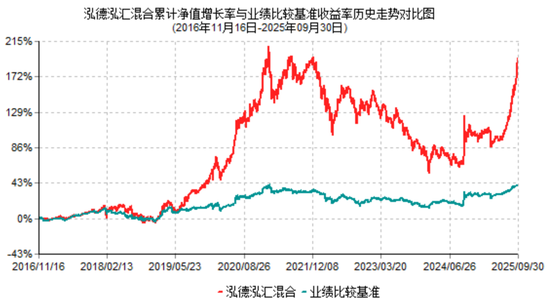
Core Insights - The performance of the Hongde Honghui Mixed Fund has shown significant growth, with a net value increase of 45.46% in Q3 2025, compared to a benchmark return of 8.21% [1] - The Chinese stock market experienced a strong performance in Q3, with the Shanghai Composite Index rising by 12.73% and the Hang Seng Index increasing by 11.56%, while the ChiNext Index surged by 50.40% [3] - The technology sector, particularly the AI industry chain, has been a major driver of growth, with companies in software, chips, and new materials benefiting from a favorable market environment [3] Fund Performance - The Hongde Honghui Mixed Fund has achieved a cumulative net value growth rate of 195.46% since its inception on November 16, 2016, significantly outperforming the benchmark return of 41.54% [1] - The fund manager, Yu Haocheng, has focused on sectors such as AI, new energy, and consumer electronics, which have performed well, leading to substantial net value increases [4] Market Trends - The Q3 performance of various sectors showed significant divergence, with electronics, communication, and innovative pharmaceuticals leading the gains, while banking and petrochemical sectors lagged behind [3] - The AI industry chain is expected to continue driving growth, with a favorable valuation environment providing a strong buying opportunity for investors [3] - The outlook for Q4 suggests a potential shift towards a more balanced market style, with a focus on leading companies in AI and new energy, as well as cyclical sectors like chemicals and new materials [4]

卸任在即,巴菲特囤下3820亿美元现金,再创历史新高!
Jin Shi Shu Ju· 2025-11-03 03:44
Group 1 - Warren Buffett has sold stocks for the third consecutive year, with Berkshire Hathaway selling $6.1 billion in common stocks in the last quarter, totaling approximately $184 billion in stock sales over the past three years [1] - Berkshire's cash reserves have reached a record high of $382 billion, not including approximately $23 billion in short-term U.S. Treasury investments [1] - Berkshire has not conducted any stock buybacks for five consecutive quarters, as Buffett opts to remain cautious [2] Group 2 - Berkshire's Class A shares have declined about 12% since Buffett announced his retirement, while the S&P 500 index has increased by approximately 20% during the same period [2] - The company recently completed a significant $9.7 billion cash acquisition of Occidental Petroleum's petrochemical business, marking the first major deal led by incoming CEO Greg Abel [2] - Berkshire's insurance business, particularly GEICO, has seen a profit increase to $2.4 billion over the past year, doubling from the previous year [3] Group 3 - Despite a relatively mild hurricane season, Berkshire faced $1.1 billion in losses due to California wildfires, and its utility subsidiary, PacifiCorp, is dealing with lawsuits related to past fire incidents [3] - Berkshire remains a long-term holder of Apple, although Buffett has gradually reduced his stake in the company in recent years [3] - The total stock investment for Berkshire has risen to $283 billion, despite the recent stock sales [3]
博禄公司:业绩超预期,项目如期推进
Haitong Securities International· 2025-11-03 03:20
Investment Rating - The report assigns an "Outperform" rating to the company, indicating an expected relative return exceeding 10% over the next 12-18 months [13]. Core Insights - The company reported a strong performance in Q3 2025, with net revenue of $1.446 billion, surpassing the consensus estimate of $1.4 billion. The EBITDA margin improved to 39% from 34% in Q2 2025, and net income reached $295 million, exceeding expectations of $285 million [2][6]. - The company reaffirmed its dividend of $16.2 per share for FY 2025, aligning with market expectations. Additionally, the completion of over 90% of Project 4 is noted, showcasing the company's operational efficiency [1][2]. - The strategic proposal to merge with Nordic Chemicals and acquire Nova Chemicals is expected to create the "Boroque International Group," with a total capacity of 13.6 million tons per year, positioning it as the fourth-largest player globally [3]. - The company maintains a cost leadership position in the petrochemical sector, primarily due to its use of natural gas liquids as feedstock and its large integrated production base, which is expected to yield economies of scale [3][4]. Financial Summary - For Q3 2025, the company reported a net revenue of $1.446 billion, a 11% increase from the previous quarter, while the gross profit margin was 49% [6]. - The EBITDA for Q3 2025 was $565 million, reflecting a 28% increase compared to Q2 2025, with a net income margin of 20% [6]. - The price premiums for polyethylene and polypropylene products were reported at $230/ton and $140/ton, respectively, consistent with previous guidance [2][4].
周期论剑|三季报总结及展望
2025-11-03 02:35
Summary of Key Points from Conference Call Records Industry Overview - **Overall Performance**: The third quarter of 2025 showed improved growth across various sectors, with the ChiNext board leading in net profit and revenue growth. The growth style continues to lead equity profit recovery, while the consumer sector faces pressure [1][4] - **Investment Trends**: Active funds significantly increased allocations to TMT-related hardware, battery cells, non-bank financials, and high-performing sectors, while reducing exposure to consumer and large financial sectors. TMT sector holdings approached 40% [1][5] Key Industries and Companies Nonferrous Metals - **Performance**: Nonferrous metal companies saw substantial revenue and profit increases, with a 51% year-on-year profit growth and a 9% quarter-on-quarter increase. The nonferrous metal index rose by 41.82%, outperforming the CSI 300 [1][6][7] - **Future Outlook**: The long-term price trend for nonferrous metals is expected to rise due to macroeconomic improvements and demand driven by AI technology cycles [1][8] Chemical Industry - **Performance**: The chemical sector experienced a 4.1% revenue growth and approximately 7% profit growth in the first three quarters of 2025, benefiting from strong performance in potassium and phosphorus fertilizers, as well as fluorochemical sectors [1][11] - **Future Outlook**: The industry is expected to gradually improve in 2026, with recommendations for leading companies with cost advantages and growth potential [1][11] Transportation Sector - **Aviation**: The aviation sector showed growth, surpassing 2019 levels, with expectations for a profit upturn in 2026. Major airlines reported positive performance despite initial low expectations [1][12] - **Oil Shipping**: Oil shipping companies are projected to achieve record profits in 2025, with a bullish outlook for 2026 due to favorable supply-demand dynamics [1][13] Coal Industry - **Performance**: The thermal coal sector showed revenue and performance improvements, with a 30% increase in economies of scale. The price of coal is expected to rise, entering a new upward cycle [1][18][19] - **Future Outlook**: The coal price is projected to recover to above 600 RMB per ton by the end of 2026, with potential to reach over 800 RMB [1][20] Steel Industry - **Future Trends**: The steel industry is expected to continue recovering in 2026, with demand growth and supply contraction. Leading companies are anticipated to maintain excess profits due to management and structural advantages [1][24][26] Real Estate Market - **Current Data**: The real estate market is experiencing a downward trend but is expected to stabilize, with sales projected at approximately 8.4 to 8.5 trillion RMB in 2026 [1][29] Public Utilities - **Performance**: The thermal power sector showed significant growth, with some companies reporting up to 300% profit increases due to lower coal prices. The sector is expected to maintain a competitive edge in 2026 [1][34] - **Recommended Companies**: Key recommendations include major state-owned enterprises like Huaneng and Datang, which are undervalued and have stable fundamentals [1][35] Additional Insights - **Investment Recommendations**: Focus on companies with strong management capabilities and stable performance, particularly in the coal and public utility sectors [1][22][35] - **Market Dynamics**: The overall market is characterized by structural recovery and differentiation, with technology and growth sectors leading the way [1][2]
埃及签署石化综合体建设协议
Zhong Guo Hua Gong Bao· 2025-11-03 02:16
Core Insights - The Suez Canal Authority (SCA) of Egypt has signed a strategic partnership agreement with Anchorage Investment Company to construct a petrochemical complex in Ain Sokhna [1] Investment Details - The petrochemical complex project will be implemented in two phases: - Phase one involves an investment of $2 billion, focusing on producing polypropylene (PP) from propane, with hydrogen as a byproduct [1] - Phase two is expected to require an investment of approximately $4.5 billion, aimed at expanding production capacity for other petrochemical products and establishing additional industrial units centered on export and sustainable development [1] Strategic Alignment - The project aligns with SCA's strategy to maximize asset utilization, diversify economic activities, and broaden revenue sources [1]
能源早新闻丨我国西部地区装机规模最大,正式开工!
中国能源报· 2025-11-02 22:32
Group 1: Energy Sector Developments - The National Energy Administration announced the addition of 282 experts to the national power reliability management expert database, covering various specialties including power supply reliability and information system development [2] - In September 2025, 72,18 new renewable energy generation projects (excluding household photovoltaics) were registered, including 32 wind power projects and 7,184 photovoltaic projects [2] - The construction of the largest pumped storage power station in western China, the Wazhang Pumped Storage Power Station, has officially commenced, with a total investment of 1.594 billion RMB and a total installed capacity of 2.8 million kilowatts [3] Group 2: Chemical and Material Innovations - Chinese scientists have made breakthroughs in green catalytic technology, developing a new catalytic control technique for Fischer-Tropsch synthesis that significantly reduces CO2 emissions and increases the yield of liquid fuels and olefins [4] - The completion of the largest ethylene project in southwest China, the Guangxi Petrochemical Ethylene Project, has been reported, featuring a core ethylene unit with a capacity of 120,000 tons per year [3] Group 3: Infrastructure and Construction - The first green building in Fiji, constructed by a Chinese company, has been inaugurated, featuring sustainable design elements such as an integrated energy system and rainwater collection [6] Group 4: International Energy Market Dynamics - Bulgaria's parliament has decided to suspend the export of oil products to other EU member states, which may impact regional energy supply dynamics [5] - Russia's second-largest natural gas producer, Novatek, warned that excluding Russian LNG from the global market could lead to a significant increase in gas prices, affecting European consumers [5]
股市必读:东方盛虹三季报 - 第三季度单季净利润同比增长85.05%
Sou Hu Cai Jing· 2025-11-02 20:12
Core Viewpoint - The company, Dongfang Shenghong, has experienced a decline in revenue but an increase in net profit for the first three quarters of 2025, indicating improved profitability despite challenging market conditions [5][9]. Trading Information Summary - On October 31, 2025, Dongfang Shenghong's stock closed at 9.25 yuan, up 0.43%, with a turnover rate of 0.28%, a trading volume of 184,400 shares, and a transaction value of 171 million yuan [1]. - The main funds saw a net outflow of 14.48 million yuan, accounting for 8.49% of the total transaction value, while retail investors had a net inflow of 9.28 million yuan, representing 5.44% of the total transaction value [3][8]. Shareholder Changes Summary - As of September 30, 2025, the number of shareholders decreased to 73,300, down by 9,622 from June 30, 2025, a reduction of 11.6%. The average number of shares held per shareholder increased from 79,700 to 90,100, with an average market value of 857,200 yuan [4][8]. Performance Disclosure Summary - For the first three quarters of 2025, Dongfang Shenghong reported a main revenue of 92.162 billion yuan, a year-on-year decrease of 14.9%. However, the net profit attributable to shareholders rose to 126 million yuan, an increase of 108.91%. The net profit excluding non-recurring items was -71.4365 million yuan, up 94.87% [5][9]. - In Q3 2025, the single-quarter main revenue was 31.245 billion yuan, down 11.91% year-on-year, while the net profit attributable to shareholders was -260 million yuan, an increase of 85.05% [5]. Institutional Research Summary - On October 31, 2025, a conference call was held to discuss the company's performance and strategies [6]. Company Announcements Summary - The 19th meeting of the 9th Supervisory Board of Jiangsu Dongfang Shenghong was held on October 29, 2025, where the board approved the asset impairment provision for the first three quarters of 2025 and the Q3 report, confirming compliance with legal and regulatory requirements [7][8]. Industry Insights Summary - The decline in revenue is attributed to falling crude oil prices affecting petrochemical product prices. However, the company has improved its gross margin to nearly 10%, up 1.3 percentage points from the previous year, indicating enhanced profitability [9]. - The company has completed the PT and POE projects, with ongoing construction of EV and polyester filament projects, and no large new projects planned, suggesting a gradual decrease in future capital expenditures [9].

震荡蓄势待新高
Huaan Securities· 2025-11-02 12:29
Group 1: Market Overview - The market is expected to continue high-level fluctuations due to a "policy window" period following the Fourth Plenary Session and new US-China negotiations, with a focus on the upcoming Central Economic Work Conference [2][3] - Economic fundamentals are showing marginal slowdown, with October retail sales expected to grow by approximately 2.9% year-on-year, while fixed asset investment is projected to decline by 0.7% [4][25] - The central bank's indication of restoring open market operations for government bonds signals a marginal easing of monetary policy, which may lead to a "stock-bond seesaw" effect if interest rates decline [3][17] Group 2: Industry Configuration - The AI industry remains a core focus, with adjustments providing opportunities for a new round of technology market trends, while sectors with strong performance support, such as energy storage/batteries, military industry, storage, and engineering machinery, are also highlighted [5][39] - The first main line of investment is to continue to focus on the AI industry chain, particularly in computing power (CPO/PCB/liquid cooling/optical fiber) and application sectors (robots/games/software), which are expected to maintain a clear trend of growth [39][41] - The second main line includes sectors with solid performance support, such as electric power equipment (energy storage/batteries), military industry, storage, and engineering machinery, which are anticipated to benefit from high demand and ongoing improvements in performance [39][41]
基础化工行业周报:中石油百万吨级乙烯装置开车成功,璞烯晶超高纯高分子量聚乙烯投产-20251102
Huafu Securities· 2025-11-02 07:04
Investment Rating - The report maintains a positive outlook on the basic chemical industry, highlighting strong performance in specific sectors such as tires and electronic materials [2][4][5]. Core Views - The report emphasizes the successful launch of major production facilities, such as the 1 million ton ethylene plant by PetroChina, which is expected to enhance the petrochemical ecosystem in Southwest China [3]. - The report identifies several investment themes, including the competitiveness of domestic tire manufacturers, the recovery of the consumer electronics sector, and the resilience of certain cyclical industries [4][5][7]. Summary by Sections Market Performance - The overall chemical sector saw a 3.37% increase in the CITIC Basic Chemical Index, while the Shanghai Composite Index rose by 0.11% [13][16]. - The top-performing sub-sectors included organic silicon (6.2%), phosphate fertilizers (5.94%), and soda ash (4.75%) [16]. Major Industry Developments - PetroChina's ethylene plant in Guangxi successfully commenced operations, producing 1.2 million tons of ethylene annually, which will significantly reduce oil product output and increase chemical product production [3]. - The launch of the ultra-pure high molecular weight polyethylene facility by Puxin Crystal in Shanghai marks a significant advancement in specialty materials [3]. Investment Themes - **Tire Sector**: Domestic tire companies are becoming increasingly competitive, with recommended stocks including Sailun Tire and Linglong Tire [4]. - **Consumer Electronics**: A gradual recovery in demand is anticipated, benefiting upstream material companies involved in the panel supply chain [4]. - **Cyclical Industries**: Focus on industries with strong resilience and inventory destocking, particularly in phosphate and fluorine chemicals [5]. - **Vitamin Supply**: Supply disruptions in vitamins A and E due to BASF's force majeure are expected to create market imbalances [7]. Sub-industry Insights - **Polyurethane**: The price of pure MDI increased slightly, while the operating rate remained stable at 78% [28]. - **Tires**: The operating rate for all-steel tires rose to 65.33%, indicating strong demand from the automotive sector [52]. - **Fertilizers**: Urea prices increased by 1.03%, with a notable rise in the operating rate of compound fertilizer production [64][69].
辽宁省委书记许昆林会见恒力集团董事长陈建华一行
Xin Lang Cai Jing· 2025-11-02 03:40
Core Viewpoint - The meeting between the Liaoning Provincial Secretary and the executives of Hengli Group emphasizes the commitment to support the development of private enterprises in Liaoning, aiming to create a favorable business environment and enhance the local economy [1] Group 1: Government Support for Private Enterprises - The government will implement strong policies to support the growth of private enterprises, addressing the shortcomings in the private economy [1] - There is a focus on creating a market-oriented, law-based, and international business environment to encourage private entrepreneurs [1] - A mechanism for regular communication between the government and enterprises will be established to provide comprehensive lifecycle services and support [1] Group 2: Hengli Group's Role and Future Plans - Hengli Group is encouraged to expand its operations in Liaoning and play a leading role in developing a multi-layered industrial ecosystem [1] - The company is expected to contribute to the strengthening of the petrochemical industry in Liaoning by enhancing the supply chain [1] - There is an emphasis on accelerating the construction of Hengli Heavy Industry's Phase III project and planning for future industries to create new growth points for high-quality development [1]
