网约车

Search documents
美股异动|优步股价大跌近6% 市场竞争加剧引发回调风险
Xin Lang Cai Jing· 2025-09-17 23:12
Core Viewpoint - Uber's stock has experienced notable fluctuations due to competitive pressures, particularly from Lyft's partnership with Waymo to launch autonomous taxi services by 2026, which has negatively impacted Uber's market position [1] Group 1: Stock Performance and Market Competition - On September 17, Uber's stock fell by 4.99%, marking a total decline of 5.97% over two days, primarily driven by increased competition in the ride-hailing and autonomous driving sectors [1] - Despite the recent downturn, Uber has seen a cumulative stock increase of 54.09% since the beginning of 2025, indicating a technical correction phase [1] - Internal trading activities, including multiple stock sales by CEO Dara Khosrowshahi on September 12, may have influenced investor confidence [1] Group 2: Innovations and Market Expansion - Uber is advancing its sustainability and technological initiatives in the freight sector by collaborating with Tesla to launch a dedicated electric vehicle fleet accelerator program, aimed at reducing barriers to electric truck adoption [2] - The partnership includes subsidized purchasing opportunities for Tesla Semi trucks and optimized charging infrastructure, reinforcing Uber's leadership in the freight market while promoting environmental benefits [2] - Additionally, Uber has introduced the Uber Safari service, focusing on adventure tourism and enhancing its presence in local markets, which not only increases tourism revenue but also creates opportunities for local travel agencies and guides [2] Group 3: Long-term Growth Potential - Despite facing competitive pressures, Uber's technological innovations and market diversification strategies, particularly in freight and tourism, provide new growth momentum [3] - Investors are encouraged to monitor Uber's ongoing innovation capabilities and market responses when evaluating investment opportunities, considering the growth potential across different business lines [3]

降息夜市场剧烈震荡,美股三大股指涨跌不一,中国金龙指数大涨2.8%
Feng Huang Wang· 2025-09-17 22:19
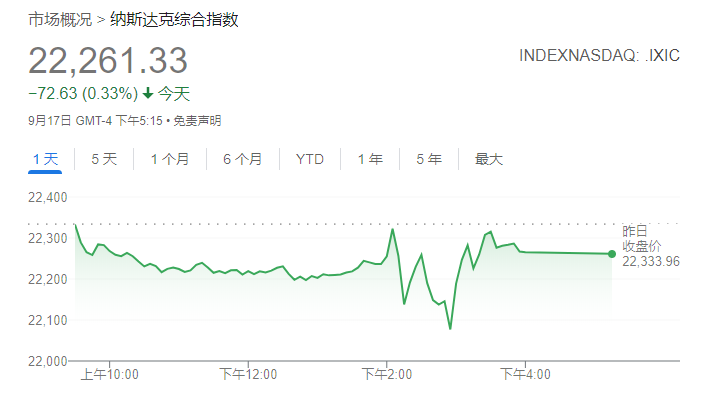
Federal Reserve Actions - The Federal Reserve lowered the federal funds rate target range by 25 basis points to 4.00%-4.25% and indicated two more rate cuts of 25 basis points each in 2025 [3] - Chairman Powell noted that the U.S. economy has shown signs of slowing growth, while inflation remains elevated, and the labor market is experiencing increased downside risks [3] - Powell described the rate cut as a "risk management" measure, suggesting it is a preventive action rather than the start of a long-term easing cycle [3] Market Reactions - The Dow Jones Industrial Average rose by 260.42 points (0.57%) to 46018.32, while the Nasdaq fell by 72.63 points (0.33%) to 22261.33, and the S&P 500 decreased by 6.41 points (0.10%) to 6600.35 [4] - Among the S&P 500 sectors, the financial sector increased by 0.96%, while the information technology sector declined by 0.7% [4] Industry ETFs Performance - Semiconductor ETFs fell by 0.64%, while financial ETFs rose by 0.97% and regional bank ETFs increased by 1.19% [5] Notable Stock Movements - Major tech stocks showed mixed results, with Nvidia down 2.62% and Tesla up 1.01% [6] - Lyft surged by 13% following news of a partnership with Waymo for autonomous taxi services, while Uber dropped by 5% [6] - Workday's stock rose by 7.25% after Elliott Management acquired over $2 billion in shares [6] Company News - Reddit is in preliminary talks with Google for a new content licensing agreement, aiming for higher revenue from its data used in search results and AI training [7] - Nvidia's CEO Huang Renxun stated that natural gas will be needed to power new AI data centers in the UK, highlighting the challenges posed by high electricity prices [8] - Amazon introduced an AI assistant feature in its Seller Assistant tool to help sellers manage their online stores more efficiently [9]

滴滴出行20250917
2025-09-17 14:59
Summary of Didi Chuxing Conference Call Industry Overview - The local transportation industry is characterized as a high-frequency necessity with significant systemic value, attracting competition from major players due to its potential to enhance ecosystems and empower public infrastructure [4][5] - The competitive landscape has evolved from a subsidy war in 2014 to a duopoly between Didi and Kuaidi, followed by the merger with Uber China in 2015, leading to a market dominated by a few key players [4][5] Key Points and Arguments - **Diversified Product Offerings**: Didi adjusts capacity distribution through various products (e.g., Huaxiaozhu, Didi Chauffeur, Enterprise Version, Freight) to meet different demands and increase matching efficiency during peak times [2][6] - **Market Disruption Challenges**: There are currently no significant threats to Didi's platform, as the era of burning cash for market share has ended, and new entrants face high costs to disrupt the established player [2][7] - **Control Over Supply**: Didi maintains strong control over supply through infrastructure, first-mover advantage, and order volume, unlike lower-cost aggregation platforms (e.g., Amap, Meituan Dache) that face safety risks and weaker supply control [2][12] - **Autonomous Driving Potential**: Didi is collaborating with GAC Aion on L4 autonomous driving technology, which could fundamentally change capacity distribution efficiency and cost structure [2][13][15] - **Future Growth Areas**: Didi's growth will come from enhancing service quality, penetrating lower-tier markets, and expanding internationally, particularly in Latin America [2][18][19] Financial Performance and Profitability - **Profitability Drivers**: The profitability per order is closely linked to driver incentives and headquarters operational costs, with an increase in take rate due to driver oversupply and enhanced brand premium [3][20] - **Operational Leverage**: Reduced headquarters expenses in the China region and narrowing losses in overseas operations contribute to significant performance elasticity [3][21] Competitive Strategies - **Market Competition Response**: Didi enhances its core barriers by improving capacity control through diversified products and deepening supply-side infrastructure [6][19] - **Brand Building**: Didi leverages its first-mover advantage and safety perception to maintain consumer loyalty, achieving a market share of around 70% despite competition [8][12] Technological and Regulatory Considerations - **Safety and Regulation in Autonomous Vehicles**: Safety and regulatory frameworks are critical in the Robot Taxi sector, with local regulations varying significantly, impacting operational strategies [17] - **Investment in Technology**: Didi is open to various technological paths for autonomous driving, focusing on its role as an operational platform rather than favoring specific technologies [16] Conclusion - Didi's strategic focus on product diversification, operational efficiency, and technological advancement positions it well in a competitive landscape, with significant growth potential in both domestic and international markets [2][18][19]

Lyft(LYFT.US)联手Waymo以抗衡优步(UBER.US)!2026年将于纳什维尔推出自动驾驶出租车服务
Zhi Tong Cai Jing· 2025-09-17 13:40
Lyft(LYFT.US)将首次与Alphabet(GOOGL.US)旗下Waymo合作,于明年在纳什维尔推出自动驾驶出租车 服务。这项合作将帮助Lyft更好地与竞争对手优步(UBER.US)抗衡。 Lyft一直在努力追赶其规模更大的竞争对手优步,为其网约车用户提供自动驾驶汽车服务。虽然这标志 着Lyft与Waymo的首次合作,但Waymo早已是优步的合作伙伴。两家公司在2023年达成多年协议,目前 优步已在凤凰城、奥斯汀和亚特兰大提供Waymo出行服务。 Lyft去年11月也签署了多项类似协议,并于上周与May Mobility在亚特兰大启动了其首个商业试点项 目。Lyft预计最早明年将与其他合作伙伴(包括英特尔支持的Mobileye Global Inc.和奥地利的Benteler集 团)在更多美国市场提供自动驾驶出行服务。Lyft还与中国百度(BIDU.US)达成协议,在欧洲提供自动驾 驶出行服务。 与Waymo的合作凸显了Lyft高管过去一年不断强调的观点,即在自动驾驶汽车日益普及的背景下,Lyft 在行业中能发挥的作用。Lyft负责司机体验的执行副总裁Jeremy Bird表示,凭借Flexdriv ...

南京百日攻坚行动进入冲刺期
Nan Jing Ri Bao· 2025-09-16 02:29
Core Insights - The article discusses the ongoing "100-day action" in Nanjing aimed at increasing membership in labor unions for new employment forms, particularly focusing on ride-hailing drivers [1] - The initiative has exceeded its initial target of adding 15,000 new members, reaching over 20,000 [1] Group 1: Membership and Participation - The goal of the "100-day action" is to add approximately 15,000 new members, with around 3,000 of these being ride-hailing drivers from the T3 travel platform [1] - As of now, the membership has surpassed the target, achieving over 20,000 new members [1] Group 2: Events and Activities - A key event, "Ningxin Xianghu Haoyun Banxing," was held, featuring health check-ups, legal consultations, and industry exchanges for over a hundred drivers [1] - The event included a roundtable discussion focused on listening to drivers' voices and building industry consensus, with participation from government departments, companies, and driver representatives [2] Group 3: Services and Support - Various services were provided at the event, including health screenings, free massages, and legal aid consultations for drivers facing labor contract disputes [3] - The legal aid section offered support for drivers with issues such as social security interruptions due to contract disputes [3] Group 4: Future Initiatives - The event also promoted a "scan to join" campaign to encourage more drivers to join the union and benefit from inclusive policies [4] - The city’s labor union plans to implement a "list + responsibility" approach to further enhance membership and services for new employment forms [4]
持续亏损中重启IPO!“365约车”再度递表港交所 阿里持股
Sou Hu Cai Jing· 2025-09-15 13:56
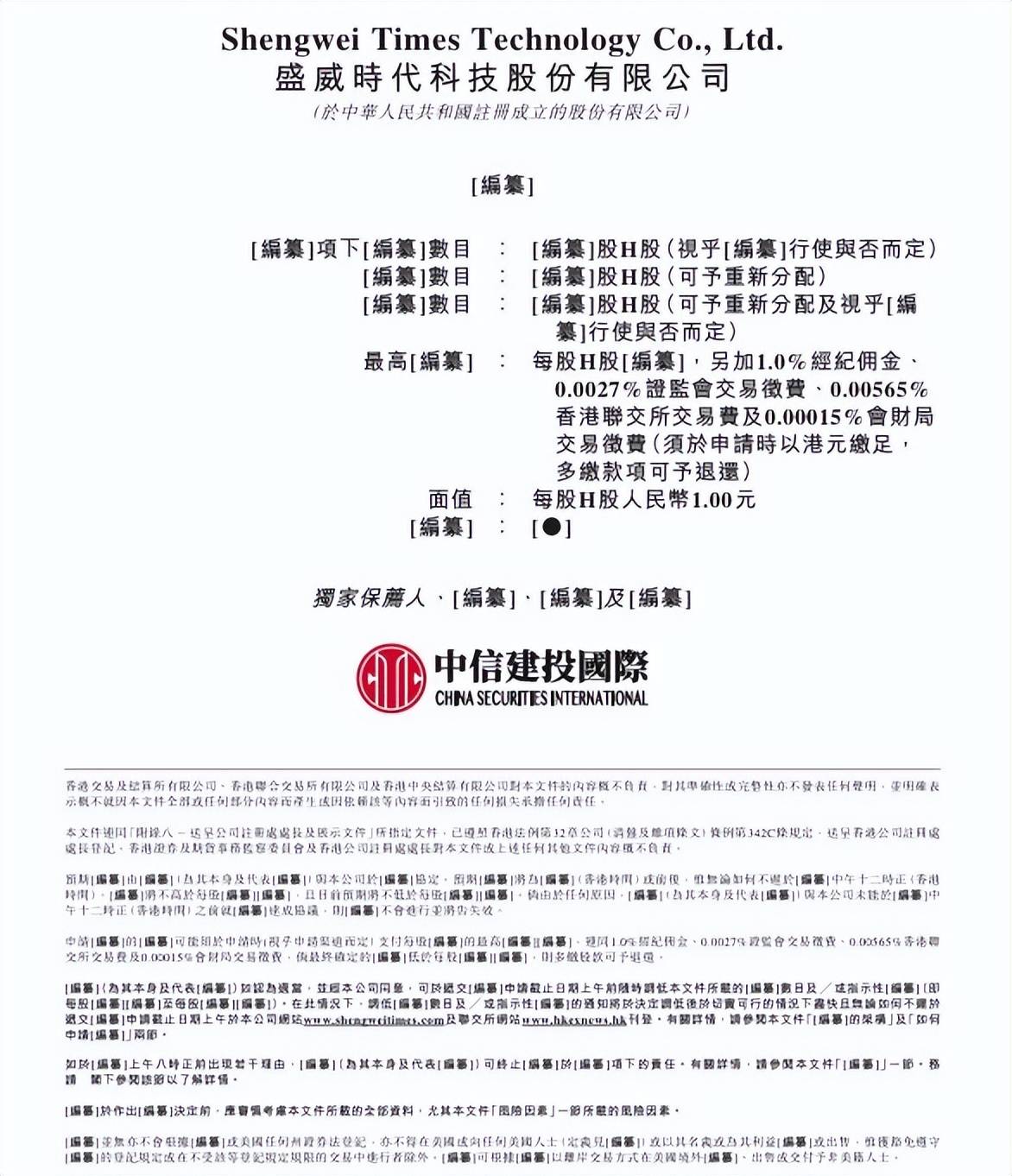
Core Viewpoint - Shengwei Times has refiled for an IPO on the Hong Kong Stock Exchange after its initial application lapsed in November 2024, despite ongoing revenue growth and challenges in its ride-hailing business, which heavily relies on the Gaode platform and has consistently low profit margins [1][4][11]. Group 1: Company Overview - Shengwei Times is the parent company of the ride-hailing service "Chuxing 365" and provides intercity road passenger transport information services, ranking 14th in China's ride-hailing market by GTV as of 2024 [1][4]. - The company has established operations in over 30 provinces and municipalities, collaborating with major partners like 12306 and various travel platforms [4][10]. - Shengwei Times has been focusing on customized passenger transport services, developing a range of transport solutions including airport shuttles and intercity rides [4][10]. Group 2: Financial Performance - Revenue for Shengwei Times was reported at 816 million yuan in 2022, 1.206 billion yuan in 2023, and 1.594 billion yuan in 2024, with a compound annual growth rate of 39.8% from 2022 to 2024 [11][12]. - The company has faced continuous losses, with net losses of 499 million yuan in 2022, 482 million yuan in 2023, and 426 million yuan in 2024, totaling approximately 1.496 billion yuan over three and a half years [13][15]. - The gross profit margin has been low, with figures of 6.6% in 2022, 7.1% in 2023, and dropping to 3.5% in 2024, indicating ongoing profitability challenges [11][12]. Group 3: Market Challenges - The ride-hailing market in China is becoming increasingly competitive, with 392 licensed platforms as of July 2025, leading to rising sales costs for Shengwei Times [16][19]. - The company is heavily dependent on the Gaode platform for customer acquisition, which poses risks if partnerships weaken [19][22]. - Shengwei Times faces pressure from other ride-hailing companies that have recently gone public, indicating a potential industry turning point [19][22]. Group 4: Strategic Considerations - To improve its market position, Shengwei Times needs to reduce its reliance on the Alibaba ecosystem and enhance its independent customer acquisition capabilities [22][23]. - The company must optimize its cost structure, particularly by lowering the high service fees paid to drivers, which currently account for 82.3% of sales costs [15][23]. - Regulatory compliance is becoming more stringent in the ride-hailing industry, necessitating increased resources for compliance to avoid penalties and reputational damage [23].
广州新就业形态劳动者权益保障周开启 开设5个行业专场
Nan Fang Du Shi Bao· 2025-09-15 12:30
Core Viewpoint - The event aims to enhance labor rights protection for new employment forms and empower the development of the new economy through a series of activities organized by various government departments in Guangzhou [1][2]. Group 1: Event Overview - The "Rights New for You: Ecological Integration" Labor Rights Protection Week took place from September 15 to September 19, featuring a combination of main and specialized events [1]. - The event included two main venues and five industry-specific sessions, ensuring broad coverage across new employment sectors [1]. Group 2: Activities and Initiatives - On September 15, a launch ceremony and employment supply-demand matching event were held, featuring 28 booths for job postings, career consultations, workplace planning, entrepreneurial markets, and health check-ups [1]. - Specialized activities included a delivery personnel event on September 16, focusing on psychological health services and conflict resolution for ride-hailing drivers [1]. - A health-focused event for couriers was conducted on September 17, providing health knowledge lectures and medical consultations [1]. - On September 18, a home service rights protection event was organized, incorporating skills enhancement and health care for domestic workers [2]. - A specialized session for online anchors was held on September 18, aimed at improving skills and providing policy guidance [2]. - The week concluded with a meeting of the Guangzhou New Employment Labor Protection Alliance, sharing best practices in labor rights protection [2]. Group 3: Future Plans - The Guangzhou Municipal Social Work Department and the Human Resources and Social Security Bureau plan to continue enhancing the "Rights Protection Week" brand and deepen labor rights protection for new employment forms [2].
滴滴上线宠物友好地图 已合作超100家宠物友好门店
Xin Lang Ke Ji· 2025-09-15 10:47
Core Insights - Didi has launched a pet-friendly map and reported nearly 4 million pet registrations, addressing the challenges of pet transportation [1][2] Group 1: Pet Transportation Services - Didi has introduced a pet-friendly map to help users find pet-friendly locations, currently available in Beijing, Shanghai, and Chengdu, with over 3,000 stores listed and partnerships with more than 100 pet-friendly establishments [1] - The pet transportation service has been trialed since September 2024, with over 300 cities participating and dedicated pet vehicles operating in 49 cities [1] - The company has implemented features to enhance user experience, such as a pet quantity note function for multi-pet families and a thank-you red envelope feature to encourage drivers to participate in pet-friendly services [1] Group 2: Service Expansion and Future Plans - Didi's passenger general manager highlighted the continuous expansion of service scenarios, including options for elderly passengers, charter services, and overseas travel, catering to various travel needs [2] - The company aims to further optimize its pet transportation products and services to create a more inclusive, safe, and warm travel environment [2]
一周港股IPO:思格新能源、潮宏基等4家递表;不同集团、紫金黄金等3家通过聆讯
Cai Jing Wang· 2025-09-15 10:41
Group 1: Company Filings - Four companies submitted applications to the Hong Kong Stock Exchange from September 8 to September 14, with three companies passing the hearing [1][6] - Sig Energy (Shanghai) Co., Ltd. submitted its listing application on September 8, aiming to be a global leader in distributed energy storage systems, with a projected market share of 28.6% in 2024 [2] - Shengwei Times Technology Co., Ltd. submitted its application on September 11, ranking 14th in China's ride-hailing service market, with revenues projected to grow from approximately 8.16 billion RMB in 2022 to 15.94 billion RMB in 2025 [3][4] - Shenzhen Maiketian Biomedical Technology Co., Ltd. submitted its application on September 11, with a product reach in over 140 countries and revenues expected to increase from 9.17 billion RMB in 2022 to 13.99 billion RMB in 2025 [4] - Guangdong Chaoshan Industrial Co., Ltd. submitted its application on September 12, leading the jewelry market in mainland China with a projected market share of 1.4% in 2024 [5] Group 2: Companies Passing Hearings - Different Group passed the hearing on September 11, focusing on mid-to-high-end parenting products, with a market share of 4.2% in China [7] - Zijin Gold International Limited passed the hearing on September 14, being a leading global gold mining company with a compound annual growth rate of 21.4% in gold production from 2022 to 2024 [8] - Botai Internet of Vehicles Technology (Shanghai) Co., Ltd. passed the hearing on September 14, ranking third in China's smart cockpit solutions market with a market share of 7.3% [9] Group 3: Companies Going Public - Hesai Technology (02525.HK) is set to launch its IPO from September 8 to September 11, with a global offering of 17 million shares and a maximum price of 228.00 HKD per share [10] - Jinfang Pharmaceutical (02595.HK) will have its IPO from September 11 to September 16, offering 77.6 million shares at a price of 20.39 HKD per share [11] - Health 160 (02656.HK) plans its IPO from September 9 to September 12, offering 33.65 million shares at a price range of 11.89 to 14.86 HKD per share [12] Group 4: New Stock Listing - Dahang Science and Technology (02543.HK) was listed on September 9, closing at 56.90 HKD per share, with a price increase of 14.95% [13]

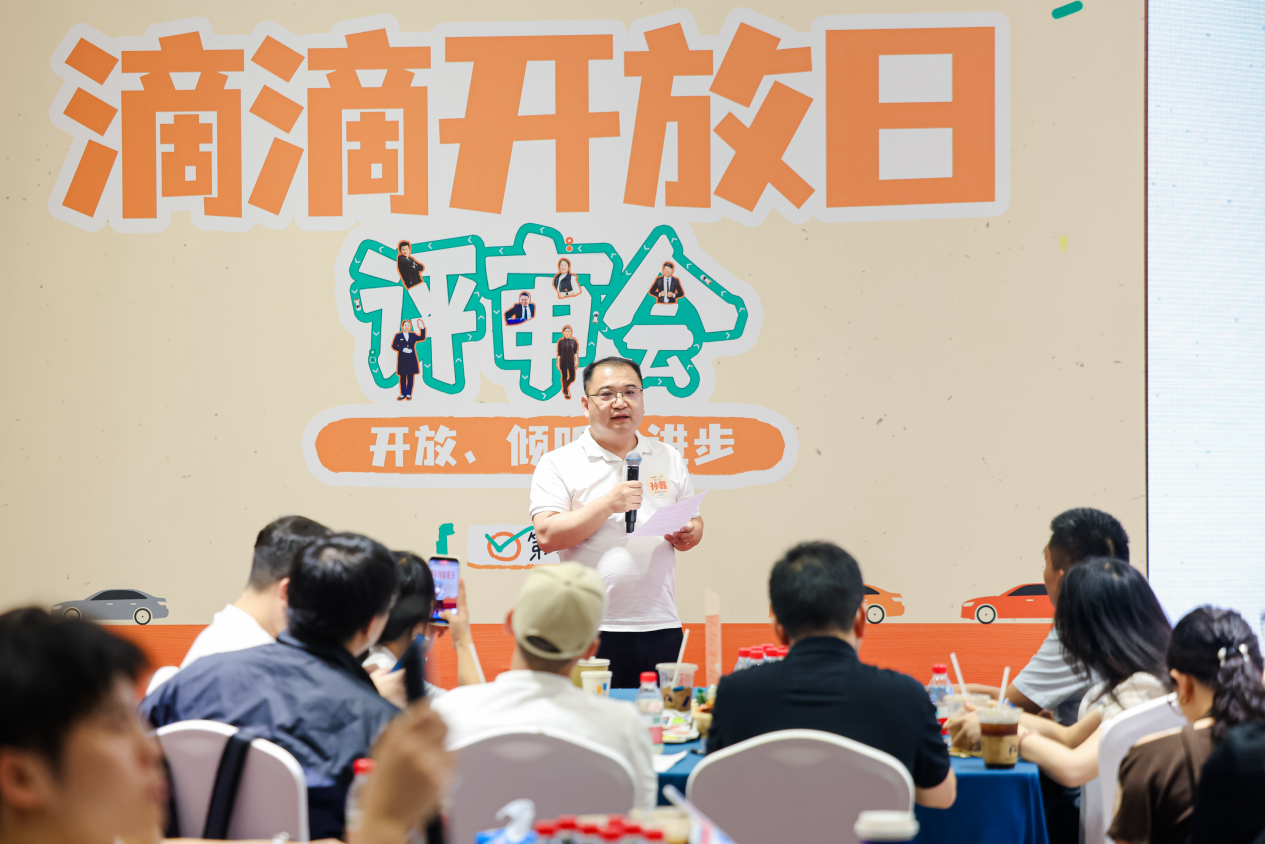
司机反馈问题改进、抽成公开讨论 滴滴开放日聚焦这些核心问题
Yang Guang Wang· 2025-09-15 09:58
Core Viewpoint - Didi's recent open day event focused on driver feedback and commission issues, highlighting the platform's commitment to improving driver experiences and addressing concerns regarding commission rates [1][2][3] Group 1: Event Overview - The third session of Didi's open day, titled "Driver Experience Supervisor Review Meeting," was held in Beijing with over 60 participants, including drivers, media, and experts [1] - This event marks the third open day held by Didi in 2025, emphasizing ongoing engagement with drivers and stakeholders [1] Group 2: Commission Discussion - Drivers shared their commission experiences, with reported rates of 6.9% and 18% for different drivers in August [1] - Didi's average commission rate for all orders in 2024 is projected to be 14%, with the company clarifying that commission does not equate to profit, as most funds are reinvested into driver and passenger incentives [2] Group 3: Feedback and Suggestions - Attendees provided constructive feedback, suggesting improvements such as enhanced bill visualization, audio notifications for non-commission orders, and automatic calculations of total earnings for drivers [2] - The consensus among participants was that both the platform and drivers should work together to enhance service quality and expand market demand, fostering a sustainable ride-hailing ecosystem [3] Group 4: Commitment to Improvement - Didi's CTO expressed the company's intention to continue hosting open day events to address driver issues, emphasizing a culture of openness, listening, and progress [3]