造船

Search documents
侃股:巨头合并进一步提升投资价值
Bei Jing Shang Bao· 2025-07-20 10:31
Group 1 - The core viewpoint of the news is that the merger between China Shipbuilding and China Shipbuilding Industry Corporation, approved by the China Securities Regulatory Commission, marks a significant shift in the Chinese shipbuilding industry from scale expansion to quality improvement, enhancing the investment value of listed companies [1] - The merger involves a total asset scale of several hundred billion, setting a record for absorption and merger scale in the A-share market, indicating a strong union that provides important reference value for investment [1] - The primary positive impact of the merger is the significant enhancement of scale effects, allowing the newly formed company to exhibit substantial advantages in resource integration, which can accelerate the research and development process and improve production efficiency [1] Group 2 - From a market competitiveness perspective, the merger can create a more comprehensive industry leader, enabling rapid market share expansion and diversification of business areas, which enhances resilience against market fluctuations [2] - Mergers can lead to maximization of synergy effects, where different companies' unique characteristics can be effectively integrated to create new growth points, thus increasing future development potential and investment returns [3]


周末重磅!国务院批准!证监会,同意!特朗普,签了!新能源大消息......影响一周市场的十大消息
券商中国· 2025-07-20 09:31
Group 1: New Central Enterprise - China Yajiang Group - The Yarlung Tsangpo River downstream hydropower project has officially commenced, with a total investment of approximately 1.2 trillion yuan [2] - China Yajiang Group has been established as the 22nd central enterprise, following China Three Gorges Corporation and preceding State Energy Investment Corporation [2] Group 2: A-Share Merger - The China Securities Regulatory Commission has approved the merger of China Shipbuilding (600150.SH) and China Shipbuilding Industry Corporation (601989.SH), marking a significant step in the integration of major shipbuilding platforms [3] - Post-merger, the total asset scale of the surviving company will exceed 400 billion yuan, positioning it as the world's largest publicly listed shipbuilding company [4] - Both companies have reported earnings forecasts that significantly exceed market expectations, with China Shipbuilding projecting a 98.25% to 119.49% increase in net profit for the first half of 2025 [4] Group 3: New Energy Vehicle Industry Regulation - The Central Fourth Guidance Group is focusing on addressing irrational competition in the new energy vehicle industry, emphasizing the importance of regulatory measures for high-quality development [5][6] - A joint meeting by the Ministry of Industry and Information Technology, National Development and Reform Commission, and State Administration for Market Regulation has been held to further standardize competition in the new energy vehicle sector [6][7] - Key measures include enhancing supervision, establishing long-term mechanisms, and strengthening industry self-discipline to foster a healthy competitive environment [6][7] Group 4: Low-altitude Economy Development - The National Development and Reform Commission has convened a meeting to promote the safe and healthy development of the low-altitude economy, emphasizing the need for tailored approaches based on local conditions [8] - The meeting highlighted the importance of safety in development and the establishment of regulatory frameworks to prevent inefficient and harmful competition in the low-altitude industry [8] Group 5: Key Industries Growth Plans - The Ministry of Industry and Information Technology is set to release growth plans for ten key industries, including steel, non-ferrous metals, and petrochemicals, focusing on structural adjustments and the elimination of outdated capacity [9] Group 6: Stablecoin Legislation in the U.S. - President Trump has signed the "Guidance and Establishment of a National Innovation Act for Stablecoins," marking the first formal regulatory framework for digital stablecoins in the U.S. [10] Group 7: Stock Market Performance - The Nasdaq Composite Index reached a new historical high, with a slight increase of 0.05%, while major tech stocks showed mixed performance [11] - Chinese concept stocks mostly rose, with the Nasdaq Golden Dragon China Index increasing by 0.6% [12] Group 8: Upcoming Events - The 2025 World Artificial Intelligence Conference is scheduled to take place from July 26 to 28, featuring over 800 global enterprises and a record exhibition area [13] - The first batch of mid-year reports from Shenzhen Stock Exchange companies will be released soon, with several companies set to disclose their financials [14]


申万宏源交运一周天地汇(20250713-20250718):航运商品共振BDI年内新高,欧盟对俄油制裁,造船中报预告超预期
Shenwan Hongyuan Securities· 2025-07-19 15:08
Investment Rating - The report maintains a positive outlook on the shipping and transportation industry, recommending specific companies such as China Merchants Energy and China Shipbuilding [4][5]. Core Insights - The Baltic Dry Index (BDI) has reached a new high for the year, driven by rising shipping asset values and the impact of EU sanctions on Russian oil [4]. - The report highlights the performance of various sectors within the transportation industry, noting a significant increase in oil tanker rates and a recovery in shipping prices [5]. - The report emphasizes the resilience of the logistics and express delivery sectors, suggesting potential for market share consolidation among leading companies [4]. Summary by Sections Shipping Sector - The report indicates that the EU's sanctions on Russian oil are creating upward pressure on tanker rates, with VLCC rates increasing by 16% to $30,978 per day [5]. - The BDI increased by 23.4% week-on-week, closing at 2,052 points, supported by strong Capesize rates [5]. - Recommendations include China Merchants Energy and China Shipbuilding, with a focus on companies like GNK, GOGL, and SBLK [4]. Logistics and Express Delivery - The express delivery industry is experiencing high growth, with companies like SF Holding and SF Express being recommended for their potential to optimize logistics costs [4]. - The report anticipates a turning point in the express delivery market, driven by policy support and demand recovery [4]. Aviation and Airports - The aviation market is expected to stabilize as supply chain recovery continues, with recommendations for airlines such as China Eastern Airlines and Spring Airlines [4]. - The report notes that if domestic airline ticket prices recover, it could further support airline profitability [4]. Rail and Road Transportation - Rail freight volume and highway truck traffic are showing resilience, with rail freight increasing by 1.47% week-on-week [6]. - The report suggests that traditional high-dividend investment themes and potential value management catalysts in the highway sector are worth monitoring [4].
斗不赢特朗普,加拿大调转枪口,逼中国付出代价,中方没有退路
Sou Hu Cai Jing· 2025-07-19 03:37
Core Viewpoint - The article discusses the impact of the Trump administration's tariff policies on Canada and its subsequent shift in focus towards China, highlighting the complexities and contradictions in Canada's trade policies and its reliance on the U.S. market [1][5][7]. Group 1: Tariff Policies and Economic Impact - The Trump administration imposed a 50% tariff on steel and aluminum imports, significantly affecting Canada as the largest importer of these materials from the U.S. [1] - In 2022, nearly half of Canada's steel imports came from the U.S., while 91% of its steel exports were sent to the U.S., indicating a high dependency on the American market [1][3]. - Canada is preparing to impose a 35% tariff on U.S. imports after August 1, reflecting its struggle to negotiate the removal of tariffs with the U.S. [1][3]. Group 2: Canada's Response to China - The Canadian government, led by Carney, plans to impose a 50% tariff on steel exports from countries without a free trade agreement with Canada, including China, if their export levels exceed 2024 figures [3]. - Additionally, a 25% tariff will be applied to all steel products from countries outside the U.S., including China, due to concerns over potential surges in cheap steel imports [3]. - Carney's rationale for these tariffs is based on fears of Chinese steel flooding the Canadian market due to U.S. tariffs, although this reasoning has been criticized as a misrepresentation of the "overcapacity" narrative [3][5]. Group 3: Contradictions in Trade Policy - Canada's trade policy appears contradictory, as it criticizes "Chinese manufacturing" while benefiting from trade with China, such as in the case of a British Columbia ferry company purchasing vessels from Chinese manufacturers [5][7]. - The Canadian government faces internal conflicts regarding support for domestic industries versus engaging in trade with China, highlighting the complexities of its trade relationships [5][7]. - The article emphasizes that Canada should reconsider its reliance on the U.S. and seek diversified partnerships rather than escalating tensions with China [5][8].

集运分歧出现后市展望,下半年交运新方向
2025-07-16 06:13
Summary of Conference Call Notes Industry Overview - The conference call primarily discusses the shipping and logistics industry, with a focus on recent developments in shipping and the impact of autonomous vehicles on logistics and delivery services [1][8]. Key Insights and Arguments Shipping Industry - The shipping sector is experiencing a shift towards new strategies and logic, particularly in the second half of the year [1]. - The impact of e-commerce on local delivery is still underappreciated in the market, indicating a need for increased awareness [2]. - Recent changes in cross-border logistics, particularly in the U.S. with the transition from full to semi-managed overseas shipping, have shown positive trends [2]. - New ship prices have stabilized and begun to rebound, with second-hand ship prices also showing signs of recovery [2]. - The performance of shipbuilding stocks, such as China State Shipbuilding Corporation and Yangzijiang Shipbuilding, has shown an upward trend, with significant valuation recovery potential compared to Korean and A-share counterparts [3]. - The overall performance of the shipbuilding sector is expected to improve, supported by stable ship prices and strong second-quarter earnings [3]. - Global shipping valuations remain relatively low, with significant buyback support from companies like COSCO [4]. Autonomous Vehicles in Logistics - The development of autonomous vehicles is heavily reliant on local policies and road rights, with a gradual approach to national regulations [8][9]. - The company 90 has demonstrated technological leadership in L4 autonomous vehicle technology, with a lower reliance on remote control compared to competitors [9]. - The pricing strategy for the E6 model has been significantly optimized, with costs reduced by over 60% compared to previous models [10]. - The company is expanding its operations internationally, with data centers in Singapore and plans for commercialization in Europe and Japan [11]. - The integration of autonomous vehicles into logistics is expected to significantly reduce costs for delivery companies, enhancing operational efficiency [14][15]. - The relationship between delivery companies and autonomous vehicles is characterized by mutual development and cost reduction, presenting numerous investment opportunities [15]. Additional Important Points - The shipping industry is facing challenges with fluctuating freight rates, particularly in the U.S. and Indian markets, which may affect overall shipping dynamics [6]. - The increase in oil production by Saudi Arabia is anticipated to impact shipping costs and operational strategies in the coming months [7]. - The logistics sector is witnessing a trend towards digitalization, which could further enhance efficiency and reduce costs in the delivery process [15]. This summary encapsulates the key points discussed in the conference call, highlighting the current state and future outlook of the shipping and logistics industry, as well as the transformative potential of autonomous vehicles within this sector.
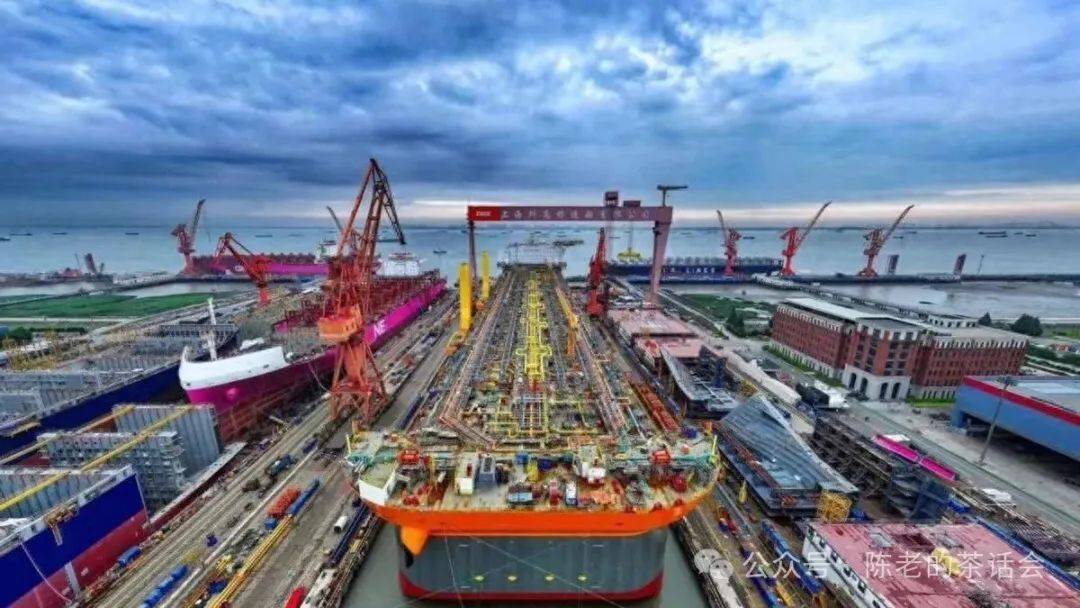
船舶吸收合并重工获批船价企稳推荐船舶板块,关注港股租赁公司
2025-07-16 06:13
Summary of Conference Call Records Industry or Company Involved - The conference call primarily discusses the shipping and leasing industry, with a focus on companies such as **Shan Nan Transportation**, **Chuan Bo Heavy Industry**, and **Yangzijiang Shipbuilding**. It also touches on the broader **Hong Kong stock market** and **oil transportation**. Core Points and Arguments 1. **Merger of Chuan Bo Heavy Industry**: The approval of the merger between Chuan Bo Heavy Industry and another company is expected to be completed around September, which could significantly boost shareholder confidence and operational efficiency post-merger [1][4][5]. 2. **Increase in Shipbuilding Orders**: There has been a notable increase in shipbuilding orders and new ship prices since June, indicating a positive trend in the industry [2][3]. 3. **Stabilization of New Ship Prices**: Recent data shows that new ship prices have stabilized, with only a slight decrease of 0.01% recently, suggesting a potential upward trend in the future [3]. 4. **Impact of U.S.-China Trade Talks**: The ongoing U.S.-China trade negotiations may influence the shipping industry positively, with expectations of improved conditions [3][8]. 5. **Profit Margin Improvements Post-Merger**: The merger is anticipated to enhance profit margins due to better financial management and operational synergies [5][4]. 6. **Demand for Replacement Vessels**: There is a significant demand for replacing aging vessels, which is expected to drive future orders in the shipping sector [7][9]. 7. **Oil Transportation Outlook**: The increase in production by OPEC is expected to positively impact oil transportation, especially as demand rises in the Northern Hemisphere during the winter months [9][10]. 8. **Hong Kong Leasing Companies**: The conference highlighted the potential for recovery in Hong Kong leasing companies, particularly in aviation and shipping sectors, as market activity increases [11]. Other Important but Possibly Overlooked Content 1. **Market Dynamics**: The call emphasized the importance of understanding the cyclical nature of shipping and how macroeconomic factors, such as inflation and commodity prices, can affect shipping rates and demand [7][8]. 2. **Regional Shipping Trends**: The call noted that the demand for smaller vessels and regional shipping routes has increased due to changes in shipping alliances and operational strategies [6][8]. 3. **Local Economic Activity in Hong Kong**: There is a positive correlation between the activity in the Hong Kong stock market and local economic indicators, such as rental prices and public transport usage [11]. This summary encapsulates the key insights from the conference call, providing a comprehensive overview of the current state and future outlook of the shipping and leasing industry.
银行放水+出口爆单!A股变盘信号已拉响,散户必看3大转折点
Sou Hu Cai Jing· 2025-07-16 04:01
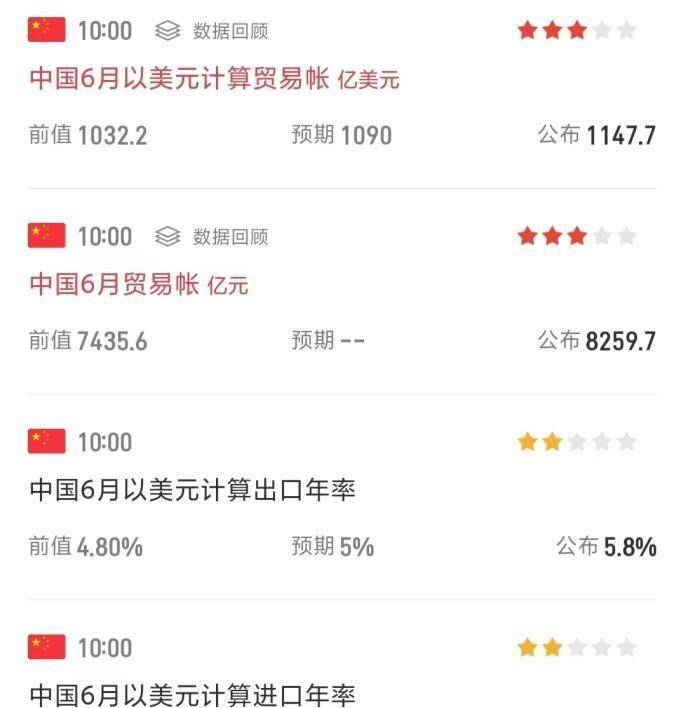
Group 1: Monetary Policy and Economic Indicators - The central bank has lowered corporate loan rates to a historic low of 3.3% and mortgage rates to 3.1%, providing strong support for the real economy [1] - M2 money supply has surpassed 330 trillion yuan, with social financing growth nearing 9%, indicating unprecedented bank credit issuance [1] - The quota for re-loans supporting technological innovation has been expanded to 800 billion yuan, and green loan balances have increased by 25% year-on-year, reflecting strong policy support for emerging industries [1] Group 2: Export Data and Market Dynamics - In June, export growth surged to 5.8%, reversing previous declines, with significant increases in key sectors such as rare earths (up 24% month-on-month), ships (up 58%), and integrated circuits (up 23%) [3][4] - ASEAN has become a crucial support for exports, with a 13% increase in exports to Southeast Asia, while the decline in the U.S. market has been effectively controlled [4] - The cross-border transaction volume in RMB reached 8.9 trillion yuan in the first nine months, with the foreign exchange hedging ratio for enterprises rising to 27% [6] Group 3: A-share Market Trends - The A-share market shows unusual performance, with major banks' dividend yields dropping below 4% and PB valuations nearing 0.7 times, indicating a potential shift in investor sentiment [6] - Despite the overall market decline, foreign capital is actively purchasing technology stocks, with significant investments from sovereign funds [6] - The market is witnessing a transition of funds between "old" and "new" assets, with a focus on AI leaders and undervalued consumer stocks [6][7] Group 4: Technical Analysis and Investment Strategies - Technical indicators for bank stocks show a "flat top" pattern, suggesting potential short-term adjustments, while the robotics sector is showing bullish patterns [7] - Investors are advised to focus on sectors benefiting from policies, such as robotics and shipping, and to consider undervalued consumer leaders for potential investments [8] Group 5: Global Economic Context - The global economy faces stagflation risks, with trade tensions escalating and the U.S. Federal Reserve caught between controlling inflation and avoiding recession [7] - China is proactively attracting foreign investment through a visa-free policy for 26 countries and increasing the use of RMB for cross-border transactions to mitigate exchange rate risks [7]
为抗衡中国领先地位,韩美“一拍即合”:将为美国重振造船业献力
Sou Hu Cai Jing· 2025-07-16 00:59
Core Viewpoint - The collaboration between South Korea and the United States in the shipbuilding industry aims to counter China's dominance, as China currently holds 70% of global new ship orders, while South Korea has only 17% and the U.S. is largely sidelined [3]. Group 1: Industry Dynamics - Shipbuilding is not just a business for shipyards; it reflects a country's industrial level, technological capability, and international standing [3]. - China has a significant cost advantage in shipbuilding, with prices for LNG carriers being 10%-20% lower than those from South Korea due to a complete industrial chain that allows for self-sufficiency in materials [3][7]. - The U.S. lacks sufficient steel production capacity, which hampers its competitiveness in shipbuilding, even in collaboration with South Korea [7]. Group 2: Strategic Partnerships - South Korea's largest shipbuilding company, Hyundai Heavy Industries, has partnered with U.S. company Edison Chouest to build LNG dual-fuel container ships in the U.S., with the first batch expected by 2028 [5]. - The partnership model allows both countries to leverage their strengths, with the U.S. providing facilities and South Korea supplying technology [5]. Group 3: Competitive Challenges - South Korea acknowledges its cost competitiveness is inferior to China's, which affects its market position [7]. - The collaboration between South Korea and the U.S. faces challenges in steel supply, technology transfer, and cost control, which could hinder their efforts to compete with China [12]. - The long-term competitiveness in the shipbuilding industry requires sustained innovation and investment, as China's leading position is a result of decades of technological accumulation and industrial chain development [10][12].
收到美国加税通知,李在明态度变了!韩官员透露重要消息,美对华阴谋曝光
Sou Hu Cai Jing· 2025-07-14 14:17
Group 1 - The U.S. announced a 25% tariff on South Korean imports starting August 1, which has significant implications for South Korea's economy and its diplomatic relations with the U.S. [1][3] - The tariff is seen as a strategy by the U.S. to pressure South Korean companies to invest more in U.S. manufacturing and to purchase more U.S. energy and agricultural products, aiming to reduce the trade deficit [3][5] - The U.S. is leveraging this tariff to influence South Korea's stance on China, as the new South Korean president, Lee Jae-myung, has expressed intentions to improve relations with China, which contradicts U.S. interests [3][6] Group 2 - South Korea's key industries, including automotive, steel, and semiconductors, are heavily reliant on exports to the U.S., making them particularly vulnerable to the new tariffs [5][6] - The South Korean government faces a dilemma: aligning with U.S. interests could alleviate tariff pressures but would damage relations with China, a crucial trade partner [6][8] - The South Korean administration is actively seeking to negotiate on key security issues, such as wartime operational control, which could provide leverage in discussions with the U.S. regarding tariffs and cooperation against China [8]

欧盟美国贸易博弈,韩国也来凑 “热闹”?
Sou Hu Cai Jing· 2025-07-14 01:37
Group 1: EU and US Trade Negotiations - The US plans to impose a 30% tariff on EU imports starting August 1, 2025, which has caused significant concern within the EU [2] - EU leaders, including Commission President von der Leyen and Council President Costa, emphasize the importance of fair trade and express readiness to negotiate while warning of potential countermeasures [3] - French President Macron and other EU officials call for immediate action and preparation of credible countermeasures if no agreement is reached by the deadline [3] Group 2: South Korea's Trade Strategy - South Korea is seeking to negotiate tariff reductions with the US, inspired by the recent US-UK trade agreement [4][5] - The automotive sector is a focal point for South Korea, with exports to the US projected to reach $34.2 billion in 2024, accounting for 26.8% of total exports to the US [6] - Experts suggest that South Korea could leverage US needs in shipbuilding and LNG projects to negotiate better terms for automotive and semiconductor exports [6] Group 3: Economic Implications - A successful trade agreement between the EU and the US could stabilize supply chains and protect the interests of businesses and consumers on both sides [7] - Conversely, failure to reach an agreement could lead to significant economic losses for both the EU and South Korea, impacting key industries and overall economic growth [7]