化妆品

Search documents
毛戈平上市一年多,创始人团队套现十几亿
Xin Lang Cai Jing· 2026-01-08 02:49
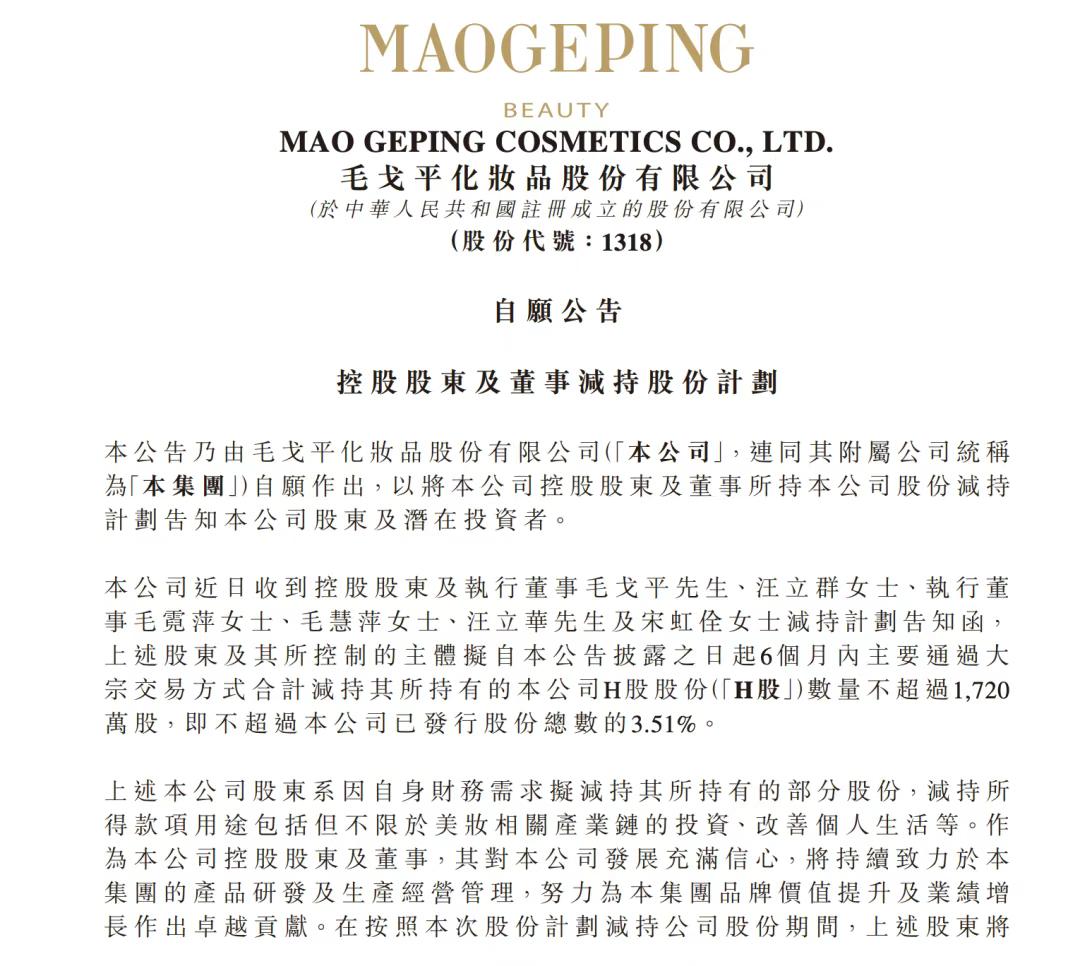
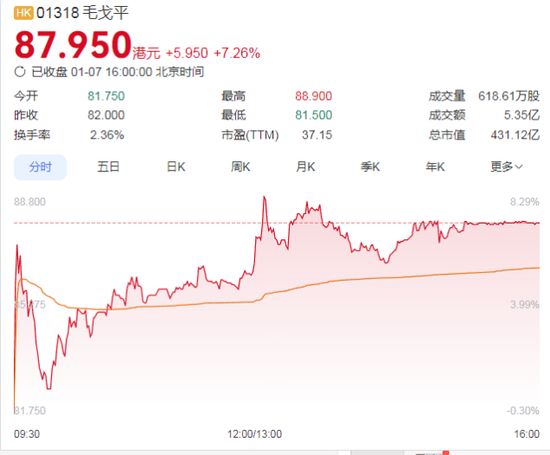
Core Viewpoint - The announcement from Mao Geping Cosmetics Co., Ltd. indicates that six major shareholders, including the founders, plan to reduce their holdings by up to 17.2 million H-shares, representing 3.51% of the total issued shares, primarily through block trades within six months [1][5]. Group 1: Shareholder Reduction Details - The shareholders involved in the reduction include founders Mao Geping and Wang Liqun, as well as directors Mao Nipin, Mao Huiping, Wang Lihua, and Song Hongqian [3]. - The estimated cash-out from this reduction could be at least HKD 1.4 billion based on the opening price of HKD 81.75, and up to HKD 1.53 billion at the peak price of HKD 88.9 [5]. Group 2: Purpose and Impact of the Reduction - The reduction is driven by personal financial needs, with proceeds intended for investments in the beauty industry and personal living improvements. The announcement reassures that this will not affect the company's control or governance structure [5][6]. - The timing of the reduction coincides with the first window after the lock-up period, which typically lasts for 12 months post-IPO [5]. Group 3: Market Reaction and Performance - Following the announcement, the stock price of Mao Geping rose by 5.3%, reaching a peak of HKD 88.9, with a closing price of HKD 87.95, reflecting a 7.26% increase [1][8]. - Citigroup's report suggests that the potential reduction could exert short-term pressure on the stock price, but maintains a "buy" rating with a target price of HKD 82, citing strong earnings growth prospects [6][7]. Group 4: Financial Performance - For the first half of 2025, Mao Geping reported revenue of HKD 2.588 billion, a year-on-year increase of 31.3%, and a net profit of HKD 670 million, up 36.1% [7]. - The gross margin for the same period was 84.2%, slightly down from 84.9% year-on-year, indicating robust profitability despite a minor decline in margin [7].

研判2025!中国睫毛膏行业发展历程、市场政策、产业链图谱、销售规模、竞争格局及发展趋势分析:高端市场仍然被国际知名品牌占据[图]
Chan Ye Xin Xi Wang· 2026-01-08 01:33
Core Insights - The mascara market in China has evolved from a "non-essential" product to a "daily necessity," driven by the younger generation's demand for natural, long-lasting, and multifunctional makeup effects [1][11] - In 2024, the total sales of mascara in China are projected to reach 2.004 billion yuan, with high-end mascara accounting for approximately 25.0% and mass-market mascara for about 74.9% [1][11] - The trend towards clean beauty and sensitivity-friendly products is pushing companies to accelerate the development of low-sensitivity, nourishing, and multifunctional mascara products [1][11] Overview - Mascara is defined as a viscous product made from a mixture of oils, water, wax, thickeners, pigments, film-forming agents, and emulsifiers, primarily used to enhance and beautify eyelashes [2] Development History - The mascara industry in China has undergone four major stages: introduction of imported products, rapid popularization, innovation and differentiation, and compliance with high-quality standards [5] - Domestic brands have shifted from imitation to breakthroughs in technology and branding, narrowing the gap with international brands [5][6] Market Policies - The Chinese government has implemented various regulations to enhance the quality and safety of cosmetics, including mascara, promoting a shift towards standardized and high-quality production [6][7] Industry Chain - The mascara industry supply chain includes raw material suppliers (oils, waxes, pigments), component suppliers (brush heads, tubes), and sales channels (department stores, beauty shops, e-commerce) [7][8] Consumer Insights - The primary consumer demographic for mascara in China is women, making up 90.3% of the market, with the age group of 18-35 years accounting for 78.6% of consumers [9][10] - Over 80% of consumers prioritize waterproof and smudge-proof features, while 40% consider ease of application as a key factor influencing repurchase rates [9][10] Competitive Landscape - The mascara market is highly competitive, featuring both international brands (e.g., Yves Saint Laurent, Lancôme, Dior) and domestic brands (e.g., Maogeping, CarziLan, Huaxizi) [11][12] - Domestic brands are leveraging insights into Asian consumer preferences and innovative marketing strategies to capture market share [11][12] Development Trends - There is a shift towards multifunctional and natural ingredient-based mascara products, with an emphasis on nurturing properties and reduced irritants [14] - Online sales channels are expected to strengthen, with innovations in marketing strategies such as social e-commerce and live streaming [15] - The rise of domestic brands is supported by the growing trend of national pride, with brands incorporating traditional cultural elements into their products [16]

守护“颜值安全”
Xin Lang Cai Jing· 2026-01-07 17:12
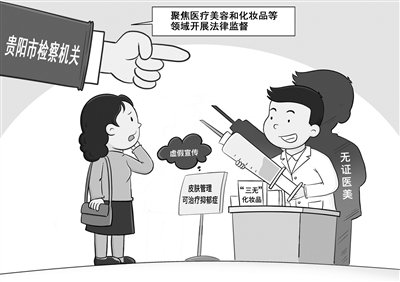
转自:劳动午报 当你在网络平台搜索"个性穿孔",琳琅满目的工作室广告瞬间弹出,包括舌钉、唇钉、脐钉等不同项 目;当你在商场选购化妆品,却发现不少商品缺少明确的生产信息,标签内容模糊不清;当你路过美容 店,随手接过的宣传单上竟写着"皮肤管理可治疗抑郁症"……如今,人们对美的追求日益多元,美容项 目层出不穷,但这些服务背后,是否藏着不为人知的风险?近年来,贵州省贵阳市检察机关积极履行公 益诉讼检察职责,聚焦医疗美容和化妆品等领域开展法律监督,切实守护人民群众的"颜值安全"。(1 月1日《法治日报》) (来源:劳动午报) □邰怡明 ...
上市一年后,毛戈平夫妇等人将至少套现14亿港元!“用于投资,改善个人生活等”
Nan Fang Du Shi Bao· 2026-01-07 16:42
1月7日,毛戈平公司的股价盘中上涨达到5.3%,当日开盘价为81.75港元,最高飙升至88.900港元。按这样的 股价范围,这六名控股股东和执行董事最少能套现14亿港元。 创始人夫妇及其姐弟集体减持 公告显示,本次减持的人员除了毛戈平、汪立群夫妇,还包括执行董事毛霓萍、毛慧萍、汪立华及宋虹 佺。据了解,前两位是毛戈平的姐姐,汪立华为汪立群的弟弟,宋虹佺为公司核心高管。 毛戈平、汪立群夫妇 公告表示,这次六人合计减持其所持有的公司H股股份数量不超过1720万股,即不超过本公司已发行股份 总数的3.51%。南都记者以1月7日开盘价81.75港元计算,这次减持六人共计可以套现最少14亿元,若按截 至发稿之时的最高估价88.9港元来计算,则共计能套现15.3亿港元。 1月6日晚,毛戈平化妆品股份有限公司(以下简称"毛戈平")发布股份减持公告。公告显示,包含创始人夫 妇毛戈平和汪立群在内的六位公司控股股东和执行董事拟自公告披露之日起6个月内主要通过大宗交易方 式合计减持其所持有的公司H股股份数量不超过1720万股,即不超过本公司已发行股份总数的3.51%。 花旗发表的研究报告显示,毛戈平潜在减持股数最高占H股股本6.6 ...

韩国全年出口额突破7000亿美元大关
Shang Wu Bu Wang Zhan· 2026-01-07 16:19
Core Insights - South Korea's total export value for the year has surpassed $700 billion for the first time, reaching a historic high, positioning the country as the sixth-largest exporter globally [1] - This milestone follows previous significant achievements in export values, including $100 billion in 1995, $200 billion in 2004, $300 billion in 2006, $400 billion in 2008, $600 billion in 2011, and $600 billion again in 2018 [1] - The increase in exports reflects a more diversified export structure, with strong performances from traditional sectors such as semiconductors, automobiles, shipbuilding, and biopharmaceuticals, alongside new growth drivers from cultural exports like food and cosmetics [1] Industry Analysis - The Ministry of Trade, Industry and Energy attributes the record export figures to a recovery in market confidence following the establishment of a new government, which has led to a strong rebound in exports since June [1] - Despite a decline in exports during the first half of the year due to uncertainties, the latter half saw a significant recovery, contributing to the overall growth for the year [1] - As of September, both the export value and the number of exporting small and medium-sized enterprises reached historical highs, indicating a robust performance across various business sizes [1]
果然财经|毛戈平与家人拟减持公司股份,将套现超10亿
Qi Lu Wan Bao· 2026-01-07 15:29
Group 1 - The core point of the article is that Mao Geping Cosmetics Co., Ltd. plans to reduce its shareholding, with the family set to cash out over 1 billion yuan [1] - The announcement states that the shareholder intends to sell part of their shares due to personal financial needs, with proceeds aimed at investments in the beauty-related industry and improving personal living conditions [1]
葛兰、赵蓓、胡昕炜、刘彦春等百亿基金经理,最新调仓路线曝光
Zhong Guo Zheng Quan Bao· 2026-01-07 15:19
Group 1 - Kelong Pharmaceutical has seen a reduction in holdings by the China Europe Medical Health Mixed Fund managed by fund manager Ge Lan, from 42.60 million shares at the end of Q2 2025 to 38.20 million shares by the end of Q4 2025, indicating a decrease of 1.87 million shares [1] - The same fund had already begun reducing its stake in Kelong Pharmaceutical in Q3 2025, where the holdings decreased from 42.60 million shares to 40.06 million shares, a reduction of 2.53 million shares [1] - In contrast, the Industrial Bank of China Credit Suisse Frontier Medical Stock Fund managed by Zhao Bei increased its holdings in Kelong Pharmaceutical from 20.00 million shares at the end of Q3 2025 to 22.00 million shares by the end of Q4 2025 [1] Group 2 - Proya, another well-known consumer goods company, announced a share buyback on January 5, 2025, revealing that the Invesco Great Wall Emerging Growth Mixed Fund managed by Liu Yanchun reduced its holdings from 3.33 million shares at the end of Q3 2025 to 2.60 million shares by the end of December 30, 2025, a decrease of over 700,000 shares [2] - Additionally, the fund managed by Hu Xinwei, the Huatai-PineBridge Consumer Industry Mixed Fund, has exited the top ten circulating shareholders of Proya [2]


林清轩(02657):公司深度报告:以油养肤快速破圈前景广阔,高端国货护肤产品渠道多维发力
Guohai Securities· 2026-01-07 14:17
Investment Rating - The report does not explicitly state an investment rating for the company Core Insights - Lin Qingxuan, founded in 2003, is a leading high-end domestic skincare brand in China, known for its "oil-based skincare" concept and camellia oil facial essence, focusing on anti-wrinkle and firming skincare products [6][8] - The company has experienced rapid growth, with revenue reaching 1.05 billion yuan in the first half of 2025, a year-on-year increase of 98%, and a net profit margin of 17.3% [6][14] - The market for oil-based skincare is expanding, with a projected market size of 11 billion yuan by 2025, driven by consumer awareness and the rise of domestic brands [6][51] Company Overview - Lin Qingxuan is recognized as a pioneer in the "oil-based skincare" market, with its camellia oil essence being a flagship product that has sold over 45 million bottles since its launch [6][19] - The company operates a multi-channel sales strategy, with 554 physical stores and a significant online presence, particularly on platforms like Douyin, where it holds a 72% market share in its category [6][30][66] - The founder, Sun Laichun, holds a significant stake in the company, which enhances stability and strategic direction [11] Financial Performance - Revenue has grown from 690 million yuan in 2022 to 1.21 billion yuan in 2024, with a compound annual growth rate (CAGR) of 32.42% [14][15] - The gross profit margin for the camellia oil essence has increased from 33% in 2022 to 48% in the first half of 2025, contributing to overall profitability [19][24] Market Dynamics - The "oil-based skincare" market is characterized by a shift towards high-end products, with a significant portion of the market now held by domestic brands [51][53] - Lin Qingxuan leads the market with a 12% share in facial essence sales, outperforming competitors on major e-commerce platforms [55][57] - The demand for oil-based skincare products is driven by a growing understanding of skin barrier science and the need for lipid-based protection [51][64] Product Strategy - The product lineup includes 230 SKUs, with the camellia oil essence accounting for 46% of revenue and 48% of gross profit [19][24] - The company emphasizes the use of natural ingredients and has positioned itself as a high-end brand through effective marketing and product differentiation [6][64] Sales Channels - The company has successfully integrated online and offline sales channels, with online sales accounting for 65% of total revenue in the first half of 2025 [30][66] - Douyin is identified as the primary sales channel for the company, reflecting the effectiveness of live-streaming and visual marketing strategies [66]
彩妆合伙人离职、主品牌陷成分风波,上美股份的“新故事”怎么讲
Bei Jing Shang Bao· 2026-01-07 13:24
Core Insights - The departure of Gu Mai, a key figure in the makeup business of Shangmei Co., raises concerns about the future development of the NAN beauty brand, despite the company's assurance that operations remain stable [1][2][3] - The NAN beauty brand represents Shangmei's strategic expansion from skincare to makeup, and Gu Mai's management experience was seen as crucial for its growth [2][4] - Concurrently, the main brand, Han Shu, is facing issues related to product safety, which may impact overall brand reputation and financial performance [5][6][7] Group 1: Departure of Gu Mai - Gu Mai's departure is attributed to personal career development, and he will continue to collaborate with the company in other forms [1] - Gu Mai has extensive experience in the beauty industry, having held significant positions at major companies like LVMH and Alibaba [1] - The impact of Gu Mai's exit on NAN beauty's future remains uncertain, although the company claims that the brand's operations are normal and stable [2][3] Group 2: Challenges Facing Han Shu - Han Shu's official live streaming channel on Douyin has been inactive since January 5, raising concerns about the brand's market presence [5][6] - The brand is under scrutiny due to allegations of illegal ingredient additions in its products, which could damage consumer trust and sales [6][7] - Han Shu contributes significantly to Shangmei's revenue, accounting for 81.4% of total revenue in the first half of 2025, with reported earnings of 33.44 billion yuan [6][9] Group 3: Strategic Implications - The recent challenges, including Gu Mai's departure and Han Shu's product issues, pose risks to Shangmei's ten-year strategic plan aimed at achieving 30 billion yuan in revenue by 2030 [8][10] - The company has shown strong financial growth in recent years, but the current situation may hinder its transition from a single-brand reliance to a multi-brand strategy [10][11] - Analysts suggest that acquiring a well-established makeup brand could better align with Shangmei's current development model [11]

毛戈平家族拟减持股票套现14亿
3 6 Ke· 2026-01-07 13:18
Core Viewpoint - The MGP family plans to collectively reduce their holdings in the Hong Kong-listed company MAOGEPING, following a significant increase in stock price since its IPO, with a total value of approximately HKD 14.10 billion for the planned share reduction [1][4][20]. Group 1: Share Reduction Details - The controlling shareholders and executive directors, including Mao Geping and several family members, intend to reduce their holdings by up to 17.2 million shares, representing 3.51% of the total issued shares [4][8]. - The reduction will primarily occur through block trades within six months from the announcement date, with the timing dependent on market conditions [4][12]. - This marks the first large-scale reduction by shareholders since the company's listing, which is a rare occurrence among leading domestic beauty brands [7][8]. Group 2: Financial Implications - The funds from the share reduction are intended for personal financial needs and investments in the beauty-related industry chain, indicating a diversification of personal wealth and potential reinvestment into the business [13][20]. - The company has seen a significant increase in sales and marketing expenses, with a 24.8% year-on-year rise in sales and distribution costs, which reached HKD 1.169 billion, accounting for 45.2% of total revenue [20][23]. Group 3: Strategic Considerations - The reduction may be viewed as a strategy to optimize the ownership structure, allowing for potential future investments from strategic investors while maintaining control with approximately 63.8% of shares post-reduction [19][20]. - The company is exploring vertical and horizontal expansions, including the development of new product lines and potential entry into overseas markets, which could be funded by the proceeds from the share reduction [14][16][24].