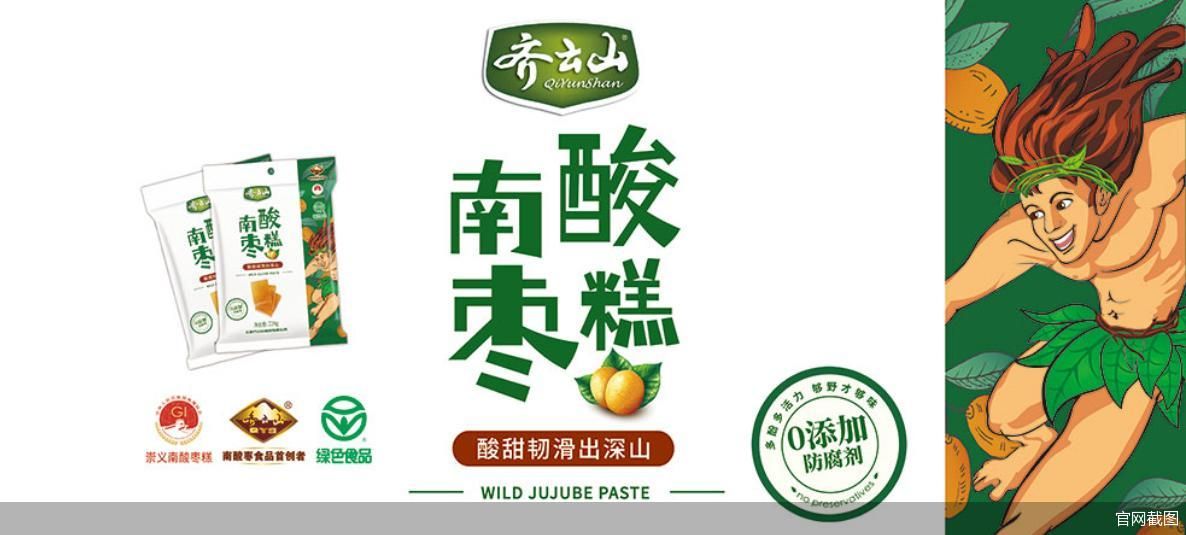
零食

Search documents
吃货又立功!又一老字号要上市,靠一颗野果能否圆梦?
中国基金报· 2025-07-05 11:57
Core Viewpoint - Qi Yun Shan Food is heavily reliant on its single product, South Sour Jujube Cake, which poses risks for its IPO ambitions as it struggles with diversification and online transformation [1][2][4][6]. Financial Performance - In 2024, South Sour Jujube Cake generated 294 million RMB, accounting for 86.7% of total revenue, while other products contributed only 13 million RMB, representing a mere 3.8% [1][2][3]. - Revenue growth for Qi Yun Shan Food was 37.25% in 2024, significantly higher than 13.82% in 2023, driven by an expanded distribution network [14]. Product and Market Strategy - The company has strategically reduced production capacity for other products, focusing resources on South Sour Jujube Cake and South Sour Jujube Granules, with the latter's production capacity dropping from 1,100 tons to 677 tons [4][5]. - Despite claims of pursuing product diversification, R&D investment has decreased from 4.7% in 2022 to 3.5% in 2024 [6]. Sales Channels - In 2024, offline sales accounted for 89.3% of total revenue, with 199 out of 230 distributors being offline [8][10]. - Online sales have been declining, with online direct sales only reaching 35.5 million RMB in 2024, down from 12.7% in 2022 and 14% in 2023 [10][11]. Customer Concentration - The top five customers contributed 38.7% of total revenue in 2024, with the largest customer alone accounting for 22.9% [15][16]. - The reliance on a few key customers raises concerns about revenue stability and potential risks associated with customer concentration [15][16]. Supply Chain Challenges - Qi Yun Shan Food faces supply chain risks due to its dependence on local farmers for raw materials, which are not secured by formal contracts, leading to potential shortages and price volatility [18].


新一轮“去产能”:成因、方案和给普通人的建议
吴晓波频道· 2025-07-04 17:22
Core Viewpoint - The emergence of "involution" competition in recent years is not merely due to the short-sightedness of companies and employees, but is deeply rooted in macroeconomic backgrounds influenced by economic cycles, institutional issues, and technological development patterns [1][27]. Group 1: Industry Responses to Involution - The automotive industry has been notably active, with a significant "60-day account period revolution" and calls from the National Federation of Industry and Commerce for manufacturers to shorten rebate periods and simplify policies [3][4]. - The pig farming sector is also responding, with major companies being urged to reduce production capacity and stabilize prices, controlling the weight of pigs for market [5]. - The photovoltaic industry is proactively reducing production, with leading glass manufacturers planning a collective 30% cut in output [6]. - The cement industry is undergoing self-examination, with the China Cement Association requiring members to align actual production with registered capacity [7]. Group 2: Historical Context of Capacity Reduction - Historical capacity reduction efforts have typically focused on high-pollution and high-energy-consuming traditional industries, employing methods such as limiting new capacity and eliminating outdated production [16][20]. - The current round of capacity reduction is characterized by a broader scope, including emerging industries like photovoltaics and new energy vehicles, indicating a shift from traditional sectors [21][22]. Group 3: Economic and Policy Factors - The low demand in the domestic market and uncertainties in foreign demand are contributing to the "involution" competition, exacerbated by supply-demand mismatches in certain industries [28]. - Local governments' performance evaluation mechanisms lead to "race-to-the-bottom" competition, distorting industry entry costs and slowing down market adjustments [29]. - Technological advancements often result in structural overcapacity, particularly in emerging industries, as companies invest heavily to adapt to rapid changes [30]. Group 4: Future Directions and Recommendations - To address "involution" competition, authorities should enhance counter-cyclical adjustments to boost domestic demand and reform the income distribution structure to improve labor compensation [34][36]. - Encouraging differentiated competition among enterprises and establishing industry standards can help mitigate excessive competition [38]. - A tailored approach to supply-side guidance based on industry-specific technological development patterns is necessary to support innovation [39]. Group 5: Investment Opportunities - Investors should be aware of the typical patterns of capacity reduction, as stock prices in affected industries may initially drop but can rebound significantly post-adjustment [57]. - Emerging industries such as semiconductors and artificial intelligence, despite current bubbles, present substantial arbitrage opportunities [58].

三只松鼠成立三家新公司加码供应链,不久前刚与“爱零食”分手
Di Yi Cai Jing· 2025-07-04 09:48
Group 1 - The company plans to invest up to 200 million RMB to enhance its supply chain, focusing on the construction of snack industrial parks and supply chain bases in various regions [2][3] - The strategic focus of the company is on "high-end cost performance," aiming to improve the self-production ratio of snack categories while maintaining reasonable pricing for consumers [2][3] - The company's revenue has fluctuated, increasing from 900 million RMB in 2014 to 10.2 billion RMB in 2019, then declining to over 7 billion RMB in 2022 and 2023, with a projected revenue of 10.6 billion RMB in 2024 [2] Group 2 - The company has been working to expand its offline channel presence, having previously relied heavily on e-commerce platforms [3] - A planned acquisition of the snack brand "Ai Ling Shi" for 200 million RMB was terminated due to disagreements on core terms, highlighting the company's challenges in offline expansion [3] - The company's offline store revenue was 404 million RMB in 2024, accounting for only 3.8% of total revenue, indicating a weak position in offline retail [3]

亿滋亚洲中东非大区供应链高级副总裁张凝芳:打造全球化的平台需“本土创新加整合”
麦肯锡· 2025-07-04 03:00
Core Viewpoint - The article discusses the balance between globalization and localization in supply chain management, emphasizing the importance of local innovation while leveraging global resources [3][4]. Group 1: Globalization and Localization - The relationship between globalization and localization requires a better balance, focusing on local consumer needs while utilizing global advantages [3]. - The company has achieved over 90% localization in packaging materials and raw materials in China, with 100% localization in biscuit production technology [3][4]. Group 2: Product Development Trends - The snack industry shows distinct market characteristics, with Chinese consumers preferring less sweet products due to health concerns, leading to the development of thinner, less sweet Oreo products [5]. - Local product development can inspire interest in other markets, showcasing a trend towards healthier snacks globally [5]. Group 3: Supply Chain Maturity and Challenges - The AMEA region faces varying supply chain maturity levels, with a need for patience in improving factory standards [6]. - The collaborative environment in China, supported by government and suppliers, is unique and not easily replicated elsewhere, highlighting the need for patience in global expansion [6][7]. Group 4: Talent Development and Leadership - The company employs two methodologies for talent development: "hunting" for specialized skills and "farming" for building foundational capabilities [9][10]. - Female leadership is emphasized, with a focus on establishing a unique leadership style and overcoming feelings of inadequacy [11]. Group 5: Lighthouse Factories and AI Integration - The Suzhou factory is recognized as a global lighthouse factory, showcasing advancements in employee engagement and technology integration [12][13]. - Future AI applications are expected to enhance decision-making processes and optimize supply chain efficiency [14][15]. Group 6: Future Supply Chain Challenges - Key challenges include building a flexible supply chain, ensuring sustainability, and engaging the new generation of workers [16]. - Recommendations for supply chain professionals include focusing on loss reduction, maintaining a broad perspective while addressing specific issues, and fostering collaboration [17][18][19].


三只松鼠(300783):多品类协同+全渠道共振,业态布局全面开花
China Post Securities· 2025-07-03 10:26
Investment Rating - The report maintains a "Buy" rating for the company, expecting a significant outperformance relative to the benchmark index over the next 6 to 12 months [6][13]. Core Insights - The company is focusing on a multi-category product matrix, aiming for a clear path to achieve a 10 billion yuan target in the nut category and over 100 million yuan in the beverage sector. The nut category remains the primary focus, with plans to optimize product lines and introduce high-end sub-series to enhance competitive differentiation [4]. - The company has announced its entry into the beverage market, launching 60 products, with initial sales showing strong performance, validating the strategy of replicating successful snack products. The snack business has seen rapid growth, with multiple billion-level products and numerous ten-million-level categories being developed [4]. - The distribution business is experiencing high growth, with new store formats like convenience stores and lifestyle shops being introduced. The company is actively exploring online short video content e-commerce and expanding offline channels, achieving significant growth in GMV through platforms like Douyin [5]. Financial Projections - Revenue forecasts for 2025 to 2027 are set at 138.47 billion yuan, 177.63 billion yuan, and 205.76 billion yuan, representing year-on-year growth rates of 30.36%, 28.28%, and 15.84% respectively. The net profit attributable to the parent company is projected to be 4.85 billion yuan, 6.75 billion yuan, and 8.23 billion yuan for the same period, with growth rates of 19%, 39.18%, and 21.84% respectively [6][9]. - The earnings per share (EPS) for the next three years are expected to be 1.21 yuan, 1.68 yuan, and 2.05 yuan, corresponding to price-to-earnings (P/E) ratios of 22, 16, and 13 times [6][9].
食品饮料周报:飞天茅台批价小幅波动,关注IFHM港股上市-20250703
Tianfeng Securities· 2025-07-03 09:12
Investment Rating - Industry rating: Outperform the market (maintained rating) [6] Core Views - The liquor sector is experiencing a decline in sentiment due to fluctuations in the price of Feitian Moutai, with leading companies actively exploring new consumption scenarios and demographics [2][13] - The health products, soft drinks, and snacks sectors are viewed positively due to high growth potential, low base effects, and upcoming peak seasons [4][15] Summary by Sections Market Performance Review - The food and beverage sector saw a decline of 0.88% from June 23 to June 27, while the Shanghai Composite Index rose by 1.95% [1][22] - Specific sector performances included health products (+3.65%), baked goods (+2.72%), and soft drinks (-0.58%) [1][22] Liquor Sector Insights - The white liquor sector declined by 1.66%, attributed to seasonal demand weakness and price fluctuations of high-end products like Feitian Moutai [2][13] - Current prices for 25-year Moutai (original/scattered) are 1870 RMB/1800 RMB, down by 80 RMB/100 RMB from the previous week [2][13] - The Shunwan white liquor index PE-TTM is at 18X, which is considered low compared to the historical average [2][13] Health Products and Snacks - The health products sector is experiencing a growth trend, with a 3.65% increase this week, driven by new consumption trends [20] - The snack sector is expected to benefit from low base effects and new product launches, with companies like Three Squirrels and Salted Fish being highlighted [17][21] Soft Drinks and Beer - The soft drink sector saw a slight decline of 0.6%, with notable performances from brands like Master Kong (+5.4%) and Nongfu Spring (+5.3%) [4][15] - The beer sector declined by 1.9%, but there is optimism for recovery with upcoming consumption policies [4][15] Investment Recommendations - Focus on strong alpha companies in the liquor sector such as Shanxi Fenjiu and Guizhou Moutai, which are expected to benefit from market consolidation [4][21] - In the consumer goods sector, companies that align with cost reduction and market share growth strategies are recommended, including Li Gao Foods and Nongfu Spring [4][21]





齐云山港股闯关现“双高”风险:酸枣糕占90%营收,经销商贡献九成收入
Sou Hu Cai Jing· 2025-07-03 03:19
Core Viewpoint - Jiangxi's time-honored food company Qiyunshan plans to list on the Hong Kong Stock Exchange, primarily focusing on its core product, sour jujube cake, which accounts for nearly 90% of its revenue. The company has attempted to diversify its product line but has seen limited market success, raising questions about its growth potential in a highly segmented snack market [2][3]. Business Overview - Qiyunshan's business revolves around sour jujube products, having launched its first sour jujube cake in 1992. As of 2024, the company holds a 32.4% market share in the sour jujube food market [3]. - The sour jujube cake has been the largest revenue contributor, generating RMB 193 million, RMB 209 million, and RMB 294 million in 2022, 2023, and 2024 respectively, accounting for 88.7%, 84.7%, and 86.7% of total revenue during those years [3][4]. Financial Performance - Qiyunshan's revenue for the fiscal years 2022, 2023, and 2024 was RMB 217 million, RMB 247 million, and RMB 339 million, respectively, with net profits of RMB 26 million, RMB 24 million, and RMB 53 million [8]. - The company experienced significant growth in 2024, with revenue and profit increasing by 37.25% and 120.83%, attributed to market demand expansion and an increase in its distribution network [9]. Product Dependency - Qiyunshan heavily relies on its sour jujube cake, with the second-largest product, sour jujube granules, contributing only RMB 31.26 million, or 9.2% of total revenue in 2024. Other products like sour jujube jelly and soft candy have underperformed, with their combined revenue dropping from 6.1% in 2022 to 3.8% in 2024 [5][6]. - The company has acknowledged the risks associated with its reliance on a single product and plans to use funds from its IPO to explore product innovation and potential value in other categories [8][9]. Market Position - In the broader snack market, Qiyunshan ranks ninth among the top ten companies in the fruit snack segment, with a market share of only 0.63%. The overall snack market in China is projected to reach RMB 1.34 trillion by 2024 [8]. - The company’s sales are primarily driven by third-party distributors, with offline distributors contributing over 85% of revenue from 2022 to 2024. The number of distributors increased from 140 to 199 during this period [9][10]. Strategic Initiatives - To mitigate the risks of dependency on offline distributors, Qiyunshan plans to enhance its online sales channels and invest in live-streaming sales and network expansion following its IPO [11].
盐津铺子(002847):从“产品出海”到“链路出海”
Xin Lang Cai Jing· 2025-07-02 10:47
Core Viewpoint - Company is transitioning from "product export" to "supply chain + brand export," aiming to establish a global growth trajectory through local manufacturing and branding strategies [1][2] Group 1: Overseas Expansion Strategy - Company announced an investment of 220 million yuan to establish its first overseas factory in Thailand, focusing on konjac and potato chip products, leveraging local low-cost raw materials and labor advantages [1] - The chairman set a target for overseas business to account for 10%-20% of total revenue within 3-5 years, indicating a significant strategic shift towards international markets [1] Group 2: Market Potential and Product Performance - The konjac market is experiencing rapid growth, with the "Big Devil" konjac product projected to achieve a 76% year-on-year revenue increase in 2024, highlighting its status as a phenomenon in the industry [1] - The Chinese konjac snack market has surpassed 30 billion yuan, with an expected five-year CAGR of 28%, indicating strong growth potential [1] Group 3: Channel and Organizational Evolution - The company is undergoing a channel transformation, with the share of supermarkets decreasing from 54% in 2017 to 3.6% in 2024, while e-commerce and new retail channels now account for over 96% [1] - The company has established a foundation for "standardized replication" across supply chain, branding, and channels, supporting its ability to replicate success in overseas markets [1] Group 4: Financial Performance and Projections - In Q1 2025, the company reported revenue of 1.537 billion yuan, a 25.7% increase, and a net profit of 178 million yuan, an 11.6% increase, with a net profit margin of 11.5% [2] - The gross profit margin was 28.5%, down 3.6 percentage points year-on-year, primarily due to changes in channel and product category structures [2] - Forecasts for net profit attributable to the parent company for 2025-2027 are 783 million yuan, 999 million yuan, and 1.215 billion yuan, reflecting adjustments due to fluctuations in raw material and labor costs [2]
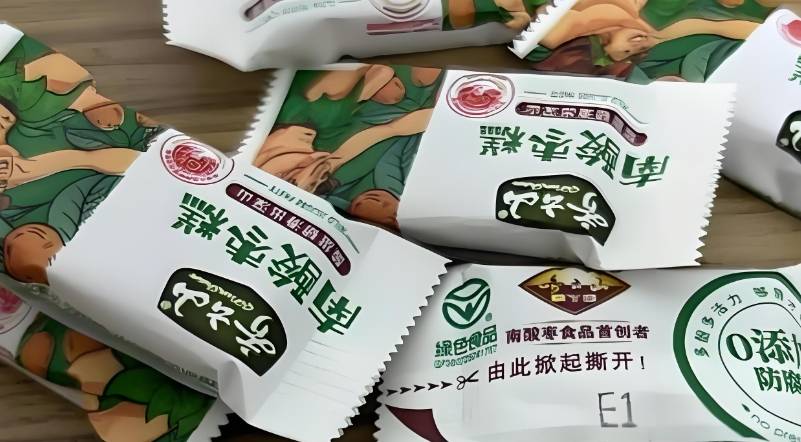
南酸枣糕撑起齐云山食品IPO,果类零食强化线上渗透
Cai Jing Wang· 2025-07-01 12:39
Core Viewpoint - Qiyunshan Food is applying for a listing on the Hong Kong Stock Exchange, leveraging its strong revenue from its main product, the South Jujube Cake, which contributes over 80% of its income [1][2]. Company Overview - Qiyunshan Food specializes in South Jujube products and is headquartered in Chongyi County, Jiangxi Province [1]. - The company has launched five types of South Jujube products, with the South Jujube Cake being the flagship product introduced in 1992 [1]. Financial Performance - Revenue for Qiyunshan Food from 2022 to 2024 is projected to be 217 million, 247 million, and 339 million yuan respectively, with net profits of 25.63 million, 23.70 million, and 53.19 million yuan [1]. - The South Jujube Cake's revenue for the same period is expected to be 193 million, 209 million, and 294 million yuan, accounting for 88.7%, 84.7%, and 86.7% of total revenue [1]. Product Strategy - The company is strategically reducing production capacity for other products to focus on South Jujube Cake and South Jujube Granules to meet increasing market demand [2]. - Future product development will emphasize functional health-oriented products, including new forms like South Jujube Chips and Drinks [2]. Sales Channels - From 2022 to 2024, revenue from offline channels is projected to be 189 million, 211 million, and 303 million yuan, representing 86.9%, 85.6%, and 89.3% of total revenue [2]. - The company relies heavily on five major offline distributors, which account for over 85% of its revenue [2]. Market Position - Qiyunshan Food holds a 32.4% market share in the South Jujube food market, ranking first in the industry [3]. - In the broader fruit snack market, it ranks ninth with a market share of 0.63% [3]. - The Chinese fruit snack market is expected to grow from 99.5 billion yuan in 2024 to 151 billion yuan by 2029, with a compound annual growth rate of 8.7% [3]. Competitive Landscape - The top ten companies in the fruit snack market hold only 10.4% of the market share, indicating a highly fragmented industry [3]. - Competitors include Liuliu Mei and Haoxiangni, which have also filed for listings and reported significant revenues [4]. Online Marketing Strategy - Qiyunshan Food plans to enhance its online presence through e-commerce infrastructure and diverse online marketing strategies, including live streaming and community group buying [5].
收入依赖大单品,线上线下渠道失衡,齐云山食品闯关港股
Bei Jing Shang Bao· 2025-06-30 13:33
Core Viewpoint - Qi Yunshan Food has submitted an application for listing on the Hong Kong Stock Exchange, with a strong reliance on its flagship product, South Jujube Cake, which accounts for over 80% of its revenue [1][3][4]. Group 1: Financial Performance - Qi Yunshan Food reported revenues of 217 million yuan, 247 million yuan, and 339 million yuan for the years 2022, 2023, and 2024, respectively, with net profits of 25.63 million yuan, 23.70 million yuan, and 53.20 million yuan during the same period [3][4]. - The flagship product, South Jujube Cake, generated revenues of 193 million yuan, 209 million yuan, and 294 million yuan from 2022 to 2024, representing 88.7%, 84.7%, and 86.7% of total revenue for those years [3][4]. Group 2: Product and Market Strategy - Qi Yunshan Food has launched five types of South Jujube products, including South Jujube Cake, South Jujube Granules, and South Jujube Soft Candy, among others [3]. - The company plans to diversify its product offerings and has introduced seven flavors of South Jujube Cake and various fruit and vegetable cakes to address market demand [4][5]. Group 3: Sales Channels - The company primarily relies on offline sales channels, with 199 out of 230 distributors being offline, generating 1.89 billion yuan, 2.11 billion yuan, and 3.03 billion yuan in revenue from 2022 to 2024, accounting for approximately 86.9%, 85.6%, and 89.3% of total revenue [6][7]. - Online direct sales generated revenues of 25.84 million yuan, 31.66 million yuan, and 32.93 million yuan during the same period, representing about 11.9%, 12.8%, and 9.7% of total revenue [7]. Group 4: Market Position - As of 2024, Qi Yunshan Food holds a 32.4% market share in the South Jujube food market in China, ranking first in the industry, while its overall market share in the fruit snack market is only 0.6%, placing it ninth [9].