
金融市场

Search documents
Amillex 安迈每日汇评|美元走弱助推金价登顶,降息预期点燃多头情绪
Sou Hu Cai Jing· 2026-01-23 04:34
Group 1: Gold Market - Spot gold continues its strong upward trend, surpassing the $4,900 mark and reaching a historical high of $4,960.43 per ounce [1] - The primary driver of this surge is the persistent weakness of the US dollar, which fell 0.5% to 98.28, marking a three-week low [1] - Market expectations indicate that the Federal Reserve is likely to initiate a rate cut cycle in the second half of 2026, with two cuts totaling 50 basis points, enhancing gold's appeal as a non-yielding asset [1] Group 2: Stock Market - The Dow Jones index is reported at 49,384.01 points, up 0.63%, buoyed by signals of easing geopolitical tensions from the Davos Forum [7] - The S&P 500 index stands at 6,913.35 points, up 0.55%, reflecting optimistic expectations ahead of the upcoming Federal Reserve meeting [7] - The Nasdaq index is at 25,436.02 points, up 0.91%, with active performance in tech stocks, particularly in the AI sector [7] Group 3: Currency Market - The US dollar index (DXY) is at 98.30, down 0.41%, as safe-haven buying recedes due to easing geopolitical tensions [8] - The euro to dollar exchange rate is reported at 1.1750, up 0.56%, benefiting from reduced trade friction risks between the US and Europe [8] - The dollar to yen exchange rate is around 158.40, with market risk appetite improving and demand for the yen weakening [8] Group 4: Commodity Market - WTI crude oil is priced at approximately $59.70 per barrel, down 2.14%, as geopolitical premiums significantly decline [5] - Spot silver is reported at about $95.82, up 3.44%, as the market rebounds above the $95 historical high amid easing geopolitical tensions [8] Group 5: Cryptocurrency Market - Bitcoin is trading at approximately $89,521, having slightly dropped from the psychological $90,000 mark, showing strong technical support around $88,000 [8] - Ethereum is fluctuating around the $3,000 mark, with recent on-chain activity debates affecting its price, oscillating between $2,980 and $3,050 [8]
中国经济升级“加速跑” 制造业“量稳质升”产业优化升级表现亮眼
Sou Hu Cai Jing· 2026-01-22 10:32
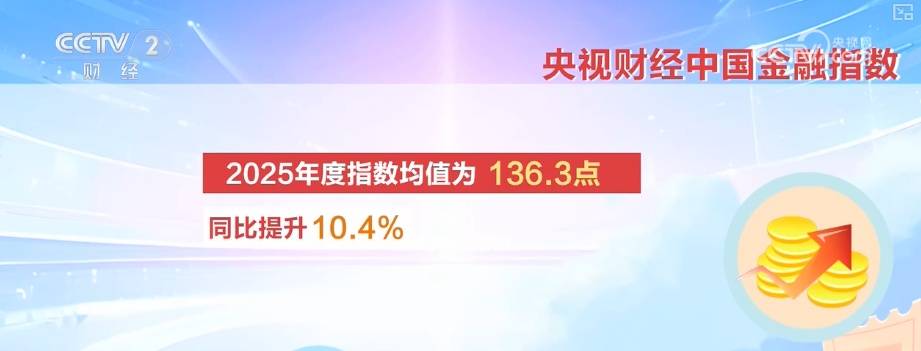
央视网消息:1月22日,"央视财经中国金融指数"和"央视财经金融街经济景气指数",两大指数的最新年度数据已经出炉。透过数 据,能看到哪些中国经济发展的新变化?专家进行了分析解读。 "央视财经中国金融指数",作为国内首个反映中国金融运行状况实时态势的指数,2025年度指数均值为136.3点,同比提升10.4%。 指数12个月全线跑赢上年同期,6个月处于扩张期,表明2025年我国金融市场实现里程碑式跨越,市场活力全面释放。其中,股票市 场年内表现亮眼,ETF规模破6万亿元。直接融资增加,超社会融资规模增量一半。 来源:央视网 作为国内首个以金融视角展示中国经济景气程度的指数——"央视财经金融街经济景气指数",2025年度指数为100.59点,表明市场 预期稳中向好,中国经济正加速升级。其中,2025年全年,我国货物进出口总额同比增长3.8%,出口增长6.1%。我国制造业年 内"量质齐升",制造业增加值占全球比重近30%,制造业规模有望连续16年保持全球第一。 中央财经大学经济学院副院长伏霖表示,产业优化升级的表现非常亮眼,精密仪器、高端装备的国产化率持续提高,制造业真正实 现了"量稳质升"。服务业对国民经济增长的 ...

潘功胜:加强债券市场、外汇市场、货币市场、票据市场、黄金市场监督管理
Feng Huang Wang· 2026-01-22 09:37
Core Viewpoint - The People's Bank of China emphasizes the importance of maintaining stable financial markets and managing expectations for the year 2026, with a focus on the stability of the RMB exchange rate [1] Group 1: Financial Market Stability - The central bank aims to ensure the smooth operation of financial markets [1] - There will be a continued effort to keep the RMB exchange rate stable at a reasonable and balanced level [1] Group 2: Market Supervision - Strengthening supervision and management of various markets, including the bond market, foreign exchange market, money market, bill market, and gold market [1] Group 3: Liquidity Mechanisms - Establishing mechanisms to provide liquidity to non-bank institutions under specific scenarios [1] Group 4: Support for Capital Markets - Continued utilization of two monetary policy tools to support the stable development of capital markets [1]
一丹麦养老基金退出美国国债市场,格陵兰事件动摇美元根基
Hua Xia Shi Bao· 2026-01-22 05:32
Group 1 - The core issue revolves around the U.S. President Trump's aggressive stance on acquiring Greenland, including the potential use of force, which has led to protests in Denmark and Greenland [1] - Trump announced a 10% tariff on eight European countries opposing the acquisition, which could rise to 25% if no agreement is reached [1] - The European nations condemned the tariff threats, stating it could damage transatlantic relations and lead to a dangerous cycle of retaliation [1] Group 2 - The financial markets reacted strongly, with the U.S. dollar index dropping by 0.6% and European currencies like the Swiss franc and euro rising [1] - U.S. Treasury Secretary emphasized Greenland's importance to U.S. national security, linking it to missile defense systems aimed at protecting Europe [1] Group 3 - The potential for U.S. actions to undermine trust within NATO could destabilize the international monetary system, threatening the dollar's status as the world's reserve currency [3] - European countries hold over $10 trillion in U.S. assets, with significant amounts in U.S. Treasury bonds and stocks, which could be sold if trust in the dollar diminishes [3] - Denmark's pension fund announced its exit from the U.S. Treasury market, signaling potential future sell-offs of U.S. assets by other European funds [3] Group 4 - Following potential sell-offs of U.S. debt, alternative assets such as gold, euro-denominated assets, and Chinese yuan assets may become more attractive, leading to continued volatility in international financial markets [4]
美国股债汇三杀解读
2026-01-22 02:43
美国股债汇三杀解读 20260121 摘要 特朗普政府对格陵兰岛的兴趣源于其地缘战略位置和丰富的稀土、石油 资源,虽遭丹麦拒绝出售,但美国可能通过关税等手段施压,对欧洲经 济构成潜在威胁。 日本首相高市早苗解散众议院旨在打破财政法案推行僵局,寻求更多支 持以实施财政计划,但面临公明党反水和在野党竞争的挑战,选举结果 存在不确定性。 美国资产避险属性减弱,美元走弱,美债利率攀升,丹麦养老金降低美 债头寸,欧盟讨论将美债作为金融武器,资金流出压力增加,传统避险 资产如贵金属或受益。 海外市场波动可能通过次生地缘风险影响中国,如欧洲为维稳美欧关系 采取更鹰派姿态,对中国产生负面影响,美国中期选举期间市场波动性 可能增加。 2026 年美国经济波动受执政党和在野党政治博弈影响,财政刺激与反 制措施交织,加剧金融市场不稳定,国际事件如格陵兰岛争议亦带来不 确定性。 特朗普对格陵兰岛采取行动有两大原因:首先,格陵兰岛位于连通北极的重要 航道上,是一个关键地缘点。如果北极冰层融化,它将重塑全球航运格局。其 次,格陵兰拥有丰富的稀土和石油资源,这些资源尚待开发。近期特朗普在被 海外市场波动可能对中国投资者带来短期风险压力,但 ...
美欧关系紧张担忧情绪加剧 金价高涨冲破4800美元
Jin Tou Wang· 2026-01-21 06:05
Group 1 - Gold prices surged to $4,861.01 per ounce, marking a 2.07% increase, with a peak of $4,870.41 and a low of $4,756.81, driven by heightened geopolitical tensions between the US and Europe [1] - The market's risk aversion was intensified by President Trump's aggressive stance on Greenland, which could potentially lead to a trade war with Europe and threaten NATO unity [1] - Trump's warning of imposing tariffs up to 200% on French wine and champagne if they obstruct US interests has caught European leaders off guard, prompting calls for the EU to reduce dependence on the US [1] Group 2 - Analysts noted that Trump's actions have led to a loss of trust in the US, with investors selling off US assets, including the dollar and long-term bonds, in favor of gold [2] - The dollar experienced its largest single-day drop in over a month, with the US stock market indices also seeing significant declines, indicating a broader sell-off of US assets [2] - Market participants are closely monitoring upcoming events, including the Supreme Court's review of Trump's attempt to remove a Federal Reserve governor and the Federal Reserve meeting scheduled for January 27-28, where rates are expected to remain unchanged [2] Group 3 - The gold market opened at $4,672.30, initially retracing to a low of $4,659.20 before rallying due to safe-haven demand, closing at $4,763.60 [3] - Technical indicators suggest a bullish outlook for gold, but caution is advised due to clear overbought signals, with specific price levels identified for potential adjustments and stop-loss placements [3] - Target prices for gold are set at various levels, including $4,745, $4,752, $4,763, $4,772, $4,785, and the $4,800 mark [3]
美国市场梦回「四月风波」,惨遭「股债汇三杀」,华尔街抛售美国交易重燃,这次市场为何不相信TACO了?
Sou Hu Cai Jing· 2026-01-21 01:51
Group 1 - The market is experiencing significant turmoil, with gold prices rising by 3%, U.S. Treasury yields soaring, and both U.S. stocks and the dollar facing declines [1] - The European Union is reacting to U.S. policies under Trump, with concerns about political stability in Germany and France, and potential military confrontations in Europe [1] - The U.S. is facing internal economic challenges, including supply chain disruptions and commodity price volatility, while external pressures from geopolitical tensions are increasing [1] Group 2 - Trump's response to potential Supreme Court rulings on tariffs includes exploring alternative methods such as licensing, indicating a shift in strategy [3] - The U.S. financial markets experienced a sharp decline, with the Dow Jones dropping over 900 points and significant losses in major indices, reflecting market anxiety over trade policies [3] - The TACO strategy, which previously capitalized on Trump's policy reversals, is failing as market participants grow weary of his unpredictable actions [5] Group 3 - The Federal Reserve's tightening policy has undermined the TACO strategy, as expectations for monetary easing have diminished, leading to concerns about inflation and economic growth [7] - The U.S. CPI is showing signs of persistent inflation, with core service prices remaining high, impacting consumer purchasing power [7] - The market is no longer anticipating a policy reversal, as the fundamental economic issues of inflation and weak recovery persist [8] Group 4 - There is a notable shift in investment patterns, with funds moving from technology sectors to defensive sectors, indicating a decrease in risk appetite among investors [9] - The bond market is reflecting long-term concerns, with rising yields indicating skepticism about inflation and fiscal sustainability [9] - The effectiveness of the TACO strategy is diminishing as market participants have fully priced in Trump's policy patterns, leading to increased uncertainty [11]

Nasdaq Turns Negative for the Year. Sentiment Looks 'Morose.'
Barrons· 2026-01-20 19:59
A 'Sell America' theme is emerging as the Greenland dispute escalates, with Treasuries and the dollar losing favor and the Nasdaq approaching a year-to-date loss.The Dow was down about 900 points or 1.8%, while the S&P 500 was down 2%. The tech-heavy Nasdaq, down 2.3%, is now trading at 22,981, putting it on track to be negative for the year.President Trump has threatened to impose tariffs on goods from European allies, which presumably come on top of existing tariffs that are being reviewed by the Supreme ...
美国最高法院周二未就特朗普关税相关事宜作出裁决。标普目前跌1.5%,道指跌744点跌幅1.5%,纳指跌416点跌幅1.8%,半导体指数跌0.7%
Hua Er Jie Jian Wen· 2026-01-20 15:12
Core Viewpoint - The U.S. Supreme Court did not make a ruling regarding the tariffs related to Trump, leading to a significant market reaction with major indices declining sharply [1] Market Reaction - The S&P 500 index fell by 1.5% - The Dow Jones Industrial Average dropped 744 points, also reflecting a 1.5% decrease - The Nasdaq Composite decreased by 416 points, marking an 1.8% decline - The semiconductor index experienced a slight decline of 0.7% [1]
特朗普强买格陵兰搅动世界,黄金为何没“疯涨”?
Xin Lang Cai Jing· 2026-01-20 02:05
Core Viewpoint - The article discusses the potential market reactions and implications of President Trump's threats to impose tariffs on European allies, highlighting the complexities of investor sentiment and the evolving global order [3][9]. Market Reactions - Following Trump's tariff threats, U.S. stock index futures fell by over 1%, while gold prices rose by nearly 2%, indicating a shift in investor sentiment [10][12]. - The S&P 500 index futures and European stock markets experienced similar declines, reflecting a cautious market response [10]. Investor Sentiment - Investors may have become desensitized to Trump's tariff announcements, as previous threats did not lead to significant long-term economic impacts [11]. - The concept of "TACO trading" suggests that investors are betting on Trump backing down from his threats, given the uncertainty surrounding his policy decisions [11][12]. Potential Benefits - Some investors perceive potential benefits from increased military spending in Europe as a response to the tariff threats, which could positively impact defense stocks [12]. - European utility stocks have also seen gains due to a flight to safety, indicating a shift in investment strategies [12]. Historical Context - The article draws parallels to historical events, suggesting that investors often overlook immediate threats until they escalate into significant crises, as seen in the lead-up to World War I [12][13]. - Historical data indicates that markets can rebound quickly after initial shocks, as evidenced by the performance of the UK stock market during World War II [12][13]. Future Implications - The evolving global order may lead to increased attempts by other countries to decouple economically and militarily from the U.S., which could create more volatility in the markets [13]. - Investors are advised to remain flexible as the situation could either lead to a catastrophic breakdown or a resolution where Europe concedes to U.S. demands [13].
