锂离子电池制造

Search documents
从三个“不变”看2025年中国经济发展画卷
Shang Hai Zheng Quan Bao· 2025-12-14 19:43
Group 1 - The central economic work conference highlighted that the main goals for economic and social development in 2025 will be successfully achieved, indicating a strong foundation for economic stability [1] - The trend of shifting economic momentum from old to new and from inferior to superior remains unchanged, with significant advancements in technology and innovation throughout the year [1] Group 2 - The release of domestic demand vitality is evident, with the Chinese film box office surpassing 50 billion yuan in December, and the ice and snow industry expected to exceed 1 trillion yuan this year [2] - Policies aimed at expanding domestic demand, such as special actions to boost consumption and practical measures to promote private investment, are being implemented [2] Group 3 - Industrial transformation and upgrading are contributing significantly to economic growth, with advanced manufacturing and modern service industries increasing their share [3] - In the first ten months, the contribution rate of the added value of equipment manufacturing to industrial growth reached 58.7% [3] Group 4 - The rapid development of the digital economy and the transformation of new productive forces into real productive forces are creating new growth points [4] - The added value of the digital industry manufacturing sector grew by 9.5% year-on-year in the first ten months, with smart device manufacturing and electronic components growing by 11.1% and 12.3% respectively [4] Group 5 - Several international institutions have raised their economic growth forecasts for China in 2025, indicating a positive long-term outlook for the economy [5] - The World Bank's chief economist for China believes that China's economic growth potential remains high, supported by enhanced technological innovation and resource allocation efficiency [5] Group 6 - Economic circulation is improving, with positive trends in supply and demand relationships in industries like photovoltaics and lithium-ion batteries [7] - The stock trading volume in the Shanghai and Shenzhen markets increased by 106.8% year-on-year in the first three quarters, indicating a more orderly economic circulation [7] Group 7 - The Chinese government is signaling a commitment to open cooperation through reforms in foreign investment and expanding access in various sectors [7] - The measures proposed in the central economic work conference aim to leverage China's large market advantages to attract global resources and enhance economic competitiveness [7] Group 8 - Macroeconomic policies are expected to continue supporting economic stability, with a focus on expanding effective demand and maintaining growth [8] - The long-term stability of the Chinese economy is underpinned by systemic advantages and a strong collaborative force among various factors [8]
11月份物价数据彰显经济韧性与潜力
Zheng Quan Ri Bao· 2025-12-14 16:16
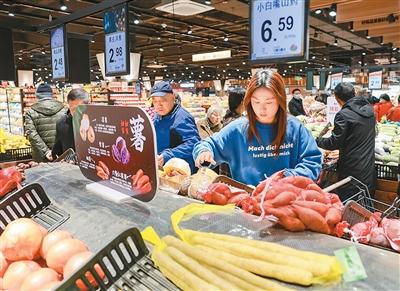
Group 1 - The core viewpoint of the articles highlights that the recent increase in consumer prices indicates a synchronized improvement in supply and demand, reflecting economic resilience and potential [1][2] - In November, the Consumer Price Index (CPI) rose by 0.7% year-on-year, the highest since March 2024, with the core CPI (excluding food and energy) increasing by 1.2% for three consecutive months [1] - The Producer Price Index (PPI) saw a month-on-month increase of 0.1%, marking two consecutive months of growth, indicating a positive trend in industrial pricing [1] Group 2 - The increase in consumer prices is attributed to effective policy measures and the growth of new economic drivers, with specific sectors like arts and crafts, sports equipment, and nutritional foods seeing price increases of 20.6%, 4.3%, and 1.1% respectively [1] - The prices of household appliances and clothing rose by 4.9% and 2.0% year-on-year in November, while prices for services such as airline tickets and home services also increased, reflecting a shift in consumer spending patterns [2] - The sustained rise in core CPI suggests a steady increase in consumer confidence, supported by macroeconomic policies and efforts to optimize market competition and production capacity [2]
固态电池独角兽启动创业板IPO!小米、华为都投了
证券时报· 2025-12-14 14:21
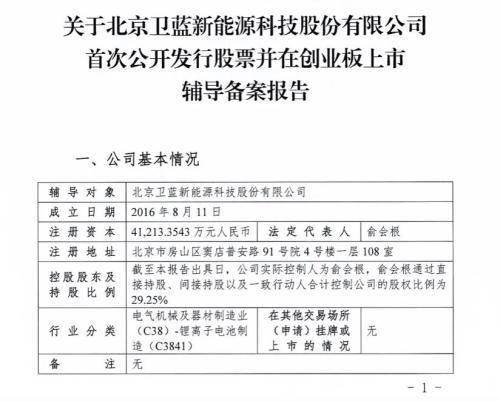
Core Viewpoint - Recently, China Securities Regulatory Commission disclosed that Weilan New Energy is receiving guidance from CITIC Construction Investment, aiming to list on the ChiNext board. The actual controller of the company is Yu Huigen, who controls 29.25% of the company's shares through direct and indirect holdings and concerted actions [1][2]. Company Overview - Weilan New Energy Technology Co., Ltd. was established on August 11, 2016, with a registered capital of 41.2133543 million RMB. The company is located in Beijing and is primarily engaged in the research, production, marketing, and sales of solid-state lithium-ion batteries. It is recognized as a national-level specialized and innovative "little giant" enterprise and a unicorn company [2][6]. - The company was incubated from the Chinese Academy of Sciences and has over 40 years of research experience in the solid-state battery industry, achieving breakthroughs in various solid-state lithium battery technology fields [6]. Market Position and Valuation - According to the Hurun Research Institute's "2025 Global Unicorn List," Weilan New Energy is valued at 18.5 billion RMB, ranking 455th on the list [3][4]. Product Applications - Weilan New Energy's products are primarily used in three areas: new energy vehicles, energy storage, and low-altitude economic power. Key products include: - 360Wh/kg high energy density power cells, capable of exceeding 1000 km in single-charge range, which have been mass-produced and delivered to NIO by the end of 2023 [7]. - 280Ah ultra-high safety energy storage cells, which have also been mass-produced and delivered for various energy storage projects [7]. - 320Wh/kg high energy density low-altitude economic power cells, supplied to multiple domestic and international clients [7]. Technological Advancements - Weilan New Energy recently collaborated with BASF to launch a new generation of solid-state battery packs, marking a significant advancement in the industrialization of solid-state battery technology in China. The partnership aims to address core issues in safety and range associated with traditional power batteries [8][7]. Recent Financing and Strategic Partnerships - In September, Weilan New Energy completed a D+ round of financing, with strategic investments from Beijing Green Energy and Low Carbon Industry Investment Fund, as well as Guangdong Energy Group and ICBC Capital. This financing reflects strong market recognition of the solid-state battery industry and confidence in Weilan New Energy's future development [10][11]. - The company has completed a total of nine financing rounds, with notable investors including Xiaomi, NIO, Geely, and Huawei, among others [11].


有望成为固态电池第一股!卫蓝新能源启动创业板IPO
中关村储能产业技术联盟· 2025-12-12 09:14
Core Viewpoint - Beijing Weilan New Energy Technology Co., Ltd. has submitted its IPO guidance record to the Beijing Securities Regulatory Bureau, aiming to become the first listed company in the solid-state battery sector in China [2]. Group 1: Company Overview - Beijing Weilan New Energy was established on August 11, 2016, with a registered capital of 412.133543 million RMB [5]. - The actual controller of the company is Yu Huigen, who holds a total equity stake of 29.25% [8]. - The company operates in the electrical machinery and equipment manufacturing industry, specifically in lithium-ion battery production [5]. Group 2: Capital and Financing - Over its nine years of operation, the company has attracted significant capital resources, with 48 shareholders as of September 2025 [8]. - The company completed its D+ round of financing in September 2025, with strategic investments from various funds and companies, including the Beijing Green Energy and Low Carbon Industry Investment Fund [8]. - Previous financing rounds included investments from notable firms such as Huawei, IDG Capital, and Xiaomi [8]. Group 3: Product Development and Collaborations - Weilan New Energy has developed a product matrix that includes high-energy density power cells and ultra-safe energy storage cells, with successful deliveries to major automotive and energy companies [9]. - The company has partnered with BASF to launch a new generation of solid-state battery packs, emphasizing safety through the use of solid electrolytes [9]. - Collaborations with other listed companies, such as Huayou Cobalt and Enjie, have been established to enhance the development of solid-state battery technologies [11][12]. Group 4: Global Expansion - The company has established a global presence with R&D headquarters in Beijing, Europe, and multiple production bases in China and abroad [12]. - Weilan New Energy's business operations extend to various countries, including the United States, Canada, and several European nations [12].
下周一,重要预告!
券商中国· 2025-12-12 07:31
Economic Overview - The State Council Information Office will hold a press conference on December 15, 2025, to discuss the national economic operation for November 2025, presented by Fu Linghui, spokesperson of the National Bureau of Statistics [1] Consumer and Producer Price Index - In November, the Consumer Price Index (CPI) increased by 0.7% year-on-year, with the growth rate expanding; the core CPI, excluding food and energy, rose by 1.2%, maintaining a growth rate above 1% for three consecutive months [3] - The Producer Price Index (PPI) saw a month-on-month increase of 0.1%, marking two consecutive months of growth; however, it decreased by 2.2% year-on-year, with the decline rate widening by 0.1 percentage points compared to the previous month [3] - Notably, the effects of comprehensive rectification of "involution-style" competition are becoming evident, as industries such as coal mining, photovoltaic equipment manufacturing, and lithium-ion battery manufacturing have experienced a narrowing of year-on-year price declines for several months [3] - The price trends in certain industries reflect the rapid development of emerging industries and the effective release of consumer potential [3]

发布会预告,就在下周一!
证券时报· 2025-12-12 04:26
Group 1 - The core viewpoint of the article highlights the upcoming press conference by the State Council Information Office on December 15, 2025, where the National Bureau of Statistics will present the economic performance for November 2025 [1] - In November, the Consumer Price Index (CPI) increased by 0.7% year-on-year, with the core CPI (excluding food and energy) rising by 1.2%, maintaining a growth rate above 1% for three consecutive months [2] - The Producer Price Index (PPI) saw a month-on-month increase of 0.1%, marking two consecutive months of growth, while the year-on-year decline was 2.2%, with the decline rate widening by 0.1 percentage points compared to the previous month [2] Group 2 - The article notes that the effects of comprehensive measures to address "involution" competition are becoming evident, with industries such as coal mining, photovoltaic equipment manufacturing, and lithium-ion battery manufacturing experiencing a narrowing of price declines over several months [2] - The price trends in certain industries reflect the rapid development of emerging sectors and the effective release of consumer potential [2]
固态电池独角兽筹备IPO,蔚来小米都投了
Sou Hu Cai Jing· 2025-12-12 04:15
Core Viewpoint - Beijing Weilan New Energy Technology Co., Ltd. has officially initiated its IPO process on the A-share market, aiming to list on the ChiNext board with CITIC Securities as the counseling institution [1] Company Overview - Founded on August 11, 2016, the company has a registered capital of approximately 412.13 million RMB [2] - The actual controller, Qin Huigen, holds a total equity stake of 29.25% through direct and indirect holdings [2] - The company operates in the solid-state battery sector and is recognized as a leading player in the industry, often compared to Qingtao Energy, which is backed by SAIC Group [2] Investment and Financing - Since 2017, the company has undergone multiple rounds of financing, raising nearly 1.5 billion RMB in its D-round in 2022, with notable investors including Xiaomi, NIO, Geely, Huawei, and Tianqi Lithium [2] - In September of this year, the company completed a new round of financing after a three-year hiatus, attracting a prestigious group of investors [3] Strategic Partnerships - The D+ round of financing included strategic investments from Beijing's related industrial funds and new shareholders such as Guangdong Energy Group and ICBC Capital [4] - Guangdong Energy Group has engaged in comprehensive strategic cooperation with the company in the energy storage sector, accelerating the industrialization of solid-state batteries [4] Technological Foundation - The company was established based on solid-state battery technology from the Chinese Academy of Sciences, founded by a team of prominent scientists including Academician Chen Liquan [7] - The technical team is considered top-tier in the domestic solid-state battery field, with a pragmatic approach focusing on oxide electrolyte technology, which balances safety, industrialization difficulty, and cost control [8] Product Development and Capacity - The company has achieved commercial applications of battery cells with energy densities of 360 Wh/kg for power batteries and 320 Wh/kg for low-altitude economic battery cells [9] - It has established four production bases in Beijing, Jiangsu, Zhejiang, and Shandong, with an annual production capacity of 28.2 GWh and a planned total capacity exceeding 100 GWh [9] Recent Contracts and Market Expansion - In October, the company signed a significant investment cooperation agreement with Shaanxi Forestry Industry Group, planning to establish a new company to build production capacity in Shandong [10] - The partnership aims to leverage the company's solid-state battery technology to penetrate the energy storage market, with a total contract value of approximately 4 billion RMB [11]

锐财经|物价水平保持企稳态势
Ren Min Ri Bao Hai Wai Ban· 2025-12-12 01:52
Group 1 - The Consumer Price Index (CPI) increased by 0.7% year-on-year in November, the highest since March 2024, driven primarily by a reversal in food prices from a decline to an increase [2][4] - Core CPI, excluding food and energy, rose by 1.2% year-on-year, maintaining above 1% for three consecutive months [2][4] - The Producer Price Index (PPI) saw a month-on-month increase of 0.1% but a year-on-year decline of 2.2%, indicating a mixed price environment influenced by seasonal demand and macroeconomic policies [4][5] Group 2 - Food prices shifted from a 2.9% decline to a 0.2% increase, with fresh vegetable prices rising by 14.5% after nine months of decline, significantly impacting the CPI [2][3] - Service prices and industrial consumer goods prices increased by 0.7% and 2.1% respectively, contributing positively to the CPI [2][4] - The demand for coal and gas increased seasonally, leading to price rises in related industries, with coal mining prices up by 4.1% [4][5] Group 3 - Emerging industries such as new materials and intelligent technology are driving price increases in related sectors, with prices for external storage devices rising by 13.9% year-on-year [5][6] - Consumer demand is being revitalized through targeted actions, with prices in sectors like arts and crafts rising by 20.6% [5][6] - The government plans to enhance domestic demand and consumption through various initiatives, especially as the year-end approaches, which is traditionally a peak consumption period [7]
物价水平保持企稳态势
Jing Ji Wang· 2025-12-12 01:35
Group 1 - The Consumer Price Index (CPI) increased by 0.7% year-on-year in November, the highest since March 2024, driven primarily by a reversal in food prices from a decline to an increase [2][4] - Core CPI, excluding food and energy, rose by 1.2% year-on-year, maintaining above 1% for three consecutive months, indicating stable inflationary pressures [2][4] - The increase in CPI was influenced by seasonal price rises in services and industrial consumer goods, with notable increases in household appliances (4.9%) and clothing (2.0%) [2][4] Group 2 - The Producer Price Index (PPI) saw a month-on-month increase of 0.1% but a year-on-year decline of 2.2%, reflecting seasonal demand increases in certain industries [4][5] - The PPI decline was less severe than in previous months, with improvements noted in sectors such as coal mining and photovoltaic equipment manufacturing, indicating a narrowing of price drops due to ongoing capacity governance [4][5] - Emerging industries, including new materials and intelligent services, are driving price increases in related sectors, with significant year-on-year price rises in external storage devices (13.9%) and artistic products (20.6%) [5][6] Group 3 - To maintain price stability and promote reasonable price recovery, there is a need to continue expanding domestic demand and optimizing market competition [6][7] - The upcoming year-end period is seen as a critical time for consumption, with plans for various promotional activities to stimulate consumer spending [7] - The outlook for 2026 suggests that with the implementation of demand expansion policies and ongoing capacity governance, prices are expected to rise moderately, supported by improvements in supply-demand structures [7]
物价水平保持企稳态势(锐财经)
Ren Min Ri Bao Hai Wai Ban· 2025-12-11 22:56
Group 1 - The Consumer Price Index (CPI) increased by 0.7% year-on-year in November, the highest since March 2024, driven primarily by a reversal in food prices from a decline to an increase [2] - Core CPI, excluding food and energy, rose by 1.2% year-on-year, maintaining above 1% for three consecutive months [2] - The increase in CPI was influenced by seasonal price rises in services and industrial consumer goods, with household appliances and clothing prices rising by 4.9% and 2.0% respectively [2][4] Group 2 - The Producer Price Index (PPI) saw a month-on-month increase of 0.1% but a year-on-year decrease of 2.2%, with the decline attributed to high comparison bases from the previous year [4][6] - Seasonal demand increases in certain domestic industries, such as coal and gas, contributed to the month-on-month price rise in PPI [4] - New industries, including new materials and intelligent technology, are driving price increases in related sectors, with prices for external storage devices rising by 13.9% year-on-year [6] Group 3 - To stabilize price levels and promote reasonable price recovery, there is a need to continue expanding domestic demand and optimizing market competition [7] - The upcoming year-end and early-year period is seen as a crucial time for consumer spending, with plans for various promotional activities to enhance consumption [7] - Looking ahead to 2026, policies aimed at expanding domestic demand are expected to support a moderate recovery in prices, particularly in service sectors such as dining, accommodation, and health services [7]