能源

Search documents
山东政商要情(12.15—12.21)
Jing Ji Guan Cha Bao· 2025-12-22 01:03
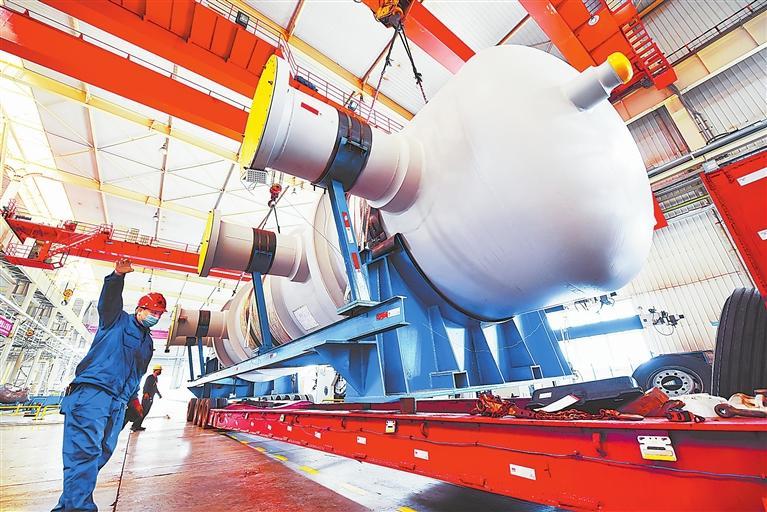
Group 1: Legal Framework Development in Shandong - The Shandong Provincial Committee held a meeting to promote comprehensive rule of law in the province, focusing on legislative, administrative, and judicial improvements [1][2] - Emphasis was placed on scientific legislation, optimizing the business environment, and enhancing public legal services [1][2] - The meeting aims to strengthen the rule of law as a foundation for high-quality economic and social development in Shandong [2] Group 2: Government Investment Fund Development - Shandong issued implementation opinions to promote the high-quality development of government investment funds, aligning with national guidelines [3] - The opinions stress a structured approach to fund management, emphasizing risk-sharing and regulatory compliance [3] - The initiative aims to enhance the effectiveness of government investment funds in supporting economic and social development [3] Group 3: Shandong's Top Enterprises - The 2025 list of Shandong's top 200 enterprises shows a total revenue of 10.34 trillion, with Shandong Energy Group leading at 866.48 billion [4][5] - The top ten companies include major players like Weiqiao Pioneering Group and Haier Group, reflecting a strong industrial base [4][5] - Industrial enterprises contribute 76.8% of the revenue among the top 200, highlighting the industrial characteristics of Shandong's economy [4] Group 4: Innovation in Power Generation - The world's first commercial supercritical carbon dioxide power generation unit was successfully commissioned in Guizhou, marking a significant technological milestone [6][7] - This technology improves efficiency by over 50% and reduces water consumption by 50%, showcasing advancements in energy generation [6][7] - The project represents a key step for Jinan Steel Group in transitioning from traditional manufacturing to green technology [7]





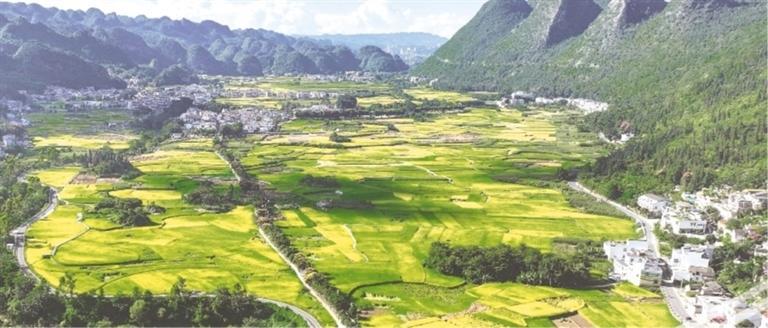
峰林潮涌展风采 金州大地焕新颜
Xin Lang Cai Jing· 2025-12-21 22:46
Core Viewpoint - The article highlights the significant economic and infrastructural development in Qianxinan, showcasing the region's progress in various sectors and its commitment to high-quality development during the 14th Five-Year Plan period [11][12]. Economic Growth - The regional GDP increased from 132.2 billion yuan at the end of the 13th Five-Year Plan to an estimated 147.67 billion yuan in 2024, with projections to exceed 150 billion yuan by the end of the 14th Five-Year Plan [12]. - Infrastructure investment has grown at an average annual rate of 12.3%, with industrial contributions to economic growth reaching 41.5% [12]. Industrial Development - Qianxinan has focused on four main industries: energy, basic materials and processing, new energy batteries and materials, and specialty light industry, aiming to build a competitive modern industrial system [13]. - The region has seen traditional industries expand, with electrolytic aluminum production capacity reaching 575,300 tons and aluminum processing output exceeding 21 billion yuan [14]. Agricultural and Tourism Advancements - The agricultural sector has introduced 19 nationally recognized specialty products, with significant contributions from brands like "Puan Red Tea" and "Xingren Job's Tears" [14]. - The creation of a national 5A scenic area at Wanfenglin and the integration of various tourism sectors have enhanced the region's tourism brand recognition [15]. Social and Environmental Initiatives - Qianxinan has invested over 1.22 billion yuan in infrastructure and industry development in poverty alleviation areas, ensuring stability in grain planting areas and maintaining a forest coverage rate of 63.19% [16]. - The region has achieved a 97.9% coverage rate for community elderly care services and ranks at the top tier in education levels within the province [16]. Future Outlook - As the 14th Five-Year Plan concludes, Qianxinan aims to continue its high-quality development trajectory, focusing on leveraging its advantages and pursuing modernization in line with national strategies [17].

零碳工厂有“亮点”
Xin Lang Cai Jing· 2025-12-21 22:46
Group 1 - Zhongtian Power Cable Co., Ltd. has established a zero-carbon factory that utilizes a comprehensive green management system, achieving a significant transition from "low-carbon manufacturing" to "zero-carbon operation" [1] - The factory's photovoltaic power station is expected to generate 3.376 million kWh in 2024, accounting for approximately 52% of its total electricity consumption, thereby increasing the share of renewable energy in total energy consumption to over 50% [1] - The factory employs a diversified approach to offset carbon emissions, including purchasing green power certificates and carbon credits, aiming for a carbon reduction of 91 tons through CCER transactions in 2024 [1] Group 2 - Jiangsu Hengtong High Voltage Submarine Cable Co., Ltd. promotes low-carbon transformation through a systematic approach that includes source reduction, process control, and end-of-pipe treatment [2] - The company has implemented over 60 energy-saving technological upgrades, achieving a 5% annual reduction in carbon emissions for the same output over the past five years [2] - A carbon emission management team was established in 2022, and an energy management system will be launched in July 2024 to enable real-time monitoring and data visualization of energy consumption [2] Group 3 - Wanbang Digital Energy Co., Ltd. has built a digital carbon management center that integrates energy consumption tracking, carbon emission accounting, and real-time data collection through smart meters and sensors [3] - The company has achieved a self-reduction of 81.83% in carbon emissions in 2024 through photovoltaic construction, green electricity procurement, and energy-saving technological upgrades, with a goal of 100% carbon offset through carbon credits and green certificates [3] Group 4 - Jiangsu Botuo New Building Materials Co., Ltd. aims to become a zero-carbon factory by optimizing energy structure and resource recycling, having built a 1.6 MW distributed photovoltaic power project expected to generate 1.93 million kWh in 2024 [5] - The company has replaced traditional coal-fired boilers with biomass boilers and developed technologies for recycling waste concrete, achieving 100% waste disposal and zero solid waste emissions [5] - The company actively promotes material innovation by utilizing industrial waste to replace natural raw materials, enhancing the environmental attributes of its products [5] Group 5 - Envision Energy Co., Ltd. launched a green supply chain project in 2022 with three sustainability goals: zero negative corporate social responsibility events, 100% carbon assessment, and 100% green electricity production [6] - The company has provided carbon management training to over 200 core suppliers, helping them identify carbon emission hotspots [6] - Envision aims to achieve 100% green electricity usage among core suppliers by 2028 through enhanced collaboration and innovative models [6]
【“十四五” 迈向“十五五”】 改革开放步履铿锵——甘肃省加快塑造高质量发展新动能新优势
Xin Lang Cai Jing· 2025-12-21 02:12
Core Viewpoint - Gansu Province is accelerating the creation of new momentum and advantages for high-quality development through deepened reforms and expanded openness, aiming for significant progress in the "14th Five-Year Plan" and beyond into the "15th Five-Year Plan" [15][42]. Group 1: Economic Development and Reforms - Gansu's state-owned enterprises have achieved an average annual industrial output growth rate of 21.5% during the "14th Five-Year Plan," contributing to 46.5% of the province's industrial growth [25]. - The province has seen a cumulative tax revenue exceeding 100 billion yuan, an increase of nearly 33 billion yuan compared to the "13th Five-Year Plan" period [25]. - Key projects in the chemical and energy sectors, such as the construction of the Lingtai Power Plant, are indicative of Gansu's focus on enhancing its energy infrastructure [14][12]. Group 2: Export Growth and Agricultural Products - In the first ten months of this year, Gansu's fresh apple exports reached 430 million yuan, with products being shipped to 14 countries including Vietnam and Australia [28]. - A total of 361 types of Gansu's specialty agricultural products have been exported to 131 countries, with a total export value of 13.28 billion yuan [30]. - The province's logistics sector is integrating with international trade, facilitating the export of various products including medicinal herbs and fruits [31]. Group 3: Business Environment and Competitiveness - The number of enterprises engaged in import and export activities in Gansu has reached 1,548, showing a year-on-year increase [34]. - Gansu has implemented innovative customs clearance processes, significantly reducing the time for importing copper concentrate from nearly 200 hours to under 30 hours, saving companies over 100 million yuan [36]. - The province is enhancing its business environment through various reforms, including the establishment of a unified mobile government service platform and reducing the time required for business registration to one working day [38].
73岁普京承认正在恋爱;北京一副局长送外卖,亲身体会焦虑;山西宣布:废除烟花爆竹“禁放令”;两批爱泼斯坦案文件被公开丨每经早参
Mei Ri Jing Ji Xin Wen· 2025-12-20 23:58
Group 1 - Russian President Putin acknowledged being in a relationship during a public event, which is a rare personal disclosure from him [10] - The World Trade Organization reported that artificial intelligence could boost global trade by 34% to 37% by 2040, contingent on supportive policies [10] - The U.S. Department of Justice released additional court documents related to Jeffrey Epstein, with over 550 pages redacted [11] Group 2 - China's central bank will issue commemorative coins and banknotes starting December 22, including one banknote and several coins, all recognized as legal tender [4] - The Chinese government in Fujian province has launched a financial support plan for technology innovation, aiming for a 10% annual growth in loans for technology-related industries from 2025 to 2027 [5] - The online travel booking platforms reported a significant increase in flight bookings to Hainan for the upcoming New Year holiday, with a 10% year-on-year increase [6] Group 3 - The Chinese company Huawei announced a price reduction for its foldable phone model Pura X, with discounts of 600 yuan and 800 yuan for different versions [13] - The Chinese company Moer Thread unveiled its fifth-generation GPU architecture "Huagang," set to enter mass production next year, along with several AI and graphics products [15] - Xiaomi has allocated over 100 million yuan in subsidies to its nationwide car dealership network, supporting new store constructions [19] Group 4 - The world's first commercial supercritical carbon dioxide power generation unit has successfully commenced operations in Guizhou, marking a significant advancement in clean energy technology [21] - The first official license plate for L3-level autonomous driving has been issued in Chongqing, indicating a milestone in the commercialization of autonomous vehicle technology [22]




中国产业经济行业 现状格局与投资规划分析报告2026年版
Sou Hu Cai Jing· 2025-12-20 13:41
Core Insights - The report provides a comprehensive analysis of the current state and future prospects of various industries in China, focusing on investment opportunities and macroeconomic factors influencing these sectors [3][4][5]. Group 1: Macroeconomic Environment - The report discusses the macroeconomic environment for industrial investment in China, including policies, economic growth, and foreign direct investment trends [3][4]. - It highlights the GDP growth forecast for 2025, indicating a positive outlook for economic expansion [3]. - The analysis includes fixed asset investment scale from 2020 to 2025, showing significant growth trends [3][4]. Group 2: Industry-Specific Investment Opportunities - The real estate sector is analyzed for its investment environment, including policy impacts and market conditions, with a focus on urban complexes and tourism real estate as key opportunities [5][6]. - The internet industry is identified as a strategic emerging sector, with investment opportunities in mobile payment and e-commerce [5][6]. - The energy sector is highlighted for its investment potential, particularly in renewable energy resources and processing [6][7]. Group 3: Mergers and Acquisitions - The report outlines the trends in mergers and acquisitions within various industries, noting increased regulatory scrutiny and the rise of private equity as a driving force [4][5]. - It discusses the active merger activities in cultural media and real estate sectors, indicating a dynamic market environment [4][5]. Group 4: Emerging Industries - New energy and new materials industries are emphasized for their growth potential, supported by government policies and increasing market demand [15][16]. - The biotechnology sector is also highlighted, with a focus on investment opportunities arising from policy support and market trends [15][16]. Group 5: Regional Investment Analysis - The report provides a detailed analysis of investment environments across different regions in China, identifying specific opportunities in provinces like Guangdong and Jiangsu [20][21]. - It emphasizes the importance of regional characteristics in shaping investment strategies and opportunities [20][21].
山东省属国资国企深化改革推动高质量发展 省属控股上市公司总市值超1.2万亿元
Da Zhong Ri Bao· 2025-12-20 00:55
Group 1 - The Shandong provincial government has introduced three new state-owned listed companies this year, bringing the total to 53, with a total market value exceeding 1.2 trillion yuan, including three companies valued over 100 billion yuan [1] - As of November 2023, state-owned enterprises in Shandong reported total assets of 5.7 trillion yuan, with operating revenue of 2.3 trillion yuan and total profits of 868.6 billion yuan, maintaining strong performance nationally [1] - The provincial government is focusing on cultivating first-class enterprises, with four state-owned enterprises recognized as world-class industry leaders and 22 included in the "Double Hundred Enterprises" list, leading in several categories nationally [1] Group 2 - In July 2023, the provincial state-owned assets supervision and administration commission initiated a "New Growth Action" targeting strategic emerging industries, selecting 249 projects for potential support, with 170 projects set for incubation [2] - Shandong state-owned enterprises currently possess 78 national-level R&D platforms and have undertaken 487 major scientific research projects since the 14th Five-Year Plan, ranking first nationally [2] - From January to November 2023, R&D expenditure by state-owned enterprises reached 42 billion yuan, leading among provincial-level regulated enterprises [2] Group 3 - The state-owned assets commission has been optimizing the industrial structure of state-owned enterprises, with revenue from strategic emerging industries reaching 479.66 billion yuan in the first three quarters of 2025, a year-on-year increase of 42.26% [3] - The proportion of revenue and investment from strategic emerging industries has increased by 6.2 and 1.3 percentage points respectively compared to the end of the previous year [3] - The provincial government has completed major reform tasks at the provincial level, focusing on reducing management structures and personnel in state-owned enterprises by over 8% [3]
四点半观市 | 机构:中国利润增长的最大潜力集中在科技行业
Shang Hai Zheng Quan Bao· 2025-12-19 12:53
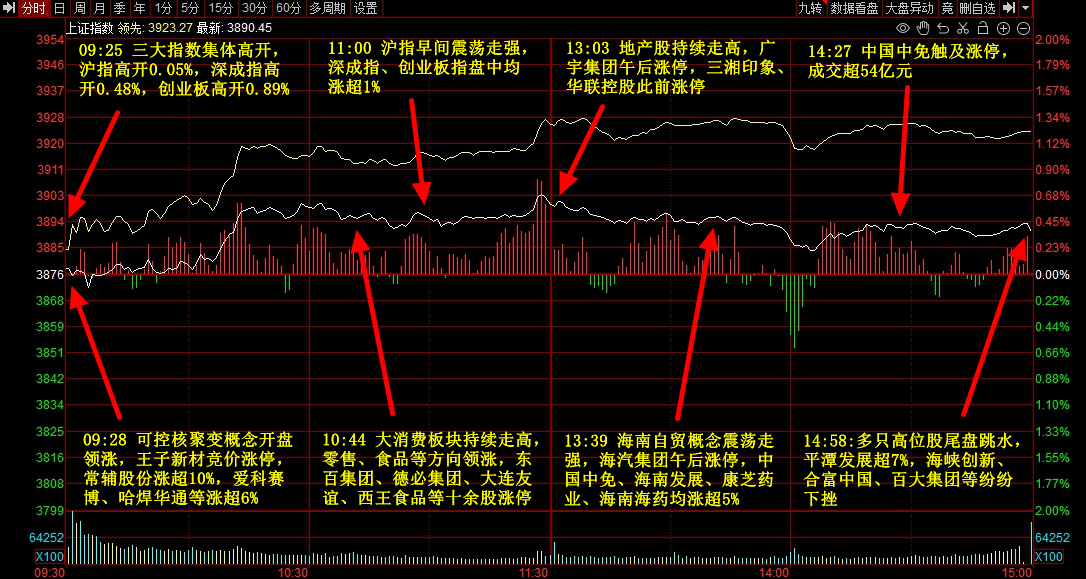
来源:上海证券报·中国证券网 12月19日,A股三大指数震荡反弹,深成指、创业板指盘中一度涨超1%。截至收盘,上证指数报 3890.45点,涨0.36%;深证成指、创业板指分别涨0.66%、0.49%。沪深北三市全天成交17487亿元,较 上个交易日放量719亿元。 12月19日,日韩市场主要股指收盘上涨。日经225指数上涨1.03%,报49507.21点,本周累计下跌 2.61%。韩国综合指数收盘上涨0.65%,报4020.55点,本周累计下跌3.52%。 12月19日,中证转债指数收涨0.38%,报485.28点。嘉美转债涨20%,华体转债涨13.45%,惠城转债涨 9.53%;博瑞转债跌11.86%,金钟转债跌6.19%,英特转债跌3.35%。 【资金风向标】 Choice数据显示,12月19日,资金净流入额排名前十的个股依次是雪人集团、N优迅、山子高科、航天 发展、中国中免、永辉超市、中国平安、赣锋锂业、航天动力、均胜电子。其中,优迅股份上市首日获 净流入12.95亿元。 【机构观点】 法国巴黎资产管理首席市场策略师Daniel Morris在《2026投资展望》中称,随着人工智能革命持续推动 大规模 ...
华阳股份(600348.SH):钠离子固态电池已纳入公司规划
Ge Long Hui· 2025-12-19 10:50
格隆汇12月19日丨华阳股份(600348.SH)在投资者互动平台表示,公司密切关注行业技术发展趋势,钠 离子固态电池已纳入公司规划。 ...

A股五张图:偷袭!
Xuan Gu Bao· 2025-12-19 10:32
Market Overview - The market experienced a slight collective rise, with indices such as the Shanghai Composite, Shenzhen Component, and ChiNext increasing by 0.36%, 0.66%, and 0.49% respectively, while over 4,400 stocks rose and only about 900 declined [1]. Nuclear Fusion Sector - Trump Media Technology Group and TAE Technologies announced a binding merger agreement, leading to a nearly 42% surge in Trump Media's stock and a positive response in U.S. nuclear fusion stocks [4][7]. - The nuclear fusion sector in A-shares opened strong, with stocks like Wangzi New Materials and others hitting the daily limit [4][8]. - The nuclear fusion sector ultimately closed up by 3.35% after initially rising over 4% [8]. Aerospace Sector - The commercial aerospace sector strengthened again, with stocks like Huati Technology and others achieving consecutive gains [12]. - The sector was buoyed by U.S. President Trump's executive order aimed at enhancing America's "space advantage," which included increased R&D and private sector investment [12]. Education Sector - The education sector saw a sudden surge, with stocks like Xinkai Pu and others collectively rising, driven by news of Alibaba's potential product launch in the education space [13][16]. - The education sector ultimately closed up by 1.67% after an intraday rise exceeding 2% [16]. Fujian Local Stocks - Fujian local stocks rebounded strongly, with stocks like Luyan Pharmaceutical and others achieving consecutive gains [18]. - The sector saw an overall increase of 2.86% by the end of the trading day, despite a late pullback [19].