电商平台

Search documents
致马云:关于天猫超市售假及维权困境的实名诉求
Sou Hu Cai Jing· 2025-07-14 01:18
Core Viewpoint - The article highlights consumer dissatisfaction with Alibaba's Tmall Supermarket, particularly regarding counterfeit products and inadequate customer service responses, leading to a call for accountability and better consumer protection [1][4][7]. Group 1: Consumer Experience - A long-term consumer of "Xinshi Tang" Yuling Gao purchased counterfeit products from Tmall Supermarket, which deviated significantly from the expected quality and characteristics [3]. - The consumer experienced physical discomfort after consuming the counterfeit product and faced unhelpful responses from customer service, which insisted the product was compliant [3][4]. - The article mentions multiple instances of other consumers facing similar issues with counterfeit products and poor customer service, indicating a systemic problem within the platform [4]. Group 2: Customer Service Issues - Public data reveals that as of May 28, 2025, Tmall's complaint response rate was only 5.53%, and the completion rate was 5.41%, ranking at the bottom among major e-commerce platforms [4]. - The article criticizes the customer service team's dismissive responses, which include phrases like "the product is fine" and "the inspection report is compliant," reflecting a lack of genuine support for consumers [4][5]. Group 3: Call for Accountability - The consumer has initiated formal complaints through platforms like 12315 and Black Cat Complaints, indicating a willingness to pursue legal action if necessary [5]. - The article emphasizes the need for Alibaba to uphold its commitments to consumer protection, particularly regarding the "genuine product guarantee" promised to VIP members [7]. - The author urges Alibaba's leadership to recognize the importance of consumer trust and social responsibility over mere financial metrics [7].



“反内卷”已成投资主线 机构聚焦“硬核竞争力”
Shang Hai Zheng Quan Bao· 2025-07-11 18:02
Group 1 - The "anti-involution" investment theme is gaining attention, with a focus on companies that have technological barriers and resource integration capabilities, suggesting a strategy of "winning before seeking battle" [1][3] - Emerging sectors such as photovoltaic, lithium batteries, and electric vehicles are favored over traditional industries like steel, which are experiencing profit-taking [2][3] - The performance of the steel sector has seen a net redemption of 729 million yuan since June 23, while photovoltaic ETFs have attracted a net subscription of 2.082 billion yuan during the same period [2] Group 2 - The investment outlook emphasizes the importance of downstream demand and the profitability elasticity of companies, with a focus on industries that can benefit from improved demand [3][4] - Companies with strong technological upgrades, innovation capabilities, and solid past performance are prioritized for investment, highlighting the significance of company quality [4] - The Chinese renewable energy sector is transitioning from scale expansion to quality competition, driven by global demand growth and technological innovation [3]
出海速递 | 锦江国际赴港上市:出海十年,为何至今难盈利?/Manus官网显示“地区不可用”,社交账号清空
3 6 Ke· 2025-07-11 11:20
Group 1 - The core viewpoint of the article discusses the challenges faced by Jinjiang International in achieving profitability despite its ten years of international expansion efforts [2] - Jinjiang International is seeking to raise funds through its Hong Kong listing while pursuing a global strategy, particularly in Southeast Asia [2] - The company is confronted with issues such as cultural conflicts, management shortcomings, and resource dispersion, which hinder its growth and profitability [2] Group 2 - The article highlights the significance of the mutual visa exemption agreement between China and Malaysia, effective from July 17, 2025, facilitating travel for various purposes [6] - The potential impact of U.S. tariffs on imports from Canada, announced by President Trump, could affect trade dynamics and economic relations [6] - The article mentions the role of KrASIA in enhancing the global brand presence of Chinese companies through English media services [6]

大消费时代来临,平台将成为消费升维关键策动方
Huan Qiu Wang Zi Xun· 2025-07-10 08:10
Group 1 - The core viewpoint emphasizes the importance of activating new consumption and boosting domestic demand to create a virtuous cycle of "demand-supply-employment-income," which is crucial for high-quality economic development [1] - The policy logic indicates that activating new consumption is a strategic choice to respond to economic cyclical fluctuations and cultivate new economic growth drivers [1][2] - The current consumption market in China is transitioning from survival-oriented to development-oriented, and from material-based to service-oriented, necessitating a more efficient supply-demand matching mechanism [1][2] Group 2 - The central government has called for the construction of a high-quality, efficient, and competitive modern circulation system, guiding the innovative development of e-commerce platforms [2] - Platforms like Taobao Flash Purchase are responding to policy calls by innovating and investing in subsidies to create an immediate supply system of "goods + services," addressing deep-seated contradictions in the e-commerce industry [2][3] Group 3 - Taobao Flash Purchase launched a subsidy plan totaling 50 billion yuan, which has shown significant results within a week, with over 4,124 restaurant brands reaching historical peaks in business activity [3][4] - The subsidy program has led to a doubling of order volumes for 2,318 non-food categories, with daily orders surpassing 80 million and active users reaching 200 million [3][4] Group 4 - The 50 billion yuan subsidy plan serves as a strategic engine for elevating platforms to large-scale consumer e-commerce, creating a positive cycle of "platform benefits - user gains - merchant growth" [4] - The platform's direct subsidy model ensures merchants' profit margins, allowing them to invest in quality improvement and digital transformation, shifting the industry focus from price competition to value competition [4] Group 5 - Taobao Flash Purchase's innovative practices serve as a model for the e-commerce industry, acting as a stabilizer for the consumption market, a conduit for economic growth, a leader in consumption upgrades, and a promoter of the digital economy [4][6] - The platform's approach integrates resources and fosters a collaborative ecosystem, moving from a zero-sum game to a win-win situation, which is essential for high-quality economic development [6][7] Group 6 - E-commerce platforms are positioned as core carriers of the modern circulation system, tasked with significant responsibilities in the current historical context [7] - The expectation is for more platforms to innovate and integrate resources, enhancing consumption potential and improving circulation efficiency through digital transformation [7]
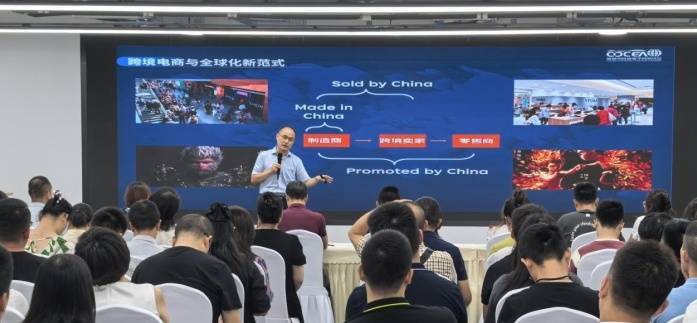
助力“成都造”扬帆出海 工业企业与电商平台对接交流会成功举办
Sou Hu Cai Jing· 2025-07-09 14:26
Group 1 - The event aimed to bridge the gap between industry and digital economy, promoting "Chengdu-made" products through e-commerce channels to expand domestic and international markets [2][3] - Chengdu has established a modern industrial system covering 38 major industrial categories and 184 subcategories, with over 5,000 large-scale industrial enterprises, ranking eighth in comprehensive manufacturing strength nationwide [2] - The event highlighted the importance of e-commerce platforms as key hubs connecting production and consumption, essential for activating market vitality and broadening sales channels [2] Group 2 - The Chengdu Cross-border E-commerce Platform Association provided systematic promotion regarding overseas trends, paths, services, and guarantees to guide enterprises in going global [3] - Major e-commerce players like JD Group and Taotian Group presented detailed introductions to their business models and cooperation processes, facilitating direct connections for enterprises with leading platforms [3] - The event successfully created a face-to-face communication platform between industrial enterprises and e-commerce platforms, enhancing the connection between supply, circulation, and consumption [3]

优哩哩(YULLILY):重塑全球电商格局的短视频数智生态
Jin Tou Wang· 2025-07-09 07:19
Industry Overview - The integration of short videos and e-commerce is an irreversible trend in the digital economy, with issues like traffic monopoly, merchant competition, and ecological imbalance becoming increasingly prominent [1][3] - In 2023, short video users accounted for 94.8% of global internet users, and the global short video market is expected to exceed $2.2 trillion by 2035 [2] - Live e-commerce, which started in China in 2016, reached a transaction volume of 3.5 trillion RMB in 2022, contributing 80% of the growth in the e-commerce sector [2] Challenges in the Industry - Three major contradictions are intensifying: 1. Traffic monopoly where top creators and platforms control over 90% of traffic, making it difficult for new creators to succeed [3] 2. Merchant difficulties due to price wars squeezing profits, leading to a decline in product quality and consumer experience [3] 3. Ecological imbalance caused by MCN institutions controlling resources and creating a single monetization channel, resulting in a vicious cycle of "involution" [3] Company Positioning - YULLILY, headquartered in Singapore, positions itself as a "global short video smart e-commerce platform" with the mission of "linking excitement and illuminating life" [4] - The platform aims to redefine the future of short video e-commerce by integrating content creation, product trading, and social interaction into a value-interconnected ecosystem [4] Strategic Directions - YULLILY targets industry pain points with three strategic directions: 1. Fair traffic distribution by implementing a mechanism that allocates 90% of traffic to new creators [5] 2. S2K2C model innovation that connects supply chain (S), key opinion leaders (K), and consumers (C) to reconstruct the supply-communication-consumption loop [5] 3. Technology democratization through AI digital humans and smart algorithms to lower the barriers for entrepreneurship [5] Core Competitiveness - The HERO AI system is YULLILY's core advantage, reconstructing the relationships between people, goods, and venues through four technologies: 1. AI digital human live streaming that supports over 30 languages and operates 24/7, addressing high labor costs and geographical limitations [6] 2. AIGC content engine that automatically generates multimedia content, accelerating brand globalization [6] 3. 4.0 smart algorithms that analyze user behavior for personalized recommendations [6] 4. Multi-modal interaction providing immersive shopping experiences [6] Innovative Business Model - YULLILY's unique S2K2C business model creates a win-win closed loop: 1. Supply side (S): Carefully selected high-quality products from a robust supply chain [7] 2. Creator side (K): Cultivating ordinary individuals into key opinion leaders to earn commissions through short videos and live streaming [7] 3. Consumer side (C): AI matches content with user interests, allowing for shopping during entertainment [7] Global Expansion Strategy - YULLILY employs a phased strategy for global expansion: 1. Southeast Asia as a foundation, leveraging regional price differences [9] 2. Expansion into the Americas by replicating successful models and enhancing logistics efficiency [9] 3. Gradual entry into Western Europe, Australia, and Africa, adapting to local cultures and consumption habits [9] Vision for Inclusivity - YULLILY aims to create a "universal light entrepreneurship platform" focusing on three aspects: 1. Light assets with no inventory risk [10] 2. Light operations through AI-managed live streaming and training [10] 3. Light management with transparent commission structures for creators [10] Future Plans - YULLILY's long-term vision extends beyond business to include ecological and social responsibilities: 1. Expanding into short films and documentaries to build a creator ecosystem [11] 2. Establishing a charity foundation to support education and healthcare projects [11] 3. Aiming to become a global leader in the industry and set standards for the digital economy [11]
专题报告:“反内卷”及其对黑色板块影响
Wu Kuang Qi Huo· 2025-07-09 02:16
专题报告 2025-07-09 "反内卷"及其对黑色板块影响 报告要点: 我们认为本轮"反内卷"并非是简单的再来一次"供给侧改革",其与 2016 年附近的"供给侧 改革"在面临的主要矛盾上存在显著差异。前者主要解决的是无序价格战、不正当竞争、地方 保护主义等问题,为的是"高质量发展";后者则主要聚焦上游原材料的"过剩产能"问题。 此外,二者在聚焦的产业上也明显不同。前者聚焦光伏、锂电池、新能源汽车、电商平台等新 兴行业;后者则着力于钢铁、煤炭等传统的上游行业。 对于黑色板块而言,我们认为当前阶段,"反内卷"情绪的影响大于实质。后续影响是否会出 现实质化,取决于需求端政策的发力情况。但在短期预期难以证伪的情况下,叠加 7 月份宏观 事件的频繁扰动,预计盘面价格波动将加剧,建议谨慎参与。 陈张滢 黑色研究员 从业资格号:F03098415 交易咨询号:Z0020771 0755-23375161 chenzy@wkqh.cn 黑色金属研究 | 黑色 "反内卷"及其对黑色板块影响 2025 年 7 月 1 日,中央财经委员会第六次会议在京召开,会议研究了纵深推进全国统一大市 场建设、海洋经济高质量发展等问题。 " ...
读研报 | “反内卷”,市场这样划重点
中泰证券资管· 2025-07-08 09:54
Core Viewpoint - The recent discussions on "anti-involution" are driven by policy guidance and market expectations, with a focus on promoting product quality and orderly competition while addressing low-price chaos in various industries [2] Group 1: Impacted Industries - The industries most affected by the current "anti-involution" include upstream raw materials related to real estate and infrastructure (such as coal, steel, and cement), equipment manufacturing overlapping with new productive forces (including automotive, electrical machinery, and electronic device manufacturing), and certain downstream consumer goods sectors (such as pharmaceuticals and food manufacturing) [3] - Emerging industries may experience a greater impact from "anti-involution," as recent government reports emphasize the need to cultivate new and future industries while addressing homogeneous competition in sectors like new energy vehicles and photovoltaics [4] Group 2: Policy Implementation and Observations - The consensus is that the approach to "anti-involution" will be moderate, considering the significant presence of private enterprises in affected industries, with many sectors having a high proportion of private companies [6] - Employment concerns are also crucial, as the new industries most affected by "involution" employ a substantial number of workers, making abrupt capacity reductions potentially harmful to job stability [6] - The market is currently in a wait-and-see mode regarding the form and intensity of "anti-involution" policies, with future market movements dependent on clearer policy signals [7] Group 3: Need for Comprehensive Policy Support - High-intensity capacity reduction may require comprehensive policy support, balancing social stability and the specifics of capacity overhang, including timelines for exit and risk mitigation strategies [8] - Observations should not only focus on supply-side changes but also on demand-side updates, as changes in supply structure are necessary but not sufficient for industry recovery [8]

两个月突破8000万单,淘宝闪购凭什么拿下六成市场增量
Bei Jing Shang Bao· 2025-07-08 07:27
Core Insights - Taobao Flash Sale has achieved record-breaking growth, with daily orders exceeding 80 million and over 200 million active users within two months of its launch [1][2] - The platform captured approximately 60% of the new market order growth, indicating a significant shift in the consumer market landscape [1][3] Market Performance - Taobao Flash Sale's daily orders surged from over 40 million at the end of May to over 80 million by early July, contributing to a total market increase from 100 million to 200 million daily orders [1][2] - Non-food orders accounted for over 13 million, showcasing the platform's strong ability to drive traffic and conversion beyond traditional food delivery [2] Consumer Trends - The platform's expansion into various categories has led to significant order growth across multiple sectors, with categories like grains and oils increasing by 489% and snacks by 388% [2][3] - The integration of online and offline services has created a new consumption experience, reflecting the evolving consumer demand for multi-dimensional and cross-scenario purchasing [3][4] Strategic Initiatives - Taobao Flash Sale's rapid growth is attributed to its alignment with the "big consumption" trend and the integration of resources from various Alibaba businesses, enhancing operational efficiency [3][4] - The platform has announced a 50 billion yuan subsidy to support users and merchants, which has resulted in substantial sales growth for both chain restaurants and small businesses [5] Business Model - The platform's approach to subsidies aims to stimulate consumer demand without forcing merchants into price wars, thereby fostering a healthier competitive environment [5] - The combination of food, retail, and service sectors under the Taobao Flash Sale model reflects a strategic shift towards an ecosystem that meets comprehensive consumer needs [4][5]
拼多多100w+爆款,揭开了行业的价格迷雾
阿尔法工场研究院· 2025-07-07 15:04
Core Viewpoint - The article argues that consumer downgrade is a myth, while information upgrade is the reality, highlighting how Pinduoduo exposes the true prices of products [1] Group 1: Cost and Pricing Insights - A sunscreen jacket priced at 299 yuan has a production cost of only about 40 yuan, with materials and labor costs detailed [2] - Pinduoduo has seen explosive sales of affordable sunscreen jackets, with sales figures reaching over 100,000 units, indicating a shift in consumer behavior towards value-based purchasing [3][10] - The cost of luxury goods, such as a 10,000 yuan handbag, can be as low as 100-200 yuan, revealing significant brand markups [6] Group 2: Changing Consumer Behavior - Consumers are increasingly moving away from the Veblen effect, focusing on cost-effectiveness rather than brand prestige, even among high-net-worth individuals [7] - The rise of Pinduoduo has led to a greater awareness among Chinese consumers of the strength and stability of the domestic manufacturing system [8] Group 3: Supply Chain and Business Model - Pinduoduo's model emphasizes direct manufacturer-to-consumer sales, eliminating middlemen and reducing marketing costs, which allows for lower prices and higher sales volumes [22][23] - The platform's low commission rates encourage merchants to offer quality products without compromising on materials and craftsmanship [23] - Pinduoduo's "hundred billion subsidy" initiative aims to support merchants and enhance local industry digital transformation, with a commitment to invest over 100 billion yuan in the next three years [28][31] Group 4: Industry Transformation - Pinduoduo is reshaping the domestic consumption market by integrating local manufacturing into the supply chain, creating jobs and revitalizing local economies [32][34] - The platform focuses on product value and real pricing rather than brand storytelling, positioning itself as an organizer of the supply chain [33] - As a result, consumers are discovering high-quality, affordable products on Pinduoduo, while manufacturers are realizing that success comes from genuine product quality rather than marketing [35][36]