
医美

Search documents
童颜针“九国杀”在即,爱美客如何直面博弈
Hua Er Jie Jian Wen· 2025-08-19 08:48
Group 1 - The core viewpoint is that Aimeike (300896.SZ) is facing increased pressure in the medical beauty industry, with significant declines in revenue and net profit in the first half of the year [1] - In the first half of 2023, Aimeike's revenue and net profit attributable to shareholders reached 1.299 billion yuan and 789 million yuan, representing year-on-year declines of 21.59% and 29.57% respectively [1] - The main products, including injection solutions and gels, saw revenues drop by nearly 25% year-on-year, primarily due to a slowdown in consumer spending and increased competition from newly approved products [1] Group 2 - Aimeike's acquisition of the aesthetic product AestheFill is a key focus for the second half of the year, following the completion of a $190 million acquisition of 85% of a Korean medical beauty company [2] - After terminating the agreement with *ST Suwu (600200.SH), Aimeike regained exclusive distribution rights for AestheFill in mainland China, which is expected to boost its revenue [2] - AestheFill generated over 400 million yuan in sales in mainland China from April 2024 to March 2025, indicating potential for significant revenue growth in the second half of the year [3] Group 3 - The increasing number of approved aesthetic products may lead to price reductions in the second half of the year, creating a competitive pricing environment [3] - Aimeike is currently the only upstream medical beauty materials company with both the RuBaiTianSheng and AestheFill products, which may allow it to leverage price adjustments to increase sales volume [3]
业绩滑坡、代理权暗战、行业竞争加剧:爱美客遇上市来最强考验
2 1 Shi Ji Jing Ji Bao Dao· 2025-08-19 07:53
Core Viewpoint - Aimeike (300896.SZ), one of the "three swordsmen" in the medical beauty industry, is facing its most severe performance downturn since its listing, with a significant decline in revenue and net profit in the first half of 2025 [2][3]. Financial Performance - In the first half of 2025, Aimeike reported revenue of 1.299 billion yuan, a year-on-year decrease of 21.59%, and a net profit of 789 million yuan, down 29.57% year-on-year, marking the first negative growth since its A-share debut in September 2020 [2][4]. - The company's revenue growth rates from 2021 to 2023 were 104.13%, 33.91%, and 47.99%, respectively, but have dropped to single digits in 2024, with projected growth rates of 5.45% for revenue and 5.33% for net profit [4]. Product Performance - Aimeike's two main product lines experienced significant declines in the first half of 2025: the solution injection products generated revenue of 744 million yuan, down 23.79%, while the gel injection products earned 493 million yuan, down 23.99% [5][4]. - The competitive landscape has intensified, particularly for the "Haitai" and "Ruhbai Tianzi" products, with new entrants in the market leading to increased pressure on sales [7]. Market Dynamics - The medical beauty industry is undergoing a transformation, shifting from rapid expansion to a focus on quality and effectiveness, with a slowdown in overall market growth [2][9]. - The Chinese medical beauty market grew from 99.3 billion yuan in 2017 to 189.2 billion yuan in 2021, but the high-growth phase is fading, leading to intensified competition and price pressures [9]. Strategic Moves - Aimeike has acquired an 85% stake in REGEN Biotech for $190 million to enhance its portfolio in regenerative injection products, although it faces challenges regarding distribution rights for key products [3][8]. - The company is also expanding into new areas, including biopharmaceuticals and chemical drugs, with ongoing projects such as the development of botulinum toxin and weight management injections [10][11]. Industry Outlook - The industry is expected to see a decline in prices for high-end products as competition increases, potentially leading to a more accessible "mass medical beauty" era [10]. - Aimeike's future growth will depend on its ability to navigate the competitive landscape and successfully implement its strategic adjustments [12].

医美巨头高增长“神话”破灭!营收利润双降超20%
Shen Zhen Shang Bao· 2025-08-19 07:22
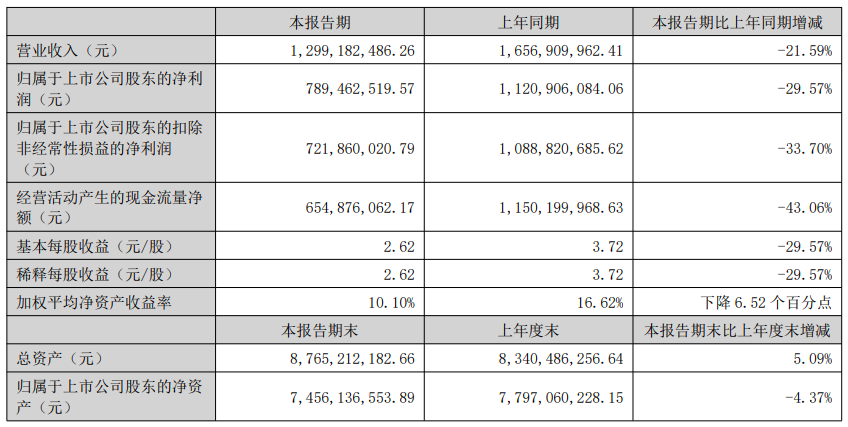
Core Viewpoint - Aimeike (300896) reported a significant decline in both revenue and profit for the first half of 2025, marking the first time since its IPO in 2020 that the company experienced such a downturn in both metrics [1][2] Financial Performance - The company's operating revenue for the first half of 2025 was 1.30 billion yuan, a decrease of 21.6% year-on-year [2] - The net profit attributable to shareholders was 789 million yuan, down 29.6% compared to the previous year [2] - The net profit after deducting non-recurring gains and losses was 721 million yuan, reflecting a 33.7% decline [2] - The net cash flow from operating activities plummeted by 43.06% to 655 million yuan [1][2] - Basic and diluted earnings per share both fell to 2.62 yuan, a decrease of 29.57% [2] - The weighted average return on equity dropped to 10.10%, down 6.52 percentage points from the previous year [2] Business Segment Performance - Revenue from solution-type injection products was 744 million yuan, down 23.79% year-on-year [3] - Revenue from gel-type injection products was 493 million yuan, a decline of 23.99% [3] - These two segments accounted for 95.2% of total revenue, indicating their critical role in the company's overall performance [1] Long-term Growth Trends - From 2021 to 2024, the company's revenue growth rate fell sharply from 104.13% to 5.45%, and net profit growth dropped from 117.81% to 5.33% [3] - The significant decline in the first half of 2025 reduced the five-year compound annual growth rate from over 50% at the time of listing to 18.7% [3] Gross Margin and Product Development - The gross margin fell below 94% for the first time since the 2022 semi-annual report, decreasing to 93.44% from 94.91% in the previous year [4] - In March 2025, the company acquired 85% of South Korea's REGEN for $190 million, gaining production rights for the "童颜针" (AestheFill) [4] - A new product, "医用含聚乙烯醇凝胶微球的交联透明质酸钠凝胶" (brand name: 嗗科拉), was launched in May 2025, expanding the product line [4] Legal and Financial Issues - Aimeike is facing a claim of 1.6 billion yuan due to a dispute over the agency rights for the "童颜针" product, which has raised concerns in the market [5] - The company reported goodwill of 1.594 billion yuan, accounting for 18.19% of total assets and 19.84% of net assets [5]
新氧发布Q2财报:轻医美连锁收入同比增长426%线下转型跨过拐点
Zhong Guo Jing Ji Wang· 2025-08-19 07:20
Core Insights - The medical beauty consumption market in 2024 is characterized by an increase in volume but a decrease in price, with 31 million consumers, a 10.7% year-on-year growth, and a 10% decline in average spending [1] - New Oxygen's chain business has experienced explosive growth, with a 381% year-on-year increase in customer visits and a 458% increase in service points [1][2] - The company is transitioning from traditional business models to a new chain model, which is expected to maintain high growth rates and offset declines in traditional services [3] Group 1: Market Trends - The medical beauty market is seeing a rational consumer decision-making process, with a growing demand for high-quality and cost-effective services [1] - The average spending per consumer in the medical beauty sector has decreased by 10% year-on-year [1] Group 2: Company Performance - New Oxygen has opened 31 stores across nine cities, with significant revenue growth in both first and second-tier cities, achieving a 643% increase in first-tier cities and a 99% increase in second-tier cities [2] - The gross margin of New Oxygen's stores has improved, with a 22% quarter-on-quarter increase, and 50% of stores achieving a gross margin exceeding 24% [2] Group 3: Financial Outlook - Despite the growth in the chain business, New Oxygen reported a net loss of 36 million yuan in the second quarter, with a 35.6% decline in revenue from its core information and appointment services [2] - The company anticipates that its light medical beauty chain business will reach between 150 million and 170 million yuan by the third quarter of 2025, representing a growth of 230.5% to 274.6% compared to the same period in 2024 [3]

医美龙头爱美客上半年净利润同比下降近三成,童颜针“争夺战”备受关注
Xin Lang Cai Jing· 2025-08-19 06:05
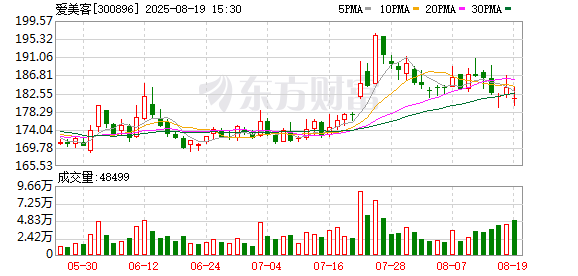
Core Viewpoint - Aimeike (300896.SZ), a leading player in the medical aesthetics industry, reported a significant decline in revenue and net profit for the first half of 2025, leading to a drop in stock price following the announcement [1][2]. Financial Performance - The company achieved operating revenue of 1.299 billion yuan, a year-on-year decrease of 21.59% [1]. - Net profit attributable to shareholders was 789 million yuan, down 29.57% year-on-year [1]. - The net profit after deducting non-recurring gains and losses was 722 million yuan, a decline of 33.70% [1]. - The net cash flow from operating activities was 655 million yuan, down 43.06% year-on-year [1]. - Basic and diluted earnings per share were both 2.62 yuan, a decrease of 29.57% [1]. - The weighted average return on net assets was 10.10%, down 6.52 percentage points from the same period last year [1]. Product Performance - Revenue from solution-type injection products was 744 million yuan, a decrease of 23.79% year-on-year [1]. - Revenue from gel-type injection products was 493 million yuan, down 23.99% year-on-year [1]. - Gross margins for solution-type and gel-type products were 93.15% and 97.75%, respectively [1]. Research and Development - The company invested 157 million yuan in R&D, an increase of 24.47% year-on-year [1]. - Several products, including botulinum toxin injections and lidocaine cream, are in the registration phase, while others are undergoing clinical trials [1]. Asset and Equity Position - As of the end of the reporting period, total assets were 8.765 billion yuan, an increase of 5.09% from the previous year [2]. - Net assets attributable to shareholders were 7.456 billion yuan, a decrease of 4.37% from the previous year [2]. Dividend Distribution - The board approved a profit distribution plan to pay a cash dividend of 12 yuan (including tax) for every 10 shares, with no bonus shares or capital reserve transfers [4]. Legal Matters - The company is involved in arbitration with *ST Suwu regarding the "Tian Yan Needle" and has taken steps to protect its interests in the ongoing legal dispute [5].

爱美客(300896):市场竞争加剧,上半年业绩承压
EBSCN· 2025-08-19 05:42
Investment Rating - The report maintains a "Buy" rating for the company [1] Core Views - The company reported a significant decline in revenue and net profit for the first half of 2025, with revenue at 1.3 billion yuan, down 21.6% year-on-year, and net profit at 790 million yuan, down 29.6% year-on-year [4][5] - The performance in the second quarter of 2025 was particularly impacted by a weak consumer market and increased competition, leading to a revenue decline of 25.1% year-on-year [5][6] - Despite the current challenges, the company has potential growth drivers through new product launches and acquisitions, particularly in the overseas market [7][9] Summary by Sections Financial Performance - For 1H2025, the company's revenue from solution products and gel products was 740 million yuan and 490 million yuan, respectively, both showing declines of 23.8% and 24.0% year-on-year [5] - The gross margin for 1H2025 decreased by 1.5 percentage points to 93.4%, while the net profit margin fell by 6.9 percentage points to 60.8% [6] - The company’s expense ratio increased by 10.1 percentage points to 28.9% in 1H2025, driven by higher sales, management, and R&D expenses [6][7] Future Outlook - The company has launched a new product, "嗗科拉," aimed at high-net-worth individuals, and completed the acquisition of REGEN Biotech, which is expected to enhance its product matrix [7] - The company’s A-type botulinum toxin product, Hutox®, is awaiting approval, and a new weight management injection is in clinical trials, indicating a robust pipeline for future growth [7][9] - The report projects a downward revision of revenue forecasts for 2025-2027, with expected revenues of 2.703 billion yuan, 3.103 billion yuan, and 3.476 billion yuan, reflecting a decrease of 16%, 19%, and 21% respectively [8] Valuation Metrics - The projected earnings per share (EPS) for 2025-2027 are 5.37 yuan, 6.01 yuan, and 6.69 yuan, with corresponding price-to-earnings (P/E) ratios of 34, 31, and 27 [8][10] - The report highlights the company's strong market position and potential for growth, maintaining a positive long-term outlook despite short-term challenges [9]
新氧科技(SY):Q3有季节性压力,但FY25增长目标信心不变
Haitong Securities International· 2025-08-19 05:11
Investment Rating - The report maintains an "Outperform" rating for the company with a target price of $10.28, while the current price is $3.74 [2][6]. Core Views - The company is facing seasonal pressures in Q3, but confidence in the FY25 growth target remains unchanged. The report anticipates a significant revenue increase in Q4 due to the release of pent-up consumer demand [4][5]. - The company’s offline medical beauty segment has shown strong growth, with revenue increasing by 427% year-on-year to 1.444 billion RMB in Q2, exceeding management's guidance [3][4]. - Despite a projected increase in revenue for FY25, the company is expected to incur a larger loss than previously forecasted, with losses now estimated to exceed 140 million RMB [5][6]. Financial Summary - For FY25, the company is projected to generate revenue of 1.546 billion RMB, reflecting a 5% increase from the previous year, while FY26 revenue is expected to rise significantly to 2.545 billion RMB, a 65% increase [2][9]. - The net profit for FY25 is forecasted to be a loss of 140 million RMB, with a projected recovery to a profit of 11 million RMB in FY26 [2][9]. - The gross margin is expected to decline to 49.3% in FY25 and further to 42.5% in FY26, indicating pressure on profitability [2][9]. Business Segment Insights - The offline medical beauty segment is expected to see Q3 revenue of 1.7 billion RMB, a 274% increase year-on-year, with a significant ramp-up anticipated in Q4 [4]. - The upstream product sales are projected to decline by 16% for FY25, while the POP business is expected to see a 38% decrease in revenue for the same period [4][5]. - The report highlights the company's strategy to open 10 new offline stores, despite the anticipated seasonal slowdown [4].
业绩“阵痛”挡不住爱美客出海决心:高毛利产品托底、销售网络密布,为何必须走出去?
Mei Ri Jing Ji Xin Wen· 2025-08-19 05:07
Core Viewpoint - The company Aimeike reported a decline in revenue and net profit for the first half of the year, attributed primarily to a significant acquisition of the Korean company REGEN, which is expected to impact short-term performance but aims for long-term growth in international markets [1][4][9]. Financial Performance - In the first half of the year, Aimeike achieved revenue of 1.299 billion yuan and a net profit of 791 million yuan, representing year-on-year declines of 21.59% and nearly 30% respectively [1]. - The acquisition of REGEN for approximately 1.386 billion yuan has led to a substantial cash outflow of 9.861 billion yuan in investment activities, nearly doubling year-on-year [4]. Product Performance - Despite the overall decline, the company’s high-margin products, such as the "Haitai" and "Ruhbai Tianzi," continue to support its performance, with gross margins for solution and gel injection products remaining high at 93.15% and 97.75% respectively [4][5]. - The "Haitai" series remains a leading product in the neck wrinkle repair market, maintaining a strong market presence despite competition [5]. Market Strategy - Aimeike is focusing on international expansion to avoid domestic market saturation and profit erosion, as indicated by its acquisition of REGEN [3][9]. - The company has established a robust B2B network with over 7,000 beauty institutions, enhancing its market penetration and customer loyalty [6][7]. Future Outlook - Aimeike's product pipeline is promising, with three major products currently in the review stage for market approval, including a high-end botulinum toxin product expected to capture a significant share of the domestic market [8]. - The domestic botulinum toxin market is projected to grow at a compound annual growth rate of over 15% from 2025 to 2030, indicating strong future demand [8].
爱美客:上半年营收下滑21.59%至12.99亿元,1.9亿美元收购韩国REGEN公司85%股权
Cai Jing Wang· 2025-08-19 04:46
Core Insights - The company reported a 21.59% decline in revenue for the first half of 2025, totaling 1.299 billion yuan, while net profit attributable to shareholders decreased by 29.57% to 789 million yuan [1] Group 1: Financial Performance - Revenue for the first half of 2025 was 1.299 billion yuan, reflecting a 21.59% decrease compared to the previous period [1] - Net profit attributable to shareholders was 789 million yuan, down 29.57% year-on-year [1] Group 2: Strategic Initiatives - The company is strategically investing in overseas markets to enhance its core competitiveness [1] - A major investment included the acquisition of 85% of South Korea's REGEN company for 190 million USD [1] Group 3: Product Development - REGEN, established in 2000, is the first in South Korea and the third globally to obtain registration for polylactic acid-based dermal fillers [1] - The products AestheFill and PowerFill, which contain PDLLA microspheres and sodium carboxymethyl cellulose, have received regulatory approval in 35 and 23 countries respectively [1] - A new product, "Medical Polyvinyl Alcohol Gel Microsphere Cross-linked Sodium Hyaluronate Gel" (brand name: Gakela), was launched in May for treating mild to moderate chin retrusion [1]
单季度业绩降幅扩大 爱美客股价低开1.54%
Xin Hua Cai Jing· 2025-08-19 01:39
Group 1 - The core viewpoint of the article highlights that Aimeike's financial performance in the first half of 2025 shows significant declines in revenue and profit, indicating challenges in the market [1][2] - Aimeike reported a revenue of 1.299 billion yuan for the first half of 2025, a year-on-year decrease of 21.59%, and a net profit of 789 million yuan, down 29.57% [1] - The company's cash flow from operating activities also decreased by 43.06% to 655 million yuan, reflecting a broader trend of declining financial health [1] Group 2 - In the second quarter of 2025, Aimeike's revenue fell by 25.11% to 636 million yuan, with net profit dropping 41.75% to 346 million yuan [1] - The report indicates that the medical beauty industry in China is experiencing a transformation from scale expansion to a focus on quality and effectiveness, driven by increased competition and consumer demand [2] - The market is seeing a notable differentiation between high-end and mass markets, with new injectable products becoming the focal point of the industry [2]