茶饮

Search documents
05后的第一杯酒,可能是奶茶店里买的
东京烘焙职业人· 2025-10-23 08:37
Core Insights - The article discusses the emerging trend of "micro-drinking" among young consumers, highlighting how brands like "Mixue Ice Cream" and "Chayan Yuese" are adapting to this trend by expanding their product offerings to include alcoholic beverages [3][6][8]. Group 1: Market Trends - The rise of "micro-drinking" is characterized as a business focused on emotional value, providing consumers with psychological and emotional satisfaction rather than just selling alcohol [6]. - Young consumers are increasingly rejecting traditional drinking culture, favoring personal enjoyment and comfort over the pressure of social drinking [8]. - The success of brands like Rio and Helen's Little Bar indicates that "micro-drinking" has become a significant lifestyle choice for young people [8]. Group 2: Brand Strategies - Mixue Ice Cream is expanding into the beer market by acquiring a majority stake in the fresh beer brand "Fulu Family," aiming to leverage its supply chain efficiency to offer affordable beer [10][12]. - Chayan Yuese is developing a cultural-driven approach by launching a sub-brand for alcoholic tea drinks, focusing on emotional experiences and cultural symbols [17][19]. - Both brands are targeting different consumer segments: Mixue focuses on cost-effective solutions, while Chayan Yuese emphasizes cultural experiences and high-quality products [10][17]. Group 3: Financial Performance - Mixue Ice Cream reported a revenue of 14.875 billion yuan, with 97.4% coming from sales to franchisees, indicating a strong supply chain model [12][15]. - Chayan Yuese achieved a revenue of 1.59 billion yuan in the first half of 2024, with a growth rate of 29.1%, and 78.9% of its revenue coming from member purchases, showcasing strong customer loyalty [17][24]. Group 4: Challenges and Opportunities - Mixue Ice Cream faces saturation in the market, with a significant number of stores leading to declining sales per store and increasing closure rates [14][15]. - Fulu Family's challenge lies in competing with established beer brands and navigating the complexities of the beer market, which has higher barriers to entry compared to the tea market [16]. - Chayan Yuese must balance its cultural identity with the need for expansion outside its home region while maintaining quality and operational efficiency [24].

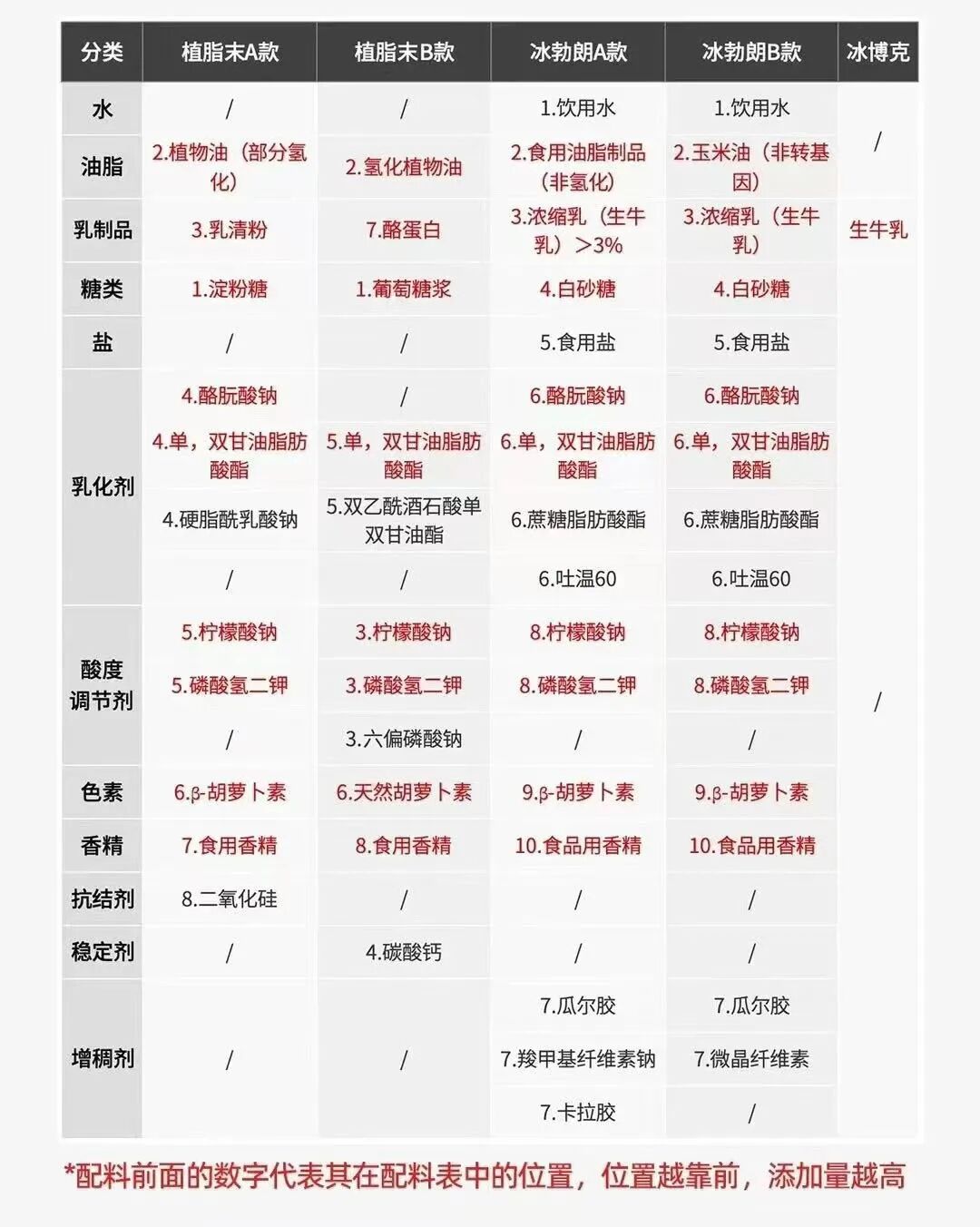
西贝危机后,茶饮仍未走出信任生死局
3 6 Ke· 2025-10-23 04:13
Group 1: Core Insights - The incident involving Xibei highlights the challenges faced by the Chinese restaurant industry, particularly regarding consumer trust in pre-packaged food products [1] - Following the backlash, Xibei experienced a significant drop in daily revenue exceeding 1 million yuan, with a nearly 70% decrease in foot traffic at its largest Beijing location [1] - The public discourse surrounding the incident reflects a broader issue of unclear definitions and lack of standards within the Chinese dining sector, revealing a gap between industry standards and public knowledge [1] Group 2: Tea Beverage Industry Challenges - The tea beverage industry is facing a trust crisis, exacerbated by the "Ice Bolang incident," where a blogger's findings on ingredient transparency ignited consumer skepticism about health claims made by brands [2] - Consumers are increasingly questioning the authenticity of ingredients used in tea beverages, particularly regarding the use of non-hydrogenated base milk and the presence of additives [4] - The discussion around tea beverage ingredients has surged, with related keywords seeing over 200% annual growth in discussions across social media platforms from 2021 to 2025 [4] Group 3: Industry Response and Trends - Major tea brands are beginning to adopt transparency in ingredient sourcing, with over 90% of surveyed consumers expressing concern over the use of non-natural ingredients like plant-based creamers [8] - The tea beverage market is witnessing a shift towards quality and health, with brands like Heytea focusing on unique ingredients and health attributes in their new product lines [14] - Competitors from other sectors, such as dairy and coffee, are encroaching on the tea beverage market, prompting existing brands to rethink their strategies and product offerings [11][12]

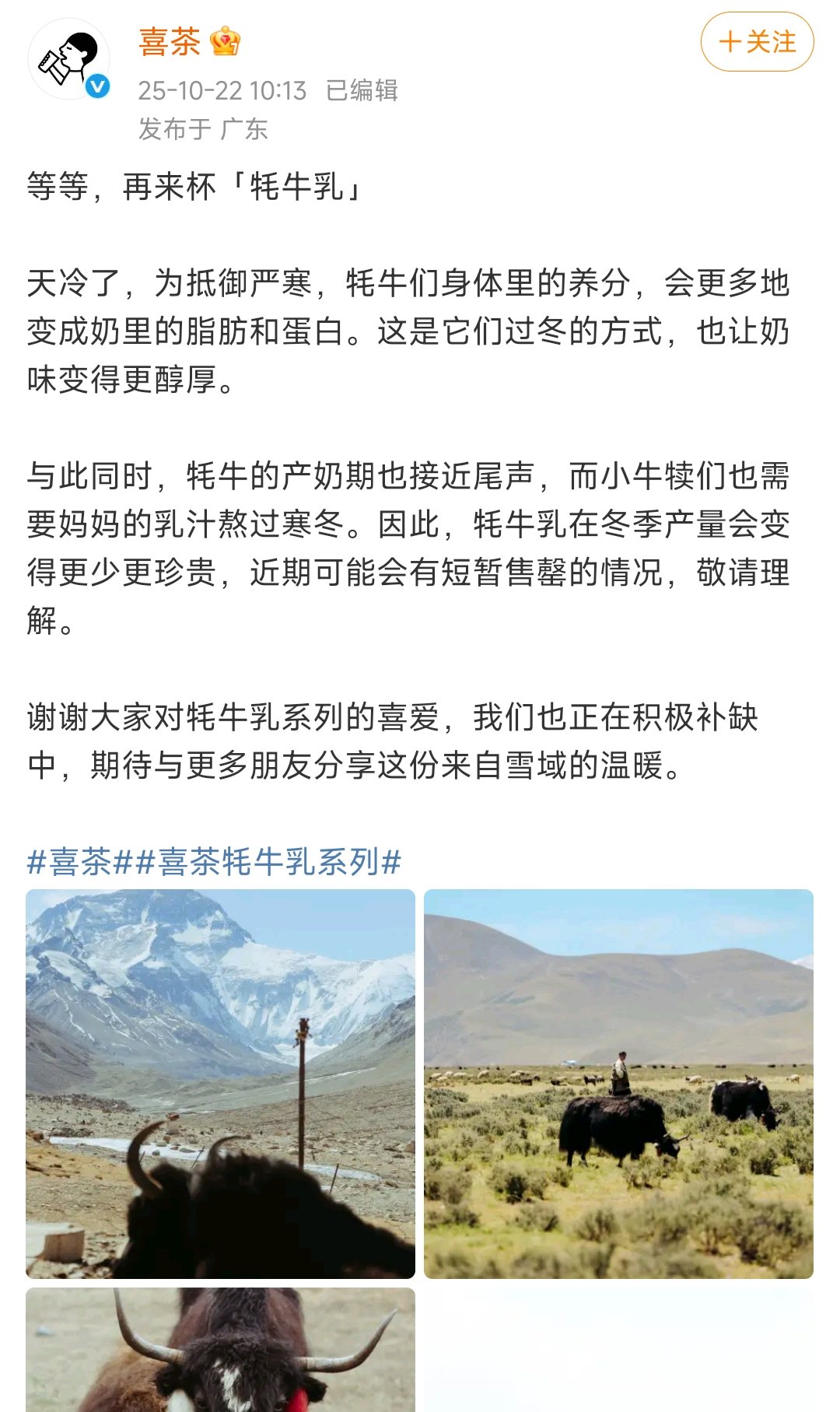
喜茶「雪域·牦牛乳恰安莫」成降温后的第一杯热奶茶,回归即断货
Bei Jing Shang Bao· 2025-10-23 03:40
Core Viewpoint - The recent return of the popular product "Snowy Highland Yak Milk Tea" by Heytea has led to a rapid sell-out in various cities, driven by consumer demand and seasonal trends [1][3][4]. Group 1: Product Popularity and Consumer Response - "Snowy Highland Yak Milk Tea" has sold out in multiple cities including Beijing, Tianjin, and Shanghai within 10 days of its launch, sparking discussions among consumers [1][3]. - The product has been embraced as a seasonal favorite, particularly as a warm drink during the recent drop in temperatures, leading to a trend on social media [1][3]. - Consumers have expressed excitement over finally being able to purchase the product after previous sell-outs, indicating strong demand [1][3]. Group 2: Supply Chain and Production Challenges - Heytea has acknowledged that the winter production of yak milk is variable, which may lead to temporary shortages, but they are actively working on restocking [3][9]. - The company has conducted extensive research in key yak milk production areas such as Qinghai, Gansu, Sichuan, and Tibet to secure a stable supply of high-quality yak milk [9]. - All yak milk sources undergo flavor testing and strict quality checks to meet Heytea's standards before being approved for use in their products [9]. Group 3: Product Development and Market Strategy - "Snowy Highland Yak Milk Tea" was first launched in Tibet in September 2024 and has since become a popular regional product, attracting tourists and consumers alike [4][6]. - Following consumer demand, Heytea expanded the product's availability nationwide in March, leading to significant social media buzz and discussions about the product [6][11]. - The company has introduced additional products inspired by highland ingredients, such as "Cheese Salted Butter Tea," further enhancing its product lineup and consumer appeal [11][13].
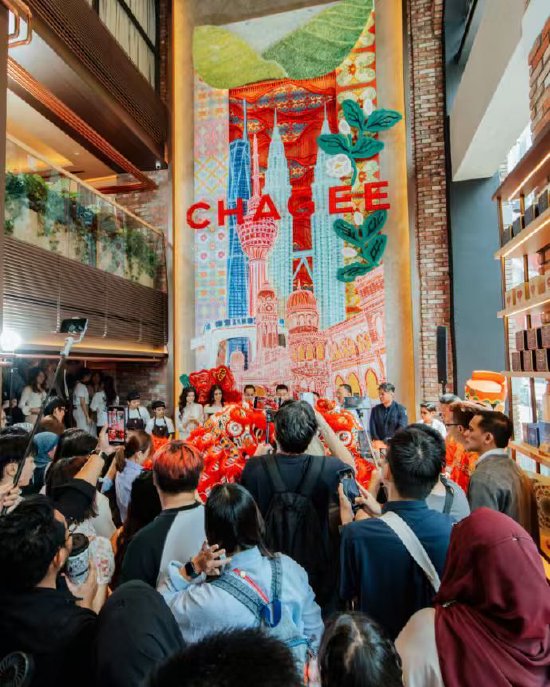
霸王茶姬马来西亚最大门店开业,当地门店总数突破200家
Xin Lang Ke Ji· 2025-10-23 03:05
Core Insights - Bawang Tea Ji has opened its largest store in Malaysia in Kuala Lumpur, attracting thousands of new members within three days of opening [1] - The company has also launched a flagship store in the Mid Valley shopping district of Kuala Lumpur, bringing the total number of stores in Malaysia to 200 [1] - In the Philippines, Bawang Tea Ji opened its largest store in Manila, covering over 200 square meters, shortly after entering the market [1] Expansion and Performance - The new store in Malaysia is strategically located in the Bukit Bintang area, known for high foot traffic, and features a two-story layout with workstations and relaxation areas for consumers [1] - In the Philippines, the three stores opened on August 29 sold over 23,000 cups of tea within three days [1] - By 2025, Bawang Tea Ji expects to see synergistic effects in several Southeast Asian markets, having recently collaborated with Pop Mart on a new product [1] Financial Growth - The company's second-quarter financial report indicates a 77.4% year-over-year increase in overseas GMV and a 31.8% quarter-over-quarter growth [1]
零售周报|LVMH三季度亚洲增2%;遇见小面、自然堂等拟港股上市
Sou Hu Cai Jing· 2025-10-23 02:03
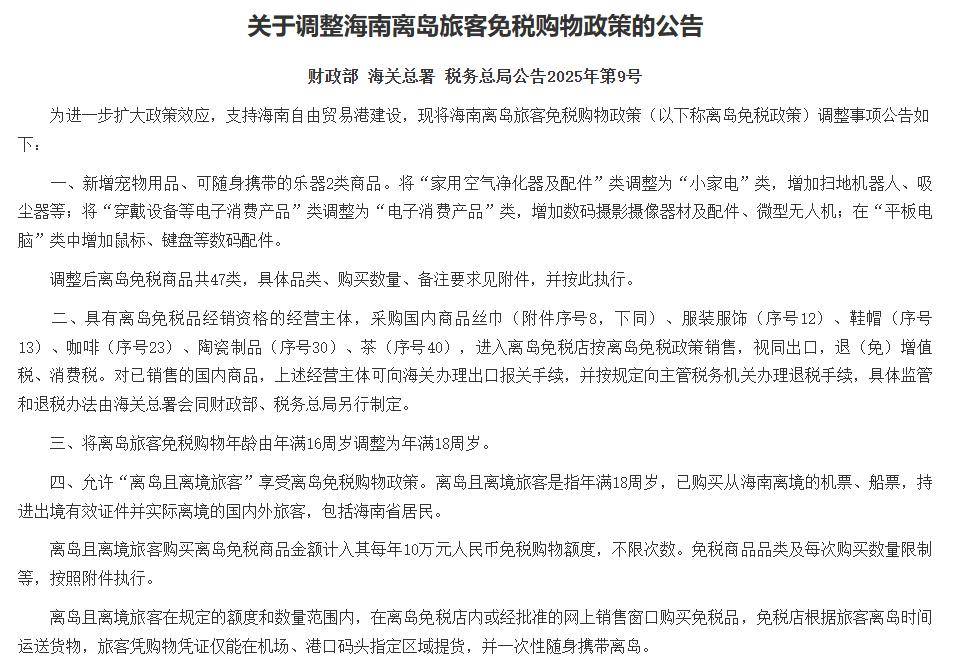
Group 1 - The Ministry of Finance, General Administration of Customs, and State Taxation Administration announced adjustments to Hainan's duty-free shopping policy, effective November 1 [2] - The range of duty-free goods will expand from 45 to 47 categories, including pet supplies, portable musical instruments, drones, and small appliances [2] - Domestic products such as clothing, ceramics, and tea will be allowed for sale in duty-free shops, with VAT and consumption tax exemptions [2] - The age limit for duty-free shopping will be raised from 16 to 18 years [2] - Travelers leaving the island can enjoy duty-free shopping, with purchases counting towards an annual limit of 100,000 RMB [2] - Local residents with island departure records can purchase duty-free items without limit within the same calendar year [2] Group 2 - Michelin Guide will include Shenzhen and Ningde for the first time, with the Shenzhen guide set to launch in 2026 [3] - The 2026 Michelin Guide for Shenzhen will be published alongside the Guangzhou guide [3] - A Michelin food festival will be held in Shenzhen from October 24 to 26, featuring chefs from Michelin-starred restaurants [3] Group 3 - ZARA plans to open a large flagship store in Shanghai on Huaihai Road, featuring five retail floors and innovative technology for consumer experience [6] - The flagship store is scheduled to open in the first half of 2026, following ZARA's global store optimization strategy [6] Group 4 - The brand PhiiB opened its first store in mainland China at Qingdao's Aeon Mall, focusing on high-quality wool fabric [8] - PhiiB promotes a philosophy of luxury based on comfort and structure rather than external symbols [8] Group 5 - The ancient gold brand Baowangfu plans to open its second store in Shanghai's IFC by the end of 2025 [9] - The new store will be the seventh luxury store for Baowangfu nationwide [9] Group 6 - Liverpool FC's official store opened its first location in Guangdong at K11, featuring a wide range of club merchandise [11] - The store design integrates Liverpool's club culture with Shenzhen's innovative spirit [11] Group 7 - LVMH reported a 1% increase in Q3 organic revenue to €18.28 billion, ending two consecutive quarters of decline [11] - The fashion and leather goods segment saw a 2% decline, while perfumes and cosmetics grew by 2% [11] - Revenue in the Asia region, including China, grew by 2% in Q3 [11] Group 8 - The beauty store JIANG TUN BEAUTY by Wushang Group achieved over 1,000 transactions within ten days of opening [15] - The store focuses on high-end cosmetics and aims to create an integrated shopping and experience space [15] Group 9 - Jiu Mao Jiu Group announced plans to exceed 200 new model restaurants by the end of the year, with positive sales trends [16] - The new model restaurants have received favorable responses since their launch [16] Group 10 - The tea brand Bawang Chaji opened its eighth store in Hong Kong within a year, continuing its expansion in the region [17] - The brand aims to cover more areas in Hong Kong with additional store openings planned [17] Group 11 - The bakery brand 85°C is closing over 40 stores in mainland China this year, marking its largest adjustment in five years [20] - The current number of operational stores stands at 659, with approximately 440 in mainland China [20] Group 12 - The Chinese beauty brand Natureroad submitted its IPO application to the Hong Kong Stock Exchange, aiming for a public listing [22] - Natureroad is the third-largest domestic cosmetics group in China based on projected 2024 retail revenue [22] Group 13 - Hailan Home announced plans to issue H-shares and list on the Hong Kong Stock Exchange to enhance its global strategy [25] - The company aims to accelerate overseas business development and improve its international brand image [25] Group 14 - Meili Tianyuan announced a strategic acquisition of 100% of Shanghai Siyuanli for 1.25 billion RMB, expanding its beauty service network [27] - After the acquisition, the total number of stores will reach 734, enhancing the company's market presence [27]
卢浮宫失窃背后:一个“分裂的法国”与消费市场巨变
创业邦· 2025-10-23 00:10
Core Insights - The article discusses the recent theft at the Louvre Museum in Paris, highlighting the vulnerability of French museums and the broader implications for French society and governance [5][6][9]. - It examines the political instability in France, particularly surrounding pension reforms and the rise of extreme political parties, which reflects a deep societal divide and economic challenges [10][11][14][15]. - The article also explores changing consumer behaviors in France, particularly among different socio-economic groups, and the rise of low-cost brands like Temu amid economic pressures [20][19][21]. Group 1: Theft at the Louvre - The theft involved four suspects who used electric tools to break into the museum and stole eight valuable items, raising concerns about security in French cultural institutions [6][9]. - The incident has sparked political outrage, with leaders expressing disappointment and anger over the state of security and governance in France [6][10]. Group 2: Political and Economic Context - France is experiencing a government crisis, with a "hung parliament" situation leading to difficulties in passing legislation, which undermines President Macron's authority [10]. - The country's fiscal situation is dire, with a deficit of 5.8% of GDP and a national debt of 114% of GDP, prompting credit rating downgrades from major agencies [11]. - The rise of extreme political parties reflects a shift in public sentiment, with traditional parties losing influence amid growing economic inequality [14][15]. Group 3: Consumer Behavior and Market Trends - The article notes a significant increase in poverty rates, with 9.2 million people living below the poverty line, leading to changes in consumer habits towards lower-priced goods [19][20]. - Temu, a low-cost e-commerce platform, has gained traction in France, with a market penetration rate of 11.9%, appealing to cost-conscious consumers [20]. - The luxury goods market remains strong, with French brands dominating, but there is a growing trend among younger consumers towards sustainability and ethical consumption [18][32]. Group 4: Opportunities for Chinese Brands - The article highlights successful Chinese brands like Huawei and TCL in the French market, emphasizing the importance of local partnerships and brand image [29][30]. - There is potential for growth in the food and beverage sector, particularly with tea and vegetarian options, as French consumers show interest in diverse culinary experiences [32][33]. - The rise of outdoor living and camping culture in France presents new market opportunities for related products, with a projected market size of $11 billion by 2031 [28].

奶茶的“寒冬”:补贴退潮后,谁还能笑着开店?
3 6 Ke· 2025-10-22 13:01
Core Insights - The tea beverage industry is experiencing a shift from aggressive subsidy-driven growth to a more rational and sustainable business model as consumer price sensitivity increases due to reduced subsidies [1][3][4] - The number of tea shops in China is declining, with a net decrease of 39,200 stores in the past year, indicating a challenging market environment [1][3] - Companies are now focusing on profitability per store rather than just expansion, marking a transition from rapid growth to quality and operational efficiency [4][5] Industry Trends - The withdrawal of subsidies has led to a decrease in consumer demand, with many users opting for more rational consumption patterns [1][3] - The competitive landscape is shifting from a focus on scale to a focus on quality, with companies needing to demonstrate their operational efficiency and profitability [4][5][7] - The tea beverage market is facing increased cost pressures due to rising raw material prices and seasonal demand fluctuations [3][4] Company Strategies - Companies like Mixue Ice City are diversifying their product offerings, such as entering the fresh beer market, to find new growth avenues [7][8] - Brands are exploring international markets, with companies like Tea Baidao and Heytea expanding their presence in countries like South Korea, Malaysia, and the United States [10][11] - Enhanced marketing strategies, including celebrity endorsements, are being employed to leverage high traffic and brand visibility [11]
新消费龙头三季度业绩亮眼,港股消费ETF易方达(513070)助力把握消费升级投资机遇
Mei Ri Jing Ji Xin Wen· 2025-10-22 03:50
Core Viewpoint - The Hong Kong new consumption sector is experiencing localized activity, with significant gains in stocks like Pop Mart and Xiu Li, reflecting strong consumer demand and robust earnings growth in the sector [1] Group 1: Market Performance - As of 11:05 AM, Pop Mart's stock rose over 4%, while Xiu Li and Mi Xue Bing Cheng increased by more than 2% [1] - The CSI Hong Kong Stock Connect Consumption Theme Index showed narrow fluctuations, indicating a stable market environment [1] Group 2: Earnings Growth - Pop Mart's latest earnings report indicates a year-on-year revenue growth rate of 245%-250% for Q3, accelerating from 204.4% in the first half of the year [1] - The overseas market has become a key growth driver, with strong performance also observed in the domestic market, highlighting sustained new consumption demand [1] Group 3: Investment Sentiment - Analysts suggest that there is a "high cut low" allocation demand in the market, with the consumption sector attracting new capital due to its valuation appeal [1] - The earnings growth momentum in the Hong Kong new consumption sector is strong, and after previous adjustments, valuations have returned to a reasonable range, enhancing their investment value [1] Group 4: Index and ETF Information - The CSI Hong Kong Stock Connect Consumption Theme Index includes leading companies across various new consumption fields such as trendy toys, tea drinks, e-commerce, consumer electronics, and medical beauty [1] - As of yesterday, the index's rolling price-to-earnings ratio was 22 times, positioned at the 21st percentile since its launch in 2020 [1] - The E Fund Hong Kong Consumption ETF (513070) is the largest ETF tracking this index, featuring a low management fee of 0.15% per year and supporting T+0 trading, providing investors with a convenient tool for exposure to Hong Kong's new consumption leaders [1]
喜茶回应“雪域·牦牛乳恰安莫”再次断货:正积极补货
Xin Lang Ke Ji· 2025-10-22 03:07
Core Insights - The popular product "Snowy Yak Milk Chai" from Heytea has experienced a sell-out situation shortly after its re-launch, indicating strong consumer demand [1] - Heytea has acknowledged the temporary sell-out due to seasonal variations in yak milk production and is actively working on restocking [1] Product Performance - "Snowy Yak Milk Chai" was first launched in September 2024 in Tibet and has gained significant attention [1] - The product has been reintroduced nationally in May and October of this year, reflecting its popularity [1] Supply Chain and Quality Control - Yak milk, a key ingredient in the product, undergoes flavor testing and strict quality checks before use [1] - Heytea conducts on-site inspections of the milk source and production facilities to ensure the quality meets their standards [1]
蜜雪冰城美国第二家店即将开业,选址好莱坞C位
3 6 Ke· 2025-10-22 02:21
Core Insights - The company, Mixue Ice City, is set to open its second store in North America on the Hollywood Walk of Fame in Los Angeles, following its first store in Manhattan, New York [1][5]. Store Details - The new store will occupy 752 square feet (approximately 69.86 square meters) and is currently under renovation, with an expected opening by the end of this year or early next year [1]. - The location at 6922 Hollywood Boulevard is strategically positioned across from major tourist attractions, including the TCL Chinese Theatre and Madame Tussauds, attracting approximately 10 million visitors annually, translating to an estimated daily foot traffic of about 27,400 [3]. Market Context - The Hollywood retail sector is experiencing a recovery, with the retail vacancy rate decreasing from 9% to 8% over the past year, indicating a resurgence in commercial activity [6]. - In contrast, other areas of Los Angeles have seen a significant increase in retail vacancies, with 1.7 million square feet of space being vacated during the same period [6]. Expansion Plans - Mixue plans to open an additional 5 to 10 stores in Los Angeles next year, targeting high streets, shopping centers, complexes, and airports [7]. - The company is also considering franchise opportunities, with store sizes ranging from 500 to 3,000 square feet, and has shown interest in locations previously occupied by Starbucks [7]. Financial Performance - The latest financial report indicates that Mixue achieved revenue of 14.875 billion yuan and a net profit of 2.718 billion yuan in the first half of the year, representing year-on-year growth of 39.3% and 44.1%, respectively [7]. - As of June 30, Mixue's global store network surpassed 53,000 locations across 12 countries, with 4,733 stores located overseas, marking an increase of 128 stores compared to the previous year [7]. Global Strategy - Mixue has made significant strides in international expansion, with recent openings in Kazakhstan and Brazil, and plans to establish a global business support center by 2025 to enhance operational efficiency [8][14]. - The U.S. market is seen as a critical battleground for Chinese tea brands, with over 45 brands having opened nearly 15,000 stores overseas, particularly in key urban areas [8][14]. Competitive Landscape - The U.S. tea beverage market is projected to grow at an annual rate of 9.1%, with potential for 5 to 10 times the current store count, expected to exceed $8 billion by 2030 [14]. - The absence of a dominant national player in the tea beverage sector presents an opportunity for Chinese brands to establish a foothold in the market [14].