咖啡

Search documents
新消费周报 | 宗馥莉辞去娃哈哈董事长等职务;电商平台相继公布双十一活动节奏;泡泡玛特玩具收入跃居全球第二
Sou Hu Cai Jing· 2025-10-11 12:18
Group 1: TOP TOY IPO - TOP TOY has submitted an application for listing on the Hong Kong Stock Exchange, with JPMorgan, UBS, and CITIC Securities as joint sponsors [1] - In 2024, TOP TOY achieved a GMV of 2.4 billion yuan in mainland China, with nearly 50% of revenue coming from self-developed products [1] - The company's GMV has a compound annual growth rate of over 50% from 2022 to 2024, and successful IPO funding will support its IP matrix expansion and global layout [1] Group 2: Pinduoduo's Fast Group - Pinduoduo's Fast Group is testing a "pre-order/takeaway" service for restaurants and hotels, initially recruiting merchants in Jiangsu and Hunan [2] - Users can pre-order cooked food items on the platform and either pick them up or have them delivered by the merchants [2] Group 3: JD Logistics Acquisition - JD Logistics announced it will acquire its wholly-owned subsidiary engaged in local instant delivery from JD Group for $270 million [3] - This acquisition aims to enhance JD Logistics' last-mile delivery capabilities and expand its integrated supply chain solutions [3] Group 4: Wahaha Leadership Change - Zong Fuli has resigned from her positions as legal representative, director, and chairman of Wahaha Group, effective September 12 [5] - The resignation is reportedly due to trademark compliance issues, leading to the decision to rebrand to "Wawa Xiaozong" starting from the 2026 sales year [5] Group 5: New Consumption Trends - CBNData's New Consumption Weekly highlights the latest trends in the new consumption sector, including a new module focusing on technological innovations [6] Group 6: Natural堂 IPO and Investment - Natural堂, a domestic beauty giant, is preparing for an IPO in Hong Kong after securing 300 million yuan in investment from Guohua Capital for a 4.20% stake [10] - The company has a valuation exceeding 7.1 billion yuan following this round of financing [10] Group 7: Dongpeng Beverage IPO - Dongpeng Beverage has re-submitted its IPO application to the Hong Kong Stock Exchange, with joint sponsors including Huatai International and Morgan Stanley [10] - The company reported a revenue CAGR of 36.5% and a net profit growth rate of 52% over the past three years [10] Group 8: Starbucks Restructuring - Starbucks has initiated a second round of layoffs, planning to close hundreds of stores in North America and Europe, affecting approximately 900 employees [11] - The company has faced a decline in sales in North America for six consecutive quarters, with a 2% year-on-year drop reported for Q3 of fiscal 2025 [11] Group 9: International Gold Prices - International gold prices reached a historic high of $4,061.2 per ounce during the recent holiday period, driven by increased market risk aversion [15][16] - The surge in gold prices is attributed to factors such as the U.S. government shutdown and the suspension of economic data releases [16] Group 10: Didi Autonomous Driving Funding - Didi Autonomous Driving has secured 2 billion yuan in Series D funding, aimed at enhancing AI research and promoting L4 autonomous driving applications [18] - The company has commenced full-scene, fully driverless testing in Beijing and Guangzhou, with plans for new autonomous vehicles to be delivered by the end of the year [18] Group 11: Chiikawa Flagship Store - The first offline flagship store for the popular Japanese IP "Chiikawa" has opened in Shanghai, covering over 500 square meters [23] - The store features exclusive products for the Chinese market and is seen as a key move for localizing operations [23]



拉萨城关咖啡文化周:本地咖啡豆首次亮相 冲煮大赛见证产业成长
Zhong Guo Xin Wen Wang· 2025-10-11 10:45
Core Insights - The Lhasa Chengguan Coffee Culture Week has officially launched, showcasing local coffee beans for the first time and hosting the 11th China Coffee Brewing Competition in the Lhasa region, highlighting the growth of the coffee industry in Tibet [1][4]. Group 1: Event Overview - The event combines coffee culture, intangible cultural heritage experiences, and cross-regional exchanges, creating a unique blend of local flavors and modern lifestyles [1]. - The opening ceremony featured remarks from industry leaders, emphasizing the rising popularity of coffee in Tibet and the successful integration of coffee with local cultural elements [2]. Group 2: Local Coffee Development - The most notable breakthrough is the debut of coffee beans cultivated by the Tibet Agricultural Science Institute, which enhances the competitiveness of local coffee from planting to brewing [4]. - The event aims to promote activities that showcase city characteristics, enhance cultural quality, and stimulate consumer growth [4]. Group 3: Competition and Participation - Nearly 50 competitors participated in the China Coffee Brewing Competition in Lhasa, including contestants from outside Tibet and a deaf barista, reflecting the event's diversity and inclusivity [4]. - The China Coffee Brewing Competition has been held over 290 times across 33 provinces in the past decade, with the Lhasa region hosting four successful events that have trained over 100 professionals, significantly improving local coffee service standards [4].

2.97亿元!蜜雪冰城,要卖啤酒了
Sou Hu Cai Jing· 2025-10-11 07:50
Core Insights - The article discusses the recent investment agreement between Mixue Group and Xianpi Fulujia, where Mixue Group will acquire a 53% stake in Xianpi Fulujia for a total of 297 million yuan, marking its expansion into the fresh beer market [1][2]. Investment Details - Mixue Group will inject 297 million yuan into Xianpi Fulujia, acquiring 51% of its expanded registered capital, along with an additional 2% from independent third-party shareholders [1]. - After the transaction, Xianpi Fulujia will become a non-wholly owned subsidiary of Mixue Group [2]. Company Background - Xianpi Fulujia was founded in 2021, focusing on providing freshly brewed beer products, including various types such as fresh beer, fruit beer, tea beer, and milk beer [3]. - As of August 2025, Xianpi Fulujia is projected to have around 1,200 stores across 28 provinces in China, making it the leading brand in the fresh beer chain store segment [7]. Market Positioning - The acquisition aligns with Mixue Group's strategy of offering "high-quality and affordable" products, expanding its product matrix to include fresh beer alongside tea and coffee [8][10]. - Xianpi Fulujia's pricing strategy is competitive, with most products priced between 5.9 yuan and 9.9 yuan, significantly lower than the industry average [10]. Strategic Advantages - The partnership allows Xianpi Fulujia to leverage Mixue Group's extensive cold chain logistics and marketing resources, enhancing product quality and supply chain efficiency [12]. - The acquisition is seen as a strategic move to tap into the underdeveloped fresh beer market, which is identified as a blue ocean opportunity with significant growth potential [13][15]. Industry Trends - The fresh beer segment is gaining traction as consumer preferences shift towards quality and experience, with the market expected to grow from 10 billion yuan in 2020 to over 100 billion yuan by 2025 [15]. - Xianpi Fulujia is recognized as a pioneer in the fresh beer category, being the first brand in China to receive national certification for "fresh beer" [15]. Consumer Engagement - Xianpi Fulujia's store locations are strategically chosen in community areas and dining hotspots, catering to the demand for convenient, on-the-go consumption [17]. - The brand's focus on product innovation and seasonal offerings aims to keep the consumer experience fresh and engaging, enhancing customer loyalty [17].

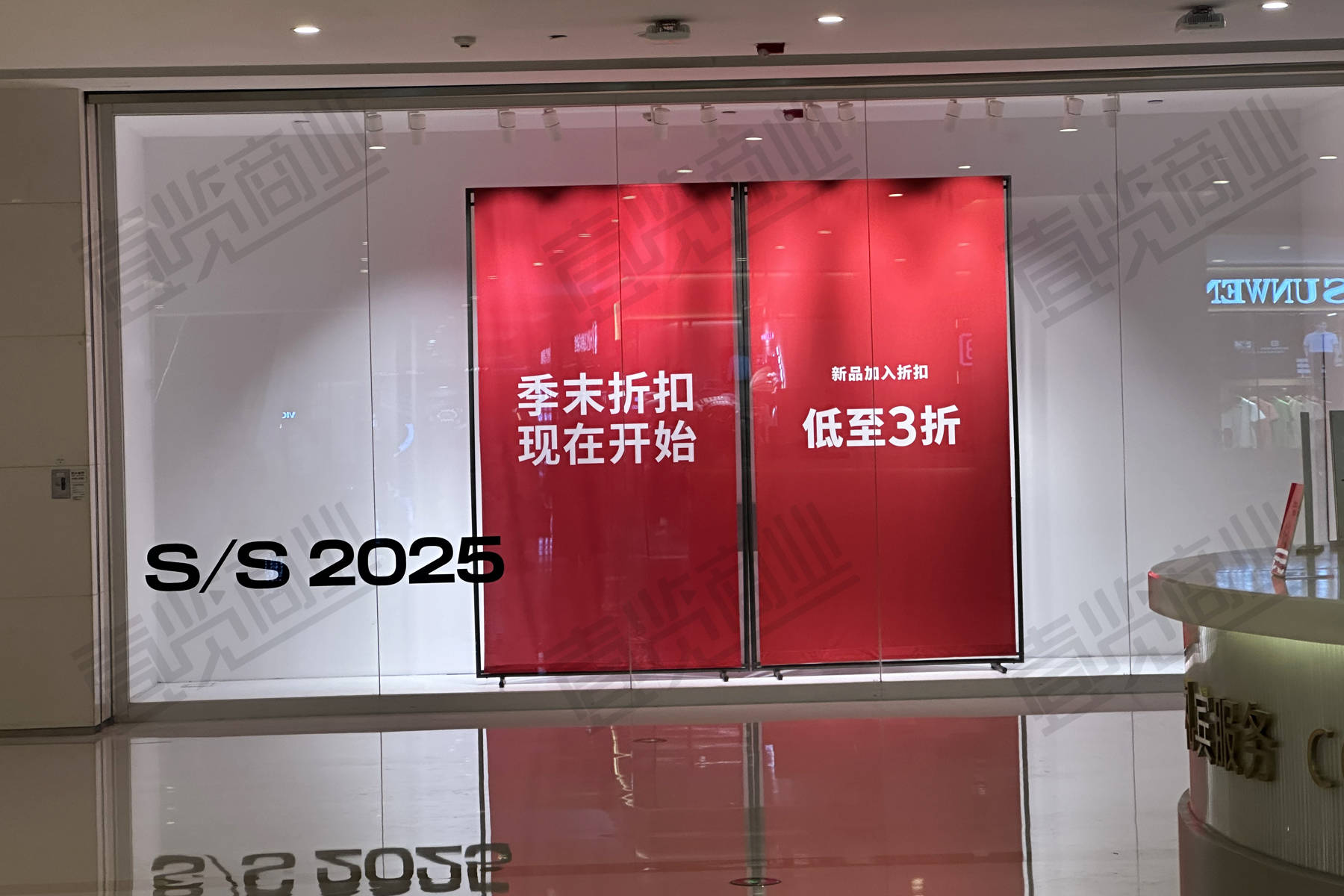
超1.7万家实体店,倒在2025上半年
Sou Hu Cai Jing· 2025-10-11 03:27
Retail Industry Overview - The total retail sales of consumer goods in China reached 24.55 trillion yuan in the first half of the year, with a year-on-year growth of 5.0%, slightly up from 3.7% in the same period last year [2] - Online retail sales amounted to 7.43 trillion yuan, growing by 8.5%, while offline retail sales were 17.12 trillion yuan, with a growth of 3.75%, indicating a shift in consumer shopping habits towards online platforms [2][5] Store Closures - In the first half of 2025, at least 1.71 million stores closed across various sectors, including major brands like Walmart, Starbucks, and Haidilao [2] - The supermarket sector saw at least 720 store closures, including national and regional brands such as Yonghui Supermarket and Hema [3][4] - The restaurant industry faced nearly 10,000 closures, while the apparel sector saw around 4,500 stores shut down [2][6] Supermarket Sector Challenges - Traditional supermarkets are experiencing accelerated closures due to increased competition from e-commerce and the rise of instant retail, which has grown from 36.6 billion yuan in 2017 to 650 billion yuan in 2023 [6] - Many supermarkets are closing underperforming stores and focusing on online business to adapt to changing consumer preferences [6][7] Department Store and Shopping Center Decline - The department store sector reported a year-on-year growth of only 1.2%, with at least 23 department stores and shopping centers closing in the first half of 2025 [8][9] - The decline is attributed to outdated business models and a lack of unique product offerings, leading to decreased foot traffic [11][12] Tea and Coffee Shop Closures - The tea and coffee sectors saw significant closures, with at least 6,673 tea and coffee shops shutting down in the first half of 2025 [13] - Brands like Heytea and Nayuki faced substantial store reductions, reflecting a market consolidation where only strong brands survive [15][20] Apparel Industry Adjustments - The apparel sector experienced a 3.1% year-on-year growth, with at least 4,563 clothing stores closing, including major brands like Semir and GU [21][24] - The closures are driven by high inventory levels, brand aging, and a shift towards larger store formats, which require higher operational efficiency [24][25][27] Cinema Industry Struggles - The cinema industry is facing a crisis, with a high vacancy rate of 30-40% and at least 38 cinemas closing in the first half of 2025 [28][30] - Factors contributing to this decline include high fixed costs, reliance on blockbuster films, and competition from streaming services [30][31][32] Other Industries - Various other sectors, including pet care, home improvement, and education, also experienced closures, indicating a broader trend of market contraction [34]



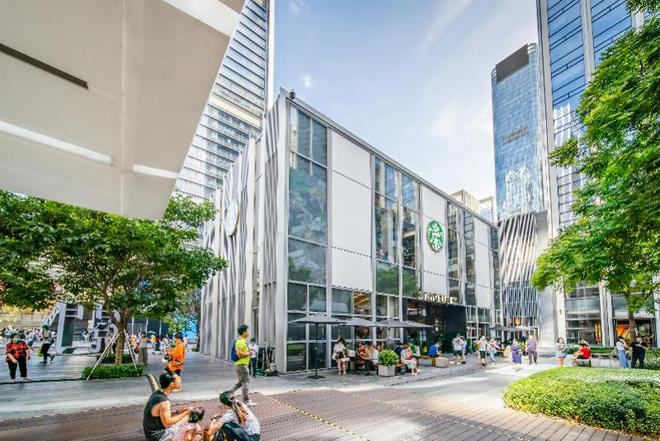
星巴克深圳万象天地旗舰店将结束营业?工作人员回应
Nan Fang Du Shi Bao· 2025-10-10 11:19
Core Insights - Starbucks' flagship Reserve store in Shenzhen's MixC will close on October 12 due to contract expiration and adjustments in the business district [1][3] - Since its entry into Shenzhen in 2002, Starbucks has played a crucial role in shaping the local coffee culture, with a total of 368 stores expected by September 2025 [3] - The company is continuously adapting its store formats, locations, and designs to meet evolving consumer demands and market conditions [3] Company Strategy - Starbucks emphasizes the importance of both new and old store transitions, indicating a strategy of renovation and upgrade in response to changes in consumer preferences and surrounding business environments [3] - The closure of the flagship store is part of a broader strategy to maintain relevance and competitiveness in the market, with other nearby stores still providing service [3]

定安18家乡咖上新迎客
Hai Nan Ri Bao· 2025-10-10 01:29
Group 1 - The article highlights the launch of a giant coffee cup experience at the Xiangcao Farm in Longhu Town, Ding'an County, during the holiday period, featuring a coffee cup larger than a small pot, capable of holding 3 to 4 cups of their signature vanilla iced latte [2] - A giant coffee challenge and a short video contest are being held, allowing visitors to win experience vouchers for the giant coffee, with a daily limit of 10 cups available [2] - The article mentions that 18 local coffee shops in Ding'an are introducing new offerings, including various cultural and entertainment activities such as music concerts, esports events, and traditional performances to enhance the holiday experience for visitors [2] Group 2 - The Water Tower Coffee Shop in Dashi Village and the Hupan Coffee Shop are introducing unique drinks for the Mid-Autumn Festival, including a blue sparkling water drink called "Sea on the Bright Moon" and a special "Zao Po Vinegar Coffee" that combines local vinegar with cold brew coffee and fresh fruit juices [3] - The article notes that Ding'an is hosting a series of events centered around Zao Po vinegar, aiming to provide visitors with a new culinary experience that highlights this local specialty [3]
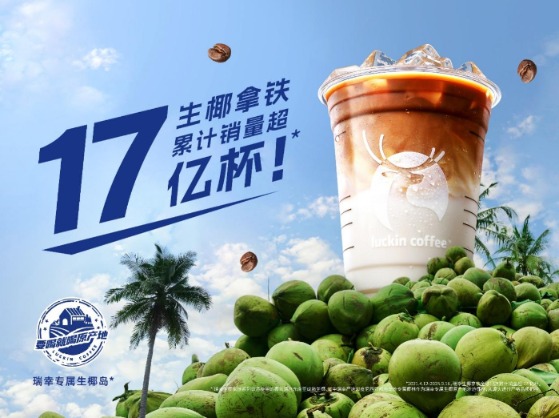
瑞幸多个产品获“首创认证”,中国咖啡创新实力彰显
Zhong Guo Xin Wen Wang· 2025-10-09 06:24
Core Insights - Luckin Coffee's three flagship products, including the Coconut Latte, Ice Coconut Latte, and Orange C Americano, have received the "Luckin Original" certification from an independent research institution, highlighting the company's innovative capabilities in the coffee industry [1][3] - The Coconut Latte has been recognized as the best-selling coconut latte globally, with over 1.7 billion cups sold as of September 2023, showcasing Luckin's significant impact on the coffee market and its role in upgrading China's coffee industry [2][3] Company Innovation - Luckin Coffee has established a digital product development system that continuously optimizes and upgrades product formulas, resulting in high-quality coffee beverages that appeal to health-conscious consumers [3][4] - The Coconut Latte combines plant-based coconut milk with coffee, creating a unique flavor profile that has led to its status as a phenomenon in the ready-to-drink beverage market [3][4] - The Orange C Americano has also gained popularity, with cumulative sales exceeding 350 million cups by the second quarter of 2023, reflecting consumer preference for healthier coffee options [3][4] Industry Impact - Analysts note that Luckin Coffee's ability to create multiple blockbuster products demonstrates its successful establishment of a scalable product innovation mechanism, positioning it as a significant innovator in China's ready-to-drink beverage industry [4] - The company has invested heavily in quality control, assembling a professional coffee research and development team and employing world champion baristas to design and develop coffee recipes, leading to multiple awards from the International Institute of Coffee Tasting [4][5] - Luckin Coffee has built smart roasting bases in Fujian and Jiangsu, with plans for additional facilities, creating a supply network with an annual capacity of 155,000 tons, ensuring efficient production and quality management [5] Future Prospects - The recent certifications from third-party institutions affirm Luckin's originality and systematic innovation capabilities, which are crucial in a competitive market characterized by homogenization [5] - As Luckin continues to expand internationally, it is expected to influence global coffee consumption patterns and enhance the impact of Chinese coffee culture [5]

港股异动 | 蜜雪集团(02097)逆市涨超7% 跨界投资鲜啤福鹿家 前瞻性布局“茶饮+咖啡+鲜啤”版图
智通财经网· 2025-10-09 02:19
Core Viewpoint - Mijue Group (02097) has seen a stock price increase of over 7%, currently trading at 399.4 HKD, following the announcement of an investment agreement with Xianpi Fulujia to acquire a 51% stake through a capital increase of 285.6 million RMB [1] Group 1: Investment Details - Mijue Group signed an investment agreement to increase its stake in Xianpi Fulujia by 285.6 million RMB, acquiring 51% of the expanded registered capital [1] - Additionally, Mijue Group entered into a share transfer agreement to acquire an additional 2% stake from an independent third-party shareholder [1] - The target company primarily offers freshly brewed beer products priced between 6 to 10 RMB per 500mL [1] Group 2: Strategic Implications - The investment is a significant move for Mijue Group to expand into the freshly brewed beer category, aiming to leverage the competitive advantages of the target company [1] - According to CITIC Securities, Fulujia is an emerging leader in the fresh beer industry, with synergies expected in supply chain, consumer operations, and franchise resources due to the alignment with Mijue Group's business model [1] - While the immediate financial impact may be limited, the long-term outlook for the domestic fresh beer industry is promising, enhancing Mijue Group's strategic positioning in the "tea + coffee + fresh beer" market [1] Group 3: Competitive Landscape - Mijue Group is noted for its strong brand IP, supply chain, and operational capabilities, which are expected to provide a solid competitive moat [1] - The company is anticipated to have strong growth certainty and a clear competitive landscape moving forward [1]
这一年,这些耳熟能详的品牌都被卖了丨国庆特别策划③
36氪· 2025-10-04 04:08
Core Insights - The article discusses the recent trend of brand ownership changes in various industries, highlighting significant acquisitions and sales of well-known brands, indicating a reshuffling of the market landscape [2][3]. Group 1: Brand Acquisitions and Sales - Canada Goose Holdings Inc. is considering selling part or all of its shares due to declining growth and stock price issues, despite previously being popular in China [8]. - Nestlé has fully acquired Xu Fu Ji, a well-known candy brand in China, after initially purchasing 60% of its shares for $1.7 billion in 2011 [13]. - The American makeup brand elf Beauty announced the acquisition of the brand Rhode, founded by Hailey Bieber, for $1 billion, despite Rhode being only three years old and having limited product offerings [11]. Group 2: Market Dynamics - The article notes that the sale of high-end brands like Costa and Peet's Coffee reflects the competitive pressure from low-cost coffee brands, suggesting a shift in consumer preferences [6]. - The acquisition of Versace by Prada is highlighted, with financing plans involving €2.5 billion, indicating ongoing interest in luxury brand consolidation [12]. - Grubhub's unexpected sale for $650 million raises questions about the valuation of major players in the food delivery market [4]. Group 3: Emerging Trends - The rapid rise and subsequent sale of brands like Rhode, which achieved significant sales with limited products, illustrates the changing dynamics of brand success in the digital age [11]. - The article emphasizes that ownership changes are not merely transactions but represent strategic moves in a continuously evolving market landscape, with each sale presenting new opportunities and challenges [3].

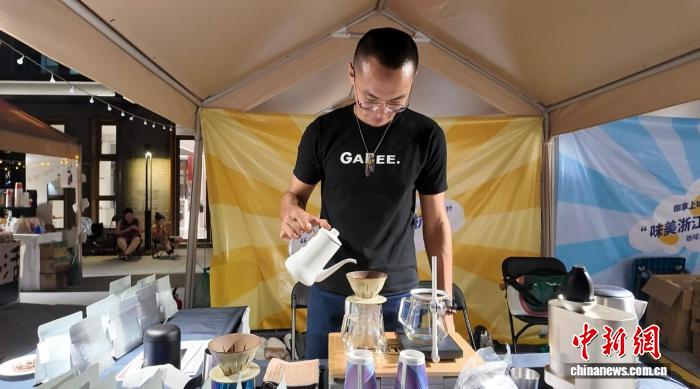
台湾咖啡师和他的“茶与咖”
Zhong Guo Xin Wen Wang· 2025-10-02 13:01
Core Insights - The article highlights the growing acceptance and appreciation of specialty coffee in mainland China, particularly through the experiences of Taiwanese barista Li Yi at a coffee culture festival in Hangzhou [1][2]. Group 1: Coffee Culture and Trends - The "Coffee Culture Carnival" in Hangzhou features 60 coffee brands, showcasing a variety of specialty coffees that attract large crowds [1]. - Li Yi emphasizes the connection between coffee and tea, explaining that both beverages can reflect their origins and unique characteristics, thus enhancing consumer experience [2]. - There is a noticeable shift among consumers from drinking coffee solely for caffeine to seeking flavor experiences, with many now engaging in hand-brewing techniques [2]. Group 2: Innovative Coffee Blends - Li Yi and his team have experimented with unique coffee blends, such as combining Taiwanese oolong tea and guava juice, as well as integrating local Zhejiang white wine into coffee [4]. - A collaboration with a traditional Chinese medicine brand resulted in six coffee blends using herbal ingredients, which surprised consumers with their unique flavors [4]. Group 3: Regional Coffee Culture - Different cities in China exhibit distinct coffee cultures, with Shanghai being a "testing ground" for new flavors, while Hangzhou serves as a "tasting room" for consumers to find their preferred tastes [4]. - The article notes that the pursuit of quality and local flavors remains a common thread in both tea and coffee cultures across regions [4].