智能汽车

Search documents
专论 || 张永伟:从出口“新三样”到聚合“三大件”
Zhong Guo Qi Che Bao Wang· 2025-09-29 02:27
Group 1 - The core idea of the article emphasizes the importance of "aggregated thinking" in driving the collaborative development of three key sectors: smart vehicles, smart robots, and low-altitude economy, which are interconnected through technology, supply chains, and application fields [1][3][4] - The article outlines that the current fourth industrial revolution is characterized by the convergence of various technologies, such as artificial intelligence and new energy, which were previously developed independently [1][2] - The potential of the "three key components" (smart vehicles, power batteries, and new energy represented by photovoltaics) is highlighted as a significant driver for export and economic growth, especially in the post-pandemic context [3][4] Group 2 - The shared industrial chain among smart vehicles, smart robots, and low-altitude flying is crucial for the aggregation effect, with over 60% of the automotive supply chain being applicable to these sectors [4][5] - The article discusses the rapid development of the perception field, where costs have significantly decreased, exemplified by the price drop of automotive laser radar from over 100,000 yuan to around 800 yuan within five years [5][6] - The demand for computing power in vehicles has increased, with modern cars requiring 300 to 400 chips, indicating a trend towards a unified operating system across vehicles, robots, and drones [6][7] Group 3 - The article suggests that the manufacturing sector must establish advantages quickly, drawing parallels with the electric vehicle industry, which saw a dramatic increase in sales from 1 million to 10 million units in five years due to a 50% reduction in component costs [9][10] - It is anticipated that the robotics sector may experience a similar "electric vehicle moment" in the near future, with prices potentially dropping from over 1 million yuan to 100,000 or 200,000 yuan [10][11] - The article emphasizes the need for component manufacturers to expand into the aggregation field, leveraging existing supply chains and fostering cross-industry collaborations to accelerate market entry [11][12] Group 4 - The internationalization of the autonomous and automated driving industry is highlighted, with increasing global demand for Chinese components and solutions, particularly in the robotics sector [12] - The article calls for a shift in thinking from single-industry development to a coordinated approach that breaks down barriers between industries, technologies, and policies [12][13] - It stresses the importance of infrastructure integration and policy adaptation to support the rapid development of industries like autonomous driving, low-altitude economy, and smart robotics [12][13]
摩尔线程IPO过会;专家称L3智驾2027放量丨新鲜早科技
2 1 Shi Ji Jing Ji Bao Dao· 2025-09-29 02:06
Group 1: Industry Developments - Moore Threads' IPO application has been approved, potentially making it the first domestic GPU company to go public, focusing on both graphics rendering and AI computing [2] - Didi has launched its AI travel assistant, which customizes ride options based on user input, enhancing user experience [4] - Didi's overseas ride-hailing service has expanded to Australia, New Zealand, and Egypt, now operating in 12 countries and over 1,000 cities [11] Group 2: Company News - Wang Jianlin's restrictions have been lifted, indicating a resolution to economic disputes involving Wanda Group [3] - Xiaomi's demand for the 17 Pro Max model has exceeded expectations, prompting the company to increase production [6] - HP has introduced new printing products tailored to the evolving needs of Chinese households, emphasizing the importance of the Chinese market [12] Group 3: Investment Activities - Beijing Xinghe Power Aerospace completed a D-round financing of 2.4 billion yuan, with multiple investment funds participating [12] - Yuliqi Robotics announced nearly 100 million yuan in angel financing, with participation from several notable financial institutions [13] - "Leisure Technology" secured 200 million yuan in angel financing, aiming to accelerate the development of consumer-grade intelligent products [14] - "Bai Xing Intelligent" completed a Pre-A round financing of several million yuan, focusing on AI Agent solutions for foreign trade [15]



重视Q4新一轮AI智能车板块投资机会
2025-09-28 14:57
Summary of Conference Call on AI Smart Vehicle Sector Investment Opportunities Industry Overview - The smart vehicle industry is accelerating, showing signs of a turning point, with software becoming more important than hardware, and B-end applications outperforming C-end applications [1][2] - The fourth quarter is expected to bring significant market activity in the smart vehicle sector, driven by the expansion of AI technology from hardware to applications and from the digital world to the physical world [1][2] Key Insights and Arguments - **Investment Opportunities**: The smart vehicle sector is anticipated to see substantial investment opportunities in Q4, with a focus on AI smart vehicles. Key stocks include Xiaopeng Motors, Horizon Robotics, and ChaoTu Mobility [1][2] - **Robot Taxi Potential**: Robot Taxi is identified as the best breakthrough application scenario for smart vehicles, with a projected domestic ownership of 500,000 units by 2030 and 2 to 2.5 million units by 2035 [1][3][12] - **Autonomous Driving Technology**: Rapid advancements in autonomous driving technology are noted, with leading companies like Li Auto and Xiaopeng already demonstrating partial L4 capabilities. Significant changes are expected by the end of the year [1][10] - **Catalysts for Growth**: Key catalysts for the development of the autonomous vehicle market include L3 access policies, the release of Tesla's V74 version, and production plans for Xiaopeng's Robotaxi [1][11] Market Dynamics - **Performance of Smart Vehicle Sector**: The smart vehicle sector underperformed in the first half of the year due to regulatory tightening and market sentiment influenced by incidents like the Xiaomi accident. The focus has shifted towards software and digital models rather than physical applications [3][4] - **Future Trends**: The smart vehicle market is expected to grow significantly, with AI efficiency improvements leading to better performance in the sector. The potential for investment and industrial transformation in China is highlighted [6] Investment Recommendations - **Valuation Approach**: The valuation of smart vehicles and Robotaxis should be based on their ability to replace human jobs and generate income, rather than traditional metrics like user numbers [16] - **Key Players**: Investors are advised to focus on companies with significant barriers in software or hardware integration, as these are likely to achieve higher profit margins [18] Company-Specific Insights - **Xiaopeng Motors**: Positioned as a leading player in the smart vehicle market, with plans for new models and a focus on both B-end and C-end markets. Expected to scale production of Robotaxis by 2026 [21] - **Horizon Robotics**: Recognized as a leader in L2 and L3 intelligent driving, with a market cap reflecting its core positioning. Expected to reach a market cap of over 200 billion [24] - **Black Sesame Intelligence**: Noted for its potential in the L4 scene and partnerships with major automotive companies. The company is expected to see significant growth in the coming years [25] Additional Considerations - **Robotaxi Market Size**: The domestic ride-hailing and taxi market is estimated at 5 to 6 million vehicles, with Robotaxi expected to enhance user experience rather than compete on price [12] - **Role of Regulatory Bodies**: Organizations like China Automotive Research Institute play a crucial role in policy changes and vehicle testing, which are essential for the industry's evolution [30] This summary encapsulates the key points from the conference call regarding the AI smart vehicle sector, highlighting investment opportunities, market dynamics, and company-specific insights.
L4级解决方案明年年中发布 千里科技印奇:智驾系统将进入由AI驱动的全新阶段
Mei Ri Jing Ji Xin Wen· 2025-09-28 14:41
Core Insights - The article discusses the advancements and strategic partnerships of Qianli Technology in the field of intelligent driving, particularly focusing on the development of L4-level autonomous driving solutions and the establishment of a Robotaxi service platform [1][2]. Group 1: Company Developments - Qianli Technology is accelerating the development of L4-level intelligent driving solutions, with plans to launch by mid-next year [1]. - The company has partnered with Geely to develop a dedicated hardware platform for Robotaxi, emphasizing safety, convenience, and comfort [1]. - A new company, Qianli Zhijia, has been established with an investment of 1.5 billion yuan, aiming to be an independent supplier of intelligent automotive solutions [2]. Group 2: Strategic Partnerships - Qianli Technology and Geely have launched the "Qianli Haohan" intelligent driving system, which includes multiple levels to cater to different vehicle brands and price points within Geely [2]. - Geely's CEO has expressed the intention to leverage Qianli Zhijia to provide specialized services for intelligent driving, aiming for a platform-based approach to serve global automotive companies [2][3]. - The collaboration aims to replicate the success of Huawei's automotive business unit, with a focus on rapid iteration and competitive advantages in technology [3]. Group 3: Industry Context - The article highlights the increasing trend of automotive companies partnering with Huawei for intelligent driving solutions, with Huawei's products already integrated into over 1 million vehicles [4]. - The competitive landscape is shifting as more companies seek to align with successful models like Huawei's, raising the stakes for Qianli Technology and Geely in their quest to establish a similar presence in the market [4].


政策引路、车企竞速,辅助驾驶告别“野蛮生长”
Bei Jing Shang Bao· 2025-09-28 14:25
Core Insights - The "Vehicle-Road-Cloud Collaboration" is identified as the core path for the development of intelligent driving in China, emphasizing the need for a dual support system of smart roads and cloud computing for the realization of L3 to L4 level autonomous driving [1][3] - Recent policy actions, including the release of the draft for safety requirements of intelligent connected vehicles and conditional approval for L3 models, indicate that the auxiliary driving industry in China is entering a new phase of standardized development focused on safety quantification [1][5] Industry Developments - The auxiliary driving industry faces challenges such as a lack of unified performance baselines and improper promotional language, which can lead to dangerous behaviors among drivers [4] - The draft safety requirements transform safety concepts into quantifiable metrics, including 46 field tests, 72 hours of road tests, and specific thresholds for vehicle hazards and typical faults [4] - The Ministry of Industry and Information Technology has proposed a work plan to stabilize growth in the automotive industry, which includes conditional approval for L3 model production [5] Technological Advancements - The penetration rate of intelligent driving is increasing, with projections indicating that vehicles supporting high-speed and urban NCA will grow from under 2 million in 2023 to over 7 million by 2025 [6] - Leading tech companies and new automotive players are showcasing advantages in the market, with Huawei's ADS system accumulating 4 billion kilometers of safety mileage and XPeng Motors launching the world's first L3-capable AI car [6][7] - Traditional automakers like BYD are also accelerating their advancements, planning to equip 60% of new vehicles with advanced driving features by 2025 [7] Compliance and Standards - The systematic connection of policies and standards is crucial for the orderly advancement of autonomous driving technology, with recent initiatives aimed at bridging generational gaps in technology [8] - The draft has clarified the definitions of L2 to L5 level technologies, establishing boundaries between auxiliary driving and autonomous driving [8] - The industry is experiencing significant generational gaps, with leading companies advancing to urban NOA while others remain at basic levels of highway assistance [9] Future Trends - The competition in the auxiliary driving sector will increasingly focus on technological innovation and service experience optimization, with a shift from "selling functions" to "selling safety" [9][10] - The "Vehicle-Road-Cloud Collaboration" is expected to become a significant trend, enhancing road safety and traffic efficiency through effective information exchange between vehicles and infrastructure [10]


华为靳玉志:乾崑智驾已合作28款车型,搭载量突破100万辆
Feng Huang Wang· 2025-09-28 13:45
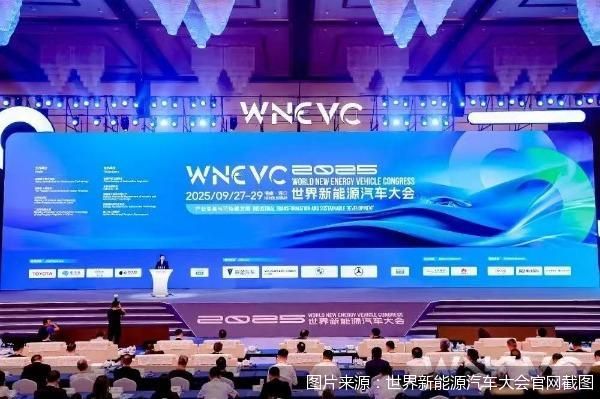
凤凰网科技讯 9月28日,在海南海口举行的2025世界新能源汽车大会上,华为智能汽车解决方案BU CEO靳玉志透露,华为乾崑智能驾驶系统累计搭载量已突破100万辆,合作上市车型达28款,覆盖鸿蒙 智行、阿维塔、深蓝、岚图等多个品牌。 针对自动驾驶技术发展路径,靳玉志提出"三波浪潮"观点,并指出2027年将实现L3级别自动驾驶的规模 放量。他透露,华为计划在2025年首发面向L3技术架构的高速商用解决方案,2026年力争实现高速L3 规模商用,2027年随着高速与城区NCA功能普及,L3将实现规模放量,城区L4进入商用阶段。 靳玉志在会上披露了乾崑智驾的运营数据:辅助驾驶总里程达50亿公里,累计泊车辅助次数2.8亿次, 避免可能的碰撞271万次。搭载全新MoLA架构的鸿蒙座舱方面,截至2025年8月,其语音助手被唤醒 2.38亿次,语音搜索导航次数近7000万次。 ...
华为车BU CEO靳玉志:L3级自动驾驶将在2027年规模放量
Mei Ri Jing Ji Xin Wen· 2025-09-28 10:36
Core Insights - The automotive industry is undergoing a transformation characterized by three waves: electrification, intelligence, and automation [1][3][4] Group 1: Waves of Transformation - The first wave (2015-2022) focused on electrification, where electric power replaced fuel, significantly reducing travel costs [3] - The second wave (2022-2027) is centered on intelligence, with algorithms replacing drivers, leading to enhanced safety and experience [3] - The third wave, starting in 2027, will focus on automation, where algorithms will redefine safety and experience standards, greatly improving travel and societal efficiency [3] Group 2: Current Industry Status - The automotive industry is currently in the intelligence phase, with many new vehicles launched this year featuring intelligent driving assistance [3] - By 2025, intelligent driving assistance, represented by high-speed and urban Navigation Cruise Assist (NCA), is expected to become mainstream [3] Group 3: Huawei's Position - Huawei's intelligent driving solution, QianKun, is already integrated into 28 models from various automakers, with a cumulative installation exceeding 1 million units [3] - The rapid adoption of intelligent driving assistance is anticipated to accelerate the arrival of the autonomous driving era [4] Group 4: Future Projections - L3 autonomous driving is expected to scale up by 2027, with the penetration rate of intelligent driving assistance increasing rapidly [4] - Huawei is committed to advancing L3/L4 autonomous driving technologies and has upgraded its QianKun ADS 4 for future commercial applications [4]
小米17系列正面迎战苹果,雷军谈小米如何“逆天改命”
Sou Hu Cai Jing· 2025-09-28 08:15
Core Insights - Xiaomi has undergone a significant transformation over the past five years, evolving from an internet company to a player in smart manufacturing, focusing on a comprehensive ecosystem of "people, vehicles, and homes" [1][11] - The launch of the Xiaomi 17 series smartphones marks a pivotal moment, showcasing advancements in battery life, imaging technology, and display quality, positioning the products to compete directly with Apple's iPhone [2][15] - The company has made substantial investments in research and development, with a commitment of over 100 billion yuan in core technologies over five years, leading to breakthroughs in self-developed chips and electric vehicles [13][16] Product Launch and Performance - The Xiaomi 17 series includes three models, with starting prices of 4499 yuan for the standard version, 4999 yuan for the Pro version, and 5999 yuan for the Pro Max version, achieving record sales within minutes of launch [1][10] - The Xiaomi 17 Pro Max has reportedly captured over 50% of the sales within the series, breaking records for first-day sales in the domestic market [1][10] Technological Advancements - The Xiaomi 17 standard version features a 7000mAh battery, nearly double that of the iPhone 17, showcasing significant advancements in battery technology [2] - The imaging system in the Xiaomi 17 Pro series is highlighted as a leader in mobile photography, utilizing advanced technologies to enhance image quality [2][3] - The introduction of the "super pixel" technology in the display of the Xiaomi 17 Pro Max improves clarity and reduces power consumption by 26% [3] Strategic Direction - Xiaomi's shift towards high-end products is characterized by a focus on user insights and technological breakthroughs rather than mere specifications [15] - The company aims to redefine the automotive space with its electric vehicles, emphasizing a combination of technology and ecosystem integration [9][17] Financial Performance - In the first half of 2025, Xiaomi reported total revenue of 227.2 billion yuan, a year-on-year increase of 38.2%, with net profit reaching 22.83 billion yuan, a significant growth of 146% [10] Long-term Vision - Xiaomi's commitment to long-term investment in technology and innovation is evident, with plans to continue expanding its capabilities in both the automotive and semiconductor sectors [8][14] - The company aims to establish itself as a leading force in global technology, moving beyond traditional competitors and setting new benchmarks for innovation [19]
理想汽车车载端全球首发单曲《PRESSURE》
Huan Qiu Wang· 2025-09-28 01:35
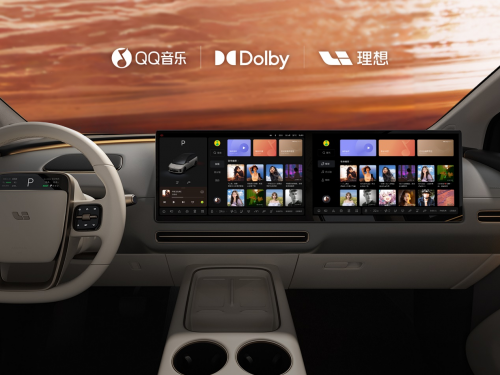
Group 1 - QQ Music collaborates with Dolby Laboratories and Li Auto to launch the new English single "PRESSURE" in Li Auto vehicles, marking a global premiere [1][3] - All current models of Li Auto support Dolby Atmos, enhancing the audio experience for users [1] - The collaboration integrates music content with advanced audio technology in the automotive space, providing a new cross-industry cooperation model [3] Group 2 - "PRESSURE" is a significant single from Tia Yuan's new English album, showcasing her unique musical style and artistic pursuit [1] - The use of Dolby Atmos technology allows for a detailed restoration of musical elements, offering a multi-dimensional sound experience for drivers [1]

斥资超13亿元!奔驰成千里科技第五大股东,携手吉利加码中国智驾赛道
Mei Ri Jing Ji Xin Wen· 2025-09-26 11:57
Core Insights - The announcement on September 25 reveals that Lifan Holdings and Mercedes-Benz Digital Technology have signed a share purchase agreement to acquire a total of 135,633,002 shares of Qianli Technology, representing 3.00% of the company's total equity, at a price of RMB 9.87 per share, totaling approximately RMB 1.339 billion [1] - Mercedes-Benz Digital Technology will hold 3% of Qianli Technology's shares post-transaction, becoming the fifth-largest shareholder [1] Group 1 - The investment by Mercedes-Benz, exceeding RMB 1.3 billion, is aimed at enhancing its competitive edge in intelligent driving, accelerating local R&D, and expanding its collaborative ecosystem [2] - Qianli Technology is recognized for its significant contributions in the intelligent driving sector, particularly through its "Qianli Haohan" intelligent driving solution, which has been rapidly implemented across various models of Geely's automotive brands [2][6] - The "Qianli Haohan" solution includes five levels (H1, H3, H5, H7, H9) and has already been integrated into Geely's economic models, with the H3 solution fully deployed in vehicles priced around RMB 100,000 [2] Group 2 - Qianli Technology, formerly Lifan Technology, has undergone a strategic transformation focusing on "AI + vehicle" technologies, with significant backing from Geely [7] - The company plans to go public in Hong Kong to raise funds for enhancing its AI capabilities, R&D, and expanding its sales and service networks [11] - In the first half of 2025, Qianli Technology reported revenues of RMB 4.184 billion, a year-on-year increase of 40.04%, and a net profit of RMB 31.17 million, reflecting a 19% growth [11]