
茶饮

Search documents
雪王又来再造蜜雪冰城了
3 6 Ke· 2025-10-17 00:43
Core Insights - Mixue Ice Cream and Tea has expanded its business into the fresh beer market by acquiring a 53% stake in the fresh beer chain brand Fulu Family for 297 million yuan, marking a significant shift from its traditional tea and coffee offerings [1][20] - Fulu Family, established in 2021, has rapidly grown to over 1,200 stores across 28 provinces in China and is projected to achieve a net profit of 1.07 million yuan in 2024, indicating a profitable business model [1][6] - The acquisition is seen as a strategic move to tap into the growing low-alcohol beverage market, which is expected to reach 570 billion yuan in 2024, with a compound annual growth rate exceeding 30% [8][31] Business Strategy - The pricing strategy for Fulu Family's products ranges from 5.9 yuan to 14.9 yuan, appealing to a younger demographic that Mixue aims to attract [2][4] - The brand's marketing slogan positions it as "adult milk tea," targeting a similar customer base as Mixue, thus creating a complementary product line [4][19] - Mixue's existing infrastructure and supply chain capabilities are expected to enhance Fulu Family's operational efficiency, potentially reducing logistics costs by 15% to 20% [14][21] Market Trends - The fresh beer market in China is projected to grow significantly, with the craft beer segment expected to reach a market size of 80 billion yuan in 2024, reflecting a 30% year-on-year increase [7][8] - The demographic of consumers aged 18-26 constitutes 41% of the low-alcohol beverage market, indicating a substantial target market for Fulu Family [9][31] - The shift in consumer preferences towards low-alcohol beverages aligns with Mixue's strategy to diversify its product offerings and capture a larger share of the beverage market [6][8] Competitive Landscape - Fulu Family's rapid expansion outpaces traditional beer establishments, with a goal to double its store count to 2,500 by 2026, leveraging Mixue's established brand and operational expertise [20][26] - The fresh beer market is becoming increasingly competitive, with other brands like Qingdao Beer and Huaren Beer also exploring similar business models [22][31] - The success of Fulu Family will depend on its ability to differentiate itself in a crowded market and maintain profitability at the store level, as evidenced by challenges faced by competitors like "Fresh Beer 30 Kilometers" [26][31]

Labubu风靡全球,新消费为何持续火爆?
Cai Fu Zai Xian· 2025-10-16 10:50
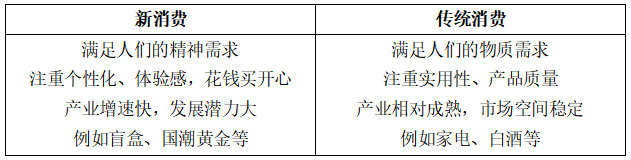
Core Viewpoint - The new consumption sector has emerged strongly in the market this year, becoming a focal point after a period of stagnation in the consumer sector [1] Group 1: Definition of New Consumption - New consumption is a relative concept that focuses on fulfilling people's spiritual needs, contrasting with traditional consumption that meets material needs [2] - New consumption emphasizes personalization and experience, while traditional consumption prioritizes practicality and product quality [3] Group 2: Segments of New Consumption - The "Guzi Economy" includes merchandise derived from copyrights of comics, animations, games, and idols, with a market size projected to reach 168.9 billion yuan in 2024, growing at 40.6% year-on-year [5][6] - The ready-to-drink tea market is expected to reach 312.7 billion yuan in 2024, reflecting a growth of 20.97% compared to the previous year [7] - The pet economy is projected to reach 300.2 billion yuan in 2024, with a year-on-year growth of 7.5% and a compound annual growth rate of 9.9% from 2018 to 2024 [7] - The "Guochao Gold" sector integrates elements of Eastern aesthetics and cultural identity, catering to young consumers' desires for individuality and fashion [7] Group 3: Reasons for Popularity of New Consumption - The rise of the Z generation as the main consumer group, coupled with their optimistic outlook on consumption, has driven the popularity of new consumption [8] - Changing consumer psychology emphasizes emotional value and personalization, leading to a preference for unique and resonant experiences [8] Group 4: Performance of New Consumption Sector - The "three stars" of Hong Kong stocks, including brands like "Mao Mart," "Golden Shop," and "Snow Ice City," have seen significant stock price increases of 268.19%, 1144.26%, and 81.38% respectively since their listings, outperforming the Hang Seng Index [8] Group 5: Future Investment Prospects - China's consumer market is vast, with a projected retail sales total of 48.8 trillion yuan in 2024, contributing 44.5% to economic growth [14] - Recent policies have been introduced to support the transformation of consumption, including measures to promote new consumption scenarios and high-quality service consumption [14][15] - The export potential of new consumption sectors, such as the pet industry, is significant, with exports to the EU expected to reach 1.12 billion USD in 2024, leading to greater growth opportunities [15]
“殉葬风”页面引热议,喜茶为何总在“阴间”营销上翻车?
凤凰网财经· 2025-10-16 10:24
Core Viewpoint - The recent "funeral style" design of Heytea's new product has sparked significant public debate, with mixed reactions from consumers regarding its aesthetic and appeal [1][2][9]. Product Launch and Consumer Reaction - Heytea's new product "碎银子糯糯" (Shattered Silver Sticky) is based on Yunnan black gold Pu'er tea, and the black-and-white design was intended to align with its visual theme [2][3]. - Despite the controversy, some consumers expressed a desire to try the product, while others criticized the design as inappropriate for a brand like Heytea [2][8]. Marketing Strategy and Brand Image - This is not the first time Heytea has faced backlash for its "funeral style" designs; a previous product, "咸酪泰奶冰" (Salty Cheese Thai Milk Ice), also drew similar criticism [9][17]. - The brand's use of "negative energy marketing" aims to stand out in a saturated market, appealing to younger consumers who resonate with "mourning culture" as a form of emotional expression [20][21]. Company Background and Market Position - Founded in 2012, Heytea gained popularity with its innovative cheese tea and has undergone significant growth, attracting substantial investment and expanding its market presence [22][24]. - However, the brand has faced challenges in maintaining its premium image amid increasing competition and a shift towards lower-priced offerings [26][27]. - In response to market pressures, Heytea has made strategic decisions to lower prices and open franchises, but this has led to concerns about brand dilution and quality control [26][27]. Future Outlook - As the market landscape evolves, Heytea is at a crossroads, needing to balance its brand identity with competitive pressures while considering the potential for a return to its premium roots [27][28].

网友吐槽喜茶外卖页面“阴间感”画风,网友:它好像忘了自己叫喜茶
Qi Lu Wan Bao· 2025-10-16 09:20
Group 1 - The core issue revolves around consumer backlash regarding the new branding style of Heytea, which some users find reminiscent of a "funeral" aesthetic [1] - A store employee explained that the change in color scheme was due to the launch of a new product [1] - This incident follows a previous controversy where a promotional campaign was associated with Qingming Festival, indicating a pattern of misalignment in branding and cultural sensitivity [1]

反内卷需要法律“明文规定”
Ren Min Wang· 2025-10-16 04:32
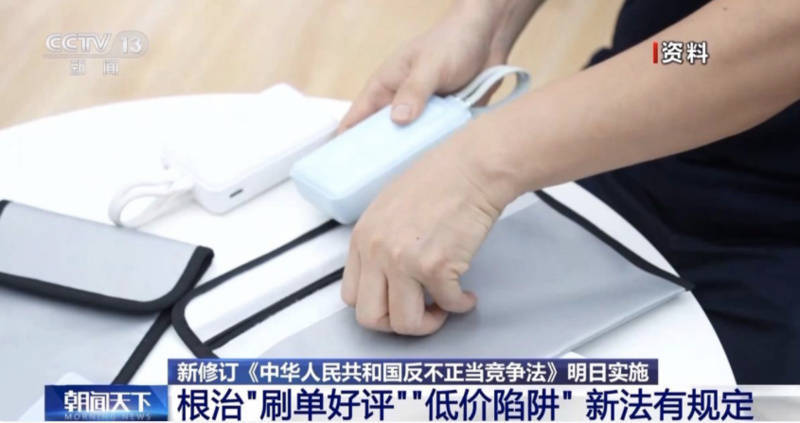
Core Points - The newly revised Anti-Unfair Competition Law of the People's Republic of China officially took effect on October 15, addressing challenges in the digital economy and providing stronger legal protections for both operators and consumers [1] - The law specifically targets "involution" in the market, prohibiting platform operators from forcing or indirectly compelling sellers to sell products below cost, with regulatory authorities empowered to investigate such practices [1][5] - The law aims to reshape market competition logic, emphasizing value competition based on quality, technology, service, brand, and innovation rather than destructive price wars [5][6] Summary by Sections Legal Framework - The revised Anti-Unfair Competition Law has undergone three amendments to better address the issues arising in the digital economy and to safeguard consumer rights [1] - It establishes a dual defense mechanism of "self-inspection by platforms + regulatory oversight" to ensure compliance with the law [1] Market Dynamics - "Involution" refers to irrational and destructive competition, where market players engage in price wars rather than improving quality or services, leading to negative externalities [3] - Examples of extreme low-price promotions, such as "2,000 mAh for 14.5 yuan," highlight the risks to product safety and public welfare [3][4] Long-term Implications - The law is seen as a necessary measure to combat the systemic damage caused by involution, which can lead to market monopolization and ultimately higher prices and fewer choices for consumers [4][5] - By defining below-cost sales that disrupt market order as illegal, the law provides clear guidelines for market participants and enforcement agencies [5] Economic Development - The legal provisions are intended not only to address current market order issues but also to support the long-term high-quality development of the Chinese economy [6]

新华网财经观察丨新茶饮的出海密码
Xin Hua Wang· 2025-10-16 03:31
Core Insights - The internationalization trend of Chinese new tea beverage brands is becoming increasingly prominent, with companies like Mixue Group and Bawang Chaji leading the way in overseas expansion [2][9]. Overseas Expansion: Seeking Growth and New Opportunities - New tea beverage brands are rapidly expanding globally, moving from Southeast Asia to regions like Europe, North America, and Oceania [3]. - Mixue Ice City opened its first store in Central Asia in Kazakhstan, achieving over 430,000 RMB in sales in the first month, and has expanded to 12 countries with over 4,700 overseas stores [5]. - Bawang Chaji opened its first U.S. store in Los Angeles, selling over 5,000 cups on the first day, and has expanded to 208 overseas stores by mid-year [7]. Market Potential and Growth Drivers - The Chinese new tea beverage market is projected to reach 354.72 billion RMB in 2024, with a year-on-year growth of 6.4%, indicating stable growth in the coming years [8]. - The overseas market presents new growth opportunities compared to domestic demand, which is a core driver for companies to "go global" [9]. Supply Chain as a Foundation for Success - A stable supply chain is crucial for tea beverage companies expanding overseas, with significant differences in standards between domestic and international markets [12]. - Mixue Group has established a comprehensive supply chain, including self-built factories and a global procurement network, to ensure product quality and freshness [14]. - Bawang Chaji has also focused on localizing its supply chain to meet the specific needs of different markets [15]. Localization Strategies for Market Penetration - Companies face challenges in adapting to different consumer preferences and regulatory environments in overseas markets [16]. - Successful brands conduct thorough market research to develop localized products, such as Mixue Ice City's chocolate ice cream lemon mint water tailored for Malaysian tastes [16]. - Bawang Chaji has implemented local partnership mechanisms and collaborated with local universities to integrate local innovation into product development [19]. Future Trends in Globalization - The expansion of tea beverage brands will be a long-term, phased process, with trends indicating a shift from quantity to quality in market management [22]. - There will be a growing emphasis on health and functionality in product offerings, with concepts like "low sugar" and "organic" gaining traction in international markets [23]. - Building a strong brand presence through content expression and community engagement will become increasingly important in overseas markets [24]. Digital Transformation and Market Opportunities - The integration of digital and intelligent solutions is reshaping the industry, with online ordering and supply chain traceability becoming standard practices [25]. - The global beverage market is expected to see significant growth in ready-to-drink products, particularly in regions like Southeast Asia and North America [26].


听·见|新规实施,向“刷单好评”“低价陷阱”说不
Sou Hu Cai Jing· 2025-10-15 12:24
Core Points - The newly revised Anti-Unfair Competition Law in China addresses various issues in the e-commerce sector, including counterfeit products, fake reviews, and predatory pricing practices [1][3][4] - The law aims to clarify and regulate new forms of unfair competition arising from the platform economy, ensuring a fairer market environment for consumers and legitimate businesses [3][4] Group 1: Key Regulations - The law explicitly defines "confusion behavior" related to "brand squatting," where others' trademarks are used as search keywords to mislead consumers [3] - It prohibits the organization of fake transactions and reviews, mandating platforms to establish reporting mechanisms for unfair competition [3][4] - The law addresses predatory pricing by penalizing sales below cost that disrupt market order [3][4] Group 2: Market Implications - The law seeks to eliminate "consumer traps" that distort market signals, allowing consumers to make informed decisions and helping compliant businesses survive [3][4] - It emphasizes the need for quality over price in competition, encouraging businesses to invest in innovation and new technologies rather than engaging in destructive price wars [4] - The law's effectiveness will largely depend on enforcement by regulatory bodies and the commitment of platforms and businesses to uphold their responsibilities [4]
蜜雪冰城3亿收购鲜啤福鹿家53%股权,现打鲜啤赛道再添巨头
Sou Hu Cai Jing· 2025-10-15 04:07
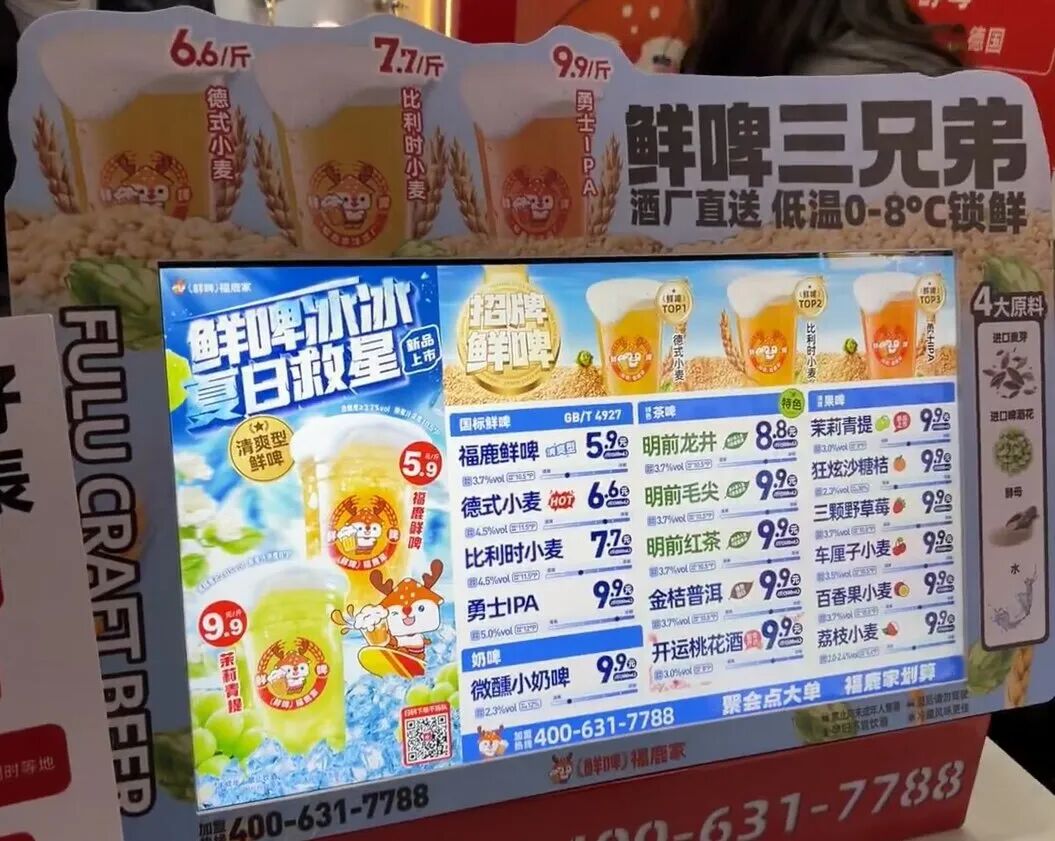
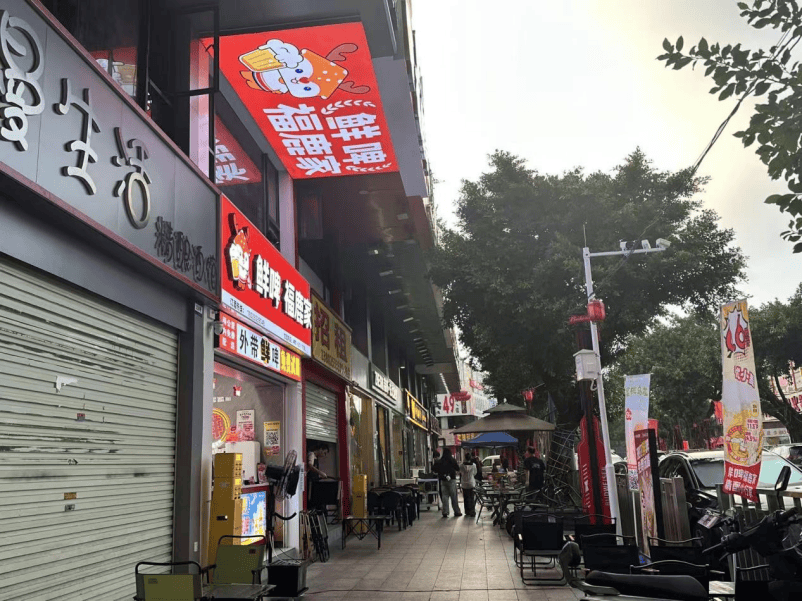
Core Insights - Recently, Mixue Ice City announced the acquisition of a 53% stake in Fresh Beer Fulu Family for nearly 300 million yuan, expanding its product offerings from tea and coffee to fresh beer [1][10] - The Fresh Beer Fulu Family stores feature a similar design to Mixue Ice City, emphasizing a vibrant red and cartoon style, and offer promotions like free tastings and no delivery fees within 2 kilometers [1][3] Company Overview - Fresh Beer Fulu Family operates small stores around 20 square meters, focusing on self-pickup and delivery, with a layout akin to tea shops [3] - The pricing strategy for Fresh Beer Fulu Family is competitive, with standard fresh beer priced at 5.9 yuan per 500ml and flavored beers ranging from 6.9 to 9.9 yuan [3][5] - The store offers approximately 16 SKUs of fresh beer, including standard, tea, milk, and fruit beers, along with various snacks priced between 1 to 15 yuan [5][9] Operational Model - Fresh Beer Fulu Family stores utilize a specialized cold storage for fresh beer, with a shelf life of only one month, emphasizing freshness [7][9] - The brand has rapidly expanded through a franchise model, with plans to exceed 1,000 stores by June 2025, having already opened over 400 new locations in just two months [9][10] Market Context - The craft beer market in China is experiencing growth, with the market size expected to reach 11 billion yuan by 2028, indicating a blue ocean opportunity for fresh beer and craft beer segments [19] - The industry is witnessing a shift in consumer preferences from industrial beer to fresh and flavorful craft options, aligning with Mixue Ice City's strategic entry into the fresh beer market [19] Competitive Landscape - The craft beer sector has seen significant investment and growth, with several brands like Helen's Tavern and Taishan Original Beer gaining traction [11][12][15] - Despite the presence of established brands, the fresh beer market remains fragmented, presenting opportunities for new entrants like Mixue Ice City to leverage their existing franchise networks for rapid expansion [19]

蜜雪集团再涨超6% 蜜雪冰城啤酒冲上热搜 机构看好公司拓宽品牌矩阵
Zhi Tong Cai Jing· 2025-10-15 02:12
Core Viewpoint - Mixue Group (02097) has expanded its business into the alcoholic beverage sector by acquiring a 53% stake in Fresh Beer Fulu Family for a total price of 297 million RMB, marking a significant shift from its traditional focus on tea and coffee products [1] Group 1: Company Developments - As of the latest report, Mixue Group's stock price increased by over 6%, reaching 439.4 HKD with a trading volume of 177 million HKD [1] - The acquisition of Fresh Beer Fulu Family will allow Mixue Group to integrate its financial performance into the group's consolidated financial statements, establishing it as a non-wholly owned subsidiary [1] Group 2: Industry Insights - The beer industry is characterized by a large market size and consumer base, with increasing demand for high-quality and diverse products, which is expected to create opportunities in the fresh beer market [1] - Mixue Group aims to leverage its existing supply chain and franchise advantages to enhance its brand presence in the fresh beer sector while maintaining its commitment to high-quality and affordable products [1]
港股异动 | 蜜雪集团(02097)再涨超6% 蜜雪冰城啤酒冲上热搜 机构看好公司拓宽品牌矩阵
智通财经网· 2025-10-15 02:05
Core Viewpoint - Mijue Group has expanded its business into the alcoholic beverage sector by acquiring a 53% stake in Xianpi Fulujia for 297 million RMB, marking a significant diversification from its traditional focus on tea and coffee products [1][1][1] Company Summary - Mijue Group's stock price increased by over 6%, reaching 439.4 HKD with a trading volume of 177 million HKD [1][1][1] - The acquisition of Xianpi Fulujia will allow Mijue Group to integrate the financial performance of the company into its consolidated financial statements, enhancing its market presence in the fresh beer segment [1][1][1] Industry Summary - The beer industry is characterized by a large market size and consumer base, with increasing demand for high-quality and diverse products, which presents growth opportunities for the fresh beer market [1][1][1] - Mijue Group aims to leverage its existing supply chain and franchise advantages to strengthen its brand presence in the fresh beer sector while maintaining its commitment to high-quality and affordable products [1][1][1]