快递

Search documents
拦截高风险交易近300笔
Xin Lang Cai Jing· 2026-01-11 22:25
Core Viewpoint - The Yongkang Market Supervision Bureau in Zhejiang Province has implemented a "reminder label + three-day payment buffer" mechanism to mitigate risks associated with cash-on-delivery transactions, particularly for elderly consumers, thereby promoting the high-quality development of the silver economy [1][2] Group 1: Mechanism Implementation - The mechanism has been adopted across all SF Express outlets in Yongkang, intercepting nearly 300 high-risk transactions and involving an amount close to 600,000 yuan, resulting in a recovery of 16,000 yuan for consumers [1] - The initiative focuses on protecting the legal rights of elderly consumers who prefer cash-on-delivery, especially in online shopping and television shopping, where they often face challenges in returning goods [1] Group 2: Collaborative Efforts - The Yongkang Market Supervision Bureau collaborates with postal management departments and courier companies to establish a database of active elderly consumers, which is updated dynamically [2] - Community volunteers, in conjunction with anti-fraud campaigns by public security agencies, conduct "home delivery" education activities to provide consumer warnings and guidance on legal rights [2] Group 3: Consumer Protection Measures - A guideline for emergency handling of cash-on-delivery disputes has been developed, ensuring that complaints received via the 12315 hotline are prioritized and addressed promptly [2] - The introduction of a "risk prevention guide" for cash-on-delivery transactions aims to enhance the self-protection awareness of the elderly population through regular educational activities [2]

寻找共识 拥抱趋势 警惕泡沫
Zhong Guo Zheng Quan Bao· 2026-01-11 20:49
Core Insights - The current A-share market rally is driven by a combination of policy expectations, industry trends, capital flow, and market sentiment, indicating a complex and critical new phase in the market [1][2] - The influx of incremental capital is a key factor in the ongoing market strength, with significant net inflows from northbound capital and increased trading volumes [2][3] Market Dynamics - The strong market performance is attributed to a multi-dimensional resonance of policies, industry developments, and capital dynamics, with a notable shift from a focus on existing capital to new incremental capital [2][3] - Northbound capital has seen multiple days of net inflows exceeding 10 billion yuan since January, with daily trading volumes rising from 1.7 trillion yuan to over 2.8 trillion yuan [2] Investment Strategies - Private equity firms are actively adjusting their portfolios, focusing on both offensive and defensive strategies, with a clear emphasis on sectors like AI and cyclical industries [4][5] - Investment in technology sectors is expanding from hardware to applications, with a focus on areas such as innovative pharmaceuticals, brain-computer interfaces, and commercial aerospace [4][5] Sector Focus - High-growth sectors such as AI applications, commercial aerospace, innovative pharmaceuticals, and non-ferrous metals are repeatedly highlighted as key investment areas [6][7] - There is a growing interest in cyclical assets due to expectations of economic recovery, with private equity firms increasing their holdings in sectors like non-ferrous metals and chemicals [5][6] Investor Sentiment - Institutional investors maintain a strategic optimism, while individual investors exhibit anxiety and indecision, reflecting a dichotomy in market sentiment [4][8] - Recommendations for individual investors emphasize the importance of professional management, focusing on long-term trends, and utilizing standardized investment tools to mitigate selection difficulties [8][9] Conclusion - The current market environment presents a comprehensive test of cognitive depth, strategic flexibility, and investment discipline, with private equity firms adapting their strategies to navigate the complexities of the evolving market landscape [9]
增值税新规调整 混合销售适用税率 影响范围有多大
Sou Hu Cai Jing· 2026-01-11 16:35
Core Viewpoint - The new VAT regulations effective from January 1, 2026, significantly alter the tax treatment of mixed sales, expanding the definition and applicability of tax rates based on the primary business activity involved in a transaction [2][3][5]. Summary by Sections VAT Policy Changes - The new VAT law specifies different tax rates for various sales activities: 13% for goods, 9% for transportation and construction, 6% for services, and a zero rate for exports. Small-scale taxpayers will have a 3% rate [2]. - The new regulations allow for separate accounting of different business activities within a single transaction, enabling businesses to apply the corresponding tax rate for each activity [2]. Mixed Sales Definition - The definition of mixed sales has evolved from requiring both goods and services to now encompassing transactions involving multiple tax rates or collection rates, reflecting the complexity of modern business models [3][4]. - The new approach emphasizes the economic substance of transactions, focusing on the primary business activity to determine applicable tax rates [7]. Implications for Various Industries - The new VAT rules will have widespread implications across industries, as many businesses engage in transactions that involve multiple tax rates. For example, in the logistics sector, a delivery service may now be taxed at 6% instead of 9% if the primary service is deemed to be the delivery [6][9]. - Industries such as construction and food sales will also see changes, where the primary service or product will dictate the applicable tax rate, potentially leading to lower tax burdens for certain transactions [9][10]. Recommendations for Compliance - Experts suggest that businesses should clearly define the primary and ancillary activities in their transactions to ensure compliance with the new VAT regulations [6][10]. - The government may need to provide further clarifications for industries where the distinction between primary and ancillary services is not clear, enhancing tax certainty for businesses [10].
交通运输行业周报:招商轮船发布业绩预增公告,委内原油出货或利好油运市场-20260111
SINOLINK SECURITIES· 2026-01-11 13:40
Investment Rating - The report does not explicitly state an overall investment rating for the industry Core Views - The logistics sector is seeing price increases due to a reduction in low-cost deliveries, benefiting leading companies like SF Express and ZTO Express [2] - The shipping market is experiencing a stable demand with a potential increase in oil transportation due to Venezuelan oil exports, which may positively impact the oil shipping market [4] - The airline sector is expected to see profit elasticity due to supply optimization and rising ticket prices, with recommendations for China Southern Airlines and Air China [3] Summary by Sections Transportation Market Review - The transportation index remained flat during the week of January 3-9, 2026, while the Shanghai Composite Index rose by 2.8%, indicating underperformance in the transportation sector [1][12] Industry Fundamentals Tracking Shipping and Ports - The shipping market is stabilizing with a good supply-demand relationship, and oil shipping is expected to rise due to the potential for Venezuelan oil to shift from black market to compliant market [20] - The China Export Container Freight Index (CCFI) was 1194.89 points, up 4.2% week-on-week but down 22.8% year-on-year [21] - The domestic trade container freight index (PDCI) was 1337 points, down 0.4% week-on-week and down 1.0% year-on-year [28] Aviation and Airports - In November 2025, civil aviation passenger volume reached 60.17 million, a year-on-year increase of 6%, with domestic routes up 5% and international routes up 19% [59] - The average daily flights in the week of January 3-9, 2026, were 14,725, a slight increase of 0.28% year-on-year [3] Rail and Road - In November 2025, national railway passenger volume was 331 million, up 8.94% year-on-year, while freight volume was 46 million tons, up 1.16% year-on-year [83] - The national highway freight volume was 3.876 billion tons, up 3.57% year-on-year, but the number of trucks on highways decreased by 14.86% week-on-week [89]

圆通斥资3亿收购喻会蛟旗下资产:阿里刚减持套现6亿
Xin Lang Cai Jing· 2026-01-11 11:12
Group 1 - YTO Express announced an investment of 305 million yuan to acquire 100% equity of Wanjia Gaoke, a wholly-owned subsidiary of its controlling shareholder, Shanghai YTO Jiaolong Investment Development (Group) Co., Ltd. [3][12] - The acquisition aims to enhance the infrastructure layout in the Beijing area and optimize asset allocation in North China [5][14]. - The transaction allows the controlling shareholders, Yu Huaiqiao and Zhang Xiaojuan, to cash out 300 million yuan [5][14]. Group 2 - Alibaba's investment company, Hangzhou Haoyue, reduced its stake in YTO Express from 9.06% to 7.9%, resulting in a cash-out of over 600 million yuan [6][8]. - Following the transaction, the total shareholding of Alibaba's entities in YTO Express decreased from 18.75% to 17.59% [6][15]. - In less than a year, Alibaba has cashed out over 1.4 billion yuan from YTO Express while remaining a significant shareholder [17]. Group 3 - As of the last trading day, YTO Express's stock price was 16.55 yuan, with a market capitalization of 56.6 billion yuan [8][16]. - In a previous transaction, Hangzhou Haoyue transferred 68,935,068 shares, accounting for 2% of the total share capital, through block trading [8][16].



四川老板督战出海,1000亿极兔撒腿狂奔
2 1 Shi Ji Jing Ji Bao Dao· 2026-01-11 08:39
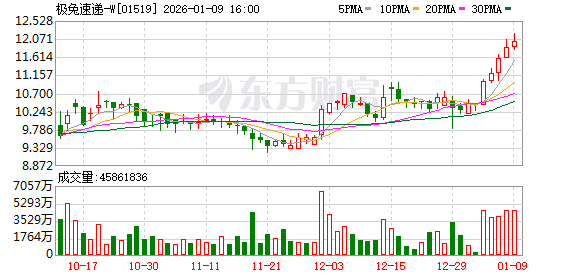
Core Insights - J&T Express aims to significantly expand its international operations, targeting a package volume of over 30 billion by 2025, with a daily processing capacity of 82.5 million packages [2] - The company has seen substantial growth in Southeast Asia and emerging markets, with package volume increases of 67.8% and 43.6% respectively, contributing to nearly 30% of its total volume [2][5] - J&T Express plans to make strategic acquisitions and investments in Latin America and the Middle East, viewing these regions as potential growth markets similar to Southeast Asia [2][11] Group 1: Financial Performance - As of mid-2025, J&T Express reported a net profit of $160 million, a 147.1% year-on-year increase, with Southeast Asia contributing two-thirds of this profit despite accounting for less than a quarter of total business volume [7] - The company's stock price has increased by 60% since 2025, with a market capitalization exceeding HKD 100 billion [2] - In the first half of 2025, J&T Express's revenue from Southeast Asia reached approximately $1.97 billion, with a gross profit of $350.97 million [19] Group 2: Market Strategy - J&T Express has expanded its operations to 13 countries globally, focusing on partnerships with major e-commerce platforms to grow alongside them [4][16] - The company is adapting its pricing strategies and increasing promotional efforts to maintain its market position amid rising competition from other Chinese logistics firms [17] - J&T Express is also diversifying its service offerings by targeting non-e-commerce packages, which are seen as a significant growth opportunity [21][22] Group 3: Future Outlook - Management is optimistic about maintaining high growth rates in emerging markets, particularly in South America, where local e-commerce platforms are increasing their investments [7] - The company is committed to achieving operational efficiency through automation and cost optimization, aiming for annual cost reductions of 5%-10% [20] - J&T Express anticipates that changes in external environments, such as new tariffs in Mexico, will have short-term impacts but believes that long-term trends will favor growth in direct shipping models [25]
招商交通运输行业周报:油运景气度回升,26年民航力争完成客运量8.1亿人次-20260111
CMS· 2026-01-11 08:04
Investment Rating - The report maintains a "Recommended" rating for the transportation industry [2] Core Insights - The shipping sector is experiencing a recovery in oil transportation due to improved demand post-holidays and geopolitical tensions [6][16] - The aviation industry aims to achieve a passenger volume of 810 million in 2026, reflecting a growth rate of 5.2% [23][24] - The express delivery sector is expected to see a gradual recovery in competition and profitability, with a focus on major players like SF Express [20] Shipping - The oil shipping sector is rebounding due to increased cargo availability from the Middle East and geopolitical sanctions affecting supply [6][16] - Container shipping rates are showing slight increases, with strong pricing power among shipowners before long-term contract negotiations [11][12] - Key stocks to watch include COSCO Shipping Energy, China Merchants Energy, and Pacific Shipping [16] Infrastructure - Weekly data indicates a decline in truck traffic and rail freight, with road truck traffic at 46.964 million vehicles, down 14.9% week-on-week [17][18] - Port throughput for the first week of 2026 was 25.4953 million tons, showing a slight decrease but a year-on-year increase of 7.7% in container throughput [18] - Recommended stock for infrastructure investment is Anhui Expressway [18] Express Delivery - In November 2025, express delivery volume reached 18.06 billion pieces, a year-on-year increase of 5%, while revenue decreased by 3.7% [19][20] - The competitive landscape is expected to stabilize, with major companies like SF Express anticipated to see profit growth in 2026 [20] - Recommended stocks include SF Express, ZTO Express, YTO Express, and Yunda Express [20] Aviation - The aviation sector is entering a critical period with the Spring Festival approaching, and passenger volume is projected to grow by 5.2% in 2026 [23][24] - Recent data shows a year-on-year increase in domestic passenger volume of 1.5% and a decrease in ticket prices [21][24] - Recommended stocks include Air China, China Southern Airlines, and Spring Airlines [24] Logistics - The cross-border air freight price index has decreased by 19.9% week-on-week, indicating a significant drop in logistics costs [25]



湖南省委书记省长调研的这件事,与骑手、快递员等有关
Xin Lang Cai Jing· 2026-01-11 07:55
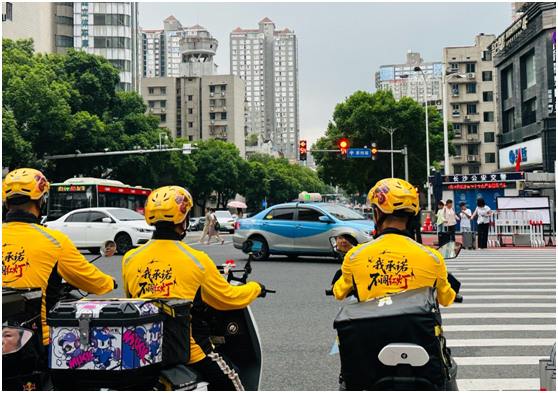
Core Insights - The construction of "Love Stations" for new employment groups is emphasized as a vital social initiative to enhance the welfare of workers such as delivery riders and couriers [1][9] - New employment groups are recognized as essential to urban operations and social stability, with significant government support for their rights and welfare [2][9] Group 1: New Employment Groups - New employment groups, including delivery riders and couriers, have become indispensable to urban life and social services [2][9] - As of December 2025, Hunan Province is projected to have approximately 127,800 delivery workers, with around 64,000 in food delivery [2] - The demographic of these workers is predominantly young, reflecting diverse career aspirations and a desire for social respect and belonging [4] Group 2: Challenges Faced - Delivery workers face long hours, high intensity, lack of rest areas, and insufficient rights protection, highlighting the need for basic support services [4] - There is a demand for essential services such as drinking water, charging stations, and emergency medical assistance [4] Group 3: "Love Stations" Initiative - The "Love Stations" initiative aims to provide essential services to new employment groups, including rest areas, drinking water, and health services [6][10] - The first batch of 249 "Love Stations" was established in Changsha, offering six core services to support workers and citizens in need [6] - Various types of stations have been built, including union stations and community-based support centers, with a total of approximately 6,000 stations across the province [4] Group 4: Government Support and Implementation - Government officials emphasize the importance of building "Love Stations" as a means to protect the rights of new employment groups and improve their living conditions [9][11] - The construction of these stations is guided by principles of practicality, local adaptation, and a focus on human needs, avoiding superficial measures [9] - Continuous efforts are being made to enhance the coverage and effectiveness of these services, aiming to improve the overall well-being of new employment groups [11]
民航继续整治过低票价,继续重视油运布局
GOLDEN SUN SECURITIES· 2026-01-11 05:23
Investment Rating - The report maintains an "Overweight" rating for the transportation industry [4] Core Insights - The civil aviation sector is expected to continue addressing "involutionary competition" while focusing on "expanding domestic demand" and "countering involution," indicating a positive long-term outlook for the aviation sector [2][11] - The shipping market is experiencing a recovery in VLCC freight rates due to geopolitical risks, with some shipowners becoming optimistic about future market conditions [2][12] - The logistics sector shows promising growth in express delivery, particularly in overseas markets, with significant increases in package volumes reported [3][15] Summary by Sections Weekly Insights and Market Review - The transportation sector index rose by 0.23% from January 5 to January 9, 2026, underperforming the Shanghai Composite Index by 3.59 percentage points [1][17] - The top-performing segments included highway freight, public transport, and warehousing logistics, with increases of 4.90%, 2.34%, and 2.16% respectively [1][17] Aviation - The civil aviation sector is seeing a recovery in demand, with a focus on maintaining low growth in capacity supply and improving airline profitability as ticket prices stabilize [11] - Key stocks to watch include China Eastern Airlines, China Southern Airlines, and Spring Airlines [11] Shipping and Ports - VLCC freight rates have begun to rise, with the CT1 route rate reaching $54,455 per day as of January 9, 2026 [2][12] - The dry bulk shipping market is facing downward pressure, with the BDI index at 1,688 points as of January 9, 2026 [13][14] Logistics - The express delivery sector is expected to grow, with a focus on overseas expansion and the impact of e-commerce growth on delivery volumes [3][15] - The report highlights the performance of Jitu Express, which saw a 73.6% increase in package volume in Southeast Asia for Q4 2025 [15][16]
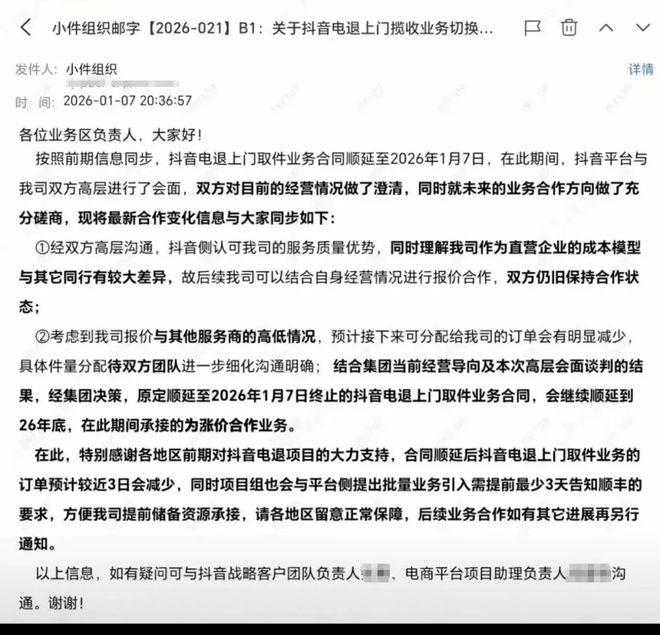
独家|切出二十天,抖音退货重回顺丰
Tai Mei Ti A P P· 2026-01-11 04:00
Core Viewpoint - The logistics industry is experiencing a significant shift as SF Express has successfully renegotiated its partnership with Douyin, extending their contract until the end of 2026 with a price increase, highlighting the importance of service quality over cost in logistics [1][2][9] Group 1: Background of the Partnership - SF Express was initially sidelined by Douyin in mid-December when Douyin switched its return logistics to other companies like JD Logistics and others due to cost concerns [4] - The split was not solely a unilateral decision by Douyin but rather a mutual disagreement over pricing and service expectations [4][9] Group 2: Service Quality Issues - The alternative logistics providers struggled to meet Douyin's service requirements, which included rapid response times and efficient pickup processes, leading to customer dissatisfaction [5][6][8] - JD Logistics faced operational challenges during peak periods, prioritizing its own deliveries over Douyin's return logistics, which further complicated the situation [6][8] Group 3: Market Dynamics and Pricing - The logistics market is evolving into a two-tier system where SF Express focuses on high-value, high-service clients while other providers cater to low-cost, high-volume segments [11][13] - SF Express's return to Douyin with a price increase signifies its established pricing power in the high-end market, reinforcing the idea that premium service comes at a premium price [12][14] Group 4: Industry Implications - The incident illustrates the limitations of trying to achieve low cost, high efficiency, and good service simultaneously in logistics, reinforcing the "impossible triangle" concept [11][12] - The logistics sector is entering a phase of "class solidification," where service quality will dictate market positioning, separating providers into distinct categories based on their service offerings [11][13][15]