国防军工

Search documents
吕礼诗×施佬:我们对解放军电子战能力一点都不了解,对万吨大驱也不了解
Guan Cha Zhe Wang· 2025-12-22 02:17
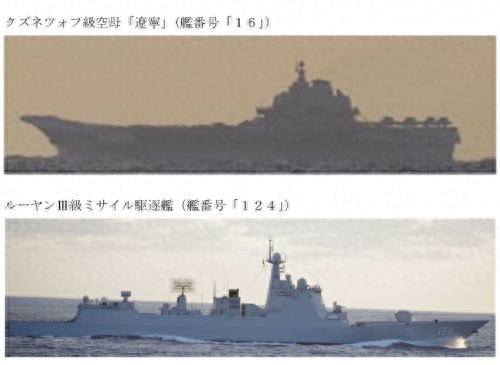
Group 1 - The discussion highlights the limited understanding of Japan and Taiwan regarding the military capabilities of mainland China, particularly in the context of recent naval activities by the Chinese aircraft carrier Liaoning [2][3][4] - The Chinese naval exercises are perceived as a strategic deterrent against Japan, with the presence of Russian military cooperation further complicating Japan's response [2][4][5] - Japan's military readiness has increased, as evidenced by the deployment of F-2 fighter jets and P-1 patrol aircraft in response to Chinese naval movements, indicating a serious acknowledgment of the threat posed by China [3][4][5] Group 2 - The U.S. national security strategy reflects a shift towards prioritizing domestic interests and a potential reduction in military engagement abroad, particularly in the Asia-Pacific region [8][9][12] - The economic constraints faced by the U.S. military are highlighted, suggesting that the ability to maintain a robust military presence is diminishing, which may impact its strategic posture in Asia [9][10][12] - The discussion raises concerns about the effectiveness of U.S. military support for Taiwan, particularly regarding arms sales and the industrial capacity to deliver on commitments [10][11][12] Group 3 - The conversation emphasizes the challenges faced by Taiwan in developing its indigenous military capabilities, particularly in submarine construction, which is seen as a costly and potentially ineffective endeavor [28][30][31] - The reliance on foreign technology and components in Taiwan's military projects raises questions about the viability and effectiveness of its defense strategy [30][32] - The overall sentiment suggests that Taiwan's military ambitions may be unrealistic given its current industrial capabilities and the geopolitical landscape [32][33]

尤洛卡12月19日获融资买入1585.27万元,融资余额4.16亿元
Xin Lang Cai Jing· 2025-12-22 01:32
Group 1 - The core viewpoint of the news is that Yuloka's stock performance and financial metrics indicate a mixed outlook, with a slight increase in stock price but a decrease in revenue year-over-year [1][2] Group 2 - On December 19, Yuloka's stock rose by 1.86%, with a trading volume of 113 million yuan. The margin trading data showed a financing buy of 15.85 million yuan and a repayment of 16.33 million yuan, resulting in a net financing outflow of 0.48 million yuan [1] - As of December 19, the total margin trading balance for Yuloka was 416 million yuan, with the financing balance accounting for 7.91% of the circulating market value, which is above the 60th percentile level over the past year [1] - In terms of securities lending, Yuloka repaid 1,000 shares and sold 12,500 shares on December 19, with a selling amount of 89,100 yuan, while the remaining securities lending balance was 13.19 million yuan, indicating a low level compared to the 20th percentile over the past year [1] Group 3 - As of December 10, Yuloka had 33,400 shareholders, an increase of 2.47% from the previous period, while the average circulating shares per person decreased by 2.41% to 17,419 shares [2] - For the period from January to September 2025, Yuloka reported operating revenue of 378 million yuan, a year-over-year decrease of 6.01%, while the net profit attributable to shareholders increased by 1.13% to 57.60 million yuan [2] - Since its A-share listing, Yuloka has distributed a total of 978 million yuan in dividends, with 400 million yuan distributed over the past three years [2]

申万宏源证券晨会报告-20251222
Shenwan Hongyuan Securities· 2025-12-22 00:41
Group 1: Market Overview - The Shanghai Composite Index closed at 3890 points, with a daily increase of 0.36% and a monthly change of 0.03% [1] - The Shenzhen Composite Index closed at 2465 points, with a daily increase of 0.98% and a monthly change of -0.34% [1] - Large-cap indices showed a slight increase of 0.3% yesterday, while mid-cap and small-cap indices increased by 0.91% and 0.8% respectively [1] Group 2: Industry Performance - The decoration and renovation industry saw a daily increase of 3.33%, but a decline of 7.79% over the past month, while it increased by 30.51% over the past six months [1] - The energy metals sector increased by 3.26% yesterday, with an impressive 85.77% increase over the past six months [1] - The general retail sector increased by 3.22% yesterday, with an 8.93% increase over the past month and an 18.79% increase over the past six months [1] Group 3: Notable Declines - The components sector experienced a decline of 0.74% yesterday, with a 3.46% increase over the past month and a significant 69.42% increase over the past six months [1] - The other electronics sector declined by 0.68% yesterday, with a 42.32% increase over the past six months [1] - State-owned large banks saw a decline of 0.67% yesterday, with a 7.66% increase over the past six months [1]


财信证券宏观策略周报(12.22-12.26):布局“春季躁动”行情,低吸科技成长方向-20251221
Caixin Securities· 2025-12-21 12:02
Group 1 - The report highlights the "spring market rally" effect, indicating that from the Central Economic Work Conference to the National People's Congress, the A-share market typically experiences a rally, with an average increase of 18.30% over 57 days based on historical data from 2009 to 2025 [4][7] - The report suggests that the market is expected to gradually enter a "spring market rally" phase, driven by increased liquidity and risk appetite, alongside favorable domestic policy expectations [4][7] - Key sectors to focus on include commercial aerospace, satellite industry, national defense, AI applications, and new consumption areas such as health, cultural tourism, and pet economy, which are expected to benefit from policy support [4][14][16] Group 2 - The macroeconomic recovery foundation remains to be solidified, with fixed asset investment declining by 2.6% year-on-year from January to November, indicating a need for policy measures to boost domestic demand [8][11] - The report notes that public budget expenditure increased by 1.4% year-on-year, with significant growth in social security, technology, and environmental protection spending, reflecting a focus on improving livelihoods and technological advancement [11] - The Japanese central bank's recent interest rate hike is expected to have limited impact on global markets, as the market had already priced in this increase, suggesting a continued trend of easing liquidity globally [12] Group 3 - The report provides an overview of A-share market performance, noting a slight increase in the Shanghai Composite Index by 0.03% and a decrease in the Shenzhen Component Index by 0.89% during the specified week [17] - The average daily trading volume in the A-share market was reported at 17,380.31 billion, reflecting a decrease of 10.12% compared to the previous week [17] - The report also highlights the performance of various sectors, with retail, non-bank financials, and beauty care showing the highest gains [17][20]
ETF市场扫描与策略跟踪:中证A500ETF合计净流入超300亿元
Western Securities· 2025-12-21 11:06
Global and A-share Market Overview - The A-share market showed mixed performance last week, with the Sci-Tech 50 Index experiencing the largest decline of 2.99%. The Hong Kong market also saw a decrease, with the Hang Seng Index down by 1.10%. The best-performing ETFs were primarily those tracking the defense and military sectors [1][12][15]. ETF New Issuance Statistics - In the A-share market, 11 stock ETFs were reported last week, and 7 new stock ETFs were established. No new equity ETFs were launched in the US market during the same period [2][17][19]. Fund Flows in A-share Market - The top 10 stock ETFs by net inflow were dominated by the CSI A500 Index ETFs, with a total net inflow exceeding 30 billion yuan. Conversely, the top 10 stock ETFs by net outflow were mainly from the military sector [2][24][25]. - The net inflow for broad-based ETFs was led by those tracking the CSI A500 Index, while the ETFs tracking the SSE 50 Index saw significant outflows [2][27]. Fund Flows in US Market - In the US market, political-themed ETFs saw the highest net inflows, while life sciences-themed ETFs experienced net outflows. Active ETFs based on the S&P 500 Index had the largest net inflows, while those based on the Russell 3000 Index saw outflows [3][24]. ETF Strategy Performance - The performance of the diffusion indicator + RRG ETF rotation strategy yielded a return of -0.31%, with excess returns relative to the CSI Equal Weight Index and the CSI 300 Index at -1.16% and -0.03%, respectively. The 50% base + intraday momentum strategy showed varying returns across different ETFs, with the SSE 50 ETF achieving a return of 0.08% [4][28].
A 股 TTM&全动态估值全景扫描(20251220):A 股估值收缩,商贸零售行业领涨
Western Securities· 2025-12-20 14:30
Core Conclusions - The overall valuation of A-shares has contracted this week, with the retail trade sector leading the gains. The Ministry of Commerce recently held a meeting to promote the "Three New" (new consumption formats, new models, new scenarios) pilot work, providing policy support for industry recovery. The concept of "reward economy" has emerged, further boosting sentiment in the consumption sector. Currently, the overall PB (LF) of the retail trade sector is at the historical 37.0 percentile, indicating significant room for valuation improvement [1][8]. Valuation Overview - This week, the overall PE (TTM) of A-shares decreased from 21.74 times last week to 21.73 times this week, while the PB (LF) remained stable at 1.77 times [10]. - The main board's PE (TTM) increased from 17.46 times last week to 17.54 times this week, and the PB (LF) rose from 1.48 times to 1.49 times [17]. - The ChiNext's PE (TTM) fell from 72.27 times to 71.32 times, and the PB (LF) decreased from 4.27 times to 4.21 times [19]. - The Sci-Tech Innovation Board's PE (TTM) dropped from 210.87 times to 205.59 times, and the PB (LF) fell from 5.17 times to 5.04 times [25]. Relative Valuation Analysis - The relative PE (TTM) of computing power infrastructure, excluding operators/resource categories, decreased from 4.47 times last week to 4.28 times this week, while the relative PB (LF) fell from 4.66 times to 4.46 times [28]. - In terms of static PE (TTM), major industries such as discretionary consumption, consumer staples, midstream manufacturing, cyclical, and midstream materials have absolute and relative valuations above the historical median, with discretionary consumption and consumer staples exceeding the historical 90th percentile [32]. - From the perspective of PB (LF), industries like resources, TMT, cyclical, and midstream manufacturing have absolute and relative valuations above the historical median, while discretionary consumption, midstream materials, financial services, services, and consumer staples are below the historical median [34]. Dynamic Valuation Insights - Analyzing the full dynamic PE, industries such as discretionary consumption, midstream manufacturing, cyclical, and midstream materials have absolute and relative valuations above the historical median, with discretionary consumption exceeding the historical 90th percentile [41]. - The current comparison of odds (PB historical percentiles) and win rates (ROE historical percentiles) indicates that industries like agriculture, public utilities, and oil and petrochemicals exhibit characteristics of low valuation and high profitability [59]. - The comparison of odds (full dynamic PE) and win rates (25-26 consensus expected net profit compound growth rate) shows that industries such as building materials, power equipment, media, and defense industry possess both low valuations and high performance growth [62]. ERP and Yield Spread - The non-financial ERP of A-shares increased from 0.87% last week to 0.89% this week, while the equity-debt yield spread improved from -0.12% to -0.05% [63]. - The full dynamic ERP of key non-financial companies in A-shares rose from 2.77% to 2.80% this week [70].
春节倒计时,大消费起舞年味渐浓 机构:跨年攻势已开始
Zheng Quan Shi Bao Wang· 2025-12-20 00:37
Market Overview - A-shares experienced a rebound this week, with the Shanghai Composite Index and Shanghai 50 showing slight gains, while the Shenzhen Component, Sci-Tech Innovation 50, and Northern Exchange 50 showed slight declines. Weekly trading volume decreased to 8.8 trillion yuan [1] Institutional Insights - Leverage funds had a net sell of over 1.1 billion yuan this week, with the basic chemical industry seeing a net sell of over 1.9 billion yuan. Other sectors like non-ferrous metals and food & beverage also faced net sells exceeding 1 billion yuan. Conversely, the electronics sector gained over 2.8 billion yuan in net buying, while the defense and military industry saw over 1.8 billion yuan in net buying [2] - The retail sector has seen continuous net inflows from major funds for five consecutive days, totaling over 22.5 billion yuan for the week. The non-ferrous metals sector also received over 20.1 billion yuan in net inflows, with several other industries exceeding 10 billion yuan in net inflows. Only the electronics and power equipment sectors experienced net outflows [2] Sector Performance - The retail sector index surged nearly 12% this week, reaching a new high for the year. Notable stocks like Baida Group and Li Qun Co. saw multiple trading halts due to price increases. Other sectors such as duty-free, internet celebrity economy, and new retail also showed strong performance [4] - The food and beverage industry is benefiting from the upcoming holiday sales season, with the snack food segment being particularly active. The sector index has risen for six consecutive days, with several companies experiencing significant price increases [6] Consumer Trends - According to iMedia Consulting, snack foods account for 49.23% of the types of goods consumers purchase for the New Year, making it the second-largest category. 40.23% of consumers prefer snack foods as gifts for the Spring Festival. The current per capita consumption of snack foods in China is 954.4 yuan, which is about one-fourth of that in the U.S. and half of that in Japan, indicating significant room for growth [7]




12月19日创业板高换手率股票(附名单)
Zheng Quan Shi Bao Wang· 2025-12-19 14:42
Market Performance - The ChiNext Index rose by 0.49%, closing at 3122.24 points, with a total trading volume of 444.704 billion yuan, a decrease of 5.152 billion yuan compared to the previous trading day [1] - Among the tradable ChiNext stocks, 1133 stocks closed higher, with 17 stocks rising over 10%, including Liying Technology, Debi Group, and Chuangyuan Co., which hit the daily limit [1] - The average turnover rate for the ChiNext today was 3.43%, with 29 stocks having a turnover rate exceeding 20% [1] High Turnover Stocks - The highest turnover rate was recorded by Deyi Culture at 57.53%, closing up 7.34%, with a trading volume of 1.18 billion yuan [1] - Other notable high turnover stocks included Huaren Health with a turnover rate of 56.23% and a closing increase of 5.72%, and Wanlong Optoelectronics with a turnover rate of 45.05% [1] Institutional Activity - Six high turnover ChiNext stocks appeared on the Dragon and Tiger list, with institutional participation noted in several stocks [3] - Aerospace Intelligence saw a net institutional buy of 90.6183 million yuan, while Huaren Health had a net institutional buy of 43.9794 million yuan [3] - Debi Group experienced a net institutional sell of 16.3466 million yuan, while Aerospace Intelligence had a significant net sell of 384 million yuan [3] Capital Flow - Among high turnover stocks, 15 stocks saw net inflows from main funds, with the highest inflows recorded for Yingshisheng at 342 million yuan, Aerospace Intelligence at 290 million yuan, and Haoen Automotive at 180 million yuan [4] - Conversely, Huaren Health experienced a net outflow of 238 million yuan, followed by Xice Testing and Tianyin Electric with outflows of 12.121 million yuan and 9.73721 million yuan, respectively [4] Sector Analysis - In terms of industry performance, the computer sector had the most stocks with turnover rates exceeding 20%, followed by defense and military industry and electric power equipment [2]




Options Corner: LMT Lags After Downgrade
Youtube· 2025-12-19 14:30
Core Viewpoint - Lockheed Martin has been underperforming compared to the industrial sector but is showing signs of a potential turnaround [2] Group 1: Company Performance - Lockheed Martin is down approximately 2% over the past year, ranking at the bottom among its defense sector peers such as Boeing, Northrop Grumman, General Dynamics, Raytheon, and GE [2] - The stock has formed a downward sloping channel, which was briefly interrupted by an upward trend that has since been broken [3][5] - Key price levels to watch include a low of 462.25, with further downside support at 437, and resistance at 485 [4][5] Group 2: Technical Analysis - The moving averages are clustered between 467 and 474, indicating a critical inflection point [4] - The Relative Strength Index (RSI) is trending lower but remains above the 50 midline, suggesting potential bearish activity if it crosses below 50 [5][6] - The volume profile indicates significant trading activity around 468, which is a key threshold for bullish sentiment [6][7] Group 3: Trading Strategy - An example trade strategy involves a broken wing call butterfly, which is bullish and aims to capitalize on potential upside while avoiding the earnings report on January 27 [9][11] - The trade consists of buying a 465 strike call, selling two 485 calls, and buying a 490 call, resulting in a net debit of approximately $700 per spread [12][13] - The break-even point for this trade is set at 472, just above the expected opening price of 467, allowing for profitability with a modest upward movement [13][14]


尾盘主力资金抢筹6只个股
Zheng Quan Shi Bao Wang· 2025-12-19 11:45
Group 1 - The core point of the article highlights that the main funds in the two markets experienced a net outflow of 1.283 billion yuan at the end of the trading day on December 19 [1] - The industries that saw significant net inflows of main funds exceeding 100 million yuan include non-ferrous metals, basic chemicals, and national defense and military industry [1] - Specific stocks that attracted over 100 million yuan in net inflow of main funds during the closing period include Ganfeng Lithium, Luoyang Molybdenum, N Uxin, Salt Lake Industry, Sungrow Power Supply, and Northern Rare Earth [1]