
芯片

Search documents
恒生指数上涨0.14% 恒生科技指数上涨0.74%
Xin Lang Cai Jing· 2026-02-05 11:03
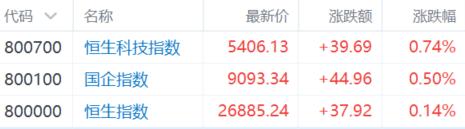
整体来看,新消费、新能源车企、银行、券商、航空等股多为上涨,芯片、科网、风电等股有涨有跌, 黄金、有色金属、商业航天、石油与天然气、房地产、煤炭等股多有下跌。 个股方面,泡泡玛特涨2.19%,中芯国际跌1.89%,美团涨1.79%,中国人寿跌2.73%,紫金矿业跌 4.76%,百度集团涨2.70%,携程集团跌0.53%,赣锋锂业跌6.60%,宁德时代跌1.93%,小鹏汽车涨 1.13%,工商银行涨0.47%,招商证券涨1.59%,商汤跌0.42%,中国石油股份跌0.66%。 成交额前三的个股中,腾讯控股涨0.09%,成交超434亿港元;阿里巴巴涨0.06%,成交超140亿港元; 小米集团涨2.83%,成交超69亿港元。 编辑:罗浩 转自:新华财经 新华财经香港2月5日电(记者林迎楠)5日,港股主要指数低开高走,截至收盘,恒生指数上涨0.14% 至26885.24点,恒生科技指数上涨0.74%至5406.13点,国企指数上涨0.50%至9093.34点。 当日恒指低开219.37点,开报26627.95点,开盘后小幅向下,午后拉高向上,最终恒指涨37.92点,主板 成交超3151亿港元。当日,港股通(南向)净流 ...
A股春节休市安排,来了→
证券时报· 2026-02-05 10:52
春节休市安排来了。 2月5日,沪深北交易所均公布了2026年春节休市安排: 2月15日(星期日)至2月23日(星期一)休市,2月24日(星期二)起照常开市。另外,2月14日 (星期六)、2月28日(星期六)为周末休市。 此外,为保证节后交易正常进行,北交所定于2026年2月23日(星期一)9:15至12:00进行交易系 统联调测试。 沪深港通方面,2月15日(星期日)至2月23日(星期一)不提供港股通服务,2月24日(星期 二)起照常开通港股通服务。另外,2月14日(星期六)、2月28日(星期六)为周末休市。 潜望系列深度报道丨 股事会专栏 丨 投资小红书 丨 e公司调查 丨 时报会客厅 丨 十大明星私募访谈 丨 豪掷7.17亿美元!美团收购叮咚买菜! 丨 "小洛熙"事件最新通报 丨 重要进展!两家存退市风险 上市公司部分账户被监管冻结 丨 深夜暴跌!芯片股,再传黑天鹅! 丨 又一A股公司,被上交所 开"罚单"!涉强蹭"商业航天""脑机接口"等热点 丨 300828,明起停牌!筹划重大资产重组 丨 利空 突袭!减肥药巨头,股价暴跌 丨 光伏产业链股拉升!传马斯克团队调研,上市公司证实! 丨 煤炭 板块,涨停潮 ...

高通,遭受重创
半导体芯闻· 2026-02-05 10:19
Core Viewpoint - Qualcomm warns that rising memory prices will slow down growth in the smartphone industry, causing a significant drop in its stock price by 11% [2] Group 1: Financial Performance - Qualcomm reported record revenue of $12.3 billion for Q1 2026, driven by strong sales of high-end smartphones and growing interest in smart glasses, automotive, and IoT products [2] - The company forecasts Q2 revenue to be between $10.2 billion and $11 billion, down from $11 billion in the same quarter last year, with smartphone chip sales expected to decline from $6.9 billion to $6 billion [3] Group 2: Market Dynamics - The cautious approach of smartphone manufacturers does not indicate a decline in market demand but rather reflects concerns over insufficient memory supply, leading to reduced production plans [3] - Qualcomm's CEO believes that the current turmoil will result in short-term losses but does not foresee long-term difficulties in the market [3] Group 3: Future Prospects - Qualcomm is diversifying its revenue streams through developments in robotics, automotive, and patent licensing, aiming to reduce its dependence on smartphone revenue by 2029 [4] - The company is also venturing into AI chip development, with initial deliveries made to its confirmed customer, Humane, and expects revenue from AI chips to materialize next year [3]

黄仁勋酒后暴论:编程只是打字,已经不值钱了
虎嗅APP· 2026-02-05 10:17
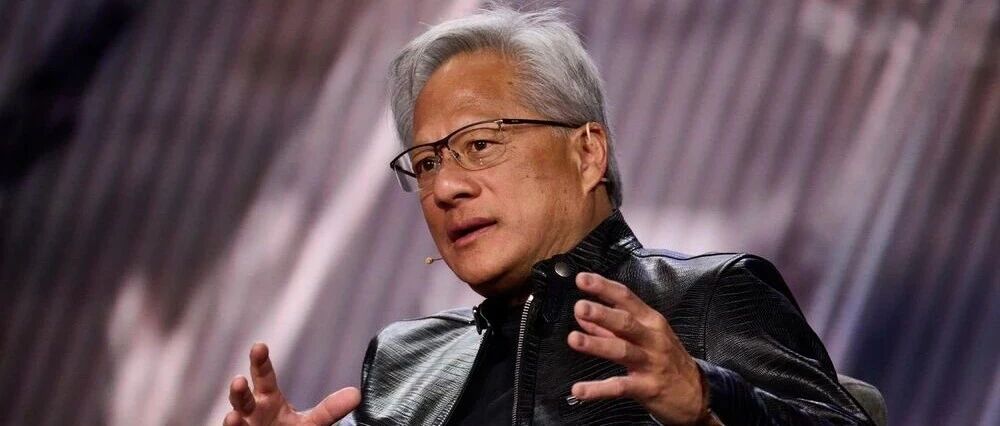
Core Viewpoint - Huang Renxun, CEO of Nvidia, expressed that programming is merely typing and has lost its value, emphasizing the need for innovation and adaptation in the face of rapid technological evolution [4][6][20]. Group 1: AI and Innovation - Huang advocates for a management approach that encourages experimentation and exploration within organizations, stating that innovation often occurs outside of strict control [6][7][40]. - He emphasizes the importance of allowing teams to experiment with various AI tools without the immediate pressure of ROI calculations, fostering a culture of "letting a thousand flowers bloom" [6][40]. - The concept of "AI factories" is introduced, where the focus shifts from merely creating tools to generating digital labor, fundamentally transforming industries [9][10][68]. Group 2: Market Potential - Huang highlighted the vast market potential for AI, noting that the global IT industry is approximately $1 trillion, while the total global economy is around $100 trillion, indicating a hundredfold opportunity for AI to penetrate and reshape the remaining sectors [10][11][68]. - He pointed out that every industry has the chance to transform into a technology-driven company, with examples like Disney aspiring to be like Netflix and Mercedes wanting to emulate Tesla [11][68]. Group 3: New Paradigms in Computing - Huang discussed the shift from explicit programming to implicit programming, where users can simply express their intentions and the AI will generate the necessary code, thus lowering the technical barrier [20][70]. - He described the transition from a "pre-recorded" era of software to a "generative" era, where applications will be contextually unique and dynamically generated based on user interactions [17][52]. Group 4: Data Sovereignty and Knowledge Ownership - Huang stressed the importance of data sovereignty and the need for companies to maintain control over their core intellectual property, which he believes lies in the questions posed during interactions with AI rather than the answers themselves [16][73]. - He argued that the most valuable intellectual property is the ability to ask the right questions, which reflects a company's strategic thinking and innovation potential [16][73]. Group 5: Future of Work and AI Integration - Huang predicted that future companies will have numerous AI assistants that learn from employee decisions and inquiries, ultimately becoming unique intellectual assets for the organization [16][73]. - He warned that companies must adapt quickly to AI technologies, as those who fail to do so risk being outpaced by competitors who embrace these advancements [68][73].


北水动向|北水成交净买入249.77亿 内资大举抢筹科网股及港股ETF 全天加仓腾讯(00700)超55亿港元
智通财经网· 2026-02-05 10:00
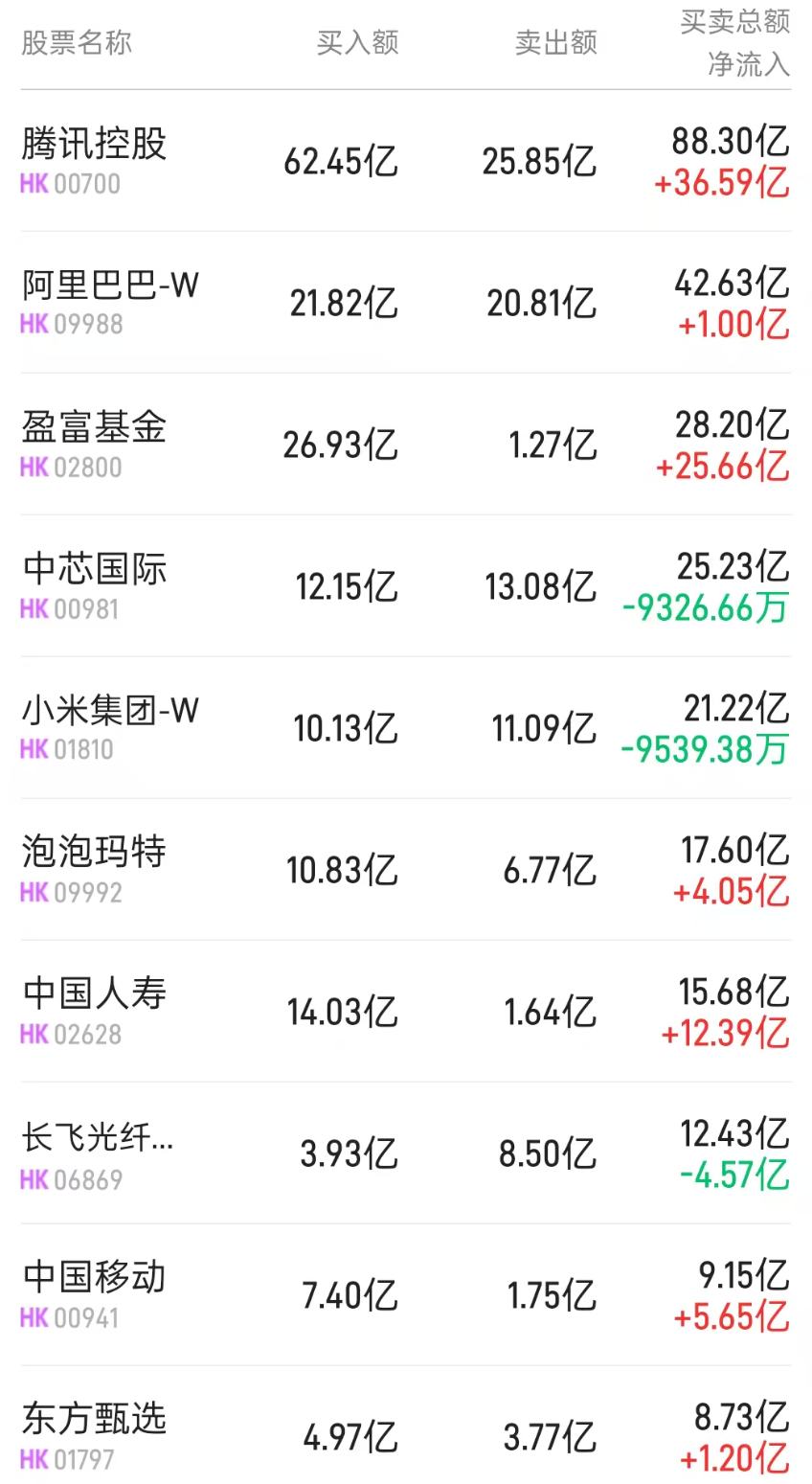
Core Insights - The Hong Kong stock market saw a net inflow of 24.977 billion HKD from Northbound trading on February 5, with both Shanghai and Shenzhen stock connect contributing approximately 12.481 billion HKD and 12.496 billion HKD respectively [1] Group 1: Stock Performance - Tencent (00700) received the highest net inflow of 62.45 billion HKD, with a total trading volume of 88.30 billion HKD [2] - Alibaba-W (09988) had a net inflow of 21.82 billion HKD, with a total trading volume of 42.63 billion HKD [2] - The Yingfu Fund (02800) saw a net inflow of 26.93 billion HKD, totaling 28.20 billion HKD in trading volume [2] Group 2: Notable Net Outflows - Changfei Optical Fiber (06869) experienced the largest net outflow of 4.57 billion HKD, with total trading volume of 12.43 billion HKD [3] - Huahong Semiconductor (01347) had a net outflow of 3.63 billion HKD [6] - SMIC (00981) faced a net outflow of 3.08 billion HKD [6] Group 3: Market Trends and Analyst Insights - High-frequency trading in tech stocks continues, with Tencent, Alibaba-W, and Meituan-W (03690) receiving significant net inflows of 55.78 billion HKD, 15.52 billion HKD, and 5.4 billion HKD respectively [4] - Goldman Sachs predicts 2026 will be a pivotal year for Chinese internet giants, focusing on trends such as AI super applications and cloud business investments [4] - China Life (02628) received a net inflow of 12.39 billion HKD, with potential government plans to issue special bonds for capital injection into large insurance companies [5]





如果AI击溃了软件,“AI龙头”英伟达为何被软件股“拉下水”?
华尔街见闻· 2026-02-05 09:56
周二,Anthropic为其Claude Cowork推出近十项工具,将AI应用推进到销售、数据分析等更多场景,市场随即把"AI将击败软件"的叙事进一步内化为估值下 调。但软件股的下跌引发了包括AI板块在内的,更大范围的抛售。 Bank of America分析师Vivek Arya认为,芯片股跟随下挫说不通。他指出,芯片下跌暗示AI投资回报正在恶化,而软件下跌又暗示AI采用将极度普及,两种结 论难以同时成立,当前市场反应过度。 AI对软件行业的冲击叙事正引发一轮"无差别"抛售,并把以英伟达为代表的AI芯片股一起卷入下跌,但卖出的逻辑本身存在内在矛盾。 周三英伟达股价下跌3.41%,博通下跌3.83%,美光下跌10%,闪迪跌超15%。与此同时,软件板块抛压仍在延续,iShares Expanded Tech-Software Sector ETF,IGV周三再跌1.8%。 "这两种结果不可能同时发生。" Arya写道,这种交易结构与今年1月"DeepSeek冲击"期间的恐慌相似,最终被证明缺乏事实支撑。当时市场担忧DeepSeek以 更低成本做出有竞争力的模型,会降低对昂贵高性能芯片的需求。 AI投入未见降温 ...
AI真成摇钱树了,AMD单季狂揽100亿美元,能否靠“性价比”杀出重围?
3 6 Ke· 2026-02-05 09:02
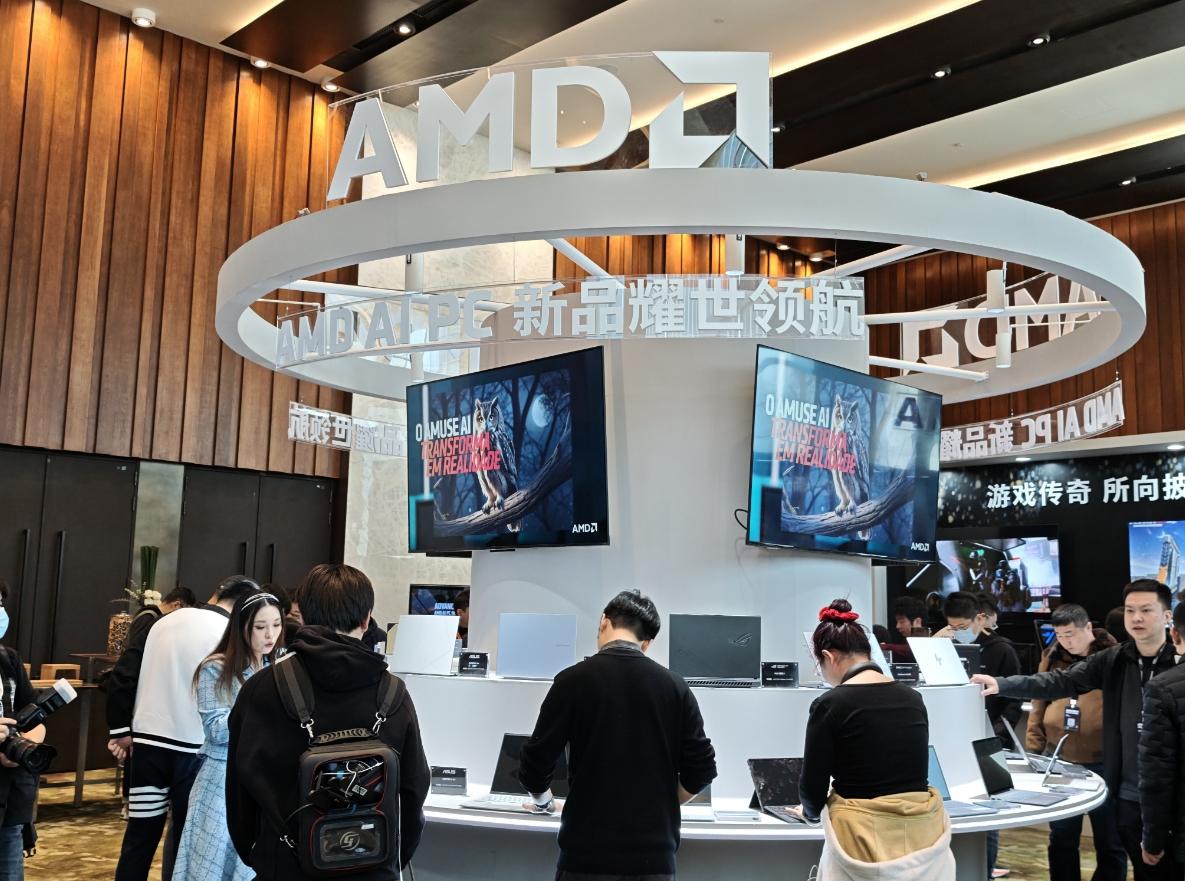
Core Viewpoint - The global PC market has shown a surprising recovery with consecutive growth in sales for 2024 and 2025, driven significantly by AI technology, despite previous years of decline [1] Financial Performance - AMD reported Q4 2025 revenue of $10.27 billion, a 34% year-over-year increase, and a total annual revenue of $34.64 billion, also up 34%, marking record highs for the company [4] - The net profit for Q4 2025 was $2.519 billion, a substantial 42% increase year-over-year, while the annual net profit reached $6.831 billion, up 26% [4] Market Reactions - Despite strong financial results, AMD's stock price fell post-earnings report, indicating investor dissatisfaction with performance relative to expectations, particularly in the context of the AI boom [6] - Intel's 2025 revenue was $52.9 billion, significantly higher than AMD, but it reported a net loss of $300 million, reflecting ongoing challenges despite its market share leadership [6][8] - Nvidia, as the leader in the GPU market, reported Q3 revenue exceeding $57 billion, a 62% increase, and profits over $37.7 billion, overshadowing AMD's performance [8] Business Segments - AMD's revenue from the client and gaming segment was $3.94 billion in Q4, accounting for nearly 40% of total revenue, driven by products like Ryzen processors and RDNA graphics cards [9] - The data center segment generated $5.83 billion in Q4, surpassing the consumer segment, largely due to advancements in AI server technology and partnerships with leading AI companies [13] - The embedded segment contributed $0.95 billion in Q4, focusing on automotive and industrial applications, indicating potential for future growth [15] AI Strategy - AMD has launched the Radeon RX 9000 series targeting the mid-to-high-end market and introduced AI-focused chips like the Ryzen AI Max+, which features enhanced AI capabilities [11] - The company anticipates significant growth in its data center business, projecting a 60% annual increase over the next three to five years, with AI-related revenue potentially reaching hundreds of billions by 2027 [18] Competitive Landscape - AMD is positioned as a challenger to Nvidia in the AI chip market, adopting an open ecosystem strategy compared to Nvidia's closed approach, and focusing on high-performance CPU and GPU combinations [20] - While AMD aims to capture stable revenue from the AI surge, it faces formidable competition from Nvidia, which currently dominates the market with a comprehensive ecosystem and high profitability [20]

港股收盘(02.05) | 恒指收涨0.14% 科网股午后回暖 百胜中国(09987)绩后大涨11%
智通财经网· 2026-02-05 08:48
Market Overview - Hong Kong stocks opened lower but closed higher, with the Hang Seng Index rising by 0.14% to 26,885.24 points and a total turnover of HKD 315.12 billion [1] - Morgan Stanley noted that despite recent market volatility, effective measures to cool A-shares, a stronger USD against RMB, and long-term regulatory support for Hong Kong are expected to provide positive liquidity support for both A-shares and Hong Kong stocks [1] Blue-Chip Performance - Baidu Group-SW (09888) saw a 2.7% increase, closing at HKD 140.9 with a turnover of HKD 3.238 billion, contributing 7.38 points to the Hang Seng Index [2] - Baidu announced a new stock buyback plan with a maximum amount of USD 5 billion, effective until December 31, 2028, and approved a dividend policy expected to be announced in 2026 [2] - Other blue-chip stocks included Haidilao (06862) up 4.03%, Lenovo Group (00992) up 3.67%, while Zijin Mining (02899) fell 4.76% and New Oriental-S (09901) dropped 3.13% [2] Sector Performance Consumer Sector - Large consumer stocks performed well, with Yum China rising over 11% post-earnings, and other consumer stocks like Mao Ge Ping (01318) up 5.29% and Haidilao (06862) up 4.03% [3] - Citigroup highlighted that the 2026 consumer recovery will rely on sustainable profit growth rather than short-term policy stimulus, naming several companies as industry favorites [3] Precious Metals - The precious metals sector saw a significant decline, with gold and silver prices dropping sharply, and major companies like China Aluminum (02600) and Jiangxi Copper (00358) also experiencing losses [4] - Guojin Securities indicated that the gold and silver markets are becoming increasingly volatile, influenced by various macroeconomic factors [4] Space Photovoltaics - The space photovoltaic concept saw a decline, with companies like Junda Co. (02865) dropping 12.35% as the technology is still in the early exploration phase [5] - The China Photovoltaic Industry Association stated that the technology is not yet ready for large-scale commercialization [5] Semiconductor Sector - Semiconductor stocks faced pressure, with companies like Zhaoyi Innovation (03986) down 4.47% following a significant drop in AMD shares, which fell 17.31% after disappointing guidance despite strong revenue growth [6] - The decline in AMD affected other major storage companies, leading to collective losses in the sector [6] Notable Company Updates - Yum China reported total revenue of USD 11.797 billion for 2025, a 4% increase, with a net profit of USD 929 million, reflecting a 2% growth [7] - MGM China (02282) reported a net revenue of approximately USD 4.462 billion for the year ending December 31, 2025, a 10.92% increase [8] - Tianqi Lithium (09696) saw a significant drop of 13.33% after announcing a placement of new H-shares and convertible bonds, raising a total of HKD 58.61 billion [9] - New City Development (01030) fell 13.17% after announcing a share placement at a discount to raise funds for future development and debt repayment [10]
港股收评:三指齐升!恒科指涨0.74%,消费概念股全天强势
Ge Long Hui· 2026-02-05 08:43
Market Overview - The Hong Kong stock market indices collectively rose in the afternoon, with the Hang Seng Technology Index initially dropping to a new low of 1.8% but ultimately closing up by 0.74%, ending a five-day losing streak [1] - The Hang Seng Index and the Hang Seng China Enterprises Index increased by 0.14% and 0.5%, respectively, as market sentiment improved, with net inflows from southbound funds exceeding HKD 22 billion [1][16] Sector Performance - The restaurant sector saw significant gains, with New Enjoy Era rising over 22%, and other sectors such as new consumption concepts, dairy products, and beer stocks also performing well [2][5] - Conversely, semiconductor stocks continued to decline, influenced by a sharp drop in AMD shares, with companies like Zhaoyi Innovation and SMIC falling by over 4% and nearly 2%, respectively [2][14] Notable Stocks - Major technology stocks such as Xiaomi and Baidu rose nearly 3%, while Meituan increased by nearly 2%, indicating a recovery in the tech sector [3] - New Enjoy Era's stock price surged to HKD 0.295, marking a 22.92% increase, while Yum China reported total revenue of USD 11.797 billion for 2025, a 4% year-on-year growth [5][6] Consumer Sector - New consumption stocks like Miniso and Mao Geping saw increases of over 6% and 5%, respectively, reflecting positive market sentiment in the consumer sector [6][7] - Miniso announced a share buyback of 51,300 shares at a price between USD 4.5575 and USD 4.6275 [7] Automotive Sector - Automotive stocks showed signs of recovery, with APOLLO rising over 3% and companies like Xiaomi and NIO increasing by over 2% [8][9] Commodity and Energy Sectors - The copper sector faced declines, with China Northern Rare Earth falling over 9%, and Morgan Stanley maintaining a cautious outlook on copper prices due to high global inventories and low demand [10][11] - The photovoltaic sector also experienced downturns, with companies like Lens Technology and GCL-Poly Energy dropping over 4% and 3%, respectively, amid regulatory concerns in the industry [12][13]
摩尔线程跌1.71%创新低 2个月前上市募80亿元
Zhong Guo Jing Ji Wang· 2026-02-05 08:41
Core Viewpoint - The stock price of Moore Threads (688795.SH) has reached a new low since its listing, closing at 534.58 yuan with a decline of 1.71% on February 5, 2023 [1]. Group 1: Company Overview - Moore Threads was listed on the Shanghai Stock Exchange's Sci-Tech Innovation Board on December 5, 2025, with a total of 70 million shares issued, accounting for 14.89% of the total share capital post-issuance [1]. - The company raised a total of 799.96 million yuan from its initial public offering, with a net amount of 757.61 million yuan after deducting issuance costs, which is 42.39 million yuan less than the original plan [1]. Group 2: Fund Utilization - The funds raised are intended for the development of new generation self-controlled AI training and inference integrated chips, new generation self-controlled graphics chips, new generation self-controlled AI SoC chips, and to supplement working capital [1]. - The total issuance costs for the public offering amounted to 42.35 million yuan, with underwriting fees constituting 39.20 million yuan [2].