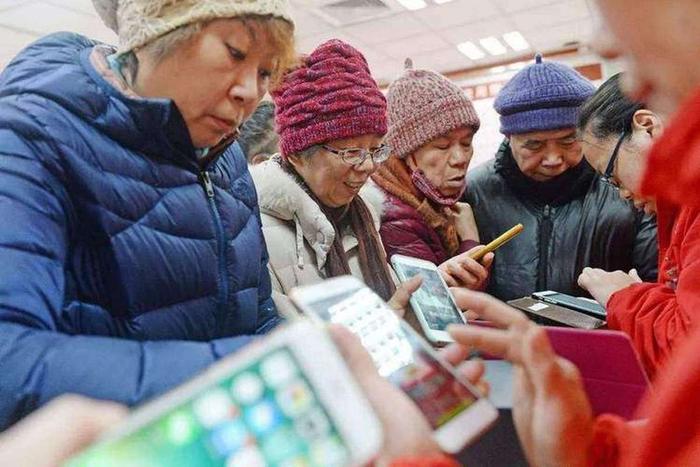
银发经济

Search documents
下一个小生意机会:藏在老龄化、宠物和社区里|吴晓波频道线下大课
吴晓波频道· 2025-09-22 00:30
Core Insights - The article emphasizes the importance of low-cost business opportunities for ordinary people in the context of economic trends, particularly focusing on the concept of "small but beautiful" businesses that require lower investment and offer quicker returns [4][33]. Group 1: Macro Trends and Business Logic - The current trend of consumption downgrade is identified as a long-term shift rather than a temporary fluctuation, driven by GDP slowdown and industrial restructuring [6][33]. - Historical references to Japan and the U.S. illustrate that businesses that survive economic downturns typically exhibit characteristics such as extreme cost-effectiveness, precise market segmentation, and high operational efficiency [6][33]. - A consensus on low-cost business models suggests an investment of around 150,000 yuan per store, with a management-light approach and a return on investment period of 12 to 24 months [7][33]. Group 2: High Opportunity Industries - The silver economy in China, with an aging population of 20%, presents significant growth potential, as it currently contributes only 5% to GDP compared to Japan's 30% [11][33]. - Opportunities in the silver economy include: - Soft food products tailored for the elderly, with a focus on affordability and large portions [13][33]. - Fitness centers specifically for middle-aged and elderly women, utilizing light exercise equipment and social engagement [13][33]. - Home modifications for elderly care, addressing essential needs for aging in place [13][33]. - The pet economy is highlighted as a low-penetration sector with significant opportunities, particularly in pet funerals and traditional Chinese medicine-based pet health products [14][15][33]. Group 3: Practical Business Models - In the restaurant industry, a shift towards lighter business models is recommended, focusing on a limited menu that emphasizes popular dishes to enhance customer retention [17][33]. - Successful case studies include: - A beauty service model that reduces operational complexity while maintaining high customer return rates [17][33]. - A fast-food chain that has thrived by optimizing space and staff efficiency, achieving significant revenue growth during economic downturns [17][33]. - Community-based dining models are proposed as a sustainable approach, leveraging local trust and repeat business, with a focus on affordable, home-style meals [30][33].


播客 | 天天基金×泉果基金:经济有周期,消费终不眠
天天基金网· 2025-09-06 10:05
Core Viewpoint - The podcast "基会来了" discusses the future of new consumption in China, questioning whether it is a fleeting trend or a sustainable growth opportunity [4]. Group 1: New Consumption Trends - New consumption companies often start with high valuations due to uncertainty about their growth potential, but they may face significant price declines if they fail to establish a solid market presence [5]. - A systematic understanding of the industry’s business model is crucial, particularly the presence of scale effects, as industries without them tend to become increasingly fragmented [5]. - The long-term success of consumer goods relies heavily on brand strength, with high gross margins indicating strong pricing power [5]. Group 2: Understanding Consumer Behavior - The 80s generation fund managers can still effectively study the consumption patterns of younger generations by recognizing industry trends and conducting thorough research [7]. - Observing new trends and being open to understanding them is essential for investment research, even if the researcher is not part of the target consumer group [7]. - Engaging with industry leaders and analyzing market data can provide valuable insights into consumer preferences and market dynamics [9]. Group 3: Consumption Dynamics - Current consumer behavior reflects a generational shift, with younger consumers displaying confidence in their purchasing decisions, prioritizing product quality and value over brand prestige [10]. - Economic growth in consumption is fundamentally linked to rising household incomes, making income growth a prerequisite for sustained consumption growth [10]. Group 4: Competitive Advantage in Global Markets - Chinese consumer brands have shown significant competitive advantages in international markets, particularly in gaming, where they have adapted products to local cultures and achieved substantial success [13]. - The success of Chinese products abroad challenges the notion that cultural differences would hinder market acceptance, as many products have thrived in Western markets [16]. Group 5: Promising Consumption Segments - Key areas for future investment include international expansion of companies, modern consumer categories like self-care products, gaming, and the pet economy, as well as the technology and AI sectors [18].

读懂养老需求 撬动银发“经济圈”
Xiao Fei Ri Bao Wang· 2025-08-28 02:41
Core Insights - The silver economy is evolving beyond traditional concepts of elderly care, encompassing diverse consumer scenarios such as health management, entertainment, and smart products [1][4] - There is a significant gap in service standards and market regulations within the silver economy, leading to mismatches between products and the actual needs of elderly consumers [1][4] Market Growth - According to the latest data from the State Taxation Administration, the number of entities engaged in the production of silver products is expected to grow by 14.1% year-on-year by mid-2025 [1] - Revenue from the manufacturing of elderly fitness equipment, rehabilitation aids, and nutritional health products has increased by 14.7%, 12.1%, and 6.9% year-on-year, respectively, surpassing the average growth rates of the manufacturing industry by 9.5, 6.9, and 1.7 percentage points [1] Consumer Challenges - Many elderly consumers find smart wearable devices cumbersome, with issues such as inconvenient charging and lack of usability leading to low adoption rates [2][4] - Elderly travel groups often provide generic itineraries that do not cater to the varying physical capabilities of participants, resulting in dissatisfaction among travelers [2][4] Need for Adaptation - Experts emphasize that the silver economy must transition from merely providing "elderly care" to enhancing the "enjoyment of aging" [4][5] - True adaptation for elderly consumers involves rethinking technology and services from their perspective, ensuring ease of use and integration into their daily lives [5] Government and Industry Initiatives - The government is increasing support for the silver economy, with initiatives such as the "Silver Travel" train service and upgrades to public transportation to better accommodate elderly passengers [6] - There is a call for greater involvement of elderly individuals in the development of products and services, suggesting a shift from user interviews to collaborative creation [6] Future Opportunities - The silver economy presents opportunities to address higher-level needs of elderly individuals, such as social engagement, skill training, and mental health services [8] - The potential for mixed services combining AI companionship with human therapists could lead to significant market growth in the mental health sector for the elderly [6][8]
调查与思考丨银发经济,只是“看上去很美”?
Sou Hu Cai Jing· 2025-08-26 01:16
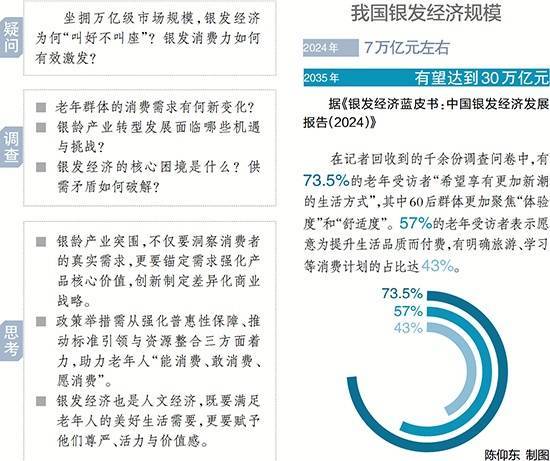
Core Insights - The silver economy in China is rapidly growing, with a current scale of approximately 7 trillion yuan, projected to reach 30 trillion yuan by 2035 [1] - Despite the potential, the market faces challenges such as demand realization difficulties, industry homogenization, and policy implementation gaps [9][10] Group 1: Market Trends - Increasing interest in AI courses for the elderly indicates a shift towards technology adoption among older consumers [4] - The main areas of consumption growth for the elderly are health management, cultural and entertainment experiences, and smart products [5] - A significant 73.5% of elderly respondents desire a more trendy lifestyle, with 57% willing to pay for improved quality of life [6] Group 2: Challenges - There is a mismatch between the consumption demand and payment willingness among the elderly, leading to low conversion rates for products [11] - The market is saturated with homogeneous products, particularly in the tourism sector, which stifles innovation and service upgrades [13][14] - Policy measures aimed at supporting the elderly often face implementation challenges, with many initiatives failing to reach their intended beneficiaries effectively [16] Group 3: Opportunities for Growth - Companies are encouraged to develop differentiated products based on a comprehensive understanding of the elderly's diverse needs [18] - Establishing a demand-driven funding allocation system and enhancing the accessibility of services can stimulate consumption among the elderly [19] - The silver economy should focus on creating a supportive ecosystem that not only meets the material needs of the elderly but also enhances their dignity and sense of value [20]
中国现在的正在上演的诡异经济
Sou Hu Cai Jing· 2025-08-11 04:55
Core Viewpoint - The article discusses the emergence of a new consumer behavior in China driven by emotional spending, particularly among the single population and the elderly, highlighting a shift from traditional consumption patterns to those focused on emotional value [5][30]. Group 1: Demographic Changes - The single population in China has reached 240 million, expected to exceed 300 million next year, while the population aged 60 and above has surpassed 310 million, together accounting for nearly half of China's population [5][6]. - These demographics represent the first generation of Chinese individuals who can spend money independently, breaking away from traditional family financial obligations [6][8]. Group 2: Shifts in Consumption Patterns - The article identifies a significant transformation in consumption logic, where essential living expenses are minimized while spending on emotional products has surged [9][10]. - The pet economy has reached 279.3 billion, projected to exceed 360 billion next year, driven by the emotional bonds people form with their pets in a high-pressure society [11][12]. - The rise of the "one-person economy" is noted, with products and services tailored for single individuals becoming mainstream, reflecting a shift in lifestyle [13]. Group 3: Emotional Value in Consumption - The concept of "emotional value" is introduced as a new form of value that transcends traditional economic measures, focusing on the psychological satisfaction derived from products [18][20]. - The article emphasizes that the current consumer landscape is characterized by a demand for emotional fulfillment, with spending on seemingly irrational items serving as a means to achieve psychological balance [30][32]. Group 4: Economic Implications - The silver economy has surpassed 12 trillion, expected to approach 50 trillion next year, representing 12% of GDP, indicating a significant market opportunity akin to the real estate boom [26]. - The article suggests that the emotional economy is not just a commercial opportunity but also a profound social transformation, reflecting the complexities of modern life and individual isolation [27][34].
银发经济规模已超10万亿元 养老服务供给有很大完善空间|首席对策
Di Yi Cai Jing Zi Xun· 2025-08-10 07:54
Core Insights - The "14th Five-Year Plan" emphasizes the development of the silver economy in response to the aging population, with projections indicating that by 2024, the elderly population (aged 65 and above) will reach 220 million, accounting for 15.6% of the total population [1][3] - The aging process in China is accelerating, with significant disparities between regions and urban-rural areas, necessitating a comprehensive approach to elder care and services [1][5] Group 1: Aging Population and Economic Impact - The silver economy has surpassed 10 trillion yuan, with its share of the national economy continuously increasing, projected to reach 20% by 2035 [8][3] - The traditional perception underestimates the consumption potential of the elderly, indicating a need for better understanding of their demands [6][7] Group 2: Systematic Development of Elderly Care - The past five years have seen a shift from isolated breakthroughs in elderly services to a more integrated system approach, focusing on the construction of a comprehensive elderly care service system [3][4] - The government is enhancing the policy and institutional framework for elderly care, promoting a coordinated service system from community to institutional levels [4][5] Group 3: Challenges in Supply and Demand - There is a structural imbalance in the supply of elderly services, primarily provided by small and medium enterprises that lack sufficient policy support [7][8] - The demand for elderly services is growing, but the current supply does not adequately meet the needs of the elderly population [10][11] Group 4: Technological Integration - The application of AI and robotics in elderly care can alleviate the shortage of caregivers and improve service efficiency, although ethical concerns regarding technology use must be addressed [9][10] - The integration of technology in elderly care presents both opportunities and challenges, particularly in identifying suitable applications for robots in this sector [9][10] Group 5: Financial and Policy Support - The development of a multi-pillar pension system is essential for addressing the challenges of the current pension model, which relies heavily on a pay-as-you-go system [14][15] - Macro policies, including structural monetary tools, are being implemented to support the development of the elderly care industry, emphasizing the need for financial security alongside returns [17][18]
将提振消费与惠民生结合起来
Sou Hu Cai Jing· 2025-08-08 22:45
Core Insights - The integration of consumption stimulation and improving people's livelihoods is crucial for activating domestic demand and promoting high-quality economic development [1][3] - Expanding domestic demand is essential for stabilizing growth, with consumption contributing over 60% to economic growth in recent years [1] - Recent policies aimed at boosting consumption have shown significant effects, including innovations in consumption scenarios and the emergence of new growth points like the ice and snow economy and silver-haired consumption [1] Policy Implementation Challenges - There are challenges in policy implementation, including poor coordination between different departments, leading to inconsistencies in policy goals and measures [2] - Some consumers remain unaware of specific subsidy policies, such as those for new energy vehicles, resulting in missed opportunities for eligible consumers [2] - There is a mismatch between market supply and consumer demand, affecting market activity [2] Strategic Measures for Consumption Stimulation - Enhancing residents' income and providing targeted welfare policies, such as consumption vouchers for low-income groups, can create a virtuous cycle of consumption, employment, and income growth [3] - High-quality supply is necessary to stimulate consumption demand, with a focus on expanding product and service offerings and supporting new business models [3] - Optimizing the consumption environment through improved infrastructure and consumer rights protection can enhance consumer confidence [3] - Inclusive financial services should be developed to support consumption equity, particularly for rural areas and new urban residents [3]
旅居康养“逐浪”中国银发经济蓝海
Xin Hua Wang· 2025-08-06 00:35
Core Insights - The silver economy in China is transitioning from basic security to quality consumption, creating new opportunities for the travel and health care industry [1] - The scale of China's silver economy is expected to reach 30 trillion yuan by 2035, driven by policy support, market demand, and technological innovation [1] Group 1: Travel and Health Care Industry Development - The travel and health care industry is experiencing a "two-way rush" with the silver economy, boosting consumption across multiple sectors such as transportation, accommodation, and healthcare [2] - The travel and health care products account for nearly 20% of the silver economy, with an annual growth rate projected between 15% and 20% [3] - The integration of digital service platforms in Heilongjiang province has led to a year-round travel and health care model, effectively meeting the diverse needs of the elderly population [3] Group 2: Market Trends and Consumer Behavior - Elderly tourism is shifting from compensatory travel to primary consumption, with projects transitioning from resource-driven to service-driven models [3] - Future travel and health care projects should focus on specific elderly demographics, addressing chronic disease rehabilitation and cultural pursuits of highly educated retirees [3] - The silver economy supports three major development goals: improving livelihoods, economic growth, and social construction [4] Group 3: Policy and Infrastructure - Establishing smart elderly care big data platforms is essential for providing precise services and promoting urban-rural integration [4] - Enhancing the quality of life for the elderly is fundamental to stimulating consumption in the travel and health care sectors [4]

成都温江:抢占银发经济新赛道 打造全国核心示范区
Zhong Guo Chan Ye Jing Ji Xin Xi Wang· 2025-08-04 08:10
Core Viewpoint - Chengdu's Wenjiang District is actively developing a comprehensive silver economy industry chain, integrating culture, commerce, tourism, sports, and health to become a national core area for the silver economy, providing a model for high-quality development in the aging industry [1][2]. Policy Guidance - The State Council's issuance of opinions on developing the silver economy in January 2024 marks a significant policy-driven acceleration for the sector, with Sichuan Province and Chengdu quickly prioritizing it as a key industry chain [2]. - Wenjiang District aims to leverage the integration of culture, commerce, tourism, sports, and health as a vital engine for expanding domestic demand and improving livelihoods, striving to take the lead in the national silver economy sector [2]. Innovative Layout - The exploration of the silver economy in Wenjiang began in 2023, highlighted by the first national summit on high-quality development of the silver economy and the establishment of a specialized incubator [3]. - Wenjiang has created a full industry chain ecosystem covering research, production, sales, and services through a structure of "one core area + multiple specialized parks" [3]. - The silver economy industrial park focuses on the research and sales of age-friendly products, attracting leading companies in the sector [3]. E-commerce Empowerment - The silver e-commerce professional park addresses online sales challenges by providing comprehensive e-commerce solutions, including platform development, professional host training, and logistics integration [4]. - The park has launched themed live streaming rooms for senior health products across various regions, collaborating with over 200 brands and achieving an average daily live streaming traffic of over 3 million [4]. - The park aims to create a billion-level online transaction scale by the end of 2025, with over 50 silver e-commerce companies already established [4]. Industry Resource Gathering - The "2025 China (Chengdu) Silver Economy Industry Expo" will be held in August 2025, showcasing innovative products and services in the silver economy [5]. - The expo will feature various sections, including an elderly-friendly product exhibition and a smart elderly care experience area, expecting participation from over 200 domestic and international companies [5]. - The silver e-commerce professional committee will advocate for quality and integrity in the sector, ensuring that products and services genuinely benefit the elderly population [5].
税务局捅破窗户纸:不是老人变潮了,是你根本不懂银发江湖
Xin Lang Cai Jing· 2025-07-28 19:14
Core Insights - The article highlights the significant economic contributions of the elderly population in China, challenging stereotypes about their consumption habits and capabilities [1][7] - It emphasizes the shift from traditional views of elderly spending to a more dynamic engagement in various sectors, including technology and experiential consumption [3][5] Group 1: Economic Contributions - Elderly-related tax revenue increased by 28% year-on-year in the first half of the year, surpassing growth rates in other sectors like live-streaming e-commerce [1][6] - The number of elderly individuals engaging in education and new skills has surged, with a 120% increase in registrations for senior education programs [1][3] - Spending on smart devices by seniors rose by 47%, with significant interest in online stock trading and virtual tourism [3][4] Group 2: Changing Consumption Patterns - The elderly are moving towards experience-based consumption, with a 35% increase in the tourism market, while group tours have dropped to 20% of the market [3][4] - There is a notable rise in elderly participation in gaming, with older players showing higher engagement than younger demographics [3][4] - The demand for "age-friendly" products and services is growing, with a 210% increase in tax revenue from companies focused on adapting products for seniors [5][6] Group 3: Employment and Entrepreneurship - There has been a notable increase in tax filings from seniors, with 230,000 new taxpayers over 60, 30% of whom are re-entering the workforce [4][6] - Seniors are increasingly taking on entrepreneurial roles, with examples of successful businesses run by retirees outpacing younger counterparts [4][5] - The concept of "skills-based retirement" is gaining traction, with many seniors seeking meaningful work rather than traditional retirement roles [4][5] Group 4: Market Dynamics and Challenges - The article points out the rise of scams targeting the elderly, with a 180% increase in financial fraud cases related to retirement investments [6][7] - There is a significant digital divide, with only 12% of elderly individuals in rural areas engaging in online consumption compared to 68% in urban settings [6][7] - The need for businesses to adapt to the preferences and habits of older consumers is emphasized, moving beyond simplistic adaptations like larger text sizes [7][8]