
零售

Search documents
估计以后没有企业想学胖东来了
虎嗅APP· 2026-03-18 10:57
Core Viewpoint - The article discusses the evolution of the profit distribution mechanism at Pang Donglai, emphasizing a shift towards a more structured and institutionalized approach that makes it harder for other companies to replicate its success [4][13]. Group 1: Profit Distribution Mechanism - Pang Donglai's founder, Yu Donglai, announced a profit distribution plan allocating nearly 3.8 billion yuan of company assets, with approximately 50% going to the management team and 50% to employees [8]. - This distribution is not direct cash but rather a conversion of assets into shares, allowing employees to become shareholders, thus transforming them from "workers" to "partners" [9][13]. - The plan has been in place for over 20 years, evolving from a system of free gifting and holding to a clearer structure as the company prepares to open new stores [12]. Group 2: Employee Treatment and Culture - Pang Donglai offers competitive employee benefits, including an average salary exceeding 9,000 yuan per month, a maximum of 7 working hours per day, and generous vacation policies [14]. - The company fosters a culture that treats employees as family, which is integral to its operational success and difficult for other companies to replicate [14][22]. - The contrasting management styles highlight a divide in corporate culture, with some companies employing strict KPI systems and others, like Pang Donglai, promoting autonomy and creativity [17][24]. Group 3: Management Theories - The article references Douglas McGregor's X and Y theories of management, where X theory assumes people dislike work and require control, while Y theory posits that people can be self-motivated and creative [20][21]. - Pang Donglai exemplifies Y theory management, focusing on trust and empowerment rather than control, which is challenging for many companies to adopt [22][25]. - The article suggests that the current corporate environment, characterized by excessive management control, is reaching its limits, necessitating a shift towards Y theory practices [24][29].


强call顺周期消费-低估港股先行
2026-03-18 02:31
Summary of Key Points from Conference Call Records Industry Overview - The consumer sector, particularly the cyclical consumption segment, is showing signs of bottoming out, with potential for rebound or reversal in demand. This is supported by positive trends in the restaurant industry, which serves as a key reference point [2][2] - The restaurant industry is experiencing a slowdown in price wars, with companies like McDonald's and KFC implementing slight price increases, indicating a more rational pricing environment [2][2] Company-Specific Insights Haidilao - Haidilao's table turnover rate has improved to over 4.0, with expectations for 2026 revenue to reach approximately 4.6 billion yuan [1][5] - The return of founder Zhang Yong as CEO is expected to accelerate the growth of the main brand and the "hard bone" sub-brands, with plans to expand into lower-tier cities and introduce new dining formats [6][6] - If Haidilao maintains a turnover rate above 4.0 and a customer price close to 100 yuan, it could achieve a profit recovery to around 4.6 billion yuan, corresponding to a valuation of about 20 times [6][6] Mixue Ice Cream - Mixue Ice Cream is expected to see over 20% growth in store openings in 2026, with its price advantage under 10 yuan becoming more pronounced as delivery subsidies decline [1][7] - Despite market concerns about same-store sales and growth, Mixue's actual performance may exceed pessimistic expectations, with a stable same-store sales growth forecast [7][8] Songcheng Performance - Songcheng Performance is projected to achieve revenue between 1 billion to 1.1 billion yuan in 2026, driven by improvements in existing projects and new developments [3][4] Old Puhuang Gold - Old Puhuang Gold is transitioning towards a luxury goods model, with expected revenue of around 7.2 billion yuan in 2026 and a low valuation of 15 times [1][10] - The company is focusing on high-value customers, with significant growth potential in its high-end gold product offerings [11][11] China Oriental Education - China Oriental Education has seen a year-on-year increase of over 25% in spring recruitment collections, with a projected profit of 1 billion yuan for 2026 [1][17] - The company is expanding into new sectors such as beauty and pet care, indicating a strategic diversification [17][18] Dongfang Zhenxuan - Dongfang Zhenxuan is experiencing a fundamental turnaround, with plans to expand its self-operated product offerings by 90% to approximately 1,500 SKUs in the 2026 fiscal year [1][18] - The company is enhancing its multi-channel strategy, including expanding its own app and offline teaching networks [18][18] Bluko - Bluko is guiding for a 30% revenue growth in 2026, with a focus on international expansion and new product categories like building vehicles [1][16] - The company aims for a 70%-80% growth in its overseas segment, leveraging popular IPs for market penetration [16][16] Additional Insights - The overall sentiment in the cyclical consumption sector is cautiously optimistic, with signs of recovery in consumer spending and strategic shifts among key players [2][2] - Companies are increasingly focusing on enhancing customer experience and product offerings to drive sales growth in a competitive environment [1][1]

有奖发票已投放18.5亿元奖金,你中奖了吗
第一财经· 2026-03-18 02:20
Core Viewpoint - The implementation of the lottery invoice policy in 50 major cities in China has effectively stimulated consumer spending, with a total of 1.85 billion yuan in prizes distributed and 230 million participants engaged in the initiative [3][4]. Group 1: Policy Implementation and Impact - The lottery invoice trial, lasting six months, allows consumers to participate in a draw for prizes by requesting invoices for purchases over 100 yuan in various sectors, including retail and dining [3]. - As of March 12, 2026, the program has attracted 230 million participants and distributed 1.85 billion yuan in prizes, indicating a positive impact on consumer behavior [3][4]. Group 2: Local Adjustments and Incentives - In Wuhan, the monthly limit for invoice submissions has been increased from 10 to 20, and the number of invoices from the same merchant that can be submitted has risen from 2 to 3 [5]. - Wuhan has introduced special prizes, including a year's use of a specific brand of car and consumer vouchers ranging from 1,000 to 10,000 yuan, to further encourage participation [5]. Group 3: Regulatory Oversight - Authorities are monitoring and addressing fraudulent activities related to the lottery invoice program, including the issuance of false invoices and improper splitting or merging of invoices to increase winning chances [5]. - The tax authorities have outlined specific types of violations that will be closely monitored, including the issuance of invoices for non-existent transactions and the improper use of red invoices [5]. Group 4: Financial Support for Cities - The central government will provide financial support to the participating cities, with funding caps set at 300 million yuan for mega cities like Beijing and Shanghai, 200 million yuan for large cities, and 100 million yuan for smaller cities [6].

股价大涨近6%!亚朵Y2025电话会:2026年预计零售收入同比增长25%-30%!
美股IPO· 2026-03-18 00:41
Core Viewpoint - The company is optimistic about its retail business growth, projecting a 25%-30% increase in retail revenue for 2026, following a record high of 3.67 billion yuan in FY2025, which represents a 67% year-over-year increase [1][7]. Group 1: Financial Performance - In FY2025, the company achieved a retail revenue of 3.67 billion yuan, marking a 67% increase year-over-year, with the "Deep Sleep Memory Pillow Pro" series surpassing 10 million units in sales [1]. - The adjusted net profit margin for FY2025 was approximately 17.9%, remaining stable compared to 2024 despite initial expectations of a decline due to changes in revenue structure and higher effective tax rates [8]. - The company anticipates a slight decrease in net profit margin for 2026 due to increased G&A and R&D expenses as part of its long-term strategic investments [8]. Group 2: Strategic Initiatives - The company has completed its goal of establishing 2,000 selected hotels under the "China Experience" strategy and has initiated a new three-year strategy focused on brand leadership and excellence [3]. - The retail business now accounts for nearly 40% of the company's total revenue, with synergies between hotel and retail operations continuing to strengthen [3]. - The company plans to open 488 new hotels in 2025, bringing the total number of operating hotels to 2,015, which is a 24.5% increase year-over-year [3]. Group 3: Market Outlook - The hotel industry is experiencing a moderate recovery, with RevPAR showing a positive trend throughout 2025, and the company expects this trend to continue into 2026 [6]. - The overall supply growth in the hotel industry may slow further in 2026, but leisure demand remains strong, with positive performance indicators such as ADR and occupancy rates exceeding last year's levels during the Spring Festival [6]. - The company is committed to maintaining high-quality standards in its hotel operations, planning to close approximately 80 hotels in 2026 to ensure consistency in guest experience [9]. Group 4: Retail Business Development - The company emphasizes innovation and product-driven growth in its retail segment, focusing on maintaining a leading position in the pillow category while expanding into other product lines such as bedding and homewear [7]. - The retail business is expected to continue its strong growth trajectory, with a focus on enhancing product and brand strength to achieve sustainable long-term development [7].

大消费渠道脉搏:零食量贩头部品牌探索多元模式,布局新业态差异化竞争
Haitong Securities International· 2026-03-17 15:20
Investment Rating - The report does not explicitly provide an investment rating for the industry or specific companies within it [6]. Core Insights - Leading brands in the bulk snack industry are actively expanding diversified business models, with Wanchen launching money-saving supermarkets and exploring a comprehensive selection model that includes fresh fruits and baked goods, currently piloted in Jiangsu and Anhui [2][9]. - The convenience store business of Yummy Snack has established a presence in Guangzhou, with around 300 stores and a low entry barrier for franchisees, indicating a rapid expansion strategy [10]. - The overlap in target customer groups between convenience stores and bulk snack stores is about 10%-20%, with significant differences in positioning and competitive focus [11]. - Busy Ming focuses on large-scale expansion and increasing store numbers, while Wanchen Group is concentrating on improving single-store operational efficiency and product-driven efforts [12]. Summary by Sections Market Overview - On March 16, 2026, Haitong International held a seminar discussing the current state and future trends of new snack wholesale convenience store formats [8]. Business Models - Wanchen has launched a money-saving supermarket model and a community hard-discount supermarket brand, Huishengjia, focusing on essential household items [2][4]. - Busy Ming has introduced a project called "A Little Recommended," which aims to enhance profit margins through a direct-sale model [9][12]. Competitive Landscape - The competitive impact of new business formats on bulk snack operations is relatively small, with bulk snack stores leveraging price advantages to attract customers [11]. - Meiyijia, a leading convenience store, is expanding steadily with over 40,000 stores nationwide and positive same-store sales growth at established locations [13]. Strategic Directions - Busy Ming prioritizes store expansion, while Wanchen Group is focusing on enhancing operational efficiency and product offerings [12].
山姆、盒马、美团们疯狂开店,中小商家靠什么突围?
3 6 Ke· 2026-03-17 10:28
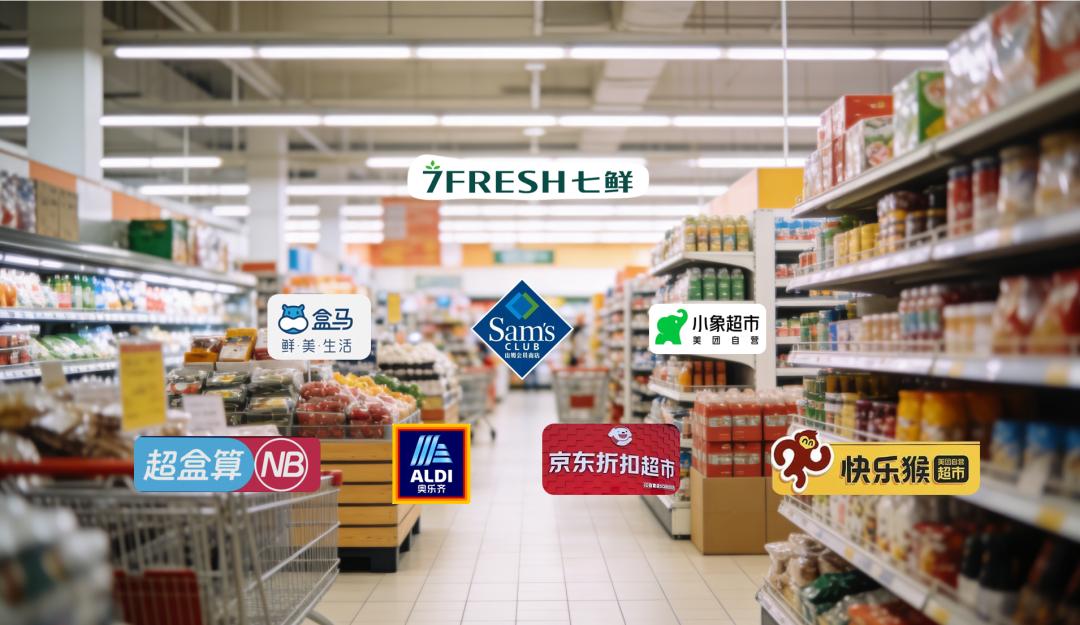
Group 1 - The retail market is experiencing a new round of expansion, with major players aggressively opening new stores while many smaller retailers face closures and losses, indicating a rapid structural adjustment in the industry [2][5] - Major retail giants are expanding across various formats, including large stores like Sam's Club and Hema, as well as smaller formats like Walmart community stores and Meituan's Happy Monkey, making the offline retail space a battleground [3][5] - The expansion goals of these giants are ambitious, contrasting sharply with the struggles of many small retailers, which highlights a concentration of resources and influence towards leading players in the market [5][15] Group 2 - The current offline retail market is dominated by three main types of players: domestic platform giants like Alibaba and Meituan focusing on traffic efficiency, international giants like Sam's Club and Aldi emphasizing quality, and regional new forces like Fresh Wind Life that cater to local needs [6][11][10] - The giants leverage their financial strength, digital capabilities, and product power to create significant asymmetrical advantages over traditional small retailers, leading to a competitive landscape where smaller players struggle to keep up [16][17][20] - The unique case of Pang Donglai demonstrates a successful model in non-first-tier cities, focusing on high-quality service and community engagement, which has become a significant trend in the retail industry [13][39] Group 3 - To survive, small retailers must adopt a localized strategy that emphasizes understanding local consumer needs and agile supply chain management, contrasting with the standardized approaches of larger chains [24][26][28] - Key steps for small retailers include identifying local demand differences, establishing localized supply chains, and maintaining operational agility to respond to community needs [27][29][30] - Building a strong local brand identity and emotional connection with the community is essential for small retailers to differentiate themselves from larger competitors [30][34] Group 4 - The retail industry is undergoing a reshaping process where the giants' aggressive expansion is not the end for smaller players but rather a new phase that will eliminate those who do not adapt [39] - The focus for small retailers should be on flexibility and service quality, which are critical competitive advantages that larger companies cannot easily replicate [39][38]

2026年,钱从哪挣?
创业家· 2026-03-17 10:15
Group 1 - The core question for many is where the money will come from in 2026 [2] - The article highlights five key concepts related to business strategies for growth [3] - Many companies are facing significant challenges due to insufficient domestic demand [5][6] Group 2 - Companies are increasing competition due to limited market capacity, leading to a cycle of intense competition [7] - One potential solution for companies is to expand overseas, which has evolved from traditional export methods [8][9] - An example is Miniso, which not only sells products abroad but also relocates its entire value chain, including branding and R&D, overseas [10][11] Group 3 - Leading companies are beginning to explore overseas expansion, which requires integrating complex supply chain systems [14][15] - Tesla's operations in Shanghai illustrate the importance of a robust supply chain network for successful overseas ventures [20][21] - Other industries can also benefit from collaborating with leading companies to expand internationally [22] Group 4 - Companies are leveraging their unique advantages to succeed in overseas markets, such as cost advantages from factories in Yiwu [25][26] - Product advantages are also crucial, as seen with Mech-Mind Robotics, which has developed advanced industrial robots [27][28] - Identifying and utilizing comparative advantages can lead to successful international ventures [24] Group 5 - Building long-term trust in familiar social networks is essential for business success, as demonstrated by the story of Pang Donglai [31][34] - Employees who feel respected and valued are more likely to engage with customers and provide feedback, fostering a cycle of trust [34][36] Group 6 - The article discusses a shift in consumer behavior, where individuals are willing to pay for better experiences, indicating an upgrade in consumption concepts [38][39] - Businesses can create demand by introducing services that consumers may not initially recognize as valuable, such as travel photography for retirees [40][41] - As traditional large-scale business opportunities diminish, a more refined and personalized commercial ecosystem is emerging [43][46]


让供应商“二选一”?永辉喊话山姆
新华网财经· 2026-03-17 08:34
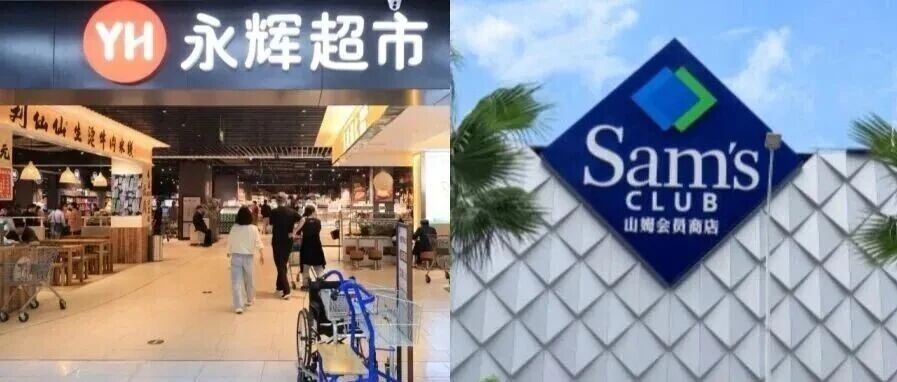
Core Viewpoint - The article emphasizes the importance of fair competition and quality improvement in the retail industry, particularly in the context of private label brands like 品质永辉 and 山姆MM. It advocates for collaboration with suppliers, transparency in product ingredients, and a focus on employee welfare and innovation to enhance product quality and customer satisfaction [1][4][10]. Group 1: Fair Competition - The company calls for a fair competitive environment, urging against practices that force suppliers into exclusive partnerships, which undermines industry integrity [4]. - It stresses the need for all players, including both local and international companies, to adhere to legal and ethical business practices [4]. Group 2: Quality Improvement - The company aims to enhance product quality through better raw materials, scientific formulations, advanced processes, and aesthetically pleasing designs [5]. - It commits to transparency by annually publishing ingredient lists and the use of food additives in its products, advocating for safer and healthier options for consumers [6]. Group 3: Pricing Strategy - The company highlights the importance of value for money in private label products, suggesting that quality should be prioritized over price, and vice versa [7]. - It proposes a standardized pricing approach based on weight or volume to provide greater value to customers [7]. Group 4: Employee Development - The company recognizes employees as key partners and emphasizes the need for fair compensation, professional development, and a supportive work environment [9]. - It also stresses the importance of maintaining ethical standards and integrity within the workforce [9]. Group 5: ESG Commitment - The company expresses a commitment to environmental, social, and governance (ESG) principles, aiming to contribute positively to society and the ecosystem [10]. Group 6: Innovation Focus - The company acknowledges the need for continuous innovation, particularly in developing essential consumer products, and aims to learn from industry leaders like 山姆MM and Kirkland [10]. - It aspires to improve product quality and service to enhance the consumer experience in China [10].

基建开门红背后:口径调整的变与不变
Xinda Securities· 2026-03-17 07:32
Investment Highlights - In January-February 2026, fixed asset investment growth was 1.8%, a 2 percentage point improvement from the 3.8% decline in 2025[5] - Infrastructure investment surged by 11.4%, significantly higher than the overall investment growth, which was boosted by 3 percentage points from infrastructure alone[16] - Social retail sales (社零) increased by 2.8%, surpassing the market expectation of 2.6%[6] Infrastructure as a Key Driver - Infrastructure investment was the main contributor to the positive investment growth, with a notable rebound in construction and installation projects rather than equipment purchases[16] - The real estate sector showed a rebound with a -11.1% growth rate, improving by 6.1 percentage points compared to the previous year[5] - New construction area declined by 23.1% year-on-year, indicating a lack of improvement in the construction and demand sides of real estate[17] Statistical Adjustments and Implications - The recent adjustment in infrastructure investment statistics did not affect the overall fixed asset investment growth, which would have turned positive regardless of the adjustment[24] - The adjustment included previously excluded sectors like electricity and water supply, but the core infrastructure growth rate remained robust at 11.4%[24] - The new statistical scope overlaps with previous measures but does not fully align, indicating a nuanced understanding of infrastructure investment metrics[24] Risk Factors - Potential risks include insufficient growth stabilization policies, lower-than-expected global economic conditions, and unexpected trade frictions[27]
中东冲突冲击明显加大
HTSC· 2026-03-17 02:50
Economic Overview - The ongoing Middle East conflict has led to an extended expectation of the blockade of the Strait of Hormuz, causing oil prices to exceed $100 per barrel[1] - The US Q4 GDP growth rate has been revised down by 0.7 percentage points to 0.7%, with private investment and consumption growth slowing to 1.9%[3] - The US February CPI and January PCE inflation rates met expectations, with core CPI year-on-year remaining at 2.5%[3] Market Reactions - The Federal Reserve's interest rate cut expectations have decreased to less than one cut in 2026, while the European Central Bank's rate hike expectations approach two increases[1] - US stock indices have generally declined, with the S&P 500, Nasdaq, and Dow Jones falling by 1.6%, 1.3%, and 2.0% respectively[5] - The US dollar index rose by 1.6% to 100.5, while the euro and yen depreciated by 1.7% and 1.2% respectively[5] Employment and Consumption - The Atlanta Fed's GDPNow model indicates a rise in the US Q1 GDP growth rate by 0.6 percentage points to 2.7%[2] - Initial jobless claims in the US fell to 213,000, better than the expected 215,000[2] - Actual personal consumption growth remains steady at 1.8%[2] Energy Market Dynamics - International oil prices have surged, with Brent crude rising by 11.3% to $103.1 per barrel, driven by geopolitical tensions[5] - The International Energy Agency's member countries agreed to release 400 million barrels from strategic oil reserves in response to the crisis[4] Risks and Outlook - Geopolitical uncertainties and a potential weakening labor market pose risks to economic stability[6]