
面板

Search documents
华映科技涨2.17%,成交额5.60亿元,主力资金净流出3840.33万元
Xin Lang Cai Jing· 2025-12-19 06:43
Group 1 - The core stock price of Huaying Technology increased by 2.17% on December 19, reaching 5.17 CNY per share, with a total market capitalization of 14.3 billion CNY [1] - The company has seen a year-to-date stock price increase of 14.63%, with a recent 5-day increase of 2.99%, a 20-day decrease of 6.00%, and a 60-day increase of 2.17% [2] - Huaying Technology has appeared on the stock market's "Dragon and Tiger List" four times this year, with the most recent appearance on December 3, where it recorded a net purchase of 226 million CNY [2] Group 2 - The main business of Huaying Technology includes the research, production, and sales of LCD display panels and liquid crystal modules (LCM), with panel business contributing 74.29% and module-related business 25.53% to its revenue [2] - As of December 10, the number of shareholders of Huaying Technology increased to 253,500, while the average circulating shares per person decreased by 1.19% to 10,899 shares [2] - The company reported a revenue of 1.039 billion CNY for the period from January to September 2025, a year-on-year decrease of 21.03%, while the net profit attributable to the parent company was -722 million CNY, reflecting a year-on-year increase of 14.94% [2] Group 3 - Huaying Technology has distributed a total of 1.592 billion CNY in dividends since its A-share listing, with no dividends paid in the last three years [3] - As of September 30, 2025, Hong Kong Central Clearing Limited was the sixth largest circulating shareholder, holding 15.964 million shares, a decrease of 5.313 million shares from the previous period [3]

关注挖掘机销售超预期和流感持续爆发后的产业链机会
Tebon Securities· 2025-12-17 06:06
Market Overview - During the week of December 8-12, the Shanghai Composite Index fell by 0.34%, while the Shenzhen Component Index rose by 0.84% and the ChiNext Index increased by 2.74%[6] - The average daily trading volume in the market was 1.95 trillion yuan, up from 1.70 trillion yuan the previous week[6] E-commerce in Latin America - Latin America's e-commerce market is experiencing rapid growth, with a total transaction volume of $507 billion in 2023, reflecting a year-on-year growth rate of 27%[16] - The e-commerce penetration rate in Latin America is currently between 12-15%, which is higher than Southeast Asia's 10-13% but significantly lower than China's approximately 45%[16] Health Sector Insights - The percentage of flu-like illness (ILI) cases in southern provinces reached 11.1%, up from 10.3% the previous week and significantly higher than the 2022-2024 average of 3.9%[28] - The demand for flu vaccines and antiviral medications is expected to rise, with sales of oseltamivir increasing by 237% in the last week of November[33] Hard Technology Sector - The panel industry reported a cumulative net profit of 6.035 billion yuan in Q3 2025, a year-on-year increase of 161%[38] - The depreciation costs for panel manufacturers are expected to decline as production lines built during the 2018-2020 expansion phase reach the end of their depreciation periods[38] High-end Manufacturing - In November 2025, excavator sales reached 20,027 units, a year-on-year increase of 13.9%, with domestic sales up by 9.11% and exports up by 18.8%[45] - The demand for excavators is driven by infrastructure projects and equipment upgrades, supported by the Belt and Road Initiative[46]
新一轮上升周期下面板行业信用风险研究
Lian He Zi Xin· 2025-12-16 11:43
1. Report's Industry Investment Rating The provided content does not mention the industry investment rating. 2. Core Viewpoints of the Report - Since 2024, the panel industry has entered a new upward cycle. The demand for high - end consumer electronics is the medium - to - long - term core driver for the industry's upward movement from 2026 - 2028, but the uncertainty of national subsidy policies may lead to demand fluctuations. - High - end panel production capacity is expanding rapidly, while low - end capacity remains stable, and panel prices are relatively stable. - Leading enterprises are expected to maintain stable profits and reduce leverage through demand recovery, technological iteration, and production control. In contrast, most small and medium - sized manufacturers have high leverage, low profitability due to the squeeze from leading enterprises, and some may be eliminated [1]. 3. Summary by Relevant Catalogs 3.1 Introduction - In the past few decades, the panel manufacturing industry has shifted to China. In 2024, the share of mainland China's LCD panels exceeded 70%. The industry's production capacity structure has been optimized, and high - end panel products have strong downstream demand. The future panel industry will feature multiple technological paths such as LCD, OLED, and Mini - LED [4]. 3.2 Panel Industry Cycle and Key Factors Affecting Credit Risk 3.2.1 Panel Industry Cycle - Since 2012, the panel industry has experienced three complete cycles and entered the fourth upward cycle since 2024. The industry is highly cyclical, with supply - demand changes, technological iteration, and competition pattern changes running through its development. In the upward phase, supply - demand and corporate performance improve; in the downward phase, there is over - supply, price decline, and an increase in the number of loss - making enterprises [5]. - **First cycle**: The upward phase was from September 2014 to June 2015, with growing LCD demand and rising prices. The downward phase was from July 2015 to August 2016, with over - supply due to the concentrated launch of LCD 8.5 - generation production lines and falling prices [6]. - **Second cycle**: The upward phase was from September 2016 to November 2017, driven by the demand for large - size LCD TVs and mobile phone OLED screens, and the contraction of Korean enterprises' LCD capacity. The downward phase was from December 2017 to December 2019, with over - supply due to the concentrated launch of high - generation LCD production lines and falling prices [6]. - **Third cycle**: The upward phase was from April 2020 to July 2021, due to the "stay - at - home economy" during the pandemic and the exit of Korean enterprises from the LCD field. The downward phase was from August 2021 to October 2022, with the decline of the "stay - at - home economy" and over - supply. The adjustment phase was from November 2022 to the end of 2023, with panel manufacturers controlling production and prices starting to rise in March 2023 [6][7]. - **Fourth cycle**: Since 2024, the upward cycle has been driven by the "trade - in" policy, with the demand for medium - sized OLED applications in vehicles and tablets continuously released. Leading panel manufacturers control production, and panel prices are stable [11]. 3.2.2 Core Factors Affecting Panel Industry Credit Risk - **Supply - demand situation**: Supply - demand changes cause panel price fluctuations, affecting corporate revenue, cash flow, and solvency. In the upward cycle, demand is strong, prices rise, and credit risk is low; in the downward cycle, over - supply leads to price drops and increased credit risk [12]. - **Technological iteration**: It helps reduce production costs and improve efficiency but also accelerates the elimination of old - technology production lines. Enterprises that fail to keep up with technological trends face product backlogs and increased credit risk [13]. - **Market competition**: In the upward cycle, competition is mild, and credit risk is controllable. In the downward cycle, leading enterprises squeeze the living space of small and medium - sized manufacturers, increasing their credit risk [15]. - **Financial leverage and profitability**: The panel industry is capital - intensive, and enterprises rely on debt financing for expansion, leading to high asset - liability ratios. In the upward cycle, profitability is strong, and credit risk is low; in the downward cycle, over - supply and high debt pressure increase credit risk [16]. 3.3 Changes in Credit Risk Factors in the Current Upward Cycle (2024 - present) 3.3.1 Supply - demand Situation - In the current upward cycle, panel demand is driven by the demand upgrade of consumer electronics and the national "trade - in" policy. The overall supply - demand is in a tight balance, with stable low - end capacity and rapidly expanding high - end capacity. Panel prices are basically stable [17]. - In 2024, the global display panel market size reached 1.3 trillion yuan, a 9.41% increase from the previous year, and is predicted to reach 1.4 trillion yuan in 2025. The average size of global LCD TV panels increased to 51.4 inches, the sales of Mini - LED TVs increased by 490.6%, the shipment of tablets increased by 9.2%, the shipment of monitors increased by 1.5%, and the shipment of smartphone display panels increased by 7%, with the shipment of OLED smartphones increasing by 26% [17][18][19]. - The government has issued a series of policies to support the development of the panel industry, including promoting technological research and expanding the scope of "trade - in" subsidies [20][21]. - In the future, high - end panel supply may face over - capacity risks after 2028 if new production capacity continues to be launched and demand growth is lower than expected [23]. - Panel prices are expected to start a general decline in November 2025, with mainstream - size panel prices expected to drop by $2 and larger - size panels having a more significant decline [24][26]. 3.3.2 Technological Iteration - The global display panel market shows a diversified development of technological routes. LCD dominates the low - to - mid - end market, OLED penetrates the mid - to - high - end market, Mini - LED fills the gap between them, and Micro LED has not been commercialized [28]. - In 2024, the market share of TFT - LCD was 56.25%, and that of OLED was 14.51%. In 2025, the demand for OLED panels in mobile phones and mid - sized IT products increased [31]. - Mini - LED has the advantages of long life and low cost, and its TV shipments exceeded those of OLED in 2025. Micro LED has excellent performance but is limited by high cost and technical bottlenecks [33]. 3.3.3 Market Competition - The panel industry is mainly dominated by Korean and Chinese enterprises, with a stable and highly concentrated competition pattern. Chinese enterprises have the right to speak in the LCD field, Korean manufacturers dominate the OLED field, and the competition situation between Chinese and Korean enterprises in the Mini - LED field varies in different industrial chain links [34]. - In the LCD field, mainland China's capacity accounted for 72.7% in 2024, and the concentration is increasing. In the OLED field, Korean manufacturers still have an advantage, while Chinese enterprises are making technological breakthroughs. In the Mini - LED field, Chinese and Korean enterprises are competing, and Chinese enterprises have achieved a breakthrough in the upstream of the industrial chain [34][35][36]. 3.3.4 Financial Leverage and Profitability - In the current upward cycle, panel enterprises' financial leverage remains high, with leading enterprises' total debt - to - capital ratio at around 50% and mid - to - tail enterprises' exceeding 60%. Profitability has improved through production control and price stabilization, but the gross profit margin is still low [38]. - In the first half of 2025, 4 out of 8 mainland Chinese panel enterprises achieved profitability. The gross profit margins of leading enterprises are between 13% - 16%, while those of mid - to - tail enterprises are below 7% or even negative [40][42]. - The new OLED 8.6 - generation production lines under construction by some enterprises will drag down their profitability in the short term but will have cost advantages in the long term, squeezing the profit space of non - layout enterprises [44]. 3.4 Summary and Outlook of Panel Industry Credit Risk in the Current Upward Cycle - The demand for high - end consumer electronics is the medium - to - long - term core driver for the industry's upward movement, but the uncertainty of national subsidy policies may lead to demand fluctuations [45]. - Low - end panel capacity is stable, and high - end capacity is expanding rapidly. High - end panels are expected to achieve supply - demand balance from 2026 - 2028, but there may be over - capacity risks after 2028 [45]. - The panel industry will present a multi - technology parallel pattern for a long time. LCD will maintain its mainstream position, OLED will penetrate the mid - to - high - end market, Mini - LED will fill the high - end niche market, and Micro LED will be difficult to become the mainstream in the short term [46]. - In the current upward cycle, Chinese enterprises monopolize the LCD market, and the concentration will continue to increase. The years from 2026 - 2028 will be crucial for the competition between Chinese and Korean high - generation OLED production lines. Chinese enterprises will expand their leading edge in the Mini - LED field [47]. - The financial leverage shows a differentiated trend. Leading enterprises will gradually reduce leverage, while most mid - to - tail enterprises have high leverage and high risks [48]. - The profitability is concentrated in leading enterprises. Leading enterprises' profitability will continue to increase, while mid - to - tail enterprises' profitability is low, and some may be eliminated [48][49].
友达董事长:明年可望维持AI相关动能
WitsView睿智显示· 2025-12-16 08:28
Group 1 - The core viewpoint is that the AI-related momentum is expected to be maintained in the coming year, with optimism in the information and communication technology industry, despite challenges such as geopolitical issues [1] - The chairman of AUO, Peng Shuanglang, mentioned that the semiconductor and server sectors are benefiting from the AI wave, and the trend of AI development is anticipated to continue [1] - There is a concern regarding the impact of rising memory prices on end product sales, with close monitoring of price increases to see if they remain within consumer acceptance [1] Group 2 - The Taiwan Electrical and Electronic Manufacturers' Association is considering forming an industrial cluster in the U.S., similar to the Hsinchu Science Park, to enhance overseas collaboration [2] - Companies in Taiwan are encouraged to expand internationally to create a clustering effect, although discussions are still in the early stages [2] - The trend of companies establishing a presence in Southeast Asia is expected to continue, with other regions gradually mimicking this model to form new economic patterns [2]

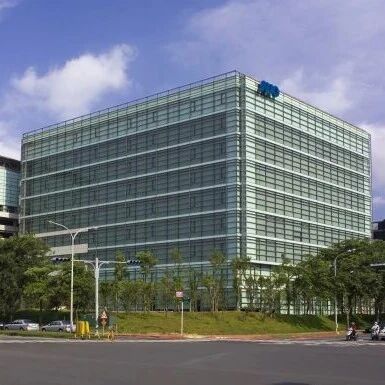
友达攻车用/工业用面板,提升高端产品比重
WitsView睿智显示· 2025-12-11 04:48
Core Viewpoint - AUO has made significant operational and structural adjustments in response to the stabilizing panel market, focusing on optimizing product mix and enhancing automotive and industrial panel layouts [1][4]. Group 1: Operational and Structural Adjustments - AUO has introduced multi-screen designs and improved integration in automotive displays, which has contributed to an increase in high-end product proportion and monthly revenue recovery [1]. - The company is closely monitoring brand customer order patterns and global end-market demand fluctuations [1]. Group 2: Digital Transformation and Efficiency - AUO has been undergoing a seven-year digital transformation, enhancing production efficiency by 44% since 2018 and saving over 11 billion in manufacturing costs [3]. - The company aims for a 4.7% reduction in electricity consumption by 2024, demonstrating significant carbon reduction achievements [3]. - AUO's subsidiary, AUO Display Plus, has signed an MOU with a shoe manufacturing company to implement AI-assisted behavior analysis for improved process monitoring and quality consistency [3]. Group 3: Green Transition and Carbon Management - AUO is actively promoting energy efficiency and circular economy measures, with improvements in Scope 2 and Scope 3 carbon management, achieving an 11.88% reduction in Scope 3 emissions compared to the baseline year of 2021 [3]. - The company is accelerating its circular economy goals through the use of recycled materials and green manufacturing strategies, leading to related economic benefits [3]. Group 4: Emerging Growth in Medical Sector - The medical segment has become a new growth driver for AUO, with revenue reaching the hundred billion level, supported by existing display and sensing technologies [4]. - The company is expanding applications in clinical and educational settings through 3D microsurgery imaging and AI integration solutions [4]. Group 5: Revenue Performance - AUO reported a consolidated revenue of 24.036 billion (approximately 5.451 billion RMB) for November, reflecting a month-on-month increase of 14.92% and a year-on-year growth of 3.35% [4]. - Cumulative consolidated revenue for the first 11 months reached 256.198 billion (approximately 58.106 billion RMB), with a year-on-year increase of 0.2% [4]. Group 6: Market Observations - Industry observations indicate a potential stabilization in TV panel prices in December, which could impact AUO's operations in the upcoming quarter if prices stop declining and maintain stability [4].
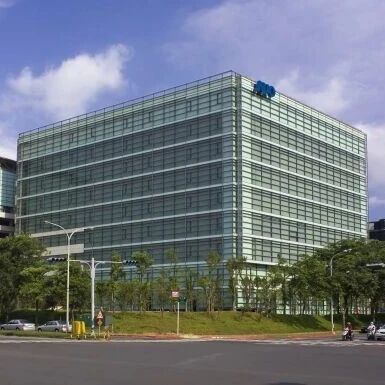
群创董事长:努力拼明年Q1面板业务涨价
WitsView睿智显示· 2025-12-11 04:48
Group 1 - TrendForce predicts that TV panel prices will stop declining in December, while monitor panel prices are expected to remain stable, and some laptop panel prices may decrease [1][2] - Innolux's chairman, Hong Jin-yang, mentioned that the fourth quarter is traditionally a slow season, and there are ongoing efforts regarding the anticipated price increases for the first quarter of next year [1][3] - Innolux reported a consolidated revenue of NT$171.24 billion (approximately RMB 38.84 billion) for November, a decrease of 6% month-over-month and 9% year-over-year, with a cumulative revenue of NT$2,053.14 billion (approximately RMB 465.65 billion) for the first eleven months of the year, reflecting a year-over-year increase of 3.4% [3] Group 2 - The company anticipates a decline in shipments of non-display, commercial display, and consumer display products by 1% to 3% in the fourth quarter due to the traditional off-season and economic uncertainties [3] - Innolux is committed to dynamically adjusting its product mix and improving operational efficiency in response to market changes, while also focusing on a dual-track transformation strategy to deepen its layout in non-display sectors [3]
消费电子行业周报:豆包发布手机助手预览版,华为“智能憨憨”销售火爆-20251210
Huaxin Securities· 2025-12-10 09:31
Investment Rating - The report maintains a "Buy" rating for ZTE Corporation and a "Hold" rating for Visionox Technology [8] Core Insights - The AI mobile phone market is on the verge of rapid growth, with the launch of Doubao's mobile assistant preview version indicating a significant shift in consumer electronics [4][14] - Huawei's "Smart Hanhai" AI toy has seen explosive sales, highlighting the growing demand for AI-integrated products in the consumer market [5][15] - The AI toy market in China is projected to grow from approximately 24.6 billion yuan in 2024 to 29 billion yuan in 2025, with expectations to exceed 100 billion yuan by 2030, reflecting a compound annual growth rate of over 50% [6][15] Summary by Sections Industry Dynamics - The smartphone market is experiencing innovation with Samsung's launch of the Galaxy Z TriFold, a multi-folding screen device aimed at maintaining its competitive edge [17][18] - The global foldable smartphone market is expected to grow, with Samsung holding a significant market share of 64% in Q3 2025 [19][24] - Apple is anticipated to regain its position as the largest smartphone manufacturer in 2025, driven by strong demand for the iPhone 17 series [33][34] Key Companies and Earnings Forecast - ZTE Corporation is projected to have an EPS of 1.76 in 2024, increasing to 1.91 by 2026, with a PE ratio of 23.99 in 2024 [8] - GoerTek and other companies are highlighted as key players in the AI toy sector, with significant growth potential [6][15] - The report suggests monitoring companies like ZTE, Visionox, and Lens Technology for investment opportunities in the AI mobile and toy markets [6][15]

友达、群创等5家面板厂公布11月营收
WitsView睿智显示· 2025-12-09 10:42
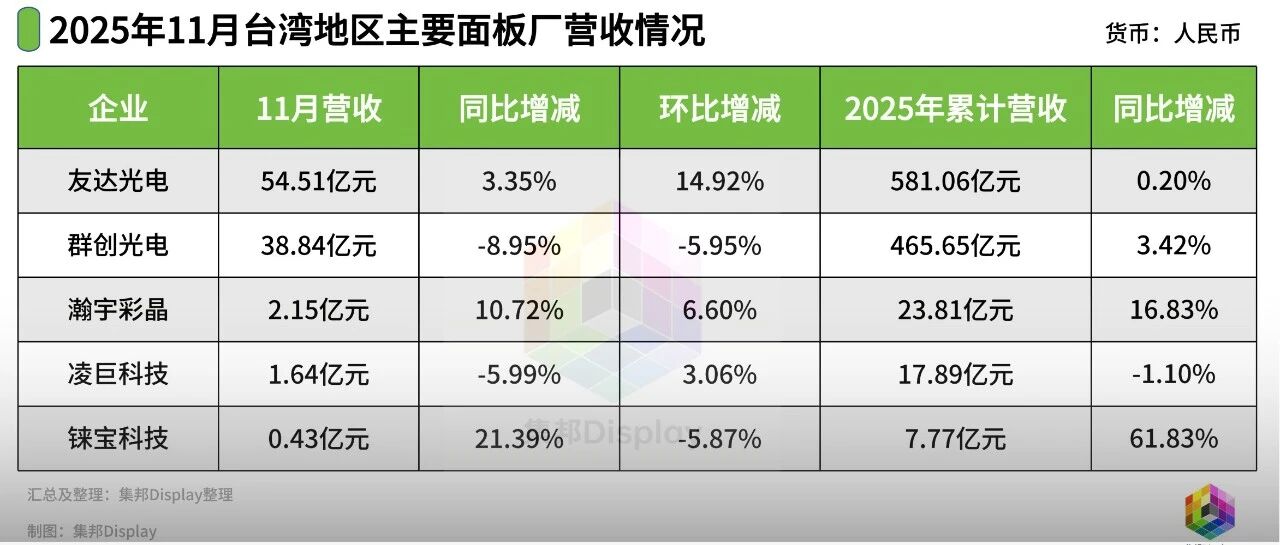
Core Viewpoint - The revenue performance of Taiwanese panel manufacturers in November 2025 shows a mixed trend, with some companies experiencing growth while others continue to face challenges. [1][2] Revenue Summary - AUO reported a revenue of RMB 5.451 billion in November, with a year-on-year increase of 3.35% and a month-on-month increase of 14.92% [1][2] - Innolux's revenue fell to RMB 3.884 billion, down 8.95% year-on-year and 5.95% month-on-month, indicating increased market pressure [1][2] - HannStar's revenue rose to RMB 215 million, reflecting a year-on-year growth of 10.72% and a month-on-month increase of 6.60% [1][2] - Lianjia's revenue decreased to RMB 164 million, with a year-on-year decline of 5.99% and a slight month-on-month increase [1][2] - Ralco's revenue reached RMB 43 million, showing a significant year-on-year growth of 21.39% [1][2] Market Dynamics - The revenue changes in November indicate a market recovery and differentiation among companies, contrasting with the overall decline seen in October [1][2] - The small and medium-sized market is showing signs of recovery, with HannStar and Lianjia experiencing slight improvements [2] Company Developments - AUO is actively engaged in technology innovation and business integration, collaborating with various partners to develop new systems and optimize operations [3][4] - Ralco is considering acquiring a stake in Anke Optoelectronics, focusing on technology and business collaboration [5] Future Outlook - The fourth quarter is typically a slow season for the panel industry, but demand for TV panels remains stable, with expectations of price stabilization in December [6] - The anticipated price increases in panel products are expected to positively impact company revenues, particularly for AUO and Ralco [6]
每日投行/机构观点梳理(2025-12-08)
Jin Shi Shu Ju· 2025-12-08 12:39
Group 1: Monetary Policy Insights - Bank of America suggests that the market may soon start betting on a rate cut by the Federal Reserve in January, despite cautious signals from the Fed [1] - The bank anticipates a 25 basis point rate cut in December, along with stronger guidance and dissenting opinions, projecting stronger growth and lower inflation [1] - Analysts believe that with significant data releases before January, Chairman Powell will find it difficult to suppress market expectations for further easing [1] Group 2: Economic Outlook in Thailand - Barclays economists report that the Bank of Thailand may resist rate hikes in 2026 due to lower-than-potential growth prospects and inflation rates below the 1%-3% target range [2] - The central bank aims to maintain a loose monetary policy and focus on addressing structural economic issues [2] - Even with rising price pressures, the central bank is unlikely to change its policy stance, prioritizing economic growth and financial stability over inflation [2] Group 3: Investment Opportunities in Technology and Commodities - China International Capital Corporation (CICC) sees significant investment opportunities in the technology sector within the machinery industry for 2026, driven by domestic demand recovery and high export growth [3] - CITIC Construction points out that copper, aluminum, and gold have clear long-term investment logic due to global macroeconomic uncertainties and geopolitical risks [4] - The report highlights that copper will benefit from supply tightness and green economy demand, while aluminum is constrained by domestic capacity limits [4] Group 4: Energy Storage and AI Development - CITIC Construction expects the energy storage industry to see a rise in both volume and price by 2026, with manufacturing profitability currently at unsustainable low levels [5] - The ongoing development of AI large models and applications is noted, with a recommendation to continue focusing on the AI computing power sector [6] - The report emphasizes the potential for new application scenarios and business models arising from the construction of space data centers [8] Group 5: Market Predictions for Copper and Panel Industry - CITIC Securities predicts that LME copper prices could accelerate towards $12,000 per ton, driven by narratives of U.S. copper stockpiling and domestic production cuts [8] - The panel industry is expected to see a positive long-term outlook due to improved competition dynamics and a shift from price-driven profit to value creation [9]
万联证券:12月TV面板价格有望企稳 26年需求端转暖可期
Zhi Tong Cai Jing· 2025-12-08 09:24
Core Viewpoint - The report from Wanlian Securities indicates that LCD TV panel prices have seen an increase in November, with expectations for a stabilization in December, driven by upcoming sports events and a shift towards larger TV sizes [1][2][3]. Price Trends - In November, LCD TV panel prices increased, with small sizes rising by $0.5-1 and medium to large sizes by $2-3. Although the settlement price is expected to decline, the decrease is anticipated to be less severe compared to previous months, with 65-inch panels expected to drop by $2 and 75-inch panels by $3, both showing a reduction of $1 from October [2]. - Predictions suggest that December TV panel prices may stabilize, with non-strategic customers for medium to large sizes potentially seeing price increases of $1-2 [2]. Demand Drivers - Upcoming major sports events, such as the 2026 Winter Olympics and the World Cup, are expected to boost demand for panels, prompting downstream manufacturers to begin stocking up in advance, which will support LCD TV panel prices [3]. - The trend towards larger televisions continues, with a forecasted 6% year-on-year growth in global display panel area demand by 2026, despite a projected 2% growth in 2025 due to trade tensions [3]. Production and Operational Efficiency - As of October 2025, global shipments of large-sized LCD TV panels reached 20.6 million units, marking an 8% year-on-year increase, although a 4.8% decline was noted from September [4]. - LCD panel manufacturers have maintained high capacity utilization rates, with shipment volumes showing year-on-year growth of 5%-10% from July to October 2025. The depreciation period for 10.5-generation LCD factories is nearing its end, which is expected to alleviate operational pressures and support price stabilization strategies [4]. Investment Recommendations - Future LCD total shipments are expected to stabilize, with Chinese manufacturers holding nearly 70% of the global market share, thereby maintaining significant influence over the industry. The demand from upcoming sports events and the long-term trend towards larger TV panels are likely to enhance profitability across the industry [5]. - The competitive advantages of leading companies in terms of pricing power, product competitiveness, and scale are expected to become more pronounced, with improving profitability and cash flow as the depreciation of high-generation production lines comes to an end [5].