医疗

Search documents
“十五五”深度报告:新发展阶段宏观环境的变化
2025-09-26 02:29
Summary of Key Points from Conference Call Records Industry or Company Involved - The discussion primarily revolves around the macroeconomic environment in China, focusing on industrialization, urbanization, demographic changes, and technological advancements. Core Points and Arguments 1. **Shift in Economic Development Model**: China is transitioning from a real estate and investment-driven economy to a technology-driven model, with industrialization rates declining from approximately 45% in 2010 to an expected 36% by 2024, indicating a need for technological upgrades in the global value chain [1][2][6]. 2. **Urbanization and Regional Development**: The urbanization rate has reached 67%, nearing the 70% level of developed economies. Current policies aim to bridge the urban-rural gap and promote equitable income distribution [1][2][6]. 3. **Demographic Challenges**: The population growth rate is declining, with an increasing proportion of elderly individuals and a decreasing share of the working-age population (15-64 years). This demographic shift necessitates a focus on high-quality labor to leverage talent dividends [3][4]. 4. **High-Quality Development**: The economic model is shifting from extensive growth to intensive growth, emphasizing high-quality development as a core path to overcoming bottlenecks. Policies are focusing on expanding demand, particularly in service consumption sectors such as education, healthcare, and elder care [9][10]. 5. **Technological Innovation**: The emphasis on cultivating new productive forces through technological innovation is critical. The digital economy is expected to contribute significantly to GDP, with a target of reaching 10% by 2025 [10][12]. 6. **Global Environment Changes**: External factors, including geopolitical tensions and global economic shifts, are prompting China to adjust its export structure and enhance domestic demand to counteract declining external demand [5][8]. 7. **Investment Opportunities**: Investors are encouraged to focus on sectors driven by national responsibilities, such as manufacturing, infrastructure, and service consumption, as well as emerging fields like artificial intelligence and low-altitude economy [14][15]. Other Important but Possibly Overlooked Content 1. **Education and Labor Quality**: The increase in higher education levels has led to a significant rise in the number of graduates, which is essential for addressing the challenges posed by an aging population [4]. 2. **Rural Revitalization Strategy**: Continued efforts in rural revitalization are necessary to achieve urban-rural integration and economic balance [4][6]. 3. **Impact of Technological Advancements**: The rapid development of artificial intelligence and its integration across various sectors is seen as a pivotal factor for enhancing productivity and economic growth [11][13]. 4. **Long-term Strategic Focus**: The future direction will prioritize technological innovation, regional coordination, and improvements in living standards, alongside balancing development and security [7][8]. This comprehensive summary encapsulates the key insights from the conference call records, highlighting the significant shifts in China's economic landscape and the implications for investment strategies.
项目引领 产业跃迁 民生升温
Qi Lu Wan Bao· 2025-09-25 23:40
Core Viewpoint - The article highlights the rapid development and high-quality growth of Pingdu City, showcasing its effective project implementation, innovative industrial activities, and improvements in people's livelihoods. Group 1: Project Implementation - The Huinuo Changyuan high-end equipment production project in Pingdu has officially commenced operations, with a total investment of 1.2 billion yuan and an expected annual output value of 600 million yuan once fully operational [1] - Pingdu has optimized its business environment, leading to a 37.2% year-on-year increase in newly registered fixed asset investment projects, totaling 343 projects from January to August [2] - The city has streamlined project approval processes, reducing average verification time by 17 days, with some industrial projects completing joint acceptance in as little as 3 days [2] Group 2: Industrial Innovation - Pingdu hosted the 4th China (International) Eyelash Industry Expo, generating over 1.5 billion yuan in trade orders and attracting around 10,000 participants [3] - The city organized a supply-demand matching conference for the new energy vehicle parts industry, resulting in cooperation intentions from over 30 enterprises [3] - Pingdu has established a clear industrial planning strategy, focusing on emerging industries such as low-altitude economy and new energy materials, while enhancing traditional sectors like intelligent manufacturing [4][5] Group 3: Livelihood Improvements - The city has invested 16.7 billion yuan in 25 housing projects, benefiting approximately 5,000 households and transforming "relocation" into "settlement" [6] - In education, Pingdu is adding 2,700 new quality school places and has renovated facilities in 77 schools to meet community demands [7] - The healthcare system is being enhanced through the integration of resources, aiming to create a comprehensive medical service network across the region [8]
盈健医疗(01419)将于1月5日派发末期股息每股0.03港元
智通财经网· 2025-09-25 13:30
智通财经APP讯,盈健医疗(01419)发布公告,该公司将于2026年1月5日派发截至2025年6月30日止年度 末期股息每股0.03港元。 ...
大兴机场投运6周年,临空区注册企业超1.5万家
Xin Jing Bao· 2025-09-25 11:00
Core Insights - Daxing International Airport has seen significant growth in its economic zone, with registered enterprises increasing from under 1,000 in 2019 to over 15,000 currently [1] - The economic zone has launched three major collaborative platforms and signed eight significant projects with a total investment of 2.7 billion yuan, expected to generate annual revenues of 11 billion yuan and trade volumes of 10 billion yuan [1][2] - The airport has established itself as a key hub in the Beijing-Tianjin-Hebei region, facilitating cross-province business operations and implementing numerous standardized government services [2][3] Economic Zone Developments - The Daxing Airport Economic Zone has introduced an integrated registration platform to streamline business operations across regions, enhancing convenience for enterprises [1][2] - The Clinical Urgent Product Import Service Center aims to address the demand for innovative medical products not yet available domestically, providing a comprehensive service chain for import and management [2] - The Oral Medicine International Cooperation Platform is set to position the economic zone as a global hub for oral medicine collaboration and innovation [2] Airport Operations and Growth - Since its opening, Daxing Airport has welcomed 66 airlines and serves 203 destinations across nearly 30 countries, significantly contributing to the "Belt and Road" initiative [3] - Projections for 2024 indicate a 11% increase in flight operations, reaching 330,000 flights, and a 26% rise in passenger throughput, nearing 50 million [3] - The airport's comprehensive bonded zone has received approval for various designated regulatory sites, enhancing its operational capabilities [3]
需求侧有待加力:8月经济数据点评
Wu Kuang Qi Huo· 2025-09-25 01:58
Group 1: Report Core View - In August, both the production and demand sides of the domestic economy faced pressure, but there were also structural highlights. The production side maintained some growth in high - value - added industries and policy - supported areas, but the overall growth rate declined due to the decline in external demand and production cuts in some industries. The consumption recovery process slowed down, and the demand overdraft effect of automobiles and durable consumer goods gradually emerged, with consumer confidence not effectively restored. The investment growth rate further slowed down, mainly dragged down by real estate and manufacturing investments. There is an increasing need for policy reinforcement, possibly focusing on promoting service consumption and accelerating the implementation of major projects to stimulate domestic demand and boost economic growth [2]. Group 2: August Overall Economic Operation Overview - In August, both supply and demand sides of the domestic economy weakened. The production side maintained some resilience driven by high - value - added industries and policy - supported areas, while the demand side was weak, with a slowdown in consumption recovery and a general decline in investment growth. The real estate industry had a more prominent drag effect. There were obvious differences within the service industry, and some industries related to consumption and business still faced recovery pressure. Overall, weak domestic and external demand and ineffective restoration of consumer confidence were the main constraints on economic recovery [5]. Group 3: Production Side - In August, the industrial added - value increased by 5.2% year - on - year, lower than the previous month and the seasonal level. Industries benefiting from policy support, such as railway transport equipment manufacturing, maintained strong growth. However, external demand pressure was obvious, with the export growth rate dropping from 7.2% in the previous month to 4.4%, and the export delivery value turning negative. Some upstream industries slowed down production expansion due to the "anti - involution" policy and cost pressure. The service production index increased by 5.6% year - on - year, also lower than the previous month. High - value - added industries like information technology and financial services grew rapidly, but the growth rate of the leasing and business service industry slowed down due to external demand uncertainty [6]. Group 4: Consumption Side - In August, the total retail sales of consumer goods increased by 3.4% year - on - year, lower than the previous value. The consumption recovery process was affected by the gradual withdrawal of the "trade - in" subsidy policy, and the growth rate of automobile consumption slowed down. The growth rate of durable consumer goods such as home appliances and furniture also declined, reflecting the gradual emergence of the demand overdraft effect. Catering consumption was relatively strong, with the growth rate rising from the previous month. Overall, consumption was sluggish, income expectations were weak, and consumer confidence was not effectively restored. In terms of consumption structure, the growth rate of essential consumer goods slowed down, while some upgraded consumer goods showed certain growth resilience. Overall consumption power was insufficient, especially in the automobile and real - estate - related consumption fields [11]. Group 5: Investment Side - In August, the year - on - year growth rate of fixed - asset investment was only 0.5%, lower than the previous month. Manufacturing investment was weak, mainly due to insufficient external demand and declining business confidence. Infrastructure investment, although supported by policies to some extent, continued to slow down due to factors such as capital constraints, seasonal construction factors, and project implementation lags. Real - estate investment remained in a slump, with an 12.9% year - on - year decline in August, and its drag effect on overall investment became more prominent. The weakness of manufacturing investment was affected by the "anti - involution" policy and the weakening effect of equipment renewal policies. Infrastructure investment was limited by the lag in capital implementation and extreme weather affecting construction progress. The real - estate market remained in an adjustment period, although policy relaxation in some cities might boost local market confidence [16]. Group 6: Demand - Side Policy - Given the current economic weakness, there is a further need for policy reinforcement. The growth rates of pro - cyclical demands such as exports, total retail sales of consumer goods, and manufacturing investment have declined, creating conditions for policy reinforcement. Policy reinforcement may focus on the demand side, especially promoting service consumption and accelerating the implementation of major projects to stimulate domestic demand recovery. Policy reinforcement may promote terminal demand growth, especially in the service consumption field. The appropriate advancement of major projects can support the investment side. In the manufacturing industry, policy reinforcement should focus on the demand side to drive overall manufacturing growth by promoting the consumption demand of high - value - added industries [23].
库卡全球首发多场景自动化解决方案
Zheng Quan Shi Bao· 2025-09-24 17:59
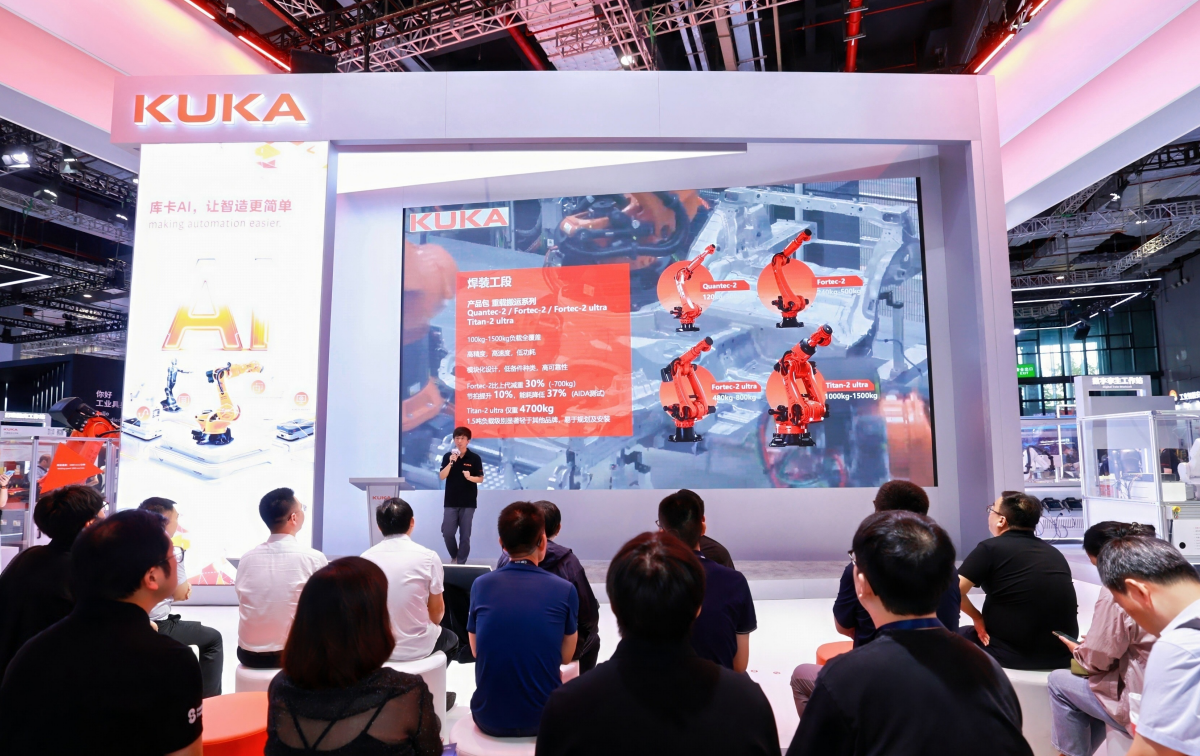
Group 1: Automation Solutions in Aerospace - KUKA China launched multi-scenario automation solutions targeting the aerospace industry, addressing production efficiency, capacity bottlenecks, and quality consistency challenges [1] - The solutions include a high-precision assembly system integrating CoboManip robotic arms, sealing systems, and quality inspection modules, achieving full automation from component handling to fuselage assembly with a positioning accuracy of 0.05mm and a payload capacity of 125kg [1] - The omniMove omnidirectional mobile platform, capable of carrying up to 90 tons, enhances space utilization and operational efficiency in the transportation of large aerospace components [1] Group 2: Automotive Industry Automation - KUKA has developed a flexible manufacturing system covering all process segments for the automotive industry, addressing the need for high load and inertia in integrated die-casting parts and battery packs [2] - The automotive automation solutions incorporate advanced technologies such as ServoGun spot welding, BestFit door installation, and AI-driven modules for collision avoidance and adaptive installation, ensuring high stability and adaptability [2] - KUKA provides end-to-end solutions for new energy vehicles, including lithium-ion and hydrogen fuel cell production processes, with robots known for high precision and stability [2] Group 3: Healthcare and Education Solutions - KUKA, through its subsidiary Swisslog Healthcare, offers smart healthcare solutions that cover drug development, laboratory testing, factory production, and hospital logistics, with applications in over 850 hospitals globally [3] - The healthcare logistics system includes automated material management solutions such as track-based transport and pharmacy automation, enhancing efficiency in hospital operations [3] - KUKA Education focuses on integrating industry and education, creating a new ecosystem for vocational training with German original textbooks and a certification system to empower students from learning to employment [3]
库卡全球首发多场景自动化解决方案 覆盖五大行业
Zheng Quan Shi Bao Wang· 2025-09-24 09:58
Core Insights - KUKA China, a subsidiary of Midea Group, launched multi-scenario automation solutions at the 25th China International Industry Fair, targeting five key industries: aerospace, automotive, new energy, medical, and education [1] Aerospace Industry - The aerospace manufacturing sector faces significant challenges, including production efficiency bottlenecks, quality consistency issues, and lengthy production line construction cycles [3] - KUKA introduced a high-precision assembly system that integrates CoboManip robotic arms, sealing systems, and quality inspection modules, achieving full automation from component handling to fuselage assembly with a positioning accuracy of 0.05mm and a payload capacity of 125kg [3] - The omniMove omnidirectional mobile platform, developed by KUKA's logistics arm, can carry up to 90 tons, enhancing space utilization and operational efficiency in the aerospace sector [3] Automotive Industry - KUKA has developed a flexible manufacturing system covering all process segments for the automotive industry, addressing the need for high load and inertia characteristics in integrated die-casting parts and battery packs [4] - Advanced technologies such as ServoGun spot welding, BestFit door installation, and AI-driven modules have been integrated into KUKA's automotive automation solutions, ensuring high stability and adaptability [4] New Energy Sector - KUKA offers end-to-end solutions for new energy applications, including lithium-ion and hydrogen fuel cell production, with robots known for high precision and stability [4] - The assembly system for fuel cells achieves a stacking precision of ±0.02mm, significantly improving consistency and overall yield rates [4] Medical Sector - KUKA, in collaboration with Swisslog Medical, provides smart medical solutions that cover various aspects of healthcare, including drug development, laboratory testing, and hospital logistics [5] - The medical logistics system includes automated solutions for material management in over 850 hospitals globally [5] Education Sector - KUKA Education focuses on integrating industry and education, creating a new ecosystem for vocational training that includes German original textbooks and a comprehensive curriculum [5] - The establishment of KUKA-authorized academies and certification programs aims to empower students from learning to employment [5]

就业市场的麻烦还在后头?美国经济已在悬崖边缘徘徊
Jin Shi Shu Ju· 2025-09-24 08:45
Group 1 - The article highlights concerns about the U.S. labor market, indicating that employment faces downward risks, which could negatively impact the economic outlook [2] - Despite a surge in investments driven by the AI boom, hiring activities have nearly stalled, threatening the vital interaction between employment and consumer spending, which constitutes over two-thirds of the U.S. economy [2][3] - The trade war has led to the highest level of comprehensive import tariffs since the Great Depression, with U.S. importers paying $350 billion annually in tariffs, which is more than double the estimated scale of recent corporate tax cuts [2] Group 2 - Public spending and contract cuts are resulting in layoffs across federal, state, local governments, and healthcare sectors, with the impact not yet fully reflected in overall unemployment data [3] - The average number of new jobs added over the past three months has dropped significantly, from 168,000 in 2024 to just 29,000, while the unemployment rate has only slightly increased from 4.2% to 4.3% [3] - The education sector is facing a hiring downturn, with estimated job reductions exceeding 200,000 due to over a 50% cut in spending by the U.S. Department of Education [3] Group 3 - The expansion of immigration raids has created a "chilling effect," causing workers to hesitate in attending work, which raises alarms among farmers and builders about potential economic growth costs [4] - The high tariffs and ongoing trade turmoil have led to a realization that tariffs may become a long-term policy norm, with the index measuring job openings versus layoffs falling into contraction territory [4] - The optimistic stock market sentiment contrasts sharply with the bleak assessment of the labor market, suggesting that ongoing hiring reductions to protect profit margins may render current earnings growth forecasts for S&P 500 companies overly optimistic [4]
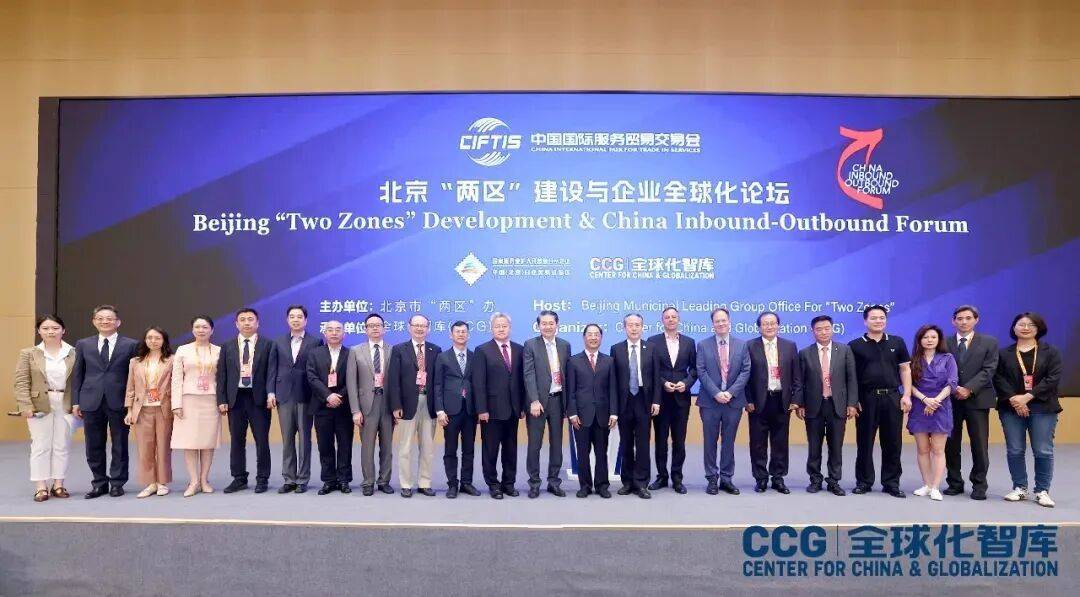
数智时代新兴市场的战略机遇@CCG服贸会中国企业全球化论坛
Sou Hu Cai Jing· 2025-09-24 04:09
Group 1 - The forum focused on strategic opportunities in emerging markets during the digital intelligence era, discussing internationalization, AI development, and localization strategies [2][4][11] - Companies need to explore suitable growth trajectories in emerging markets, adapting to fragmented markets and leveraging local insights [4][7] - The importance of creating quantifiable value for customers and establishing a value loop in business expansion was emphasized [9][15] Group 2 - AI is seen as a partner in building a new type of global civilization, presenting vast market opportunities and challenges [11][17] - Companies should not simply replicate domestic experiences in overseas markets but must conduct in-depth research and establish local teams for effective market entry [13][17] - The role of multilateral rules in protecting interests and ensuring operational freedom in global markets was highlighted, especially in the context of data fluidity [15]
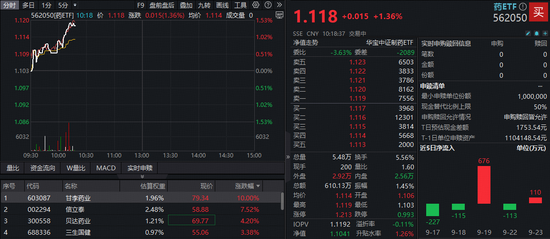
30亿大单!甘李药业涨停,药ETF(562050)拉升逾1%!港股通创新药龙头股发力,520880溢价翻红
Xin Lang Ji Jin· 2025-09-24 02:34
Group 1 - The A-share pharmaceutical sector showed recovery with significant gains in innovative drugs and traditional Chinese medicine, highlighted by Ganli Pharmaceutical's strong performance and a supply agreement worth no less than 3 billion yuan with a Brazilian company [1] - The largest medical ETF in A-shares saw a rebound, with notable increases in CXO concept stocks and medical consumables, indicating a recovery in the medical sector [3] - The Hong Kong stock market displayed mixed performance in innovative drugs, with some leading stocks rising while others fell, reflecting a volatile market environment [5] Group 2 - The fund manager of the Hong Kong Innovation Drug ETF expressed optimism about the CXO sector and the potential for a mid-term rotation towards large-cap blue-chip companies, while cautioning about the performance of small-cap companies [6] - The medical ETF market is dominated by the medical ETF (512170) with a scale of 26.5 billion yuan, making it the largest in the sector, while the drug ETF is the only one tracking the CSI Pharmaceutical Index [8] - The Hong Kong Innovation Drug ETF is designed to passively track the Hang Seng Hong Kong Innovation Drug Select Index, which has shown negative annual returns since its inception, indicating potential challenges ahead [9]