
公用事业

Search documents
Sempra Energy's Strategic Moves and Market Performance
Financial Modeling Prep· 2025-10-22 20:07
Core Insights - Sempra Energy is a significant player in the U.S. energy infrastructure sector, focusing on utility growth and strategic asset sales, which are crucial for its long-term success [1] - The company has a market capitalization of approximately $59.8 billion, highlighting its substantial presence in the industry [1] Financial Performance - Morgan Stanley maintained an "Overweight" rating for Sempra Energy, raising the price target from $93 to $99, indicating confidence in the company's future performance [2][6] - The current stock price of Sempra Energy is $91.68, reflecting a slight decrease of 0.66% or $0.61, with fluctuations between $91.62 and $93.24 during the trading day [4] Strategic Moves - Sempra is executing a $10 billion deal to sell a 45% stake in Sempra Infrastructure, which is expected to strengthen its balance sheet and enhance projected earnings per share from 2027 onwards [3][6] - The company's long-term growth is supported by major LNG agreements and utility investments, despite facing regulatory and geopolitical challenges [5][6]



武汉控股:股票交易异常波动,提醒关注交易风险
Xin Lang Cai Jing· 2025-10-22 10:53
Core Viewpoint - Wuhan Holdings announced that its stock price experienced an abnormal fluctuation, with a cumulative increase of over 20% in closing price over three consecutive trading days from October 20 to 22, 2025 [1] Financial Performance - As of October 22, the company's rolling price-to-earnings (P/E) ratio stands at 64.14, significantly higher than the industry average of 14.48 [1] Business Operations - The company confirmed that its production and operations are normal, and aside from the planned acquisition of 100% equity in Wuhan Municipal Engineering Design and Research Institute and the related fundraising, there are no undisclosed significant information [1]

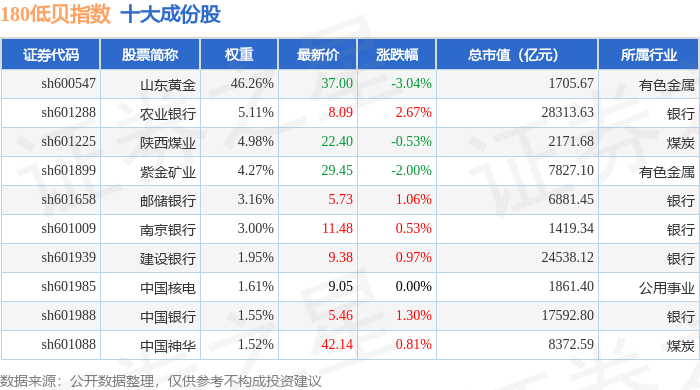
10月22日180低贝(000136)指数跌1.2%,成份股山东黄金(600547)领跌
Sou Hu Cai Jing· 2025-10-22 09:16
Market Overview - The 180 Low Bei Index closed at 13229.35 points, down 1.2%, with a trading volume of 621.03 billion and a turnover rate of 0.35% [1] - Among the index constituents, 35 stocks rose while 20 stocks fell, with Agricultural Bank leading the gainers at 2.67% and Shandong Gold leading the decliners at 3.04% [1] Key Constituents - The top ten constituents of the 180 Low Bei Index include: - Shandong Gold: 46.26% weight, latest price 37.00, down 3.04%, market cap 1705.67 billion [1] - Agricultural Bank: 5.11% weight, latest price 8.09, up 2.67%, market cap 28313.63 billion [1] - Other notable stocks include Zijin Mining, Postal Savings Bank, and China Nuclear Power, with varying performance [1] Capital Flow - The index constituents experienced a net outflow of 17.22 billion from main funds, while retail investors saw a net inflow of 12.7 billion [1] - Detailed capital flow for key stocks shows significant net inflows for Agricultural Bank and China Nuclear Power, while major banks like Industrial and Commercial Bank and Bank of China faced net outflows [2] ETF Performance - The Gold Stock ETF (product code: 159562) tracks the CSI Hong Kong and Shanghai Gold Industry Index, with a recent five-day decline of 3.62% and a P/E ratio of 24.77 [4] - The ETF's latest share count is 1.34 billion, down by 56 million, with a net inflow of 19.88 million from main funds [4]





保险公司年内举牌上市公司已达36次
Zheng Quan Ri Bao Zhi Sheng· 2025-10-21 16:41
Core Viewpoint - The announcement by China Post Life Insurance Co., Ltd. regarding its stake acquisition in China Communications Signal Co., Ltd. (China Tonghao) reflects a broader trend of insurance capital frequently acquiring stakes in listed companies, driven by changes in accounting standards and the need for better asset-liability matching [1][2]. Group 1: Stake Acquisition Details - China Post Life's acquisition involved purchasing an additional 3.995 million shares of China Tonghao, increasing its total holdings to approximately 102 million shares, which represents 5.1692% of the company's H-share capital, thus triggering the H-share stake disclosure requirement [1]. - This marks the third stake acquisition by China Post Life in 2023, following previous acquisitions in May and July of Eastern Airlines Logistics A-shares and Green Power Environmental H-shares, respectively [1]. Group 2: Industry Trends - As of October 21, 2023, 14 insurance companies have collectively acquired stakes in 25 listed companies, with a total of 36 stake acquisitions recorded this year, significantly surpassing the 20 acquisitions made in the entirety of the previous year [2]. - Major insurance firms, including China Ping An Life Insurance Co., Ltd. and Great Wall Life Insurance Co., Ltd., have also engaged in multiple stake acquisitions, often exceeding the 5% threshold for disclosure [2]. Group 3: Accounting Standards Impact - The shift in accounting standards has heightened the requirements for asset-liability matching for insurance companies, prompting a wave of stake acquisitions as firms seek to mitigate the impact of market value fluctuations on their financial results [3]. - By acquiring stakes in listed companies, insurance firms can stabilize short-term profit fluctuations and enhance their net investment yield through high dividend-paying stocks [3]. Group 4: Investment Preferences - Insurance capital has shown a strong preference for acquiring stakes in banks, public utilities, and environmental companies, with over 40% of the stake acquisitions targeting bank stocks [4]. - The focus on H-shares is notable, with 30 out of the 36 acquisitions involving H-shares, attributed to their potential for higher returns and tax benefits on dividends [4][5]. Group 5: Future Investment Strategies - Insurance companies are advised to optimize their investment strategies by focusing on long-term value investments, selecting stable dividend-paying stocks, and enhancing their risk management capabilities [5]. - The emphasis is on conducting thorough research and analysis before making stake acquisitions to avoid short-term speculative investments [5].
Valmont(VMI) - 2025 Q3 - Earnings Call Transcript
2025-10-21 14:02
Financial Data and Key Metrics Changes - Net sales increased by 2.5% year-over-year to $1.05 billion, with operating margin improving by 120 basis points and diluted earnings per share rising by 21% to $4.98 [4][14][15] - Gross profit margin increased to 30.4%, up 80 basis points from the previous year [14] - Operating income rose to $141 million, with operating margins at 13.5%, reflecting improved infrastructure results [14][15] Business Line Data and Key Metrics Changes - Infrastructure sales grew by 6.6% to $808.3 million, driven by a 12.3% increase in utility sales due to pricing and higher volumes [15] - Agriculture sales decreased by 9% year-over-year to $241.3 million, primarily due to lower irrigation equipment volumes and economic pressures in Brazil [16][17] Market Data and Key Metrics Changes - The utility market is experiencing strong demand driven by data center expansion, manufacturing onshoring, and broader electrification, with transmission CapEx expected to grow at a 9% CAGR through 2029 [8][15] - The Asia-Pacific market for lighting and transportation remains pressured, with operational challenges impacting results [9][15] Company Strategy and Development Direction - The company is focused on simplifying its business, directing resources to high-return initiatives, and enhancing performance in attractive markets [5][6] - Valmont aims to lead the North American utility market through capacity expansion and operational improvements, with significant investments in brownfield utility expansions [5][19] Management's Comments on Operating Environment and Future Outlook - Management expressed confidence in the long-term fundamentals of the business, despite near-term macro pressures, and highlighted the importance of disciplined execution and innovation [12][20] - The company raised its full-year adjusted diluted earnings per share expectations to a range of $18.70-$19.50, indicating positive momentum [22] Other Important Information - The company is investing in technology and aftermarket parts, with aftermarket sales growing by 15% year-over-year [20] - A new Chief Accounting Officer has joined the team, bringing extensive experience in large-scale manufacturing [22] Q&A Session Summary Question: Infrastructure margins and improvement initiatives - Management highlighted that margin improvements stem from pricing and cost actions, with utility expansions contributing significantly to operating margins [25][26] Question: Capacity additions in utility - Management confirmed that capacity additions are tracking above expectations, with plans to exceed the benchmark of $100 million in additional revenue for every $100 million of capacity [29][30] Question: Utility segment pricing trends - Management indicated that pricing remains strong due to tariff mitigation plans and a healthy bid market, with expectations for continued strength in pricing [63][64] Question: Agriculture margins and bad debt expense - Management acknowledged challenges in agriculture margins due to lower sales and bad debt expense, but expects improvements in future quarters as issues are resolved [66][67]

Valmont(VMI) - 2025 Q3 - Earnings Call Transcript
2025-10-21 14:00
Financial Data and Key Metrics Changes - The company reported net sales of $1.05 billion, reflecting a year-over-year increase of 2.5% [12] - Operating margin improved by 120 basis points to 13.5%, with diluted earnings per share increasing by 21% to $4.98 [4][14] - Gross profit margin rose to 30.4%, an increase of 80 basis points from the previous year [12] Business Line Data and Key Metrics Changes - Infrastructure sales reached $808.3 million, growing 6.6% year-over-year, with utility sales increasing by 12.3% driven by pricing and higher volumes [14] - Agriculture sales decreased by 9% year-over-year to $241.3 million, primarily due to lower irrigation equipment volumes in North America [15] - Telecommunications sales grew by 37%, supported by a quick turnover strategy and alignment with carrier programs [14] Market Data and Key Metrics Changes - The utility market is experiencing strong demand driven by data center expansion, manufacturing onshoring, and broader electrification, with transmission CapEx expected to grow at a 9% CAGR through 2029 [7] - The Asia-Pacific market for lighting and transportation remains pressured, with operational factors impacting results [8] - In agriculture, North American grower sentiment is soft, with the USDA expecting a 2.5% decline in crop receipts for 2025 [8] Company Strategy and Development Direction - The company is focused on simplifying its business, directing resources to high-return initiatives, and enhancing performance [5] - Valmont aims to lead the North American utility market through a multi-pronged growth approach, including capacity expansion and operational improvements [5] - The company is investing in technology and aftermarket parts to build a more resilient agriculture business [6] Management's Comments on Operating Environment and Future Outlook - Management expressed confidence in the long-term fundamentals of the business, despite near-term macro pressures [11] - The company is raising its full-year adjusted diluted earnings per share expectations to a range of $18.70 to $19.50 [20] - Management highlighted the importance of disciplined resource allocation and continuous improvement in operations [19] Other Important Information - The company plans to consolidate solar revenues into another product line for reporting purposes starting in 2026, as solar revenues are expected to be approximately 2% of total revenues going forward [14] - The company ended the quarter with approximately $226 million in cash, and net debt leverage remains below one times [16] Q&A Session Summary Question: Infrastructure margins performance - Management noted that the margin benefits have come from a combination of pricing and cost actions, with utility expansions contributing significantly to operating margins [24][25] Question: Capacity additions in utility - Management confirmed that the business is on track to exceed the benchmark of $100 million additional revenue for every $100 million of capacity added, with ongoing investments planned [26][27] Question: Utility segment pricing contributions - Pricing and volume were identified as relatively equal contributors to the 12.3% growth in utility sales, with pricing actions taken earlier in the year playing a significant role [32] Question: Agriculture business backlog - Management indicated that while the backlog is lower, the market environment remains supportive, and the project pipeline is diverse and strong [41][42] Question: Agriculture margins and bad debt expense - Management expects challenges in agriculture margins to continue in the fourth quarter but anticipates improvements in Q1 as issues are resolved [62]
尾盘猛拉,601138领衔大涨,这一赛道大爆发
Zheng Quan Shi Bao· 2025-10-21 09:58
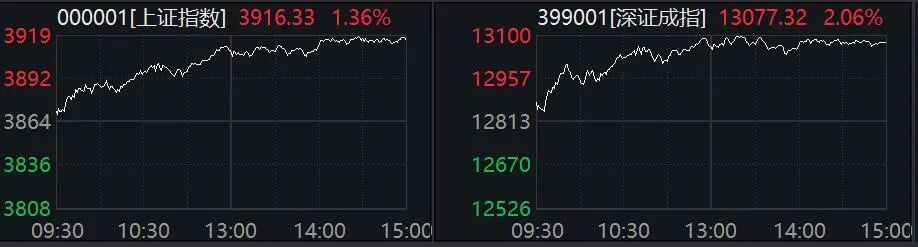
Group 1 - The consumer electronics sector experienced a significant surge, with stocks like Yunzhong Technology rising by 20% and Industrial Fulian approaching the daily limit [1][6] - The A-share market opened strongly, with the Shanghai Composite Index surpassing 3900 points and the Shenzhen Component Index exceeding 13000 points, indicating a broad market rally with over 4600 stocks rising [1] - Major sectors such as electronics, communication, and machinery saw substantial net inflows, with electronics receiving over 24 billion yuan [2] Group 2 - The iPhone 17 series has shown impressive sales, with a 14% increase in sales compared to the iPhone 16 during the first ten days of its release in China and the US, and the standard version's sales in China nearly doubling that of its predecessor [4] - The market for AI smart glasses is projected to grow significantly, with a forecasted compound annual growth rate of 55.6% from 2024 to 2029, indicating strong demand and potential investment opportunities in this sector [7]

北京控股(00392) - 北京控股有限公司附属公司北京燕京啤酒股份有限公司 - 2025年度三季度...
2025-10-21 09:21
香港交易及結算所有限公司及香港聯合交易所有限公司對本公告的內容概不負責,對其準確性或 完整性亦不發表任何聲明,並明確表示,概不對因本公告全部或任何部份內容而產生或因倚賴該 等內容而引致的任何損失承擔任何責任。 (於香港註冊成立之有限公司) (股份代號:392) 海外監管公告 北京控股有限公司附屬公司北京燕京啤酒股份有限公司 2025 年度三季度業績、利潤分配等事項公告 本海外監管公告乃由北京控股有限公司(「本公司」)根據香港聯合交易所有限公司 (「聯交所」)證券上市規則第 13.10B 條刊登。 本公司的附屬公司北京燕京啤酒股份有限公司(「燕京啤酒」)已於 2025 年 10 月 21 日 於深圳證券交易所網站(http://www.szse.cn)上載以下公告: 一、 公告内容 (一)2025 年三季度報告 燕京啤酒已公佈按照中國的「企業會計準則」編製截止 2025 年 9 月 30 日止三季度未經審 核業績,主要財務指標如下: | | 利潤表 | | | | --- | --- | --- | --- | | | 截至 9 月 30 | 日止三季度 | | | | 2025 年 | 2024 年 | | ...


宏观经济宏观月报:9月经济“预期之中”与“意料之外”-20251021
Guoxin Securities· 2025-10-21 08:00
Economic Growth Insights - The median and arithmetic average of Q3 GDP growth predictions from 12 institutions were 4.8% and 4.76% respectively, indicating a general expectation of economic performance[1] - Fixed asset investment, particularly in real estate, saw a significant decline from -12.9% at the end of June to -21.2% by the end of September, contributing to a 9.8 percentage point contraction year-on-year[1] - Infrastructure investment dropped from 5.3% to -8.1%, suggesting a substantial drag on GDP growth, estimated at about 0.7 percentage points[1] Policy and Investment Trends - The decreasing importance of real estate and infrastructure investment in national economic statistics suggests a potential shift in policy focus towards "investment in people"[2] - The "anti-involution" initiative, initially expected to gain traction in Q3, appears to have been sidelined in favor of boosting production amid economic pressures[2] - The PMI data indicated a widening gap between production and new orders, expanding by 0.9 percentage points to 1.1%[2] External Trade Dynamics - September's foreign trade performance exceeded expectations, with exports rising by 8.3% year-on-year, reflecting a shift towards emerging markets in the Global South[3] - The reliance on the U.S. market has decreased, with direct exports to the U.S. dropping to approximately 9%, while exports to Africa surged by 56%[3] - High-value industrial products, such as ships and integrated circuits, have become key drivers of China's export strength[3] Economic Outlook - The fourth quarter is expected to see a focus on utilizing existing policies, with over 1 trillion yuan in excess fiscal deposits available for economic support[3] - The potential for a stable economic performance in Q4 is bolstered by the anticipated operational window from the central bank in November[3] - Risks include a potential reduction in policy stimulus and uncertainties in overseas economic policies[3]
Singapore's largest industrial district cooling system begins operations to support STMicroelectronics' decarbonization strategy
Globenewswire· 2025-10-21 06:00
Core Insights - STMicroelectronics and SP Group have launched Singapore's largest industrial district cooling system at Ang Mo Kio TechnoPark to support decarbonization efforts [2][3] - The system aims to reduce carbon emissions by up to 120,000 tonnes annually and achieve a 20% reduction in cooling-related electricity consumption [3][8] - This initiative aligns with STMicroelectronics' commitment to becoming carbon neutral by 2027 [3][4] Company Initiatives - The district cooling system has an installed capacity of 36,000 refrigeration tonnes and serves an area of approximately 90,000 square meters [5][8] - The project has achieved over 2 million accident-free man hours during construction and received the Green Mark Platinum Super Low Energy certification [10] - STMicroelectronics is also upgrading the cooling system at its Toa Payoh site under a 20-year agreement with SP Group, aiming to reduce carbon emissions by approximately 2,140 tonnes annually [11] Technological Advancements - The cooling system utilizes advanced technologies, including a centralized closed-loop pipe network, to enhance energy efficiency and reliability [5][6] - The partnership includes the deployment of an energy management information system with 2,400 smart electricity meters to monitor energy consumption [12] - Smart water meters have been implemented to track water inflow, improving water efficiency in wafer fabrication operations [13] Environmental Impact - The new cooling system will repurpose over half a million cubic meters of water annually, contributing to resource conservation [3][8] - The project has reduced embodied carbon by about 44% compared to industrial benchmarks through optimized material choices [10] - STMicroelectronics is on track to achieve 100% renewable electricity sourcing by the end of 2027 [14]
