电子

Search documents
流动性&交易拥挤度&投资者温度计周报:主动权益基金新发规模创2022年以来新高-20260126
Huachuang Securities· 2026-01-26 10:09
Report Industry Investment Rating No relevant information provided. Core Viewpoints of the Report - The new - issue scale of active equity funds reached a new high since 2022. - The capital supply and demand sides both contracted. - The trading congestion showed different trends in various industries. - The self - media A - share search popularity and retail investor capital inflows decreased. [2] Summary by Relevant Catalogs 1. Capital Liquidity: The New - issue Scale of Active Equity Funds Reached a New High Since 2022 1.1 Public Offering Equity New - issue Scale Increased - The newly - established share of public offering equity funds last week was 261.5 billion, a significant increase from the previous value of 97.4 billion. Among them, the newly - issued active funds were 217.1 billion, reaching a new high since 2022, and the newly - issued passive index funds were 44.3 billion. [8] 1.2 Margin Trading Funds: Net Outflow - The latest margin financing balance of 2.71 trillion decreased from the previous value, while the securities lending balance of 1.733 billion increased. The overall balance accounted for 2.61% of the floating - market value, at the 99th percentile in the past three years. - Margin trading funds had a net inflow of about - 8.11 billion last week, a sharp drop from the previous net inflow of 105.22 billion, at the 19th percentile in the past three years. The turnover accounted for 9.8% of the total A - share turnover, a decrease of 1.4 percentage points from the previous value. - The margin trading turnover ratio last week was 50.2%, down from 71.0% in the previous period, at the 88th percentile in the past three years. - The number of individual investors in margin trading business reached 7.933 million, with the average daily trading investors decreasing by 111,000 from the previous value. - Margin trading mainly had a net inflow of 5.07 billion in the non - ferrous metals industry, 2.14 billion in the non - banking financial industry, and 1.43 billion in the banking industry; and a net outflow of 4.06 billion in the electronics industry, 3.68 billion in the computer industry, and 2.63 billion in the media industry. [12][13][19] 1.3 Stock - type ETFs: Net Inflow of - 333.05 Billion, at the 0th Percentile in the Past Three Years - The overall net inflow of stock - type ETFs last week was - 333.05 billion, a significant drop from the previous net inflow of - 141.58 billion. The net flow was at the 0th percentile in the past three years, with large - cap ETFs having a net inflow of - 396.19 billion and thematic ETFs having a net inflow of 4.965 billion. [20] 1.4 Listed Company Repurchases: Repurchase Amount Decreased - The repurchase amount of listed companies last week was 260 million, down from 850 million in the previous period, at the 3rd percentile in the past three years. [22] 1.5 Equity Financing: Amount at the 41st Percentile in the Past Three Years - Based on the listing date, the equity financing amount last week was 715 million, at the 41st percentile in the past three years, including 47 million in IPOs and 669 million in refinancing. [25] 1.6 Industrial Capital Net Reduction Scale Decreased - Last week, industrial capital had an overall increase of 29.1 million and a reduction of - 1.213 billion, with a net reduction of - 1.184 billion, a decrease in scale compared to the previous value of - 1.863 billion. The net reduction scale was at the 90th percentile in the past three years. - By industry, there was a net increase of 0.01 billion in the banking industry last week; and net reductions of - 5.04 billion in the electronics industry, - 1.08 billion in the pharmaceutical industry, and - 0.94 billion in the computer industry. [28][33] 1.7 Restricted - share Unlocking Scale Increased - The market value of unlocked shares last week was 5.842 billion, an increase from the previous value of 5.141 billion, at the 56th percentile in the past three years. The expected market value of unlocked shares this week is 4.051 billion. [35] 1.8 Southbound Capital Net Inflow Increased - The southbound capital flow last week was + 2.101 billion, an increase from + 899 million in the previous week. The weekly net flow intensity was at the 72nd percentile in the past three years. [38] 1.9 Northbound Capital Participation Increased - The trading of northbound capital accounted for 6.9% of the Shanghai and Shenzhen A - shares last week, an increase of 0.4 percentage points from the previous value. The participation was at the 50th percentile in the past three years. [41] 2. Trading Congestion: Construction, Home Appliances, and Semiconductors Rose; Light Industry, Building Materials, and Communications Declined 2.1 Growth - themed Industries - The trading popularity percentile of the semiconductor industry increased by 7 percentage points to 23%. [46] 2.2 Value - themed Industries - The home appliance industry rose to 68%, and the insurance industry rose by 5 percentage points to 49%. [52] 2.3 Cycle - themed Industries - The construction industry rose by 10 percentage points to 49%, and the light industry decreased by 30 percentage points to 45%. [57][61] 2.4 TMT - themed Industries - The media industry rose by 6 percentage points to 75%, and the electronics industry rose by 5 percentage points to 29%. [67] 3. Investor Thermometer: Self - media A - share Search Popularity and Retail Investor Capital Inflows Decreased 3.1 Self - media: A - share Search Popularity Decreased - The market continued its structural differentiation last week. Under regulatory cooling, the Shanghai Composite Index fluctuated slightly upward, and the decline in market trading activity led to a decrease in the self - media A - share search popularity. [71] 3.2 Douyin Users Watching "A - share" Content - The structure distribution of Douyin users watching "A - share" content from January 17th to January 23rd was generally stable. The proportion of high - level cities such as new first - tier and second - tier cities decreased; and the proportion of the young group under 30 years old decreased. [74] 3.3 Kuaishou: "A - share" Video Playback Volume Decreased - From January 17th to January 23rd, the number of "A - share" videos on Kuaishou decreased by 116 compared to the previous period; the playback volume decreased by 2.674 million times; and the interaction volume decreased by 52,000 times. [78] 3.4 Weibo Sentiment: The Outflow of Broad - based ETFs Caused a Rise in Negative Sentiment on Weibo - The overall sentiment on Weibo was stable last week, but the large - scale outflow of broad - based ETFs led to a significant increase in negative sentiment. [80] 3.5 Public Offering Fund Clustering Trend - From January 19th to January 23rd, the public offering fund clustering trend strengthened, with a preference for the growth style and the electronics industry. [83] 3.6 Retail Investor Capital Inflow Decreased - In October 2024, the number of newly - opened accounts was 6.85 million, second only to April 2015 and June 2015 in history; in December 2025, it was 2.6 million, at the 75th percentile in the past decade. - From January 19th to January 23rd, the net inflow of retail investor capital in the Shanghai and Shenzhen A - shares measured by small orders was 119.87 billion, a decrease of 129.43 billion from the previous value, at the 67.8th percentile in the past five years. [89] 3.7 Retail Investor Entry Channels: Download Volume Decreased - From January 17th to January 23rd, the cumulative download volume of Flush was 239,000 times, a decrease of 141,000 times from the previous value; the download volume of Eastmoney was 105,000 times, a decrease of 24,000 times from the previous value. The number of five - star reviews of Flush was 5,340 times, a decrease of 4,501 times from the previous value. [91]
概伦电子(688206.SH)发预盈,预计2025年年度归母净利润3600万元左右
智通财经网· 2026-01-26 10:09
智通财经APP讯,概伦电子(688206.SH)发布2025年年度业绩预盈公告,预计2025年年度实现归属于母 公司所有者的净利润与上年同期(法定披露数据)相比,将实现扭亏为盈,实现归属于母公司所有者的净 利润3,600万元左右。 报告期内,公司持续加大产品研发和技术提升力度,积极拓展产品种类,不断提升产品技术水平和市场 竞争力,EDA软件授权、技术开发解决方案等业务均实现较快增长。 ...

52只科创板活跃股获主力资金净流入
Zheng Quan Shi Bao Wang· 2026-01-26 09:44
科创50指数今日下跌1.35%,报收1532.80点,科创板全日成交量72.88亿股,成交额3449.46亿元,加权 平均换手率为3.70%。 证券时报·数据宝统计显示,今日可交易科创板股中,109只股收盘上涨,涨幅超过10%的有9只,其 中,之江生物、优刻得、瑞华泰等4股涨停,涨幅在5%至10%的有21只,收盘下跌的有488只,跌幅超 10%的有9只。 科创板股换手率区间分布显示,换手率超过20%的有4只,换手率10%~20%的有28只,换手率5%~10% 的142只,换手率3%~5%的149只,换手率1%~3%的240只,换手率不足1%的有37只。 1月26日科创板换手率居前个股 | 代码 | 简称 | 最新收盘价 | 日涨跌幅(%) | 日换手率(%) | 资金净流入(万元) | | --- | --- | --- | --- | --- | --- | | 688158 | 优刻得 | 39.13 | 19.99 | 30.41 | 67945.51 | | 688316 | 青云科技 | 81.49 | 7.11 | 24.00 | 6612.83 | | 688726 | 拉普拉斯 | 57.01 ...

91股筹码连续3期集中
Zheng Quan Shi Bao Wang· 2026-01-26 09:32
| 代码 | 简称 | 最新股东户 | 较上期增减 | 连续下降期 | 筹码集中以来涨跌 | 相对沪指 | | --- | --- | --- | --- | --- | --- | --- | | | | 数 | (%) | 数 | (%) | (%) | | 000952 | 广济药业 | 32697 | -14.36 | 3 | 5.70 | -0.53 | | 301535 | 浙江华远 | 10423 | -12.21 | 3 | 30.11 | 23.89 | | 000831 | 中国稀土 | 195665 | -11.12 | 4 | 23.67 | 17.72 | | 000628 | 高新发展 | 49376 | -11.00 | 3 | 16.16 | 9.94 | | 002590 | 万安科技 | 36761 | -8.85 | 3 | 5.45 | -0.78 | | 301221 | 光庭信息 | 13402 | -7.24 | 3 | 14.77 | 8.55 | | 601086 | 国芳集团 | 47595 | -6.86 | 4 | -6.06 | -12.01 | | ...
两市主力资金净流出1143.17亿元,电子行业净流出居首
Zheng Quan Shi Bao Wang· 2026-01-26 09:24
1月26日,沪指下跌0.09%,深成指下跌0.85%,创业板指下跌0.91%,沪深300指数上涨0.10%。可交易 A股中,上涨的有1604只,占比29.36%,下跌的3771只。 今日各行业资金流向 | 行业 | 日涨跌幅(%) | 资金流向(亿元) | 行业 | 日涨跌幅(%) | 资金流向(亿元) | | --- | --- | --- | --- | --- | --- | | 非银金融 | 0.79 | 34.93 | 交通运输 | -0.26 | -15.20 | | 医药生物 | 0.29 | 28.39 | 房地产 | -2.23 | -19.26 | | 银行 | 0.44 | 22.50 | 商贸零售 | -1.93 | -20.01 | | 通信 | 0.30 | 13.81 | 公用事业 | -0.19 | -20.36 | | 石油石化 | 3.18 | 8.06 | 建筑装饰 | 0.16 | -21.95 | | 煤炭 | 2.07 | 4.50 | 有色金属 | 4.57 | -28.51 | | 美容护理 | -0.87 | -0.40 | 家用电器 | -1.68 | -3 ...
277.21亿元资金今日流出电子股
Zheng Quan Shi Bao Wang· 2026-01-26 09:24
沪指1月26日下跌0.09%,申万所属行业中,今日上涨的有10个,涨幅居前的行业为有色金属、石油石 化,涨幅分别为4.57%、3.18%。跌幅居前的行业为国防军工、汽车,跌幅分别为4.47%、2.31%。电子 行业今日下跌2.24%。 资金面上看,两市主力资金全天净流出1143.17亿元,今日有6个行业主力资金净流入,非银金融行业主 力资金净流入规模居首,该行业今日上涨0.79%,全天净流入资金34.93亿元,其次是医药生物行业,日 涨幅为0.29%,净流入资金为28.39亿元。 主力资金净流出的行业有25个,电子行业主力资金净流出规模居首,全天净流出资金277.21亿元,其次 是电力设备行业,净流出资金为203.06亿元,净流出资金较多的还有国防军工、机械设备、汽车等行 业。 电子行业今日下跌2.24%,全天主力资金净流出277.21亿元,该行业所属的个股共476只,今日上涨的有 68只;下跌的有405只,跌停的有5只。以资金流向数据进行统计,该行业资金净流入的个股有115只, 其中,净流入资金超亿元的有15只,净流入资金居首的是澜起科技,今日净流入资金6.88亿元,紧随其 后的是香农芯创、沃尔核材,净流入 ...


191.70亿元资金今日流出国防军工股
Zheng Quan Shi Bao Wang· 2026-01-26 09:24
资金面上看,两市主力资金全天净流出1143.17亿元,今日有6个行业主力资金净流入,非银金融行业主 力资金净流入规模居首,该行业今日上涨0.79%,全天净流入资金34.93亿元,其次是医药生物行业,日 涨幅为0.29%,净流入资金为28.39亿元。 主力资金净流出的行业有25个,电子行业主力资金净流出规模居首,全天净流出资金277.21亿元,其次 是电力设备行业,净流出资金为203.06亿元,净流出资金较多的还有国防军工、机械设备、汽车等行 业。 国防军工行业今日下跌4.47%,全天主力资金净流出191.70亿元,该行业所属的个股共138只,今日上涨 的有7只,涨停的有1只;下跌的有130只,跌停的有7只。以资金流向数据进行统计,该行业资金净流入 的个股有16只,其中,净流入资金超3000万元的有6只,净流入资金居首的是钢研高纳,今日净流入资 金1.12亿元,紧随其后的是光启技术、中国船舶,净流入资金分别为9416.43万元、5464.62万元。国防 军工行业资金净流出个股中,资金净流出超亿元的有41只,净流出资金居前的有航天电子、中国卫星、 海格通信,净流出资金分别为40.51亿元、27.47亿元、9.85 ...
18家北交所公司接受机构调研
Zheng Quan Shi Bao Wang· 2026-01-26 09:22
Group 1 - In the past month (from December 27, 2025, to January 26, 2026), a total of 18 companies listed on the Beijing Stock Exchange (BSE) received institutional research, with Xingchen Technology being the most notable, attracting 31 participating institutions [1] - Among the 18 companies, 16 were researched by brokerages, 11 by funds, 5 by private equity, and 4 by insurance companies [1] - The companies that received the most attention from institutions include Tietuo Machinery, Wuxin Tunnel Equipment, and Jikang Technology, with 27, 23, and 16 participating institutions respectively [1] Group 2 - The average market capitalization of all companies on the BSE as of January 26 was 3.327 billion yuan, while the average market capitalization of the companies that received research was 4.205 billion yuan [2] - The companies with the highest market capitalization among those researched include Kaifa Technology, Fujida, and Jinhua New Materials [2] - The average stock price increase for the researched companies over the past month was 5.46%, with notable gainers including Tianrun Technology, Tairis, and Fujida, which saw increases of 24.61%, 18.46%, and 13.52% respectively [1][2]
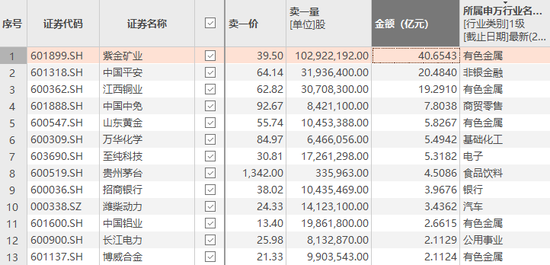
601899,尾盘突现超40亿元压单
Xin Lang Cai Jing· 2026-01-26 09:12
炒股就看金麒麟分析师研报,权威,专业,及时,全面,助您挖掘潜力主题机会! 紫金矿业当日成交额达263亿元,位居A股第一。 | | 601899 紫美矿业 | | | | 39.50 | | +1.94 +5.17% | | --- | --- | --- | --- | --- | --- | --- | --- | | 已收市 CNY | | | | | | ■ 南 ▲ 自选 + ▼ | | | 港(2899):42.060(+4.06%) | | | H/A :- 4.60% | 行情分析 | | 深度分析 | | | 委书 | -97.25% 委美 | | -102万 | 主力流入 | | 1512720 万元 | | | 25 | 39.54 | 197 | | 主力流出 | | 1551621 万元 | | | 英四 | 39.53 | 459 | | 主力净流 | | 38900 万元 | | | 卖三 | 39.52 | 750 | | | | | | | 英二 | 39.51 | 343 | | (万元) | 流入 | | SER | | 委一 | 39.50 | 1029222 | | 超大 ...


时隔两年,仪器巨头重回全球品牌价值500强
仪器信息网· 2026-01-26 09:02
Core Insights - The "Global 500 Brand Value 2026" list was released by Brand Finance at the World Economic Forum in Davos, with Apple, Microsoft, Google, and Amazon occupying the top four positions, while Nvidia rose to fifth place [1][3]. Brand Rankings - The top five brands and their respective values are: 1. Apple (USA) - $607.642 billion, +5.8% increase 2. Microsoft (USA) - $565.250 billion, +22.6% increase 3. Google (USA) - $433.075 billion, +4.9% increase 4. Amazon (USA) - $369.876 billion, +3.8% increase 5. Nvidia (USA) - $184.322 billion, +109.8% increase [3][4]. Notable Returns - Thermo Fisher made a notable return to the list, ranking 454th after being absent for two years, becoming the only brand primarily focused on scientific instruments to be included [1][2]. Other Brands in the List - Other notable brands in the top 500 include Midea, Haier, Roche, Hitachi, Siemens, General Electric (GE), Philips, and Abbott, all of which are involved in the instrument business [2].