汽车制造

Search documents
越秀证券每日晨报-20260302
越秀证券· 2026-03-02 02:15
Market Performance - The Hang Seng Index closed at 26,630, up 0.95% for the day and up 3.90% year-to-date [1] - The Hang Seng Tech Index closed at 5,137, up 0.56% for the day but down 6.86% year-to-date [1] - The Shanghai Composite Index closed at 4,162, up 0.39% for the day and up 4.89% year-to-date [1] - The Dow Jones Index closed at 48,977, down 1.05% for the day and up 1.90% year-to-date [1] Currency Performance - The Renminbi Index is at 97.810, down 0.74% over the last month but up 1.84% over the last six months [2] - The US Dollar Index is at 97.744, up 1.58% over the last month but down 0.50% over the last six months [2] - The exchange rate for Renminbi to USD is 0.146, down 1.38% over the last month and down 4.09% over the last six months [2] Commodity Performance - Brent crude oil is priced at $71.39 per barrel, up 7.21% over the last month and up 7.92% over the last six months [3] - Gold is priced at $5,179.43 per ounce, down 0.02% over the last month but up 52.45% over the last six months [3] - Silver is priced at $89.872 per ounce, down 19.82% over the last month but up 132.83% over the last six months [3] Company News - NIO (09866.HK) has signed a strategic cooperation agreement with Bosch, focusing on core technologies for smart electric vehicles [22] - New World Development (00017.HK) reported a narrowed interim loss of HKD 37.3 billion, with a core operating profit decline of 17.7% [23][24] - The Hong Kong Monetary Authority reported a 1.1% increase in M2 and M3 money supply in January [17][18] Economic Indicators - Hong Kong's overall export value in January increased by 33.8% year-on-year, exceeding market expectations [14][16] - The Hong Kong government recorded a surplus of HKD 879 billion in the first ten months of the fiscal year, with fiscal reserves increasing to HKD 7,422 billion [19]





信达国际控股港股晨报-20260302
Xin Da Guo Ji Kong Gu· 2026-03-02 01:55
Market Overview - The Hang Seng Index is expected to hold at 26,000 points amid escalating tensions between the US and Iran, with potential impacts on corporate earnings due to rising commodity prices [2] - The AI sector is experiencing rapid development, disrupting traditional business models, leading to polarized stock performance in tech stocks [2][6] - The upcoming National People's Congress is anticipated to provide support for the Hong Kong stock market, with expectations for economic growth targets and deficit rates to be announced [2] Economic Indicators - The US Federal Reserve maintained interest rates in January, indicating a positive outlook on economic activity, while signaling a cautious approach to future rate adjustments based on economic data [4] - The People's Bank of China has reduced the foreign exchange risk reserve ratio to 0%, aiming to stabilize the RMB exchange rate and support market development [7] - In January, China's foreign exchange market transactions totaled 27.54 trillion RMB (approximately 3.93 trillion USD), with significant activity in both the interbank and customer markets [7] Sector Insights - The semiconductor industry is experiencing rapid growth due to the demand for AI applications, with storage chip prices rising significantly [8] - The real estate market is showing signs of stabilization, with a narrowing decline in second-hand housing prices, indicating potential recovery as demand is expected to be released post-holiday [7][8] - The automotive sector is facing challenges in Europe, with a decline in market share for Chinese manufacturers, particularly in hybrid and electric vehicle segments [8] Corporate Developments - Companies like Lenovo, Dell, and HP are adjusting their pricing strategies in response to rising storage chip costs, with price increases ranging from 500 to 1,500 RMB [8] - BYD reported a 41% drop in sales in February, while competitors like Leap Motor saw an 11% increase in deliveries [6][8] - The gaming and entertainment sector is seeing significant investment, with companies like ByteDance planning to list in Hong Kong, aiming to raise up to 11.7 billion RMB [6][8]
揭秘长城智驾自研:元戎、Momenta「抬轿」与千人自研团队
雷峰网· 2026-03-02 00:43
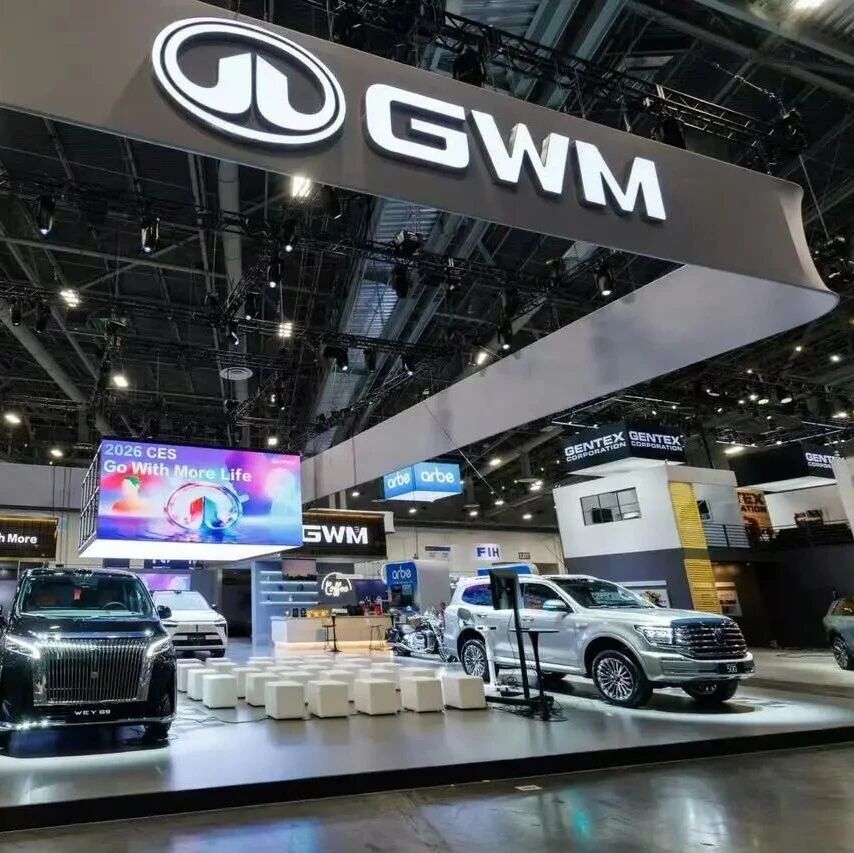
Core Viewpoint - Great Wall Motors is adopting a dual strategy in the autonomous driving sector, focusing on both self-research and collaboration with external suppliers to enhance its technological capabilities and market position [2][5][11]. Group 1: Autonomous Driving Strategy - The competition in autonomous driving is intensifying, with Great Wall Motors planning to release a VLA (Vision-Language-Action) model by the end of 2025, positioning itself as one of the few companies to implement this technology [2][5]. - Great Wall Motors is expanding its supplier network to cover vehicle price ranges from 100,000 to 400,000 yuan, with plans to implement three major computing platforms starting in 2025 [5][9]. - The ADC 2.0 platform targets mainstream models like Haval, utilizing TI chips and Qualcomm platforms, and aims to enhance capabilities in high-speed scenarios [6][7]. Group 2: Research and Development - Great Wall Motors has established a self-research team of over 1,000 people, focusing on both autonomous driving and cockpit technologies, with a significant emphasis on self-research despite ongoing collaborations [10][11]. - The company has been investing heavily in R&D, with autonomous driving research expenses accounting for 50% of total R&D investments, amounting to 1 billion yuan annually [12][13]. - The establishment of the 九州超算中心 (Jiuzhou Supercomputing Center) aims to provide substantial computational support for the development of large models, with a total computing power of 5 EFLOPS [15]. Group 3: Market Performance - The sales of the Haval Shuanglong Max, which features autonomous driving capabilities, show a balanced order structure between smart and non-smart versions, indicating a growing consumer interest in smart features [9]. - The sales of the Wey brand reached 102,000 units in 2025, marking an 86% year-on-year increase, attributed to the successful implementation of end-to-end models and VLA technology [9].


汽车行业周报:数据中心分布式电源需求上行,产业链有望受益
KAIYUAN SECURITIES· 2026-03-02 00:24
Investment Rating - The investment rating for the automotive industry is "Positive" (maintained) [1] Core Insights - The demand for distributed power sources in North America is increasing due to the mismatch between the expansion of traditional power grids and the rapid construction of data centers, creating opportunities for on-site power generation and backup power equipment [5][16] - The automotive sector is experiencing a shift towards high-end luxury passenger vehicles, with expectations of increased performance as product matrices expand [8] - The automotive parts industry is expected to see an upward trend in profitability due to reduced competition and expansion in downstream markets [8] Summary by Sections 1. Data Center Distributed Power Demand - The power supply gap in North America is widening, leading to increased demand for distributed power sources [16] - Major tech companies are significantly increasing their capital expenditures for data centers, with a total expected expenditure of approximately $650 billion in 2026 [16][17] - The total installed capacity of data centers in the U.S. is projected to grow from about 17 GW in 2025 to approximately 50 GW by 2030 [16] 2. Industry News Highlights - Xiaopeng Motors announced that Volkswagen will be the first customer for its second-generation VLA model [34] - Huawei's autonomous driving system recorded over 470 million kilometers during the Spring Festival, equivalent to 190,000 round trips between Beijing and Shanghai [35] - NIO's chip subsidiary completed its first round of financing, raising over 2.2 billion RMB [37] 3. Market Performance - The automotive sector's performance this week saw the Shanghai Composite Index increase by 1.08%, while the automotive sector rose by 0.59%, ranking 23rd among A-share industries [7][43] - The passenger vehicle sector's PE valuation decreased, while commercial vehicles and automotive parts sectors saw an increase in PE valuations [43][46] 4. Investment Recommendations - For passenger vehicles, the recommendation includes Jianghuai Automobile and Seres, with Geely Automobile as a beneficiary [8] - In the automotive parts sector, recommended companies include Desay SV, Zhejiang Xiantong, and Meili Technology, with beneficiaries such as Weichai Power and Wufeng High-Tech [8]




宗馥莉砍掉娃哈哈机器人业务,精机公司解散清算;荣耀人形机器人Robot表演后空翻;小米携手Gran Turismo发布中国首款VGT概念超跑丨邦早报
创业邦· 2026-03-02 00:09
Core Viewpoint - The article discusses various developments in the technology and automotive sectors, highlighting significant corporate actions, product launches, and market trends. Group 1: Corporate Actions - Wahaha Precision Machinery Co., Ltd. has officially entered liquidation, with its operations focused on robotics and intelligent equipment being discontinued as part of a strategy to refocus on core food and beverage businesses under the leadership of Zong Fuli [2] - Geely Holding Group has been approved to independently recruit postdoctoral researchers, becoming one of the few private enterprises in China with this qualification, which will enhance its talent acquisition and research capabilities [10] - TCL Huaxing has completed the acquisition of Fujian Zhaoyuan Optoelectronics Co., Ltd., enhancing its LED display supply chain [13] Group 2: Product Launches - Honor unveiled its humanoid robot, Robot, at the MWC 2026, showcasing its capabilities through interactive performances [3] - Xiaomi launched three high-end flagship smartphones and introduced the Xiaomi Vision Gran Turismo, a concept supercar developed in collaboration with Gran Turismo [6] - BMW has initiated a pilot project integrating humanoid robots into its production line in Leipzig, collaborating with Swedish company Hexagon [8] Group 3: Market Trends - The automotive industry in China has seen a 6.76% year-on-year increase in vehicle sales for the first two months of 2026, with electric vehicle sales growing by 6.44% [13] - The 2026 film box office in China has surpassed 10 billion yuan, leading the global market with a total of 2.25 billion viewers [18] - Multiple provinces in China have released details on the 2026 vehicle replacement subsidy policy, offering significant incentives for consumers to purchase new energy vehicles [18]







史上最惨2月,车企救市下“猛药”
汽车商业评论· 2026-03-01 23:06
Core Viewpoint - The automotive market in China is undergoing a significant transformation in 2026, shifting from aggressive price wars to a focus on long-term low-interest financing options, which are seen as a strategic response to declining sales and profit pressures [5][11][30]. Group 1: Market Dynamics - The automotive industry has experienced a shift from direct price cuts to a collective strategy of "seven-year ultra-low interest financial warfare," with nearly 30 brands participating [6][12]. - Tesla initiated this trend by offering a seven-year financing plan with an annual interest rate as low as 0.98%, significantly lower than the typical market rates of 4% to 8% [17][18]. - The overall retail sales of passenger vehicles in January 2026 dropped by 13.9% year-on-year, with new energy vehicle sales declining by 20% [32]. Group 2: Financial Strategies - Companies are utilizing financial incentives to maintain vehicle pricing while lowering the purchase threshold for consumers, effectively transferring promotional costs to financial expenses [12][30]. - Various brands have introduced competitive financing plans, such as Xiaomi's 1.93% interest rate and NIO's 0.49% rate, to attract price-sensitive consumers [20][21][22]. - The trend of extending loan terms to seven or even eight years is becoming common, with brands like Dongfeng Nissan and GAC Toyota leading this approach [26][27]. Group 3: Consumer Implications - The long-term financing options may lead to increased total interest payments for consumers, raising concerns about the potential for negative equity as vehicle values depreciate faster than loan balances [60][62]. - The shift towards financing models that separate ownership and usage rights could create complications for consumers, particularly in terms of vehicle modifications and ownership verification [68][69]. - The current financial strategies may mask deeper financial risks for consumers, as the allure of low monthly payments could lead to long-term financial burdens [60][64]. Group 4: Competitive Landscape - The competition is intensifying among automakers, with companies like Tesla and NIO leveraging their financial strength to offer attractive financing options, while traditional brands struggle to adapt [71][72]. - The market is expected to evolve into a more complex ecosystem where financial services and consumer engagement will play a crucial role in competitive differentiation [73]. - The ongoing financial strategies are likely to accelerate industry consolidation, with stronger players gaining an advantage over smaller, less financially robust competitors [59][75].


长城汽车股份有限公司2026年2月产销快报
Xin Lang Cai Jing· 2026-03-01 20:01
Group 1 - The company reported overseas sales of 42,675 units in February 2026, with a cumulative total of 82,953 units sold from January to February 2026 [1] - In February 2026, the company sold 12,744 units of new energy vehicles, bringing the cumulative total to 30,773 units for the first two months of 2026 [1] - The sales figures provided are unaudited and may be subject to adjustments pending final confirmation [1]
长城汽车2026年2月产销快报:海外与新能源表现亮眼,整体销量同比微降
Xin Lang Cai Jing· 2026-03-01 16:53
Core Insights - The core viewpoint of the article highlights the decline in sales and production for Great Wall Motors in February 2026, while also noting significant growth in the WEY brand and strong performance in overseas markets and electric vehicle sales [1] Sales Performance - Total vehicle sales in February 2026 were 64,811 units, a decrease of 13.42% compared to 74,861 units in the same month last year [1] - Cumulative sales for January and February 2026 reached 154,885 units, reflecting a slight decline of 1.58% year-on-year [1] Production Data - Total production in February 2026 was 72,594 units, down 6.79% year-on-year [1] - Cumulative production for January and February 2026 was 162,906 units, showing a year-on-year increase of 2.58% [1] Brand Performance - The WEY brand saw significant growth, with February sales reaching 5,615 units, a substantial increase of 54.13% year-on-year, and production rising by 44.35% [1] - The Haval brand's sales remained relatively stable, with February sales of 43,660 units, a year-on-year increase of 0.83% [1] - Sales for the Great Wall pickup, Ora, and Tank brands experienced a decline, with Ora brand sales dropping significantly by 72.34% [1] Market Highlights - Great Wall Motors reported strong overseas sales in February, with a total of 42,675 units sold [1] - Sales of new energy vehicles in February reached 12,744 units, with cumulative sales for January and February at 30,773 units, indicating the company's ongoing commitment to electrification [1] Additional Notes - The reported production and sales data are unaudited and may be subject to adjustments, with final figures to be confirmed in subsequent audited financial reports [1]
汽车行业周报:数据中心分布式电源需求上行,产业链有望受益-20260301
KAIYUAN SECURITIES· 2026-03-01 14:15
Investment Rating - The investment rating for the automotive industry is "Positive" (maintained) [1] Core Insights - The demand for distributed power sources in North America is increasing due to the mismatch between the expansion of traditional power grids and the rapid construction of data centers, creating opportunities for on-site power generation and backup power equipment [5][16] - The automotive sector is experiencing a shift towards high-end luxury passenger vehicles, with expectations of increased performance as product matrices expand [8] - The automotive parts industry is expected to see an upward trend in profitability due to reduced competition and expansion in downstream markets [8] Summary by Sections 1. Data Center Distributed Power Demand - The power supply gap in North America is widening, leading to increased demand for distributed power sources [16] - Major tech companies are significantly increasing their capital expenditures for data centers, with a total expected expenditure of approximately $650 billion (about 4.58 trillion RMB) in 2026 [16][17] - The total installed capacity of data centers in the U.S. is projected to grow from about 17 GW in 2025 to approximately 50 GW by 2030 [16] 2. Industry News Highlights - XPeng Motors announced that Volkswagen will be the first customer for its second-generation VLA model [6] - Huawei's autonomous driving system recorded over 470 million kilometers during the Spring Festival, equivalent to 190,000 round trips between Beijing and Shanghai [6] - NIO's chip subsidiary completed its first round of financing, raising over 2.2 billion RMB [6] 3. Market Performance - The automotive sector's performance this week saw the CSI 300 index increase by 1.08%, while the automotive sector rose by 0.59%, ranking 23rd among A-share industries [7][43] - The passenger vehicle index decreased by 1.41%, with GAC Group and NIO leading the gains [7][46] - The commercial vehicle index increased by 1.41%, with Hailun Zhe and Weichai Power leading the gains [7][50] 4. Investment Recommendations - For passenger vehicles, the demand for domestic high-end luxury vehicles is exceeding expectations, with recommended stocks including JAC Motors and Seres, while benefiting stocks include Geely [8] - In the parts sector, companies like Desay SV and Zhejiang Xiantong are recommended due to expected profitability improvements [8]
1月热销前十广东占三成,上海第八,2026新能源重卡区域市场或生巨变 | 头条
第一商用车网· 2026-03-01 13:31
Core Viewpoint - The new energy heavy truck market in China has experienced significant growth in January 2026, achieving a year-on-year increase of 127% despite a month-on-month decline of 65% compared to December 2025, indicating a robust start to the year [3][31]. Market Overview - In January 2026, a total of 16,100 new energy heavy trucks were sold across 269 cities in China, with 30 provinces having registered these vehicles, showcasing a widespread market penetration [3][31]. - The top ten cities accounted for 30.23% of total sales, a slight decrease from previous years, indicating a more distributed market rather than concentration in a few cities [5][31]. Regional Performance - Guangdong province led with 2,379 new energy heavy trucks registered, with Guangzhou, Foshan, and Shenzhen ranking among the top ten cities for sales [7][31]. - Notably, Guangzhou topped the sales chart with 784 units sold, where XCMG held a dominant market share of 43.1% [10][31]. - Foshan showed remarkable growth, moving from 20th place in 2025 to 2nd in January 2026, with a market share of 68.9% for the leading brand, Yuan Cheng [12][31]. Brand Competition - In January 2026, 14 brands were active in Shenzhen, with Shaanxi Automobile leading with a market share of 25.2% [14][31]. - Chongqing and Tianjin saw significant improvements in their rankings, with Chongqing and Tianjin rising by 5 positions each, and the leading brands in these cities were United Heavy Truck and China National Heavy Duty Truck respectively [18][20][31]. - Shanghai, previously the top city in 2025, fell to 8th place in January 2026, with no brand exceeding 100 units sold [29][31]. Conclusion - The new energy heavy truck market in China is showing signs of comprehensive growth, with expectations for further expansion in the number of cities where these vehicles will be registered and sold throughout 2026 [31].