
化工

Search documents
A股马年首日“开门红”!成交额重返万亿元,逾百股涨停
Sou Hu Cai Jing· 2026-02-24 07:40
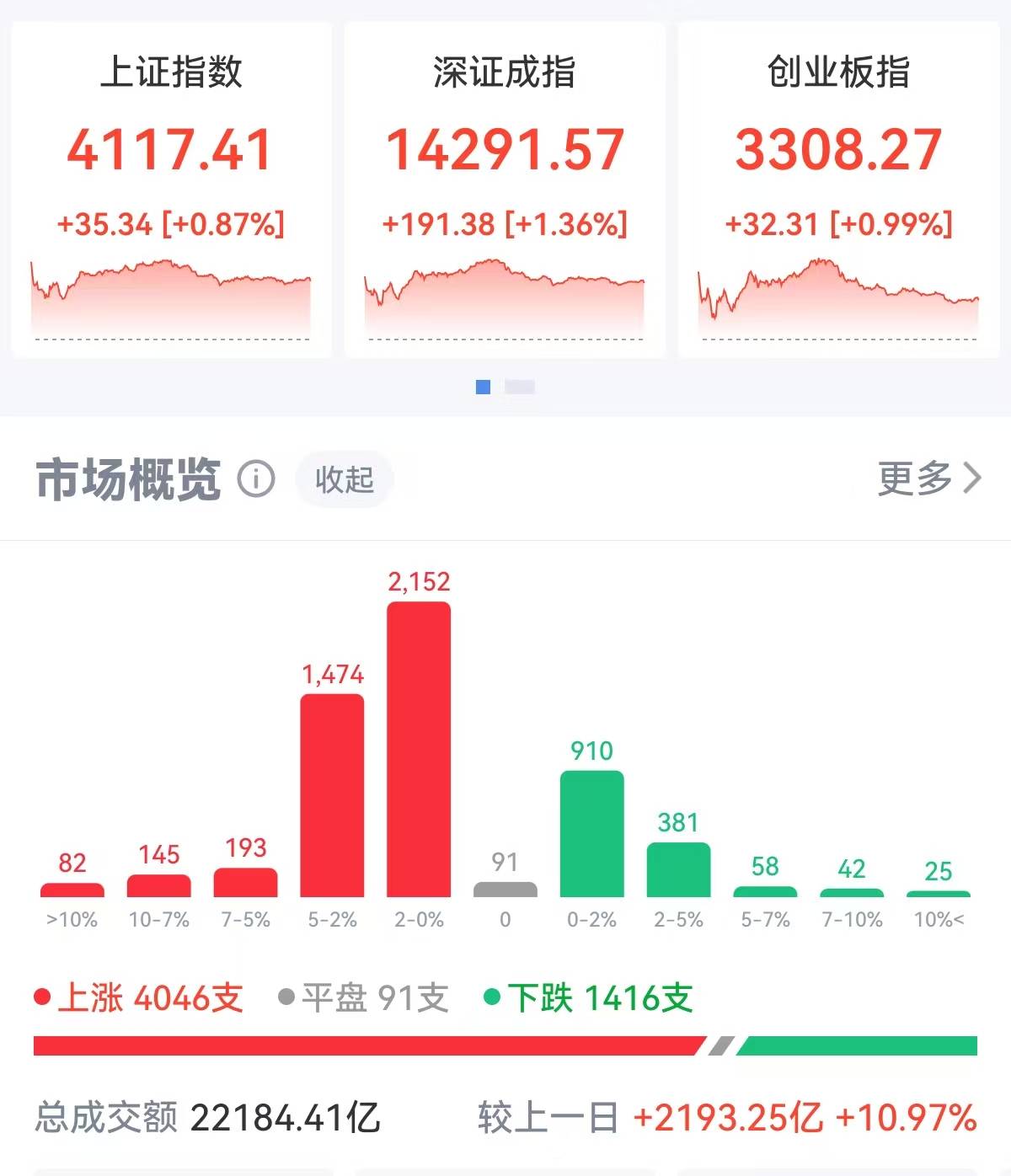
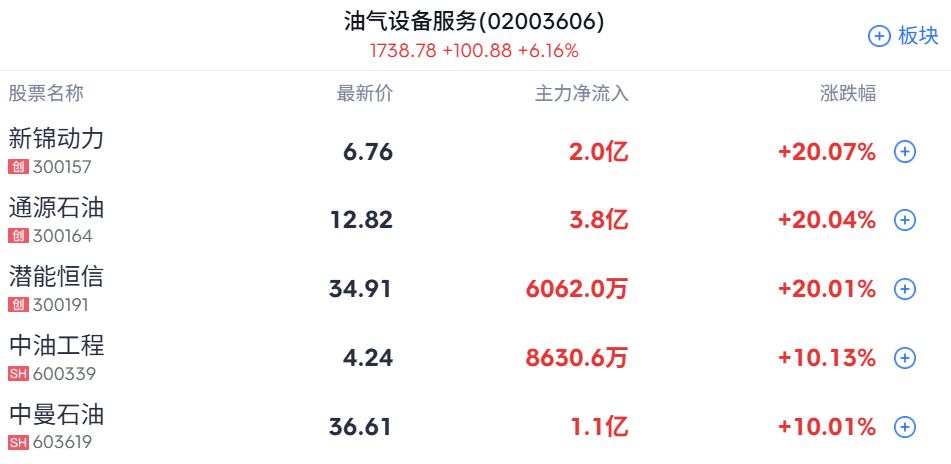
Market Performance - The A-share market opened positively in the Year of the Horse, with the Shanghai Composite Index rising by 0.87% to close at 4117.41 points, the Shenzhen Component Index increasing by 1.36% to 14291.57 points, and the ChiNext Index up by 0.99% to 3308.27 points [1] - The total trading volume in the Shanghai and Shenzhen markets reached 22,184 billion yuan, an increase of 2,193 billion yuan compared to the previous trading day, marking a return to the trillion-yuan trading range [1] Sector Performance - Most industry sectors saw gains, with precious metals, oil and petrochemicals, glass and fiber, agricultural chemicals, chemical raw materials, and non-metallic materials leading the increases [4] - The film and television, media, tourism and scenic spots, and software development sectors experienced the largest declines [4] Stock Highlights - Over 4,000 stocks rose, with more than a hundred stocks hitting the daily limit up. The precious metals and oil and petrochemical sectors saw significant surges, with Tongyuan Petroleum hitting the daily limit up by 20%, and several other stocks in these sectors also reaching the limit [4] - The chemical sector showed strength, with Meibang Co. achieving four consecutive limit ups, and several other stocks like Hongbao Li and Hongqiang Co. also hitting the limit [4] - The cultivated diamond concept surged, with Sifangda hitting the daily limit up by 20% [5] Commodity Futures - Most major contracts in domestic commodity futures closed higher, with silver rising nearly 13%, lithium carbonate over 10%, and crude oil increasing over 6% [5] - Other commodities such as platinum and palladium also saw significant gains, while polysilicon and live pigs experienced notable declines [5]

A股收评 | A股马年开门红 三大主线表现强势 春季躁动进入第二阶段?
智通财经网· 2026-02-24 07:30
Market Overview - A-shares experienced a significant opening, driven by multiple favorable factors, with the Shanghai Composite Index rising by 0.87%, the Shenzhen Component Index by 1.36%, and the ChiNext Index by 0.99% [1] - The trading volume in the Shanghai and Shenzhen markets reached 2.2 trillion yuan, an increase of 219.4 billion yuan compared to the previous trading day [1] Domestic Factors - Domestic liquidity remains reasonably ample, with effective reverse repurchase operations before the holiday stabilizing the market's funding situation [2] - Post-holiday, there is an increased willingness for capital to flow back into the market, providing support for upward movement [2] Economic and Policy Environment - The macroeconomic environment is steadily recovering, and ongoing industrial policies are boosting market risk appetite, leading to optimistic expectations for capital market performance in the Year of the Horse [3] Sector Performance - **Cyclical Stocks**: The oil and gas, non-ferrous metals, and chemical sectors saw significant gains, with the oil and gas sector leading the way [4] - **Computing Power Industry Chain**: Sectors such as optical modules, optical fibers, and PCB showed active performance, with several stocks hitting the limit up [5] - **Power Infrastructure Industry Chain**: The electric grid equipment sector experienced upward movement, with multiple stocks reaching the limit up [6] Key Sectors - **Oil and Gas Stocks**: The oil and gas sector led the market, with stocks like Tongyuan Petroleum and Zhongyou Engineering seeing substantial gains [7] - **Precious Metals**: The precious metals sector rose, with stocks such as Hunan Silver and Sichuan Gold hitting the limit up [9] - **Phosphate Chemical Sector**: The phosphate chemical sector expanded its gains, with several stocks reaching the limit up [11] - **Storage Chip Concept**: The storage chip sector saw fluctuations but ultimately rose, with stocks like Taiji Industry and Shikong Technology hitting the limit up [13] - **Electric Grid Equipment**: The electric grid equipment sector continued to strengthen, with stocks like Baiyun Electric and Baobian Electric reaching the limit up [15] Institutional Insights - **Xingye Securities**: A-shares are expected to enter a high-probability window post-holiday, with a positive outlook for a new upward trend [17] - **Dongwu Securities**: Historical "Spring Festival effect" suggests that post-holiday funds may revive, leading to a positive market opening [19] - **Huaxi Securities**: The "red envelope market" is anticipated post-holiday, driven by various factors including external uncertainties and strong performance in technology sectors [20] - **Guotou Securities**: The likelihood of a resurgence in technology sectors post-holiday has increased, supported by favorable external conditions and domestic catalysts [21]


马年第一个交易日,4034家A股公司给股民发利是!
Xin Lang Cai Jing· 2026-02-24 07:29
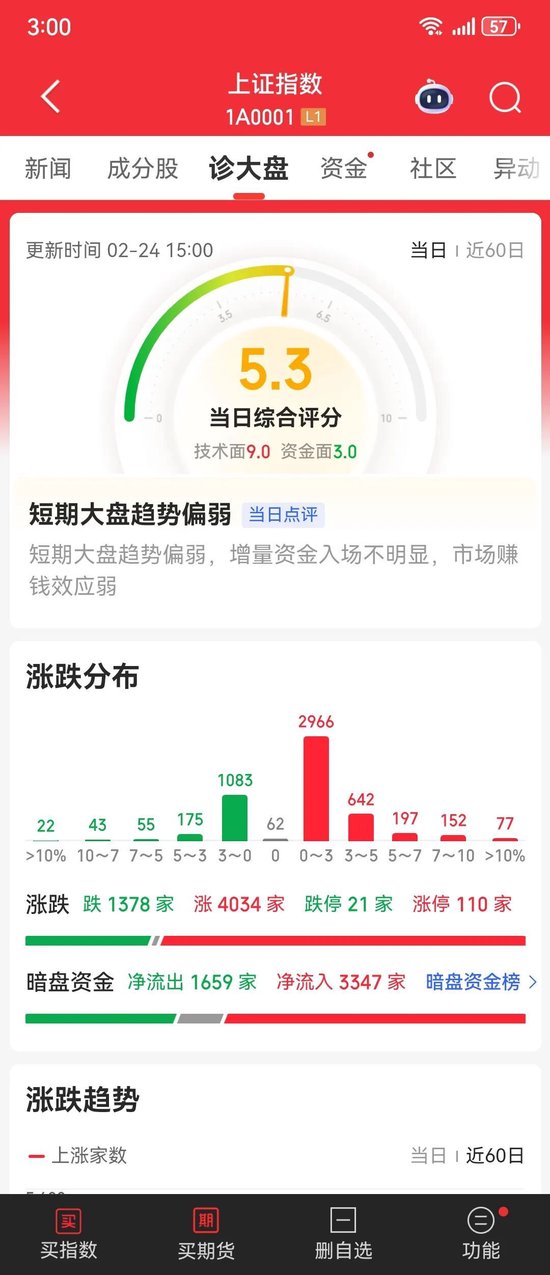
Core Viewpoint - The A-share market experienced a strong opening on the first trading day of the Year of the Horse, with a significant number of companies seeing stock price increases, indicating a positive market sentiment and a robust start to the year [4][9]. Market Performance - The Shanghai Composite Index closed at 4117.41 points, up 0.87%, while the Shenzhen Component Index rose 1.36% to 14291.57 points, and the ChiNext Index increased by 1.01% to 3326.69 points [4][9]. - Total trading volume across both markets exceeded 2.2 trillion yuan, reflecting a strong influx of capital [4][9]. Sector Performance - Leading sectors included precious metals, oil and gas extraction, fiberglass, semiconductors, and consumer electronics, driven by rising international gold prices, recovering energy prices, and supportive industrial policies [4][9]. - The main contributors to the market rally were cyclical sectors such as oil and petrochemicals, which were seen as major beneficiaries of the positive market conditions [5][10]. Stock Movements - A total of 4034 companies saw their stock prices rise, while 826 companies declined, and 202 remained flat, showcasing a strong profit-making effect [4][9]. - Over 65 stocks hit the daily limit up, while only 18 stocks hit the limit down, indicating a favorable trading environment for investors [4][9]. Investor Sentiment - Market sentiment is optimistic, with many institutions expecting a more relaxed capital environment post-holiday and continued positive policy expectations, suggesting that the spring market may continue to perform well [5][10]. - There is a general consensus among analysts that the focus will likely remain on "technology + resources" sectors, although rapid shifts in market style and rotation of hot topics are anticipated [5][10].
ETF今日收评 | 多只油气相关ETF涨超9%,影视ETF跌超7%
Sou Hu Cai Jing· 2026-02-24 07:21
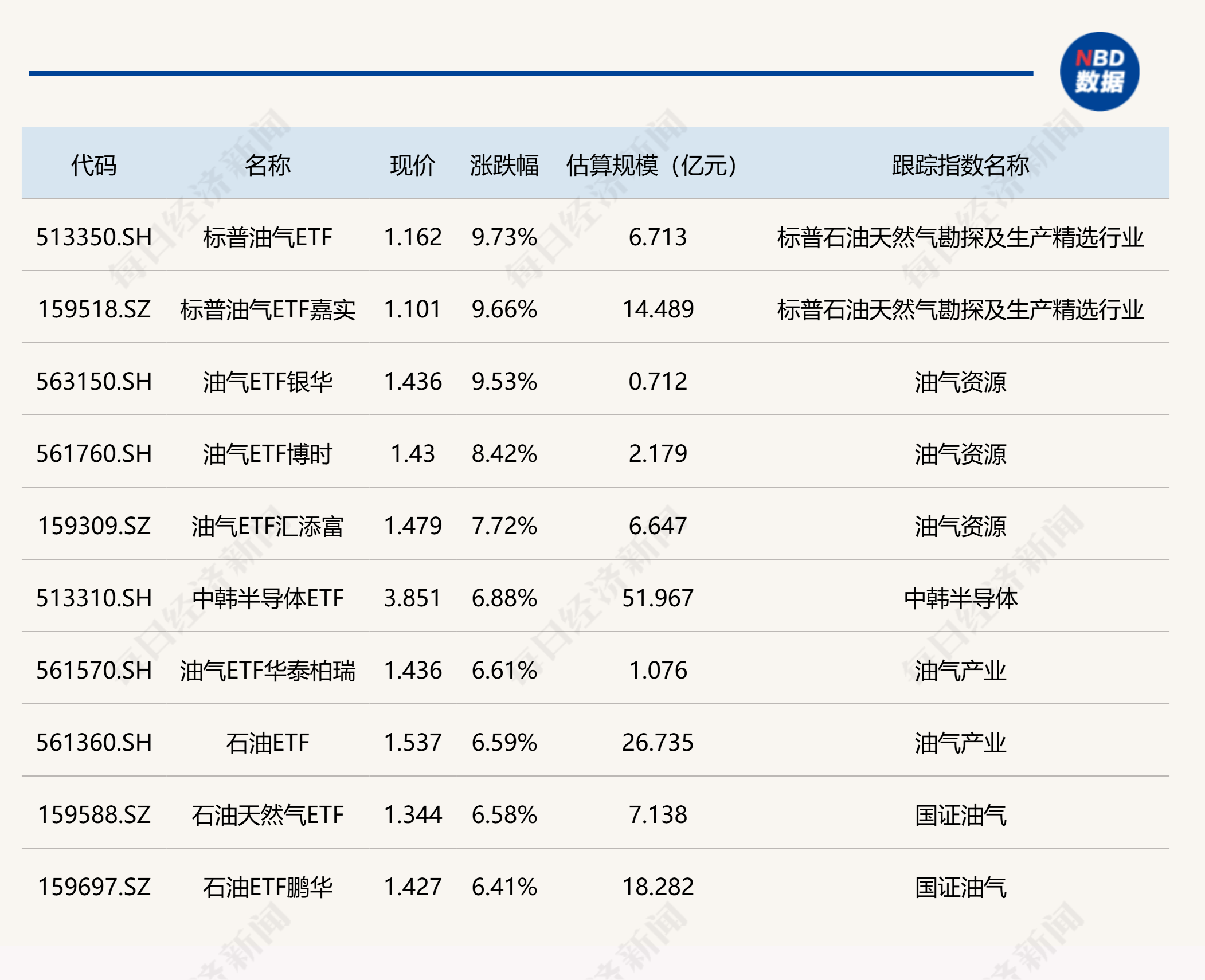
Market Overview - The market experienced a pullback after a rise, with the ChiNext Index briefly increasing by over 2% [1] - Oil and gas stocks collectively rose, while the film and AI application sectors saw significant declines [1] ETF Performance - Multiple oil and gas-related ETFs saw gains exceeding 9%, with specific performances as follows: - S&P Oil and Gas ETF (513350.SH) rose by 9.73% to 1.162 - S&P Oil and Gas ETF (159518.SZ) increased by 9.66% to 1.101 - Other notable ETFs include: - Oil and Gas ETF (563150.SH) up by 9.53% to 1.436 - Oil and Gas ETF (561760.SH) up by 8.42% to 1.43 [2] Sector Analysis - Brokerages indicate that despite geopolitical uncertainties, the medium to long-term oil supply and demand dynamics remain favorable, maintaining a positive outlook on major oil companies and oil service sectors [3] - The recovery of the macro economy is expected to boost chemical demand, with long-term benefits for leading companies in refining, coal chemical, and ethylene sectors [3] Declining Sectors - The film sector faced significant declines, with the Film ETF (516620.SH) dropping by 7.8% to 1.182 and other related ETFs also experiencing losses [4][5] - The National Film Bureau reported that the box office for the 2026 Spring Festival reached 5.752 billion yuan, with 120 million attendees, indicating a diverse range of film genres catering to various demographics [5]
连亏股永太科技错失“宁王”入股复牌跌停 停牌前日涨停
Xin Lang Cai Jing· 2026-02-24 07:21
中国经济网北京2月24日讯 永太科技(002326.SZ)今日复牌一字跌停,截至发稿报25.89元,跌幅 10.01%。停牌前一交易日,即2026年2月6日,永太科技涨停,收报28.77元,涨幅10.02%。 2025年度业绩预告显示,公司预计2025年实现营业收入500,000万元至550,000万元;归属于上市公司股 东的净利润亏损2,560万元至4,860万元;扣除非经常性损益后的净利润亏损1,900万元至3,800万元。 2月13日晚间,永太科技发布关于终止筹划发行股份购买资产并募集配套资金事项暨复牌的公告。公司 于2026年2月9日披露了《关于筹划发行股份购买资产并募集配套资金事项的停牌公告》(公告编号: 2026-008),公司拟以发行股份方式购买宁德时代新能源科技股份有限公司(以下简称"宁德时代")持 有的邵武永太高新材料有限公司25%股权并募集配套资金(以下简称"本次交易"),双方已就本次交易 签署了《股权收购意向书》,本次交易完成后,宁德时代将成为公司股东,公司股票(证券简称:永太 科技,证券代码:002326)自2026年2月9日开市起开始停牌。经审慎研究,公司决定终止筹划本次交易 事项, ...

化工板块上扬,化工ETF国泰(516220)涨超3%,行业供需格局变化可期
Mei Ri Jing Ji Xin Wen· 2026-02-24 07:01
Group 1 - The chemical industry is entering a phase of new capacity release, with a supply-demand reversal expected by 2026 [1] - The emphasis on "anti-involution" is anticipated to improve industry profitability and promote healthier long-term development [1] - Short-term adjustments in operating methods can help balance supply and demand, leading to price recovery and profit restoration [1] Group 2 - The focus on shutting down inefficient capacity and promoting technological upgrades is crucial for escaping homogeneous competition in the medium to long term [1] - Policies such as "anti-involution" and "stabilizing growth" are expected to help the economy recover from its low point, increasing the likelihood of confirming the bottom of corporate profits [1] - The restructuring of supply-demand patterns and the upgrading of industrial attributes will jointly drive the revaluation of traditional chemical enterprises [1] Group 3 - The Guotai Chemical ETF (516220) tracks a sub-index of the chemical industry (000813), which selects listed companies involved in chemical raw materials and products to reflect the development status of the Chinese chemical sector [1] - The index includes companies from various sub-industries such as pesticides, fertilizers, and coatings, aiming to capture the performance of growth-oriented and competitive enterprises [1]
《化工周报 26/2/9-26/2/13》:春晚机器人大放异彩,美国关税下调利好出口链,化工春旺行情将至-20260224
Shenwan Hongyuan Securities· 2026-02-24 06:59
Investment Rating - The report maintains an "Optimistic" rating for the chemical industry [3][4]. Core Insights - The macroeconomic outlook for the chemical industry indicates a stable increase in oil demand due to global economic improvement and tariff adjustments, with Brent oil prices expected to remain in the range of $60-75 per barrel [3][4]. - The report highlights a potential recovery in the export chain due to the reduction of tariffs on Chinese products, which is expected to boost the chemical sector's performance [3][4]. - The report suggests that the chemical industry is at a cyclical turning point, with demand expected to rise as downstream operations resume post-holiday [3][4]. Summary by Relevant Sections Macro Economic Analysis - Oil supply is constrained due to OPEC+ production delays and peak shale oil output, while demand is stabilizing with improved global economic conditions [3][4]. - Coal prices are expected to stabilize at a long-term bottom, and natural gas costs may decrease as the U.S. accelerates its export facility construction [3][4]. Industry Dynamics - The report notes significant advancements in robotics showcased during the Spring Festival, indicating a key commercialization year for robotics in 2026, with related materials expected to see increased demand [3][4]. - The chemical sector is advised to focus on investment opportunities in the textile chain, agricultural chemicals, and overseas real estate chains, with specific companies highlighted for potential growth [3][4]. Price Trends - Recent data shows a decrease in oil prices and an increase in coal prices, with the overall industrial PPI showing a slight decline year-on-year but an increase month-on-month [6][9]. - Specific chemical product prices, such as PTA and MEG, have shown mixed trends, with PTA prices slightly increasing while MEG prices have decreased [9][10]. Company Valuations - The report includes a valuation table for key companies in the agricultural chemicals and chemical fertilizer sectors, indicating growth in net profits and maintaining a positive outlook for several firms [15].



顺周期发力,油气有色化工等领涨,自由现金流ETF易方达(159222)标的指数大涨超3%
Mei Ri Jing Ji Xin Wen· 2026-02-24 06:24
Group 1 - The core viewpoint of the article highlights the strong performance of cyclical sectors such as oil and gas, non-ferrous metals, and chemicals, leading to a 3.2% increase in the National Free Cash Flow Index, outperforming major style indices [1] - The index's constituent stocks include notable performers like Silver Nonferrous and Yuntianhua, which hit the daily limit, while China National Offshore Oil Corporation and China International Marine Containers rose over 7% [1] - The tracking ETF for this index, E Fund (159222), saw a net subscription of 15 million shares during intraday trading, indicating strong investor interest [1] Group 2 - The National Free Cash Flow Index employs a selection logic centered on free cash flow rates and adjusts its constituents quarterly, maintaining a balanced market capitalization across sectors, focusing on energy, automotive, and industrial materials [1] - According to Wind data, the E Fund ETF (159222) experienced a net inflow of over 600 million yuan in the past month, attracting attention in a volatile market [1] - Since its launch, the product has achieved an excess return of 5.7% compared to the index, ranking first among ETFs tracking the same index, with a tracking error of only 0.07% [1]




金鹰基金:节后关注科技成长+顺周期+高股息的“三角组合”
Xin Lang Cai Jing· 2026-02-24 05:57
Core Viewpoint - The spring market excitement for 2026 has partially shifted to January, with a round of growth style realization before the festival, combined with regulatory easing and significant ETF outflows. It is expected that the overall index in February will mainly fluctuate, with a stronger performance anticipated after the festival. In this environment, a "structure-first, index-second" approach may be more suitable [1][8]. Group 1: Investment Focus Areas - **Technology Growth: AI + Humanoid Robots**: Focus on midstream components (gear reducers, servo motors, sensors, actuators), core materials, and some main body manufacturers. The resonance between the Spring Festival Gala and overseas world model progress may lead to a shift from "event-driven" to "scene landing" throughout the year. The computing chain includes storage chips, optical modules, PCB/IC substrates, and data center distribution and liquid cooling in power equipment, directly supporting the capital expenditure expansion of overseas cloud vendors. It is recommended to focus on large-cap leaders and some high-growth niche leaders while controlling overall valuation and position concentration to prevent short-term crowded trades and overseas volatility-induced pullbacks [2][9]. - **Cyclical Price Increases: Oil, Petrochemicals + Non-ferrous Metals + Building Materials/Chemicals**: Due to the rebound in oil prices and bulk commodity prices, marginal improvement in PPI, and the rhythm of the "14th Five-Year Plan" infrastructure commencement, it is suggested to pay attention to oil, petrochemicals, and oil and gas services. Additionally, focus on non-ferrous metals like copper and aluminum, steel building materials, and some chemical products with more sustainable price increases [3][10]. - **High Dividend Yield: Banks + Energy + Telecom/Public Utilities**: Before the festival, A-shares showed a clear preference for dividend and defensive sectors due to external disturbances and regulatory easing, with banks and food and beverage sectors being favored. After the festival, it may be beneficial to continue using high-dividend sectors like banks, energy, telecom, and public utilities as a base, which can hedge against overseas volatility and geopolitical risks while providing stable absolute returns in the context of macroeconomic stabilization and strong dividend yield and valuation attractiveness [4][11]. - **Domestic Consumption: Automotive Chain + Home Appliances + Travel Consumption**: Supported by the old-for-new policy and Spring Festival consumption data, the automotive and automotive electronics, home appliances, and white goods components benefit from the old-for-new policy and sales recovery. In the context of rising external demand and tariff uncertainties, these consumption directions, which are mainly driven by domestic demand and are policy-friendly, may exhibit both defensive and offensive characteristics [5][12].
海外市场流动性有企稳迹象,情绪或会好转勘误版
Soochow Securities· 2026-02-24 05:52
Fund Size Statistics - The top three equity ETF types by fund size change are: Scale Index ETF (154.06 billion), Cross-border Industry Index ETF (66.24 billion), and Strategy Index ETF (53.71 billion) [9] - The bottom three equity ETF types by fund size change are: Cross-border Scale Index ETF (-18.07 billion), Cross-border Theme Index ETF (2.03 billion), and Style Index ETF (2.75 billion) [9] Market Outlook - The macro timing model for February 2026 has a score of 0, historically indicating a 78.57% probability of the Wande All A Index rising in the following month, with an average increase of 3.37% [25] - A-shares are expected to experience a short-term volatile market, with trading volume gradually decreasing as the Spring Festival approaches [25] - The recent performance of overseas markets shows signs of liquidity stabilization, which may positively influence market sentiment [24] ETF Fund Flow Data - Chemical ETFs and Electric Grid Equipment ETFs continue to see an increase in fund size, while Color Metal ETFs, Gold Stock ETFs, and Hong Kong Internet ETFs have seen significant reductions [25] - The top three equity ETF products by fund size increase are: CSI 500 ETF (28.32 billion), Chemical ETF (23.86 billion), and HuShen 300 ETF (22.29 billion) [10] - The bottom three equity ETF products by fund size decrease are: Color Metal ETF (-39.32 billion), Gold Stock ETF (-29.63 billion), and Hong Kong Internet ETF (-28.03 billion) [15] Investment Strategy - A balanced ETF allocation is recommended for future market conditions, considering the potential for short-term fluctuations [61] - Risk factors include the possibility of model failure based on historical data, macroeconomic performance falling short of expectations, and unexpected major events [62]